~/sacred-texts/pyramid-texts
Pyramid Texts Utterance 269: Incense to Raise the Dead King
- Text
- Pyramid Texts, Utterance 269 (PT 269)
- Date
- Carved in the 6th Dynasty, reign of Pepi I (c. 2330–2285 BC), on the walls of the burial chambers of his pyramid at Saqqara
- Found
- Pyramid of Pepi I at South Saqqara; the wall fragments were recovered and reassembled at the site
- Language
- Old Egyptian · Hieroglyphic
- 1

ḏ(d)-mdw
Recitation:
Note · Line 1
These are the opening words of a spoken spell, carved on a wall of the burial chambers inside King Pepi I’s pyramid. It was meant to be recited while incense burned. - 2
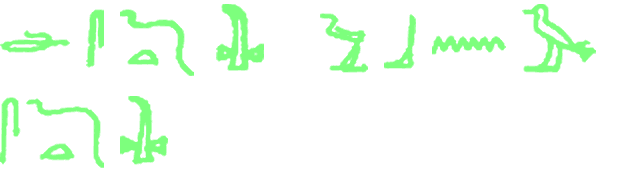
di̯ sḏ,t wbn sḏ,t
The fire is laid, the fire flares up.
- 3
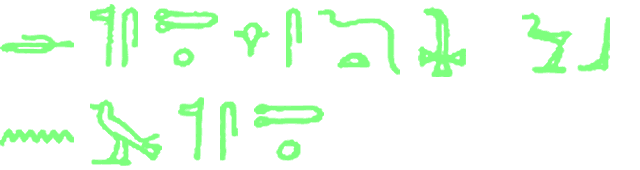
di̯ snṯ(r) ḥr sḏ,t wbn snṯ(r)
The incense is laid on the fire, the incense flares up.
- 4
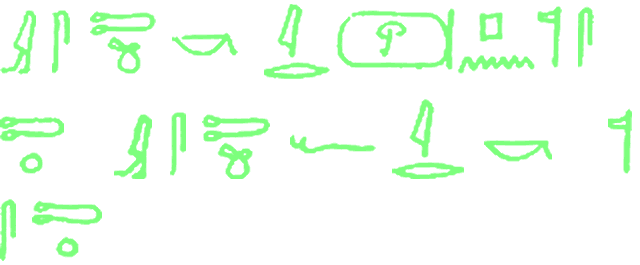
jyi̯ sṯ(j) =k jr Ppy pn snṯ(r) jyi̯ sṯ(j) =f jr =k snṯ(r)
Your scent comes to this Pepi, O incense;
his scent comes to you, O incense. - 5
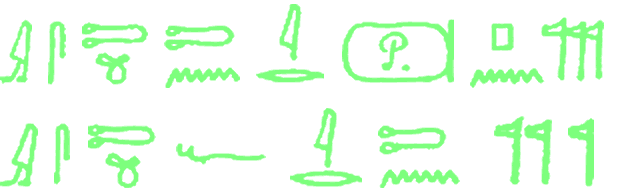
jyi̯ sṯ(j) =ṯn r Ppy pn nṯr.pl jyi̯ sṯ(j) =f jr =tn nṯr.pl
Your scent comes to this Pepi, O gods;
his scent comes to you, O gods.Note · Line 5
The smoke binds the dead king and the gods together. He takes on their fragrance and they take on his, a sign that he now belongs among them. - 6
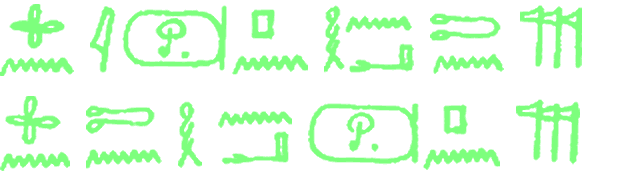
={j} 〈wn〉 Ppy pn ḥnꜥ =ṯn nṯr.pl wn =ṯn ḥnꜥ Ppy pn nṯr.pl
May this Pepi be with you, O gods;
may you be with this Pepi, O gods. - 7
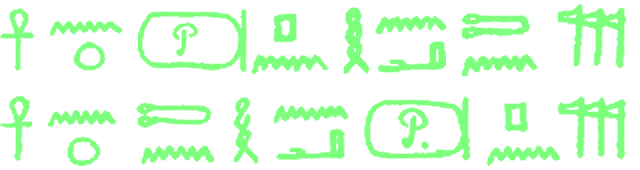
ꜥnḫ Ppy pn ḥnꜥ =ṯn nṯr.pl ꜥnḫ =ṯn ḥnꜥ Ppy pn ntr.pl
May this Pepi live with you, O gods;
may you live with this Pepi, O gods. - 8
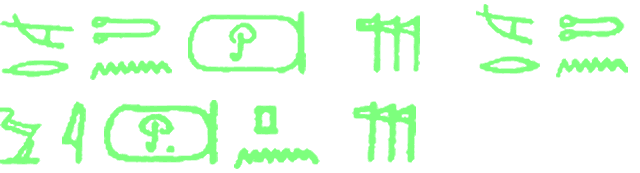
mri̯ ṯn Ppy nṯr.pl mri̯ =ṯn Mri̯,y-Rꜥw pn nṯr.pl
Pepi will love you, O gods;
may you love this Meryre, O gods.Note · Line 8
Meryre, “Beloved of Ra,” is Pepi’s throne name. The line plays “love” against the name itself: the gods are asked to love the one already called the Beloved. - 9
jyi̯ sšwi̯ Ppy pn jyi̯ šwi̯ Ppy pn
Here comes the one raised up, this Pepi;
here comes the one rising up, this Pepi.Note · Line 9
The Egyptian pairs two forms of one verb, “to lift up” and “to rise.” Pepi is lifted up by others and also rises by his own power. - 10
pri̯ =f r =f ḥr mn,t.du Ꜣs,t ḥfd.w Ppy pn ḥr mn,t.du Nb,t-ḥw,t
He shall go up onto the thighs of Isis;
this Pepi shall clamber up onto the thighs of Nephthys.Note · Line 10
The sister goddesses Isis and Nephthys mourned and revived Osiris, and they act as mothers to the dead king. - 11
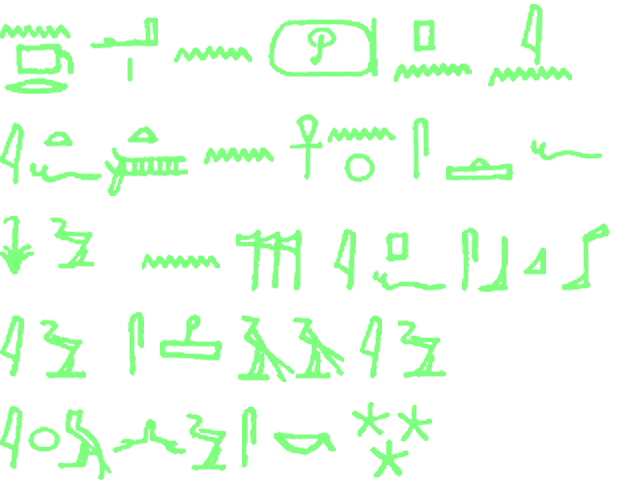
nḏri̯ ꜥ n(,j) Ppy pn jn jt(j) =f (J)tm(,w) n ꜥnḫ wꜣs s(j)p =f sw n nṯr.pl jpf sbq.jw sꜣꜣ.jw j:ḫm.w-sk
The arm of this Pepi shall be grasped by his father Atum, for life and dominion,
and he shall hand him over to those gods, the clever, the wise, the Imperishable Stars.Note · Line 11
Atum is the creator god and the father of all the gods. - 12
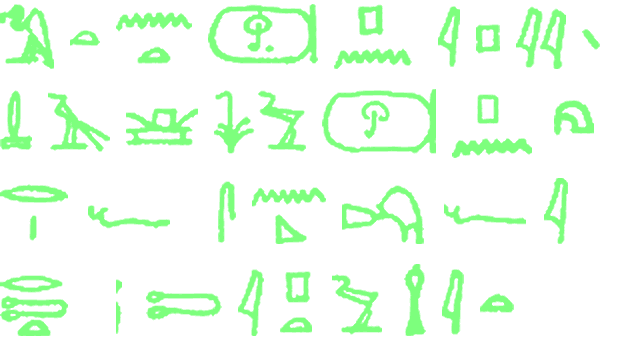
mʾw,t n.t Ppy pn Jpy jmi̯ mnḏ =ṯ pw n Ppy ḏꜣi̯ sw Ppy pn tp rʾ =f snq =f jrṯ,t =ṯ jptw ḥḏ.jt sšp.t bnj.t
Mother of this Pepi, Ipy, give this breast of yours to Pepi,
that this Pepi may take it to his mouth and suck this milk of yours, white, bright and sweet.Note · Line 12
Ipy is a hippopotamus goddess, a protector of birth and nursing. Being suckled by a goddess marks the king’s rebirth as a divine child and gives him the gods’ own nourishment. - 13
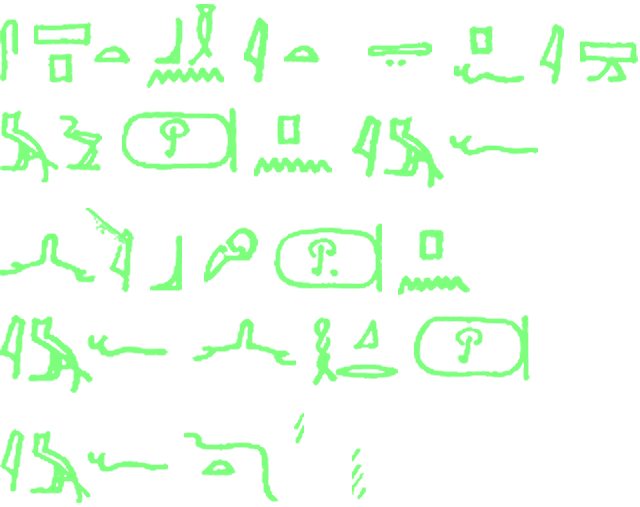
tꜣ pf j:šm.w Ppy pn jm =f n jbi̯ Ppy pn jm =f n ḥqr Ppy jm =f ḏ,t
That land to which this Pepi goes:
this Pepi will not thirst in it, Pepi will not hunger in it, ever.