~/sacred-texts/pyramid-texts
Pyramid Texts Utterance 259: Teti Refuses to Stay Buried
- Text
- Pyramid Texts, Utterance 259 (PT 259)
- Date
- Carved in the 6th Dynasty, in the reign of Teti (c. 2345–2323 BC), on the walls inside the pyramid of King Teti at Saqqara
- Found
- Pyramid of Teti, Saqqara, Egypt
- Language
- Old Egyptian · Hieroglyphic
- 1

ḏ(d)-mdw
Words to be spoken:
- 2

Ttj pn pw (W)sr(,w) m zz,w
This Teti is Osiris in a cloud of dust.
Note · Line 2
Osiris is the murdered king and god of the dead, with whom every dead king is identified. - 3
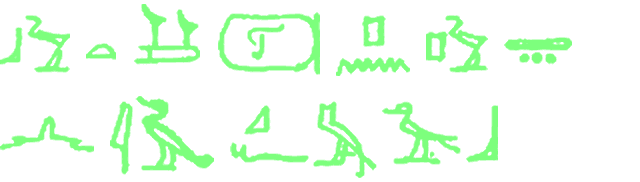
bw,t Ttj pn pw tꜣ n j:ꜥq =f m Gbb
Earth is what this Teti abhors; he will not go into Geb.
Note · Line 3
Geb is the earth god, so the earth is Geb’s own body. To enter Geb is to be buried and stay buried, which is what the king refuses. - 4
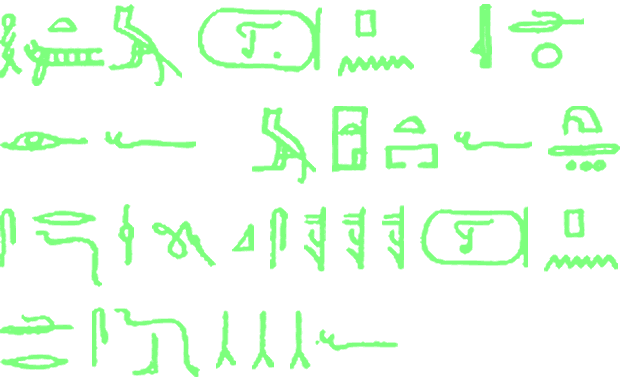
ḥtm Ttj pn qd =f m ḥw,t =f tp tꜣ srwḏ qs.pl Ttj pn dr sḏb.pl =f
This Teti shall be done with sleeping in his estate on earth, now that the bones of this Teti are made firm and his harms are driven off.
Note · Line 4
“Sleeping in his estate on earth” is lying dead in the tomb. The firming of the bones is the putting back together of the dismembered body, as was done for Osiris. - 5
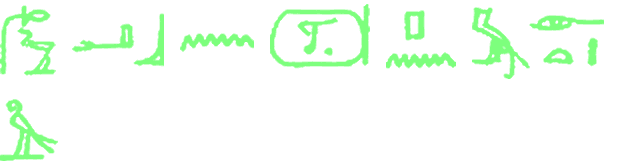
wꜥb.n Ttj pn m jr,t-Ḥr,w
This Teti has made himself pure with the Eye of Horus.
Note · Line 5
The Eye of Horus, torn out and then healed, is the great symbol of anything restored and made whole. Offerings and purifying water were called by its name. - 6
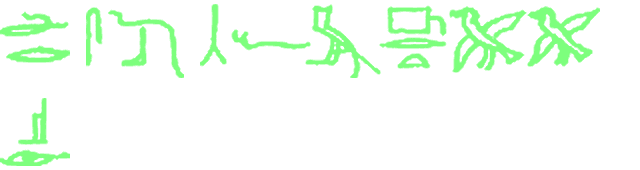
dr sḏb =f m ḏr,t.du (W)sr(,w)
His harm is driven off by the two kites of Osiris.
Note · Line 6
The two kites are Isis and Nephthys, sisters of Osiris. They took the form of birds of prey to search for his body and to mourn it with their shrill cries. - 7
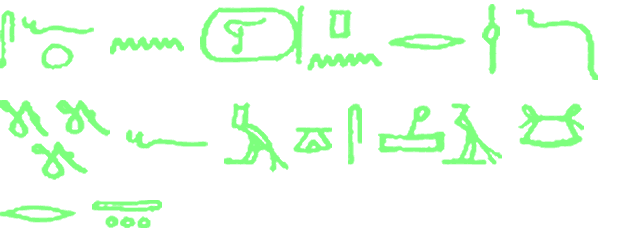
sfḫ.n Ttj pn ={f} 〈rḏ,w〉 =〈f〉 m 〈Gsꜣ〉 r tꜣ
This Teti has let the fluids of his corpse run out onto the earth in Qus.
Note · Line 7
The fluids are those of a decaying body. - 8
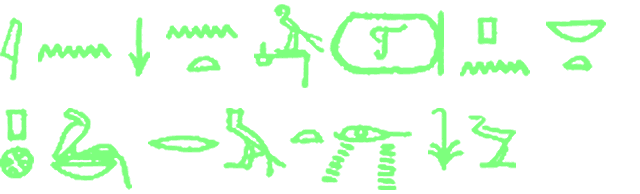
jn sn,t Ttj pn nb(,t) P rmi̯.t sw
It is the sister of this Teti, the Lady of Pe, who wept for him;
Note · Line 8
Pe is one of the two towns that made up Buto, the ancient royal city in the Delta. The weeping sister is cast as Isis, mourning her brother. - 9
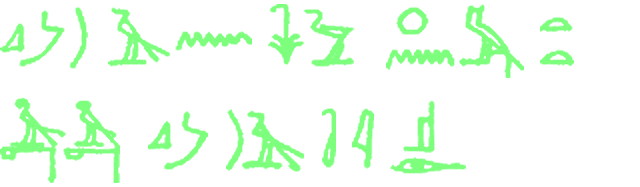
qmꜣ.n sw ḫnm,tt.du qmꜣ.tj (W)sr(,w)
the two nurses who keened over Osiris have keened over him:
Note · Line 9
The two nurses are again Isis and Nephthys, here as the women who tend and mourn the dead. What follows is their lament, which turns into a cry of triumph. - 10
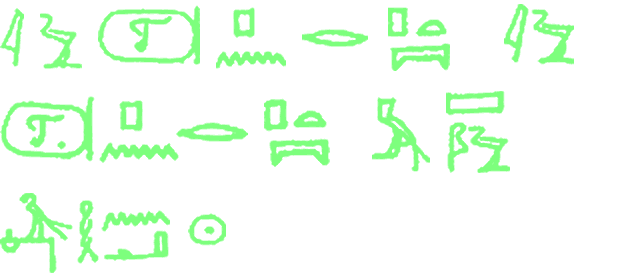
jw Ttj pn r p,t jw Ttj pn r p,t m Šw ḥnꜥ Rꜥw
"This Teti is bound for the sky! This Teti is bound for the sky, in Shu, together with Ra!
Note · Line 10
Shu is the god of air and of the empty space between earth and sky. To go up “in Shu” is to ride the air itself, in the company of Ra, the sun. - 11

n ḫmi̯ Ttj pn
This Teti shall not be brought down;
- 12

n ḫmi̯.wt(j) =f 〈jm〉 =〈f〉
there is none by whom he shall be brought down.
- 13
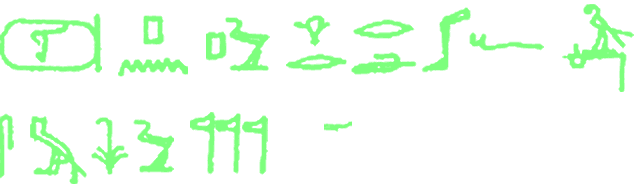
Ttj pn pw ḥr(,j)-rd≡f sms,w nṯr.pl
This Teti is He-Upon-His-Foot, eldest of the gods.
Note · Line 13
“He-Upon-His-Foot” is a divine title meaning “the one standing upright.” It is the opposite of the dead man laid out flat, and it proclaims the king risen to his feet. - 14
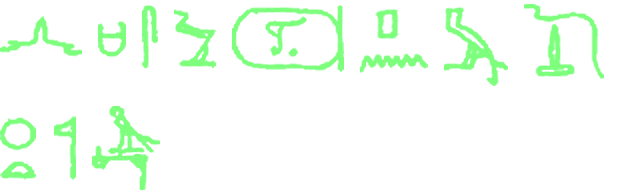
n ḥmsi̯.w Ttj pn m ḏ(ꜣ)ḏꜣ,t nṯr
This Teti shall not sit in the god's tribunal."
Note · Line 14
In a court the accused sat before the judges. The king will never be put on trial; he stands, as the line before says. - 15
jw pꜣḏ n(,j) Ttj pn r ḥr(,w) ḥnꜥ Rꜥw
The round loaf of this Teti is up above, with Ra;
- 16
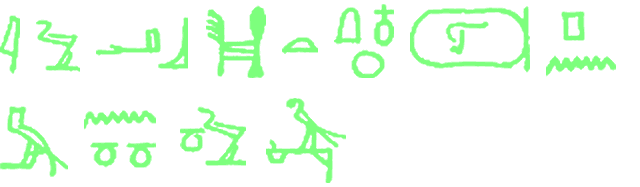
jw ꜥꜣb,t Ttj pn m Nw(,w)
the offering of this Teti is in Nun.
Note · Line 16
Nun is the boundless primeval water from which the world arose, and which still surrounds it and fills the deep. - 17

Ttj pn pw nn,w
This Teti is one who turns about:
Note · Line 17
The spell compares the dead king Teti to the sun, which sets and returns. Like the sun, he goes and comes back. - 18
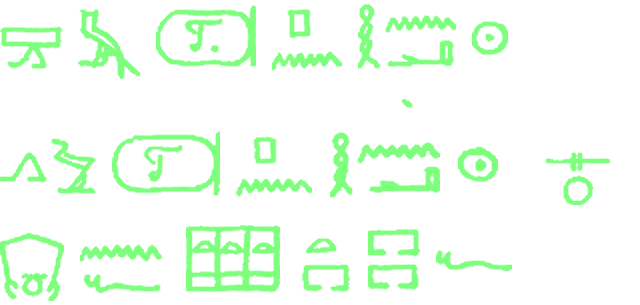
šmi̯ Ttj pn ḥnꜥ Rꜥw jwi̯ Ttj pn ḥnꜥ Rꜥw zḫni̯ =f ḥw,t.pl =f
This Teti goes with Ra,
this Teti comes with Ra,
and he seeks out his estates.Note · Line 18
Ra is the sun god. Each day he sails across the sky and each night through the underworld, and the king joins his voyage. The “estates” are the temples and domains that belong to him. - 19
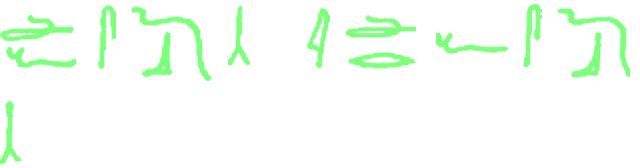
di̯ =f sḏb j:dr =f sḏb
He deals out harm, he drives out harm.
Note · Line 19
The two Egyptian verbs, “put” and “remove,” make a matched pair. Like the sun, the king has power both to send misfortune and to take it away. - 20
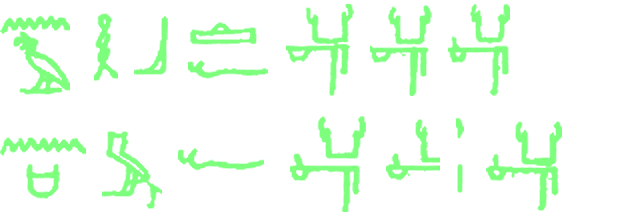
nḥb =f kꜣ.pl nḥm =f kꜣ.pl
He grants kas, he grabs kas.
Note · Line 20
The ka is a person’s life-force, the vital power that sustains them and passes on through food offerings. - 21
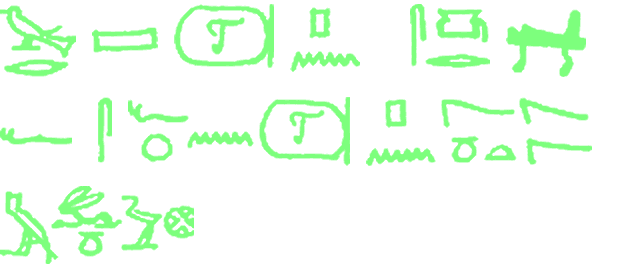
wršu̯ Ttj pn sḏr =f sfḫ{.n} Ttj pn nw,t.du m Wnw
This Teti spends the day, he spends the night,
this Teti parting the Two Adzes in Hermopolis.Note · Line 21
The “Two Adzes” are Horus and Seth, the rival gods whose long quarrel was settled before Thoth in Hermopolis. - 22
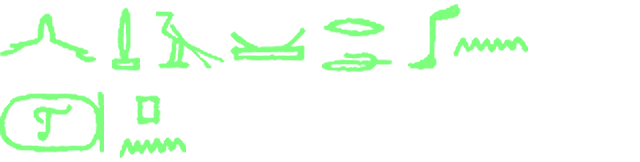
n ḏꜣi̯ rd n(,j) Ttj pn
This Teti's foot is not barred.
- 23
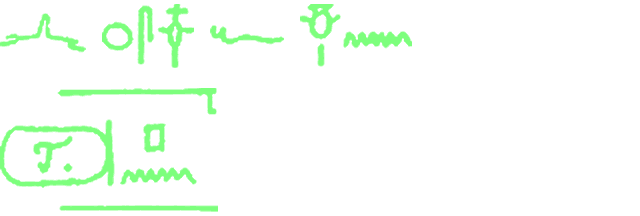
n ḫsf jb n(,j) Ttj pn
This Teti's heart is not rebuffed.
Note · Line 23
The heart is also the seat of will and desire, so this means that nothing the king wishes is refused.