~/sacred-texts/pyramid-texts
Pyramid Texts Utterance 254: Unas Eats Anyone in His Way Raw
- Text
- Pyramid Texts, Utterance 254
- Date
- Carved in the 5th Dynasty (c. 2350 BC) on the inner walls of the pyramid of King Unas at Saqqara
- Found
- Pyramid of Unas, Saqqara, still in place
- Language
- Old Egyptian · Hieroglyphic
The dead king Unas demands a place among the gods. If he is refused, he threatens to curse his father Geb, the earth, and he warns: Whoever Unas finds on his way, he eats him up raw. The gods answer by sealing the world shut: The roads are hidden from those who would pass by, the stairways destroyed for those who would go up. Only Unas gets through.
The beautiful West greets him as her own son, the pillar painted with kohl, the Bull of the sky. He passes the head-cutting monkeys, judges between Horus and Seth, and destroys his enemies: Their hearts fall to his fingers; their entrails go to those of the sky.
- 1

jdi̯.y wr,t n kꜣ Nḫn
The Great One shall bow down to the Bull of Nekhen.
Note · Line 1
Unas is the “Bull of Nekhen,” a title of the king as heir of the falcon-god of Nekhen (Hierakonpolis), the ancient royal city of Upper Egypt. - 2
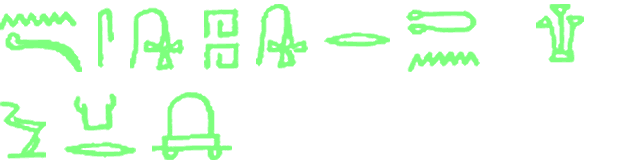
ns(r) hh r =ṯn ḥꜣ(,j).w kꜣr
Flame of the scorching blast against you who stand around the shrine!
- 3
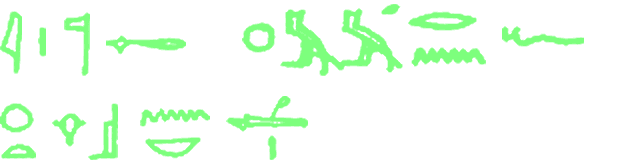
j nṯr-ꜥꜣ ḫmm rn =f ḫ,t ḥr s,t n nb-wꜥ(,w)
O great god whose name is unknown, food set in place for the Sole Lord!
- 4
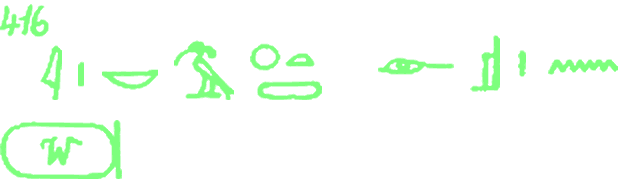
j nb ꜣḫ,t jri̯ s,t n Wnjs
O Lord of the Horizon, make a place for Unas!
- 5
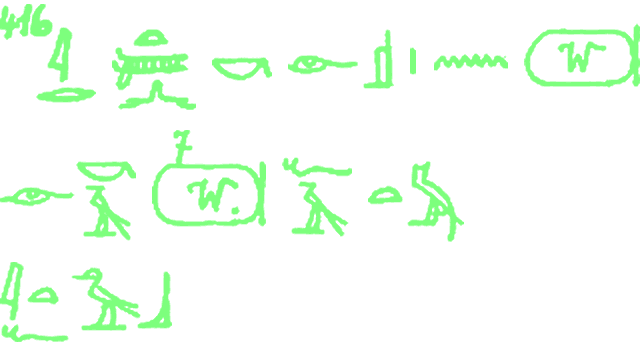
jr tm =k jri̯ s,t n Wnjs jri̯.kꜣ Wnjs fꜣ,t m jt(j) =f Gbb
If you do not make a place for Unas, Unas will lay a curse on his father Geb:
Note · Line 5
Geb is the earth god, called here the king’s father. The threat is to curse the earth itself if the gods do not give way. - 6

tꜣ n mdwi̯.n =f
the earth shall speak no more,
- 7

Gbb n wꜣ.n =f
Geb shall have no defence.
- 8
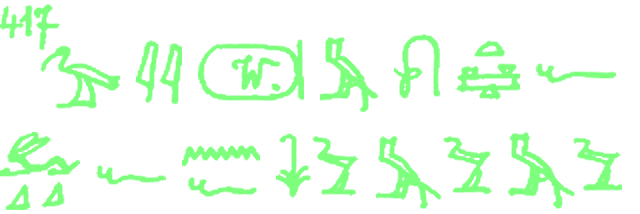
gmi̯.y Wnjs m wꜣ,t =f wnm =f n =f sw mwmw
Whoever Unas finds on his way, he eats him up raw.
- 9
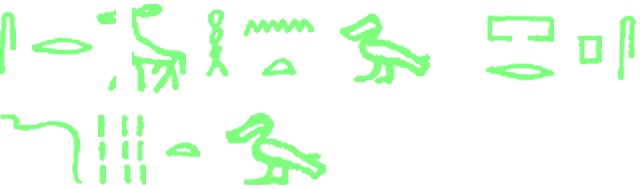
sr ḥnʾ,t pri̯ psḏ,t(j)
The henet-pelican shall prophesy, the pesdjeti-pelican shall come forth,
- 10

ꜥḥꜥ wr
the Great One shall rise,
- 11
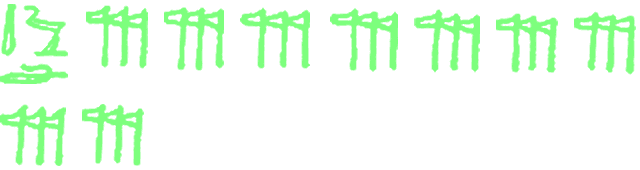
mdwi̯ psḏ,t.pl
the Enneads shall speak:
- 12

tꜣ ḏnj ḏnj,t
"The earth is dammed, dammed shut.
Note · Line 12
What follows is the gods’ verdict. The world is sealed off: the earth closes up, routes vanish, stairways fall. Every way to the sky is shut to others, while the way of Unas stays open. - 13
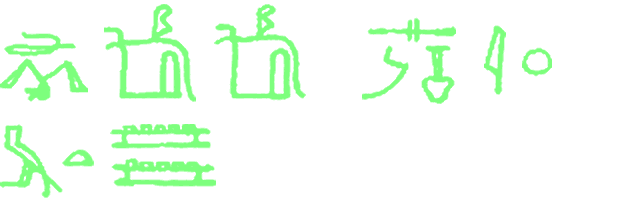
dmḏ ṯni̯(,w).du zmꜣ jḫm,t.du
The two mountain ranges are joined, the two riverbanks are made one.
- 14
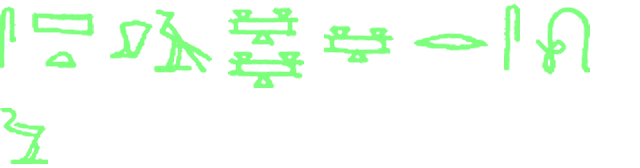
sštꜣ wꜣ,t.pl r swꜣ.w
The roads are hidden from those who would pass by,
- 15
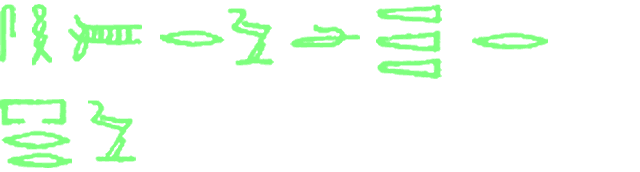
sḥtm rwd.pl r prr.w
the stairways destroyed for those who would go up."
- 16

mꜣꜥ nwḥ
The ropes are drawn taut.
- 17

ḏꜣi̯ msq,t
The Mesqet has been crossed.
Note · Line 17
The Mesqet is a region of the sky that the dead king must cross on his way upward. - 18

sqr bḏ m rʾ mr Ḥjp(,w)
The ball has been struck at the mouth of the Hapi canal.
Note · Line 18
Striking a ball was a ritual act, later performed in honour of the goddess Hathor. - 19
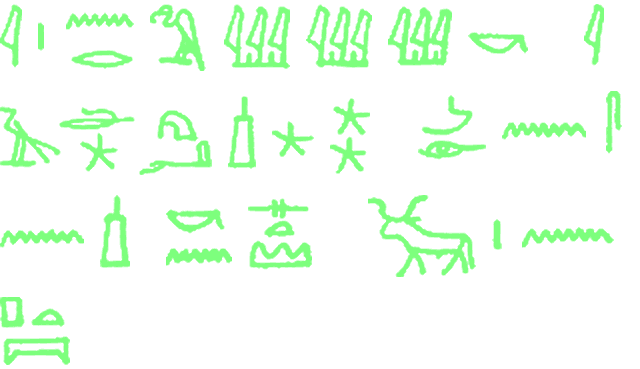
j:nr sḫ,t.pl =k jꜣd tp-ꜥ jwn sbꜣ.pl mꜣ.n =sn jwn knz,t kꜣ n(,j) p,t
Your fields, O Iad-star, shudder before the Pillar of the Stars, for they have seen the Pillar of Kenzet, the Bull of the sky.
Note · Line 19
Iad is a celestial place or star. Kenzet is a region of the beyond. The “Pillar” and the “Bull of the sky” are both the dead king, now arriving among the stars. - 20
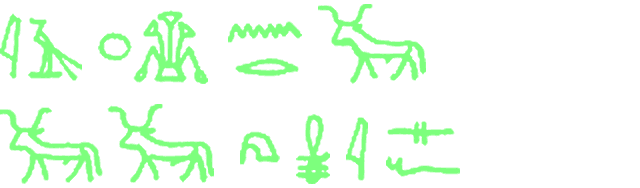
jꜣḫi̯ nr jḥ.pl tp mjz =f
The herdsman of the cattle is swamped upon his miz.
- 21
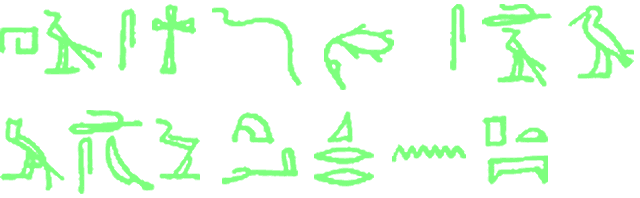
hꜣi̯ snḏ sdꜣ mds.w tp-ꜥ qrr n(,j) p,t
Dread comes down; the violent tremble before the storm of the sky.
- 22
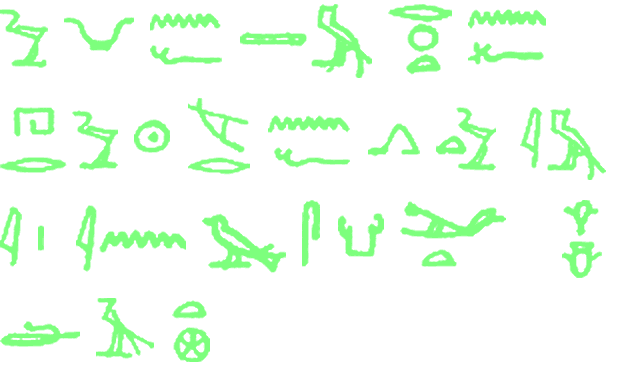
wpi̯.n =f tꜣ m rḫ.t.n =f hrw(,w) mri̯.n =f jw.t jm j jn Wr-skꜣ,t ḥr(,j)-jb dwꜣ,t
"He has opened up the earth with what he knows, on the day he chose to come there," says Wersekat, who dwells in the Duat.
Note · Line 22
The Duat is the netherworld. Wersekat’s name means something like “Great One of the Plough”, which suits his words: the king has broken open the earth as a plough does. - 23
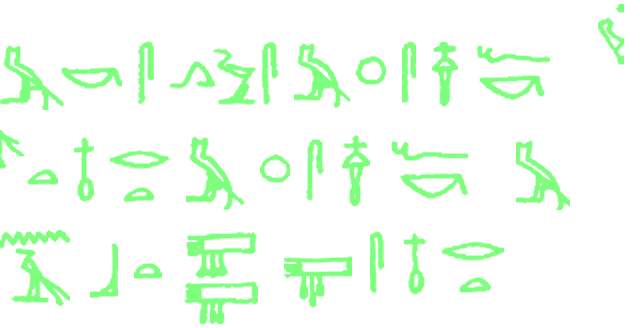
m =k s(j) jwi̯ =s m ḫsf(,w) =k Jmn,t nfr.t m ḫsf(,w) =k m nꜣb,t.pl =s nfr.t
Look, she comes to meet you, the beautiful West, comes to meet you with her beautiful locks.
Note · Line 23
The West, land of the dead, appears as a goddess who welcomes the king. - 24

j(w) =s ḏd =s
And she says:
- 25
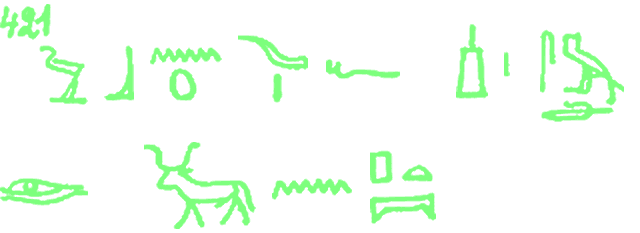
jyi̯ msi̯.n =(j) wbn ꜥb =f jwn sdm kꜣ n(,j) p,t
"Here comes the one I bore, whose horn gleams, the pillar painted with kohl, the Bull of the sky!
Note · Line 25
The West speaks of the king as her own newborn son. His eyes are made up with eye-paint, like a cult image. - 26

ṯnj jr,w =k
How distinguished is your form!
- 27

swꜣ m ḥtp(,w)
Pass in peace!
- 28
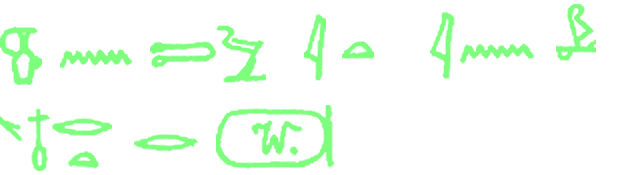
ẖnm.n =(j) ṯw j.t jn Jmn,t nfr.t r Wnjs
I have embraced you," says the beautiful West to Unas.
- 29
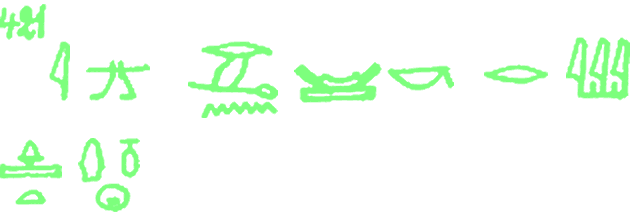
j:zj ẖni̯ =k r sḫ,t-ḥtp
"Go, and row yourself to the Field of Offerings.
Note · Line 29
The Field of Offerings is a fertile paradise in the sky where the blessed dead are fed. - 30
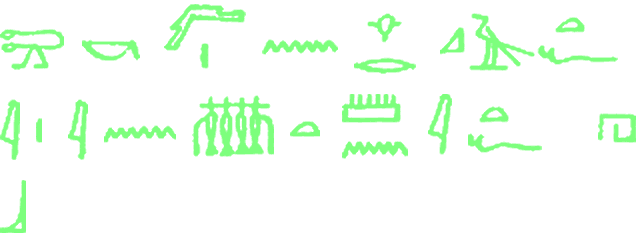
jṯi̯ =k ḥjp(,t) n ḥr(,j)-qꜣ,t≡f j jn ḫnt(,j)-mnj,t≡f
You shall take the course for Him Who Is on His Qat-Plant," says He Who Is at His Mooring-Post.
- 31
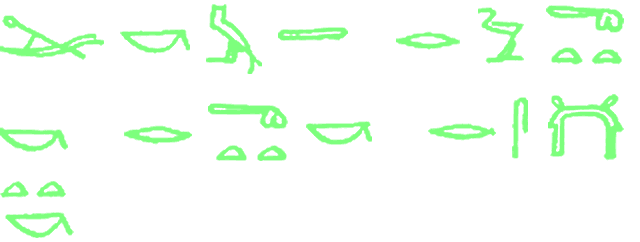
hb =k m tꜣ r wmt,t =k r mt,t =k r sṯt,t =k
"You shall tread into the earth to your full girth, to your uprightness, to your setjet.
- 32
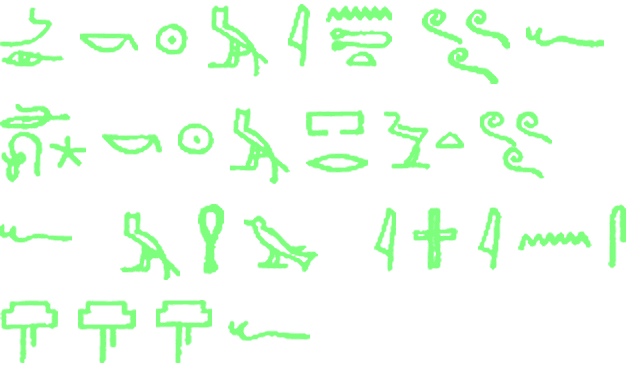
mꜣ =k Rꜥw m jnṯ,t.pl =f dwꜣ =k Rꜥw m pr.w,t =f m zꜣ wr jm(,j) jns.pl =f
You shall see Ra in his fetters, you shall worship Ra at his loosing, under the protection of the Great One who is in his red linen.
- 33
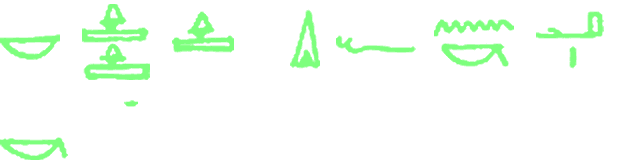
nb ḥtp(,w) ḏi̯ =f n =k ꜥ ={k}〈f〉
The Lord of Peace: may he give you his arm.
Note · Line 33
The scribe wrote “your arm”; “his arm” is the intended reading. In this spell the dead king, Unas, makes his way through dangerous ground in the afterlife. - 34
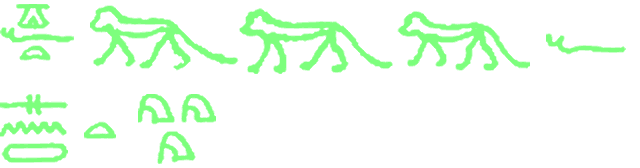
g(j)f,t.pl =f zni̯.t tp.pl swꜣ Wnjs ḥr =ṯn m ḥtp
O you, his monkeys, who cut off heads, Unas shall pass by you in peace.
- 35
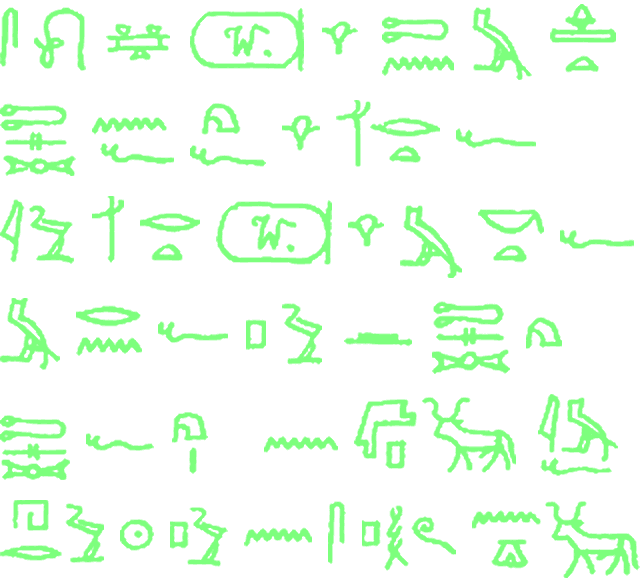
ṯ(ꜣ)z.n =f tp =f ḥr wsr,t =f jw wsr,t Wnjs ḥr mk,t =f m rn =f pw n(,j) ṯ(ꜣ)z-tp ṯ(ꜣ)z =f tp n(,j) Ḥp jm =f hrw(,w) pw n(,j) spḥ ng(ꜣ)
He has knotted his head onto his neck (the neck of Unas is in its proper place) in this his name of Head-Knotter, by which he knotted on the head of Apis on that day of lassoing the long-horned bull.
- 36
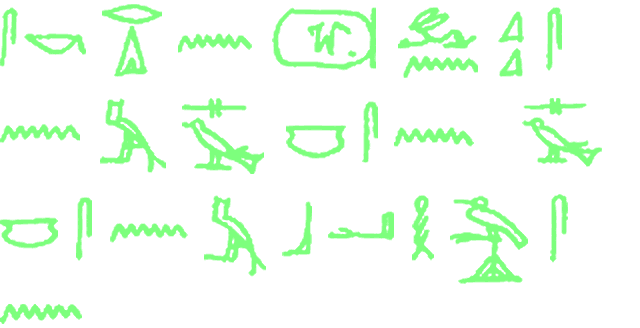
sk rḏi̯.n Wnjs wnm =sn m zwr =sn zwr =sn m bꜥḥ =sn
For Unas has let them eat from their bowls, and drink from their flood.
Note · Line 36
“Them” are the monkeys. Unas has fed them, so they have reason to spare him. - 37
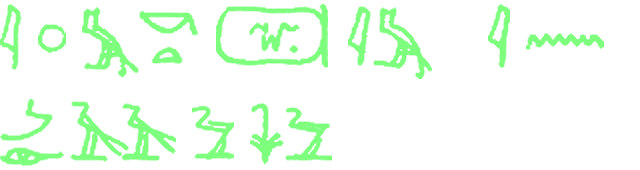
jḫ mki̯.t Wnjs jm jn mꜣꜣ.w sw
Oh, may Unas be protected there by those who see him!
- 38
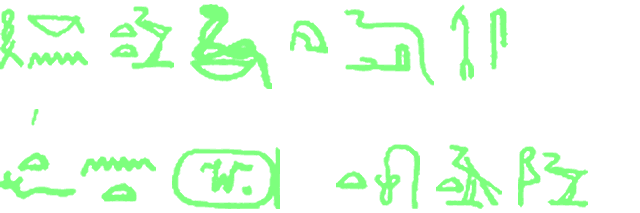
ḥkn,wtt tp ḏꜥ(m) =s Tfn,t Wnjs twꜣ.t Šw
The Hekenutet is upon her djam-sceptre; Unas's Tefnut, she who holds up Shu,
Note · Line 38
Hekenutet is a goddess whose name may mean “She who is praised.” - 39
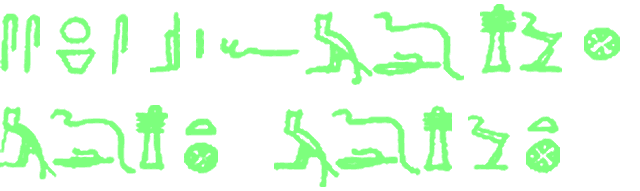
ssḫ =s s,t =f m Ḏd,w m Ḏd,t m Ḏd,wt
widens his seat in Djedu, in Djedet, in Djedut;
Note · Line 39
The three places chime in Egyptian: Djedu is Busiris, the town of Osiris; Djedet is Mendes in the Delta; Djedut is the necropolis of Heliopolis. - 40
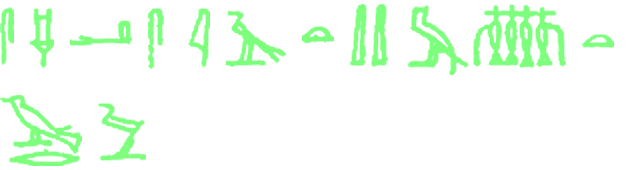
sꜥḥꜥ =s jꜣ,t.du m-ḫnt wr.w
she sets up the two standards at the head of the Great Ones;
Note · Line 40
Standards were poles bearing the emblems of gods, carried in procession. - 41
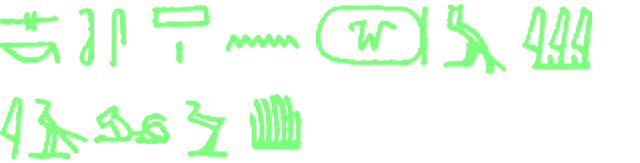
zk =s šj n Wnjs m sḫ,t-jꜣr,w
she digs a pool for Unas in the Field of Reeds;
Note · Line 41
The Field of Reeds is the watery paradise of the afterlife. - 42
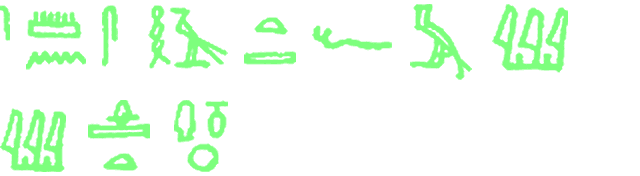
smn =s ꜣḥ,t =f m sḫ,t.du-ḥtp
she makes his field endure in the two Fields of Offerings.
- 43
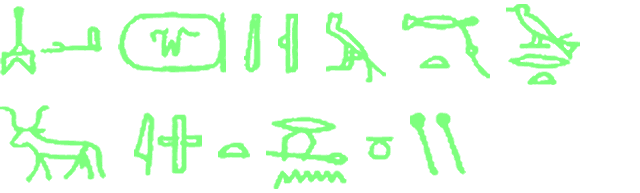
wḏꜥ+ Wnjs +mdw m Mḥ,t-wr,t jm(,w)t(j) ẖn(n).wdu
Unas judges in the Great Flood between the two contenders.
Note · Line 43
The Great Flood (Mehet-weret) is the primeval water, also a cow goddess of the sky. The two contenders are Horus and Seth, whose quarrel over the kingship had to be settled by judgment. - 44
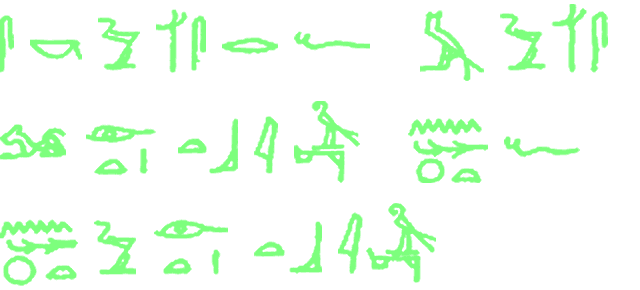
sk wsr =f m wsr,w jr,t Tbj nḫt =f nḫt,w jr,t Tbj
For his power is the power of the Eye of Tebi, his strength the strength of the Eye of Tebi.
Note · Line 44
Tebi is an obscure god known from very few texts. - 45
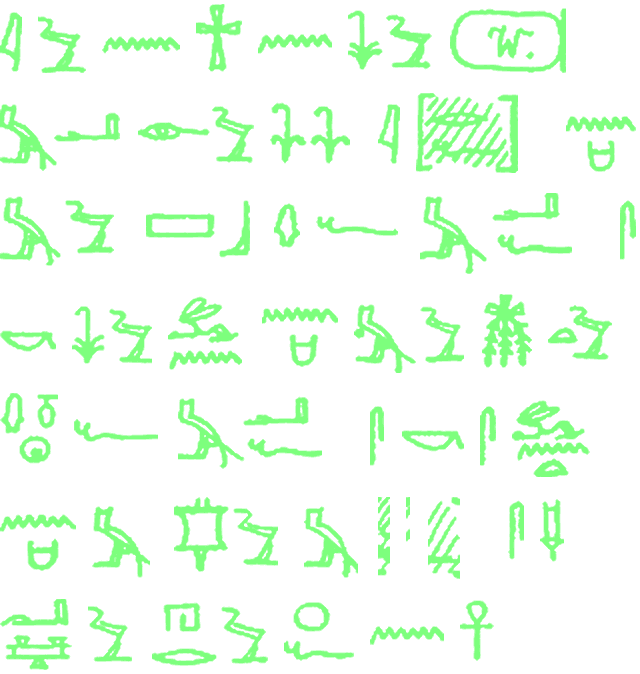
jw nḏ.n sw Wnjs m-ꜥ jri̯.w nn j[r] =[f] nḥm.w šb(,w) =f m-ꜥ =f sk sw wn nḥm.w ms,wt =f m-ꜥ =f sk s(j) wn.t(j) nḥm.w ṯꜣw m [fnḏ] =[f] sꜥḥꜥ hrw(,w) =f n(,j) ꜥnḫ
Unas has saved himself from those who would do this to him: who would snatch his meal from him while it was there, who would snatch his supper from him while it was there, who would snatch the breath from his nose, who would make his day of life stand still.
- 46
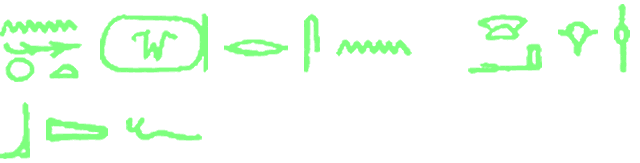
nḫt Wnjs r =sn ḫꜥi̯ ḥr wḏb =f
Unas is stronger than they, risen in glory upon his riverbank.
- 47

j:ḫr ḥꜣ,t(j).pl =sn n ḏbꜥ.pl =f
Their hearts fall to his fingers;
- 48

bsk.pl =sn n [jr(,j).w] [p,t]
their entrails go to those of the sky;
Note · Line 48
The enemies’ bodies are handed over as prey to the beings of the sky. - 49

dšr,w =sn n jr(,j).w tꜣ
Their blood goes to those who belong to the earth.
Note · Line 49
“They” are the king’s enemies, whose doom this passage lists. Their blood is poured out for the earth and the powers of the ground. - 50
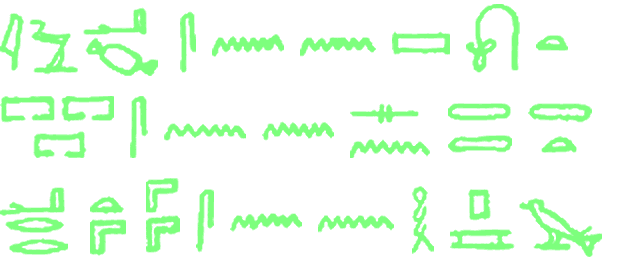
jwꜥ(,w)〈.pl〉 =sn n šwꜣ,t pr.pl =sn n zn(zn),t ꜥrr,t.pl =sn n ḥ(ꜥ)p(j) wr
Their heirs go to want, their houses to the fire, their halls to the great flood.
Note · Line 50
The “great flood” is Hapi, the Nile’s yearly flood, imagined here as a force that sweeps away the enemies’ buildings. - 51

nḏm jb n(,j) Wnjs [zp] [2]
Glad is the heart of Unas! (Twice.)
Note · Line 51
The Egyptian writes the sentence once and marks it “twice”, meaning it is to be said again. - 52

Wnjs pw wꜥ(,w) kꜣ n(,j) p,t
Unas is the One, the Bull of the sky.
Note · Line 52
The bull was the standard image of a king’s strength and fertility. As “the Bull of the sky” the dead king takes this power to the heavens. - 53

jw dr.n =f jri̯.w nn jr =f
He has driven off those who would have done this to him.
- 54

jw ḥtm.n =f tp(,j).w+ =sn +tꜣ
He has wiped out those they left on earth.
Note · Line 54
The enemies’ survivors, their descendants still living, are destroyed along with them, so that no one remains to carry on their name. - 55
ḫr =f šdi̯ =f ṯzi̯ =f [nn] [rḏi̯.n] [n] =[f] jt(j) =f Šw r-gs Stẖ
… what he has taken and raised up, this which his father Shu gave him at the side of Seth.
Note · Line 55
The first word of this line is obscure.