~/sacred-texts/pyramid-texts
Pyramid Texts Utterance 222: The Dead King Joins the Sun
- Text
- Pyramid Texts, Utterance 222
- Date
- Carved in the 5th Dynasty, in the reign of Unas (c. 2375–2345 BC), on the walls of the burial chamber of his pyramid at Saqqara
- Found
- Pyramid of Unas, Saqqara; still in place
- Language
- Egyptian (Old Egyptian) · Hieroglyphic
A priest speaks to the dead king Unas. He stands him on the first land, the spittle that came forth from Khepri, and then calls the sun-god by one name after another: he has come to you, Great Wild Bull. Unas takes on Seth of the south and Horus of the north, sheds his impurity and climbs: May you go up and open your way through the bones of Shu.
He sinks and rises with the sun in its night and day boats. You were born for Horus, you were conceived for Seth. At the end the priest turns to the creator himself: Atum, raise this Unas up to you, enfold him in your arms.
- 1

ḏ(d)-mdw
Words to be spoken:
- 2
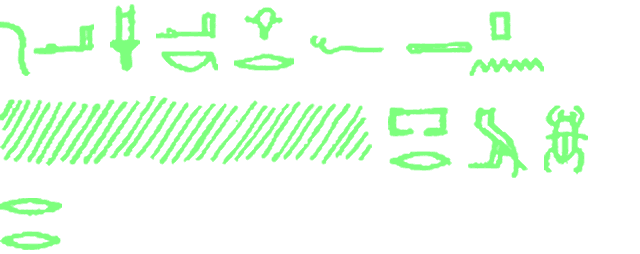
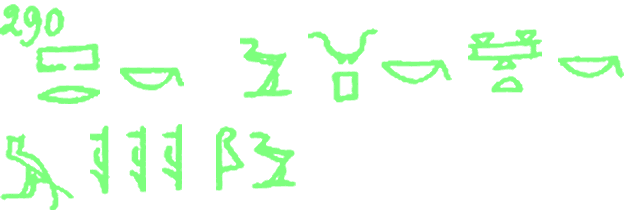
ꜥḥꜥ =k ḥr =f tꜣ pn [pri̯] [m] [(J)tm(,w)] [nšš] pri̯ m Ḫprr
Stand upon it, this land that came forth from Atum, the spittle that came forth from Khepri.
Note · Line 2
The dead king, Unas, is addressed. - 3
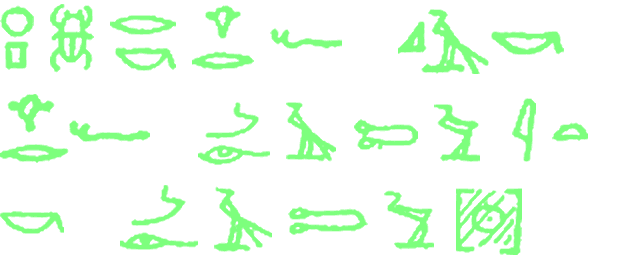
ḫpr =k ḥr =f qꜣi̯ =k ḥr =f mꜣ ṯw jt(j) =k mꜣ ṯw [Rꜥw]
Come into being upon it, rise high upon it, that your father may see you, that Ra may see you.
Note · Line 3
“Come into being” (ḫpr) is the verb inside Khepri’s name. Unas is to take shape on the land just as the creator did. - 4
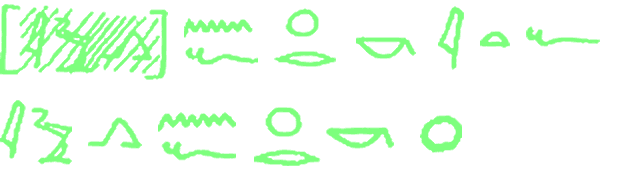
[jwi̯].n =f ḫr =k jt(j) =f jwi̯.n =f ḫr =k Rꜥw
He has come to you, his father; he has come to you, Ra.
Note · Line 4
The speaker now turns to the sun-god and calls him by one name after another. “He” is Unas. - 5
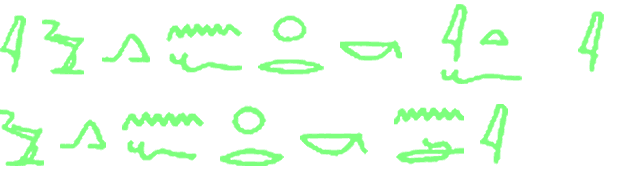
jwi̯.n =f ḫr =k jt(j) =f jwi̯.n =f ḫr =k Ndj
He has come to you, his father; he has come to you, Nedi.
- 6
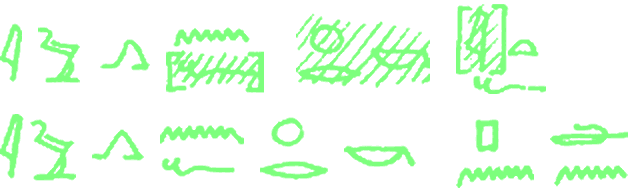
jwi̯.n =[f] [ḫr] =[k] [j]t(j) =f jwi̯.n =f ḫr =k Pndn
He has come to you, his father; he has come to you, Penden.
- 7
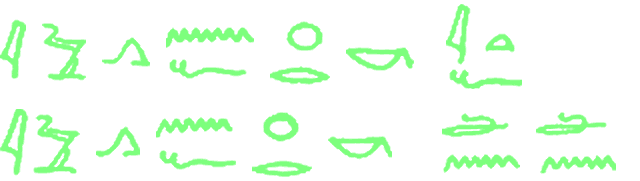
jwi̯.n =f ḫr =k jt(j) =f jwi̯.n =f ḫr =k Dndn
He has come to you, his father; he has come to you, Denden.
- 8
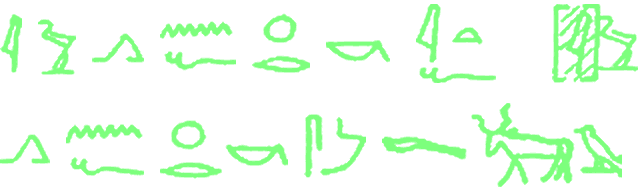
jwi̯.n =f ḫr =k jt(j) =f [j]wi̯.n =f ḫr =k smꜣ-wr
He has come to you, his father; he has come to you, Great Wild Bull.
- 9
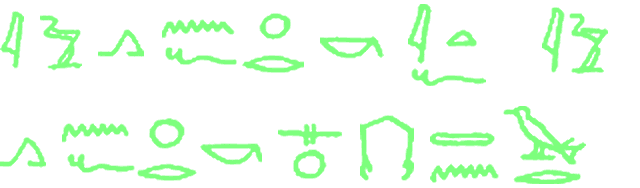
jwi̯.n =f ḫr =k jt(j) =f jwi̯.n =f ḫr =k zḫn-wr
He has come to you, his father; he has come to you, Sekhenwer.
- 10
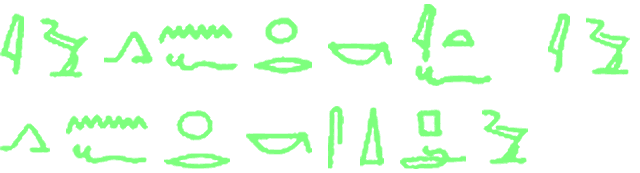
jwi̯.n =f ḫr =k jt(j) =f jwi̯.n =f ḫr =k Spd,w
He has come to you, his father; he has come to you, Sopdu.
Note · Line 10
Sopdu was a god of the eastern frontier. His name means “the Sharp One.” - 11
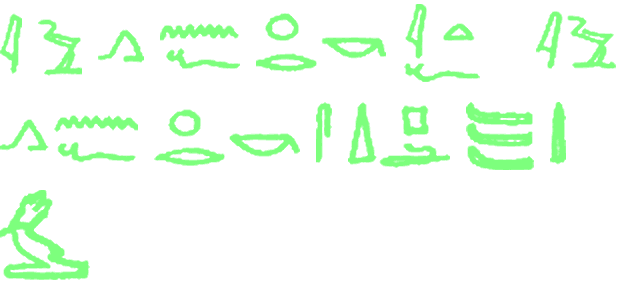
jwi̯.n =f ḫr =k jt(j) =f jwi̯.n =f ḫr =k spd-jbḥ.pl
He has come to you, his father; he has come to you, Sharp of Tooth.
Note · Line 11
This epithet repeats the root spd, “sharp,” in Sopdu’s name: the Sharp One is sharp of tooth. - 12
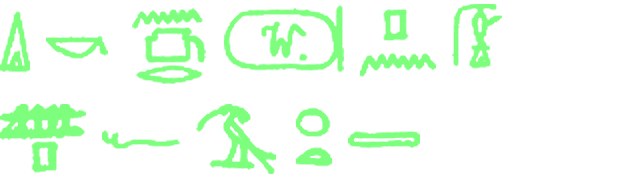
ḏi̯ =k nḏri̯ Wnjs pn qbḥ(,w) šzp =f ꜣḫ,t
Grant that this Unas grasp the cool waters of the sky and take hold of the horizon.
Note · Line 12
The “cool waters” (qbḥw) are the watery expanse of the sky. The horizon (akhet) is the place of light where the sun rises. - 13
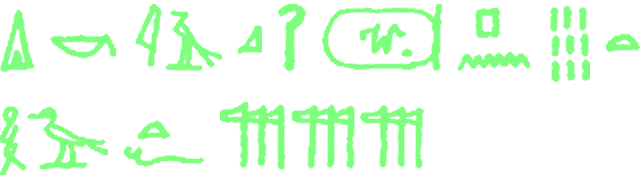
ḏi̯ =k jꜣq Wnjs pn 9,t ḥt(m) =f psḏ,t
Grant that this Unas rule the Nine Bows and complete the Nine Gods.
Note · Line 13
The Nine Bows are the traditional enemies of Egypt. - 14
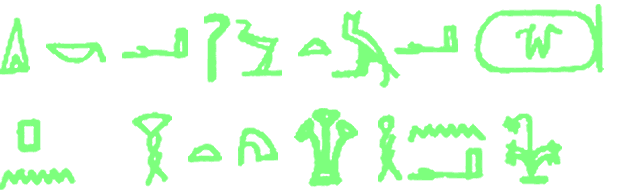
ḏi̯ =k ꜥw,t m ꜥ Wnjs pn wꜣḥ.t tp mḥ,w ḥnꜥ šmꜥ,w
Put the crook into the hand of this Unas, the crook that bows the head of Lower and Upper Egypt.
Note · Line 14
The crook, a shepherd’s staff, was a sceptre of kingship. - 15
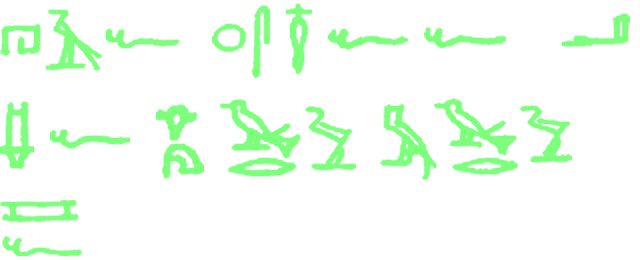
hꜣi̯ =f ḫsf =f ꜥḥꜥ =f ḥr(,j)-tp wr,w m wr,w =f
Let him fall, his enemy; let him stand, the chief, the Great One in his great waters.
Note · Line 15
The Egyptian puns on wr. w, “great one,” and wr. w, “great waters.” - 16
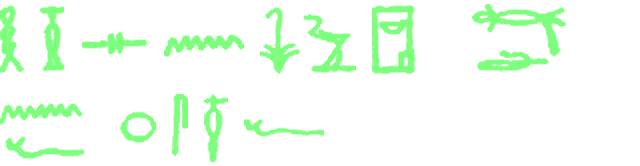
ḥzi̯.n sw Nb(,t)-ḥw(,t) šdi̯.n =f ḫsf
Nephthys has praised him, for he has seized the enemy:
Note · Line 16
The spell continues beyond this point. - 17
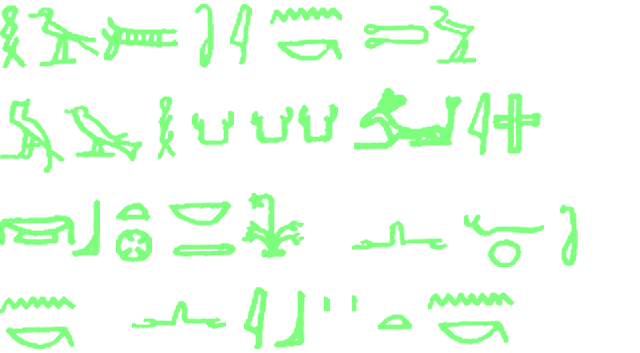
ḥtm.{tj}n =k ṯw m wr-ḥkꜣ(,w) Stẖ jm(,j) Nb(w),t nb tꜣ-smꜥ(,w) n fḫ.tj n =k n j(ꜣ)b.t n =k
You have equipped yourself as Great-of-Magic, as Seth who dwells in Ombos, lord of Upper Egypt: nothing is lost to you, nothing is lacking to you.
Note · Line 17
A priest is speaking to the dead king. - 18
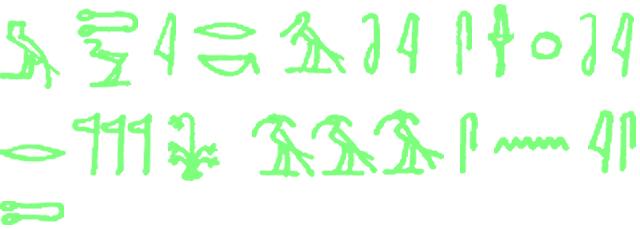
m ṯw jr =k bꜣ.tj sḫm.tj r nṯr.pl šmꜥ(,w) ꜣḫ.pl =sn jsṯ
See, you are more a ba and more mighty than the gods of Upper Egypt and their spirits.
- 19
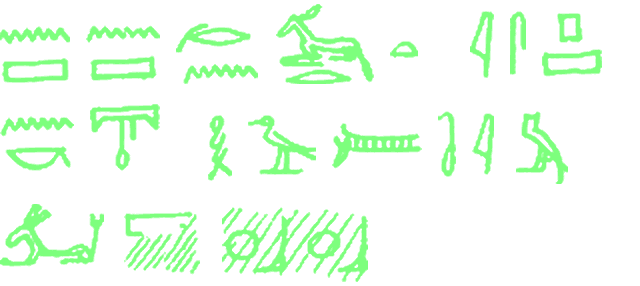
nšnš.n jwr,t j:spš.n =k grḥ ḥtm.tj m Stẖ ⸢š⸣[bšb]
The pregnant one has spewed you out, and you have lit up the night, equipped as Seth who bursts forth.
- 20

⸢wꜣ⸣ḏ =wj ḥzi̯.n (Ꜣ)s,t
How he flourishes, the one whom Isis has favoured:
Note · Line 20
The Egyptian word for “flourish” also means “be green”, like a thriving plant. The king now passes from Seth to Horus, the son of Isis. - 21
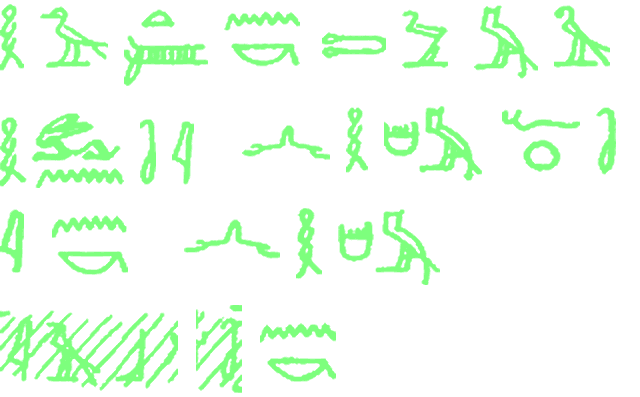
ḥtm.n =k ṯw m Ḥr(,w)-ḥwn,tj n ḥm fḫ.tj n =k n ḥm [jꜣb.tj] n =k
you have equipped yourself as Horus the Youthful: truly nothing is lost to you, truly nothing is lacking to you.
Note · Line 21
“Horus the Youthful” renders the name Horus-Hewenti, from a word meaning “young”. - 22
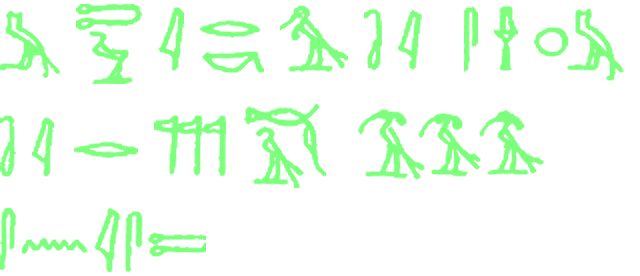
m ṯw jr =k bꜣ.tj sḫm.tj r nṯr.pl mḥ,t(j).w ꜣḫ.pl =sn jsṯ
See, you are more a ba and more mighty than the gods of the North and their spirits.
Note · Line 22
Seth stood for the south and Horus for the north. By taking on both gods, the king masters the whole land. - 23
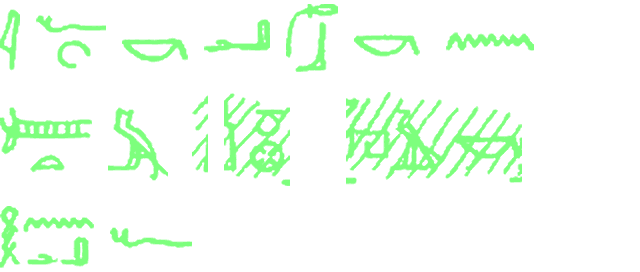
j:fḫ =k ꜥb(,w) =k n (J)tm(,w) m [Jwn,w] [hꜣi̯] =[k] ḥnꜥ =f
May you shake loose your impurity for Atum in Heliopolis, and go down with him.
Note · Line 23
Atum was the creator god of Heliopolis, and the setting sun was one of his forms. The king sheds the pollution of death and goes down with him into the west. - 24
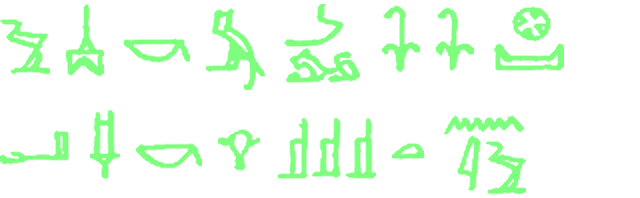
wḏꜥ =k mꜣr.w nn,t ꜥḥꜥ =k ḥr s,t.pl nj,w
May you sever the bonds of the Lower Sky, and stand upon the seats of Nun.
Note · Line 24
The Lower Sky (Nenet) is the counter-sky beneath the earth, through which the sun travels at night. Nun is the primeval water out of which everything arose. - 25

ḫpr =k ḥnꜥ jt(j) =k (J)tm(,w)
May you come into being with your father Atum.
- 26

qꜣi̯ =k ḥnꜥ j[t(j)] =[k] [(J)tm(,w)]
May you be high with your father Atum.
- 27
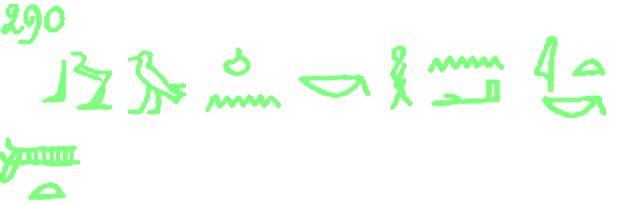
wbn =k ḥnꜥ jt(j) =k (J)tm(,w)
May you rise with your father Atum.
- 28

j:fḫ n =k mꜣr.w
Loose the bonds for yourself.
- 29

tp =k n rpw,t jwn.t
Your head to the Reput of Heliopolis!
Note · Line 29
The Reput (rpwt) is a female figure, perhaps a goddess or a cult image. The exact sense of the line is uncertain. - 30
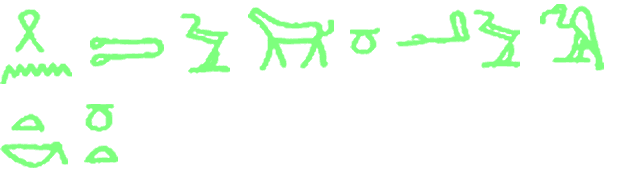
pri̯ =k wpi̯ =k wꜣ,t =k m qs.pl Šw
May you go up and open your way through the bones of Shu.
Note · Line 30
Shu is the god of air, who holds the sky up off the earth. The king climbs through Shu’s body to reach the sky. - 31
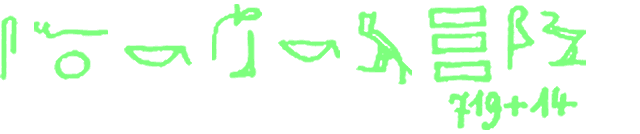
šni̯ ṯw ẖnw-ꜥ.w mʾ(w),t =k Nw,t
May the arms of your mother Nut enfold you.
Note · Line 31
Nut is the sky goddess, who gives birth each morning to the sun and to the dead king. - 32

wꜥb =k m ꜣḫ,t
May you be made pure in the horizon.
- 33
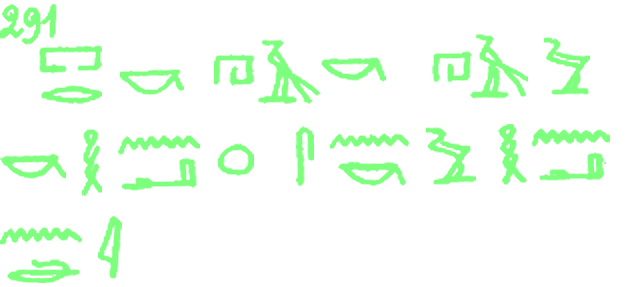
sfḫ =k ꜥb(,w) =k m šj.pl Šw
May you loosen your impurity in the lakes of Shu.
Note · Line 33
The priest speaks to the dead king, Unas. - 34
pri̯ =k hꜣi̯ =k hꜣi̯.w =k ḥnꜥ Rꜥw snk,w(j) ḥnꜥ Ndj
You go up and you come down;
you come down with Ra,
darkened beside Nedi.Note · Line 34
The king is to share the sun’s daily round of setting and rising. - 35
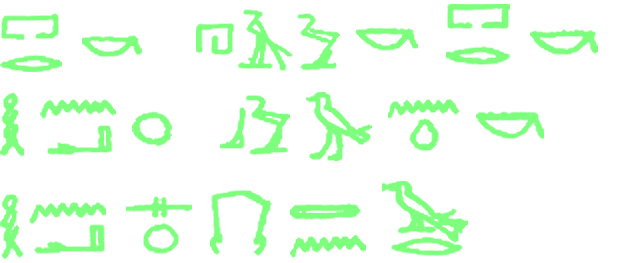
pri̯ =k hꜣi̯.w =k pri̯ =k ḥnꜥ Rꜥw wbn =k ḥnꜥ zḫn-wr
You come down and you go up;
you go up with Ra,
you rise with the Great Embracer.Note · Line 35
“The Great Embracer” (Sekhenwer) is a little-known god of the sunrise. The name is only a guess at its meaning. - 36
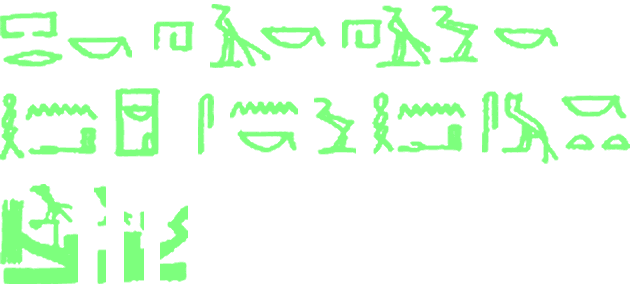
pri̯ =k hꜣi̯ =k hꜣi̯.w =k ḥnꜥ Nb(,t)-ḥw(,t) snk,w(j) ḥnꜥ msk,tt
You go up and you come down;
you come down with Nephthys,
darkened beside the Night Bark.Note · Line 36
The sun crosses the sky by boat: the Night Bark (Mesketet) carries it into the evening and the dark, and the Day Bark (Mandjet) carries it out at dawn. - 37
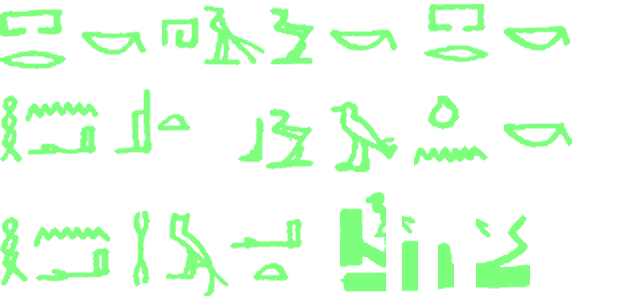
pri̯ =k hꜣi̯.w =k pri̯ =k ḥnꜥ (Ꜣ)s,t wbn =k ḥnꜥ mꜥnḏ,t
You come down and you go up;
you go up with Isis,
you rise with the Day Bark. - 38
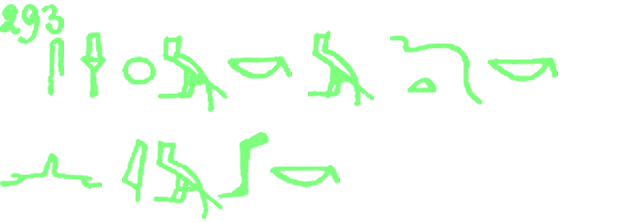
sḫm =k m ḏ,t =k n jm(,j)-rd =k
May you have power over your body,
with no adversary against you. - 39
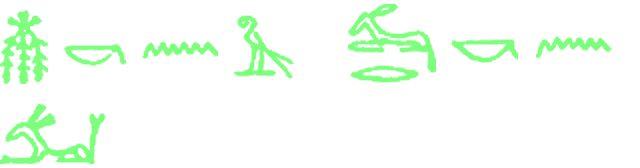
msi̯ =k n Ḥr(,w) jwr =k n Stẖ
You were born for Horus,
you were conceived for Seth.Note · Line 39
Horus and Seth are the rival gods who between them stand for the whole of kingship. - 40
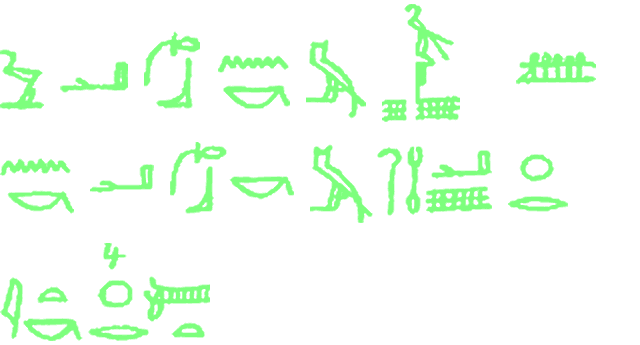
wꜥb.n =k m Jmn,tt šzp.n =k ꜥb(,w) =k m ḥqꜣ-ꜥnḏ ḫr jt(j) =k ḫr (J)tm(,w)
You have been made pure in the Western nome,
you have received your purification in the nome of Heqa-andj,
beside your father, beside Atum.Note · Line 40
The Western nome and Heqa-andj (“the Ruler Is Hale”) are provinces of the Nile Delta. Heqa-andj is the province of Heliopolis, the city of Atum, the creator and father of the gods. - 41
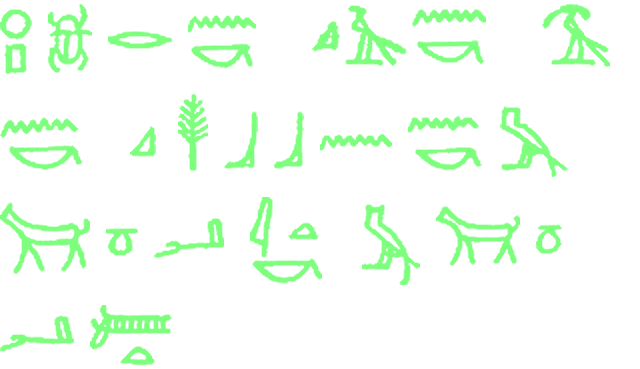
ḫpr.n =k qꜣi̯.n =k ꜣḫ.n =k qbb.n{n} =k m-ẖnw ꜥ.du jt(j) =k m-ẖnw ꜥ.du (J)tm(,w)
You have come into being, you have grown tall,
you have become an akh, you have grown cool,
in the arms of your father, in the arms of Atum.Note · Line 41
An akh is the transfigured, effective spirit of the blessed dead. “Growing cool” means refreshment and calm after the heat of death and decay. - 42
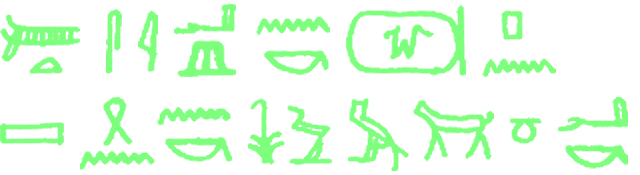
(J)tm(,w) sjꜥ n =k Wnjs pn šni̯ n =k sw m-ẖnw ꜥ.du =k
Atum, raise this Unas up to you,
enfold him in your arms.Note · Line 42
The speaker now turns from the king to the god himself. - 43
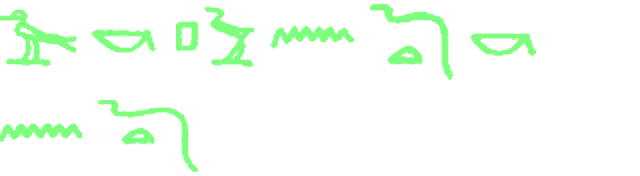
zꜣ =k pw n(,j) ḏ,t =k n ḏ,t
He is your son, of your body, for ever.