~/sacred-texts/pyramid-texts
Pyramid Texts Utterance 688: A Rope Ladder to the Sky
- Text
- Pyramid Texts, Utterance 688
- Date
- Carved in the 6th Dynasty, in the reign of Pepi II (c. 2278–2184 BC), on the walls of his pyramid at Saqqara
- Found
- Pyramid of Pepi II, South Saqqara
- Language
- Old Egyptian · Hieroglyphic
- 1

ḏ(d)-mdw
Recitation:
- 2
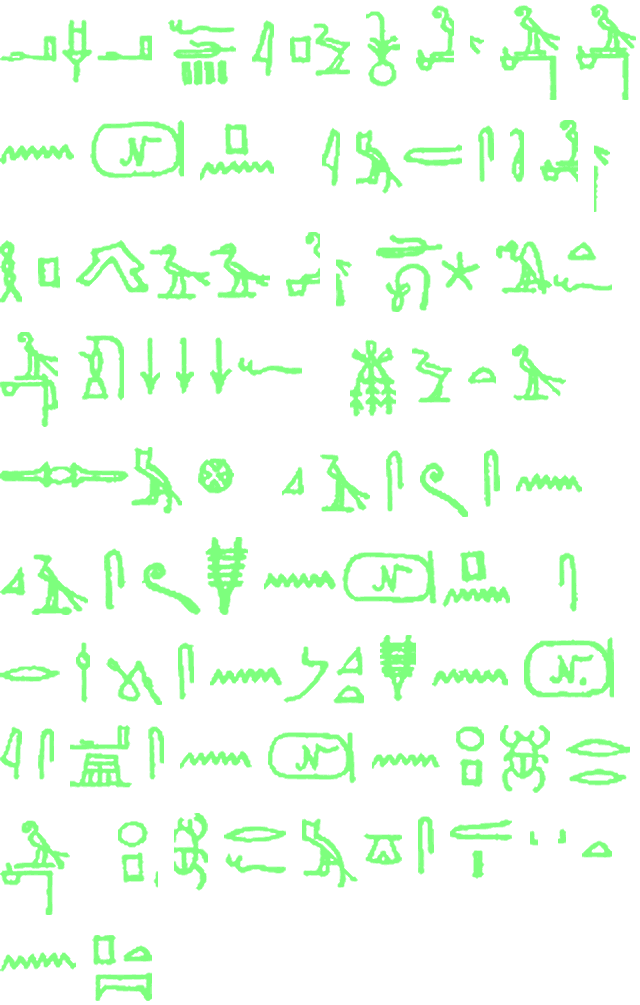
ꜥḥꜥ fd jpw (j)r(,j)-(j)ḫ(,t)-nzw.pl n Ppy Nfr-kꜣ-Rꜥw pn Jms,tj Ḥp(,y) Dwꜣ-mʾw,t≡f Qbḥ-sn,w≡f msw,t Ḥr,w Ḫm qꜣs =sn qꜣs n Ppy Nfr-kꜣ-Rꜥw pn srwḏ =sn mꜣq,t n Ppy Nfr-kꜣ-Rꜥw j:sꜥ =sn Ppy Nfr-kꜣ-Rꜥw n Ḫprr ḫpr =f m gs jꜣb,tj n(,j) p,t
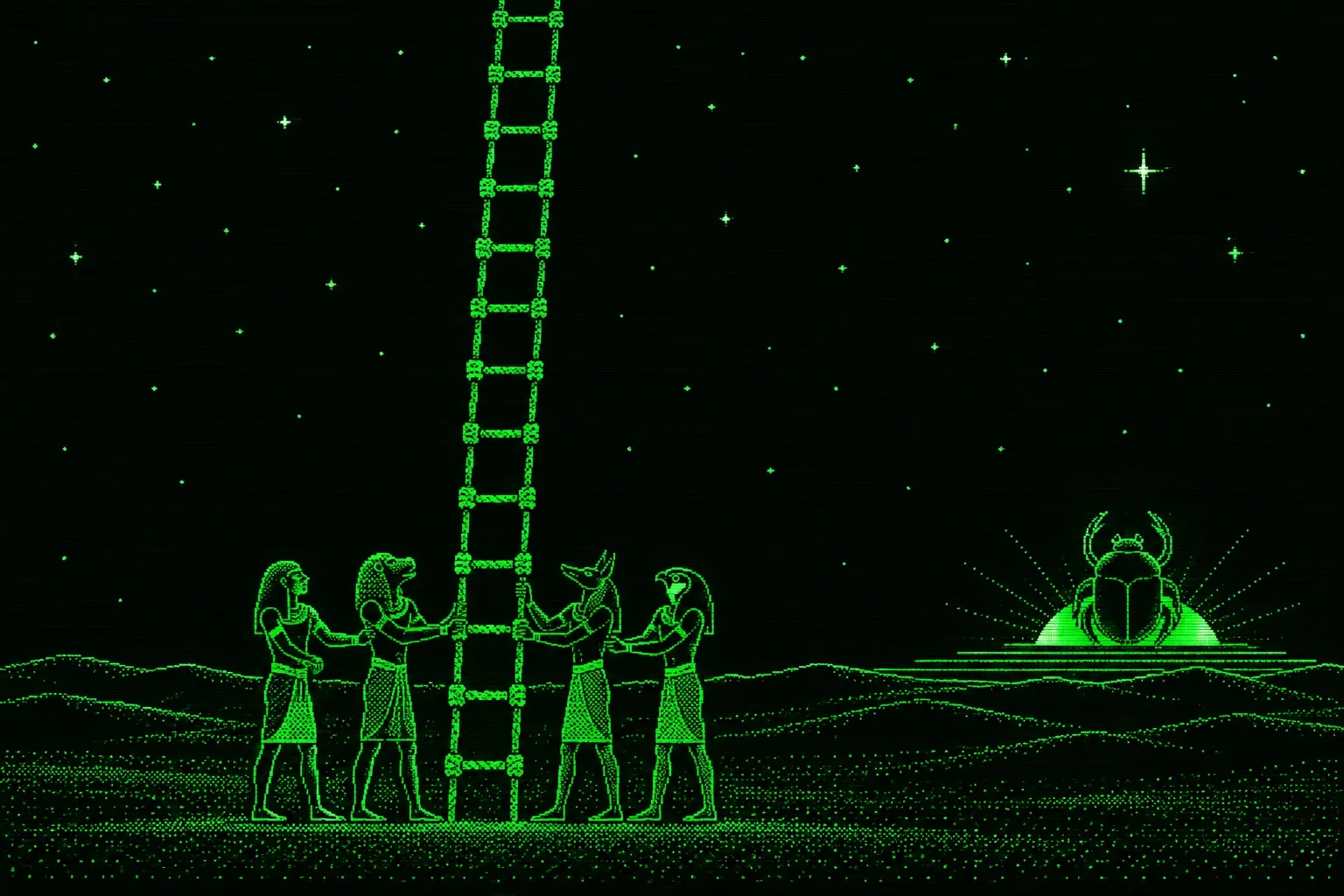
These four Keepers of the King's Property stand up for this Pepi Neferkare:
Imsety, Hapy, Duamutef, Qebehsenuef, the offspring of Horus of Letopolis,
to knot the knotted ladder for this Pepi Neferkare,
to make fast a ladder for Pepi Neferkare,
and to lift Pepi Neferkare up to Khepri the Becoming One, as he becomes on the eastern side of the sky.Note · Line 2
The four sons of Horus usually guard the dead king’s inner organs. - 3
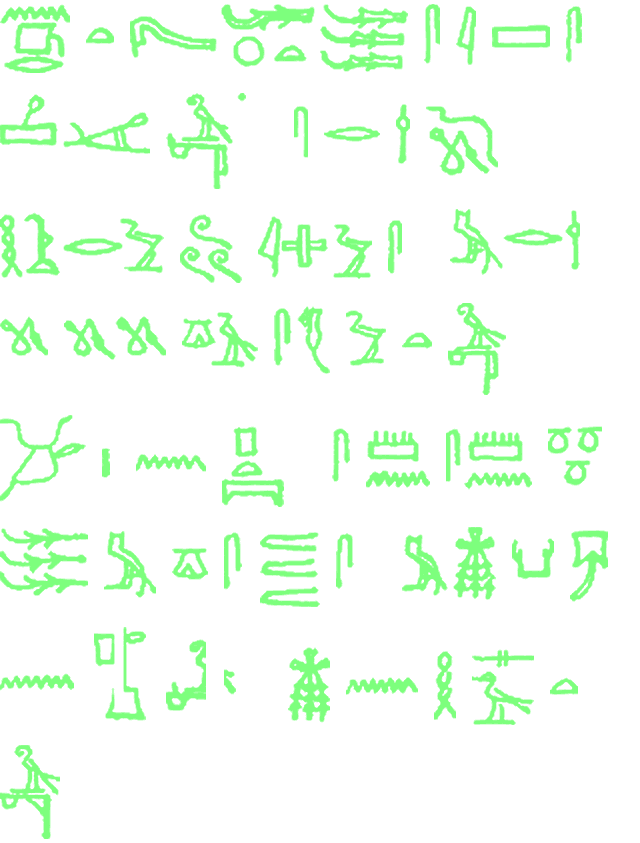
nḏr.t ḫt.pl =s j〈n〉 Šsꜣ srwḏ ḥtr.w jm(,j).w =s m rwḏ.pl Gꜣs,wt(j) kꜣ n(,j) p,t smn smn,w.pl =s m gs.pl =s m mskꜣ n(,j) jm(,j)-wt msi̯.n Ḥzꜣ,t di̯.y wṯz-wr ẖr =s jn Spḥ-Wr,t
Its timbers have been hewn by Shesa;
the ropes on it have been made fast with the sinews of Gasuti, the Bull of the Sky;
its rungs have been set firm upon its sides with the hide of the Imiut whom Hesat bore;
and the Great Prop has been placed beneath it by Sepeh-weret.Note · Line 3
The ladder is built from divine parts. - 4
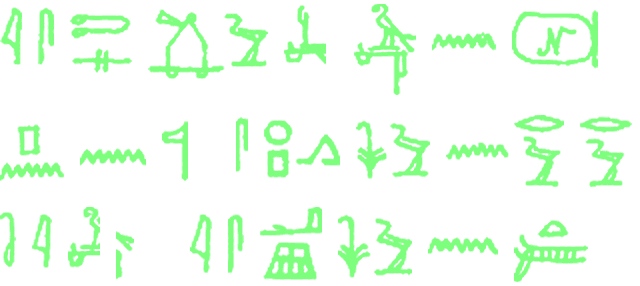
js ṯzi̯.w kꜣ n(,j) Ppy Nfr-kꜣ-Rꜥw pn n nṯr sḫpi̯ sw n Rw,tj sjꜥ sw n (J)tm(,w)
For the ka of this Pepi Neferkare shall be raised up to the god who leads him to Ruty, who lifts him up to Atum.
Note · Line 4
The ka is a person’s life-force, which lives on after death. Ruty, “the Two Lions”, is a twin-lion god linked with Atum, the creator. - 5
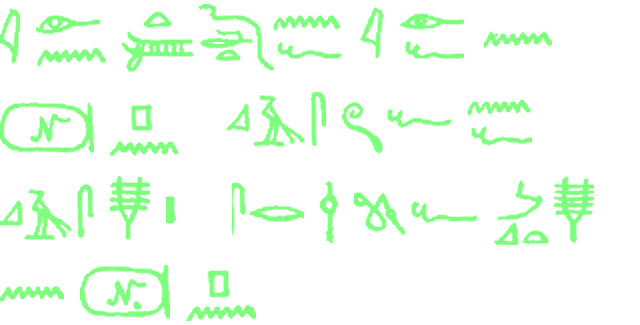
jri̯.n (J)tm(,w) ḏd.t.n =f jri̯ =f n Ppy Nfr-kꜣ-Rꜥw pn qꜣs =f n =f qꜣs srwḏ =f mꜣq,t n Ppy Nfr-kꜣ-Rꜥw pn
Atum has done what he said he would do for this Pepi Neferkare:
knot the knotted ladder for him and make fast the ladder for this Pepi Neferkare. - 6
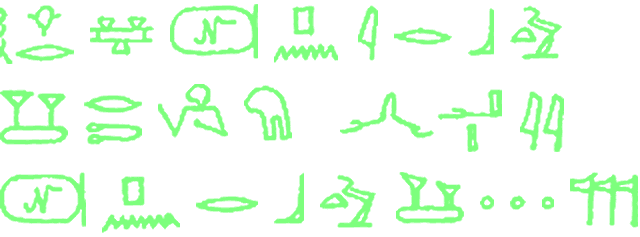
ḥri̯ Ppy Nfr-kꜣ-Rꜥw pn jr bw,t r(m)ṯ.pl n ꜥ.y Ppy Nfr-kꜣ-Rꜥw pn r bw,t nṯr.pl
This Pepi Neferkare keeps far from what is abomination to men;
the arms of this Pepi Neferkare do not reach for what is abomination to gods. - 7
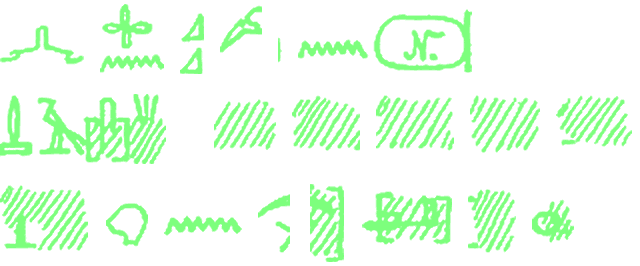
n wnm.n Ppy Nfr-kꜣ-Rꜥw ḏꜣs [n] [wšꜥ.n] =[f] [b]⸢ḏꜣ⸣ tp n(,j) ꜣbd
Pepi Neferkare does not eat the djais plant;
he does not chew bedja at the head of the month.Note · Line 7
The king proves his purity by listing foods he avoids. - 8
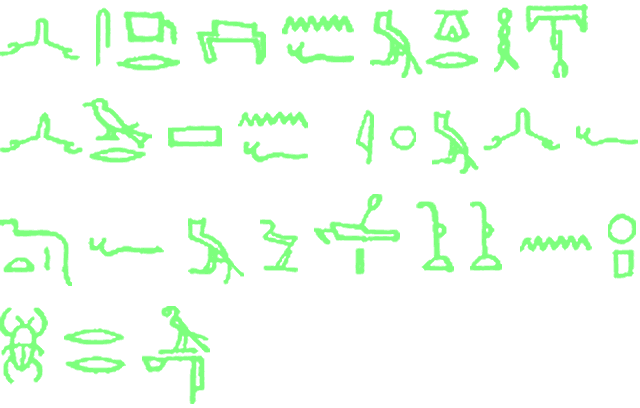
n sḏr.n =f m grḥ n wrš.n =f j:ḫm =f ḏ,t =f m wꜥ tr.du n(,j) Ḫprr
He does not lie down at night,
nor pass the day senseless of his own body, at either of Khepri's two times. - 9
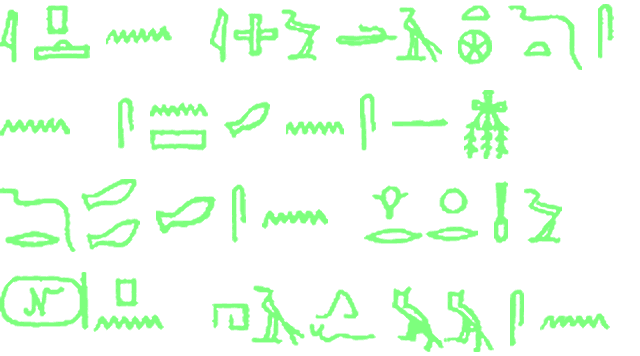
jp.n jm(,j).w d(w)ꜣ,t ḏ,t =sn snš.n =sn msḏr.pl =sn ḥr ḫrw Ppy Nfr-kꜣ-Rꜥw pn hꜣi̯ =f mm =sn
Those in the Duat have taken stock of their bodies
and opened their ears at the sound of this Pepi Neferkare as he goes down among them.Note · Line 9
The Duat is the realm of the dead, here part of the sky. “Counting one’s body” is an idiom for coming back to one’s senses. The dead stir and listen as the king arrives. - 10
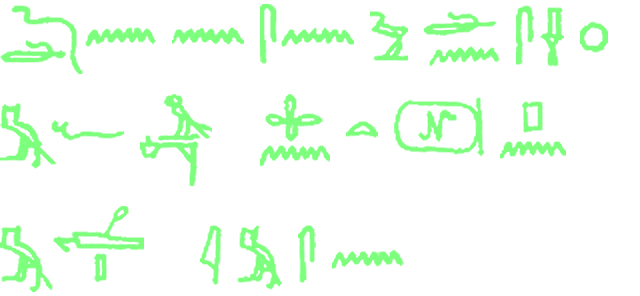
ḏd.n n =sn Wdn-sḫm≡f wn.t Ppy Nfr-kꜣ-Rꜥw pn m wꜥ jm =sn
He Whose Power Weighs Heavy has told them that this Pepi Neferkare is one of them.
- 11
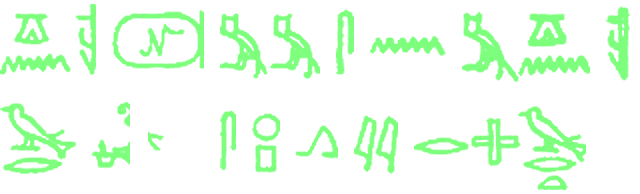
gn Ppy Nfr-kꜣ-Rꜥw mm =sn m Gn-wr sḫpi̯.y r jm(,j)-wr,t
Pepi Neferkare is honoured among them as the Great Honoured One, brought to the starboard side.
Note · Line 11
The Egyptian plays on gn, “to be honoured”, and the divine title Gen-wer, “the Great Honoured One”. - 12
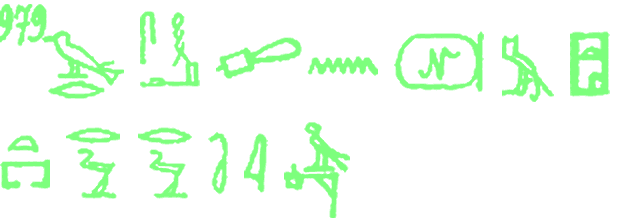
wr sꜥḥ n(,j) Ppy Nfr-kꜣ-Rꜥw m ḥw,t Rw,tj
Great is the dignity of Pepi Neferkare in the Mansion of Ruty.
- 13
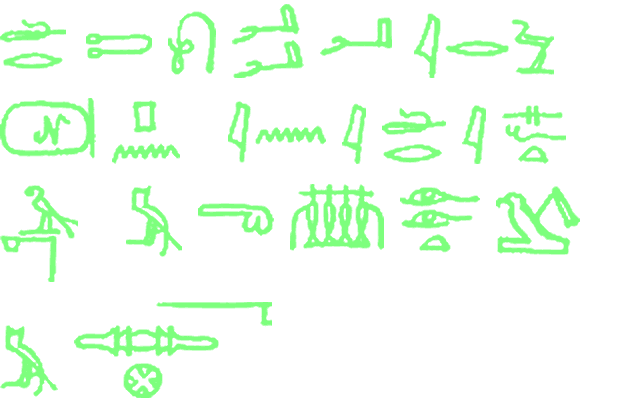
dr ṯwꜣ.pl jr(,j).w Ppy Nfr-kꜣ-Rꜥw pn jn J:dr-jzf,t m-bꜣḥ Ḫnt(,j)-jr,tdu m Ḫm
The harms that clung to this Pepi Neferkare have been removed by the Remover of Wrong, in the presence of Khenty-irty in Letopolis.