~/sacred-texts/pyramid-texts
Pyramid Texts 685: Pepi II Washed in Water from Shu’s Penis
- Text
- Pyramid Texts, Utterance 685
- Date
- Carved in the 6th Dynasty, under Pepi II (c. 2278–2184 BC), on the north wall of the burial chamber of his pyramid at Saqqara
- Found
- Pyramid of Pepi II, South Saqqara; still on the wall where it was carved
- Language
- Old Egyptian · Hieroglyphic
- 1
ḏ(d)-mdw
Recitation.
- 2
jyi̯ mw ꜥnḫ jm(,j).w p,t jyi̯ mw ꜥnḫ jm(,j).w tꜣ
Here come the waters of life that are in the sky,
here come the waters of life that are in the earth.Note · Line 2
These are the “waters of life” that revive the dead king, rising from the sky and from the earth together. Egyptians tied such waters to the yearly flood of the Nile. - 3
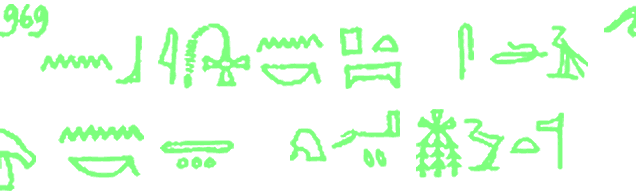
nbj n =k p,t sdꜣ n =k tꜣ tp-ꜥ,du msw,t nṯr
The sky burns for you, the earth quakes for you,
before the birth of the god. - 4
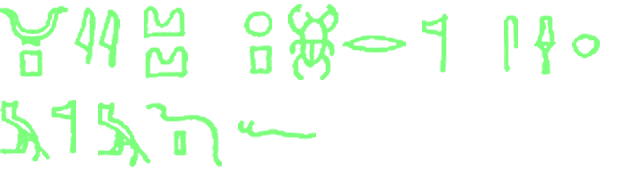
wpi̯.y ḏw.du ḫpr nṯr sḫm nṯr m ḏ,t =f
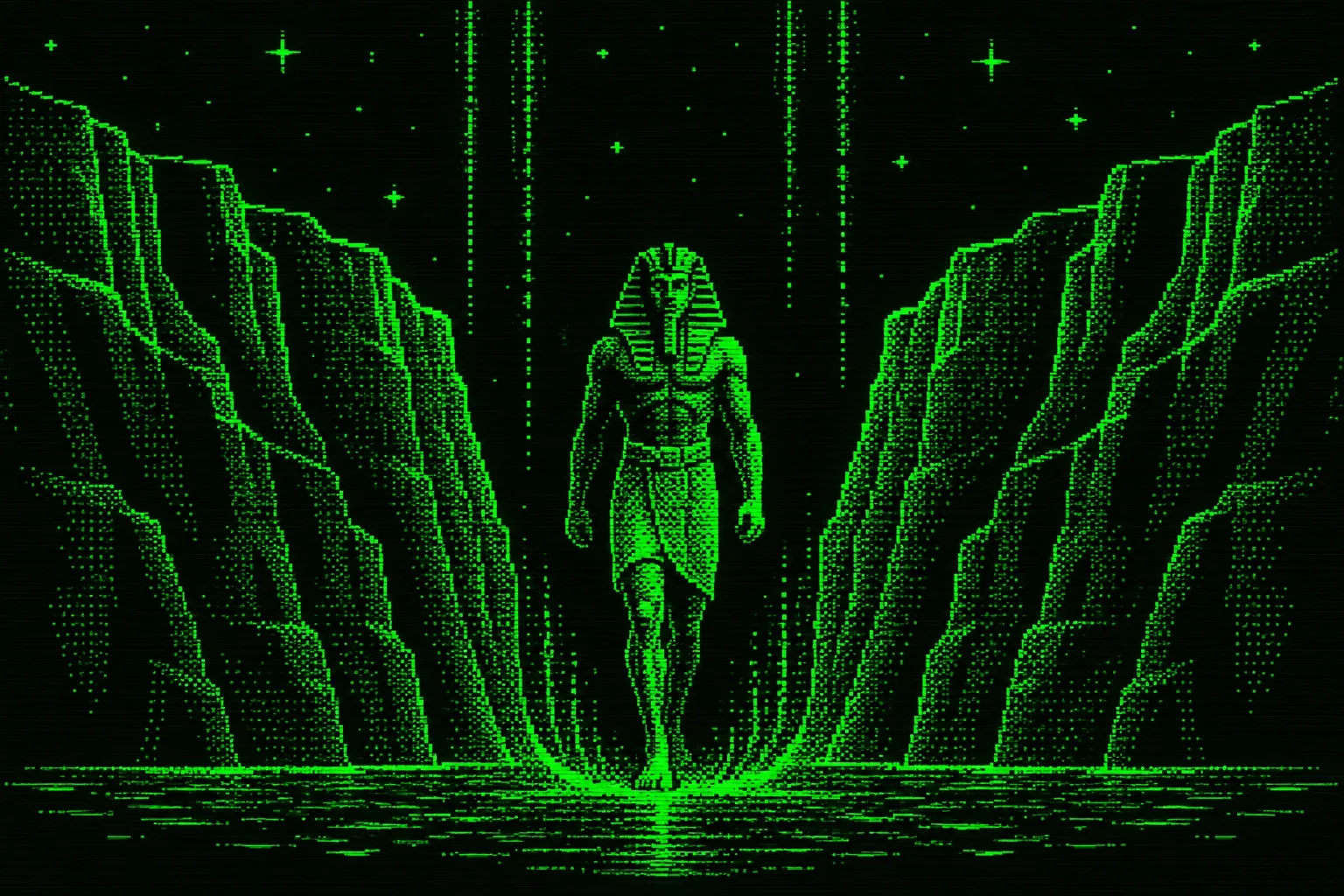
The two mountains are parted:
the god comes into being, the god takes command of his body.Note · Line 4
The two mountains are the cliffs on either side of the Nile valley. They open like a womb, and the god is born between them. - 5
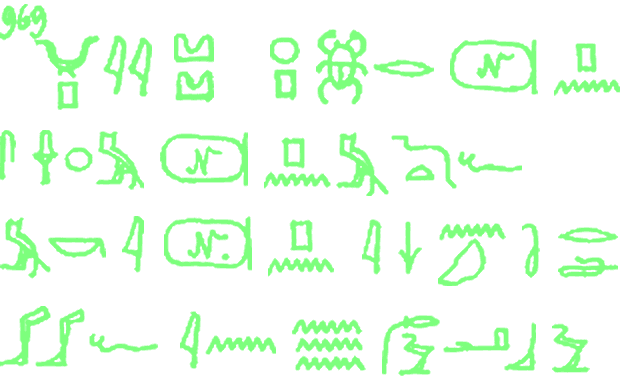
wpi̯.y ḏw.du ḫpr Ppy Nfr-kꜣ-Rꜥw pn sḫm Ppy Nfr-kꜣ-Rꜥw pn m ḏ,t =f
The two mountains are parted:
this Pepi Neferkare comes into being, this Pepi Neferkare takes command of his body.Note · Line 5
Pepi Neferkare is Pepi II of the Sixth Dynasty, in whose pyramid this spell was carved. The words just said of “the god” are now said of him by name. - 6
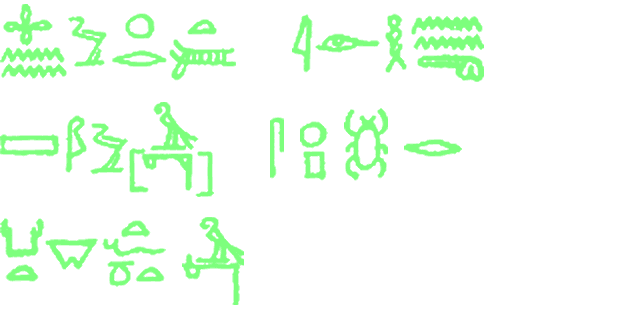
m =k Ppy Nfr-kꜣ-Rꜥw pn j:sn.tj rd.du =f jn mw wꜥb.w wnn.w ḫr (J)tm(,w) jri̯ ḥnn Šw sḫpr kꜣ,t Tfn,wt
Look, this Pepi Neferkare: his feet are kissed by the pure waters that are with Atum,
the waters Shu's penis made and Tefnut's vulva brought into being.Note · Line 6
Atum, the creator, made the first divine pair, Shu (air) and Tefnut (moisture). Here the waters of purification are said to have come from Shu’s penis and Tefnut’s vulva. - 7
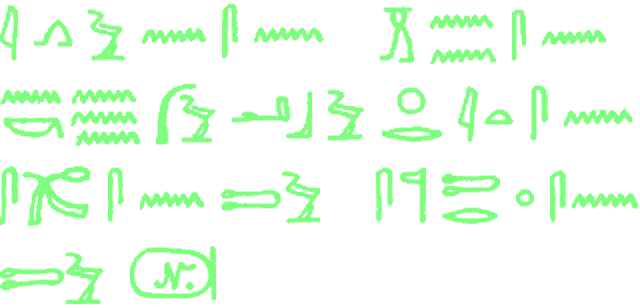
jwi̯.n =sn(j) jni̯.n =sn(j) n =k mw wꜥb.w ḫr jt(j) =sn(j) swꜥb =sn(j) ṯw snṯri̯ =sn(j) ṯw Ppy Nfr-kꜣ-Rꜥw
They have come, they have brought you pure waters from their father,
they purify you, they cense you, Pepi Neferkare.Note · Line 7
“They” are Shu and Tefnut, and their father is Atum. - 8
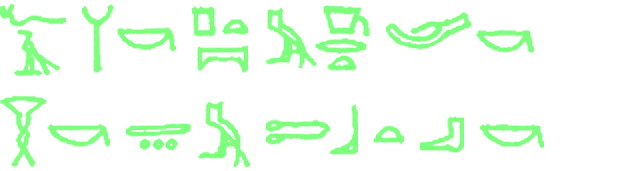
fꜣi̯ =k p,t m ḏr,t =k wꜣḥ =k tꜣ m ṯb,t =k
You shall lift the sky in your hand
and press the earth down beneath your sole. - 9
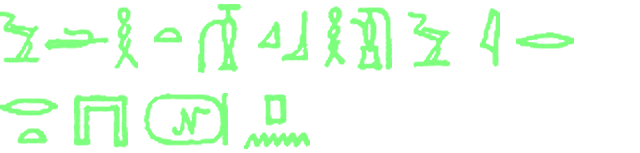
wdḥ.t qbḥ,w jr r(w),t Ppy Nfr-kꜣ-Rꜥw pn
A libation is poured at the gate of this Pepi Neferkare.
Note · Line 9
A libation is an offering of poured water, made at the tomb and its offering place. - 10

jꜥi̯ ḥr nṯr nb
The face of every god is washed.
- 11
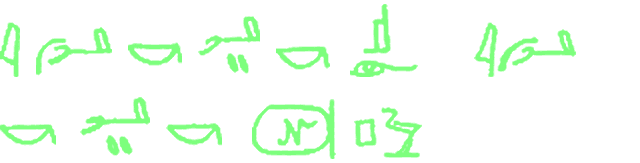
jꜥi̯ =k ꜥ.du =k (W)sr(,w) jꜥi̯ =k ꜥ.du =k Ppy Nfr-kꜣ-Rꜥw pw
Wash your arms, Osiris,
wash your arms, Pepi Neferkare.Note · Line 11
The dead king is hailed as Osiris, the murdered god who was brought back to life and became king of the dead. - 12

rnpi̯.w =k nṯr
Be young again, god!
- 13

3,nw =ṯn(j) Wḏ-ḥtp
Your third is Wedjhotep.
- 14

sṯ(j) (J)ḫ,t-wt,t jr Ppy Nfr-kꜣ-Rꜥw pn
The scent of Ikhet-utet is on this Pepi Neferkare.
Note · Line 14
Ikhet-utet is a divine serpent, here a source of sweet fragrance. - 15

bnbn m ḥw,t Zkr
The benben-loaf is from the house of Sokar.
- 16

ḫpš m pr Jnp,w
The foreleg is from the house of Anubis.
Note · Line 16
The foreleg of an ox was the choicest cut of meat offered to the dead. Anubis, the jackal god, guards the necropolis. - 17

wḏꜣ Ppy Nfr-kꜣ-Rꜥw p(w)
Be sound, Pepi Neferkare!
Note · Line 17
Pepi is the king’s personal name and Neferkare his throne name: this is Pepi II, in whose pyramid the spell is carved. - 18
ꜥḥꜥ mnj(,w) msi̯ ꜣbd ꜥnḫ Sp(ꜣ)
The shrine stands, the month is born, Sepa lives.
Note · Line 18
A new month is born as the new moon appears. Sepa is a centipede god worshipped at Heliopolis, here alive again with the renewed season. - 19
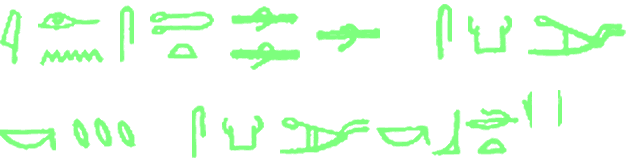
jri̯ n(.y) sṯ(ꜣ),t.pl skꜣ =k jt(j) skꜣ =k bd,t
Arouras are marked out for it, that you may plough for barley, that you may plough for emmer.
Note · Line 19
An aroura is the standard Egyptian measure of field land, about two-thirds of an acre. - 20
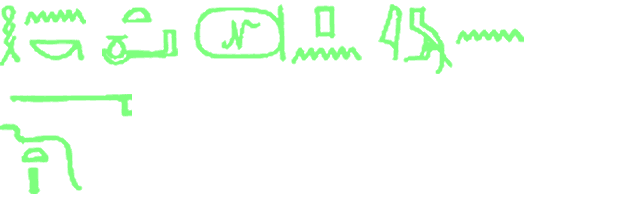
ḥnk.t Ppy Nfr-kꜣ-Rꜥw pn jm n ḏ,t
Pepi Neferkare shall be presented with it forever.