~/sacred-texts/pyramid-texts
Pyramid Texts Utterance 669: Pharaoh Hatches from an Egg
- Text
- Pyramid Texts, Utterance 669
- Date
- Carved in the 6th Dynasty (c. 2278–2184 BC) inside the pyramid of Pepi II Neferkare at Saqqara
- Found
- Pyramid of Pepi II, South Saqqara, Egypt
- Language
- Old Egyptian · Hieroglyphic
- 1
ḏ(d)-mdw
Words to be spoken:
- 2
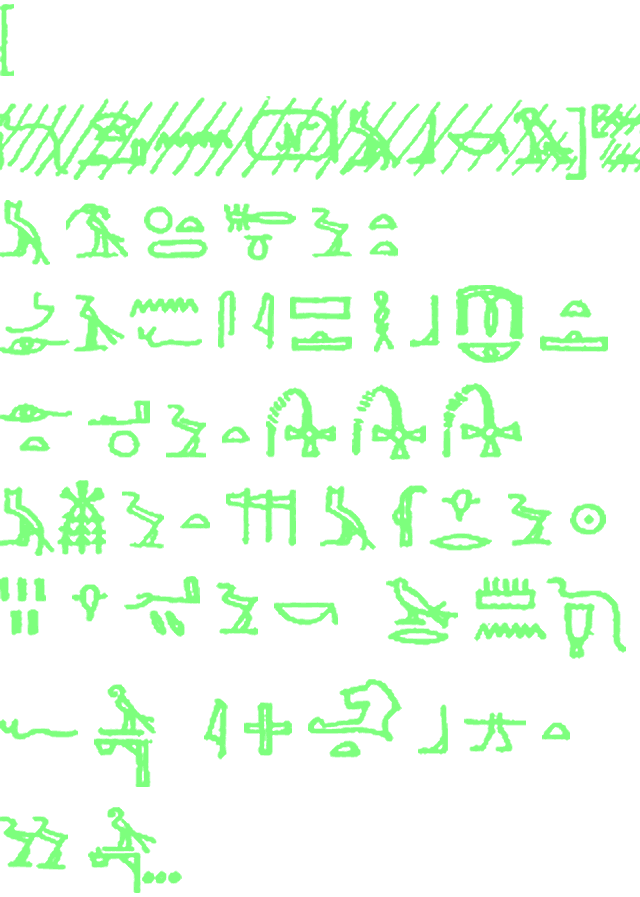
pri̯ sr.w qr ꜥꜣ m ꜣḫ,t ẖn,wtt mꜣ.n =f sj{š}〈pp〉 ḥ(ꜣ)b,t jri̯.t ꜥḫi̯,wt m msw,t nṯr.pl m ḥr(,j).w-rnp,t 5 ḥr-ꜥ,w(j) =k wr(,w)-mnḏ≡f jm(,j)-ḥꜣ,t zb,tww
He whom the great storm foretold comes forth from the inner horizon, having seen the festival-roll checked and the braziers made ready at the birth of the gods on the five days above the year, in your presence, Great-of-Breast, foremost of the escorts.
Note · Line 2
The “five days above the year” are the epagomenal days, added at the end of the 360-day calendar year. - 3
[gmi̯] =[k] [sw] [ꜥꜣ] [r] [ḥꜣ,t] [ꜥ] [mm] [nw] [jri̯.w] [rn.pl] =[sn]
May you find him here, at the head of the roll, among those who have made their names.
- 4
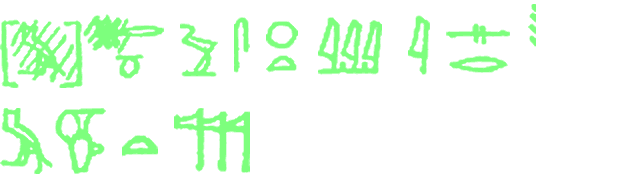
[msi̯] [Ppy] [Nfr]-kꜣ-[Rꜥw] jn mʾw,t =f 〈Nw,t〉 m msw,t wḥm.t m šš [n(,j)] Ḏḥw,tj m-ẖnw sḫ,t-jzr m ẖnm,t nṯr.pl
Pepi Neferkare has been born of his mother Nut in a birth repeated, in the nest of Thoth, within the Field of the Tamarisk, in the well of the gods.
Note · Line 4
The dead king is born a second time, now from the sky-goddess Nut. The Field of the Tamarisk is a place in the next world. - 5
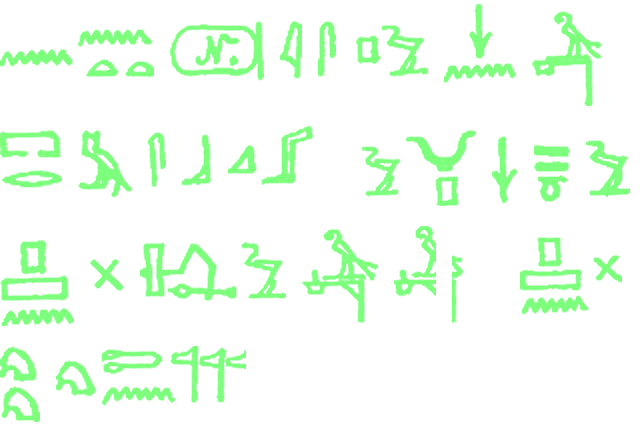
n-n,tt Ppy Nfr-kꜣ-Rꜥw js pw sn pri̯ m sbq wpi̯-sn,w(j) pšn-ꜥḥꜣ,w.du pšn tp.pl =ṯn nṯr.pl
For Pepi Neferkare is the brother who came forth as the shrewd one, He Who Parts the Two, He Who Splits the Two Fighters, he who splits your heads, you gods.
Note · Line 5
The Egyptian word for “shrewd” (sbq) sounds like a word for “leg” or “shin,” so the line may also mean “who came forth from the shin.” - 6
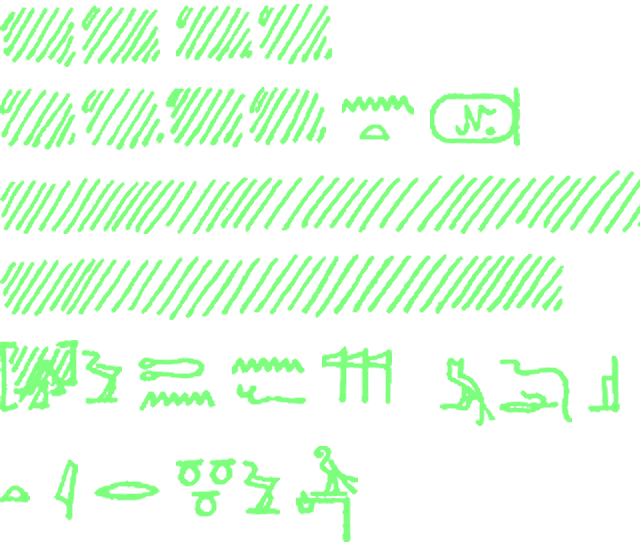
[šꜥ] [mw] [jm(,j).w] [Nw(,w)] [ḥr] [ḫrw] [sbḥ] n(,j) [mʾw,t] Ppy [Nfr-kꜣ-Rꜥw] [Nw,t] [msi̯] =[s] [sw] sšd =s Ppy Nfr-kꜣ-Rꜥw m nwr,w pw wr jm(,j) =tn nṯr.pl ꜣw{t}〈r〉.w =ṯn n =f nṯr.pl m ḏd (Ꜣ)s,t jr Nw,w
The waters in Nun parted at the sound of the scream of Pepi Neferkare's mother Nut as she bore him, as she bound the headband on Pepi Neferkare as that great Quaking One who is among you, gods, at whom you quaked, gods, when Isis said to Nun:
Note · Line 6
Nun is the primeval ocean. The king’s title “Quaking One” (nwrw) and the gods’ “quaking” (ꜣwr) echo each other in the Egyptian. The headband marks him as king from his birth. - 7
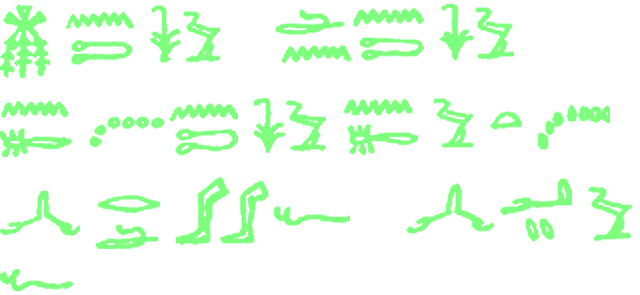
msi̯.n =ṯ sw dni̯.n =ṯ sw nẖ.n =ṯ sw nẖ.wt n rd.du =f n ꜥ.w(j) =f
"You have borne him, you have steeped him, you have spewed him forth, but he has no legs, he has no arms.
- 8

ṯ(ꜣ)z =f jr =f m jšst
With what is he to be knit together?"
- 9
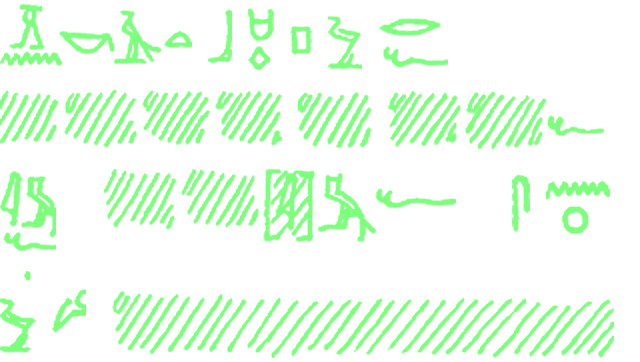
jni̯.kꜣt bjꜣ pw r =f [jm(,j)] [ḥꜣ,t] [ḥn]w ṯ(ꜣ)[z] =f jm =f [ḫpr] =[f] [j]m =f snḫ.w =〈f〉 jm =f m-ẖnw ꜥ.du =ṯn j.n =sn nṯr.pl
"Then let that bright stuff at the prow of the Henu-bark be brought to him: he shall be knit together with it, he shall come into being in it, he shall be raised in it, within your arms," say the gods.
Note · Line 9
The Henu-bark is the sacred boat of the god Sokar. - 10
m =k r =k sw msi̯.y
"Look, he is born!
- 11

m =k sw ṯ(ꜣ)z
Look, he is knit together!
- 12

m =k sw ḫpr
Look, he has come into being!
Note · Line 12
The verb “come into being” (ḫpr) is also the name of Khepri, the scarab god of the rising sun, who is born from himself. - 13
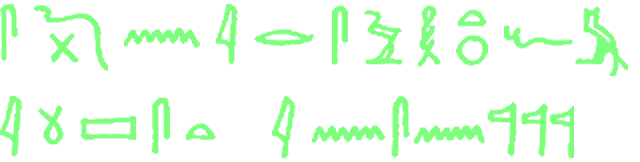
sḏ =n jr =〈n〉 swḥ,t =f m jšst j.n =sn nṯr.pl
With what, then, shall we break his egg?" say the gods.
- 14
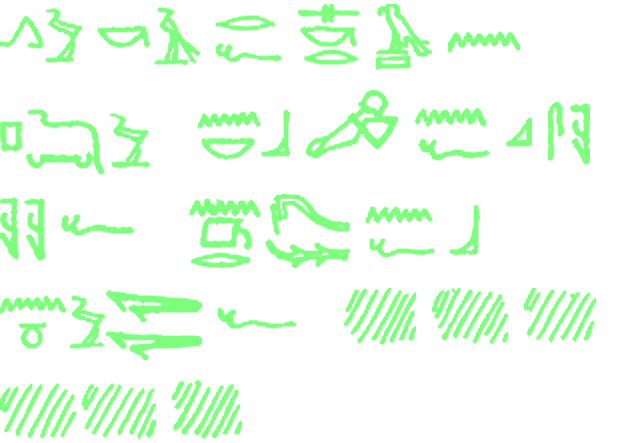
jwi̯.kꜣ r =f Zkr n(,j) Pḏ,w nbi̯.n =f qs.pl =f nḏr.n =f b(w)n.wdu =f [...] [_].du =f
"Then let Sokar of Pedju come, having cast his harpoon-points, having carved his two fish-spear tips, and having … his two … .
Note · Line 14
Sokar is a falcon god of the Memphite necropolis and a master craftsman. Pedju is one of his cult places. - 15
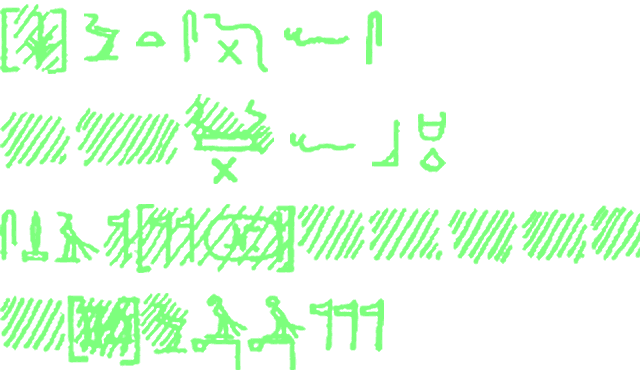
swt sḏ =f s[wḥ,t] ⸮wḥꜥ? =f bjꜣ sḏꜣ nṯr r rʾ-ꜥ,w(j) =f spd jbḥ ꜣwi̯ ꜥn,t.pl sšm,w.du nṯr.pl
He it is who will break the egg and loosen the bright stuff, so that the god may set out to his task, sharp of tooth, long of claw, the two guides of the gods.
Note · Line 15
“The god” is the king, hatched from his egg. His tooth and claws seem to be the “two guides” that lead him out. - 16

m =k Ppy Nfr-kꜣ-Rꜥw ḫpr
Look, Pepi Neferkare has come into being!"
- 17

m =k Ppy Nfr-kꜣ-Rꜥw ṯ(ꜣ)z
Look: Pepi Neferkare is knit together.
Note · Line 17
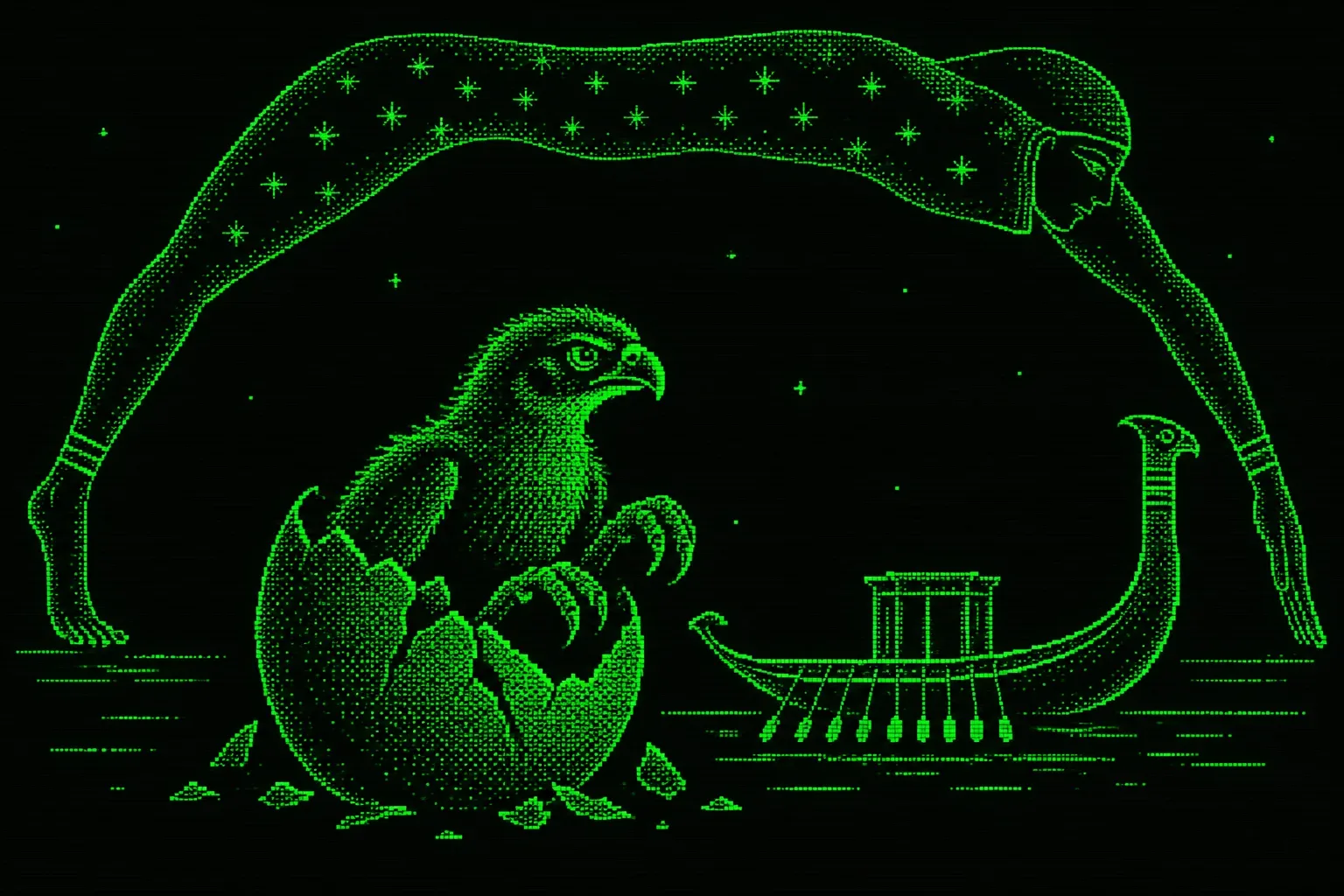
The king is pictured as a bird taking shape inside an egg, his body joined limb to limb before he hatches. - 18

m =k Ppy Nfr-kꜣ-Rꜥw sḏ n =f swḥ,t
Look: Pepi Neferkare, his egg has been broken open for him.
- 19

spꜣ.w r =f Ppy Nfr-kꜣ-Rꜥw m jšst
With what, then, shall Pepi Neferkare be made to fly?
- 20
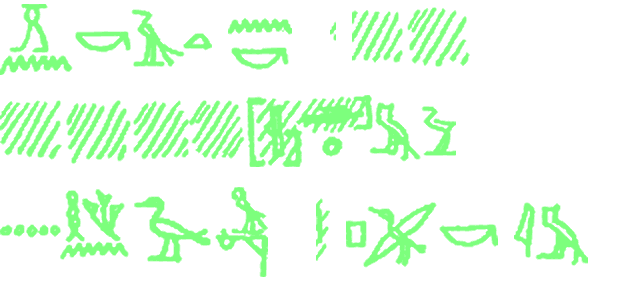
jni̯.kꜣt n =k [ḥn]w qdm.w Ḥn spꜣ =k jm spꜣ =k jm
The Henu-bark shall be brought to you, the qedemu of Hen,
and you shall be made to fly by it, you shall be made to fly by it. - 21
[n-n,tt] [rs],w jr ꜣṯw,t =k mḥ,(w)t r mnꜥ,t =k
For the South Wind shall be your nurse, and the North Wind your wet-nurse.
Note · Line 21
The two winds of Egypt rear the newly hatched king as nurses would. - 22
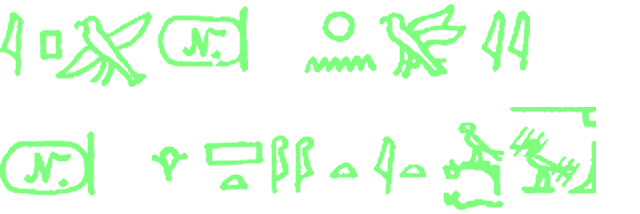
j:pꜣ Ppy Nfr-kꜣ-Rꜥw ḫni̯.y Ppy Nfr-kꜣ-Rꜥw ḥr š(w),t.du jt(j) =f Gbb
Pepi Neferkare shall fly up, and Pepi Neferkare shall alight on the two plumes of his father Geb.
Note · Line 22
Geb is the earth god, called the king’s father because the king inherits the rule of the land.