~/sacred-texts/pyramid-texts
Pyramid Texts 535: Isis and Nephthys Mourn Pepi II
- Text
- Pyramid Texts, Utterance 535
- Date
- Carved in the 6th Dynasty, in the reign of Pepi II (c. 2278–2184 BC), on the wall of his burial chamber at Saqqara
- Found
- In the pyramid of Pepi II at South Saqqara, inscribed on the wall of the burial chamber
- Language
- Old Egyptian · Hieroglyphic
- 1
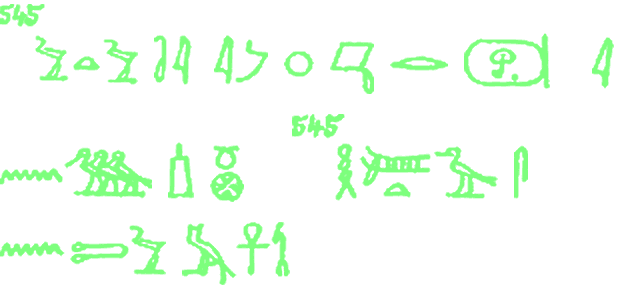
[ḏ(d)-mdw] [jn] [(Ꜣ)s,t] [ḥnꜥ] [Nb,t-ḥw(,t)]
Words spoken by Isis and Nephthys.
Note · Line 1
Isis and Nephthys are the sisters of Osiris, the murdered god. The dead king, here Pepi II (throne name Neferkare), is identified with Osiris, so the two goddesses come to mourn him as their brother. - 2
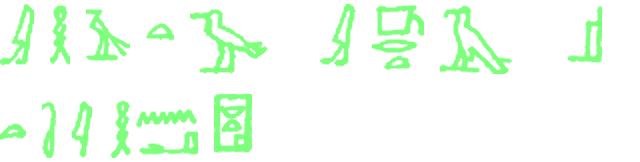
[jy] [ḥꜣ,t] jy ḏr,t (Ꜣ)s,t tw ḥnꜥ Nb,t-ḥw(,t)
The tern has come, the kite has come:
that is Isis and Nephthys.Note · Line 2
The goddesses take the shape of birds whose shrill cries sounded like keening. The word for “kite” also means “mourning woman.” - 3
jwi̯.n =sn(j) m zḫn,w sn =sn(j) (W)sr(,w) m zḫn,w [sn] =[sn(j)] [Ppy] [Nfr-kꜣ-Rꜥw]
They have come seeking their brother Osiris,
seeking their brother Pepi Neferkare. - 4
[rmi̯] [sn] =[ṯ] [(Ꜣ)s,t]
Weep for your brother, Isis!
- 5

[rmi̯] [sn] =ṯ Nb,t-ḥw(,t)
Weep for your brother, Nephthys!
- 6

rmi̯ sn =ṯ
Weep for your brother!
- 7

j:ḥms (Ꜣ)s,t ꜥ.wdu =s tp =s
Isis sits with her arms upon her head;
Note · Line 7
Hands raised to the head is the standard Egyptian gesture of mourning. - 8
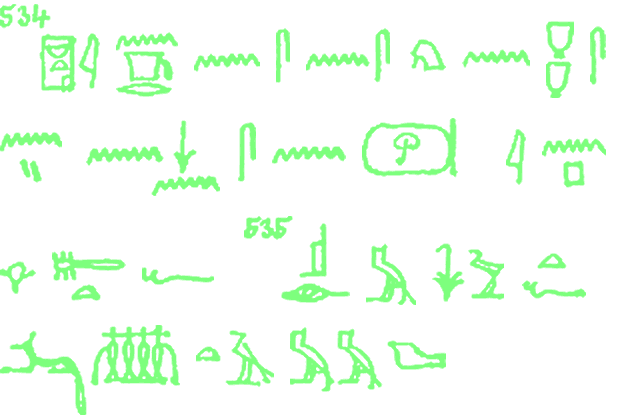
Nb,t-ḥw(,t) j:nḏr.n =s n =s [_] =s tp n(,j) mnḏ.[du] =[s] [n] [sn] =[sn(j)] [Ppy] Nfr-kꜣ-Rꜥw jnp.y [ḥr] [ẖ,t] =[f] (W)sr(,w) m sw,t =f Jnp(,w) ⸢ḫnt(,j)⸣ [ꜣmm]
Nephthys has grasped her … , the tips of her breasts,
for their brother Pepi Neferkare, lying on his belly:
Osiris in his distress, Anubis with his grip thrust forward.Note · Line 8
Clutching the breasts is another mourning gesture. - 9
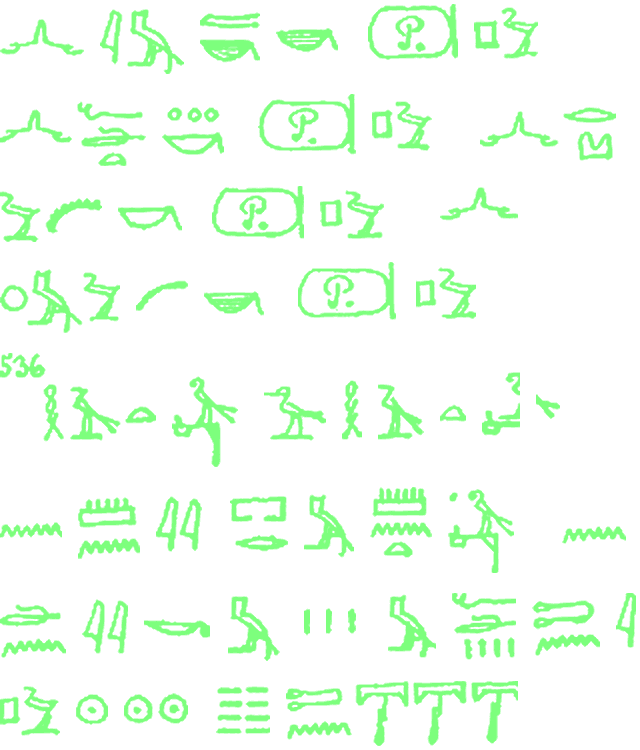
[n] jmk =k [Pp]y Nfr-kꜣ-Rꜥw pw [n] [fd,t] =[k] [Ppy] Nfr-kꜣ-Rꜥw pw n rḏw =k Pp[y] Nfr-kꜣ-Rꜥw pw n ḫ[m,w] =[k] [Ppy] Nfr-kꜣ-[Rꜥw] pw n mny pri̯ [...] [m] [f]d =ṯn jpw hrw.pl [gr]ḥ.pl
No rot for you, Pepi Neferkare!
No sweat for you, Pepi Neferkare!
No seepage from you, Pepi Neferkare!
No dust of you, Pepi Neferkare!
No mooring for him who came forth …
in these four days and nights of yours.Note · Line 9
These are the stages of decay that embalming was meant to stop: rot, sweat, the fluids that seep from a corpse, the crumbling to dust. - 10
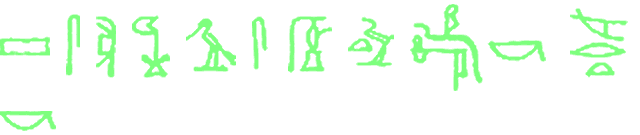
šms n Ḫꜣ[-bꜣ≡s] [Qbḥ,wt] =⸢k⸣ mr,(y)t =k
Follow Thousand-Are-Her-Bas, your beloved Qebehut!
Note · Line 10
“Thousand-Are-Her-Bas” is a name for the stars. - 11
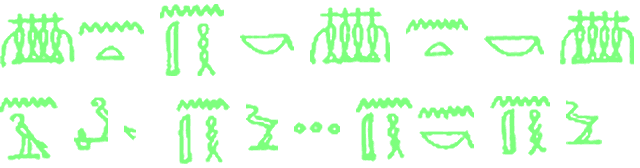
ḫnti̯ =k ḫnt(,j).w nmḥ(,w) =k n⸢m⸣[ḥ],w.pl nmḥ.[n] =[k] nmḥ,pl
May you be foremost of the foremost,
your orphan foremost of the orphans you have orphaned. - 12
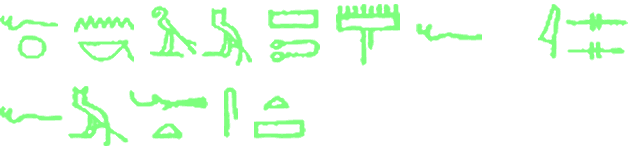
[fḫ] [n] =[k] [Ḥr,w] [m] [šṯ] =[f] jzz =f jm(,j).w-ḫt Stš
Horus has been loosed for you from his shetj garment,
that he may net the followers of Seth. - 13
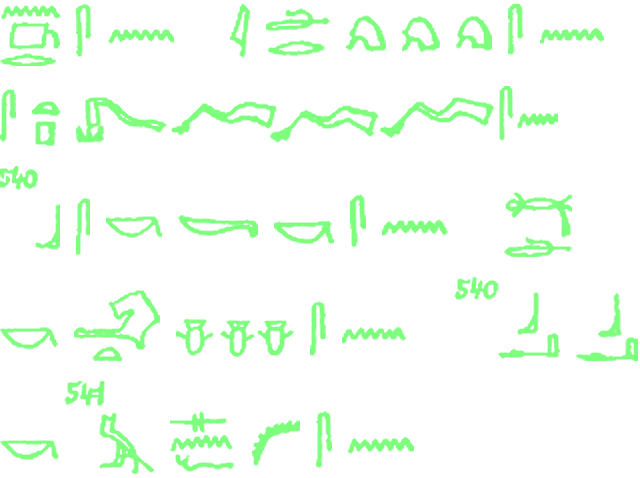
[...] bsk =k sn šdi̯ =k ḥꜣ,t(j).pl =sn bꜥbꜥ =k m znf =[s]n
… you shall gut them, tear out their hearts,
and wallow in their blood. - 14
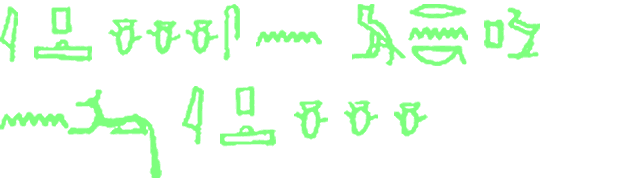
jp =k jb.pl =sn m [rn] =[k] [pw] [n(,j)] [Jnp(,w)] [jp-j]b,pl
You shall count their hearts
in this your name of Anubis, Counter of Hearts.Note · Line 14
As embalmer and guardian of the dead, Anubis also takes stock of hearts. The heart was the seat of a person’s character. - 15
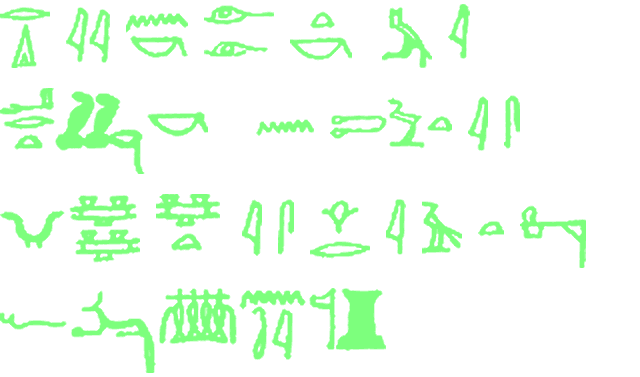
ḏi̯ n =k jr,t.du =k m jꜥr,t.du =k Wpi̯-wꜣ,t.pl js ḥr(,j)-jꜣ,t≡f [Jnp(,w)] ḫnt,j-zḥ-nṯr
Your eyes have been given you as your two uraeus serpents,
as Wepwawet upon his standard,
Anubis Foremost of the God's Booth.Note · Line 15
The uraeus is the rearing cobra on a king’s brow that spits fire at his enemies. - 16
[hꜣ] [Ppy] Nfr-kꜣ-[Rꜥw] p
O Pepi Neferkare!
- 17
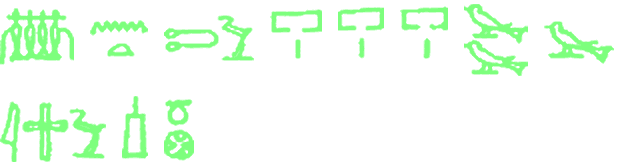
ḫnti̯ ṯw pr.pl wr.pl jm(,j).w Jwn,w
You are foremost in the Houses of the Great Ones who are in Heliopolis.
- 18
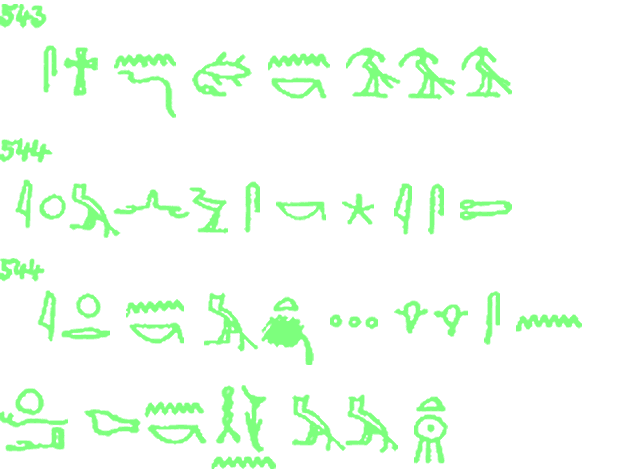
snḏ n =k ꜣḫ.pl J:ḫm.pl-sk jsṯ j:ḫ[r] [n] =[k] [m(w)t.pl] [ḥr] ḥr =sn {q}〈ḫ〉fꜥ.n =k ḥnmm,t
The blessed spirits and the Imperishable Stars fear you; the dead fall on their faces before you, for you have taken hold of the sun-folk.
- 19
wtw,tj m ḥtp(,w) jr =k 〈j〉.n Bꜣ,⸢pl⸣-[Jwn,w] ḥt(m) =sn ṯw [m] [ꜥnḫ] [wꜣs]
"Yours, in peace, is the place of eldest son," said the Souls of Heliopolis, as they furnished you with life and dominion.
Note · Line 19
The Souls of Heliopolis are a group of ancient divine powers of that city. As eldest son, the king is the rightful heir of the gods. - 20
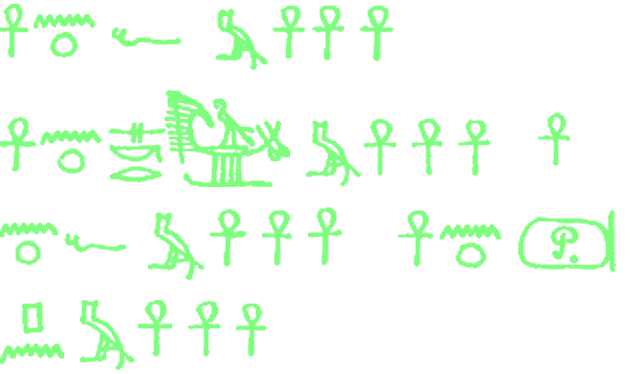
[ꜥnḫ] =[f] [m] ꜥnḫ.⸢pl⸣ ꜥnḫ Zkr m ꜥnḫ.w ꜥnḫ =f m ꜥnḫ.[pl] [ꜥnḫ] [Ppy] [Nfr-kꜣ-Rꜥw] [m] [ꜥnḫ.pl]
When he lives among the living, Sokar lives among the living; when he lives among the living, Pepi Neferkare lives among the living.
Note · Line 20
Sokar is a falcon god of the Memphite necropolis and a god of the dead. The spell binds the king’s life to the god’s: as surely as the one lives, so does the other. - 21

[hꜣ] [Ppy] Nfr-kꜣ-[Rꜥw] pw
O Pepi Neferkare!
Note · Line 21
Pepi is the king’s personal name and Neferkare his throne name. This is Pepi II, whose pyramid at Saqqara carries this text. - 22
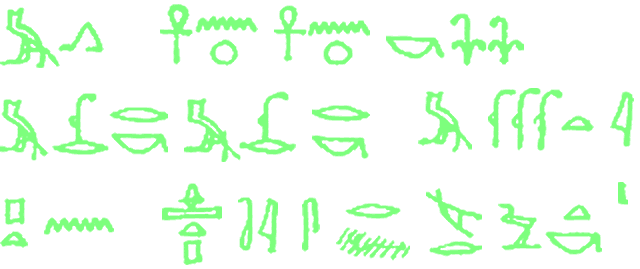
[mj] ꜥnḫ jwi̯ =k nn m tr =k m tr =k m rnp[,t].⸢pl⸣ [jptn] [ḥtp.tj] [srf] [mrw,t] =[k]
Come, live! Come here in your season,
in your season in these years,
at peace, the love of you running warm.