~/sacred-texts/pyramid-texts
Pyramid Texts Utterance 532: Keeping Osiris from Rotting
- Text
- Pyramid Texts, Utterance 532
- Date
- Carved in the late 6th Dynasty, in the reign of Pepi II (c. 2278–2184 BC), on the walls of the king's pyramid at Saqqara
- Found
- Pyramid of Pepi II, South Saqqara, Egypt
- Language
- Old Egyptian · Hieroglyphic
- 1

ḏ(d)-mdw
Recitation:
Note · Line 1
A standard heading: what follows is to be spoken aloud. - 2
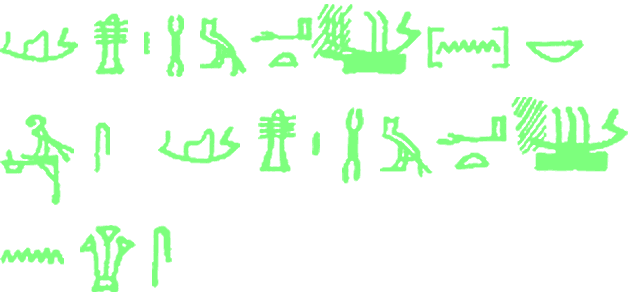
wḥꜥ ḏd mꜥnḏ,t [n] nb =s wḥꜥ ḏd mꜥnḏ,t n ḥꜣ(,y) =s
The djed-pillar of the Day-Bark is untied for its lord; the djed-pillar of the Day-Bark is untied for its protector.
Note · Line 2
The Day-Bark (Mandjet) is the boat in which the sun crosses the sky by day. - 3
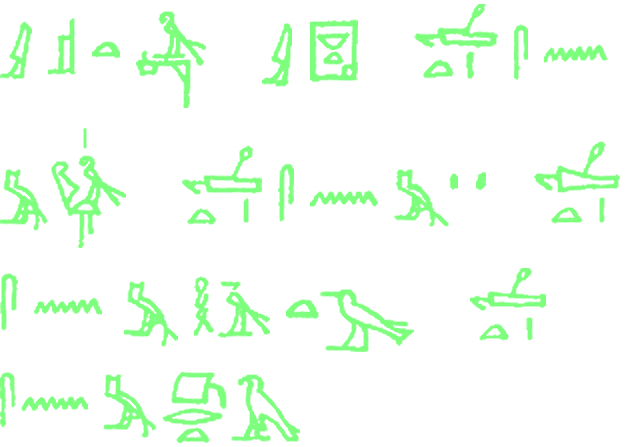
jy (Ꜣ)s,t jy Nb,t-ḥw,t wꜥ.t =sn(j) m jmn(,t) wꜥ.t =sn(j) m jꜣb(,t) wꜥ.t =sn(j) m ḥꜣ,t wꜥ.t =sn(j) m ḏr,t
Here comes Isis, here comes Nephthys, one from the west, the other from the east, one as a tern, the other as a kite.
Note · Line 3
The sisters of Osiris arrive as birds of prey and shore birds, whose shrill cries were heard as wailing. The word for kite also means a professional mourning woman. - 4
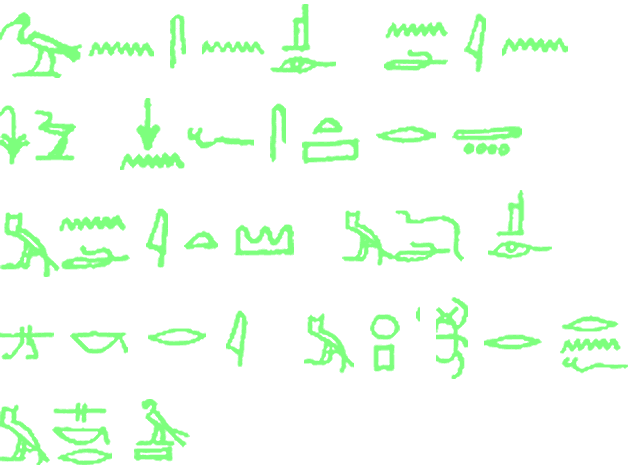
gmi̯.n =sn(j) (W)sr(,w) ndj.n sw sn =f Stš r tꜣ m Ndj,t m ḏd (W)sr(,w) zj =k r =j m ḫpr rn =f m Zkr
They have found Osiris, after his brother Seth threw him down to the ground in Nedit, when Osiris said, "Get away from me!" and his name Sokar came to be.
Note · Line 4
Nedit is where Osiris was murdered. - 5
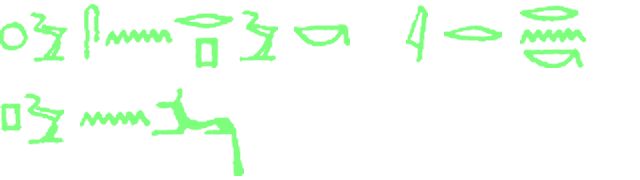
ḫwi̯ =sn(j) rpw =k jr rn =k pw n(,j) Jnp,w
They keep you from rotting, in that name of yours, Anubis.
Note · Line 5
The pun is between rpw, “to rot,” and Anubis (Inpu), the jackal god of embalming. - 6
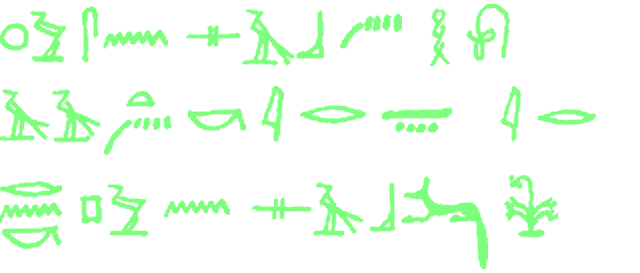
ḫwi̯ =sn(j) zꜣb ḥ(w)ꜣꜣ,t =k jr tꜣ jr rn =k pw n(,j) Zꜣb-šmꜥ(,wj)
They keep your putrid fluids from trickling into the earth, in that name of yours, Jackal of Upper Egypt.
Note · Line 6
Egyptian zab means both “to seep, trickle” and “jackal,” so the line plays on the god’s title. - 7
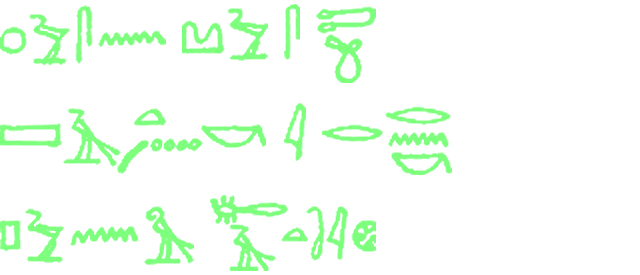
ḫwi̯ =sn(j) ḏwi̯ sṯ(j) šꜣ,t =k jr rn =k pw n(,j) Ḥr,w ẖꜣ,tj
They keep the smell of your corpse from turning foul, in that name of yours, Horus Khati.
Note · Line 7
Khat means “corpse.” Horus Khati is an obscure title of Horus, chosen here for its echo. - 8
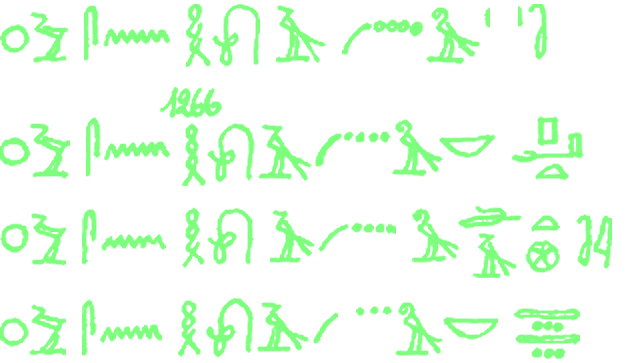
ḫwi̯ =sn(j) ḥwꜣ Ḥr,w-jꜣb,tj ḫwi̯ =sn(j) ḥwꜣ Ḥr,w nb-pꜥ,(w)t ḫwi̯ =sn(j) ḥwꜣ Ḥr,w-d(w)ꜣ,tj ḫwi̯ =sn(j) ḥwꜣ Ḥr,w nb-tꜣ(,wj)
They keep the Eastern Horus from rotting, they keep Horus, Lord of Mankind, from rotting, they keep Horus of the Underworld from rotting, they keep Horus, Lord of the Two Lands, from rotting.
Note · Line 8
The dead king is identified in turn with four forms of Horus, each kept whole by the two goddesses. - 9
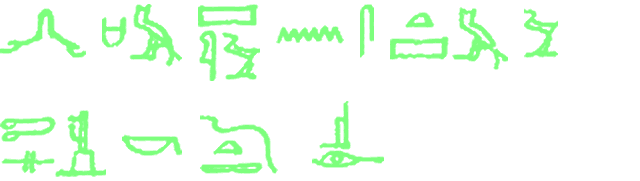
n ḥm šwi̯.n Stš m wṯz =k ḏ,t (W)sr(,w)
Never, truly, shall Seth be free of carrying you, Osiris, for ever.
Note · Line 9
As punishment for the murder, Seth is condemned to bear Osiris on his back for all time. - 10
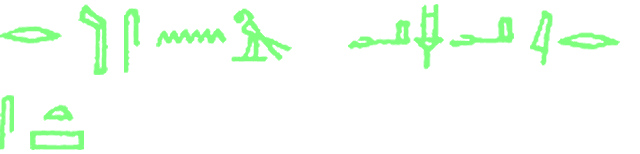
rs n Ḥr,w ꜥḥꜥ jr Stš
Wake for Horus! Stand up against Seth!
- 11
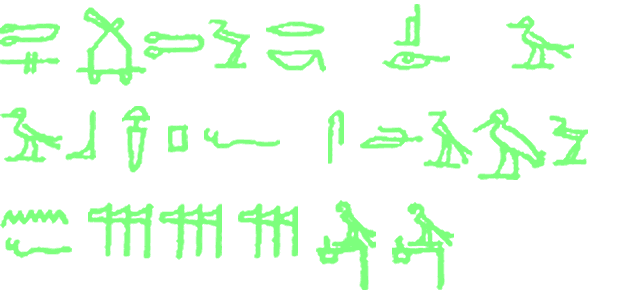
ṯzi̯ ṯw r =k (W)sr(,w) zꜣ Gbb tp(,j) =f sdꜣ.w n =f psḏ,t.du
Raise yourself, Osiris, son of Geb, his firstborn, before whom the Two Enneads tremble.
Note · Line 11
Geb is the earth god and father of Osiris. The Two Enneads are the two great companies of nine gods. - 12
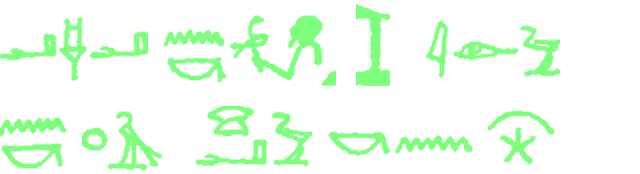
ꜥḥꜥ n =k mnj,w jri̯.w n =k psḏn,tw ḫꜥi̯.w =k n ꜣbd(,w)
The shrine stands waiting for you, the New-Moon Feast shall be held for you, and you shall appear at the Monthly Feast.
Note · Line 12
The Monthly Feast, Abedu, fell on the second day of the lunar month. Its name sounds like Abydos (Abdju), the cult centre of Osiris named below. - 13
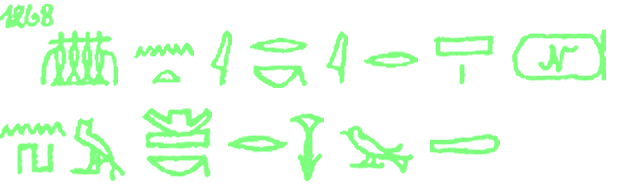
ḫnti̯ jr =k jr šj Ppy Nfr-kꜣ-Rꜥw nm(j) =k r wꜣḏ-wr
Sail upstream to the lake, Pepi Neferkare, and voyage to the Great Green.
Note · Line 13
Pepi Neferkare is King Pepi II, in whose pyramid this text is carved. The Great Green is the sea, or any wide expanse of water. - 14
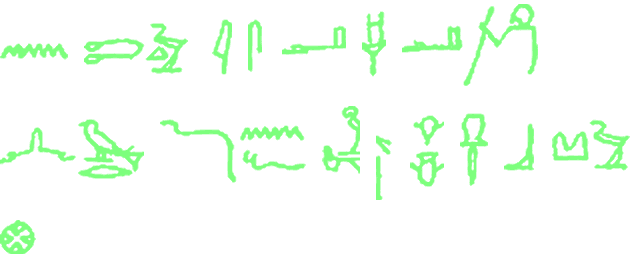
n ṯwt js Ꜥḥꜥ-n-wrḏ,n≡f ḥr(,j)-jb Ꜣbḏ,w
For you are indeed He Who Stands and Does Not Tire, who dwells in Abydos.
Note · Line 14
The name answers the commands to wake and stand: the risen Osiris never sinks down again. - 15
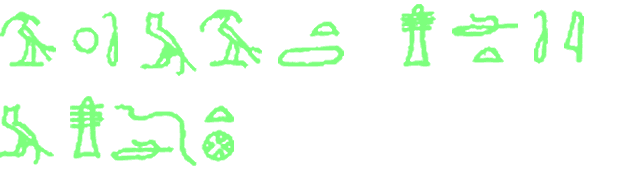
ꜣḫ.tj m ꜣḫ,t ḏd.tj m Ḏd,t
You are an akh in the Akhet, you endure in Djedit.
Note · Line 15
An akh is a transfigured, effective spirit. The Akhet is the horizon, the “place of becoming akh.” Djedit, a necropolis of Heliopolis, likewise echoes djed, “to endure.” - 16
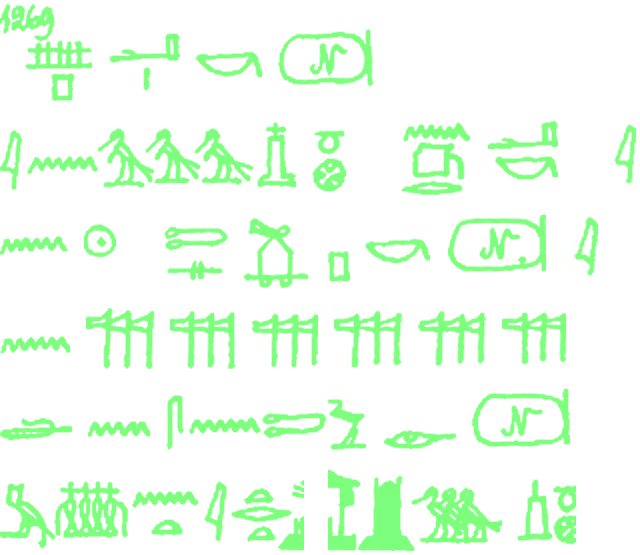
šzp ꜥ =k Ppy Nfr-kꜣ-Rꜥw jn Bꜣ,w-Jwn,w nḏri̯ ꜥ =k jn Rꜥw ṯzi̯ tp =k Ppy Nfr-kꜣ-Rꜥw jn psḏ,t.du di̯.n =sn ṯw (W)sr(,w) Ppy Nfr-kꜣ-Rꜥw m-ḫnt jtr,t.du Bꜣ,w-Jwn,w
Your arm, Pepi Neferkare, is taken by the Bas of Heliopolis, your arm is grasped by Ra, your head, Pepi Neferkare, is lifted by the Two Enneads, and they have set you, the Osiris Pepi Neferkare, at the head of the two rows of shrines of the Bas of Heliopolis.
Note · Line 16
The Bas of Heliopolis are a company of divine powers of the sun god’s city. - 17
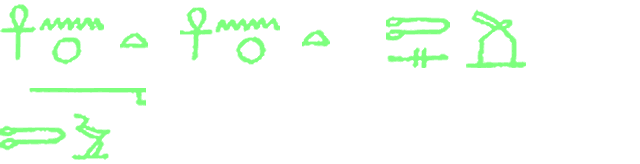
ꜥnḫ.t ꜥnḫ.t ṯzi̯ ṯw
Be alive, be alive! Raise yourself up!
Note · Line 17
The dead king, identified with the god Osiris, is called back from death and urged to rise from where he lies.