~/sacred-texts/pyramid-texts
Pyramid Texts Utterance 480: The King’s Ladder to Heaven
- Text
- Pyramid Texts, Utterance 480
- Date
- Carved in the 6th Dynasty, in the reign of Pepi II (c. 2278–2184 BC), on the west wall of the burial chamber of his pyramid at Saqqara
- Found
- Pyramid of Pepi II, South Saqqara, Egypt; still on the burial chamber wall
- Language
- Egyptian (Old Egyptian) · Hieroglyphic
- 1

ḏ(d)-〈mdw〉
Words to be spoken:
- 2
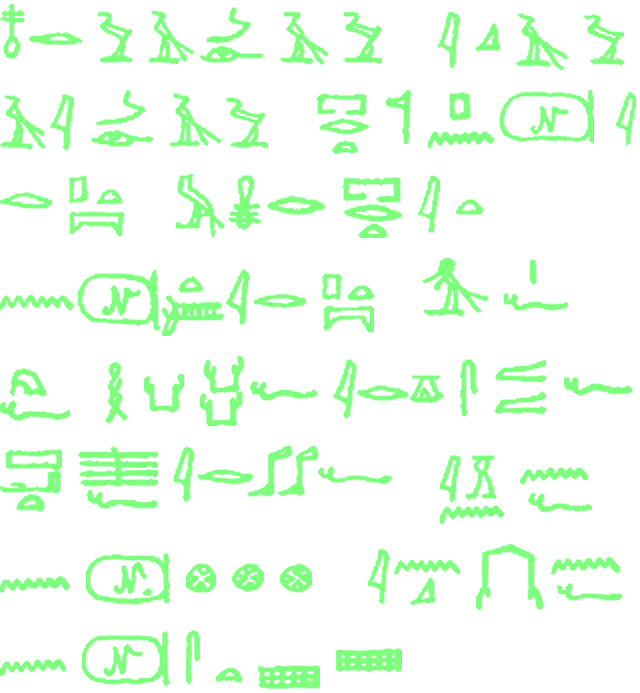
nfr =w ꜣ mꜣ,w j:qꜣ =w ꜣ{j} mꜣ,w pr.t nṯr pn Ppy Nfr-kꜣ-Rꜥw jr p,t mr pr.t jt(j) n(,j) Ppy Nfr-kꜣ-Rꜥw (J)tm(,w) jr p,t bꜣ =f tp =f ḥkꜣ,w =f jr gs.du =f šꜥ,t =f jr rd.du =f jni̯.n =f n Ppy Nfr-kꜣ-Rꜥw nʾ,t.pl jnq.n =f n Ppy Nfr-kꜣ-Rꜥw sp(ꜣ),t.pl dmḏ.n =f n Ppy Nfr-kꜣ-Rꜥw msm.w
How lovely the sight, how lofty the sight:
this god Pepi Neferkare going up to the sky,
as the father of Pepi Neferkare, Atum, went up to the sky,
his ba upon him, his magic at his sides, his terror at his feet;
for he has brought the towns to Pepi Neferkare,
gathered the nomes for Pepi Neferkare,
and joined the mesemu lands for Pepi Neferkare.Note · Line 2
The ‘going up’ is the dead king’s ascent to the sky, modelled on that of Atum, the creator god, here called his father. - 3
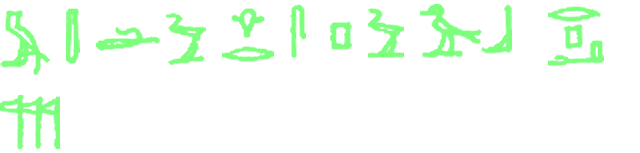
mdwi̯ ḥr =s pw Gbb (j)r(,j)-pꜥ(,t)-nṯr.pl
It was Geb, prince of the gods, who spoke of it.
Note · Line 3
Geb, god of the earth, is heir and chief noble among the gods. His word confirms the king’s rule and his rising. - 4
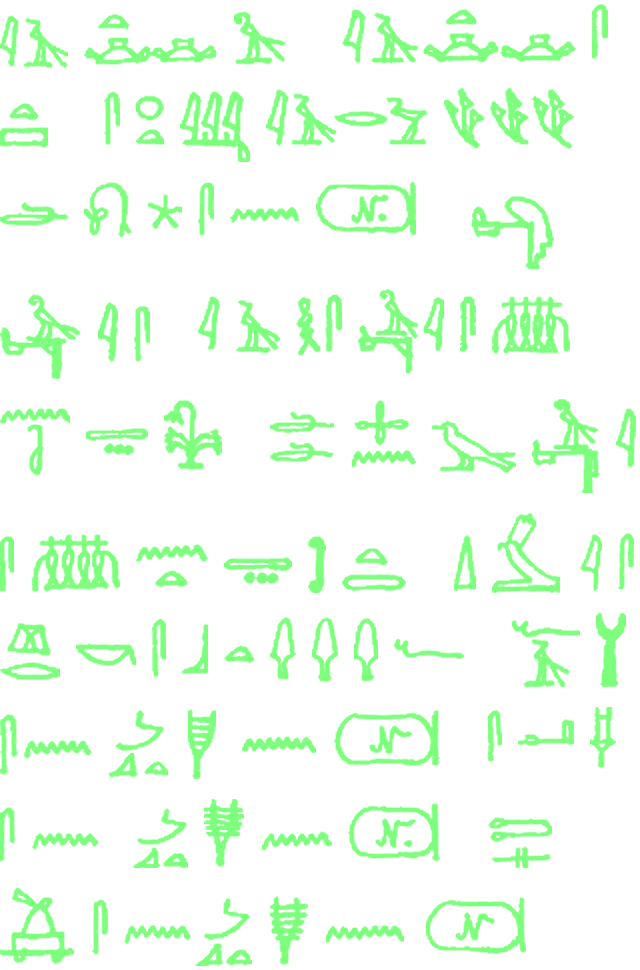
jꜣ,t.pl Ḥr,w jꜣ,t.pl Stš sḫ,t-jꜣr,w dwꜣ =sn Ppy Nfr-kꜣ-Rꜥw Dwꜣ(,w) js Jꜣḥs js ḫnt,j Tꜣ-šmꜥ(,w) Ddwn js ḫnt,j Tꜣ-zt(j) Spd(,w) js ẖr(,j) ksb,t.pl =f fꜣi̯ =sn mꜣq,t n Ppy Nfr-kꜣ-Rꜥw sꜥḥꜥ =sn mꜣq,t n Ppy Nfr-kꜣ-Rꜥw ṯzi̯ =sn mꜣq,t n Ppy Nfr-kꜣ-Rꜥw
The mounds of Horus, the mounds of Seth, and the Field of Reeds praise Pepi Neferkare
as Duau, as Iahes, foremost in Upper Egypt,
as Dedun, foremost in Nubia,
as Sopdu beneath his kesbet trees.
They lift a ladder for Pepi Neferkare,
they stand a ladder up for Pepi Neferkare,
they raise a ladder for Pepi Neferkare:Note · Line 4
Each of these gods guards a quarter or border of Egypt. - 5
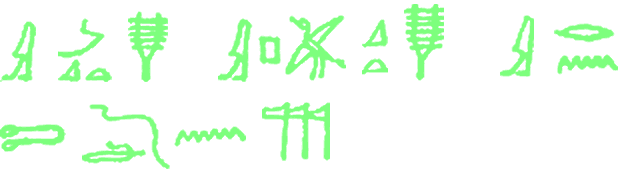
jy mꜣq,t jy pꜣq,t jy rn =ṯ ḏd.n nṯr.pl
"Come, ladder! Come, slender ladder!
Come, by the name the gods have spoken for you!"Note · Line 5
In Egyptian the two names for the ladder rhyme: maqet and paqet. - 6
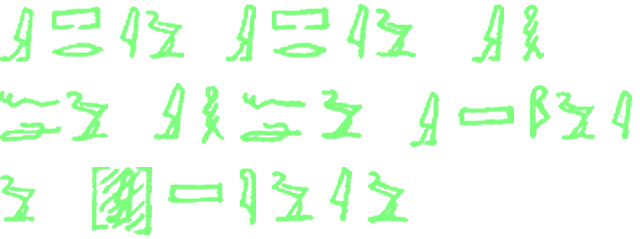
jy prj,w jy prj,w jy ḥfd,w jy ḥfd,w jy šwj,w [jy] šwj,w
Here comes one going up, here comes one going up!
Here comes a climber, here comes a climber!
Here comes one rising, here comes one rising!Note · Line 6
The cries announce the climber’s approach in three rising stages. The first two verbs return at once in the next lines, where the king ‘goes up’ and ‘climbs’. - 7
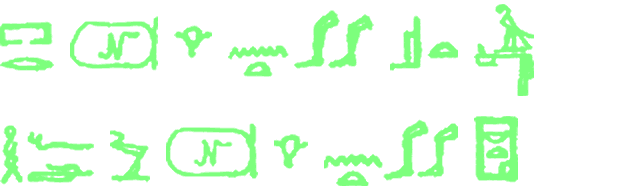
pri̯ Ppy Nfr-kꜣ-Rꜥw ḥr mn,t.du (Ꜣ)s,t ḥfdi̯.w Ppy Nfr-kꜣ-Rꜥw ḥr mn,t.du Nb,t-ḥw(,t)
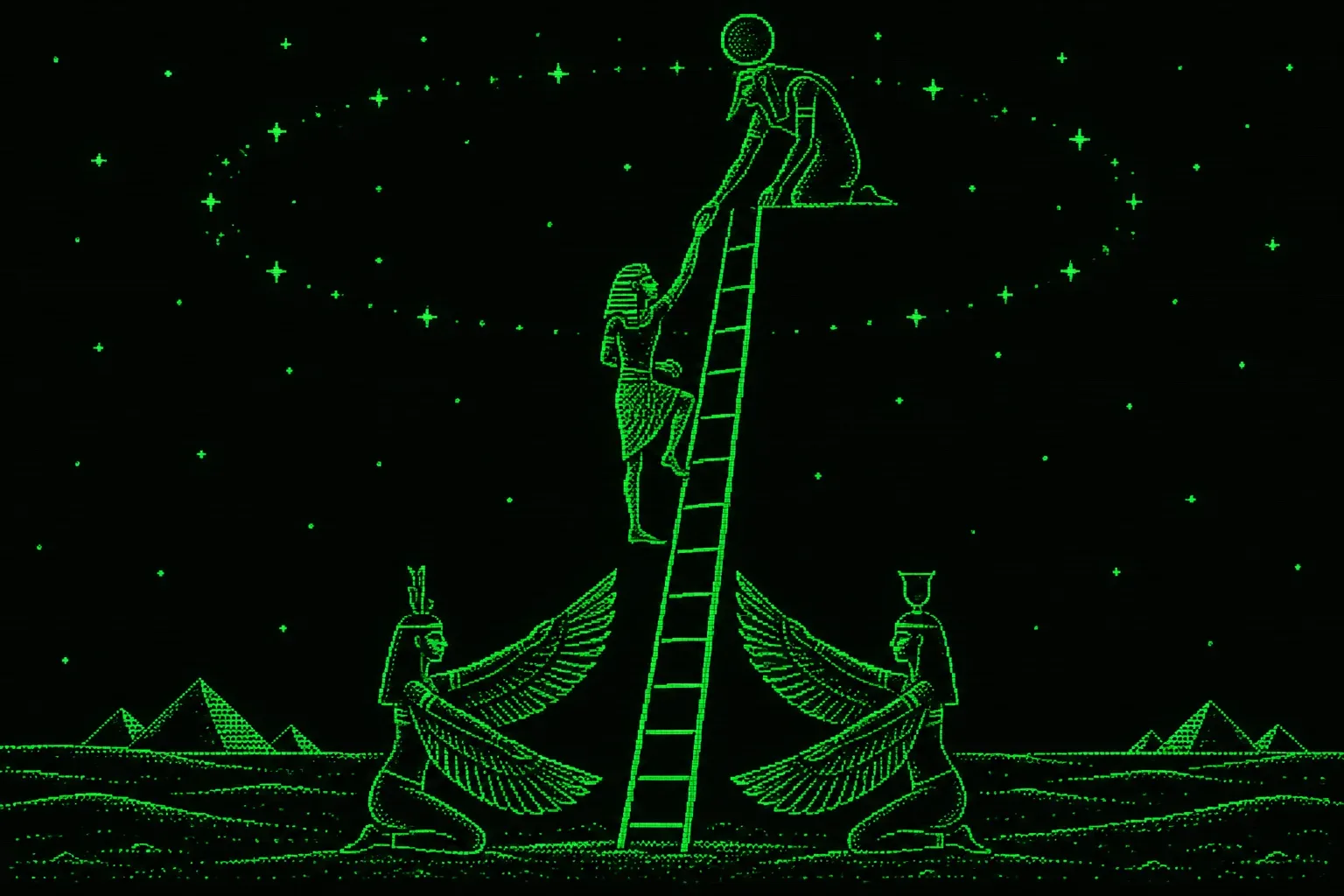
Pepi Neferkare will go up on the thighs of Isis,
Pepi Neferkare will climb on the thighs of Nephthys.Note · Line 7
Isis and Nephthys are the sister goddesses who mourn and protect the dead. Here their bodies become the rungs of his ascent. - 8
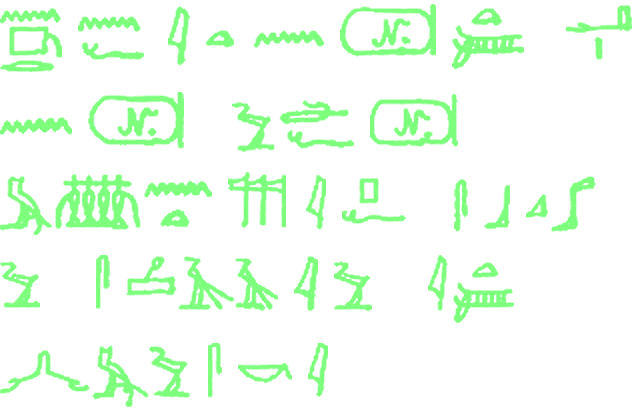
nḏri̯ n =f jt(j) n(,j) Ppy Nfr-kꜣ-Rꜥw (J)tm(,w) ꜥ n(,j) Ppy Nfr-kꜣ-Rꜥw wdi̯ =f Ppy Nfr-kꜣ-Rꜥw m-ḫnt nṯr.pl jpf sbq.w sꜣꜣ.jw j:tm.w skj
Pepi Neferkare's father, Atum, will take Pepi Neferkare by the arm
and set Pepi Neferkare at the head of those gods, the clever and the wise, who never perish.Note · Line 8
These gods who never perish are the circumpolar stars, which never sink below the horizon. - 9
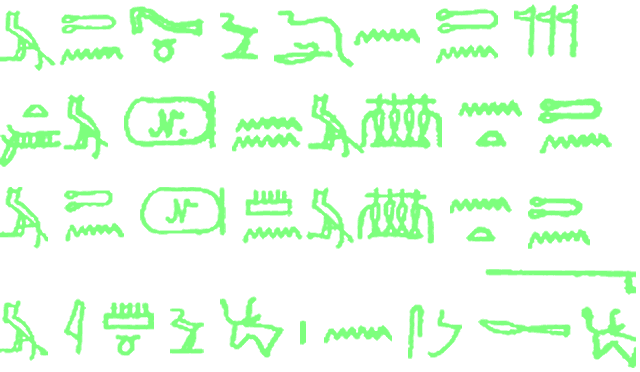
m =ṯn nw ḏd.n =ṯn nṯr.pl tm Ppy Nfr-kꜣ-Rꜥw wnn m-ḫnt =ṯn m =ṯn Ppy Nfr-kꜣ-Rꜥw mn m-ḫnt =ṯn m jmn,w n(,j) smꜣ
See, you gods, what you said, that Pepi Neferkare would not be at your head:
see, Pepi Neferkare stands fast at your head, as the Steadfast One of the wild bulls!Note · Line 9
A play closes the spell: the king ‘stands fast’ (mn) as the ‘Steadfast One’ (jmn.w), a title for an enduring fighting bull. The wild bull is an old image of royal strength.