~/sacred-texts/pyramid-texts
Pyramid Texts Utterance 390: A Spell to Trample Snakes
- Text
- Pyramid Texts, Utterance 390 (PT 390)
- Date
- Carved in the 6th Dynasty (about 2300 BC) inside the pyramid of King Teti at Saqqara
- Found
- Pyramid of Teti, Saqqara, where it remains on the wall
- Language
- Old Egyptian · Hieroglyphic
- 1

ḏ(d)-mdw
Words to be spoken:
Note · Line 1
These are the opening words of a Pyramid Text spell, carved inside the pyramid of King Teti (about 2300 BC) and meant to be recited for him after his death. - 2
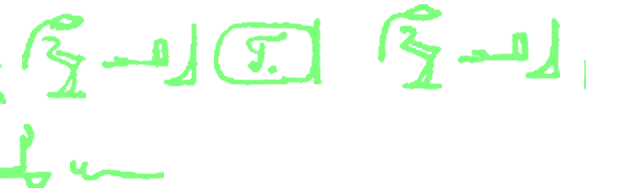
wꜥb Ttj wꜥb kꜣ =f
Teti is pure, and his ka is pure.
Note · Line 2
The ka is a person’s life force, a kind of double that lives on after death and must be kept pure and fed. - 3

wḏꜣ =w(j) Ttj wḏꜣ =w(j) Ttj
How hale is Teti, how hale is Teti!
- 4

wḏꜣ Ḥr,w n ḏ,t =f
Horus is hale in his body.
- 5

[wḏꜣ] =[w(j)] Ttj wḏꜣ =w(j) Ttj
How hale is Teti, how hale is Teti!
- 6

wḏꜣ Stš n ḏ,t =f
Seth is hale in his body.
- 7
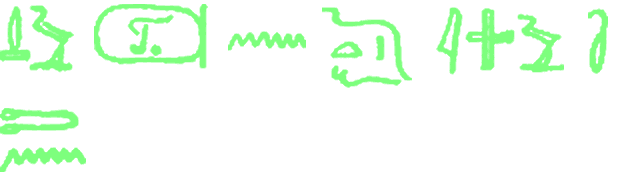
wḏꜣ Ttj n ḏ,t =f jm,wtj =ṯn(j)
Teti is hale in his body, between you two.
Note · Line 7
Horus and Seth were rivals who tore at each other in myth. Here both are whole, and the king stands sound between them, holding together what each of them stands for. - 8
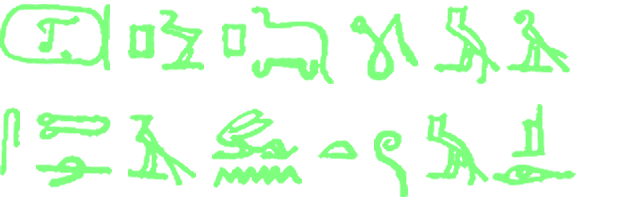
Ttj pw pḏ rwḏ m Ḥr,w sṯꜣ wn,t m (W)sr(,w)
Teti is the one who draws the bowstring taut as Horus,
who hauls the rope as Osiris.Note · Line 8
The king takes on the roles of two gods at once: the archer Horus, and Osiris hauling on a rope. The images are of strength and control before the confrontation that follows. - 9
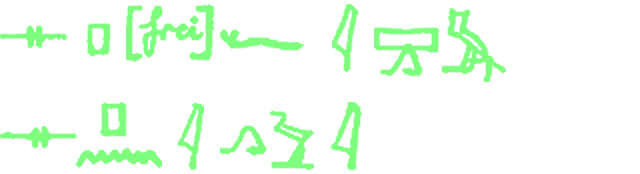
z(,j) pf j:šm z(,j) pn jwi̯.j
That one has gone, this one has come.
Note · Line 9
This seems to mark a handover: the old state, or the enemy, is gone, and the king arrives in his new, divine form. - 10

jn ṯwt Ḥr,w
Are you Horus?
- 11

ḥr ḥr =k pꜣḫd.tj
On your face, and be overturned!
- 12

jn ṯwt Stš
Are you Seth?
- 13

ḥr ḥr =k sṯꜣz.tj
On your face, and be laid out flat on your back!
Note · Line 13
The Egyptian really does put “on your face” and “on your back” together. The point is total defeat, whatever position the enemy lands in. - 14
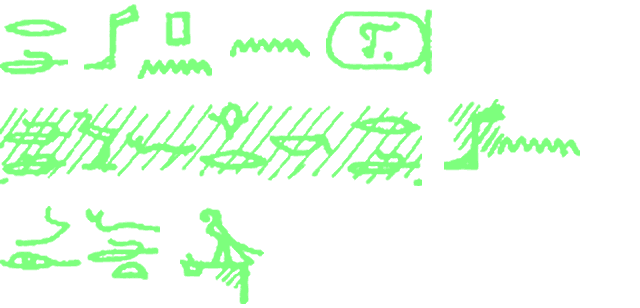
rd pn n(,j) Ttj [dd.w] =[f] [ḥr] =[k] [rd] n(,j) Mꜣfd,t
This foot of Teti, which he sets on you, is the foot of Mafdet.
Note · Line 14
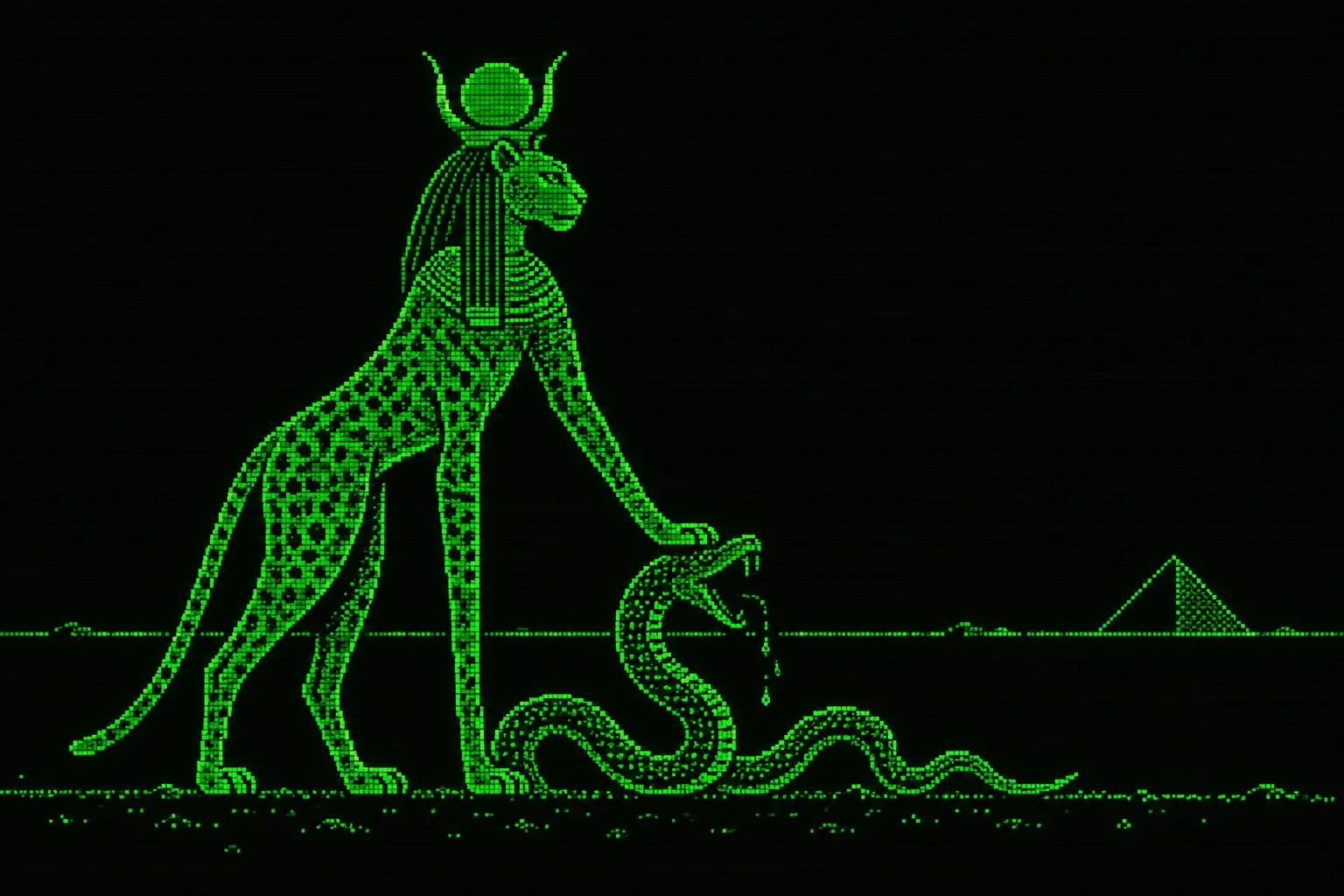
Mafdet is a feline goddess who kills snakes and scorpions. The king’s foot and hand become her paws and claws. - 15
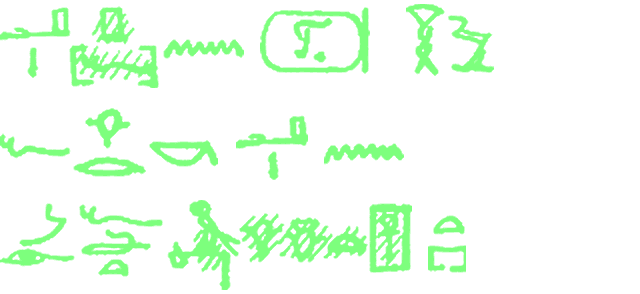
ꜥ p[n] n(,j) Ttj wꜣḥ.w =f ḥr =k ꜥ n(,j) Mꜣfd,t ḥr,t-jb-ḥw,t-ꜥnḫ
This hand of Teti, which he lays on you, is the hand of Mafdet who dwells in the Mansion of Life.
Note · Line 15
The Mansion of Life is a sacred building where Mafdet was thought to live. - 16
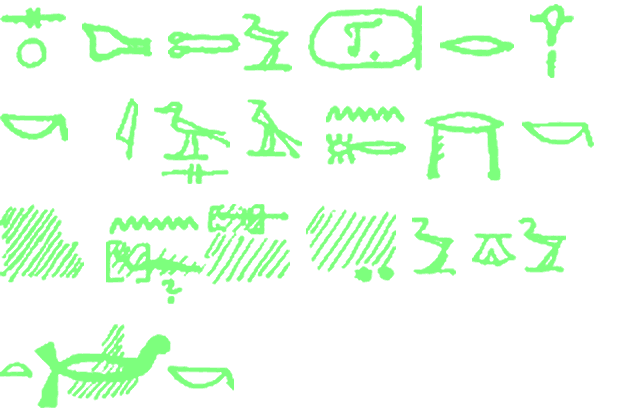
zḫi̯ ṯw Ḥr,w r ḥr =k j:zꜣ nẖ =k [j]⸢ni̯⸣ =⸢f⸣ ⸢z⸣[nf] wg,wt =k
Horus strikes you in the face: your spittle runs out, and it carries the blood of your jaw.
Note · Line 16
For a snake, spittle is its venom. The blow empties its mouth of venom and leaves its jaw bleeding. - 17

s〈r〉j,w sḏr
Seriu-snake, lie down!
Note · Line 17
This is a spell to ward off snakes, one of many carved in the burial chamber of King Teti’s pyramid to protect the dead king. - 18
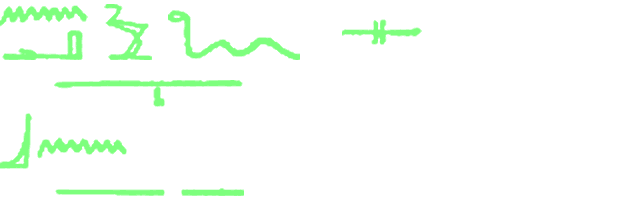
nꜥ,w zbn
Writher, slither away!
Note · Line 18
The Egyptian name of this snake, nꜥw, means “the one who writhes.” The command tells it to glide off, or to slip, and so leave the king alone.