~/sacred-texts/late-egyptian-miscellanies
The Praise of Memphis: Sweet Are the Weapons of War
- Date
- Copied in the 19th Dynasty, in the reign of Ramesses II (1279–1213 BC), on the back of Papyrus Sallier IV, as a scribe's exercise dated day by day in the summer months
- Found
- From the Memphis area; bought from the Sallier collection at Aix-en-Provence in 1839; now in the British Museum, London (EA 10184)
- Language
- Late Egyptian · Hieratic
Setyka, chantress of Hathor at Memphis, writes to Sekhmet-nefret, chantress of Amun at Thebes. She prays for her to every god of the city, Egyptian and foreign: Ptah, Sekhmet, Apis, to Baalat, to Qadesh, to Inyt, to Baal-Zaphon. Then her news: I found Memphis in fine condition, very fine indeed.
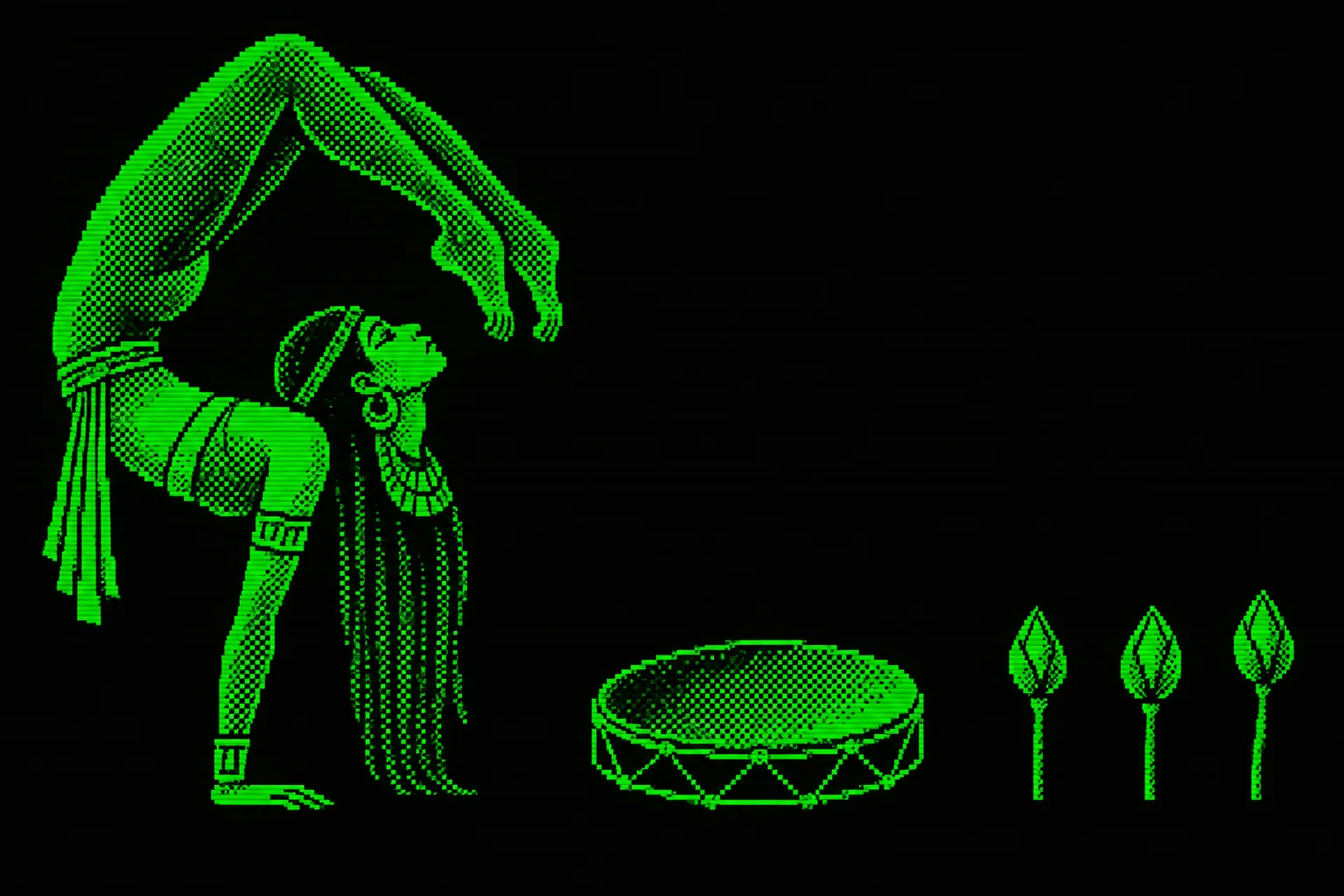
The city is a woman who has become mistress of Lower Egypt. Her granaries are full of barley and emmer. A man from Asia sits oiled, with lotus buds at his throat. Sweet are the weapons of war. A dancer from the south sets both her feet on her neck, and the noblewomen sit, their hands bowed under debyt flowers. The dates between the lines mark each day’s copying by the scribe.
- 1
[...] šmꜥ,yt-n-Ḥw,t-Ḥr,w-nb,t-〈n〉hꜣ[y,t]-rsj(,t) Sty-kꜣ rn =s ḥr nḏ ḫr,t n šmꜥ,yt-n-Jmn Sḫm,t-nfr,t n,tj m Nʾ,t-rsj(.t) ḥm,t [n(,j)] wꜥb-(n-)ḥꜣ,t-Jmn ẖr,j-ḥꜣb,t-ꜥꜣ-n-Wꜣs,t Jmn-m-ḥꜣ,t
… Setyka, chantress of Hathor, Lady of the Southern Sycamore, sends greetings to Sekhmet-nefret, chantress of Amun in the Southern City, wife of Amenemhat, wab-priest in the front rank at Amun’s bark and chief lector priest of Thebes.
Note · Line 1
The Southern City is Thebes. Amun’s bark was the sacred boat that carried his image in procession. A wab-priest served in a state of ritual purity; a lector priest recited the ritual texts. - 2
m ꜥnḫ-[(w)ḏꜣ-s(nb)]
In life, prosperity and health!
- 3
m ḥs,t Jmn-Rꜥw nswt-nṯr.pl
In the favor of Amun-Ra, king of the gods!
- 4
ḥnꜥ-ḏd
And further:
- 5
ḫy ={j} qd =t
How do you fare?
- 6
tw =t mj-〈j〉ḫ zp-2
How are you? How are you?
- 7
m =k 〈wj〉 ḥr ḏd n Ptḥ-ꜥꜣ rsj-jnb≡f nb-ꜥnḫ-tꜣ,du n Sḫm,t-ꜥꜣ.t mri̯.y(t)-Ptḥ n Sḫm,t 〈n〉 tꜣ [__].t [...] 〈n〉 Nb(,t)-ḥtp,t n pꜣ sbꜣ ḥr,j n Ptḥ n pꜣ sbꜣ jsy n Ptḥ sḏm-nḥ,wt 〈n〉 ⸢nꜣ⸣ [nṯr.pl] ⸢jm,j⸣ pr-Ptḥ n Jmn-Rꜥw nb-{stt}〈Ns,t,pl〉-tꜣ,du pꜣ 〈rhnj〉 ꜥꜣ n Pry-nfr n Jmn-n-ḥw,t-nṯr.pl n psḏ,t jm,jt pr-Ptḥ ⸢n⸣ ⸢Bꜥ~jrʾ~tj⸣ n Qdš,t n Jw~nꜣ~y,t 〈n〉 Bꜥ~jrʾ~y-Ḏꜣ~pw~nꜣ n Spd,w n Smꜣ,t nb(,t)-ꜥnḫ-tꜣ,du n Pꜣ-Rꜥw n ⸮ꜥ? ⸮n? ⸮sḫ,t-Rꜥw? n Ptḥ ḏd-šps,j n Šzm,tt nb,t-ꜥnḫ-tꜣ,du n Ptḥ ḫnt,y-tʾ~nn,t n Ptḥ ẖr,j-bꜣqꜣ≡f n Nb-mꜣꜥ,t-Rꜥw-{ẖnm,t}〈ẖnm,t〉-Ptḥ n Ḥw,t-Ḥr,w nb(,t)-nhꜣy(,t)-rsj(,t) m rn =st 〈n〉 Mḥy,t-wr,t n Sbjwk n Mri̯.y-Rꜥw [...] {Mri̯.y-Rꜥw}〈Mr-wr〉 n Tꜣ-wr,t (n) pꜣ hꜣbnj n Sḫm,t n nb(,t)-Tp-n-jn,t n Jmn b(ꜣ),t [...] 〈ꜥ〉b,t n Ptḥ nb-Smn-mꜣꜥ,t n Ptḥ nb-Ḥm,w 〈n〉 Ḥp m pr-Ptḥ n Jnp,w wt(,j) ḫnt,j-zḥ-nṯr nb-tꜣ-ḏsr,t n Wsjr nb-Rʾ-sṯꜣ,pl n ⸮[Wnn-n]fr{,t}? ⸮ḥr,j? jz,t.pl [...] rw,t-jz,t n psḏ,t jm,j-wr,t n nsw,y-bj,t.pl n,tj 〈m〉 jm,j-wr,t n,tj ḥr jmn,t Ḥw,t-kꜣ-Ptḥ n nṯr [nb] [ntr],yt nb(.t) n,tj m sw[ꜣ,w] [n] Mn-nfr
See, I pray to Ptah the Great, south of his wall, lord of Ankh-tawy; to Sekhmet the Great, beloved of Ptah; to Sekhmet of the … building; to Nebethetepet of the Upper Gate; to Ptah of the Old Gate; to Ptah who hears petitions; to the gods in the House of Ptah; to Amun-Ra, lord of the thrones of the Two Lands, the great ram-sphinx of Perunefer; to Amun of the House of the Gods; to the Nine in the House of Ptah; to Baalat, to Qadesh, to Inyt, to Baal-Zaphon, to Sopdu; to Semat, lady of Ankh-tawy; to Ra of the district of the Field of Ra; to Ptah, the august Djed pillar; to Shesemtet, lady of Ankh-tawy; to Ptah, foremost in the Tjenenet shrine; to Ptah beneath his moringa tree; to Nebmaatre-United-with-Ptah; to Hathor, Lady of the Southern Sycamore, in her name of Mehet-Weret; to Sobek of Meryre … Merwer; to Taweret of the ebony tree; to Sekhmet, lady of Tep-en-inet; to Amun of the thicket … lettuce; to Ptah, lord of Semen-Maat; to Ptah, lord of Hemu; to Apis in the House of Ptah; to Anubis the embalmer, foremost in the divine tent, lord of the burial ground; to Osiris, lord of Rosetau; to Wennefer, chief of the crews … Rut-iset; to the Nine of the West; to the kings of Upper and Lower Egypt who are in the West, west of Hutkaptah; to every god and every goddess in the country round Memphis:
Note · Line 7
Ankh-tawy and Hutkaptah are names for Memphis. - 8
[...] ꜣbd 2 šmw sw 11
… Second month of summer, day eleven.
- 9
jmm snb =t m-mn,t
Grant that you may be well every day!
Note · Line 9
Setyka asks the gods to grant health, but the “you” is still Sekhmet-nefret, her correspondent. - 10
ḥnꜥ-ḏd r-n,tj
Now to the matter at hand:
- 11
sḏm =j pꜣ hꜣb j:jri̯ =t n =j r-ḏd ḫy ꜥ,wj =[t] [tw] =[t] [mj-jḫ] [zp-2]
I have heard the letter you wrote me: “How are your arms? How are you? How are you?”
Note · Line 11
The question about the arms is a greeting, a way of asking after someone’s health. - 12
r-n,tj tw =j spr.k[wj] [r] [Mn-nfr] [...]
Here is my news: I have reached Memphis …
- 13
gmi̯ =j Mn-nfr m-šs r-jqr zp-2
I found Memphis in fine condition, very fine indeed.
- 14
n〈ꜣ〉 n,tj jm =st snb jw ḫꜣꜥ =sn ḫꜣwt mj bꜣdw [...] mj jn_jw j[w] [tꜣ] ⸢š⸣[r]j(,t) ḥḏ.t mj msr,t rnn.t 〈m〉 mḥ~ḏꜣ~jrʾ~tj ⸮j:szbi̯? tw [...] j〈w〉 szbi̯ =tw tꜣ jꜣw,t{.pl} n Mn-nfr
Her people are well, having planted herbs and cucumbers alike,
… plants and in…iu plants alike.
The White Girl is like a mesret bird reared in a fishpond.
“Off with you …!”
They have sent the Old Woman of Memphis away.Note · Line 14
The White Girl and the Old Woman suggest two ages of Memphis, pictured here as a woman. - 15
sw [...]
She is …
- 16
sw ḫpr.tj m ḥnw,t Tꜣ-mḥ,w jw jri̯.y =st ky ḫpr〈,w〉
She has become mistress of Lower Egypt,
having taken on another form. - 17
b(w)-pw.y =tw ptrj bꜣy,t Mn-nfr ḥr,w [...]
No one has seen such a wonder of Memphis, save …
- 18
nꜣ[y] =st šnw,t mḥ m jt ḥr b,tj
Her granaries are full of barley and emmer.
- 19
nꜣy =st tj~n~rʾ ẖr.j s〈m〉
Her hill fields bear fodder.
- 20
nꜣy =st š{,wt} mḥ m nḥm(,t) [...]
Her lakes are full of lotus buds …
- 21
[p]ꜣy =st bꜥḥ ẖr.j sšnj
Her flood basin bears lotus flowers.
- 22
bꜣqꜣ nḏm ꜥd ꜥšꜣ
Sweet moringa oil and fat abound.
- 23
mn,t nḥḥ ḥr tnw
There are jars of olive oil in any number.
- 24
nn [__].n =tw zb.pl sꜣy.pl r-〈rʾ〉-ꜥ ḫt [q]ꜣ~dj~rʾ~tj
There is no shortage of timber, from planks and beams to incense wood.
- 25
pꜣ ꜥꜣm,w n Mn-nfr ḥmsi̯
The man from Asia who lives in Memphis sits there.
Note · Line 25
Asia here means the lands east of Egypt, toward the Levant. - 26
hn =f sw qnj [...]
He has bent forward and embraced …
- 27
ꜥd [...] [ḥr] ḏꜣḏꜣ =f
Fat and … are on his head.
- 28
[...] [ꜣbd] [_] [šmw] [sw] [_]
… Month … of summer, day …
- 29
sqnn bꜣqꜣ n[ḥb],wt nḏm r ḫḫ =[f]
Salve, moringa oil and sweet lotus buds are at his throat.
- 30
[...] j~jrʾ~rw~ḏꜣ [...] [__]~tj [...] wꜣḥ.ṱ r-gs =f
… an oil jar … birds … have been set beside him.
- 31
ṯꜣ~dw~jw [...] m ḏr,t =f
… is in his hand.
- 32
tꜣ ḫꜣ~rʾ~pw~tj [wꜣ]ḥ.ṱ ḥ[r] [ꜥ.wj] =fj
Galbanum water has been poured over both his arms.
Note · Line 32
Galbanum is a fragrant plant resin. - 33
qnj =f [...] [rʾ]~ḥw~sw
He has embraced … rehes cakes.
- 34
jmm dby,t _ pꜣ kꜣ~ṯꜣ
Pour the fig drink into the metal goblet;
- 35
hꜣ~[__]~tj ⸮db?
… deb pastries;
- 36
[...] wꜣḥ.ṱ 〈_〉 pꜣ [...]
… has been laid on the …
- 37
[...] bꜣ~qꜣ [...] kꜣ~ṯw~_ n tꜣ jwy,t rsj.t ḥ[nꜥ] [⸮tꜣ?] [m]ḥ.tt
… of the southern quarter and the northern quarter.
- 38
st sẖk[r] [...] m [...] ⸮ḏnm? [...] jw [__]t =sn ḥr dbn =w m qmy,wt __~y~nꜣ m-mꜣ[_] [...] ⸮m?~jrʾ~⸮šr?~_ m ꜥd [nḏ]m
They are adorned … with …,
after they have … on their heads with resin oil;
new leatherwork … leatherwork with sweet-smelling fat. - 39
pꜣ ⸮kꜣ? ꜥd [...] jsj ḫꜣw [nb] nḏm stj
Food, fat, … reeds, every sweet-scented herb.
- 40
⸮nḏm? [ḫꜥw] n.w rʾ-ꜥ-ḫt
Sweet are the weapons of war:
- 41
tꜣ pḏ,t m ḫt [n] mry
the bow is of cedarwood.
- 42
[...] ꜣbd 3 š[mw] [sw] [_]
… Third month of summer, day …
Note · Line 42
Summer was Shemu, the harvest season and the last of the three seasons of the Egyptian year. - 43
[nꜣ] ꜥḥꜣ,w[.pl] [...] nḥm [...] ⸮nḏm? m j[__] [...]
The arrows … like lotus buds;
… sweet with … - 44
_ [...] pꜣ tḫ [...] n =f jw shꜣ,t m wpw,t r-ḥꜣ,t =sn ḏꜣm,w ḥr nhm.w m-sꜣ =sn
… the … for him,
with a drum among the women gathered before them
and young people cheering behind them. - 45
[ḏꜣ~p]w~qꜣ(,t) n rsj [___].ṱ [...]
A dancer from the south has come …
- 46
qni̯.y =st [...] qnj.y =st tꜣ mḥ,t(jt)
She has shown her strength …;
she has clasped the woman of the north.Note · Line 46
The Egyptian words for being strong and for embracing sound alike: the dancer’s strength is heard again in her embrace. - 47
ḏi̯.w =st rd,du =st ḥr nḥb,t =st
She has set both her feet on her neck;
- 48
ḏi̯ =sst ḏr,t =st 〈ḥr〉 pꜣ jwtn
she has set her hand on the ground.
- 49
nꜣ-n šps,yt n Mn-nfr ḥmsi̯
The noblewomen of Memphis sit,
- 50
ḏr,t =w hꜣn m dby,t m wꜣḏ n tꜣ mḫnm(,t) m mḥ(ꜥ) n pꜣ wḏ
their hands bowed under debyt flowers,
under greens from the Mekhnemet pool,
under flax from the Wed waters. - 51
ꜥkk nfr{.t} n msḏr≡j-sḏm,w ẖr.j mjs,t n jwꜣ,w
Fine akek bread from My-Ear-Listens,
topped with liver from longhorn cattle;Note · Line 51
The feast is catalogued by source: estates supply bread and livestock, and the waterways are named for their birds. - 52
[_]~jrʾ 〈n〉 pꜣ [__]y ḫj~wꜣ~y n pꜣ sḥnn dby,t db,t n Mn-n-qd≡j __ =w m ⸮šft? n šmꜥ,yt wnḏw nfr n pr Ḥw~_~rw~y~nꜣ wꜥ[tj] n Ḥr,w-m-nswt wrdw [n] ⸮ḥḏ? [...] ms,t n pꜣ bꜥḥ pꜥr.w n š,wt.pl-n-Ptḥ ḥrj,w n Nb [...] tj,t Tm ḥꜣy,t n Tꜣ-fꜣy,t-ṯꜣw n mw-ḥmsi̯-n-⸮sḫm,w? ḥr [...]
… flowers from Pa-…,
syrup from Sehenen,
fig drink made with figs from Men-en-qedi,
… from Shefet-of-the-Singer,
fine shorthorn cattle from the House of Hauron,
goats from Horus-Is-King,
marsh birds from White-…,
waterfowl from the Floodland,
quail from the Lake of Ptah,
heri fowl from Lord-…-Image-of-Atum,
hayt birds from She-Who-Bears-the-Wind
and from the Sistrum Reservoir, on … - 53
[...] ꜣbd 3 šmw sw ⸮5?
… Third month of summer, day five.