~/sacred-texts/egyptian-funerary-texts
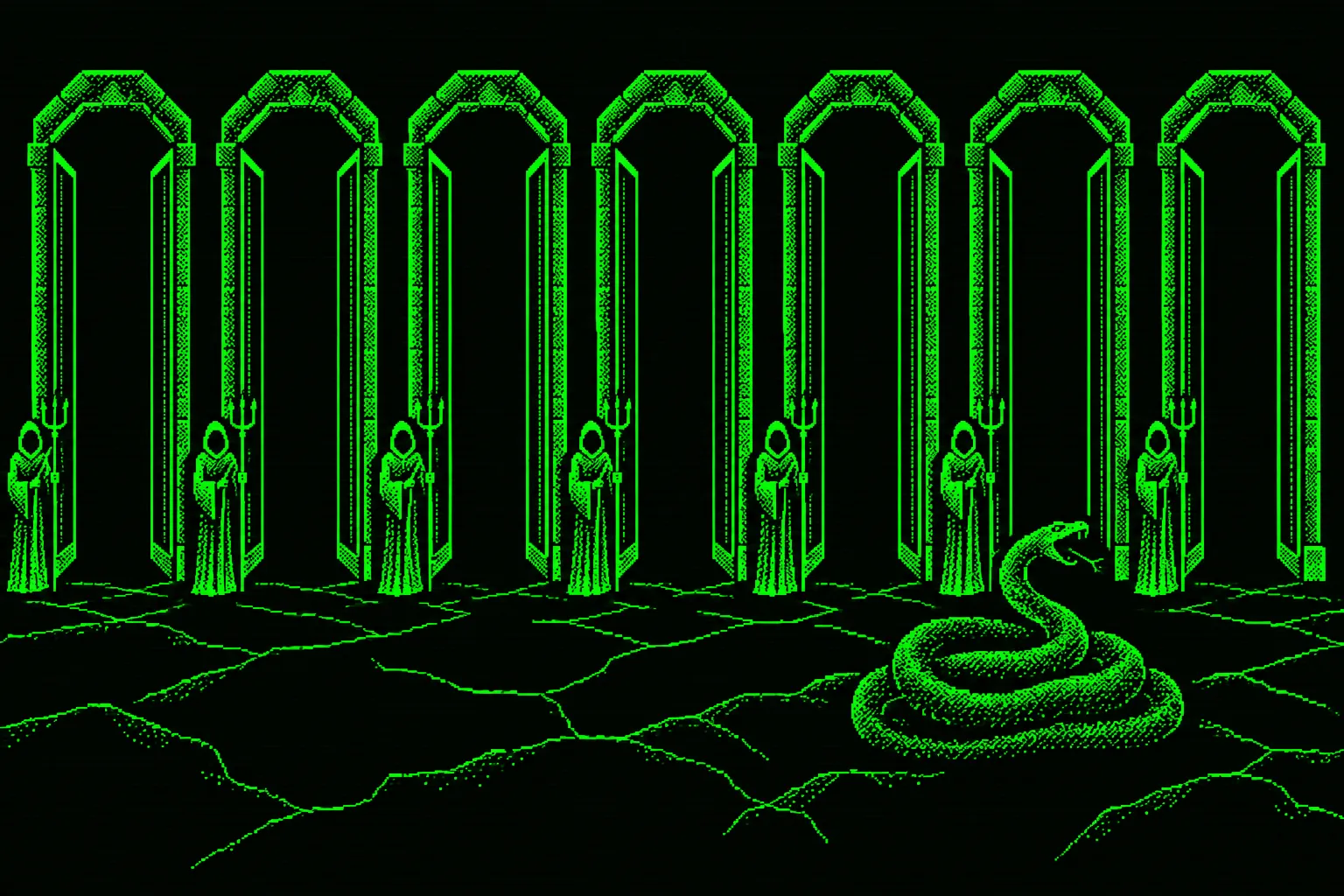
Through the Seven Gates of the Netherworld Past the Great Snake
- Date
- Copied in the 26th Dynasty (664–525 BC) in the tomb of Patjenfi at Thebes
- Found
- Tomb TT 128, Theban necropolis; in the tomb
- Language
- Late Middle Egyptian · Hieroglyphic
- 1
𓆓𓌃
ḏ(d)-mdw
Words to be spoken:
Note · Line 1
This is a cue for the person reciting the spell. The “you” in the lines that follow is Patjenfi, the man buried in the tomb. - 2
𓉔𓄿 𓁹𓊨𓀭 𓍛𓅃 𓍛𓋞𓏏 𓄂𓂝𓈖𓌥𓃀𓏏𓊖 𓇓𓏏𓂋𓐍𓐙 𓌻𓏤 𓆑 𓊪𓎀𓈖𓆑𓏭𓀭 𓐙𓊤
hꜣ (W)sr(,w) ḥm-Ḥr,w ḥm-nbw ḥꜣ(,tj)-ꜥ-n-Ḏb(ꜣ),t rḫ-nzw-mꜣꜥ mr(,y) =f P(ꜣ)-ṯnf,j mꜣꜥ-ḫrw
O Osiris, servant of Horus, servant of Gold,
mayor of Edfu, true acquaintance of the king, his beloved,
Patjenfi, justified!Note · Line 2
Patjenfi is addressed as Osiris because in death he shares the god’s identity. “Gold” is a name of the goddess Hathor, whom he served as a priest, and “justified” means he has been judged worthy among the dead. - 3
𓏠𓈖𓏛 𓊨𓏏𓉐 𓎡 𓊽𓊽
⸢mn⸣ s,t =k ḏdi̯ rn =k mj wr sms,w ⸢jm(,j)⸣ [Jwn,w]
May your seat stand firm;
may your name endure like that of the eldest Great One in Heliopolis. - 4
𓎡 𓅓 𓁷𓂋𓏏𓈉 𓎡 𓏅𓏏 𓋆𓏏𓊖 𓏇 𓊹 𓅓 𓈏𓅷𓏥𓅐𓏏𓈉
pꜣ(w),t =k m ḥr,t =k ḫnt Wꜣs,t mj nṯr m Jꜣ(,t)-ṯꜣm,t
May your offering bread be in your rock tomb at Thebes
as the god’s is at Medinet Habu.Note · Line 4
The bread is food for Patjenfi after death. The wish is that offerings will reach his tomb as regularly as they reach the god’s temple at Medinet Habu. - 5
𓎛𓆰𓈖𓃀𓏛 𓈖 𓎡 𓄿𓎛𓏏𓈅𓏥 𓅓
ḥnb n =k ꜣḥ,t.pl m sḫ(,t)-⸢jꜣ⸣[r,w] [mj] [nṯr.pl] [sšmi̯] [dwꜣ(,t)]
Fields are measured out for you in the Field of Reeds,
as for the gods who lead the way through the underworld.Note · Line 5
The Field of Reeds was imagined as fertile farmland in the afterlife. Measuring out fields gives Patjenfi a plot of his own there. - 6
𓋬 𓈖 𓎡 𓊹𓊹𓊹 𓎃𓏤 𓁷𓏤 𓂝𓂋𓊎 𓄤𓆑𓂋𓏏 𓈖 𓏠𓈖𓏏𓏭𓆤
dmḏ n =k nṯr.pl zꜣ =k ḥr ꜥr nfr{.t} n mn{tj}bj(,t)
The gods muster your protection for you
at the fair stairway of the couch. - 7
𓃹𓈖𓉿 𓈖 𓎡 𓋴𓐍𓃀𓉪𓏥 𓉿 𓊃𓈖𓏥 𓂧𓎼𓁻 𓎡 𓏶𓅱𓏥 𓄡𓏏𓏤 𓊃𓈖 𓎡
wn n =k sbḫ(,t).pl ꜥꜣ〈.du〉 =sn dgi̯ =k jm(,j).w št[,t] ẖ,t =sn [m] [hn,w] [n] [ꜥ]q =k
The gates open their two leaves for you.
You see those who dwell in the Shetit,
their bodies exulting as you enter.Note · Line 7
The Shetit is the crypt of Sokar, a god of the dead. - 8
𓄥𓅓 𓎡 𓈖 𓎁𓁷𓏤𓀭𓆑
zmꜣm =k n Jṯ-ḥr≡f
You join yourself to him whose face was taken from him.
- 9
𓅧𓈎𓂻 𓎡 𓅓 𓉪𓏏 𓁶𓏤 𓎿 𓏏𓅱 𓈖𓂋𓆂𓂡𓁷𓏤𓀭𓏪
ꜥq =k m sbḫ,t tp(.t) ḥzi̯ tw Nr-ḥr
You enter the first gate,
and Terrible of Face praises you.Note · Line 9
“Terrible of Face” is the first gate’s guardian. The praise signals that the keeper welcomes Patjenfi, and the spell goes on to name the beings who meet him at each gate. - 10
𓇋𓈎𓂻𓎛 𓎡 𓉪 𓏤𓏤𓏌𓏏 𓌻𓂋 𓏏𓅱
jqḥ =k sbḫ,t sn,nw.t mri̯ tw S[ms-pḥ,du]
You set foot in the second gate,
and He Who Brings Forth the End loves you. - 11
𓎡 𓉪 𓏥𓏌𓏏 𓋴𓈎𓃀𓆭𓀭 𓁷𓏤 𓐍𓂤 𓆓𓏏𓏤 𓎡
[w]stn =k sbḫ,t ḫmt,nw.t Sb(ꜣ)q ḥr ḫ(w)i̯ ḏ,t =k
You stride unhindered through the third gate,
while the Illuminator guards your body. - 12
𓈙𓋴𓂻 𓎡 𓉪 𓏤𓏤𓏤𓏤𓏌𓏏 𓂧𓂋𓂡 𓃛𓅱𓅪𓏥 𓎡 𓇋𓋔
š(ꜣ)s =k sbḫ,t fd,nw.t dr jw.pl =k jn Ḥw-ng(ꜣ)
You traverse the fourth gate,
and your misdeeds are driven away by the Striker of the Longhorn Bull. - 13
𓂋𓏏𓂞 𓎛𓎨𓈖𓂋𓈎𓂢𓀭𓏪 𓊡𓏲𓏥 𓂋 𓆑𓈖𓂧𓂉𓄻 𓎟
⸢s⸣[wḏꜣ] =[k] [sbḫ,t] [dj,nw.t] rḏi̯ Ḥn-rq(,j).pl ṯꜣw r fnd ={nb}〈k〉
You pass through the fifth gate,
and He Who Sends the Foes Running gives breath to your nose. - 14
𓊃𓌬 𓎡 𓉪 𓏤𓏤𓏤𓏤𓏤𓏤𓏌𓏏 𓄥𓅓𓏏𓏭𓀭 𓇋𓅓 𓁷𓏤 𓊃𓅱𓍑 𓅖 𓎛𓆑𓄫𓏲𓆙 𓉻𓂝 𓈖𓏏𓏭 𓄟𓋴𓏏𓅱 𓆑 𓌨𓄂𓏏𓏤
{s}šmi̯ =k sbḫ,t sjs,nw.t Zmꜣm,tj jm ḥr swḏꜣ ḥ[ꜥ.pl] =[k] [nḥm] =[f] [tw] m-ꜥ ḥfꜣ,w ꜥꜣ n,tj msi̯.tw =f ẖr-ḥꜣ,t Wrd-jb
You walk through the sixth gate.
There the Companion makes your limbs whole;
he saves you from the great snake
that was born before the Weary of Heart.Note · Line 14
“The Weary of Heart” is Osiris in death. The snake is so ancient that it was already alive when Osiris was born. - 15
𓇋𓎡𓃀𓁸𓏥 𓊃𓅷𓅓𓋳 𓏏𓅱 𓇋𓎡𓈖𓏏𓏭𓀭
pḥrr =⸢k⸣ sbḫ(,t) ⸢sfḫ,nw.t⸣ ⸢šzp⸣ [tw] Jkb sṯꜣm tw Jkn,tj
You run through the seventh gate.
The Mourner receives you, and Ikenti shrouds you. - 16
𓐍𓂞𓆓𓏏𓏤𓆑𓀭 𓈖𓏏 𓊃𓌬𓅓 𓏏𓅱𓏥 𓅓 𓎛𓃀𓊃𓋳𓃀𓎼𓀉𓉐
Ḫ(w)-ḏ,t≡f Wn-ḏs≡f Sḫn-wr jr(,j).pl-ꜥꜣ n{.t} ꜥr(r),yt.⸢pl⸣ sšmi̯ tw m Ḥbs-b(ꜣ)g(,j)
He Who Guards His Body, He Who Opens by Himself, the Great Embracer—
the keepers of the gateways who guide you
within the gate of the One Who Clothes the Weary. - 17
𓇋𓀞 𓇋𓂋𓀹𓉿𓂡
j jr(,j)-ꜥꜣ [10] n[{.t}] ꜥ[r(r),t] [7]
O ten gatekeepers of the seven gateways!
Note · Line 17
Here the speaker turns from addressing Patjenfi to addressing the gatekeepers themselves. The next line formally introduces him to them by his titles and his father’s name. - 18
𓇋𓅱 𓁹𓊨𓊹 𓊹𓍛 𓍛𓅃 𓍛𓋞𓏏 𓄂𓂝𓈖𓊖𓏏𓏤 𓇓𓏏𓈖𓂋𓐍𓐙𓌳𓂝 𓌻𓏤 𓆑 𓊪𓎀𓈖𓆑𓏭 𓐙𓊤 𓆇𓏤
jw (W)sr(,w) ḥm-nṯr ḥm-Ḥr,w ḥm-nbw ḥꜣ(,tj)-ꜥ-n-nʾ,t rḫ-nzw-mꜣꜥ mr(,y) =f P(ꜣ)-ṯnf,j mꜣꜥ-ḫrw zꜣ ⸢ḥm-Ḥr,w⸣ ⸢P(ꜣ)-di̯⸣-[Jmn] [mꜣ]⸢ꜥ-ḫrw⸣
The Osiris Patjenfi, justified, priest, servant of Horus, servant of Gold, mayor of Thebes, the king’s true acquaintance and his beloved, son of the servant of Horus Pa-di-Amun, justified, …