~/sacred-texts/late-egyptian-miscellanies
Papyrus Turin B: Hauling Stone for a Temple of Ramesses
- Date
- Copied in the 20th Dynasty during the reign of Ramesses IX (c. 1126–1108 BC) on the verso of Papyrus Turin B at Thebes
- Found
- From Thebes; now in the Museo Egizio, Turin
- Language
- Late Egyptian · Hieratic
Orders for Work in the Temple of Ramesses
- 1
zẖꜣ,w-nswt (j)m(,j)-rʾ-pr ḥꜣ,tj-ꜥ Hꜣw-nfr n Nʾ,t ḏd n zẖꜣ,w-spꜣ,t Ḥr,j n Nʾ,t r-n,tj
Haunefer, royal scribe, steward of the estates and mayor of Thebes, speaks as follows to Hori, district scribe of Thebes:
- 2
jni̯.tw n =k zẖꜣ,w pn n ḏd ḥnꜥ-ḏd
This letter is brought to you with this further word:
- 3
jḫ ḏi̯ =k ḥr =k r ḏi̯.t bꜣk.[t]w m ḥw,t-nṯr-n-Rꜥ-msi̯-s(w)-mri̯-[J]m[n]-ꜥnḫ-(w)ḏꜣ-s(nb)-Mr,y-mj-Jmn
Please see to it that work is done in the temple of Ramesses-Meryamun (may he live, prosper and be healthy), “Beloved Like Amun.”
Note · Line 3
Meryamun means “beloved of Amun.” The king is Ramesses II. - 4
m-jri̯ nni̯.y jw m-jri̯ bꜣ~gꜣ~y.t
Do not idle. Do not slacken.
- 5
ptrj rḫt ꜥšꜣ.t n r(m)ṯ.pl dj m-dj =k wjꜣ.tw 3 zꜣ n wꜥ,w.pl jm =sn z 600 wꜥ nb 200
Look how many men you have there, not counting the three companies of soldiers: six hundred men, two hundred to a company.
- 6
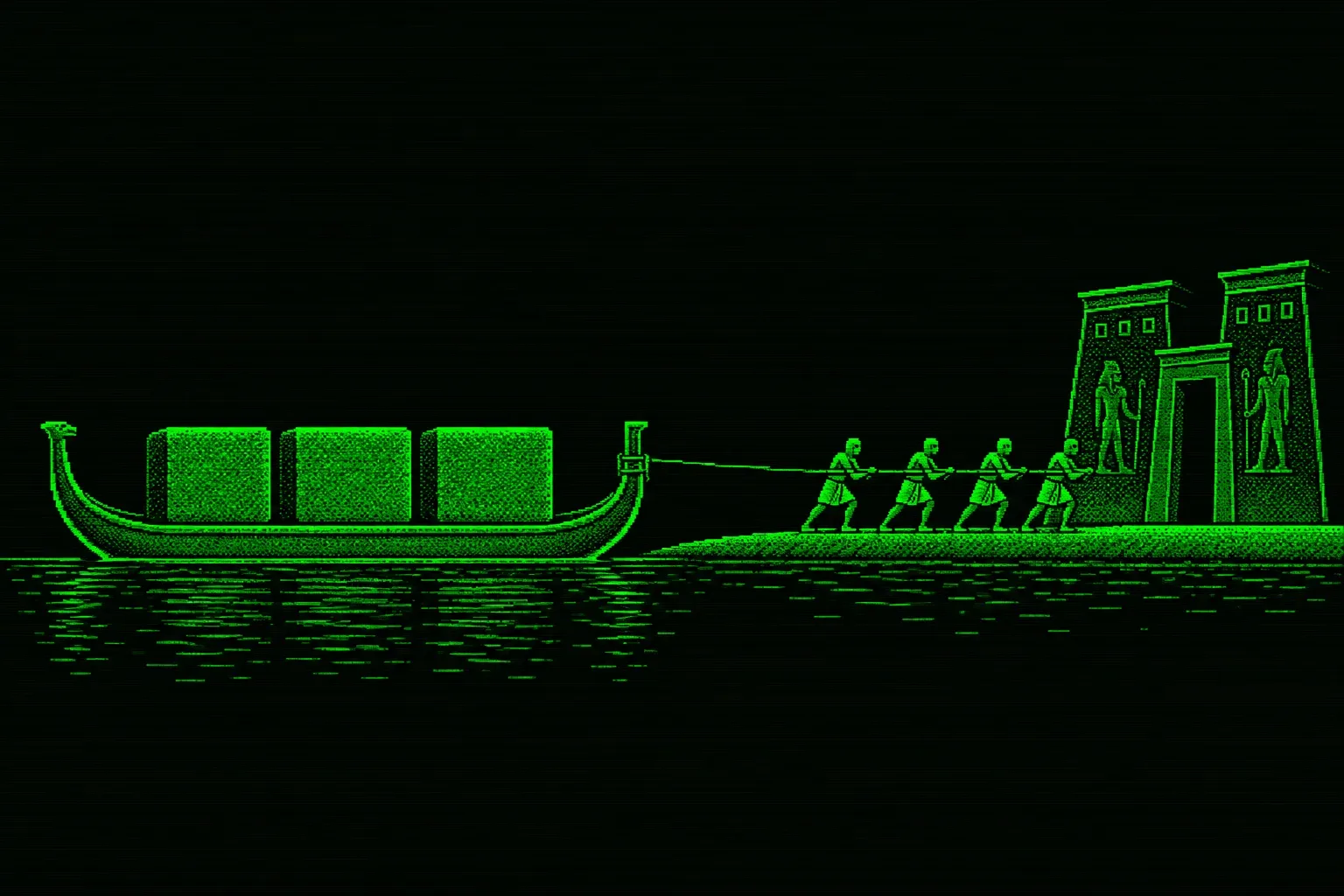
mtw =k ḏi̯.t jtḥ.tw pꜣj 3 dp ꜥꜣ.y n,tj wꜣḥ m rʾ n Pr-Mw,t
Have these three great stone blocks that lie at the entrance to the House of Mut hauled away.
Note · Line 6
The House of Mut is the temple of the goddess Mut, Amun’s consort at Thebes. - 7
jw m-ḏi̯.ꜣyt ꜥq hrw wꜥ zp-2 m pꜣy =sn dj,w m pꜣy =sn sgnn
Do not let a single day pass without the men receiving their grain ration and their anointing oil.
- 8
ptrj mdwi̯ =j m-dj nꜣ zẖꜣ,w.pl-pr-ḥḏ m-mj,tjt nꜣ zẖꜣ,w,pl-n-tꜣ-šnw,t m-{n}-ḏr wn =j m ḫdi̯ m tꜣ wḏ,yt pr,t
Look, I spoke with the scribes of the treasury and with the scribes of the granary as well when I was sailing downstream on the winter journey.
Note · Line 8
Winter here is Peret, the growing season that followed the Nile flood. - 9
šni̯{,t} pꜣy =sn bꜣk,w gr mntk m jtḥ jnr ḥr jpy jw ḫꜣꜥ =k{wj} n =k tꜣ wꜣ,t n nꜣ r(m)ṯ-mšꜥ.pl
You yourself are also to check on their work hauling stone at the ipy, once you have left the road to the soldiers.
Note · Line 9
What ipy designates in the stone-hauling work is unknown. - 10
m-ḏi̯.yt ḫpr nhꜣ.pl sḏr(.pl) jw nꜣ ktḫ.pl ḥr bꜣk jw jṯꜣ{.wt} nꜣy =sn ṯꜣ,y-s~jrʾ~y.pl nꜣ ktḫ.pl ḥr jri̯.t nꜣy =sn wpw,t.pl
Do not let some men sleep while others work, with their standard-bearers taking others off to run their own errands.
Note · Line 10
The standard-bearers were military officers. - 11
ḫr wn =w grḥ m pꜣ sḥn jw =k (ḥr) wḏi̯ pꜣ wsḫ{,t} r ẖni̯ jnr.pl jw ḏi̯ =k nꜣy =w ḥ(n),tjw ḥr-r =sn
When they have finished the task, put their officers in charge of them and send the cargo barge to ferry the stones.
- 12
jw m ḏi̯.yt sḥn n wꜥ,w mr r 〈s〉ꜥḥꜥ pꜣ jnr m-mj,t(j)t r(m)ṯ.pl
Do not order a sick soldier to raise the stone, or give the men such an order either.
- 13
zꜣu̯ tm =sn ḫꜣꜥ pꜣ jmw ḥr wꜣ,t mtw =f ḫpr mj n,tj bw šm.ṱ =f
See that they do not abandon the boat on the way, or it will be as if it had never set out.
- 14
ḫr wn =f (ḥr) spr r =k m hrw n mnjꜣ m jri̯ wsf r(m)ṯ{.pl} wꜥ m pꜣ sḥn r šwi̯ =f
When it reaches you on the day it docks, do not let a single man slacken at the task until the boat is empty.
- 15
ptrj rḫ〈t〉 ꜥšꜣ.t n r(m)ṯ.pl jm =f wjꜣ.tw nꜣ r(m)ṯ.pl kfꜥ qn,w.pl
Look how many men are aboard, not counting the many captives.
- 16
mtw =k ḏi̯.t ḏḏ.yt sgnn.pl n ṯꜣ,y-bꜣ~šꜣ~jw.pl n,tj ḥr bꜣk m nꜣ bꜣ~nš~jw.pl m ḥw,t-nṯr n Rꜥ-msi̯-sw-mri̯-Jmn ꜥnḫ-(w)ḏꜣ-s(nb)
Have anointing oils given to the stonecutters working on the gateposts in the temple of Ramesses-Meryamun (may he live, prosper and be healthy).
- 17
mtw =k sgnn [...] sw ꜥn
And anoint … him again.
- 18
jḫ rḫ =k sw-st
Please bear this in mind.
Spell from the Ritual of Amenhotep I
- 19
rʾ n srwd ḥtp-nṯr
Spell to make the god’s offering endure:
Note · Line 19
The rite calls on the power that made the world to sustain the offerings for a dead king. - 20
[...] Ḫpr,y
… Khepri!
Note · Line 20
Khepri is the rising sun, pictured as a scarab beetle. - 21
qꜣi̯.y =k m [...]
You rose high from …
- 22
[...] jšš =k m Šw{tj} [...]
… you spat out Shu …
Note · Line 22
Shu is the god of air, born from the creator Atum’s mouth. The Egyptian word for spitting echoes his name. - 23
[...] Ḏsr-kꜣ-[Rꜥ] ꜥnḫ-(w)ḏꜣ-s(nb) zꜣ-Rꜥ [Jmn-ḥtp.w]
… Djeserkare—may he live, be safe and be well—the Son of Ra, Amenhotep.
Note · Line 23
Djeserkare was the name Amenhotep I took when he became king. - 24
[...] jw =f rd ḏ,t
… as he grows forever.
- 25
rd [...] ḥtp-nṯr m ḏḏ Nfr-[kꜣ]-Rꜥ[-stp.n-Rꜥ] [...]
May it grow … the god’s offering from what Neferkare Setepenre gives …
Note · Line 25
Neferkare Setepenre was the throne name of Ramesses IX, who reigned centuries after Amenhotep I.