~/sacred-texts/letters-from-el-hibeh
Papyrus Strasbourg 31: Egyptian Priests Order an Eviction
- Date
- Written in hieratic on papyrus in the 21st Dynasty (about 1070–945 BC), between two priests of Amun at El-Hibeh
- Found
- Found at El-Hibeh in Middle Egypt; now in the Bibliothèque nationale et universitaire, Strasbourg
- Language
- Late Egyptian · Hieratic
- 1
jtj-nṯr zẖꜣ(,w)-ḥw,t-nṯr Ḥr,w-p(ꜣ)-n-Ꜣs,t pꜣ-n-[jh,y] [n] ⸢jtj-nṯr⸣ ⸢zẖꜣ(,w)⸣ [N,j-sw]-pꜣ-kꜣ-m-Km,t m ꜥnḫ-wḏꜣ-[s(nb)] [m] [ḥz(w),t] [Jmn-Rꜥw] [nswt-nṯr,pl] [pꜣy] =k nb n,tj tw=j ḥr tb[ḥ] [n] [=w] [rꜥw-nb]
The god's father and temple scribe of He-of-the-Camp, Hor-pa-en-Aset, to the god's father and scribe Ni-su-pa-ka-em-Kemet: in life, prosperity and health, in the favour of Amun-Ra, King of the Gods, your lord, whom I entreat every day.
Note · Line 1
The opening formula gives the sender, the recipient, and a blessing. - 2
[tw][=j] [ḥr] ḏd n Jmn-Rꜥw-Ḥr,w-ꜣḫ,tj jw =f wbn ḥtp Jmn hr-jb nṯr-ꜥꜣ [...] jmi̯ n =k ꜥnḫ-wḏꜣ-s(nb) ꜥḥꜥ(,w) qꜣi̯ jꜣw,t ꜥꜣi̯.t nfr.t ḥ[z(w),t.pl] [qn],w.pl-ꜥšꜣ.pl m-bꜣḥ nṯr.pl r(m)ṯ.pl rꜥw-nb
I say to Amun-Ra-Harakhty as he rises and as he sets, to Amun, the calm of heart, the great god …: "Grant you life, prosperity and health, a long lifetime, a great and good old age, and favours many and manifold before gods and men every day!"
Note · Line 2
Amun-Ra-Harakhty is Amun merged with the sun god, so he is prayed to at sunrise and sunset. Here the writer quotes the daily prayer he makes on his correspondent’s behalf. - 3
r-n,tt ⸮sḏm? =j pꜣj hꜣb j:jri̯ =k m-dj ⸮Bs?[_] pꜣj sḫt,j r-ḏd rwi̯ r(m)ṯ.pl n,tj n pꜣ ḥꜣ,wtj n,tj m-ẖnw pꜣj pr n Sꜣu̯-pꜣ-ꜥnḫ j.n =k
Further: I have heard the message you sent by Bes, this weaver, saying, "Drive out the people who belong to the chief who is in this house of Sa-pa-ankh." So you said.
Note · Line 3
Here the business of the letter begins. - 4
[⸮ḫru̯?] =tw n pꜣy =k nb jri̯ =j zp-2
Your lord was told: "I will do it, I will do it!"
- 5
ptr nꜣ r(m)ṯ.pl jw ḏi̯ =j jwi̯ =tw rwi̯ =w jm 〈m〉 pꜣ pr
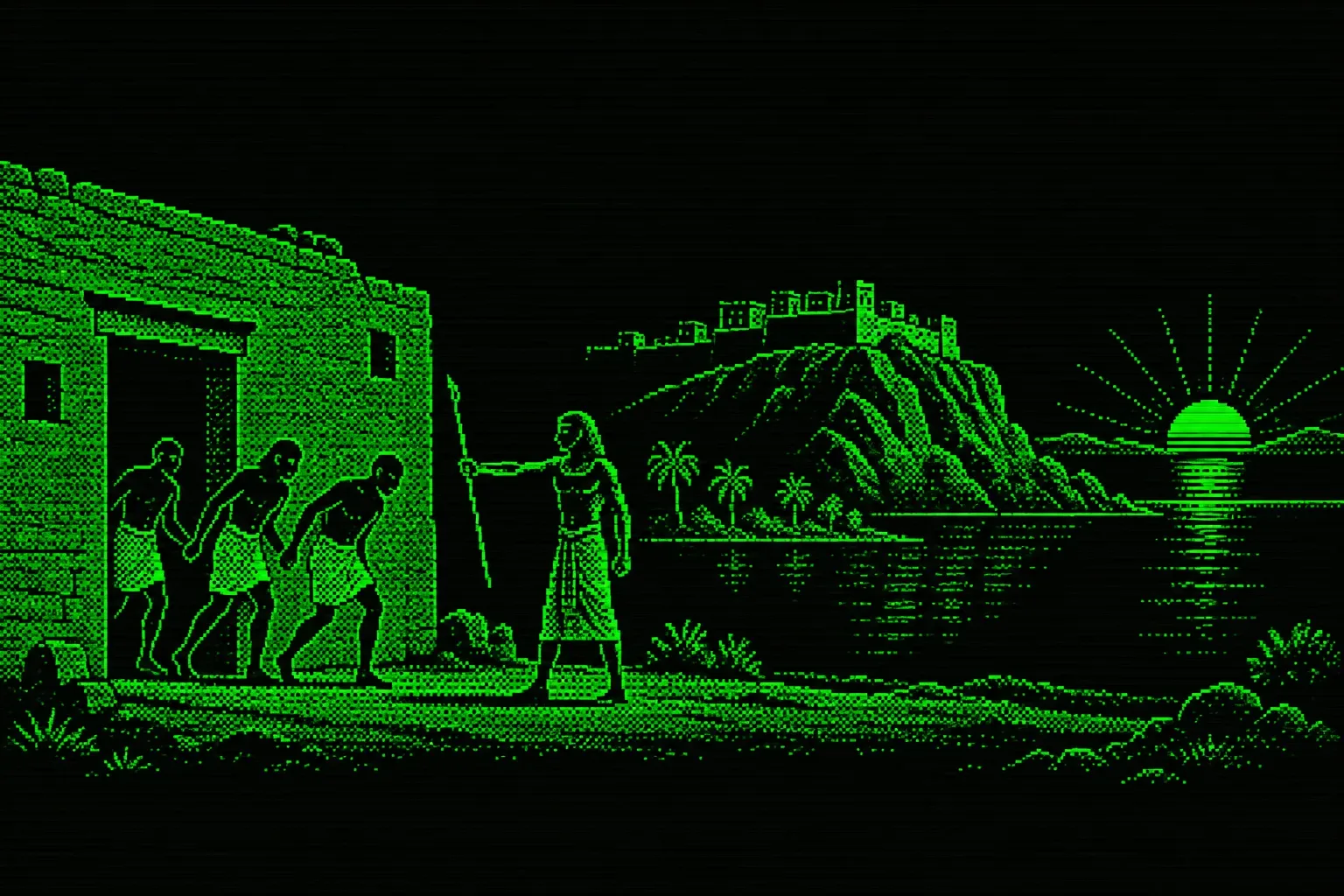
Look to the people: I have had men come, so that they are driven out of the house there.
- 6
ḫr tw=j ḥr jy.t m-ḫt r t{n}hn,t ḥꜥ =j m dwꜣ,w
And I myself am coming north to the Crag at dawn.
Note · Line 6
“The Crag” is the rocky spur on which El-Hibeh stood, and here it stands for the town itself. The writer will follow up in person. - 7
[...] jtj-nṯr zẖꜣ(,w)-ḥw,t-nṯr Ḥr(,w)-p(ꜣ)-n-Ꜣs,t p(ꜣ)-n-pꜣ-jh,y [N.j-sw]-pꜣ-m-Km,t [...] [p(ꜣ)-n-pꜣ]-jh,y
… The god's father and temple scribe of He-of-the-Camp, Hor-pa-en-Aset, to Ni-su-pa-ka-em-Kemet … of He-of-the-Camp.
Note · Line 7
This is the address, written on the outside of the folded letter.