~/sacred-texts/ramesside-letters
Papyrus Leiden I 365: Egyptian Letter Asking If You’re Dead
- Date
- Written in hieratic in the 19th Dynasty, in or after the reign of Ramesses II (c. 1279–1190 BC)
- Found
- Now in the Rijksmuseum van Oudheden, Leiden
- Language
- Late Egyptian · Hieratic
- 1
[sḏm] [Mr,y]-jtj=f ḥr nḏ ḫr,t sḏm Rwd=f-nḥḥ m ꜥnḫ-wḏꜣ-s(nb) m ḥz(w),t Jmn-Rꜥw nswt-nṯr.pl
The servant Mery-itief greets the servant Rudjef-neheh: in life, prosperity and health, and in the favour of Amun-Ra, King of the Gods.
- 2
tw=j ḥr ḏd n nꜣ nṯr.pl nb.pl Pr-Rꜥw-msi̯-sw-mr,y-Jmn ꜥnḫ-wḏꜣ-snb jmi̯ snb =k jmi̯ ꜥnḫ =k jmi̯ wḏꜣ =k
I say to all the gods of Piramesse (life, prosperity, health!): Let you be healthy, let you live, let you prosper.
Note · Line 2
Piramesse, “the House of Ramesses,” was the royal residence that Ramesses II founded in the eastern Nile Delta. The blessing “life, prosperity, health” is attached to its name as it was to the king’s. - 3
ḥnꜥ-ḏd jr pꜣ hꜣb j:jri̯ =k n sḏm Mr-Mꜣꜥ,t r-ḏd j:ḏd n pꜣ r(m)ṯ ḫy-ꜥ =k
Furthermore: as for the message you sent to the servant Mer-Maat, saying, "Say to the man: how are you?"
- 4
js pꜣy =k bꜣk Mr-Mꜣꜥ,t jw jnk pꜣy =k rwd(,w)
Is Mer-Maat your servant, while I am your agent?
Note · Line 4
Mery-itief is offended. Rudjef-neheh sent his greetings through Mer-Maat instead of writing to him, though Mery-itief is the one who acts on his behalf. - 5
pꜣ r(m)ṯ m-šs
The man is well.
- 6
ḫr-jr pꜣ hꜣb j:jri̯ =k ḥr tꜣ 3 ꜥḏd st m-šs
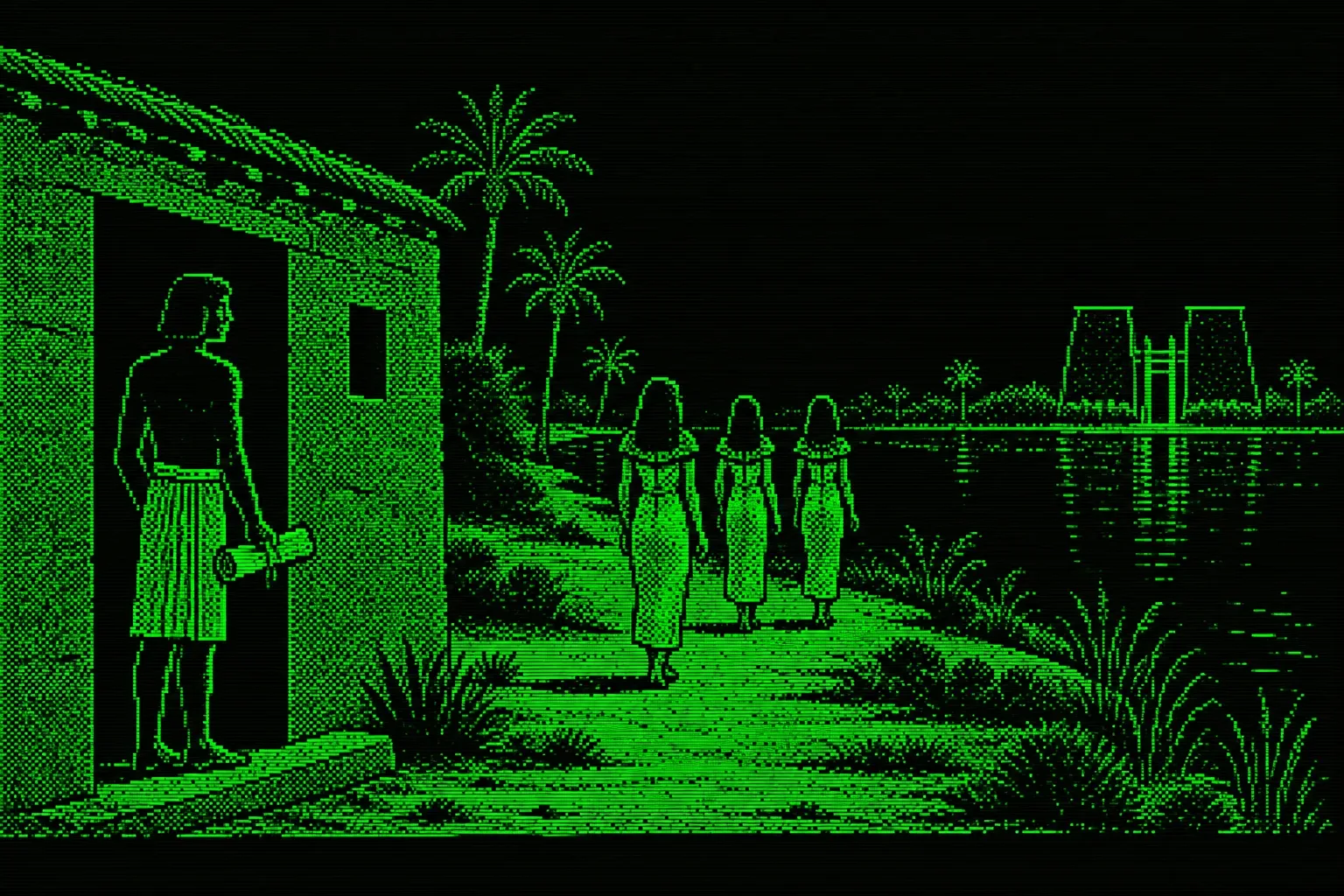
And as for the message you sent about the three girls: they are well.
- 7
bs.y wꜥ nb mj-qd =w
If only everyone were like them!
- 8
st wḏi̯ st jwi̯ n =tn bn st dy m-ꜥ =n
They have set off and are on their way to you; they are no longer here with us.
- 9
ky-ḏd n šmꜥ,yt-n-Jmn Nbw-m-[_] n šmꜥ,yt-n-Jmn Sw-pꜣ-ṯꜣw
Another message, for the Chantress of Amun Nebu-em-… and the Chantress of Amun Su-pa-tjau:
Note · Line 9
A “Chantress of Amun” was a woman who sang and made music in the god’s temple rituals. Many women of good family held the title. The writer now turns to address these two women. - 10
m-mj,tt tw=n mj-jḫ zp-2
Likewise: how are we? How are we?
Note · Line 10
The Egyptian really says “how are we,” a chatty, familiar turn of phrase. The question is written once with a sign meaning “twice,” so it is to be said two times over. - 11
tw=j ḥr ḏd n nꜣ nṯr.pl nb.pl Pr-Rꜥw-msi̯-sw-mr,y-Jmn jmi̯ snb 〈=tn〉 jmi̯ ꜥnḫ =tn jmi̯ wḏꜣ =〈tn〉
I say to all the gods of Piramesse: Let you be healthy, let you live, let you prosper.
- 12
r-n,tj tw=j m-šs tw=j ꜥnḫ.k m pꜣ-hrw
As for me, I am well; I am alive today.
- 13
ḫy jḫ pꜣy =tn tm.t ḫsf n =j tꜣy =j šꜥ,t
Oh, what is this, your not answering my letter?
- 14
nꜣ tw=tn wḏꜣ nꜣ mwt =tn
Are you well, or are you dead?
- 15
nfr snb =k
Fare well.
- 16
n sḏm Rwd=f-nḥḥ
To the servant Rudjef-neheh.
Note · Line 16
This is the address, written on the outside of the folded papyrus.