~/sacred-texts/late-egyptian-miscellanies
Papyrus Lansing: Why Being a Scribe Beats Every Trade
- Date
- Copied in the 20th Dynasty (1186–1070 BC) on Papyrus Lansing, a schoolbook from Thebes
- Found
- Purchased at Thebes; now in the British Museum, London (EA 9994)
- Language
- Late Egyptian · Hieratic
- 1
[...] j:[⸮dgi̯?] n =k m jr,t =k ḏs =k
… Look for yourself, with your own eye:
Note · Line 1
A teacher is urging his pupil to become a scribe. - 2
nꜣ jꜣw,t.pl wꜣḥ m-bꜣḥ =k
the trades are laid out before you.
- 3
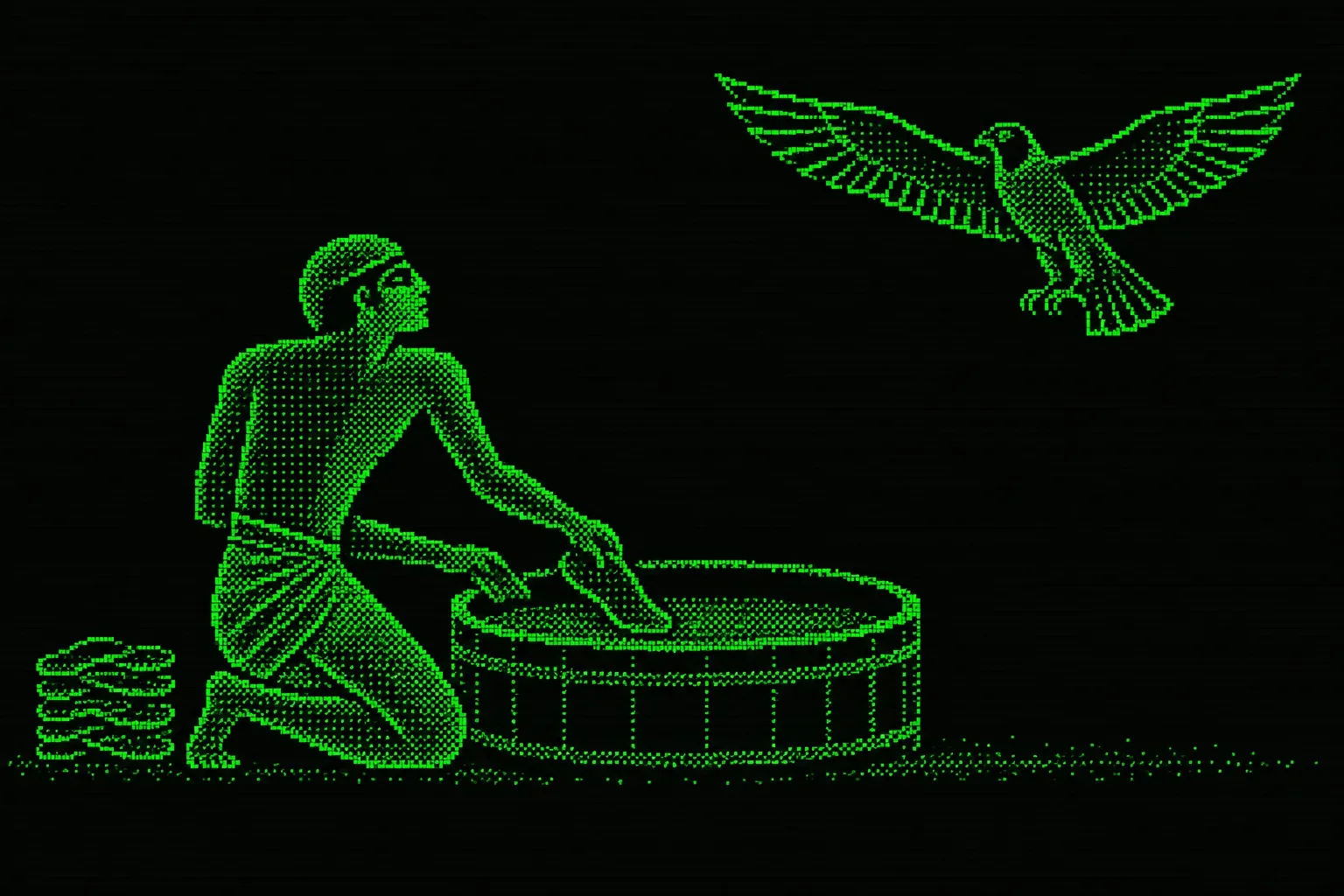
wršu̯ pꜣ rḫt,j{w.pl} 〈ḥr〉 ṯsj hꜣy
The washerman spends his day climbing up and down.
Note · Line 3
He washes clothes at the river and has to climb the bank. - 4
[ꜥ,t].pl =f nb.t(.pl) gnn 〈ḥr〉 ḏi̯.t wbḫ{.t} nꜣ ḥbs.w.pl n sꜣ〈ḥ〉-tꜣ =f rꜥ-nb ḥr jꜥi̯ nꜣy =w ḏꜣ~nꜣ~jn[jw]
Every limb is weak from bleaching his neighbors’ clothes day after day and washing their linen.
- 5
pꜣ jqd,w-nḏs,t wrḥ.w m jwt〈n〉 mj n,tj r(m)ṯ.pl.ṱ =f mt
The potter is smeared with earth like a man whose kin have died.
Note · Line 5
Mourners put dust on their heads as a sign of grief. - 6
ḏr,t.pl =f rd.du =f mḥ [m] ꜥmꜥm,t jw =f mj n,tj m pꜣ ((m))ẖnw
His hands and both his feet are caked with clay, like those of a man in a mire.
- 7
pꜣ ṯbw šbn.w bḥ pꜣy =f 〈stj〉 stnw
The sandalmaker who mixes the tanning liquor—his stink stands out.
- 8
ḏr,t.pl =f dšr.t m jw~pꜣ mj n,tj wrḥ.w m snf =f ḥr nww n-ḥꜣ =f r tꜣ ḏrw(,t) mj z gmi̯ ={f} jwf =f
His hands are red with madder, as though he were smeared with his own blood. He looks over his shoulder for the kite, like a man who finds his flesh laid bare.
Note · Line 8
Madder is a red dye made from roots. The kite is a bird of prey that scavenges meat. - 9
pꜣ ⸮wꜥr-Ḥr,w? ḥr jri̯.t ḥtp.w.pl 〈ḥr〉 sḥḏ{.pl} ꜥgꜣ~nꜣ.pl
The waʿr-Hor binds flowers into garlands and polishes jar stands.
Note · Line 9
The duties of this worker are clearer than his title. The stands held round-bottomed jars upright. - 10
j:jri̯ =f grḥ{,t} n bꜣk,w mj n,tj šw wbn 〈ḥr〉 ḥꜥ,t =f
He works through the night as though the sun were shining on his body.
- 11
nꜣ šwy.pl (ḥr) ḫdi̯ ḫntj{tyw} jw =w (ḥr) sḥn.t mj ḥmt (r) fꜣy ꜣḫ,t.pl 〈m〉 nʾ,t r k,tj jw =w (ḥr) sdbḥ pꜣ jw,tj ḫr jw nꜣ ḥtrj,pl (ḥr) fꜣy nbw pꜣ sbqj n jnr nb{.t}
The traders sail downriver and upriver, worked like copper, to carry goods from one town to another. They supply the man who has nothing, while the tax collectors carry off the gold, the finest of all stones.
- 12
nꜣ jz,t.pl mnš.w.pl n pr nb{.t} šsp =w {{n}}[[t]]ꜣy =sn sbw(,t) ⸢wḏi̯⸣ =⸢sn⸣ 〈m〉 [Km],t r ⸢Ḏꜣhꜣ⸣
The crews of every estate’s cargo ships take on their freight and set sail from Egypt for Djahy.
Note · Line 12
Djahy was an Egyptian name for a region of the eastern Mediterranean seaboard. - 13
⸢nṯr⸣ ⸢n⸣ ⸢z-⸣nb ⸢m⸣-[ḏi̯] =[f]
Each man’s god is with him.
- 14
⸢bw⸣ ⸢ḏd⸣.ṱ wꜥ jm =sn
Not one of them says,
- 15
jw =[n] (r) ptrj Km,t grw
“We shall see Egypt again.”
- 16
ḥm(w,w) pꜣ n,tj m tꜣ wḫr(,t) ḥr fꜣi̯ pꜣ ḫt ḥr wꜣḥ =f
The carpenter in the shipyard lifts the timber and lays it down.
- 17
j:ḏi̯ =f bꜣk,w =f n sf m pꜣ-h(rw)
Today he hands in yesterday’s work.
- 18
wgꜣj r ꜥ,t.pl =f
His poor limbs!
- 19
pꜣ ḥm(w,w)-wr ḥr ꜥḥꜥ ḥr pḥ,wj =f r ḏd n =f bjnw
The master carpenter stands behind him to tell him, “Bad work!”
- 20
pꜣy =f pr,y n,tj m sḫ,t.pl ḏrj sw 〈r〉 jꜣw,t nb.t
His fellow carpenter out in the fields has it harder than a man in any other trade.
- 21
wršu̯ =f ꜣtp m ḫꜥ,w.pl =f jw =f mjni̯ (m) tꜣy =f {t}〈d〉b,t
He spends the day laden with his tools, moored to his tool chest.
- 22
wḥꜥ =f r pr =f m rwh(ꜣ) jw =f ꜣtp m tꜣ db,t nꜣ sẖr.w.pl tꜣy =f ḏꜣḏꜣ.w(t)-n-swrj nꜣy =f jnr.pl n dmw
At evening he casts off for home, laden with the chest, the timbers, his drinking cup and his whetstones.
- 23
ḥri̯ zẖꜣ,w
The scribe alone is spared:
- 24
mntf ḥsb.w nꜣ bꜣk,w.pl n nꜣ r-ḏr,w
he is the one who tallies the work of them all.
- 25
jḫ rḫ =k swsn [...]
May you take note of this …