~/sacred-texts/late-egyptian-miscellanies
Be a Scribe, Papyrus Lansing: He Is Dead Though He Still Lives
- Date
- Copied in the late 20th Dynasty (about 1150–1070 BC) on Papyrus Lansing, columns 8,7–10,10, a schoolbook of the scribe Wenemdiamun at Thebes
- Found
- Found at Thebes; now in the British Museum, London (EA 9994)
- Language
- Late Egyptian (hieratic) · Hieratic
A teacher writes to his pupil. Learn to write, and you will have fine clothes, horses, a mansion and servants. Then he turns to the soldier, who answers to eight officers and is driven as if he were a donkey. He is dead though he still lives. He is marched to Syria: No clothes, no sandals. Once every three days he drinks water. It is foul and tastes of salt.
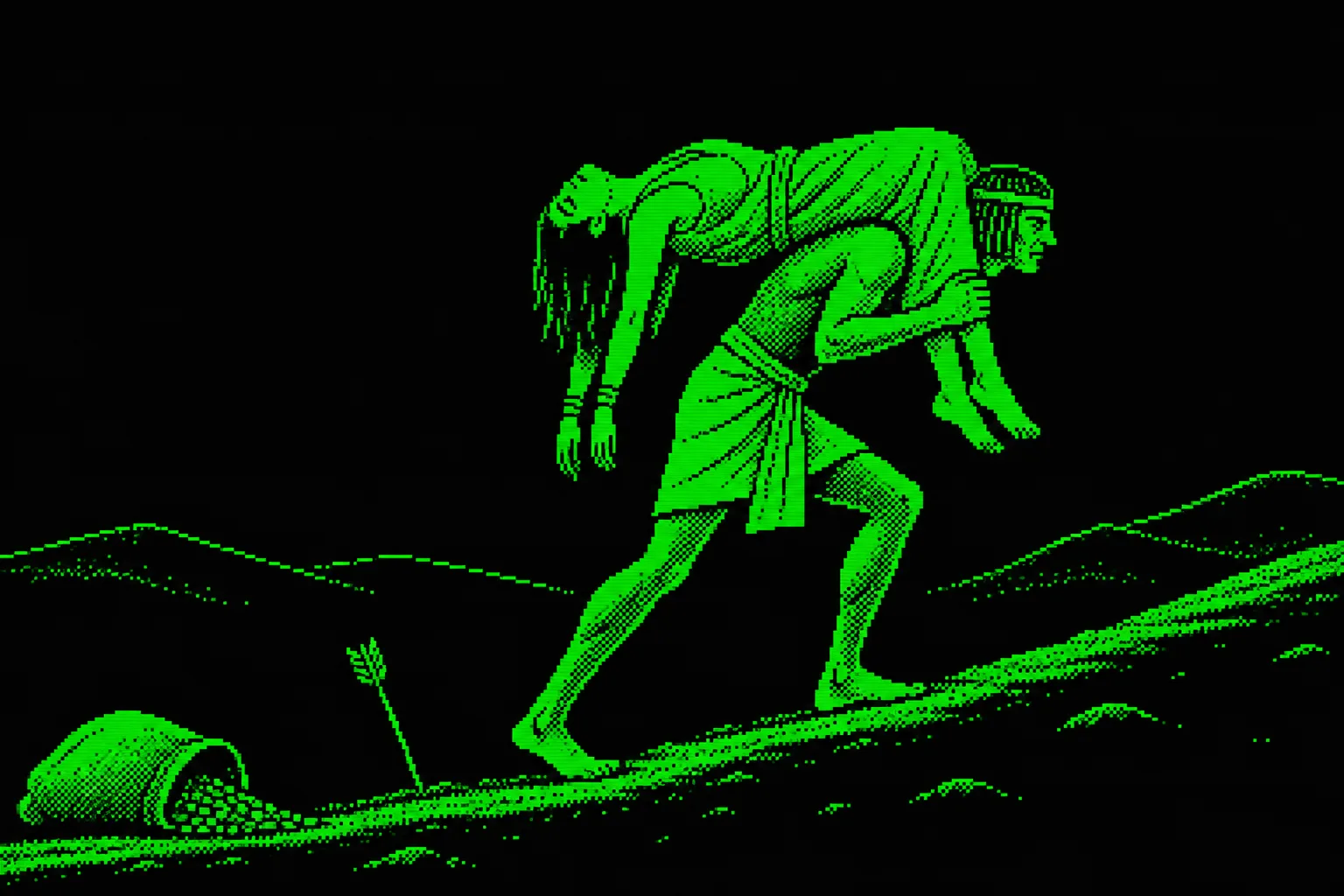
Arrows hem him in. After the victory he carries a captive woman on his neck while others snatch his grain sack. He lies dead on the fringes of the desert, with no one to keep his name alive. The lesson: Be a scribe, and you will spare yourself a soldier’s life.
- 1
[...] ḥ(nꜥ)-ḏd
… To the matter at hand:
- 2
m =kj (w)j ḥr mtr =kwj ḥr swḏꜣ ḥꜥ,t =k r ḏi̯.t ṯꜣy =k gstj m wstn{.ṱ} r ḏi̯.t ḫpr{.ṱ} =k m mḥ-jb-n-nsw r ḏi̯.t wn =k r pr.pl-ḥḏ šnw,t{.du}.pl r ḏi̯.t šsp =kwj n pꜣ qw~jrʾ{.pl} m rʾ n tꜣ šnw,t r ḏi̯.t ḫꜣꜥ =kwj pꜣ ḥtp,w-nṯr m sw nfr{.w.pl} jw =k ḏbꜣ.ṱ m mnḫ,t.pl ẖrj ssm,t.pl jw pꜣy =k sk,tj ḥr mt{,t} jw =k ꜥpr.ṱ m šms,w,pl wstn.ṱ ḥr rd jw bḫn,w qd m nʾ,t.ṱ =k jw =k ẖrj jꜣw,t wsrw.tj m ḏi̯ n =k nsw
Look, I am teaching you and keeping your body sound, so that you may freely take up the scribe’s palette, become the king’s confidant, open treasuries and granaries, receive the cargo boat at the granary gate, and lay out the god’s offering on the feast day. You will be dressed in fine clothes, with horses at your disposal and your sketi-boat afloat on the floodwaters. With attendants at your side, you will go freely on your rounds of inspection. A mansion will be built in your town. You will hold office and be powerful through what the king has given you.
Note · Line 2
A scribe’s palette held his ink and writing reeds. Here it stands for the profession the teacher wants his pupil to take up. - 3
ḥm.w.pl ḥm,t.pl m sw =k
Servants, men and women, will be all around you.
- 4
jw wn m sḫ,t.pl r šsp ḏr,t =k m ꜣḥ,t.pl n sḫpr =kwj
Those in the fields will pledge you their support on the land you have brought under cultivation.
- 5
ptj tw≡j ḥr ḏi̯.t =k r smd,t n ꜥnḫ
See, I am enrolling you in the service of life.
- 6
jmm zẖꜣ m jb =k mkj.tw =k r-ḥꜥ,t =k r bꜣk,w nb{.t} jry =k sr jqr
Take writing to heart, so that you yourself may be spared every kind of toil and become a fine official.
- 7
js bw sḫꜣ.n =k pꜣ jw,tj ḏr,t =f
Don’t you remember the man who has no hand?
Note · Line 7
The hand he lacks is a writing hand: he cannot work as a scribe. - 8
nn rḫ =tw rn =f
No one will know his name.
- 9
wnn =f ꜣtp 〈mj〉 〈ꜥꜣ〉 〈ḥr〉 〈fꜣj〉 r-ḥꜣ,t zẖꜣ,w rḫ ḏ,t.ṱ =f
He will be loaded down like a donkey, carrying his burden before the scribe who knows his own worth.
- 10
mj 〈sḏd〉 =〈j〉 n =k 〈r〉 mḥrj wꜥ,w mj ꜥšꜣ,t (n) nꜣy =f ḥjtjw.pl
Come, let me tell you what a soldier suffers and how many men command him:
- 11
pꜣ (j)m(,j)-r(ʾ)-mšꜥ pꜣ ḥr,j-pḏ,t pꜣ sꜣ~kt n,tj r-ḥꜣ,t =w pꜣ ṯꜣ,y-sjrʾ~y pꜣ jdn,w pꜣ zẖꜣ,w pꜣ ꜥꜣ(-n)-50 pꜣ ḥr,j-jwꜥ,yt jw =w ḥr ꜥq pri̯ m ={w} 〈nꜣ〉 wsḫ,t.pl (n) pr-nsw ꜥnḫ-(w)ḏꜣ-s(nb)
the general, the colonel, the junior officer who goes before them, the standard-bearer, the adjutant, the scribe, the captain of fifty, the garrison commander. They come and go in the halls of the royal palace—life, prosperity, health!
Note · Line 11
The three wishes are a customary blessing for the king. - 12
jw =w 〈ḥr〉 〈(ḏd)〉 jmm.tw.pl rḫ bꜣk jw nhsi̯.tw =f jw wn wꜥ n wnw,t jw =tw m-sꜣ =f mj ꜥꜣ{,t} jw =f (ḥr) bꜣk r ḥtp pꜣ jtn ẖrj tꜣy =f wḫꜣw(,t) n grḥ jw =f ḥqrj jw ẖ,t =f jsp
They say, “Give us a man who knows how to work!” He is roused at the first hour of the day. They stay at his heels as if he were a donkey. He works until the sun’s disk sinks into the dark of night. He is hungry; his belly aches with hunger.
- 13
sw mt.ṱ jw =f ꜥnḫ
He is dead though he still lives.
- 14
šsp =f pꜣ dj
He has drawn his grain ration.
- 15
sw ḫꜣꜥ m pꜣ sḥn{,t}
He is thrown into service.
- 16
nn sw nḏm n nḏ{.t}.tw =f
He has no ease: he is being ground down.
- 17
sw thꜣm r Ḫꜣrw
He is driven off to Syria.
- 18
bw srf =f sw
He gets no rest.
- 19
bn ḥbs.pl 〈bn〉 tj{.du}.pl
No clothes, no sandals.
- 20
tw≡tw ḥr snhꜣ nꜣ ḫꜥ,w.pl n.w rʾ-ꜥ-〈ḫt〉{ḫꜥw} r pꜣ ḫtm n Ṯꜣr,w jw nꜣy =f mšꜥ.pl qꜣi̯.y m ṯs,t{⸮t?}
They check the weapons of war at the fortress of Tjaru. Long are his marches through the hills.
Note · Line 20
Tjaru guarded Egypt’s northeastern frontier, on the road to Syria. - 21
swrj =f mw ḥr hrw 3 jw =w šꜣnš mj dp,w ḥmꜣm,wy
Once every three days he drinks water. It is foul and tastes of salt.
- 22
sd{.t} ẖ,t =f 〈⸮ḥr?〉 whꜣ
It tears his guts apart with diarrhea.
- 23
pꜣ ḫrw,y{.pl} jwi̯
The enemy has come.
- 24
jnḥ =f sw m ꜥḥꜣ.pl
He hems the soldier in with arrows.
- 25
wꜣi̯ ꜥnḫ ḥr =f
Life slips away from him.
- 26
j(w) =(tw) 〈ḥr〉 〈(ḏd)〉
They tell him:
- 27
ꜣs tw m ḥr =k 〈pꜣ〉 wꜥ,w tj~n~rʾ
“Quick now! Eyes front, brave soldier!
- 28
jni̯ n =k rn nfr
Win yourself a good name!”
- 29
jw ḫm =k ḏ,t.ṱ =f
Yet you do not know what state his body is in.
- 30
ḥꜥ,t =f gnnj
His body is weak.
- 31
pd =f ẖsj ḥr =f
His knee is weak from it.
- 32
pꜣ qn ḫpr swḏ n ḥm =f ꜥnḫ-(w)ḏꜣ-s(nb)
Victory has been won and handed over to His Majesty—life, prosperity, health!
- 33
pꜣ ḥꜣq{.pl} m{-ꜥ} h(ꜣi̯) r Km,t
The prisoner of war is on his way down to Egypt.
- 34
tꜣ ḥꜣs,tjw(,t) wꜣs{m}.tj m mšꜥ
The foreign woman is worn out on the march;
- 35
sw dd.tj 〈ḥr〉 nḥb,t (n) pꜣ wꜥ,w
she is slung across the soldier’s neck.
- 36
pꜣy =f ẖꜣrw (ḥr) ḫꜣꜥ
His grain sack falls,
- 37
jṯt sw ktḫ.w.pl
and others snatch it up.
- 38
sw ꜣtp m sjrʾtj
He is loaded down with a captive Syrian noblewoman.
- 39
ḥm,t{.pl}.ṱ =f ẖrd.w.pl.ṱ =f m pꜣy =sn dmj{,t}
His wife and children are in their town.
- 40
sw mt.ṱ
He is dead;
- 41
bw pḥ =f sw
he never reached it.
- 42
jr pry =f m ḥr(,j)-tꜣ sw gꜣb ⸢m⸣ mšꜥ
If he does come out alive, the march has left him weak.
- 43
sw m pꜣ ⸮ḥr?
He is under guard.
- 44
sw m pꜣ nwḥ{.w.pl}
He is bound with a rope.
- 45
pꜣ wꜥ,w ḥḏn
The soldier chafes.
- 46
sw (ḥr) pw~yꜣ
He springs up.
- 47
sw (ḥr) pry 〈n〉 pꜣ tš ((jw)) r(m)ṯ,pl.ṱ =f ((nb{.t}(.pl)⁝⁝)) ḏdḥ m jtḥ,w
He goes off to join the deserters, while all his people are locked up in prison.
- 48
jw =f mt.ṱ ḥr nꜣ ꜥd.w.pl nn-wn wꜥ r sḫpr rn =f
He lies dead on the fringes of the desert, with no one to keep his name alive.
Note · Line 48
For the Egyptians, speaking a dead person’s name helped sustain that person after death. - 49
qsn n =f mt ḥr ꜥnḫ
Dying is hard for him, and so is living.
- 50
jni̯ =tw n =f ṯnf,yt ꜥḫi̯.tj
They bring him a sack held aloft.
Note · Line 50
The sack may be all he gets for a burial. - 51
bw rḫ =f sḏr(,t).ṱ =f
He does not know where he will lie.
- 52
jri̯ zẖꜣ,w
Be a scribe,
Note · Line 52
The teacher turns back to his pupil: the soldier’s fate is his argument for taking up the pen. - 53
šdi̯ =k{wj} 〈tw〉 m wꜥ,w
and you will spare yourself a soldier’s life.
- 54
ꜥš =k
When you call,
- 55
jw =(tw) ḥr (ḏd)
someone answers,
- 56
m =kj wj
“Here I am!”
- 57
nḥm{.tw} =k 〈tw〉 m-ꜥ ḏꜣ~nj~nj
You will spare yourself the drudgery.
- 58
s-nb ḥr wḫꜣḫ ṯsi̯{.t.ṱ} =f
Everyone wants to rise.
- 59
jḫ rḫ =k swsn [...]
May you take that to heart …