~/sacred-texts/late-egyptian-miscellanies
Papyrus Koller: Equipping Egyptian Chariots for Syria
- Date
- Copied in the late 19th Dynasty (c. 1250–1189 BC) on Papyrus Koller
- Found
- Findspot unknown; now in the Egyptian Museum, Berlin (P. Berlin P 3043)
- Language
- Late Egyptian · Hieratic
- 1
ḥnꜥ-ḏd
Now to business:
Note · Line 1
This formula introduces the instructions in a letter. - 2
jḫ ḏi̯ =k ḥr =k r ḏi̯.t grg〈.tw〉 pꜣ rksw n ḥtrj.pl n,tj jw =f r Ḫꜣrw ḥnꜥ nꜣy =sn ḥr(,j).pl-jḥ m-mj,tt nꜣy =sn mꜥ~rw~jw.pl
Please see that the horse teams’ gear is made ready for Syria, along with their stablemasters and their grooms.
- 3
jw nꜣy =sn šnw.pl rpw mḥ [m] wnm,t m dḥꜣ{mw},t sjn sp-2
Their … are full of fodder and of straw for rubbing the horses down well.
- 4
jw nꜣy =sn ẖꜣ[r].pl mḥ m krʾ~š[tj]
Their sacks are full of kyllestis bread.
Note · Line 4
Kyllestis was the Greek name for an Egyptian emmer loaf. - 5
ꜥꜣ{[,t].pl} wꜥi̯.tj r-jw{t}〈d〉 z 2
There is one donkey for every two men.
- 6
jw nꜣy =sn mꜥ~jr〈ʾ〉~kꜣ~bw~tj m bꜣ~jrʾ~rw~[,y] jw =w mḥ m ḫꜥ,w.pl [...] n.w rʾ-ꜥ-ḫt jw 80 n ꜥḥꜣ,w m tꜣ jspꜣ~tj tꜣ ḥmy[⸮,t?] pꜣ mꜥ~jrʾ~ḥ pꜣ ḥ~jrʾ~pw tꜣ sf{d}〈,t〉 tꜣ qꜣw~tj,t pꜣ sk-(n)hm,w pꜣ jsbw~⸢jrʾ⸣ n ṯꜣ~〈gꜣ〉 mḥ m r(w)dw{,t} tꜣ ꜥwn,t (n) mꜥ~jrʾ~kꜣ~〈bw~〉tj,t pꜣ ḥꜥ,w n rs pꜣ nw,j n Ḫtꜣ pꜣ ṯt ḫn~rʾ jw nꜣy =sn ḥr.pl ḥmt m zmꜣm-n-6 ṯꜣw m ṯꜣi̯ bꜣ~sꜣ~nꜣ fdtj mꜥ~sꜣ~qꜣ jw nꜣy =⸢sn⸣ rʾ~bꜣ~šꜣ.y.pl wꜣḥ r-gs =sn jw nꜣ pḏ,t [...] 〈ṯsi̯〉 [nꜣ]y =sn r(w)d.w{t}.pl sꜥqꜣ nꜣy =[sn] [d]bw.pl m rʾ-ꜥ jtḥ 〈nꜣy〉 =sn mꜥ~šꜣ~y.pl m mtr,t wꜥb(.t)
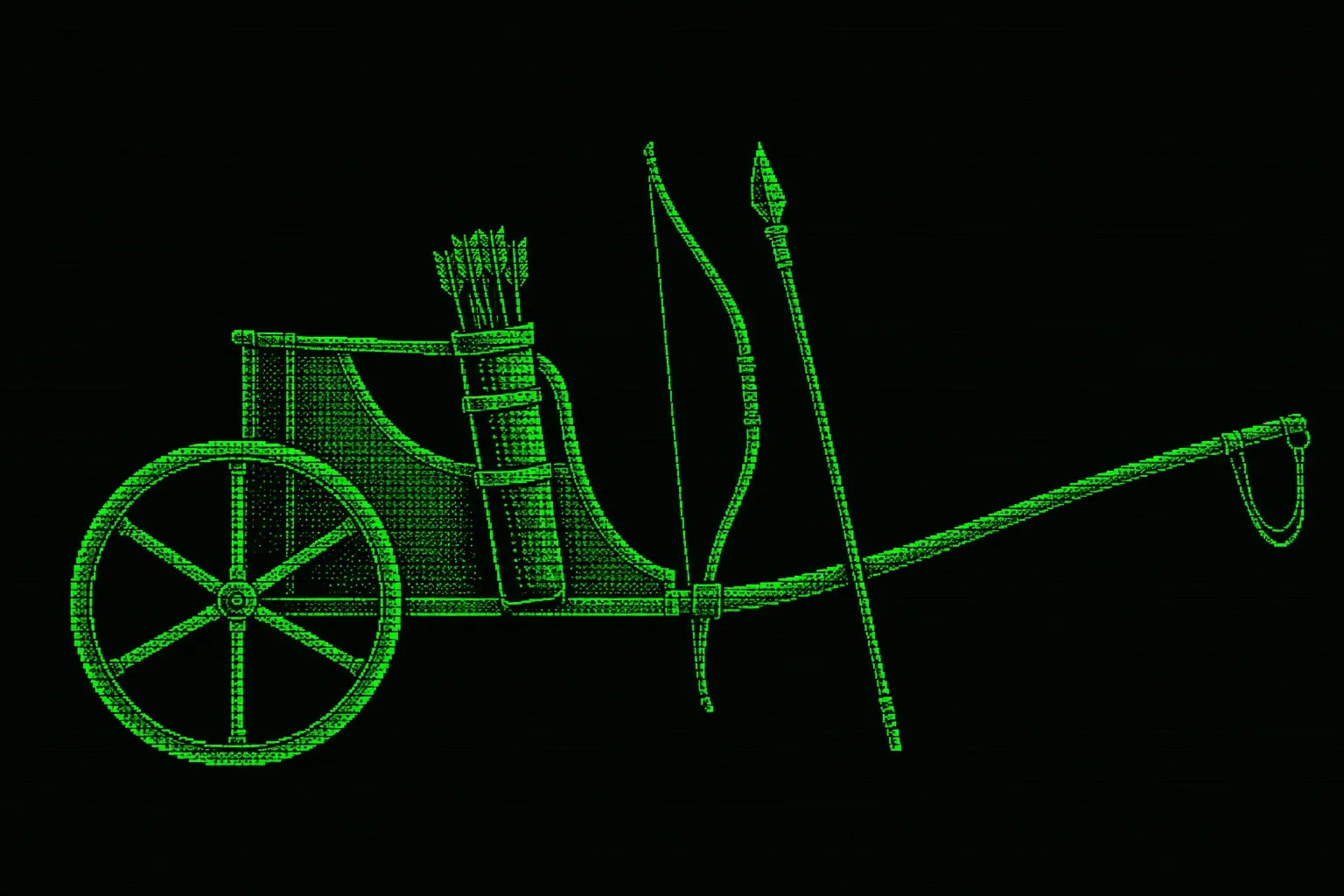
Their chariots are of brry wood, laden with arms … for battle: eighty arrows in the quiver, the hemyt fitting, the lance, the herep sword, the knife, the qetet stick, the sek-nehem arrows, the whip of tjaga wood bound with thongs, the chariot club, the watchman’s staff, the Hittite spear and the rein-loosener. Their copper faces are of sixfold alloy, cut with a graver, dressed and finished. Their leather corselets lie beside them. The bows … are bound, their strings drawn taut, their horns under tension, their leather straps of clean braid.
Note · Line 6
The “horns” are the limbs of the bows. In a composite bow, horn and sinew reinforce a wooden core. - 7
pꜣ ꜥ n ṯꜣ~gꜣ gꜣ~pw gꜣ~rʾ~bw tby tm sgnn mꜥ~šꜣ~rʾ~rʾ grḥ [...]
The chariot pole of tjaga wood is planed and smoothed, wrapped in leather, finished, oiled and polished. …
Note · Line 7
A scribal pause mark follows the description of the pole.