~/sacred-texts/late-egyptian-stories
Papyrus Chassinat III: “Come On, You Rutting Man!”
- Date
- Copied in the middle of the 20th Dynasty (about 1150–1100 BC) in hieratic on a papyrus roll; the tale is known from no other copy
- Found
- Findspot unknown; from the collection of Émile Chassinat, now in the Musée du Louvre, Paris (E 25353)
- Language
- Late Egyptian · Hieratic
A broken tale from the myth of Bata, god of Saka, known from this one papyrus. A narrator keeps asking What is it that says, and answers with a taunt: “Come on, you rutting man!” A man born in the district of Heliopolis is questioned: Why do you let yourself be beaten? Then: You have been thrown into the water. May you not die.
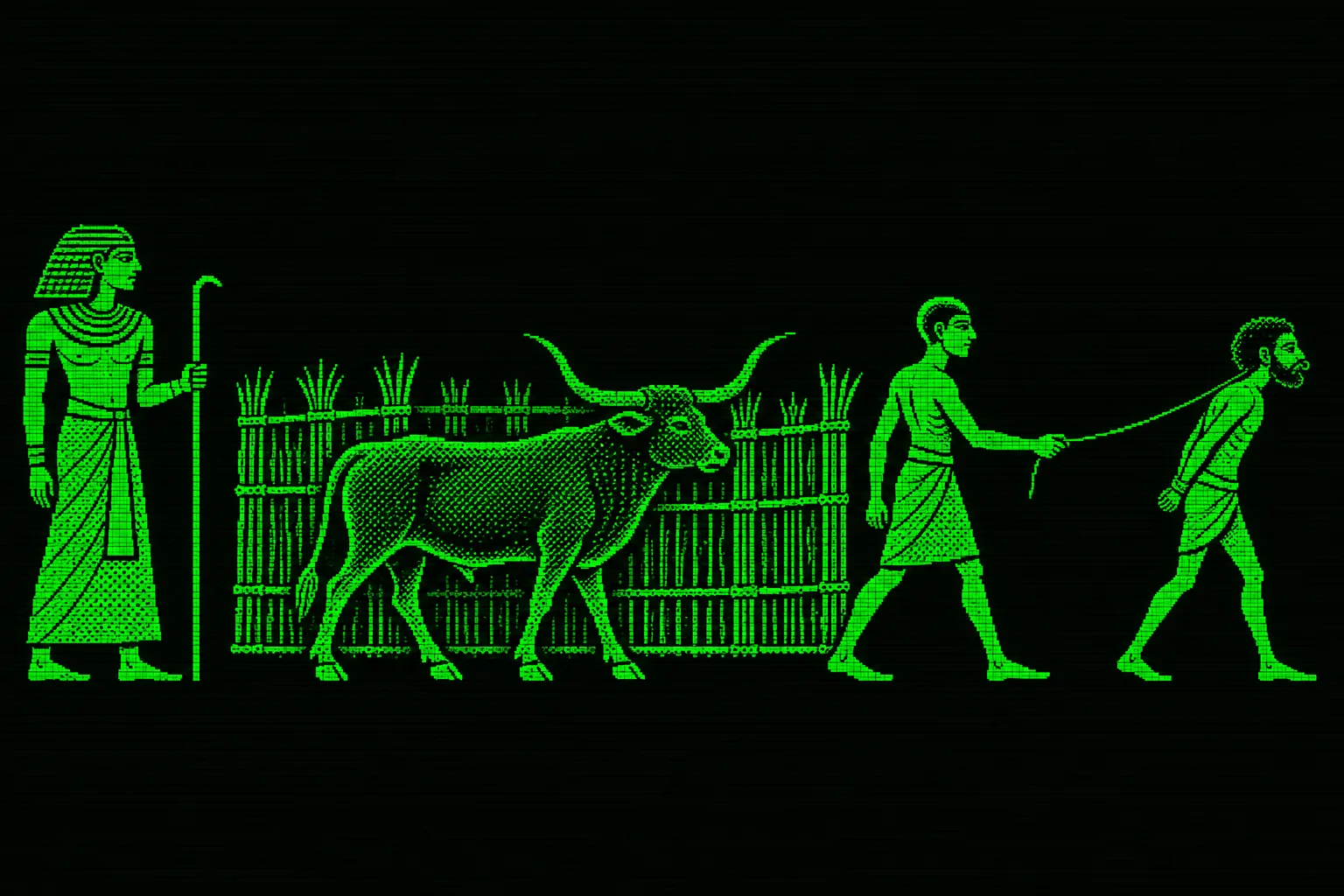
Mi-pu, the one they call “the ignorant one,” is told that he threw away his city’s good name. So they mourn the man with no nose. Later His nose was pierced, and he is led from the cattle pens like an ox while the overseer of the treasury stood by.
- 1
… 𓋴𓃀𓇼𓄿𓏏𓏛𓀜 𓂋 𓋴𓏏 𓈖𓈙𓊪𓏲𓂡 𓊡𓏲𓏫
[...] sbꜣ,t ⸢wr.t⸣ ⸢r⸣ =st nšp ṯꜣw [__]⸢w⸣.pl
… a harsh punishment on her, as he gulps air …
Note · Line 1
The opening is lost; neither the woman nor the one who punishes her can be identified. - 2
𓇋𓐍𓏛 𓅯𓄿 𓈖𓏏𓏭 𓁷𓏤 𓆓𓂧
jḫ pꜣ n,tj ḥr ḏd
What is it that says,
- 3
𓌢𓀀 𓂻𓏲𓂻
sn jwi̯
“The brother has come;
- 4
𓅯𓄿 𓁷𓏤 𓏠𓈖𓂢𓏏𓄹 𓆑
pꜣ [__]b,w ḥr 〈r〉mn,t =f
the … is on his shoulder”?
- 5
𓎝𓎛𓏛 𓆑 𓇓𓏲 𓅯𓄿 𓊃𓉔𓄿𓁣𓀜 𓆑
wꜣḥ =f sw (n) pꜣ shꜣ =f
He left him because of his rebellion.
- 6
𓈖 𓇋𓇩𓋴𓏏𓏱𓏥 𓂋 𓏏𓄿 𓅱𓆼𓄿𓐍𓂻 𓀀
[__] n [_] js[,t] r tꜣ mw[,yt] ⸢pꜣ⸣ wḫꜣḫ =j
… the wicked to the urine, the search for me.
- 7
𓄣𓏤 𓀀 𓂋 𓈝𓅓𓂻 𓁷𓏤 𓈖 𓅱𓈙𓃀𓏏𓏴𓀁
jb =j r šmi̯ ḥr ⸢pꜣ⸣[y] =[st] [ḫn] n wšb{,t}
At her answering song my heart longs to go.
- 8
𓊪𓏏𓂋𓇋𓆵𓁻 𓅯𓄿𓇋𓇋 𓋴𓏏 … 𓁷𓏤 𓇼𓉐
ptrj pꜣy =st [...] ḥr sbꜣ
Look, her … is on a door.
- 9
… 𓂧𓇉𓄿𓏏𓄧 … 𓉔𓂋𓏲𓇳𓏤 𓊏𓊪𓀜
[...] ⸢pꜣ⸣ dḥꜣ{,t} ⸢pꜣ⸣ [...] hrw šzp =[f] [ḥr] [ḏd]
… the straw and the … the day he began by saying:
- 10
𓏎𓈖 𓏏𓏲 𓈖 𓀀 𓁶𓊪𓏭 𓈖 𓂓𓏤𓈀𓏥 𓊹𓅆 𓈖 𓐠𓏤𓂓𓃒𓂸𓊖
[jmm] jni̯ =tw n =j dp,j n kꜣ (n) nṯr n Sꜣ-kꜣ
“Have the finest food of the god of Saka brought to me!
Note · Line 10
Saka was a town in Upper Egypt where the god Bata was worshipped. - 11
𓍴𓈖𓏌𓏲𓁸𓏫 … 𓈖 𓅐𓏏𓁐
šnw [...] ⸢šnw⸣ n mw,t =s[t]
Hair … her mother’s hair.”
- 12
𓇋𓐍𓏛 𓅯𓄿
jḫ pꜣ [n],tj [ḥr] [ḏd]
What is it that says,
- 13
𓅓𓂝𓇋𓂻 𓅓𓂝𓇋𓄿𓀁 𓊃𓀀𓏤
⸢mj⸣ mj~ꜣ pꜣ[j] z [d]jdj{.t}
“Come on, you rutting man!”?
- 14
[...] ⸢wꜣ,t.pl-Ḥr,w⸣
… the Ways of Horus.
Note · Line 14
The Ways of Horus were the fortified roads leading out of Egypt across its northeastern frontier. - 15
𓊖𓏏𓏤 𓎢 𓉺𓏌𓊖 𓇋𓏏𓆑 𓎢 …
nʾ,t =k Jwn,w ⸢jt⸣ =⸢k⸣ [...]
Your city, Heliopolis, your father …
- 16
𓎢 𓎢
⸢jḫ⸣ ⸢pꜣy⸣ =⸢k⸣ ⸢ḏi̯.t⸣ ⸢sḫi̯.t(w)⸣ =⸢k⸣
Why do you let yourself be beaten?
- 17
𓅓𓈖𓏏𓎢 𓌢𓀀 𓋴𓇋𓄿𓏫𓆣𓅆
m⸢ntk⸣ sn ⸮Sꜣ[__]-ḫpr?
You are the brother of Sa…-Khepri.
- 18
𓄟𓋴𓏯𓏏𓏲 𓎢 𓈖 𓎙𓋾𓊾𓏲𓏏𓈗𓈘𓈇
msi̯.tw =k n ḥqꜣ-ꜥnḏ,tw
You were born in the district of Heliopolis.
- 19
𓏏𓏲𓎢 𓆼𓂝𓄿𓂻𓏏𓏲 𓂋 𓅯𓄿 𓈗
tw≡k ḫꜣꜥ.tw r pꜣ mw
You have been thrown into the water.
- 20
𓃀𓈖 𓅓𓏏𓏱 𓎢
bn m(w)t =k
May you not die.
- 21
𓋹𓈖𓐍 𓎢 𓅓 𓋹𓈖𓐍 𓈖𓏏𓏭 𓎢 …
ꜥnḫ =k m ꜥnḫ n,tj j[w] =k [...]
May you live by the life you will …
- 22
𓏇𓇋𓊪𓏲𓀀 𓇋𓂋 𓎢 𓅯𓄿 𓆓𓂧 𓈖 𓎢 𓃹𓈖 𓈐𓈐𓈐𓅃𓅆𓊖 𓈖𓏏𓏭 𓉔𓄿𓂻𓏲𓏫 𓈖𓆑𓊡𓏲𓏫
Mj-pw [⸮smt?] jr =k pꜣ ḏd n =k wn (m) ⸢wꜣ,t⸣.pl-Ḥr,w n,tj hꜣi̯.w{.pl} (m) nfw
Mi-pu, listen now to what the one who was on the Ways of Horus told you, the one who came down on the wind!
- 23
𓆼𓄿𓂝𓂻 𓎢 𓂋𓈖𓀁 𓈖 𓊖𓏏𓏤 𓎢 𓃂𓈗
ḫꜣꜥ =k rn ⸢n⸣ nʾ,t =k wꜥb
You threw away your city’s good name, though you are innocent.
- 24
𓐍𓂋 𓇉𓄿 𓏲𓏫 𓂜𓏏𓏭𓏴𓅪 𓆑𓈖𓂧𓂉𓄹 𓀀
ḫr ḥꜣi̯ =w jw,tj fnd ={j}〈f〉 grḥ
So they mourn the man with no nose.
Note · Line 24
A mark in the manuscript ends the section here. - 25
… 𓌢𓀀 𓂋𓏤𓈗 … 𓊪𓈖𓈖 𓏏𓏲 𓈖 𓆑 𓅓 𓈖𓆑𓇋𓂉 𓅓 𓂋𓏤 𓈖
[...] sn ⸮rʾ? [...] ⸮pnn? =tw n =f m nfj m rʾ n ⸮nb(y)?.pl
… the brother, the mouth … what they scattered for him with a breath from the mouth of the protectors.
- 26
𓏇𓇋𓊪𓏲𓀀 𓇋𓂋 𓆑 𓅯𓄿 𓆓𓂧 𓈖 𓆑 𓐍𓅓𓂜𓀀 𓇋𓅱 𓌳𓄿𓇋𓎶𓀀𓏥 𓈖 𓉐𓏤 𓁷𓏤 𓊪𓊃𓂧𓄦𓄹 𓆑
Mj-pw jr =f pꜣ ḏd n =f ḫm jw mꜣ〈d〉,j.pl n pr ḥr ⸢ps⸣d =f
Mi-pu, though, is the one they call “the ignorant one,” while the temple servants are on his back.
Note · Line 26
These servants attended to the temple food. The image may mean that Mi-pu’s labor supports them. - 27
𓎼𓂋𓏛𓀁 𓌢𓀀 …
gr sn mj [...]
The brother fell silent like …
- 28
[...] w[__] [...]
[gap in the text]
- 29
𓂜𓈖 𓌃𓂧𓏏𓏲𓀁𓀀𓏥 … 𓌃𓂧𓏏𓏲𓀀 𓀀𓏥
nn mdw,tw.pl [...] mdw,t (n) rmṯ.pl
There are no babblers … the talk of mortals.
- 30
𓋴𓂋𓂧𓏲𓌗𓏛 𓏲𓏫 𓆼𓄿𓃀𓏲𓇶𓏫 𓁷𓏤𓁶𓏤 𓆑
srd =w ḫꜣbw ḥr-dp =f
They made a shadow grow over him.
- 31
𓂧𓏏𓏤 𓆄𓏲𓇋 … 𓏏𓈖 𓋹𓈖𓐍
ḏr,t šwj [...] [__]⸢.w⸣ tn ꜥnḫ
The hand was empty … this … of life.
- 32
𓈞𓊃𓀔𓏛 𓆑 𓁷𓂋𓏤 𓎗𓏲𓇋𓇋𓈗𓈘𓏭 𓇳𓏤𓎟
ḥmsi̯ =f ḥr 〈sp,t〉 〈n〉 wḏw,y rꜥ-nb
Every day he sat at the water’s edge.
- 33
𓂜𓈖 𓈖 𓆑 𓐍𓂋𓏏𓏛𓇋𓇋𓏛𓏥
nn [__] ⸮n? [__] =f ⸮ḫr,yt{t}?
Not … his … needs.
- 34
𓅯𓄿 𓊃𓊪𓊗 𓄤𓆑𓂋 𓈖 𓌢𓀀 𓅓𓁷𓂋𓏤 𓅯𓄿 𓏏𓍃𓅓𓏛 𓏏𓉔𓂿 … 𓂋 𓌢𓀀 𓆑 𓂢
pꜣ sp nfr n sn m-ḥr pꜣ tm thi̯ [...] [__].pl r sn =f grḥ
The matter goes well for the brother in the presence of one who does no harm … against his brother.
Note · Line 34
A pause mark closes this section. - 35
𓇋𓐍𓏛 𓈖𓏏𓏭 𓁷𓏤 𓆓𓂧
jḫ pꜣ n,tj ḥr ḏd
What is it that says
- 36
𓅓𓂝𓇋𓂻 𓅓𓂝𓇋𓄿𓀁 𓅯𓄿𓏭 𓊃𓀀𓏤 𓂧𓏭𓂧𓏭𓂺𓏛
mj mj~ꜣ pꜣj z djdj
“Come now, you rutting man”?
- 37
𓇍𓇋𓏏𓂻 𓉔𓉔𓃀𓏏𓄹 𓏃𓈖𓏏𓏭𓇋𓇋𓊛
jy{.t} hhb,t (m-)ḫnty
The hehbet came upstream.
Note · Line 37
What the hehbet was is unknown. Upstream on the Nile is south. - 38
𓏲𓆑𓏏 𓂉𓄹 𓆑 𓅓𓂝 … 𓆑
⸮wft? ⸮fnḏ? =⸮f? ⸮m-ꜥ? [...] [__] =f
His nose was pierced by … him.
- 39
𓊃𓈖𓏭𓇋𓇋𓂾𓂻 𓆑 𓇋𓍯𓄿𓃒 𓈖 𓎓𓏏𓉐
sny =f jwꜣ n mḏ,t
He outdid the longhorn ox of the cattle pen.
- 40
𓇋𓅷𓄿𓂷𓂡𓏏𓏲 𓆑 𓁷𓂋 𓎓𓏏𓉐𓏫 𓇋𓏲 𓅯𓄿 𓅓𓂋𓉐𓎗𓉐𓀀 𓊢𓂝𓂻
jṯꜣ.tw =f ⸮ḥr? [nꜣ-n] ⸢mḏ,t⸣.pl jw pꜣ (j)m(,j)-r(ʾ)-pr-ḥḏ ꜥḥꜥ
He was led away from the cattle pens while the overseer of the treasury stood by.
- 41
𓄟𓋴𓏯𓏏 𓅭𓀀 𓀀𓆑 𓃹𓈖 𓏏𓐩 𓁷𓏤 𓂜𓏏𓏭𓏴𓅪 𓏠𓈖𓂝𓏏𓂑𓀀 𓆑
msi̯.t(w) [__] zꜣ ={j}f wn (m) ⸮nḏ,t(j)? ḥr jw,tj mnꜥ{,t} =f
… was born, his son, who protected anyone who had no one to raise him.
- 42
… 𓊡𓏲𓏫 𓈖𓏏𓏭 𓅓 𓅯𓄿 𓉐𓏤
[...] [__].pl ṯꜣw n,tj m pꜣ pr
… the wind that is in the house.
- 43
𓁹𓇋𓇋 𓎢 𓂋𓈖𓀁 𓎢 …
jry =k rn =k [...]
You will make your name …
- 44
… 𓅯𓄿 𓌞 𓈖 𓇋𓄿𓂧𓏏𓏹𓏴𓂡
[...] pꜣ šms(,w) n ⸮jꜣd.t? ⸮sš.pl?
… the retainer, because the ropes hurt.
- 45
… 𓇋𓆛𓈖𓃀𓏲𓊅𓈇𓏪 𓈖 𓈙𓆑𓈖𓏌𓏲𓆱𓏥
[__]j [...] jnb.w.pl n šfnw
… the walls of brushwood.
- 46
𓉐𓏤 … 𓆼𓄿𓃀𓏲𓇶𓏫 𓈖 𓆳𓆳𓆑𓇳
pr [...] ḫꜣbw n snf
The house … last year’s shadow.
- 47
𓅷𓏤 𓈎𓈖 𓇋𓈖𓂋𓈙 … 𓏊𓏲𓏛𓀜 𓈖 …
⸮ṯꜣ? ⸮qni̯? ⸮jnr? [...] wdp,w n šꜣ~tj[_] [...]
The brave scion, stone … the attendant of …
- 48
… 𓆑 𓍱𓏫 𓊖𓏏𓏤 𓈖𓏏 …
[...] [__] =f sš.pl nʾ,t n.t [...]
… him, ropes; the town of …
- 49
… 𓂋𓈖𓀁 𓆑 𓊪𓏲 𓈖 …
[...] ⸢rn⸣ =f pw ⸢n⸣ [...]
… in this name of his as …
- 50
… 𓆑 …
[...] [__]⸢ḫ⸣ =f [...]
… he …
- 51
… 𓅃 …
[...] ⸢⸮Ḥr,w?⸣ [...]
… Horus …
- 52
… 𓈖 𓂝𓈙𓀁 𓈖 𓃛𓏲𓃛𓏲𓄛𓏫 …
[...] n ꜥš n jwjw.pl [...]
… calling to the dogs …
- 53
… 𓂻𓏲𓂻 𓏎𓈖 𓆑 𓅯𓄿 𓅭𓏤 𓂧𓏭𓂧𓏭𓂺 …
[...] jwi̯ jni̯ =f pꜣ ⸮zꜣ? djdj [...]
… came, bringing the rutting son …
- 54
… 𓈖 𓆑 𓏎𓈖 𓇓𓏲 𓋭𓏏𓏤 𓄂𓏹𓏹𓏹𓀜𓀀𓏥 …
[...] n =f jni̯ sw ṯs,t ḥꜣ(,wtj).pl [...]
… to him, as the troop and its commanders brought him …