~/sacred-texts/late-egyptian-stories
Papyrus Boulaq 13, an Egyptian Crime Story: Ninety Blows
- Date
- Copied in the late 18th or early 19th Dynasty (about 1320–1250 BC) in hieratic on a reused papyrus roll
- Found
- Found folded in the sand at Saqqara in 1859; now in the Egyptian Museum, Cairo (CG 58041 A–B, JdE 7550), in eighteen fragments
- Language
- Late Egyptian · Hieratic
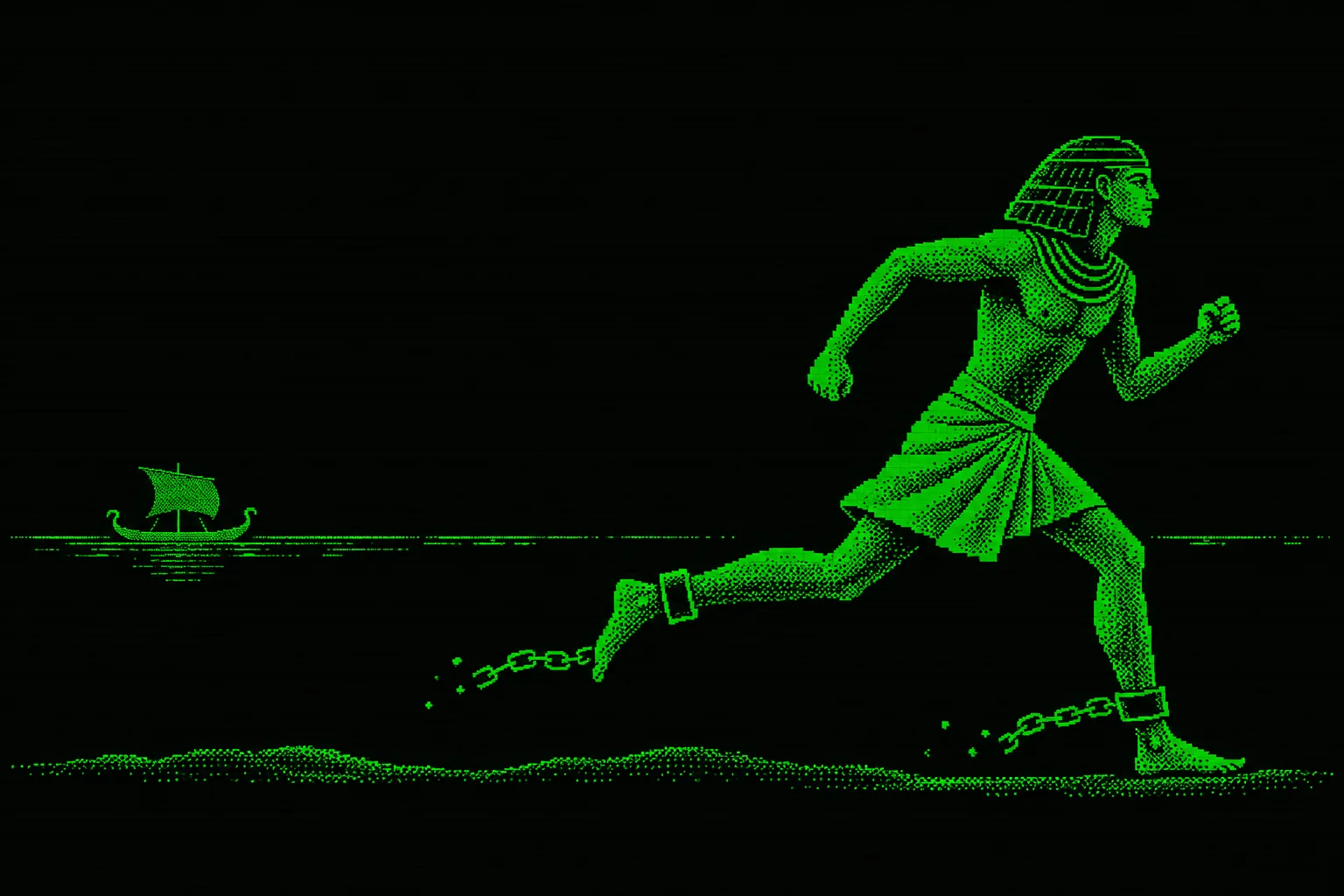
Eighteen fragments of one roll give a tale with no beginning and no end. A man received ninety blows. Someone was setting a trap. A man is seen in the act of stealing; he swore falsely; twice He was fleeing. His wife was sailing downriver and upriver, and Memphis and Kush are named.
Then voices break in, none of them named. One threatens: I’ll teach him a lesson. One confesses, I am one who does evil to …, and protests that he had done the god no wrong. There is a shackle for my two feet, a barber beaten, a master who speaks, and near the end: You fainted.
- 1
… 𓆑 𓅓 𓆑 𓏇𓇋 …
[...] [__].ṱ =f m [___].t =f mj ⸮[n,]t[j]? [__] j:[__] [...]
… him in his … like one who …
Note · Line 1
Only fragments of the tale survive. We do not know who the man is. - 2
… 𓎆𓎆𓎆𓎆𓎆𓎆𓎆𓎆𓎆 𓋴𓐍𓏏𓏴𓀜 𓇋𓏲 𓆑 𓏇𓇋 …
[...] ⸮[šz]p? 90 sḫ,t jw =f mj [__] [...]
… received ninety blows, while he was like …
- 3
… 𓅓 𓅯𓄿 𓈔𓏤𓈒𓏥
[...] ⸢m⸣ pꜣ ḥmt
… with the copper.
- 4
𓃀𓅱 …
bw ⸮nhp? [...]
There was no mourning …
- 5
… 𓉔𓂋𓏲𓇳𓏤
[...] hrw
… day.
- 6
𓇋𓏲 𓆑 𓋴𓅨𓂋 …
jw =⸮f? (ḥr) swr jꜣ[__] ⸮ḥr? [...]
Then he made … greater on …
- 7
… 𓈗 𓅓 𓅯𓄿𓇋𓇋 𓆑 … 𓈖 …
[...] [swr]j mw m pꜣy =⸮f? [...] ⸢n⸣ [...]
… drank water from his … of …
- 8
𓇓𓏲 …
sw [...]
He …
- 9
… 𓅯𓄿𓇋𓇋 𓆑 𓂧𓂋𓊪𓀜𓈀𓏥
[...] ⸮[w]jꜣ.tw? pꜣy =f drp
… apart from his food.
- 10
… 𓁹𓂋 𓏏𓏲 𓀸𓄿𓅱𓀜 𓆑 𓎟𓏏 𓊃𓂋𓂧𓎗 …
[...] jri̯ =tw zꜣ,w(t) =f nb.t 〈ꜣḥ,t.pl〉 srd [...]
… whom they kept under constant watch; the fields were planted …
- 11
𓊢𓂝𓂻 𓆑 𓇋𓅱 𓃀𓈖 𓅯𓄿 𓏴𓈋𓏲𓇋𓇋𓅱𓏭𓍱 …
ꜥḥꜥ =f jw bn pꜣ ⸮sḏ,wyw? [...]
He stood up, but the loincloth was not …
- 12
… 𓆑 𓅓 𓂋𓈙𓂉𓏛𓏭
[...] rš[u̯] =f m rš(,wt)
… he rejoiced with great joy.
- 13
𓇓𓏲 𓏇𓇋 𓈖𓏏𓏭 …
sw mj n,tj q[__] [...]
He was like one who …
- 14
… 𓄔𓅓𓏛 𓆑 𓇋𓏲 𓏏𓅱 𓂋 𓅓𓂝𓈙𓂝𓂾𓂻
[...] sḏm =f jw =tw r mꜥ~šꜥ
When … hears him, they are to set out.
- 15
𓇋𓏲 𓆑 …
jw =⸢f⸣ [...]
Then he …
- 16
… 𓁷𓏤 𓌧𓐍𓏏𓏛𓀜
[...] ḥr sḫt
… was setting a trap.
- 17
… 𓅷𓄿𓏲𓏏𓂷𓂝 𓋭𓊃 …
[...] ṯꜣw.t ṯs[__] [...]
… steal a garment …
- 18
… 𓇋𓏲 𓈖𓐍𓊪𓏲𓀁 𓀀 𓈖 𓆑 𓈞𓏏𓁐
[...] [__] jw ⸮nḫp? =j n =f ḥm,t
… after I had chosen a wife for him.
- 19
𓐍𓂋𓇋𓂋 𓂞 𓏏𓏲 𓈖 𓆑 𓅧𓏥 …
ḫr-jr ḏi̯ =tw n =f ꜥq.pl [...]
When they gave him loaves of bread, …
- 20
… 𓉔𓂋𓏲𓇳𓏤𓏫 𓇋𓏲 𓆑 𓏇𓇋 𓈖𓏏𓏭 𓅓 𓏏𓄿𓇋𓇋 𓆑 𓎟𓏏𓏤𓉐 …
[...] hrw.pl jw =f mj n,tj m tꜣy =f nb,t-⸢pr⸣ [...]
… days, as though he were the mistress of his own house …
Note · Line 20
“Mistress of the house” was a married woman’s title. Here it refers to his wife. - 21
… 𓈖𓄿𓇋𓇋𓏥 𓆑 𓈙𓏏𓏐𓍯𓄿𓏲𓏏𓏴𓅪𓏫 𓇋𓏲 𓆑 𓅓 …
[...] nꜣy =f štꜣ~wꜣ~,wt.pl jw =f m s[__] [...]
… his webs of veins, while he was in …
- 22
… 𓏌 𓅓𓂝𓍑𓄿𓃀𓏲𓆱 𓈖 𓅯𓄿 𓊪𓈖𓈎𓏴𓀜 …
[...] sn,w mꜥ~ḏꜣ~bw(,t) n pꜣ pnq [...]
… two; a scoop for bailing out …
- 23
… 𓄿𓈎𓏲𓅪𓈖 𓅓 𓂭𓂭𓂭𓏥 𓆑
[...] ⸢ꜣ⸣q m ḏbꜥ.pl =f
… perished through his fingers.
- 24
𓇓𓏲 𓅓 𓃹𓈖 𓄟𓋴𓇋𓇋𓏏𓏯𓏥 …
sw m wn (ḥr) msi̯.yt{.pl} [...]
He is one who was bringing forth …
- 25
… 𓅓 𓋴𓎼𓈖𓈖𓏌𓏥
[...] [__]y m sgnn
… oil and with ointment.
- 26
𓊪𓏏𓂋𓇋𓆵𓁻 𓆑 𓁷𓂋𓇋𓇋𓏏𓐡 …
ptrj =f ḥr,yt [...]
He saw the terror …
- 27
… 𓅱𓍱𓍱𓀜 𓏇𓇋 𓅜𓐍𓏲𓏛𓏥
[...] ⸮⸢w⸣gg? mj ꜣḫ,w
… weak as if under a spell.
- 28
𓃀𓏲 𓁹𓂋𓏏 𓆑 …
bw jri̯.t =f ⸮n[__]? [...]
He has not yet …
- 29
… 𓂝𓂋𓈎𓏲𓍼 𓆑 𓅓 𓂝𓍑𓄿𓏲𓀜
[...] ꜥrq =f m ꜥḏꜣ
… he swore falsely.
- 30
𓇓𓏲 𓁷𓏤 …
sw ḥr wꜥr [...]
He was fleeing …
- 31
𓃀𓏲 𓎝𓎛𓏛 𓆑 𓊃𓊪𓊗 𓌉𓆓𓇳𓏴𓅪 𓂋 𓏏𓍃𓅓𓏏 𓁹 𓈖 𓆑 …
[b]w wꜣḥ =f sp ḥḏ ((r)) tm.t jri̯ n =f [...]
He never missed a chance to do him harm …
Note · Line 31
Gaps in the papyrus often hide who is speaking or acting in this part of the tale. - 32
… 𓅯𓄿 𓇋𓅷𓄿𓂷𓂡
[...] pꜣ jṯꜣ
… the thief.
- 33
𓇓𓏲 𓁷𓏤 𓏲𓂝𓂋𓏲𓂾𓂻 …
sw ḥr wꜥr [...]
He was fleeing …
- 34
… 𓅯𓄿 𓉐𓏤𓏭 𓈖 𓆼𓄿𓇋𓇋𓆱𓏥
[...] pꜣ pr n ḫꜣy
… the spice storehouse.
Note · Line 34
The Egyptian calls it a “house of herbs.” - 35
𓊢𓂝𓂻 𓆑 …
ꜥḥꜥ =f s[_] [...]
He stood it upright …
- 36
… 𓈖 𓎟𓏏𓏤 𓆑 𓅨𓏏
[...] [__].pl n nb,t =f wr.t
… for his great mistress.
- 37
𓈞𓏏𓏤 𓆑 𓁷𓏤 𓐍𓂧𓊛 𓁷𓏤 …
ḥm,t =f ḥr ḫdi̯ ḥr ḫn[tj] [...]
His wife was sailing downriver and upriver …
Note · Line 37
On the Nile, downriver is north and upriver is south. - 38
… 𓏠𓈖𓄤𓉴𓊖
[...] ⸢Mn⸣-nfr
… Memphis.
- 39
𓇋𓏲 𓏏𓏲 𓂋 𓌉𓏛𓏲𓂻 𓂋 𓎢𓈙𓌙𓈉 …
jw =tw r {ḥḏ}〈wḏ〉i̯ r Kš [...]
They will set out for Kush …
Note · Line 39
Kush lay south of Egypt, in Nubia. - 40
… 𓁷𓏤 𓆑
[...] ḥr =⸢f⸣
… about it.
- 41
𓆓𓂧 𓏏𓏲 𓂋 𓎛𓆓𓇳𓏴𓅪 𓇾𓏤𓈇 …
ḏd =tw r ḥḏ tꜣ [...]
They spoke of the ruin of the land …
- 42
⸮[m]j?
“Come!”
- 43
𓇋𓏲 𓏏𓏲 𓂋 𓏏𓄿 𓍘𓇋𓇋𓏏𓆇
jw =tw r tꜣ ⸢_⸣ty,t
Then they will go to the …
- 44
𓁹𓂋 𓆑 𓏲𓂝𓂋 …
jri̯ =f wꜥr [...]
That he should flee …
- 45
… 𓅓 𓈖𓄿𓇋𓇋𓏭 𓀀 𓎛𓃀𓋴𓏲𓍱𓏥 𓈖 𓈖𓏏𓏭𓎟 𓁷𓏤 …
[...] ⸢m⸣ nꜣy =j ḥbs.w.pl n n,tj-nb ḥr [...]
… with my clothes for whoever is on …
- 46
… 𓇓𓏲 𓅓 𓈎𓈖𓈎𓈖𓏴𓂡
[...] sw m qnqn
… him dealing out blows.
- 47
𓁹𓇋𓇋 𓀀 𓈖 𓆑 …
⸢jr⸣y =j n =f sbꜣ[,yt] [...]
I’ll teach him a lesson …
- 48
… 𓂞 𓆑 𓏏𓏲 𓅓 𓅓𓂝𓆼𓄿𓏏𓍱 𓏇𓇋 𓍿𓊃𓏛𓀜 𓏏 …
[...] ⸢ḏi̯⸣ =⸢f⸣ ⸢tw⸣ m mꜥ~ḫꜣ,t mj ṯsi̯ =t(w) mꜣ⸢_⸣[_] [...]
… he put you in bonds, the way one ties …
- 49
… 𓏇𓇋 𓈖𓏏𓏭 𓋴𓇥𓂋𓁀 𓁷𓏤 𓅯𓄿𓇋𓇋 𓆑 …
[...] mj n,t[j] sḏr ḥr pꜣy =f ḥtj [...]
… like a man lying on his bed …
- 50
[...] ⸮⸢_⸣ꜣw~rw~tj~bw~jꜣ?
[gap in the text]
- 51
𓇓𓏲 𓏇𓇋 𓈖 …
sw mj ⸮n,⸢t⸣[j]? [...]
He is like someone who …
- 52
… 𓀀 𓎛𓃀𓋴𓏲𓍱𓏥
[...] [nꜣ]y =j ḥbs.w.pl
… my clothes.
- 53
𓇍𓇋𓏏𓂻𓈖 𓆑 𓈖 𓀀 𓁷𓏤 …
jy{.t}.n =f n =j ḥr [...]
He came to me because of …
- 54
… 𓅧𓂻 𓆑 𓂋 𓏶𓅓𓏲𓀁 𓅧𓈎𓏲𓈀𓏥
[...] ⸢ꜥq⸣ =f r wnm ꜥq,w
… he went in to eat bread.
Note · Line 54
The Egyptian words for “go in” and “bread” echo one another. - 55
𓐍𓂋 𓂞 𓆑 …
ḫr ḏi̯ =f [...]
So he gave …
- 56
… 𓆑 𓈎𓈖𓈎𓈖𓏴𓂡 𓏇𓇋 𓏇𓇋 𓋴𓅨𓂋𓎛𓏏𓏊𓏫
[...] ⸮[j:]?jri̯ =f qnqn mj s⸢gn⸣[n] mj swrḥ,t
… which he had pounded, as one rubs in ointment, as one rubs in oil.
- 57
… 𓆑
[...] [__] =f
… his …
- 58
𓇋𓂋 𓆓𓂧 𓀀 𓂞 𓀀 𓇓𓏲 𓅓 𓅯𓄿 …
jr ḏd =j ḏi̯ =j sw m pꜣ ṯw[__] [...]
If I say, “I put it in the …” …
- 59
… 𓆑 𓅓 𓊪𓈎𓏏𓆁𓍱
[...] [sḏr].n =f m pq,t
… he slept in the finest linen.
- 60
𓇋𓂋 𓆓𓂧 𓀀 …
jr ḏd =j ⸮ẖꜥq? [...]
If I say, “Shave …”
- 61
… 𓀀 𓁶𓏤𓁸 𓈖 𓈎𓄿𓈎𓄿𓏲𓍱 𓅓 …
[...] ⸮[ḥ]db?.n =j dp n qꜣqꜣw m [...]
… I threw the head down toward the qaqaw, in …
Note · Line 61
The word qaqaw survives, but what it names is unknown. - 62
… 𓆑 𓈙𓃀𓏴𓏛𓏫 𓆑 …
[...] [__] =f šb =f [...]
… him; he mixed …
- 63
… 𓂋𓆓𓂧
[...] ⸢r-ḏd⸣
… with these words:
- 64
𓎛𓀢𓏷𓀜 … 𓆑
ḥwi̯ [...] ⸢__⸣ =f
“Strike … him!”
- 65
𓊪𓏏𓂋𓇋𓆵𓁻 𓆑 …
ptrj =f [...]
He saw …
- 66
… 𓆑 𓅓 𓅷𓄿𓇋𓇋𓏴𓏛𓀜
[...] [__] =f m ṯꜣy
… him in the act of stealing.
- 67
𓇓𓏲 …
sw [...]
He is …
- 68
… 𓁷𓏤 𓌡𓂝𓄹 𓆑
[...] ḥr ⸮wꜥ? =f
… because of his heir.
- 69
𓂞 𓀀 𓇓𓏲 𓅓 …
ḏi̯ =j sw m [...]
I put him in …
- 70
… 𓀀 𓎟
[...] ⸮[s]⸢w⸣gꜣ? =j nb
… everything I damaged.
- 71
𓄤𓆑𓂋 𓁷𓏤 𓎁𓏏 … 𓄂𓏏𓏭𓄣 𓆑 …
nfr,w ⸢__⸣ ḥr ⸮⸢jṯi̯⸣? [...] ḥꜣ,tj =f s[_]ꜥ[_] [...]
Beauty … is seizing … his heart …
- 72
… 𓄂𓏏𓏭𓄣 𓆑 𓈖 … 𓅓𓏏𓏱
[...] ḥꜣ,tj =f n [...] mt
… his heart for … is dead.
- 73
𓅓 …
m kꜣ[__] [...]
It is …
- 74
… 𓎛𓀢𓏷𓀜 …
[...] ḥwi̯ sw [...] [d]j
… struck him … here.
- 75
𓏌𓎢𓀀 𓁹 𓇋𓐍𓏛 … 𓇋𓐍𓏛 …
jnk jri̯ jḫ [...] jḫ [...]
I am one who cries “Alas!” … What …?
- 76
[...] ⸮[tn]w? [...] [ṯn]w
… where is …? … is raised high.
- 77
𓆑 𓄤𓆑𓂋 …
ptrj =f nfr mj [...]
He saw clearly, like …
- 78
… 𓆑 𓃀𓇋𓄿𓏏𓈅𓄑𓀁
[...] ⸮[tꜣy]? =f bjꜣ,t
… his character.
- 79
𓃀𓏲 𓂋𓈙𓂉𓏛 𓆑 𓈖 …
bw ršu̯ =f n [...]
He took no joy in …
- 80
… 𓈖 𓋴𓎛𓅨𓂋𓏲𓌟𓀁𓏫
[...] [__]⸢.ṱ⸣ n sḥwr.w.pl
… for curses.
- 81
𓃀𓏲 …
bw ⸢_⸣[__] [...]
Cannot …
- 82
… 𓅯𓄿 𓀨𓀜𓀀 𓇓𓏲 … 𓄂𓏏𓏭𓄣 𓂋 …
[...] pꜣ qd sw [...] ḥꜣ,tj r m[__] [...]
… the mason … him … the heart, in order to …
- 83
… 𓆑 𓏇𓇋 𓈖𓏏𓏭 𓄡𓂝𓈎𓏲𓍜𓀜 𓂋 𓃂𓈗 …
[...] [__] =f mj n,tj (ḥr) ẖꜥq r wꜥb [...]
… he was like someone shaving to purify …
Note · Line 83
Shaving was part of ritual purification in Egypt, especially for priests serving in temples. - 84
… 𓅓 𓏏𓂋𓇋𓆵𓇳 𓄿𓏏𓏯𓇳𓏤
[...] ⸮[bj]n? m trj ꜣ,t
… evil in the space of a moment.
- 85
𓏌𓎢𓀀 𓁹 𓃀𓇋𓈖𓅪 𓈖 …
jnk jri̯ bjn n [...]
I am one who does evil to …
- 86
… 𓆑
[...] [w]ꜣjwꜣj.t =f
… when he goes away.
- 87
𓋴𓅓𓃹𓈖𓀁 𓈖𓄿 … 𓆑 𓈖 𓎀𓈖𓆑𓏲𓀔𓀁
smwn ⸢nꜣ⸣ [...] [__].n =f n ṯnf
Surely the … he … because of the drinking bout.
- 88
𓃀𓏲 𓇛𓅓 …
bw nḏm [...]
… is not sweet.
- 89
… 𓆑 𓈖 𓍋𓅓𓂋𓅪𓀀
[...] [__] =f n ⸢mḥr⸣
… him on account of the sick man.
- 90
𓃀𓏲 𓂋𓅓𓁻𓁿𓏫 …
bw rmi̯ f[__] [...]
… does not weep …
- 91
… 𓇓𓏲 𓅓 𓅯𓄿 𓉔𓄿𓇋𓇋𓏏𓏛𓀜
[...] sw m pꜣ ⸢h⸣ꜣ,y{.t}
… him at forced labor.
Note · Line 91
This was labor owed to the authorities, not necessarily a punishment. - 92
j[__] [...]
[gap in the text]
- 93
… 𓈖 𓆑 𓎟𓀀 𓆑
[...] [__] n =f nb =f
… his master for him.
- 94
𓅓𓁹 𓋴𓍋𓅓𓂋𓏲 𓄔𓏏𓏤𓀜 … 𓄔𓏏𓏤𓀜 𓅓
m-jri̯ ⸮smḥr? ⸮jdn,t? [...] ⸮msḏr? ⸮m? ⸮nfꜣ?
Do not trouble the deputy … the ear with wrongdoing.
Note · Line 94
The deputy is a woman. - 95
… 𓂋 𓋴𓃹𓈖𓏌𓌕𓏲𓏛𓏫
[...] r ⸢swnw⸣
… to trade.
- 96
𓇋𓋴 𓂋𓐍𓏛 𓍘𓇋 𓃀𓇋𓈖𓅪 …
js rḫ =tj bjn [...]
Does anyone know evil, then …?
- 97
… 𓇋𓏲 𓀀 𓅓 𓄡𓏏𓏤𓄹 𓅓𓏏𓏏𓁐
[...] jw =j m ẖ,t mw,t{t}
… while I was in my mother’s womb.
- 98
𓃀𓏲 𓂋𓐍𓏛 …
bw rḫ [...]
Does not know …
- 99
… 𓈖𓍇𓏌𓏲𓂧𓏏𓏯𓍱 𓅱𓂝𓂋𓅱𓂾𓂻 …
[...] nwd,t wꜥr.w [...]
… a swaddling cloth, after he had fled …
- 100
… 𓅓𓏏𓁐 𓇋𓀁𓁹𓂋 𓈖 𓀀 𓎢𓄿𓂋𓏤𓂋𓏤𓏊 …
[...] m(w),t j:jrr(.t) n =j kꜣ~rʾ~rʾ [...]
… mother, who made me a kerr-jar …
- 101
… 𓇋𓏲 𓃀𓏲 𓁹𓏏 𓀀 𓃀𓇋𓈖𓅪 𓅓 𓊹𓅆 𓁹𓂋𓏏 …
[...] [__].pl jw bw jri̯.t =j bjn m nṯr jri̯.t [...]
… when I had done the god no wrong; to do …
- 102
… 𓄤𓆑𓂋
[...] nfr
… beautiful.
- 103
𓐍𓂋 𓅓𓈖𓏏𓆑 𓊪𓏲 𓁹 𓃀𓇋𓈖𓅪 …
ḫr mntf pw jri̯ bjn [...]
Yet it is he who does evil …
- 104
… 𓇋𓏲 𓀀 𓏇𓏏𓏏𓏛 𓁹𓂋𓀀 … 𓁹𓂋 𓀀 …
[...] [__]s.y.pl jw =j ⸮(m-)mj,tt? ⸮jrr? [...] ⸮jrr? =⸮j? ṯꜣ[__] [...]
… while I was like a wrongdoer … I do …
- 105
… 𓊪𓏲𓆼𓄿𓇋𓇋𓍸𓆱 𓅓 𓂋𓂧𓂾𓂾𓏯 𓀀 …
[...] pw~ḫꜣ,y m rd.du =j [...]
… a shackle for my two feet …
- 106
… 𓈖 𓃹𓈖𓈙𓏲𓄛 𓅓𓂝𓏏𓏯 𓅨𓂋𓂧𓏲𓀉 …
[...] [__].t n ⸮{wnš,w}? ⸮〈wnš.pl〉? m-ḏi̯{.t} wrd,w [...]
… of raisins with the weary man …
- 107
… 𓈖𓄿𓇋𓇋 𓆑 𓁹𓂋𓏏 𓄤𓆑𓏏
[...] ⸢nꜣy⸣ =f jrr.t nfr.t
… his good deeds.
- 108
𓅯𓄿𓃹𓈖 𓈖𓏏𓆑 …
pꜣ-wn ntf [...]
For he …
- 109
𓊪𓏏𓂋𓇋𓆵𓁻 𓅓𓂝 𓎢 𓁹𓂋𓏲 𓀀 …
ptrj m =k jri̯ =j [...]
Look here, I am making …
- 110
… 𓌳𓄿𓏲𓏏𓈇𓏤 … 𓌳𓄿𓏲𓏏𓈇𓏤
[...] ⸢m⸣ꜣw,t [...] [m-]⸢m⸣ꜣw,t
… new land … anew.
- 111
𓇋𓅓𓅓𓂝 𓈖 𓀀 𓎢𓇋𓇋𓀀 𓈖𓏏𓏭 …
jmm n =j k⸢y⸣ ⸢n⸣,t⸢j⸣ [...]
Give me another man who …
- 112
… 𓅓 𓌳𓄿𓏲𓏏𓈇𓏤 … 𓅓𓌳𓄿𓏲𓏏𓈇𓏤
[...] ⸢m⸣ mꜣw,t [...] ⸢m⸣-mꜣw,t
… as new land … anew.
- 113
𓇋𓈖𓇋𓏲 𓏌𓎢𓀀 𓈔𓏤𓈒𓏥 𓇋𓏲 𓎢 …
jn-jw jnk ḥmt jw =k ⸢pr⸣[i̯(.w)] [...]
Am I copper, now that you have gone out …?
- 114
… 𓏇𓇋 𓄤𓆑𓂋
[...] [⸮bjn?] mj nfr
… evil like good.
- 115
𓊪𓈖𓂝𓊜𓏛 𓎢 𓋴𓐍𓂋𓏲𓏛𓏥 …
pnꜥ =k sḫr.w.⸢pl⸣ [...]
You overturned the plans …
- 116
… 𓋴𓅨𓂋𓎛𓏏𓈗𓀜 𓈎𓈖𓈎𓈖𓏴𓂡 …
[...] [__] swrḥ.t qnqn j:[__] [...] [__]n,wt
… anoint and pound …
- 117
𓂞 𓀀 𓂋𓐍 𓎢 𓆓𓂧 …
ḏi̯ =j rḫ =k ḏd [...]
I will see that you can say …
- 118
… 𓆑 𓂋𓐍𓏛 𓅱𓋴𓆑𓄿𓏏𓅯𓅪𓏫 𓋴𓐍𓂋𓏲𓏛 …
[...] [__] =f rḫ wsfꜣ.t ⸮s⸢ḫr,w⸣? [...] [__]
… he … can neglect a plan …
- 119
𓎟𓀀 𓆑 𓆓𓂧
nb =f (ḥr) ḏd
His master said:
- 120
𓏏𓏲𓎢 𓁷𓏤 …
tw≡k ḥr swh[i̯] [...]
“You are praising …”
- 121
𓆓𓂧 𓎢 𓌷𓂝𓏏𓆄𓏛𓏥 𓅓 𓋴𓂝𓂋𓈎𓄿𓏲𓍼𓏥 …
⸢ḏd⸣ =k mꜣꜥ,t m sꜥrq{ꜣ} [...]
You tell the truth as you finish …
Note · Line 121
Only fragments of this tale survive. Often we cannot tell who is speaking or who is being addressed. - 122
… 𓈖𓈞𓅓𓀜 𓈖𓄿𓇋𓇋𓏥 𓆑 …
[...] [__]ꜣw,w nḥm nꜣy =f ⸢ḥbs⸣[.pl] [...]
… taking away his clothes …
- 123
… 𓐍𓆑𓏏 𓅠𓅓𓏛𓏏𓏲 𓆑 𓏲𓂝𓂋𓏲𓂾𓂻 …
[...] ḫft gmi̯.ṱ =f wꜥr.w [...]
… when he was found to have fled …
- 124
𓇋𓈖𓇋𓏲 𓏌𓎢𓀀 𓉐𓏤
⸢j⸣n-jw jnk pr
Is the house mine?
- 125
𓇋𓏲 𓎢 𓂋 …
jw =k r whꜣ [...] twhꜣ [...]
You will escape … having done wrong …
- 126
… 𓎢 𓁷𓏤 𓋴𓉻𓂝𓄿𓏭𓏛 𓅓 𓅷𓄿𓏲𓏏𓂷𓂡 𓎢 …
[...] [__] =k ḥr sꜥꜣi̯.t m ṯꜣw.t =k [...]
… you … enriching yourself with what you stole …
- 127
… 𓅷𓄿𓅱𓏏𓂡 𓀀 𓂋𓐍𓏛𓎢 𓆑𓄿𓇋𓇋𓀋𓀀𓏥 …
[...] ⸢ṯꜣ⸣w.t =j rḫ.⸮k(wj)? fꜣ,y.pl [...]
… what I stole; I know the porters …
- 128
… 𓐍𓏏𓏛𓏥 𓎟𓏏 𓎁𓏏𓏏𓀜𓈖 𓆑 𓅓𓂝 …
[...] [__] (j)ḫ,t.pl nb.(w)t jṯi̯.t.n =f m-ꜥ [...]
… all the things he took from …
- 129
… 𓄡𓂝𓈎𓏲𓍜𓀜𓀀 𓁷𓏤 …
[...] ⸮[qnq]n? ẖꜥq,w ḥr [...]
… beating the barber on …
- 130
… 𓋴𓎛𓊨𓅓𓅯𓅪 …
[...] ⸮[_]ꜣ~rw~tj~bw~[jꜣ]? ⸢sḥtm⸣ [...]
… destroy …
- 131
… 𓈖𓏏𓏲𓏫 … 𓈖𓏏𓏲𓏫 𓁷𓏤 𓈖𓍇𓏌𓏲𓇳 𓈖 …
[...] n,t(j).w.pl [...] [ḥnꜥ] ntw ḥr nw (ḥr) 〈⸮nw?〉 n [...]
… those who … and they spent their time watching for …
- 132
… 𓈎𓃀𓎛𓏲𓏁𓈗𓏛𓏥 𓄂𓏏𓏤𓄣 …
[...] qbḥw ⸢ḥꜣ,tj⸣ [...]
… cool the heart …
Note · Line 132
To cool the heart is to bring it relief. - 133
… 𓆑 𓁷𓏤 𓁹𓂋𓏏 𓄋𓊪𓏲𓏏𓏴𓀁 𓈖 𓎟𓀀 𓆑 …
[...] [ḏ]ꜣḏꜣ =f ḥr jri̯.t wpw,t n nb =f [...]
… his head, as he carried out an order from his master …
- 134
… 𓎢 𓏲𓀀 𓆓𓊃 𓎢 𓋴𓐍𓂋𓏲𓏛𓏥 𓈖 …
[...] [__]⸮ꜣ?m =k wj ḏs =k sḫr.w.pl n [_]k[_] [...]
… you yourself … me, the plans of …
- 135
… 𓇋𓊪𓏛 …
[...] [pw~ḫ]ꜣ.y jp [...]
… ankle fetters assigned …
- 136
… 𓆑 𓋹𓈖𓐍𓏏𓏲 𓆑
[...] [__] =f ꜥnḫ{.ṱ} =f
… him, so that he may live.
- 137
𓃀𓏲 𓆓𓂧 𓆑 𓅓𓇋𓅓
bw ḏd =f ((m-jm))
He does not say there,
- 138
𓁹𓂋 𓇓𓏲 …
jri̯ sw [...]
“Do it!” …
- 139
… 𓂧𓄿𓇋𓅱𓈀𓏤𓍱 𓁷𓏤 𓆑 𓅧𓈎𓏲𓈀𓏥 𓂋 𓄡𓏏𓏤 …
[...] ⸢dꜣ⸣j,w ḥr =f ꜥq,w r ẖ,t [...]
… a linen wrap on him, bread for the belly …
- 140
… 𓅾𓀁𓏫 𓅓 𓄣𓏤 𓆑 𓄋𓊪𓏲𓏏𓏴𓀁 𓁷𓏤 𓎡
[...] ⸢⸮snḏ?⸣ m jb =f wpw,t ⸢ḥr⸣ =k
… fear in his heart; the message was about you.
- 141
𓈖𓏏𓎢 …
ntk [...]
You …
- 142
… 𓀀 𓎁𓏏𓏏𓀜𓏲𓏏 𓅯𓄿 𓋴𓎛𓏲𓏯𓏥 𓈞𓊃𓀔 …
[...] ⸮[r]ʾ? =⸮j? jṯi̯.tw pꜣ sḥw ḥmsi̯ [...]
… my mouth. The kilt was taken. Sitting …
- 143
𓅜𓐍𓏛 𓅯𓄿 𓎼𓄿𓃀𓏲𓆮 𓇋𓏲 𓎢 …
ꜣḫ pꜣ gꜣbw(,t) jw =k [...]
The leaf is useful when you …
- 144
… 𓁷𓏤
[...] [sḏr] ḥr ⸢ṯꜣw⸣.t
… spent the night stealing.
- 145
𓇋𓂋 𓈖𓏏𓆑 …
jr ntf [...]
As for him, …
- 146
… 𓎢 𓂸𓏏𓂭𓂭𓏛𓏏𓏲 𓅓 𓅯𓄿 …
[...] [j]w =k mtr.tw m pꜣ [...]
… while you are present in the …
- 147
… 𓁷𓏤 𓈖𓄿 𓐪𓂧𓏌𓏲𓁻 …
[...] ⸮[š]mi̯.t? ḥr nꜣ qdw [...]
… going because of the dreams …
- 148
… 𓁹𓁹 𓀀 𓌨𓂋𓏭𓏛 𓄟𓋴𓇥𓂋𓄔𓏤𓄹𓏫
[...] jr(,t).du =j ẖrj msḏr.pl
… my two eyes beneath the ears.
- 149
jn-j[w] [...]
Is …?
- 150
… 𓇋𓄿𓇋𓇋𓀙𓏛
[...] jꜣy
… the old man.
- 151
𓐍𓅓𓂜 𓎢 𓆓𓏏𓏤 𓎢
ḫm =k ḏ,t =k
You fainted.
Note · Line 151
Literally, “you no longer knew your own body.” - 152
𓂞 𓀀 …
ḏi̯ =j [...]
I gave …