~/sacred-texts/ramesside-letters-papyri-anastasi
Papyrus Anastasi VIII: Are You Sending That Enormous Ship Empty?
- Date
- Written in the 19th Dynasty, in the reign of Ramesses II (1279–1213 BC), on a papyrus from the Memphis region
- Found
- Bought in Egypt by the dealer Giovanni Anastasi; in the British Museum, London, since 1839
- Language
- Late Egyptian · Hieratic
The scribe Ra-mesu writes to the scribe Djehuti-em-hab, who handles the god’s cargo in the eastern Delta: silver, fish, wool, animal hair. He opens with What are you doing here? and demands an inquiry in writing. He has heard that the sailor Any has died along with his children, and that two men hold a great sum of silver with their crews dead.
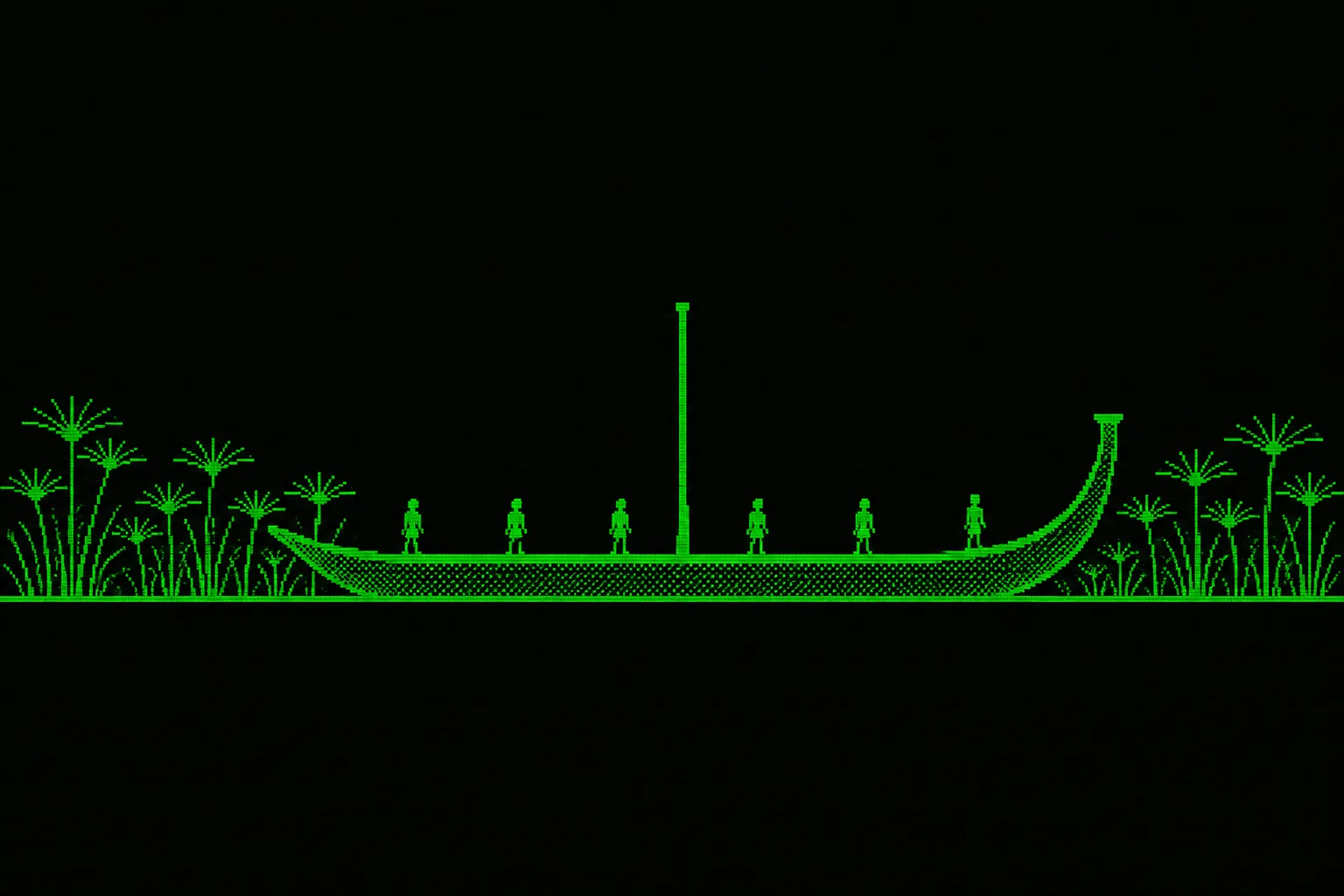
Then the anger. A cattle ferry went empty all the way to Heliopolis: Truly, you are the man for the hour! Ra-mesu brought the boatman in for a beating, and the boatman blamed Djehuti-em-hab. Are you sending that enormous ship here empty, with nothing aboard but the crew? Load it with straw, report everything, come to Memphis.
- 1
zẖꜣ(,w) Rꜥw-ms,w ḏd n Ḏḥw.tj-m-ḥꜣb
The scribe Ra-mesu says to Djehuti-em-hab:
- 2
r-n,tj jni̯.tw n =k zẖꜣ(,w) pn n-ḏd tw=k ꜥꜣ ḥr jri̯.t jḫ m
This letter was brought to you to ask: What are you doing here?
- 3
rḏi̯ hꜣb pꜣ (j)m(,j)-rʾ-ḫtm šꜥ,t r-ḏd jni̯.n =k [...] nms,t ḥḏ m zb[,t] m-dj rm sꜥrt ḏi̯ =j pri̯.y =sn n nꜣ ḥr(,j).pl-mnš
The fortress commander had a letter sent, saying: “You have brought … silver nemset jars as cargo, along with fish and wool, so that I can send them on to the captains of the menesh ships.”
Note · Line 3
A nemset was a kind of jar; a menesh was a type of seagoing ship. - 4
600 n,(j) jnr šnj 70 [...] n(,j) dbn n(,j) ḥḏ [...] [⸮rm?] pꜣ ꜥḥꜥ n,tj m-dj =k m tꜣ rnp,t
Six hundred bundles of animal hair, seventy … in deben of silver, … fish—that is the amount you have on hand this year.
Note · Line 4
A deben was a unit of weight, about 91 grams. The silver was weighed, not counted out in coins. - 5
šꜣ ḏi̯.t ḏi̯ =k st m zb,t m wꜥ hrw wꜥ wr,t
You would do well to hand them over as cargo in a single day.
- 6
m-mj,tt sḏm =j r-ḏd jz,t-mnš Ꜣny zꜣ [P]yꜣ,y n(,j) Ꜥpr-jr n(,j) pꜣ twt ꜥꜣ n(,j) Rꜥw-msi̯-sw-mr,y-Jmn ꜥnḫ-wḏꜣ-s(nb) Rꜥw-n-⸢ḥqꜣ⸣[.pl] mwt ḥnꜥ nꜣy =f ẖrd.pl
I have also heard that Any, the menesh sailor, son of Pyay of Aperel by the great statue of Ramesses, Beloved of Amun (life, prosperity, health!), the Sun of Rulers, has died along with his children.
Note · Line 6
“Life, prosperity, health!” is the customary blessing after the royal name. “Sun of Rulers” is a title of Ramesses. - 7
n mꜣꜥ,t n ꜥḏꜣ
Is it the truth or a lie?
- 8
jḫ pꜣ jri̯ pꜣ (j)m(,j)-rʾ-ḫtm n tꜣ zb,t n(,j) pꜣ pr
What has the fortress commander done with the temple’s cargo?
- 9
jr nꜣ sꜣrt n(,j) pꜣ nṯr n,tj m 〈w〉ḫr,t Pr-Rꜥw-ms,w-mr,y-Jmn ꜥnḫ-wḏꜣ-s(nb) ḥr sp,t Pꜣ-mw-n-pꜣ-Rꜥw ḏi̯ =tw m zb,t n njm nꜣ
As for the god’s fleeces at the shipyard of Pi-Ramesses-Meryamun (life, prosperity, health!), on the bank of the Water of Ra—who received them as cargo?
Note · Line 9
The Water of Ra was the Pelusiac branch of the Nile, in the eastern Delta. - 10
bw-pw pꜣ zẖꜣ(,w) [...] šmi̯.t r ḏi̯.t ḏi̯ =tw m zb,t
Didn’t the scribe … go to have them handed over as cargo?
- 11
jḫ pꜣ jri̯.yt n =sn
What was done with them?
- 12
smtr st m-zẖꜣ.w r ḏr,t n(,j) nꜣ rwḏ,w.pl n,tj ḥr rḏi̯.t zb,t m-mj,tt bꜣk.pl n(,j) nꜣy =f wḥꜥ [...]
Inquire into it in writing, addressing the agents who hand over the cargo. Inquire likewise into the deliveries from his fishermen and fowlers …
- 13
njm mki̯ pꜣy =f ḥr,j-mnš [...]
Who is looking after his menesh captain …?
- 14
[...] šmi̯.t r ḏi̯.t ꜣṯp [...] pꜣy r(m)ṯ 2 jnn m zb,t jw tꜣ rḫt ꜥšꜣ n(,j) ḥḏ m-dj =sn m zb,t jw nꜣy =sn jz,t.pl mwt
… go to have the ship loaded … these two men of ours as cargo, with that great sum of silver in their hands as cargo and their crews dead.
- 15
[...] r ptr [...]
… to see …
- 16
bn [...] dy ḥr [...] zb,t n(,j) pꜣ nṯr m tꜣ rnp,t
Not … here … the god’s cargo this year.
- 17
m-mj,tt hꜣb n =j zẖꜣ(,w) Ḏḥw,tj-m-ḥꜣb r-ḏd ḏi̯ =j grg pꜣ 50 ⸮ḥn? [...] pꜣ hꜣb =k nb ḥr =f
The scribe Djehuti-em-hab also wrote to me: “I have had the fifty … made ready … everything you wrote about.”
- 18
[_].tw jy.t pꜣ dp,t r ꜣtp m [...] n wpw,t j:[_] [...] ḥn.tw n r(m)ṯ pꜣ r wḏi̯ pꜣ kr n(,j) wḥꜥ Srw,ty ꜣs mtw =k ḏi̯.t jwt =f r-ḥꜣ,t šms Ḥy ẖr nꜣ sdbḥ n(,j) pꜣ dp.t n-mꜣw,t ḫy-rʾ
… the ship comes to be loaded with … for the mission … The men have orders to send off the cargo boat of Seruty the fisherman and fowler at once. Then have it brought before the retainer Hy again, carrying the ship’s gear, without fail.
- 19
jw =n r šmi̯.t r mšꜥ mtw =k ḏi̯.t jni̯.tw n =j ḫt-n-ꜥš m-dj zẖꜣ,w Ḏḥw,tj-m-ḥꜣb
We are about to set out on the march. Have the cedarwood brought to me from the scribe Djehuti-em-hab.
- 20
mšp st r-jqr
Spare no effort on this!
- 21
jri̯ nꜣ [...] sjn n =sn [...] grḥ m pꜣ dp,t mtw =k m grḥ m jri̯ wp(w),t nb [...] ꜥqꜣ mtw =k jy.t n =j r Mn-nfr
Have the … wait for them … finish with the ship. Finish carrying out every order … properly, then come to me at Memphis.
- 22
jw =j r jri̯.t šꜣꜥ ꜣbd 2 ꜣḫ,t 8 r hrw 10 m jm mtw =n wḏi̯ r Pr-Rꜥw-ms,w-mr,y-Jmn ꜥnḫ-wḏꜣ-s(nb) jr ꜥnḫ =n
I shall stay there from the eighth day to the tenth of the second month of the Inundation. Then we shall leave for Pi-Ramesses-Meryamun (life, prosperity, health!), if we are still alive.
Note · Line 22
The Inundation, named for the annual Nile flood, was the first season of the Egyptian year. - 23
j:jri̯ =k wꜣḥ jz,t-mnš Pꜣ-šd jz,t-mnš Jnr jw =w mḥ zp-2 m zb,t jri̯ hr,t jb =tn r pꜣ n,tj jw =w r rḫ šzp =f [...] [r]m
Leave the menesh sailors Pashed and Iner behind once they have a full load of cargo. Set your hearts at ease about what they will be able to take on … fish.
Note · Line 23
The order to leave the sailors behind is for Djehuti-em-hab alone. The words “set your hearts at ease” are addressed to more than one person. - 24
m jri̯ ḏi̯.t n =sn zb,t n(,j) zẖꜣ(,w) Pꜣ-sr m tꜣ rnp,t j:jri̯.t =w mḏḥ n =sn dp,t
Do not give them the scribe Paser’s cargo this year until they have built themselves a ship.
- 25
m =k ḏd =n n =sn mḏḥ m tꜣ rnp,t jmi̯ n =sn zb,t
Look, we told them to build it this year. Give them cargo.
- 26
ptr ḏi̯ =j grg n =sn r(m)ṯ r jz,t jw =j r mḥ mḥ zp-2
See, I have had men made ready to serve as their crew, and I shall fill it to the full.
- 27
ky-ḏd wrḥ =k ꜣs wrḥ =k tw nfr
One more thing: may you be anointed quickly; may you anoint yourself well.
- 28
mꜣꜥ,t jri̯ =k ḏi̯.t jwt pꜣ ẖn-jḥ wn.w ẖr nꜣ sꜥrt m-dj nf,w Stẖ,j [...] [_] =f jw =f šwi̯ r-šꜣꜥ Jwnw jw pꜣ 6 r(m)ṯ j:m =f m jz,t
Is it true you had Seti the boatman bring the cattle ferry that used to carry the wool … and that it went empty all the way to Heliopolis, with six men aboard as its crew?
- 29
mꜣꜥ,t mntk r(m)ṯ m tꜣ wnw,t
Truly, you are the man for the hour!
- 30
šꜣ.w gr.n =k ḥr pꜣ zp n(,j) nny jri̯ =k
You would do well to keep quiet about this piece of laziness of yours.
- 31
nn-wn jsr m pꜣ ṯwfj nꜣ
Are there no reeds in this papyrus thicket?
- 32
nn-wn bꜣk.[⸮pl?]
And are there no deliveries due?
- 33
ḥr.y r =j pꜣ tm.t ꜣṯp pꜣ dp,t mtw =tw tm.t ḏi̯.t jwi̯.t =f šw.w m-rʾ-pw mtw =tw ꜣṯp =f m ꜥq,w m pꜣ kyršt n(,j) jtr,w-ꜥꜣ r hꜣb [...] ḥr pꜣy =f sḫr m-ssr zp-2
See to it for me that the boat is loaded. They are not to let it come empty. Let them load it instead with the dues in kyreshet bread from the main branch of the Nile, then send … on account of its excellent condition.
- 34
pꜣ-wn ḏd pꜣy =f nf,w jw jni̯ =j sw r qnqn =f r-ḏd ḏd.n =j zẖꜣ(,w) Ḏḥw,tj-m-ḥꜣb jmi̯.tw ꜣṯp.yt r pꜣ dp,t ḏd n =j sḏm Sw-m-pr-Jmn ꜣṯp sw m jsr jw Ḏḥw.tj-m-ḥꜣb ḥr ḏd n =j bn jw =j r rḏi̯.t n =k m nꜣ dp,t.pl n(,j) nꜣ wḥꜥ jri̯.w ꜣṯp.t
For when I brought the boatman in for a beating, he said, “I told the scribe Djehuti-em-hab, ‘Put the cargo aboard the boat.’ The servant Su-em-per-Imen had told me, ‘Load it with reeds.’ But Djehuti-em-hab said to me, ‘I won’t give you anything from the loaded boats of the fishermen and fowlers.’”
Note · Line 34
The boatman is giving Ra-mesu his side of the story. The man whose refusal he quotes is the very man Ra-mesu is writing to. - 35
jr pꜣ wsḫ n,tj ḥr šmi̯.t r Wsr-Mꜣꜥ,t-Rꜥw-stp-n-Rꜥw ꜥnḫ-wḏꜣ-s(nb) pꜣ dmj ẖr nꜣ sꜥrt r tnw-rnp,t bn jwi̯.t =f ꜣṯp m bꜣk n(,j) ṯwfj m-bꜣḥ =k wjꜣ.tw nꜣ kr n(,j) nꜣ wḥꜥ
As for the barge that sets out each year with its load of wool for the town of Usermaatre Setepenre—life, prosperity, health!—it will not come to you laden with papyrus dues, quite apart from the small cargo boats of the fishermen and fowlers.
Note · Line 35
Usermaatre Setepenre was the throne name of Ramesses II. The customary wish for the king’s well-being follows his name even when it identifies a town. - 36
jḫ ꜥꜣi̯ =sn tr nꜣ ꜥḥꜥ.pl n(,j) nꜣ wḥꜥ tw=k ḥr hnn =k n =sn
Just how big are the ships of the fishermen and fowlers, that you bow to them?
- 37
bn jw =j r wꜣḥ =k ḥr pꜣ zp ꜥꜣ n(,j) wgg jri̯ =k jnn pꜣ ꜥḥꜥ n(,j) wpw,t.pl j:ḏd =j n =k jri̯ =st m pꜣ smn [...] tꜣ ḥꜣ,tj m hnn
I will not let you off for the great loss you have caused unless the many orders I gave you are duly carried out … in agreement with the first.
- 38
bw wꜣḥ =k nfr jri̯ =k mn n pꜣ n,tj nb tw=tw ḥr hꜣb =f
You do not neglect what is right; you can be counted on in every matter about which word is sent.
- 39
j:jri̯ =k ḏi̯.t jwt pꜣ dp,t ꜥꜣ zp-2 jw =f šwi̯.w jw tꜣ jz,t j:m =f
Are you sending that enormous ship here empty, with nothing aboard but the crew?
- 40
m-bjꜣ,t ꜣṯp =f m dḥꜣ ⸮hꜣb? ꜥꜣ pꜣ jri̯ =k
No, what you are to do is load it with straw from the great …
- 41
bn jri̯ =k gmi̯.t ky dp,t r ꜣṯp =f mj-qd pꜣ m n,j-sw
You will not find another boat like this one available to load.
- 42
ky-ḏd r:hꜣb ḥr smj n pꜣ jri̯ =k nb zp-2 m-dj pꜣ n,tj nb zp-2 wn.w =f n =k m-dj pꜣy =k sw hrw n(,j) wḏi̯ r jy.t m-ḏr,t šms Jj jw jri̯.y =k šꜥ,t m ḏr,t =f ḥr pꜣy =k nw.w n(,j) wḏi̯ =f
One more thing: send me a report by the retainer Ii. Tell me every last thing you have done, name every single person who was with you, and give the date of your departure, the day you set out to come back. Put the letter in his hand when you send him off.
- 43
jḫ rḫ =k sw
Please take note of this.
- 44
ꜣbd 1 ꜣḫ,t 27
First month of the Inundation, day 27.
Note · Line 44
The Egyptian civil year began with the season named for the Nile flood. - 45
zẖꜣ(,w) Rꜥw-ms,w n zẖꜣ(,w) Ḏḥw,tj-m-ḥꜣb
From the scribe Ra-mesu to the scribe Djehuti-em-hab.