~/sacred-texts/late-egyptian-miscellanies
Papyrus Anastasi VI: Complaint over Seized Workers and Linen
- Date
- Copied in the 19th Dynasty during the reign of Seti II (c. 1200–1194 BC) in hieratic script on papyrus
- Found
- Acquired in Egypt by Giovanni Anastasi; now in the British Museum, London (EA 10245)
- Language
- Late Egyptian · Hieratic
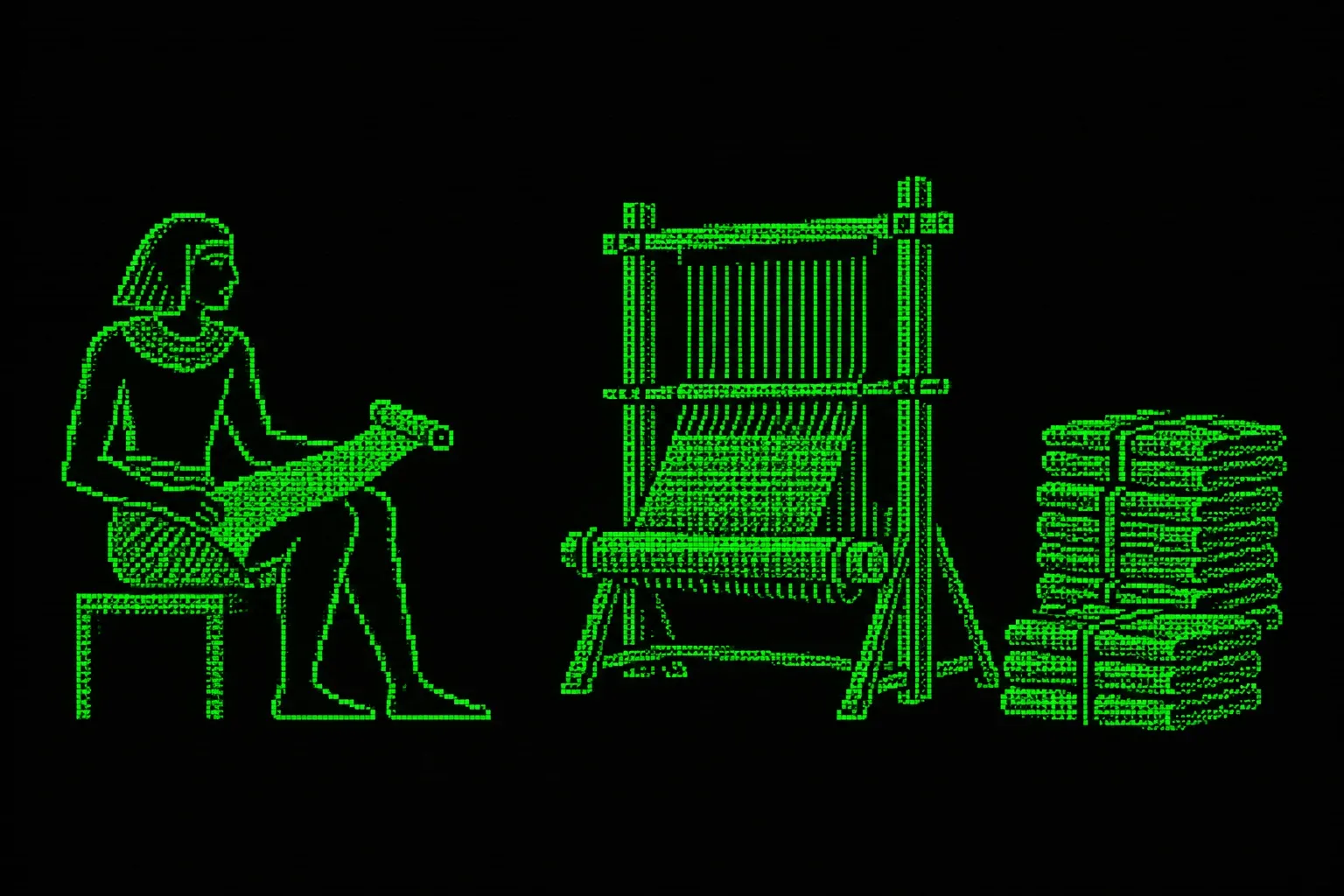
The scribe Inene writes to his superior Qagabu, scribe of the treasury, after officials register weavers under Inene’s name while keeping the workers in another town. They demand, Hand over the weavers’ work! and seize 178 mnwy of linen before the overseer of the treasury can inspect it.
Magistrates order, Release the people, wherever they are. Yet the estate steward Seba takes two field hands’ wives, and four women workers remain locked up at Tjuna. Left without seed grain or rations, Inene writes, I am the one he treats as a widow. An opening royal protocol names Seti II at Pi-Ramesses.
Letter of Complaint (lines 7–50)
- 1
zẖꜣ,w Jnnꜣ ḥr swḏꜣ [jb] n nb =f zẖꜣ,w-pr-ḥḏ Qꜣi̯-gꜣbw m ꜥnḫ (w)ḏꜣ s(nb)
The scribe Inene greets his lord Qagabu, scribe of the treasury, wishing him life, prosperity and health.
- 2
hꜣb pw r rḏi̯.t rḫ pꜣy =j nb r-n,t[j]
This letter is to let my lord know the following:
- 3
tw≡j ḥr jri̯.t wpw,t nb ḏi̯.yt m ḥr =j m-šs r-jqr ḏrj mnḫ
Every task set before me I carry out with the utmost diligence, with skill and distinction.
- 4
nn jw =j r ḏi̯.t ṯꜣy n =j pꜣy =j nb
I will give my lord no cause to find fault with me.
- 5
r-n,tj j:jri̯ =j jy.t r pꜣ n,tj pꜣy =j nb jm jw jṯꜣ pꜣ wꜥw n mnš j:ḏi̯{.t} n =j pꜣy =f ꜥḥ,wtj jw =tw ḥr ḏi̯.ṱ =f r pꜣ jtḥ{.pl} m dmj Ṯbn,t jw =f (ḥr) skꜣ n zẖꜣ,w-mšꜥ Pꜣ-mr-jḥ,pl n,tj ḥmsi̯ =f m dmj Ṯbn,t
The matter is this. I came to where my lord was after they had taken away the soldier from the cargo ship whose field hand had been assigned to me. They put the soldier in prison in the town of Tjebenet. At the time he was plowing for the army scribe Pa-mer-ihu, who lives in Tjebenet.
- 6
j:jri̯ =f ((ḫꜣꜥ)) 23 n hrw jw tꜣy =f ꜥḥ,t ḫꜣꜥ.tj jw jri̯ (j)m(,j)-r(ʾ)-pr Sbꜣ bjn nb jm
He spent twenty-three days there with his field abandoned, while the estate steward Seba did all manner of harm in it.
- 7
ḏi̯ =f jwi̯.t 3 šms(,w).pl
He summoned three attendants.
- 8
jw =tw ḥr jṯꜣ.y =〈j〉 m-bꜣḥ (j)m(,j)-r(ʾ)-mšꜥ Ḥ(w)y zẖꜣ,w Ptḥ-m-ḥb
They took me before General Huy and the scribe Ptah-em-heb.
- 9
jw =tw ḥr ḫpr ḥr snhꜣ n =j tꜣ mrj(,t) r ꜥw,tj jw jṯꜣ =f tꜣ mrj(,t) jw =st m pꜣy =f dmj
They began entering the weavers under my name on the roll, though he had taken the weavers away and they are now in his town.
Note · Line 9
The entry made Inene answerable for what the weavers produced, even though someone else had the workers. - 10
jw =f ḥr ḫpr j:jri̯ =f snhꜣ n =j ꜥw,tj m ḥw,t-nṯr Rꜥ-msi̯-sw-mri̯-Jmn ꜥnḫ-(w)ḏꜣ-s(nb) ḫr jw nꜣ r(m)ṯ.pl m-dj =f m pꜣ dmj jw bn sw ꜥḥꜥ m-bꜣḥ nꜣ sr.w.pl j~jrʾ~mꜥ =j
He then began registering the roll in my name at the temple of Ramesses-Meryamun—may he live, prosper and be well. Yet the people were with him in the town, and he did not stand with me before the magistrates.
- 11
j:jri̯ =f jṯꜣ tꜣ mrj(,t) m Pr-Nb,t-ḥtp,t jw jṯꜣ =f k,t jw~wꜣ~jꜣ,t{.pl} 2 ḥr-r =j r-ḏd bwp[w]y =f ḫꜣꜥ tꜣ wpw,t n pꜣ (j)m(,j)-r(ʾ)-pr-ḥḏ mtw =f jy.yt r ꜥḥꜥ r-ḥꜣ,t =j ḫr =f
He took the weavers from Per-Nebethetepet after he had already taken two other women workers from me. He said he had not disregarded the order of the overseer of the treasury and would come and stand before me. Those were his words.
- 12
ḫr jr tw≡tw qn snhꜣ n =j tꜣ mrj(,t) jw =f ḥr ḏi̯.t r(m)ṯ.pl m-sꜣ =j r-ḏd jmm tw bꜣk.pl n tꜣ mrj(,t) ḫr =f ḫr jw swḏ =j bꜣk.pl n tꜣ mrj(,t) m-bꜣḥ pꜣ (j)m(,j)-r(ʾ)-pr-ḥḏ ḫr j:jri̯ =tw šzp bꜣk〈.pl〉 =st ꜣbd 2 šm,w m-dwnj zp-2 ḥꜣw.pl (r)-ḥꜣ,t =f 5 ꜣbd.pl
Once they had finished entering the weavers under my name, he sent men after me. “Hand over the weavers’ work!” he said. Yet I had already handed over the weavers’ work in the presence of the overseer of the treasury. Their work had been received regularly since the second month of Shemu, more than five months before.
Note · Line 12
Shemu was the harvest season. - 13
jw =f ḥr jṯꜣ nꜣ nw,t wn jw =j r jni̯.ṱ =w m-bꜣḥ pꜣ (j)m(,j)-r(ʾ)-pr-ḥḏ
He also took away the lengths of cloth I was to bring before the overseer of the treasury.
- 14
r rḏi̯.t rḫ pꜣy =j nb nꜣ nw,t.pl jṯꜣ.y =f ((m-dj)) =((j)) j:jri̯.tw pꜣ (j)m(,j)-r(ʾ)-pr-ḥḏ ptrj{.ṱ} =w šs-nswt mnwy.pl 87 mk mnwy.pl 64 šmꜥ,t nfr mnwy.pl 27 dmḏ 178
For my lord to know what cloth he took from me before the overseer of the treasury could inspect it: royal linen, 87 mnwy; mek-linen, 64 mnwy; fine shemat-linen, 27 mnwy. Total: 178.
Note · Line 14
The mnwy is the unit of cloth used in this account. Mek and shemat are kinds of linen. - 15
ḫr jr ḥr-sꜣ snhꜣ jw =j (ḥr) mtr{,t} nꜣ r(m)ṯ.pl m-bꜣḥ nꜣ sr.pl
After the registration I identified the people before the magistrates.
- 16
jw nꜣ sr.pl ḥr ḏd n =f
The magistrates told him:
- 17
ḫꜣꜥ nꜣ r(m)ṯ.pl m pꜣ n,tj nb st jm
“Release the people, wherever they are.”
- 18
jw =f ḥr wꜣḥ n =j 4 hrw{.pl} n wḏi̯ j:jri̯{.tw} nꜣ sr.pl
He kept me waiting four days after the magistrates had departed.
- 19
jw =f ḥr ḏi̯.t jwi̯.t pꜣ zẖꜣ,w-mšꜥ ((2)) n,tj ḥr jṯꜣ pꜣ št
Then he summoned the two army scribes who were taking the taxpayer away.
- 20
jw =w ḥr jṯꜣ k,t jw~wꜣ~jꜣ,t{.pl} 2 m Pꜣ-jsḥmw r-ḏd jmm tw 〈wꜥ〉 〈ms,w〉 〈ḥm〉 šrj jw bn sw m-dj =j jw wn =f m-sꜣ nꜣ ꜥnḫ.pl n (j)m(,j)-r(ʾ)-pr Nmtj-msi̯
They took two other women workers from Pi-ishemu and said, “Hand over a young slave boy!” But the boy was not with me: he was tending the goats of the estate steward Nemtimose.
- 21
ḫr jr pꜣ r(m)ṯ{.pl} wn =f m-dj =f m ẖr(,j)-ꜥ sw m-dj zẖꜣ,w Ptḥ-m-ḥb n,tj (ḥr) snhꜣ j~jrʾ~mꜥ (j)m(,j)-r(ʾ)-mšꜥ Ḥ(w)y
The man to whom the boy was apprenticed is with the scribe Ptah-em-heb, who is conducting the registration with General Huy.
- 22
sw (ḥr) bꜣk{.pl} n =f jt m Pr-Nb,t-ḥtp,t ḫr jw pꜣ ꜥḏd m-dj =f
He grows barley for himself at Per-Nebethetepet, and yet the boy is with him.
- 23
(((j)m(,j)-r(ʾ)-pr)) ((Sbꜣ)) ((rḫ)) ((pri̯.t)) ((jm)) =((s))
Seba, the estate steward, knows what came of it.
- 24
ḫr jw wn =f m(j)nj{,wt} r pꜣ dmj n,tj pꜣ ꜥḏd jm jw =f ḥr tm jni̯.ṱ =f j[w] bwpwy =f jni̯(.t) n =j jw~wꜣ~jꜣ,t.pl n pꜣ r(m)ṯ{.pl} n,tj sw m-dj =f
Though he had landed at the town where the boy was, he did not bring him back. Nor had he brought me any women workers from the man the boy was with.
- 25
jnk pꜣ n,tj m-dj =f m ḫꜣrj(,t)
I am the one he treats as a widow.
Note · Line 25
Inene likens himself to a widow left without anyone to speak for her. - 26
ḏi̯ =f ḫpr =j mj-qd r(m)ṯ{.pl} jw nn-wn m-dj =f ḥr,j
He has made me like a man with no superior.
- 27
j:jri̯{.t} =w r =k ḫr =f ḥr ḏd n =j m-bꜣḥ nꜣ sr.pl ḥr pꜣ jṯꜣ j:jri̯ =k nꜣ ḥbsy.pl n tꜣ mrj(,t) m-bꜣḥ pꜣ (j)m(,j)-r(ʾ)-pr-ḥḏ ḫr =f ḥr ḏd n =j
“They took action against you,” he told me before the magistrates, “because you took the weavers’ garments before the overseer of the treasury.” That is what he told me.
- 28
⸮[jr]? ḏd.n (j)m(,j)-r(ʾ)-mšꜥ Ḥ(w)y ṯꜣy =[tn] [n] =f jw =f ḥr tm šzp =w jw =f ḥr ḏd n (j)m(,j)-r(ʾ)-mšꜥ Ḥ(w)y j:jri̯ =j tm šzp =w [ḥr] ṯꜣy wꜥ zẖꜣ,w Šrj n pr-ḥḏ ḫr =f ḥr ḏd r pꜣ ḥr,j-zꜣw-zẖꜣ,w,pl n pr-ḥḏ n Pr-ꜥꜣ ꜥnḫ-(w)ḏꜣ-s(nb) m-sꜣ tꜣy =f bjꜣ,t bjn
When General Huy said, “You rebuked him, yet he never received them,” he told General Huy, “It was on account of one man alone that I did not receive them: Sheri, the treasury scribe.” That was how he spoke of the chief archivist of Pharaoh’s treasury—may Pharaoh live, prosper and be well—on account of his bad character.
- 29
ḫr jr pꜣy =j nb ꜥḥꜥ n pꜣ ꜥꜣ-n-pr mtw =tw ḏd n =f
Then, when my lord stood before the master of the household, he was asked:
- 30
j:jri̯ =k ꜣbi̯ m pꜣj zẖꜣ,w jnk ḥr-jḫ
“Why did you make sport of this scribe of mine?”
- 31
bn jw =n (r) rḫ šm.t ḥr tꜣ mj,t ((bn)) [...] (([___].pl)) pꜣ{j}-wn tw≡n dj [ḥ]tꜣ{.pl} m-mn,t ḥnꜥ nꜣ[y] =[n] r(m)ṯ.pl m-dj nꜣ n,tj ḥr ḥmw wsr.pl ḏi̯.yt n =j r ꜥḥ,[w]tj
We shall not be able to walk the road. We shall not … For here we are in rags day after day, along with our people and the men making oars, the very men assigned to me as field hands.
- 32
bwpwy =j ptrj =f r-šꜣꜥ pꜣ-hrw m-dj nꜣ n,tj ḥr jṯꜣ wꜥw.pl
To this day I have not seen him, because of the men who are rounding up recruits.
Note · Line 32
The missing man is not named here. - 33
sw wꜥr m Pr-Nb,t-ḥtp,t ḫr bw ḏi̯.y{[t]} [n] =[j] pr,t.pl djw.pl r-šꜣꜥ pꜣ-hrw
He has fled from the House of Nebethetepet, and to this day no one has given me seed grain or rations.
Note · Line 33
The place takes its name from the goddess Nebethetepet. - 34
ḫr ptrj ṯꜣi̯ n =f (j)m(,j)-r(ʾ)-pr Sbꜣ tꜣ ḥm,t 2 n pꜣ ꜥḥ,wtj 2 n,tj ꜥḥꜥ (ḥr) skꜣ r-ḥꜣ,t =j m ꜣbd 2 pr,t ꜥrq(,y)
And look: on the last day of the second month of Peret, the steward Seba took for himself the two wives of the two field hands who were plowing under my eye.
Note · Line 34
Peret was the growing season, when the fields emerged from the Nile flood. - 35
jmm hꜣb pꜣy =j nb n (j)m(,j)-r(ʾ)-pr Sbꜣ ḫꜣꜥ =f nꜣ jw~wꜣ~jꜣ,t.pl jnk jṯꜣ =f
Let my lord write to the steward Seba and have him release those women workers of mine whom he took away.
- 36
jnn wn nkt n (j)m(,j)-r(ʾ)-pr Sbꜣ m-dj =[j] [...] jri̯ =⸮j? [...] ⸮n? pꜣ [ḫꜣꜥ] ⸮[j:]jri̯? [...] =⸮f? [...] ((⸮qbw?)) ((n)) =((f))
If I had so much as a little of what belongs to the steward Seba … I would do … for the release … him … for him.
- 37
j:jri̯ =tw jri̯(.t) n =f [n]ḫt.tj ḏs =f
It is for the man who has strength of his own that people act.
- 38
mꜣꜥ{,t} zẖꜣ,w-n-(j)m(,j)-r(ʾ)-pr-ḥḏ-n-Pr-ꜥꜣ ꜥnḫ-(w)ḏꜣ-s(nb) mtw ꜥꜣ-n-pr rḫ thi̯.t r tꜣy =j 4 r(m)ṯ{,pl} r:ḏd[ḥ] m p[ꜣ] ḫnw n Ṯw~nꜣ pꜣy =f dmj
The scribe to the overseer of the treasury of Pharaoh (may he live, prosper and be well) is right. And the chief steward knows of the wrong done to my four women, who are locked up in the rest house at Tjuna, his town.
Note · Line 38
The writer does not say whether the two wives are among these four women. - 39
jri̯ pꜣy =k nb r ḏi̯.t jni̯.tw nꜣ bꜣk.pl n,tj ḫꜣꜥ m Pr-Nb,t-ḥtp,t mtw =tw sḥn.ṱ =w pꜣ-wn st ḥmsi̯ nn-wn wpw,t m ḏr,t =w
Your lord will have the workers who were let go at the House of Nebethetepet brought in and put to work, for they sit there with no task in hand.
- 40
hꜣb pw r rḏi̯.t rḫ pꜣy =j nb
This is a letter to let my lord know.
Opening Royal Protocol (lines 1–6)
- 41
ḫr ḥm nswt-bjtj nb-tꜣ,du Wsr-ḫpr,pl-n-Rꜥ-stp.n-Rꜥ ꜥnḫ-(w)ḏꜣ-s(nb) zꜣ-Rꜥ nb-ḫꜥ,pl mj Tm Stẖ,y-mri̯.n-Ptḥ ꜥnḫ-(w)ḏꜣ-s(nb) mri̯.y Tm nb-tꜣ,du-Jwnw Rꜥ-Ḥr-ꜣḫ,tj,du ḏi̯ ꜥnḫ ḏ,t r-nḥḥ mj jt =f Rꜥ-Ḥr-ꜣḫ,tj,du
Under the Majesty of the King of Upper and Lower Egypt, Lord of the Two Lands, Userkheperuenre, Chosen of Ra—may he live, prosper and be well!—Son of Ra, Lord of Crowns like Atum, Seti, whom Ptah loves—may he live, prosper and be well!—beloved of Atum, Lord of the Two Lands and of Heliopolis, and of Ra-Horakhty, given life for ever and ever like his father Ra-Horakhty.
Note · Line 41
The two royal names belong to Seti II. The first is his throne name; the second is his birth name. The Two Lands are Upper and Lower Egypt. - 42
m hrw 〈p〉n jw =tw [...] m Pr-Rꜥ-msi̯-sw-mri̯-Jmn pꜣ Kꜣ-ꜥꜣ-n(,j)-pꜣ-Rꜥ-Ḥr-ꜣḫ,tj,du pr-nswt ꜥnḫ-〈wḏꜣ〉-s(nb) nfr n ḥḥ,pl n ḥb-s[d,pl] ḥr jri̯(.t) ḥsi̯,y Jmn-n-Rꜥ-msi̯-sw-mri̯-Jmn ꜥnḫ-(w)ḏꜣ-s(nb) Ptḥ-n-〈___〉 [...]
On this day the king was … in Pi-Ramesses-Beloved-of-Amun, the Great Ka of Ra-Horakhty, the perfect royal palace of millions of Sed festivals—life, prosperity and health!—doing what won praise from Amun of Ramesses-Beloved-of-Amun—may he live, prosper and be well!—and from Ptah of …
Note · Line 42
Pi-Ramesses was the royal residence named for Ramesses II. Its title calls it the ka, or vital power, of Ra-Horakhty. The Sed festival was a jubilee that renewed the king’s power to rule.