~/sacred-texts/ramesside-letters-papyri-anastasi
Papyrus Anastasi IX: He Took Away My Eighteen Head of Cattle
- Date
- Written in the reign of Ramesses II (1279–1213 BC), 19th Dynasty, in hieratic on papyrus; dated first month of the Inundation, day 12
- Found
- Bought in Egypt by the dealer Giovanni Anastasi; in the British Museum, London, since 1839
- Language
- Late Egyptian · Hieratic
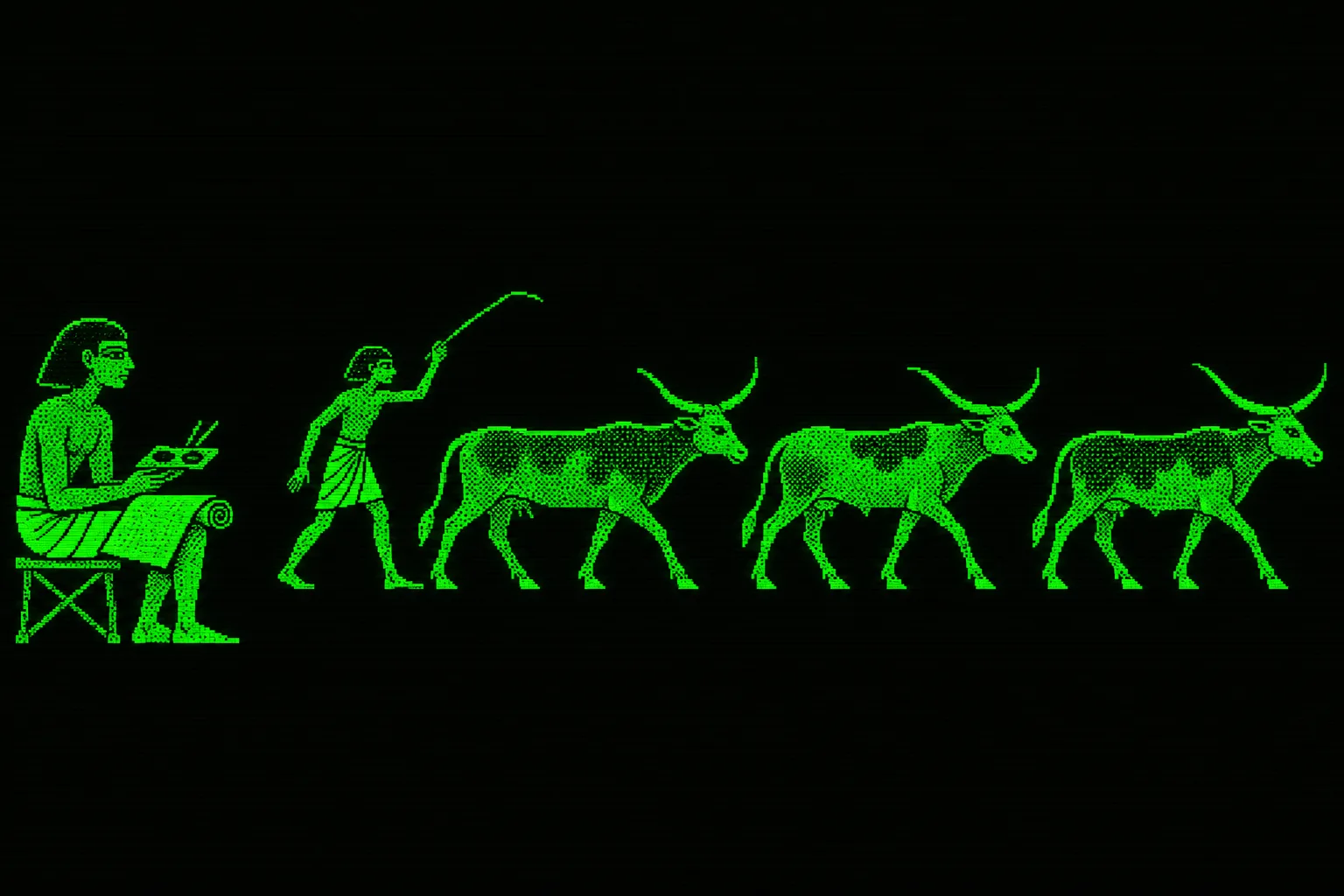
Hori, a scribe responsible for cattle, answers an angry letter from his superior, the scribe Ra-mesu. Accused of sloppy work, he hits back: did I not bring the cattle two months ago, before you had even asked for them? He insists on his share of the wine jar and sour cream: Don’t I want something to live on myself?
Then come his own grievances. A rival has seized his herd, He took away my eighteen head of cattle, and is now ordering the timber removed. Hori has witnesses ready and throws the duty back on his chief: Aren’t you my superior? The papyrus is broken toward the end, where cattle are sent to the House of Usermaatre Setepenre, Ramesses II, and the letter closes with its date.
- 1
zẖꜣ(,w) Ḥrj ḥr swḏꜣ jb nb =f zẖꜣ(,w) Rꜥw-ms,w m ꜥnḫ-wḏꜣ-s(nb)
The scribe Hori greets his lord, the scribe Ra-mesu, in life, prosperity and health.
Note · Line 1
The greeting speaks of making the recipient’s heart sound. The same expression for sending word recurs below. - 2
hꜣb pw r rḏi̯.t rḫ pꜣy =j nb
This is a letter to let my lord know.
- 3
ky swḏꜣ-jb n pꜣy =j nb r-n,tj sḏm.n =j nꜣ md(w),t.pl ꜥḥꜣ hꜣb =k n =j ḥr =w ḫr jw mꜣꜥ pꜣ j:ḏd =k wj m-bꜣḥ =j dgi̯ =w n(,j) ꜥnḫ n jtj n(,j) r(m)ṯ n pꜣy =f šrj nꜣ hꜣb =k n =j ḥr =w bn md(w),t n mwt jwnꜣ
A further word to my lord: I have heard the angry words you wrote to me about. Yet what you told me to my face is true: what you wrote to me about was counsel for life, such as a man’s father gives his son, not talk of death.
- 4
r-n,tj hꜣb =j r jni̯ nꜣ jḥ.pl r ḥwi̯ nꜣ ⸢jḥ.pl⸣ jw =w r-ḥꜣ,t pꜣy =w ẖr,j-ꜥ-n-mnj,wpl
Further, I sent to have the cattle brought in and to have the cattle in the charge of the chief herdsman’s assistants driven on.
- 5
ḫr-jr tꜣ rḫt jḥ.pl j:ḏd =w n =k ns =st nꜣy =w ms.pl n,tj m-sꜣ =w
As for the tally of cattle they reported to you, the animals belong to their children, who look after them.
- 6
ḫr-jr nꜣ jḥ.pl st r-ḥꜣ,t pꜣy =w mnj,w.pl jw =w m s,t nb bn st r-ḥꜣ,t šms(,w) jnk
Wherever the cattle are, they are in the charge of their own herdsmen, not of any retainer of mine.
- 7
ḫr-jr pꜣy =k hꜣb n =j r-ḏd bw jri̯ =k ḫry js bn j:jri̯ =j jni̯ nꜣ jḥ.pl ꜣbd 2 r nꜣ jw bw jri̯ =k ḥn =w
As for your writing to me, “You did not carry out your orders to the letter”—did I not bring the cattle two months ago, before you had even asked for them?
- 8
ḫr-jr tw=tw ḥr ⸢grḥ⸣ m ḥwi̯ nꜣ jt ⸢jw⸣ ⸢=j⸣ ⸢ḥr⸣ hꜣb r jni̯ pꜣy =w mnj,w.pl r-ḏd mj ⸢jṯ⸣ꜣ =k st jw bw jri̯.t =k hꜣb n =j
When they finish threshing the barley, I send for the herdsmen with the message, “Come and take them yourself,” before you have even written to me.
Note · Line 8
Cattle were driven over the cut barley on the threshing floor to tread the grain loose. - 9
ḫr-⸢jr⸣ ⸢pꜣ⸣y =k ḏd r tꜣ šꜣy ḥnꜥ pꜣ sm,y ⸢jw⸣ ⸢=w⸣ ⸢j⸣ḫ r =j tw=j ḥr wḫꜣ⸢.t⸣ =w
As for what you said about the wine jar and the sour cream—“What use are they to me?”—I want them.
- 10
js bw jri̯ =j wḫꜣḫ n =j pꜣ ꜥnḫ
Don’t I want something to live on myself?
- 11
js bn
Isn’t that so?
- 12
ptr j:jri̯ pꜣ šrj [...] [⸮jḥ?].pl ⸢pꜣ⸣ [...] r ḏi̯.t ẖdb =j ⸢nꜣy⸣ =j jḥ.pl n(,j) ⸢ḥ⸣ꜥ,w =j
Look, did the son … the cattle, the …, to make me kill my own cattle?
- 13
tw=n m-ꜥ =k m ḥr mn n(,j) zẖꜣ(,w)
We are in your hands, under the eye of the scribe So-and-so.
Note · Line 13
“So-and-so” stands in place of a name; the name has not been lost in a gap. - 14
jmi̯ nꜣ rmṯ.pl r-ḫt ky wḏꜣ =j m-dr,t =w r-hꜥ,w =j
Put the men under someone else, so that I myself may be safe in their hands.
- 15
jr hrw nb j:jri̯ pꜣ⸢y⸣ ⸢=j⸣ ⸢nb⸣ ꜥnḫ.w jw ḥꜣm =j nb jḥ.pl m-ꜥ mnj,w-jḥ.w Rꜥw-jꜣ
Every day my lord lives, I shall round up cattle as master of the cattle under Ra-ia the cowherd.
- 16
[...] ⸢mꜣꜥ⸣ [...] ꜥšꜣ [...] ⸢ṯꜣ⸣,y kꜣ.⸢pl⸣
… true … many … male cattle.
- 17
jṯꜣ ⸢=f⸣ pꜣy =j 18 n(,j) jḥ.pl
He took away my eighteen head of cattle.
- 18
ptr sw ḥn r jṯꜣ ⸢ḫt⸣.pl j:jri̯ =j w⸢p⸣(w),t ⸢j⸣rm [...] ⸢m-bꜣḥ⸣ ⸢=k⸣
Look, he is giving orders to take away the timber that I had to handle together with … in your presence.
- 19
⸢jw⸣ n⸢ꜣ⸣y =j ⸢mtr⸣.y [...] g⸢r⸣g ꜥm =k r-ḏd mꜣꜥ,t ⸢pꜣ⸣ j:⸢ḏd⸣ ⸢=j⸣
My witnesses … stand ready. You will know that what I say is the truth.
- 20
ḫr-jr pꜣy [...] ḫrp [...] n jḥ.pl n(,j) ḥtr [...]
As for the … overseeing … the cattle of the team …
- 21
mk m⸢nt⸣k šzp nꜣ jḥ.pl n mꜣ〈⸮z?〉 ḫr mntk sḥn [...] [_]y [...]
Look, it is you who receive the cattle for slaughter, and you who give the orders …
- 22
b⸢n⸣ mntk pꜣy =j ḥr,j
Aren’t you my superior?
- 23
bn mntk pꜣ mnj,w n(,j) nꜣ jꜣw,t.pl
Aren’t you the shepherd of the flocks?
- 24
js jr r(m)ṯ nb [...] Rꜥw [...] jꜣdr [...] r-ḥꜣ,t =w jm[_] [...] r ⸢mḥ⸣ [...] nṯr [...]
Now as for everyone … Ra … a herd … in their charge … to fill … a god …
- 25
jw ⸢=s⸣ pꜣ nṯr jw =k ḥr ⸢tm⸣.t jri̯ =f n =j
It is the god, yet you do not do it for me.
- 26
j⸢r⸣ ⸢jri̯⸣ ⸢=f⸣ ⸢n⸣ ⸢=j⸣ pꜣ [...] r ⸢=j⸣ [...] j:j⸢ri̯⸣ [=j] rḫ ꜥnḫ m⸢j-j⸣ḫ j:jri̯ =j jni̯.t nhj n(,j) s⸢m⸣w,t n pꜣy =j nb mj-jḫ
If he does for me the … concerning me … how am I to live? How am I to bring my lord any fodder?
- 27
mk ptr [...] [_] =k [...] [_] =j [_]n,t j:jri̯ =w j[_] [_]wt [...] m-bꜣḥ pꜣy =w nb [...] pꜣy =j ꜥḥꜥ [...] j:⸢jri̯⸣ [...] m-mj,tt
Just look: … you … I … what they do … before their lord … my standing … do … likewise.
- 28
jr pꜣy =j k[_] [...] ḥr =s [...] pꜣ⸢y⸣ ⸢=j⸣ ⸢nfr⸣ pꜣy =j bjn wꜣḥ m-bꜣḥ =tn
As for my … on that account … the good in me and the bad lie before you all.
Note · Line 28
Hori addresses more than one person here. - 29
j[_] [...] n⸢ꜣ⸣y ⸢=w⸣ ꜥ mḥ,tj [...] m ꜥ rs,j ḫr jw ⸢=tw⸣ ⸢ḥr⸣ [...] nb
… their northern districts … in the southern district, but they … every …
- 30
ḫr m pꜣ n,tj mj-⸢qd⸣ ⸢=k⸣ j:jri̯ ꜥḥꜥ n =w mntk tm [...]
For it takes someone like you to stand up to them, and you are the one who refrains from …
- 31
[...] [swḏ]ꜣ-jb n pꜣy =j nb [...] n jḥ.pl r-ḥꜣ⸢,t⸣ mnj,w-jḥ,w Bꜣk-n-Jmn jw =w mḥ jri̯.t =f [...] j:m =sn jw ḏi̯ =j ⸢ḥ⸣n =st ẖr,j [...] r pr Wsr-Mꜣꜥ,t-Rꜥw-stp-n-Rꜥw ꜥnḫ-wḏꜣ-s(nb) r-ḥꜣ,t =j
… a report to my lord … the cattle in the care of the herdsman Bakenamun. They were hard at work on it … among them, and I had them loaded with … for the House of Usermaatre Setepenre (life, prosperity and health!) under my supervision.
Note · Line 31
Hori is writing to Ramesu, whom he calls “my lord.” Usermaatre Setepenre is the throne name of Ramesses II; the words after it are a customary wish for the king’s well-being. - 32
wnn =j ⸢ḥr⸣ jy.t jw =j [...] [_] =w r-ḥꜣ,t =j jw ḏd =tw n =j tw=t[w] ḥr [...]
When I arrive, I shall … them under my supervision, for I was told that someone was …
- 33
⸢jw⸣ ⸢=j⸣ ḥr šmi̯.t n wr-n-mḏꜣ⸢.y⸣ Kꜣ-[_] r ḏi̯.t šd =f ⸢n⸣hj n(,j) jt
I am going to Ka-…, chief of the Medjay, to have him take away some of the barley.
Note · Line 33
In the New Kingdom the Medjay served as police and guards. - 34
jr [...] Ḏḥw,tj jw =j ḥr šmi̯.t [...] r ⸢hꜣb⸣ n ⸢=j⸣ ⸢m-dr,t⸣ pꜣy ꜥḏd j:ḏi̯ =j jwi̯.t ⸢=f⸣
As for … Djehuty, I am going … to send word to me by this young man I told to come.
- 35
hn[_] [...] ⸮jri̯? pꜣy =j ⸢nb⸣ r [...]
… make my lord into …
- 36
⸢hꜣ⸣b pw r rḏi̯.t rḫ pꜣy =j ⸢nb⸣ m ꜣbd 1 ꜣḫ,t sw ⸮12? [...]
This letter is to inform my lord. First month of the Inundation, day twelve …
Note · Line 36
The Inundation was the first season of the Egyptian year, named for the annual flood of the Nile.