~/sacred-texts/karnak-temple-inscriptions
The Temple of Opet at Karnak: Where Osiris Was Begotten
- Text
- Karnak temple inscriptions, Temple of Opet (de Wit, Les inscriptions du temple d'Opet)
- Date
- Carved under the later Ptolemies, 2nd–1st century BC
- Found
- The temple of Opet, beside the temple of Khonsu at Karnak, Thebes
- Language
- Ptolemaic Egyptian · Hieroglyphic
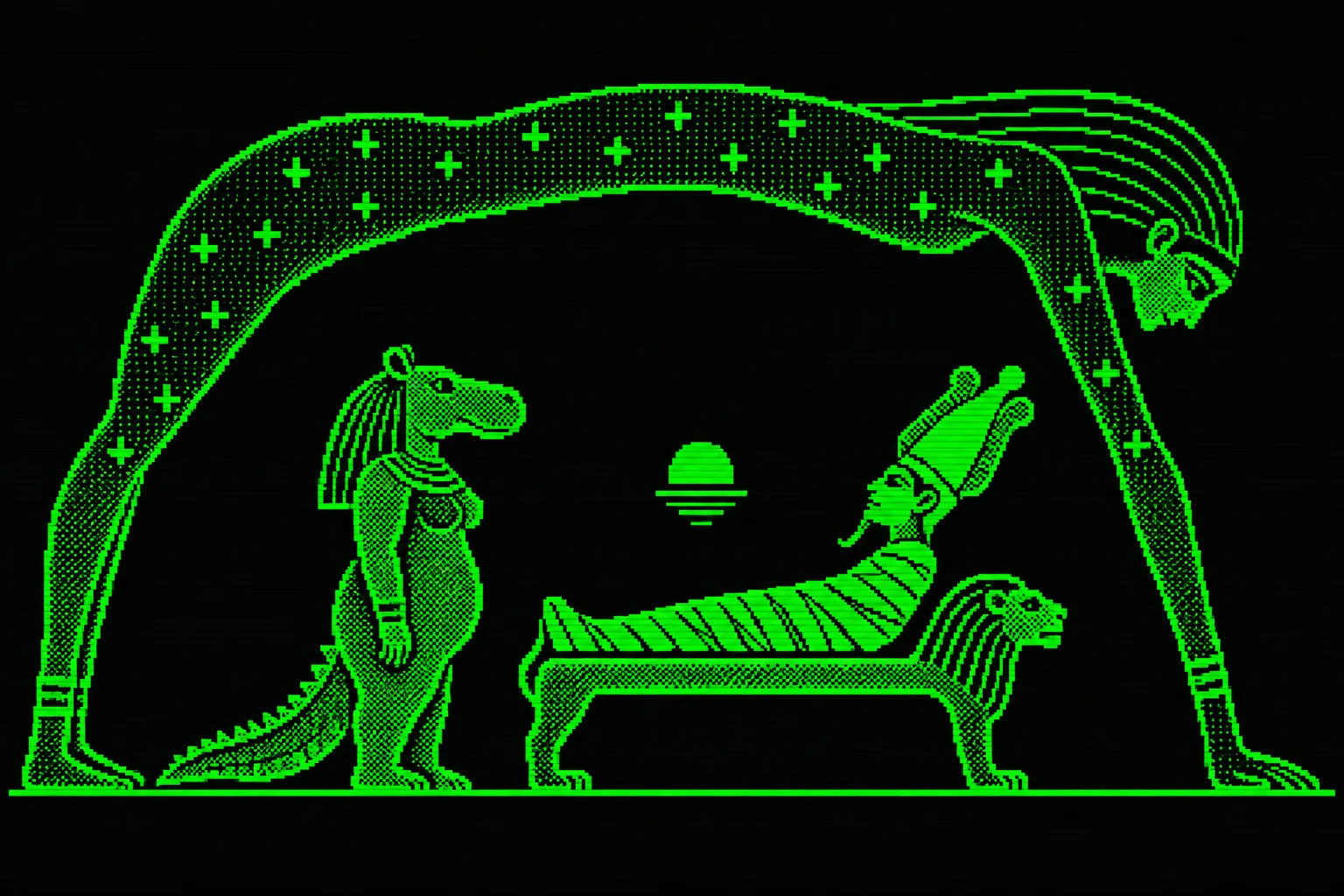
The temple of Opet stands at Karnak, beside the temple of Khonsu. Opet was a hippopotamus goddess of birth, and the Ptolemies built her a temple where Osiris was born each year as her son. Under it is a crypt, the god’s tomb; above it are the scenes of his rebirth.
The walls carry the usual furniture of a temple: the king’s long names, his offerings, the answers of the gods. Between them come hymns of waking and the speeches of the women who brought the god into the world: Nut, Isis, Nephthys, Meskhenet of the birth-brick, Tefnut, Mut. Many scenes are damaged, and the gaps are marked where they fall. Each scene carries its page in de Wit’s edition.
- 1Opet 72
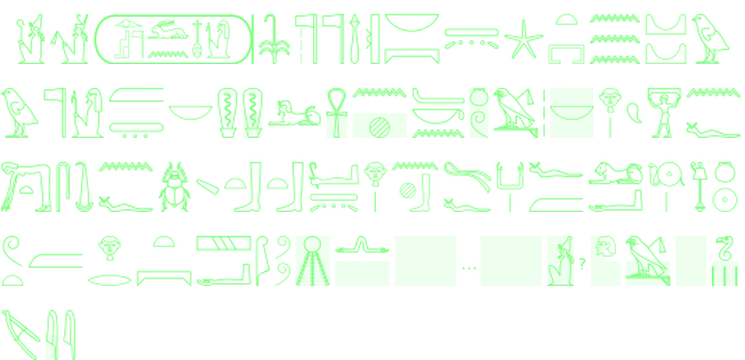
nswt-bj.tj jwꜥ-n-nṯr.wj-prj.wj-stp.n-ptḥ-jrj-mꜣꜥ.t-rꜥ-sḫm-ꜥnḫ-jmn sꜣ-rꜥ ptwlmys-ꜥnḫ-ḏ.t-mrj-ptḥ p(ꜣ) nṯr mnḫ ꜥpr pr-gb m jḫ.t nb.(t)
The King of Upper and Lower Egypt, Heir-of-the-Two-Manifest-Gods-Chosen-of-Ptah-Who-Does-the-Right-of-Ra-Living-Image-of-Amun, the Son of Ra, Ptolemy-May-He-Live-Forever-Beloved-of-Ptah, the god Euergetes, who furnishes Per-Geb with all things.
Note · Line 1
The king is Ptolemy VIII. His throne name identifies his parents, Ptolemy V and Cleopatra I, as the “Two Manifest Gods,” and his own Greek title Euergetes means “Benefactor.” - 2
nswt-bj.tj jwꜥ-n-nṯr.wj-prj.wj-stp.n-ptḥ-jrj-mꜣꜥ.t-rꜥ-sḫm-ꜥnḫ-jmn sꜣ-rꜥ ptwlmys-ꜥnḫ-ḏ.t-mrj-ptḥ p(ꜣ) nṯr mnḫ
The King of Upper and Lower Egypt, Heir-of-the-Two-Manifest-Gods-Chosen-of-Ptah-Who-Does-the-Right-of-Ra-Living-Image-of-Amun, the Son of Ra, Ptolemy-May-He-Live-Forever-Beloved-of-Ptah, the god Euergetes.
- 3
mn n=k ḥtp.w
Take the offerings for yourself.
Note · Line 3
The short speeches belong to offering scenes carved on the temple walls. The king presents a gift, and the god replies with a blessing for him or for Egypt. - 4
[…] ?nwt? msj.(t) nṯr
… Nut, who bore the god.
Note · Line 4
Nut is the sky goddess. The child she bears here is Osiris. - 5
ḏd-mdw dj.n=(j) n=k kꜣw ḏfꜣ
Words spoken: I have given you food and provisions.
- 6
[ḏd]-mdw [dj].n=(j) n=k sḫ.t ṯḥn.[tj] m nfr […] r=k prj m ꜣḫ.t
Words spoken: I have given you the countryside gleaming with grain … for you what springs from the field.
- 7Opet 73
nswt-bj.tj jwꜥ-n-nṯr.wj-prj.wj-stp.n-ptḥ-jrj-mꜣꜥ.t-rꜥ-sḫm-ꜥnḫ-jmn sꜣ-rꜥ ptwlmys-ꜥnḫ-ḏ.t-mrj-ptḥ p(ꜣ) nṯr mnḫ
The King of Upper and Lower Egypt, Heir-of-the-Two-Manifest-Gods-Chosen-of-Ptah-Who-Does-the-Right-of-Ra-Living-Image-of-Amun, the Son of Ra, Ptolemy-May-He-Live-Forever-Beloved-of-Ptah, the god Euergetes.
- 8
ḏd-mdw jn […]
Words spoken by …
- 9
dj=j prj n=k ḥꜥpj m ṯpḥ.t=f
I make the Inundation come forth for you from its cavern.
Note · Line 9
The Inundation is the yearly Nile flood that watered Egypt’s fields. Egyptians pictured it welling up from a cavern near Elephantine, at the First Cataract. - 10
nswt-bj.tj jwꜥ-n-nṯr.wj-prj.wj-stp.n-ptḥ-jrj-mꜣꜥ.t-rꜥ-sḫm-ꜥnḫ-jmn sꜣ-rꜥ ptwlmys-ꜥnḫ-ḏ.t-mrj-ptḥ p(ꜣ) nṯr mnḫ
The King of Upper and Lower Egypt, Heir-of-the-Two-Manifest-Gods-Chosen-of-Ptah-Who-Does-the-Right-of-Ra-Living-Image-of-Amun, the Son of Ra, Ptolemy-May-He-Live-Forever-Beloved-of-Ptah, the god Euergetes.
- 11

ḏd-mdw jn wsjr ḥr.(j)-jb wꜣs.t jtj m jp.t-wr.t ḥḳꜣ spꜣ.wt šmꜥw mḥw
Words spoken by Osiris, who dwells in Thebes, sovereign in the Great Opet, ruler of the nomes of Upper and Lower Egypt.
Note · Line 11
The nomes were Egypt’s provinces. Upper Egypt lay upriver in the south and Lower Egypt in the northern Delta, together making up the “Two Lands.” - 12
dj=j n=k tꜣ.wj nb
I give you the Two Lands entire.
- 13

ḏd-mdw jn ḥrw-sꜣ-ꜣs.[t] sꜣ [ws]jr
Words spoken by Harsiesis, son of Osiris.
Note · Line 13
Harsiesis, also called Harsiese, means “Horus son of Isis.” He avenged his father Osiris and inherited his throne. - 14
dj=j jw n=k ḥꜥpj <r> tr=f
I make the Inundation come to you in its season.
- 15Opet 74
[nswt-bj.tj jwꜥ-n-nṯr.wj-prj.wj-stp.n-ptḥ-jrj-mꜣꜥ.t-rꜥ-sḫm-ꜥnḫ-jmn] sꜣ-rꜥ ptwlmys-ꜥnḫ-[ḏ.t]-mrj-ptḥ p(ꜣ) nṯr mnḫ
King of Upper and Lower Egypt, Heir-of-the-Two-Manifest-Gods-Chosen-of-Ptah-Who-Does-the-Maat-of-Ra-Living-Image-of-Amun, Son of Ra, Ptolemy-May-He-Live-For Ever-Beloved-of-Ptah, the god Euergetes.
- 16
jrj.(t) snṯr n jt=f jrj=f dj.(t) ꜥnḫ
Burning incense for his father, that he may be given life.
Note · Line 16
The king calls the god receiving his incense “father.” In these offerings Ptolemy approaches the gods as their son and heir. - 17
dj=j n=k tꜣ-nṯr ẖr jḫ.t=sn nb.(t)
I give you God's Land, laden with all its riches.
Note · Line 17
“God’s Land” here means the incense-producing lands to Egypt’s southeast, around Punt. In return for incense, the god gives the king the country it comes from. - 18
nswt-bj.tj jwꜥ-n-nṯr.wj-prj.wj-stp.n-ptḥ-jrj-mꜣꜥ.t-rꜥ-sḫm-ꜥnḫ-jmn sꜣ-rꜥ ptwlmys-ꜥnḫ-ḏ.t-mrj-ptḥ p(ꜣ) nṯr mnḫ
King of Upper and Lower Egypt, Heir-of-the-Two-Manifest-Gods-Chosen-of-Ptah-Who-Does-the-Maat-of-Ra-Living-Image-of-Amun, Son of Ra, Ptolemy-May-He-Live-For-Ever-Beloved-of-Ptah, the god Euergetes.
- 19
sḳr tꜣ ḥḏ n jt=f jrj=f dj.(t) ꜥnḫ
Presenting white bread to his father, that he may be given life.
- 20

ḏd-mdw jn gb jr.j-pꜥ.t nṯr.w nṯr ꜥꜣ nb p.t
Words spoken by Geb, Hereditary Prince of the gods, the great god, lord of the sky.
Note · Line 20
Geb is the earth god and the father of Osiris. Per-Geb, “House of Geb,” is a name for the temple of Opet, where Osiris was believed to have been born. - 21
dj=j n=k s.t mḥ.t jb ḫwj[=j] […] =sn
I give you the seat of trust; I protect their …
- 22

ḏd-mdw jn ḥrw-wr nb šmꜥw sꜣ nw.t […]
Words spoken by Haroeris, lord of Upper Egypt, son of Nut …
Note · Line 22
Haroeris means “Horus the Elder.” As a child of Nut, he belongs to the same generation as Osiris. - 23
dj=j n=k tꜣ.wj ḫꜣs.wt ẖr jm.j.w=sn
I give you the Two Lands and the foreign countries, with all that is in them.
- 24Opet 75
nswt-bj.tj jwꜥ-n-nṯr.wj-prj.wj-stp.n-ptḥ-jrj-mꜣꜥ.t-rꜥ-sḫm-ꜥnḫ-jmn sꜣ-rꜥ ptwlmys-ꜥnḫ-ḏ.t-mrj-ptḥ p(ꜣ) nṯr mnḫ
The King of Upper and Lower Egypt, Heir-of-the-Two-Manifest-Gods, Chosen-of-Ptah, Who-Does-the-Maat-of-Ra, Living-Image-of-Amun; the Son of Ra, Ptolemy-May-He-Live-Forever-Beloved-of-Ptah, the Beneficent God.
- 25
ḥnk wḏꜣw n jt=f jrj.n=f dj.(t) ꜥnḫ
Offering the wedjat-eye to his father. He has won the gift of life.
Note · Line 25
The wedjat is the eye Horus lost in his struggle with Seth and regained. Presenting the healed eye was a way to offer wholeness and protection, so quite different gifts can bear its name. - 26

ḏd-mdw jn mnṯw-rꜥ nb wꜣs.t nb pḥtj ḥrw wsr.tj
Words spoken by Montu-Ra, lord of Thebes, lord of strength, Horus of the two mighty uraei.
Note · Line 26
Montu is the falcon-headed war god of the Theban region. The uraei are the rearing cobras that guard a god or king from his brow. - 27
dj=j n=k ?ẖkr? (29) n ḥrw ḥr ḫwj.(t) ḏ.t=k
I give you the ornament of Horus to protect your body.
- 28
[…] ḥr.(j).t-tp wꜣs.t […]
… the uraeus of Thebes …
- 29
dj[=j] n=k ḥ[ꜥpj]
I give you the flood.
- 30
nswt-bj.tj jwꜥ-n-nṯr.wj-prj.wj-stp.n-ptḥ-jrj-mꜣꜥ.t-rꜥ-sḫm-ꜥnḫ-jmn sꜣ-rꜥ ptwlmys-ꜥnḫ-ḏ.t-mrj-ptḥ p(ꜣ) nṯr mnḫ
The King of Upper and Lower Egypt, Heir-of-the-Two-Manifest-Gods, Chosen-of-Ptah, Who-Does-the-Maat-of-Ra, Living-Image-of-Amun; the Son of Ra, Ptolemy-May-He-Live-Forever-Beloved-of-Ptah, the Beneficent God.
- 31
ḥnk mꜣꜥ.t n jt=f jrj=f dj.(t) ꜥnḫ
Offering Maat to his father, that he may win the gift of life.
Note · Line 31
Maat is both the right order of the world and the goddess who embodies it. The king offers a small figure of her, bearing her distinctive feather. - 32

ḏd-mdw jn ḫnsw m wꜣs.t nfr-ḥtp ḥrw nb ꜣw.t-jb m jp.t-s.wt
Words spoken by Khonsu-in-Thebes-Neferhotep, Horus, lord of joy in Ipet-Sut.
Note · Line 32
Khonsu is the moon god, the son of Amun and Mut. Ipet-Sut, “Most Select of Places,” is the Egyptian name for the great sanctuary of Amun at Karnak. - 33
ḏd-mdw jn ḥw.t-ḥrw ḥr.(j.t)-jb pr-bnn.t jr.t rꜥ nb.(t) p.t ḥnw.t nṯr.w nb.(w)
Words spoken by Hathor who dwells in Per-Benenet, the Eye of Ra, lady of the sky, mistress of all the gods.
Note · Line 33
Per-Benenet is Khonsu’s temple, next door to Opet’s. The “Eye of Ra” is the sun god’s power to act and protect, which several goddesses embody. - 34
dj=j n=k šn nb n jtn tꜣ ḏr=f m jḫ.t nb.(t)
I give you the whole circuit of the sun-disc and the entire earth, with every offering.
- 35Opet 76
nswt-bj.tj jwꜥ-n-nṯr.wj-prj.wj-stp.n-ptḥ-jrj-mꜣꜥ.t-rꜥ-sḫm-ꜥnḫ-jmn sꜣ-rꜥ ptwlmys-ꜥnḫ-ḏ.t-mrj-ptḥ sn.t<=f> ḥḳꜣ.t nb.(t)-tꜣ.wj ḳlꜣwpdrꜣ nṯr.wj mnḫ.wj
The King of Upper and Lower Egypt, Heir-of-the-Two-Manifest-Gods, Chosen-of-Ptah, Who-Does-the-Maat-of-Ra, Living-Image-of-Amun; the Son of Ra, Ptolemy-May-He-Live-Forever-Beloved-of-Ptah, and his sister, the ruler, lady of the Two Lands, Cleopatra: the Two Beneficent Gods.
Note · Line 35
The sister named here is Cleopatra II. She and Ptolemy VIII were worshipped together as the Benefactor Gods. - 36
mn n=k ?nn wn? […]
Take for yourself … …
- 37

ḏd-mdw jn wsjr wnn-nfr mꜣꜥ-ḫrw nswt nṯr.w ḥḳꜣ ḏ.t
Words spoken by Osiris Wennefer, true of voice, king of the gods, ruler of eternity.
Note · Line 37
Wennefer, also called Onnophris, means “he who is perfect.” The title “true of voice” means that Osiris has won his case before the divine judges. - 38
ḏd-mdw {j} dj=j n=k ꜥnḫ wꜣs nb ꜣw.t-jb nb.(t)
Words to be spoken: I give you all life and dominion, and all joy.
- 39

ḏd-mdw jn ꜣs.t wr.t mw.t-nṯr
Words spoken by Isis the great, the god's mother.
Note · Line 39
Isis is the wife as well as the sister of Osiris. “The god’s mother” refers to her son Horus. - 40Opet 77
nswt-bj.tj jwꜥ-n-nṯr.wj-prj.wj-stp.n-ptḥ-jrj-mꜣꜥ.t-rꜥ-sḫm-ꜥnḫ-jmn sꜣ-rꜥ ptwlmys-ꜥnḫ-ḏ.t-mrj-ptḥ ḥm.t<=f> ḥḳꜣ.t nb.(t)-tꜣ.wj ḳlꜣwpdrꜣ nṯr.wj mnḫ.wj
The King of Upper and Lower Egypt, Heir-of-the-Two-Manifest-Gods-Chosen-of-Ptah-Who-Does-the-Maat-of-Ra-Living-Image-of-Amun, the Son of Ra, Ptolemy-May-He-Live-Forever-Beloved-of-Ptah, and (his) wife, the ruler, the lady of the Two Lands, Cleopatra: the two Beneficent Gods.
- 41
mn n=ṯ sšš.[t] […]
Take for yourself the seshesh-sistrum …
Note · Line 41
The seshesh-sistrum is a sacred rattle. Its player shook it before the goddess to soothe and delight her. - 42
ḏd-mdw jn jp.t wr.t msj.(t) nṯr.w jr.t rꜥ nb.(t) p.t ḥnw.t nṯr.w nb.(w)
Words spoken by Opet the Great, who bore the gods, Eye of Ra, lady of the sky, mistress of all the gods.
Note · Line 42
Opet was worshipped in the form of a hippopotamus, a mother who protected women and children in childbirth. - 43
ḏd-mdw {j} dj=j ṯꜣw nḏm nb n fnḏ.[wj]=k
Words spoken: I give every sweet breath of air to your nostrils.
- 44

ḏd-mdw jn nb.t-ḥw.t sn.t-nṯr […] .w jr.t rꜥ nb.(t) p.t ḥnw.t nṯr.w nb.(w)
Words spoken by Nephthys, the god's sister … Eye of Ra, lady of the sky, mistress of all the gods.
Note · Line 44
Nephthys mourns Osiris alongside her sister Isis. Their laments help bring their dead brother back to life. - 45Opet 78
nswt-bj.tj [jwꜥ-n]-nṯr.wj-prj.wj-[stp.n-ptḥ-jrj-mꜣꜥ.t-rꜥ-sḫm-ꜥnḫ-jmn] sꜣ-rꜥ ptwl[mys-ꜥnḫ-ḏ.t-mrj-ptḥ] p(ꜣ) nṯr mnḫ sḥtp nb=f m jr.t ḥrw wꜣḏ.t
The King of Upper and Lower Egypt, Heir-of-the-Two-Manifest-Gods-Chosen-of-Ptah-Who-Does-the-Maat-of-Ra-Living-Image-of-Amun, the Son of Ra, Ptolemy-May-He-Live-Forever-Beloved-of-Ptah, the Beneficent God, who contents his lord with the green Eye of Horus.
Note · Line 45
Here the green Eye is an offering of eye paint made from malachite. - 46
[ḏd-mdw jn jmn-rꜥ] […]
Words spoken by Amun-Ra …
- 47
nswt-bj.tj jwꜥ-n-nṯr.wj-prj.wj-stp.n-ptḥ-jrj-mꜣꜥ.t-rꜥ-[sḫm-ꜥnḫ]-jmn sꜣ-rꜥ ptwlmys-ꜥnḫ-ḏ.t-mrj-ptḥ p(ꜣ) nṯr mnḫ shrj […] ḥḳꜣ nṯr.[w]
The King of Upper and Lower Egypt, Heir-of-the-Two-Manifest-Gods-Chosen-of-Ptah-Who-Does-the-Maat-of-Ra-Living-Image-of-Amun, the Son of Ra, Ptolemy-May-He-Live-Forever-Beloved-of-Ptah, the Beneficent God, who gladdens … the ruler of the gods.
- 48
ḏd-mdw jn jmn-rꜥ nb p.t tꜣ […] pꜣw.(tj) tꜣ.wj ḏsr ꜥ nṯr ꜥꜣ […] ḏw.wj
Words spoken by Amun-Ra, lord of sky and earth …, the primeval one of the Two Lands, holy of arm, the great god … the two mountains.
- 49
ḏd-mdw jn [ ?jp.t?] […] nb.(t) […]
Words spoken by Opet … lady of …
- 50Opet 79
[…] nṯr.wj mnḫ.wj
… the two Beneficent Gods.
- 51
[jp.t]-wr.t m ršw.t sp-sn ḥw.t wtṯ n.t wnn-nfr mꜣꜥ-ḫrw m ḥb ḥr ḥb p.t dj.(t) s(w) r tꜣ m wsjr m-ẖnw pr-jp.t-wr.t [g]s jmnt.t [n] pr-ḫnsw […] wn[n-nfr mꜣꜥ-ḫrw]
The temple of Great Opet is in joy, in joy! The mansion where Wennefer the justified was begotten keeps feast upon feast: the sky brings him to birth as Osiris within the temple of Great Opet, on the west side of the temple of Khonsu … Wennefer the justified.
- 52Opet 80
nswt-bj.tj jwꜥ-n-nṯr.wj-prj.wj-[stp.n]-p[t]ḥ-[jrj-mꜣꜥ.t-rꜥ-sḫm-ꜥnḫ-jmn] sꜣ-rꜥ ptwlmys-ꜥnḫ-ḏ.t-mrj-ptḥ sn.t=f ḥḳꜣ.t nb.(t)-tꜣ.wj ḳlꜣwpdrꜣ nṯr.wj mnḫ.wj
The King of Upper and Lower Egypt, Heir of the Two Gods Epiphanes, Chosen of Ptah, Who Does the Maat of Ra, Living Image of Amun, the Son of Ra, Ptolemy, may he live forever, beloved of Ptah, and his sister, the ruler, Lady of the Two Lands, Cleopatra: the two Gods Euergetes.
- 53
) rs ṯw wṯs ṯw wḥm.n=k msw.w(t) wnn-nfr mꜣꜥ-ḫrw nswt [nṯr.w] […] ṯꜣw nḏm r šr.t.{t}=k pꜣw.(tj) tꜣ.wj ḥkn=f m mꜣꜣ=k psḏ.t nhm n [ḥr]=k […] ḥw.t ꜥꜣ.t m ḥb b(w) ḏsr m hnw r ꜥḳ ḥm=k m-ḫnt=s p.t m ḥb […] sjꜥr.n=s ṯw r ṯpḥ.t nwn s.t wr.t n.(t) pꜣw.(tj) tꜣ.wj ꜣwj=f n=k ꜥ.[wj=f] […] ḥtp ṯ[ḥ]ḥw.(t) ꜣbḫ m srḫ n nb […] n=k ḏ.t […] [r] tr=f r sfsf […] .w nb.(w) ḏd m wꜣs.[t]
Wake! Lift yourself up! You have renewed your births,
Onnophris, true of voice, king of the gods …
… a sweet breeze for your nose.
The Primeval One of the Two Lands rejoices to see you;
the Ennead exults before your face …
The Great Mansion is in festival, the Holy Place in jubilation,
when your majesty enters within it;
the sky is in festival …
she has raised you up to the cavern of Nun,
the great seat of the Primeval One of the Two Lands;
he stretches out his arms to you …
… peace; jubilation is mingled with the serekh of the lord …
… for you forever …
… at its time, to dispense …
… all …, enduring in Thebes.Note · Line 53
The worshippers call on Osiris to wake. Amun, the “Primeval One,” reaches out to receive him in the waters of Nun, which Egyptians believed existed before creation. - 54
) wbn.tj (30) m jꜣb.t sḥḏ.n=k nn.t ḫsr=k ḥꜣtj kkw ꜣṯ ṯw rḥ.tj ḥr (31) wꜥr.tj n.(t) mw.t=k wṯs.n=s ṯw r ꜣḫ.t snb ꜥwg=k tꜣ ḥr fdw=f […] šn ḥr.t ḫꜥj.tj m jp.t-wr.t m wꜥ tp ḥḥ sꜥḥ.tj m nṯr n(n) kj ḥr ḫw=f wsjr ḥr.(j) nṯr.w
Risen as the left Eye, you have lit up the sky,
and driven off the clouds and the dark.
The Two Companions nurse you on your mother's thighs;
she has lifted you to the horizon,
so that your warmth may heal the earth on its four pillars.
… the circuit of the sky,
appearing in the temple of Opet as the One at the head of millions,
invested with rank as a god who has no other of his kind:
Osiris, chief of the gods.Note · Line 54
The left Eye is the moon, so its return to the sky makes Osiris’s rebirth visible. The two goddesses who nurse him are Isis and Nephthys. - 55

ḥrw-smꜣ-tꜣ.wj sṯnj [ḥb] nṯr.wt sꜣ rꜥ mstjw n šw pẖr-ns.t n jr.j-pꜥ.t nṯr.w nswt m ẖ.t n prj.(t)=f r tꜣ mꜣṯ nḫb.t ḥr rn=f
Harsomtous, who makes splendid the festival of the goddesses, son of Ra, offspring of Shu, successor to the hereditary prince of the gods, king in the womb before he had come forth upon the earth, in whose name the titulary is proclaimed.
Note · Line 55
Harsomtous means “Horus who unites the Two Lands.” The titulary is the set of formal names proclaimed for a pharaoh, here accorded to a child already king in the womb. - 56
nswt-bj.tj wsjr wnn-nfr mꜣꜥ-ḫrw [nswt] nṯr.w šw jrj m pr-jp.t-wr.t nb njw.wt ḥḳꜣ n spꜣ.wt jm.j.w=sn n=f r psḏ.t twꜣ.tw n=f p.t smḏ.tw n=f dwꜣ.t wꜣḥ.tw tꜣ […]
The King of Upper and Lower Egypt, Osiris Onnophris, true of voice, king of the gods, the light made in the temple of Opet, lord of cities, ruler of nomes, whose people are his Ennead; the sky is lifted up for him, the Duat is made deep for him, the earth is laid out …
Note · Line 56
The Ennead is a company of gods, traditionally nine. The Duat is the underworld through which the sun travels at night. - 57
ḏd-mdw jn jp.t wr.t msj.(t) nṯr.w wr.t m ḥw.t wtṯ=s
Words spoken by Opet the Great, who bore the gods, great in the Mansion of her Begetting.
- 58Opet 81
nswt-bj.tj jwꜥ-n-nṯr.wj-prj.wj-stp.n-ptḥ-jrj-mꜣꜥ.t-rꜥ-sḫm-ꜥnḫ-jmn sꜣ-rꜥ [ptwlmys-ꜥnḫ-ḏ.t-mrj-ptḥ] p(ꜣ) nṯr mnḫ sn.t=f ḥḳꜣ.t nb.(t)-tꜣ.wj ḳlꜣ[w]pdrꜣ nṯr.wj mnḫ.wj
The King of Upper and Lower Egypt, Heir of the Two Gods Epiphanes, Chosen of Ptah, Who Does the Maat of Ra, Living Image of Amun, the Son of Ra, Ptolemy, may he live forever, beloved of Ptah, the God Euergetes, and his sister, the ruler, Lady of the Two Lands, Cleopatra: the two Gods Euergetes.
Note · Line 58
The Leuven French has “his wife”; the Egyptian calls the queen his sister, as Ptolemaic queens often were. - 59
) rs=k nfr m ḥtp wsjr […] =f wṯs ṯw m ḏbꜣ.t =k (32) m ḥw.t msḫn.(t)=k swḏ.tw njw.wt=k n jwꜥ=k ?pnꜥ ? (33) ṯw m wr[ḏ] (34) […] sꜣ =k (35) ḥrw ḥr wšb ḥr=k jwꜥ mnḫ prj m ꜣs.t sꜣ=k smsw [ḥr.j]-ns.t=k […] ?ḫj.t ? (36) m-ḫnt jp.t-s.wt r ḥḳꜣ=f šn n jtn ?ḫrw ?=f (37) mꜣꜥ jm.j.t-pr=k m ꜥ=f nḏ=f ṯw m-ꜥ jrj r=k ḫfꜥ.n=f nbḏ ḥr ḥnks.t=f ḫr nṯṯ ẖr ṯb.tj=f šsp.n=f ḥḏ hd.n=f bṯnw.w=k m jrw=f n kꜣ-nḏ-jt=f ꜥḥꜥ.n=f m nswt jwtj wḥm.t(j)=f(j) tꜣ ḏr=f ḥtp ḥr mw=f […] gs[=k ] (38) jrj […] m rꜣ n (39) psḏ.t dwꜣ ṯw nṯr nṯr.t m […] nswt m p.t bj.tj m tꜣ jtj m […] m […] n.t rꜥ ḥtp m dwꜣ.t ḥr ẖꜣ.t=k ḥḳꜣ m jnb-ḥḏ sšm […] jꜥb ḏ.t=f m jp.t-wr.t
Wake well, in peace, Osiris! … he …
Lift yourself up from your coffin
in the Mansion of your birth-brick.
Your cities are handed on to your heir.
Turn over, do not be weary …
Your son Horus avenges you,
the excellent heir who came forth from Isis,
your eldest son, upon your throne …
acclaimed in Karnak, to rule what the sun disk circles.
His voice is true; your title deed is in his hand.
He guards you from the one who acted against you:
he has seized Nebedj by his braid,
fallen and bound beneath his sandals;
he has taken up the mace and struck down your rebels
in his form of Bull Who Protects His Father.
He has risen as a king who has no equal;
the whole land, at peace, is loyal to him …
… your side … made … in the mouth of the Ennead.
God and goddess worship you as …
King of Upper Egypt in the sky, King of Lower Egypt on earth,
sovereign in … in … of Ra,
who rests in the Duat upon your corpse,
ruler in Memphis, who leads …
his body is gathered whole in the temple of Opet.Note · Line 59
A woman crouched on bricks to give birth, so the coffin stands in the very place where Osiris began life. Nebedj is Seth, his murderer, whom Horus subdues as he claims his father’s throne. - 60
) jj=j ḫr=k jt=(j) wsjr nṯr [ꜥꜣ] ḫnt.(j) ḥw.t wtṯ=f sḫm=k m ḥḳꜣ ?ꜣw.t-[jb]? […] nḏ=j ḥr=k m-ḫnt pr-gb swr=j kꜣ=k ḫnt pr-jp.t-wr.t ḏsr.tw n=k mnw m spꜣ.wt njw.wt ḥnk.tw snṯr n kꜣ=k ḫwj tw=k ꜣs.t rdj.n=s tw=k m ḥr.t sꜥnḫ.n=s tw=k m jꜥb.t dj.(t) s(j) ḥnꜥ=k m […] ?sꜣḥ?
I have come to you, my father Osiris,
great god, foremost in the Mansion of his Begetting.
You are mighty as ruler of joy …
I greet you in the House of Geb;
I magnify your ka in the temple of Opet.
Monuments are consecrated to you in nomes and cities;
incense is offered to your ka.
Isis protects you:
she has set you in the sky,
she has given you life as the left Eye,
she who places herself beside you as … Orion.Note · Line 60
The ka is the life force of a god or person. Food and incense sustain it, which is why offerings can be addressed to it directly. - 61
ḥrw-smꜣ-tꜣ.wj jrj šsp m ḥw.t [wtṯ]=f nb.tj wbn m-[ḫnt] pr-gb m hrw=f ḥrw-nbw ꜥḥꜥ ḥr sꜣ ḫr.j.w=f ḫft.j.w=f m ṯs.wt ẖr=f
Harsomtous, who makes light in the Mansion of his Begetting; He of the Two Ladies, who rises in the House of Geb on his day; Golden Horus, who stands on the backs of his foes, his enemies in hordes beneath him.
Note · Line 61
The “Two Ladies” are Nekhbet and Wadjet, the goddesses who protect the two halves of Egypt. A pharaoh had both a Two Ladies name and a Golden Horus name, titles given here to the divine child. - 62
nswt-bj.tj wsjr wnn-nfr mꜣꜥ-ḫrw […] bj.tj n […] ṯnj.tj r nṯr.w [nṯr] wꜥ n(n) sn-nw=f ḳn wsr jwꜥ mnḫ ḏꜥm ḫsbḏ tp nṯr m ḥr.t sḥḏ tꜣ.wj m mꜣw.t=f rnpj.tj r tp ꜣbd ḥḳꜣ nfr mrj nṯr.w n mꜣꜣ=f nṯr ꜥꜣ ḫnt.(j) pr-jp.t-wr.t
The King of Upper and Lower Egypt, Osiris Onnophris, true of voice … King of Lower Egypt of … more exalted than the gods, sole god without a second, valiant, mighty, the excellent heir of electrum with a head of lapis lazuli, god in the sky, who lights the Two Lands with his rays, made young again at the start of the month, the good ruler whom the gods love to see, great god, foremost in the temple of Opet.
Note · Line 62
Electrum is a pale alloy of gold and silver, and lapis lazuli is deep blue. The precious materials give the moon god a body fit to shine in the night sky. - 63
ḏd-mdw jn ꜣs.t wr.t mw.t-nṯr jr.t rꜥ nb.(t) p.t
Words spoken by Isis the Great, the god's mother, the Eye of Ra, lady of the sky.
- 64Opet 82
ḏd-mdw jn njw.t mw.[t] (42) msj.(t) nṯr.w
Words spoken by Niut, the mother who bore the gods.
Note · Line 64
Niut means “the City.” Here Thebes herself speaks as a mother goddess. - 65
jḥj=j n ḥr […]
I play the sistrum before …
- 66
ḏd-mdw […] =j sbj.w=k
Words spoken: … I … your rebels.
- 67
bꜣ.w nḫn nṯr.w jm.j.w ḥr.t jrj hnw n mw.t=f nw.t msj.(t) [nṯr.w] dj=f ꜣw.t-jb nb.(t) mj rꜥ ḏ.t
The Souls of Nekhen, the gods who are in the sky, make jubilation for his mother Nut, who bore the gods. May he give all joy, like Ra, forever.
Note · Line 67
Nekhen, also called Hierakonpolis, was an ancient royal city in Upper Egypt. Its “Souls” are ancestral royal spirits who greet the rising sun. - 68Opet 83
bꜣ.w nḫn nṯr.w jm.j.w ḥr.t jrj hnw n mw.t=f ꜣs.t wr.t mw.t-nṯr dj=f snb nb mj rꜥ ḏ.t
The Souls of Nekhen, the gods who are in heaven, make jubilation for his mother, Isis the Great, the god's mother. May he give all health, like Ra, forever.
- 69
bꜣ.w nḫn nṯr.w jm.j.w ḥr.t jrj hnw n mw.t=f nb.t-ḥw.t sn.t-nṯr mnḫ.t dj=f ꜥnḫ wꜣs nb mj rꜥ ḏ.t
The Souls of Nekhen, the gods who are in heaven, make jubilation for his mother, Nephthys, the excellent sister of the god. May he give all life and power, like Ra, forever.
- 70
sꜣ-rꜥ ptwlmys-ꜥnḫ-ḏ.t-mrj-ptḥ p(ꜣ) nṯr mnḫ [jrj] hnw n jt=f jmn-rꜥ nb ns.wt-tꜣ.wj sꜣ ꜥnḫ wꜣs nb ḥꜣ=f mj rꜥ ḏ.t
The Son of Ra, Ptolemy, living forever, beloved of Ptah, the Beneficent God, makes jubilation for his father, Amun-Ra, Lord of the Thrones of the Two Lands. All protection, life and power are behind him, like Ra, forever.
- 71Opet 84
msḫn.t nfr.t
Meskhenet the Fair.
Note · Line 71
Meskhenet personifies the birth-brick. She was believed to pronounce a child’s destiny at birth. - 72
dj=j n=k jꜣ.t rꜥ m p.t
I give you the office of Ra in heaven.
- 73
msḫn.t mnḫ.t (43)
Meskhenet the Excellent.
- 74
rnnwt.t nfr.(t) ḥr
Renenutet, fair of face.
Note · Line 74
Renenutet is a goddess of harvest and nourishment. She can also appear as a nurse to the newborn. - 75
dj=j n=k ns.t n.(t) rꜥ jꜣ.t ḥrw m tꜣ
I give you the throne of Ra and the office of Horus on earth.
- 76
tꜣ-wr.t m rnp.t jw n jt<=s> m-sꜣ jb=s
Taweret in the year, who comes to her father as she pleases.
Note · Line 76
Taweret is a hippopotamus goddess who protects women in labour. Here she also appears as the daughter of the sun god Ra. - 77
dj=j n=k snb nb ḫr=j
I give you all health, which comes from me.
- 78Opet 85
ꜥnḫ.t-wnm.(t)-wnn.(t)
The Flame, who devours all that exists.
- 79

dj=j n=k tḫ.t m ẖr.t-hrw n.t rꜥ nb
I give you drunkenness as your daily portion, every day.
- 80
sms.t sḏfꜣ.(t) nḫn
Semeset, who provisions the child.
- 81
dj=j n=k ḥn.t m ršw.t
I give you the canal, in gladness.
- 82
jp.t-ḥm.t=s ḫn.t(j.t) ꜣḫ.t
Ipet-hemetes, foremost of the horizon.
Note · Line 82
Ipet-hemetes is a form of Opet herself. - 83

dj=j ṯḥn ḥr-nb n mꜣꜣ=k
I make every face shine at the sight of you.
- 84
nfr.t-jrw mkj.(t) jrj=s
Neferet-iru, who protects the one who formed her.
Note · Line 84
The goddess’s name means “Fair of Form.” In Egyptian it echoes the words for the one who formed her. - 85

dj=j n=k ṯꜣj.w ḥr nhm n mꜣꜣ=k
I give you the men, rejoicing at the sight of you.
- 86
jwꜥ-n-nṯr.wj-prj.wj-stp.n-ptḥ-jrj-mꜣꜥ.t-rꜥ-sḫm-ꜥnḫ-jmn ptwlmys-ꜥnḫ-ḏ.t-mrj-ptḥ
Heir of the Two Manifest Gods, Chosen of Ptah, Who Does the Maat of Ra, Living Image of Amun, Ptolemy, may he live forever, beloved of Ptah.
- 87
jm.j.t-p.t sšm.(t) nṯr.w
Imyt-pet, who leads the gods.
- 88
dj=j n=k sḫ.t ẖr jm.j.w=s{n}
I give you the countryside with all that is in it.
- 89Opet 86
nswt-bj.tj jwꜥ-n-nṯr.wj-prj.wj-stp.n-ptḥ-jrj-mꜣꜥ.t-rꜥ-sḫm-ꜥnḫ-jmn sꜣ-rꜥ ptwlmys-ꜥnḫ-ḏ.t-mrj-ptḥ p(ꜣ) nṯr mnḫ sḥtp mw.t=f
The King of Upper and Lower Egypt, Heir of the Two Manifest Gods, Chosen of Ptah, Who Does the Maat of Ra, Living Image of Amun, the Son of Ra, Ptolemy, may he live forever, beloved of Ptah, the god Euergetes, who contents his mother.
- 90
sjꜥr wn-ḥr n mw.t=f jrj.n=f dj.(t) ꜥnḫ
Lifting the mirror to his mother. He has done it, granted life.
Note · Line 90
The Egyptian name for the mirror means “face-opener.” - 91
ḏd-mdw jn jp.t wr.t nw.t msj.(t) nṯr.w wr.t wsr.(t) ḥnw.t nṯr.(w)t ṯs.(t) pr.t n nṯr.w nb.(t) nṯr.wt ḥnw.t pr-nswt
Words spoken by Opet the great, Nut, who gives birth to the gods, the great one, the mighty, lady of the goddesses, who forms the seed for the gods, mistress of the goddesses, lady of the royal palace.
Note · Line 91
The two names belong to one mother in this scene. Opet gives birth as Nut, the sky itself. - 92Opet 87
nswt-bj.tj jwꜥ-n-nṯr.wj-prj.wj-stp.n-ptḥ-jrj-mꜣꜥ.t-rꜥ-sḫm-ꜥnḫ-jmn sꜣ-rꜥ ptwlmys-ꜥnḫ-ḏ.t-mrj-ptḥ p(ꜣ) nṯr mnḫ jrj mrj jt=f
King of Upper and Lower Egypt, Heir-of-the-Epiphanes-Gods-Chosen-of-Ptah-Who-Does-the-Maat-of-Ra-Living-Image-of-Amun, Son of Ra, Ptolemy-may-he-live-forever-Beloved-of-Ptah, the god Euergetes, who does what his father loves.
- 93

mn n=k jr.t ḥrw wꜣḏ.t bꜥḥj=f n kꜣ=k m […]
Take the green Eye of Horus, that it may bring the flood to your ka in …
- 94
ḏd-mdw jn jmn-jp.t ḏꜣm.t nswt nṯr.w snn ꜥnḫ n rꜥ m jp.t-s.wt sꜣ wsjr msj ꜣs.t ḫꜥj=f tp hrw 10 r wꜣḫ jḫ.t n jwt=f
Words spoken by Amenope of Djeme, king of the gods, living image of Ra in Karnak, son of Osiris, born of Isis, who appears every tenth day to lay offerings before his fathers.
Note · Line 94
Every ten days the image of Amenope, a form of Amun, crossed the Nile from Karnak to Djeme at modern Medinet Habu. There he brought offerings to the ancestral gods buried on the west bank. - 95
dj=j n=k ns.t n.(t) gb jm.j.t-pr n.(t) wn-ḥr
I give you the throne of Geb and the title-deed of Wenher.
- 96Opet 88
nswt-bj.tj jwꜥ-n-nṯr.wj-prj.wj-stp.n-ptḥ-jrj-mꜣꜥ.t-rꜥ-sḫm-ꜥnḫ-jmn sꜣ-rꜥ ptwlmys-ꜥnḫ-ḏ.t-mrj-ptḥ p(ꜣ) nṯr mnḫ tj.t n.(t) rꜥ.{t} ḫnt.(j) tꜣ.wj
King of Upper and Lower Egypt, Heir-of-the-Epiphanes-Gods-Chosen-of-Ptah-Who-Does-the-Maat-of-Ra-Living-Image-of-Amun, Son of Ra, Ptolemy-may-he-live-forever-Beloved-of-Ptah, the god Euergetes, image of Ra, foremost of the Two Lands.
- 97
mn n=k ḥḳꜣ tj.t šps.(t) n.(t) ḏ.t=k nḫḫ štꜣ n ḥꜥ.w=k
Take the heka-sceptre, a noble image for your body, and the hidden flail for your limbs.
Note · Line 97
The heka-sceptre is a shepherd’s crook. Together with the flail it is an emblem of royal authority, often shown in Osiris’s hands. - 98
ḏd-mdw jn wsjr ḥr.(j)-jb wꜣs.t wr m jp.t-wr.t ḫj šps ḫnt.(j) ḥw.t wtṯ=f jwꜥ tꜣ.wj n prj.(t)=f m sp.t=f ḥḳꜣ ndb tp nwd.t=f
Words spoken by Osiris who dwells in Thebes, great in the temple of Opet, noble child foremost in the Mansion of his Begetting, heir of the Two Lands before ever he came forth from the lips, ruler of the whole earth while still in his swaddling bands.
Note · Line 98
The “lips” are the lips of the womb. Osiris’s right to rule thus predates even his first breath. - 99

ḏd-mdw {j} dj=j mn ḫꜥ=k ḥr-sꜣ tꜣ mj rꜥ ḥr wbn ḥtp
Words to be spoken: I make your appearing endure upon the earth as Ra rises and sets.
- 100
ḏd-mdw jn ꜣs.t rḥ.t m pr-jp.t-wr.t ḥnw.t m ḥw.t wtṯ šꜣw=s
Words spoken by Isis, the maiden in the House of Opet the Great, mistress in the Mansion where her destiny was begotten.
- 101
dj=j n=k šn nb n jtn tꜣ ḏr=f m jm.j.t-pr=k
I give you all that the sun-disk encircles, and the whole earth, as your title-deed.
- 102Opet 89
nswt-bj.tj jwꜥ-n-nṯr.wj-prj.wj-stp.n-ptḥ-jrj-mꜣꜥ.t-rꜥ-sḫm-ꜥnḫ-jmn sꜣ-rꜥ ptwlmys-ꜥnḫ-ḏ.t-mrj-ptḥ p(ꜣ) nṯr mnḫ
King of Upper and Lower Egypt, Heir-of-the-Epiphanes-Gods-Chosen-of-Ptah-Who-Does-the-Maat-of-Ra-Living-Image-of-Amun, Son of Ra, Ptolemy-may-he-live-forever-Beloved-of-Ptah, the god Euergetes.
- 103
ḥnk mnḫ.t n jt=f jrj.n=f dj.(t) ꜥnḫ
Presenting cloth to his father. He does it so that he may be given life.
- 104
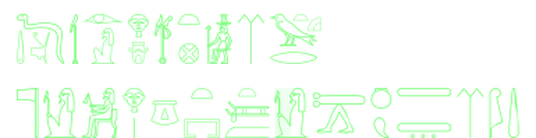
ḏd-mdw jn wsjr ḥr.(j)-jb wꜣs.t jtj m jp.t-wr.t nṯr šps ḥr.(j)-ns.t jtm jṯj.n=f tꜣ.wj m mꜣꜥ-ḫrw
Words spoken by Osiris who dwells in Thebes, sovereign in the temple of Opet, noble god upon the throne of Atum, who seized the Two Lands in triumph.
Note · Line 104
Atum is the creator god who first occupied the throne. To sit on it places Osiris in a line of kings reaching back to creation. - 105
ḏd-mdw {j} dj=j n=k jꜣ.t n.(t) rꜥ nswj.t wsjr ḥḳꜣ n šw
Words to be spoken: I give you the office of Ra, the kingship of Osiris, the rule of Shu.
Note · Line 105
Shu is the god of air and light, Atum’s son and successor. The offices the king receives here once belonged to the gods who ruled the world before him. - 106
ḏd-mdw jn nb.t-ḥw.t mnḫ.t mkj.(t) sn=s sꜣ.(t) ḏ.t=f nfr.(t) sꜣḫ.(t) ḥtp nṯr ḥr mdw=s
Words spoken by Nephthys, the excellent, who shields her brother and guards his body, the beautiful one who transfigures him, at whose words the god is content.
- 107
dj=j n=k ꜥḥꜥw n p.t ẖr rꜥ rnp.wt n.(t) ḥḥ ẖr sꜣ.t{t}=f
I give you the lifetime of heaven with Ra, and the years of Heh with his daughter.
Note · Line 107
Heh personifies immeasurable time. His name also means “a million.” - 108Opet 90
nswt-bj.tj jwꜥ-n-nṯr.wj-prj.wj-stp.n-ptḥ-jrj-mꜣꜥ.t-rꜥ-sḫm-ꜥnḫ-jmn sꜣ-rꜥ ptwlmys-ꜥnḫ-ḏ.t-mrj-ptḥ p(ꜣ) nṯr mnḫ
The King of Upper and Lower Egypt, Heir-of-the-Epiphanes-Gods-whom-Ptah-has-chosen-who-does-the-Maat-of-Ra-living-image-of-Amun, the Son of Ra, Ptolemy-may-he-live-forever-beloved-of-Ptah, the god Euergetes.
- 109
ḥtp sp-sn jmn-rꜥ wnn-nfr ḥꜥj m tꜣ ḥkn m p.t jrj ẖr.(t)=k jm=s kꜣ.t jsk pw ?…? smꜣꜥ ḫrw=f
Be at peace, be at peace, Amun-Ra Onnophris, appearing on earth, exulting in heaven! Make of it your sustenance. This indeed is the work … that makes his voice true.
Note · Line 109
The combined name Amun-Ra Onnophris brings the creator worshipped at Thebes and Osiris together as one god. - 110
ḏd-mdw jn jmn-rꜥ wnn-nfr mꜣꜥ-ḫrw ḫnt.(j) wꜣs.t [ḏd] r=f jmn-rꜥ twt ꜥb.wj hrw tpj djw ḥr.(j).w-rnp.t msj wsjr [m] ḥb=f nfr m tꜣ ḏr=f hrw pn jrj p.t mw.t=f pẖr njw.t nfr.(t) m nn.t
Words spoken by Amun-Ra Onnophris, true of voice, foremost of Thebes, who is called Amun-Ra, whole of both horns: on the first of the five days upon the year Osiris is born, at his beautiful feast throughout the whole land, on this day when the sky is made, and his mother goes round the beautiful city in the heavens.
Note · Line 110
The Egyptian calendar had twelve months of thirty days, followed by five extra days. Each was a birthday of one of Nut’s children, beginning with Osiris. - 111
ḏd-mdw {j} dj=j n=k mꜣꜥ.t ꜥpr m ?hꜣw?=k (44) n(n) jsf.t jm=k
Words to be spoken: I give you Maat, fully furnished in your time, with no wrong in you.
- 112
ḏd-mdw jn mw.t wr.t nb.(t) jšrw nb.tj rḫj.t ḫwj.(t) sn=s hrw jꜥb.tw ẖꜣ.t=f m tꜣ msj.tw=f jm
Words spoken by Mut the great, lady of Isheru, mistress of the common folk, who shields her brother on the day his corpse is put back together in the land where he is born.
Note · Line 112
Isheru is the crescent-shaped sacred lake at Mut’s temple in Karnak. Here Mut takes the part of Isis gathering the scattered body of Osiris. - 113
dj=j n=k ḫꜥ n ḥrw ḥnꜥ ḥr.(j).t-tp=f tp-tꜣ ḫnt.(j) ꜥnḫ.w
I give you the crown of Horus with its uraeus, upon earth, foremost of the living.
- 114
ḏd-mdw jn ḫnsw-šw m wꜣs.t ꜥẖm nṯr.j nfr-ḥr ḏꜣj jmnt.t wꜣs.t m ẖr.t-hrw r wꜣḥ jḫ.t n bꜣ ꜥꜣ n km-ꜣ.t=f ntj jm m jmn m ꜥ.t jgr.t ḥnꜥ bꜣ.w n.(w) ḫmn.w
Words spoken by Khonsu-Shu in Thebes, the divine image, fair of face, who crosses to the West of Thebes with the daily provisions to lay an offering before the great ba of Kematef, who is there as Amun in the necropolis, together with the bas of the Eight.
Note · Line 114
Kematef, “He who has completed his time,” is Amun as an ancestral serpent buried at Djeme. A ba is a form in which a god or a dead person can move and act apart from the body. - 115

dj=j wꜣḫj mꜣꜥ.t m tꜣ m rk=k
I make Maat abound in the land in your time.
- 116Opet 91
nswt-bj.tj jwꜥ-n-nṯr.wj-prj.wj-stp.n-ptḥ-jrj-mꜣꜥ.t-rꜥ-sḫm-ꜥnḫ-jmn sꜣ-rꜥ ptwlmys-ꜥnḫ-ḏ.t-mrj-ptḥ p(ꜣ) nṯr mnḫ
The King of Upper and Lower Egypt, Heir-of-the-Epiphanes-Gods-whom-Ptah-has-chosen-who-does-the-Maat-of-Ra-living-image-of-Amun, the Son of Ra, Ptolemy-may-he-live-forever-beloved-of-Ptah, the god Euergetes.
- 117
mn n=k ḥḥ tj.t štꜣ.(t) n.(t) jt=k rmnj ṯw mw.t=k <r>-ḏr jtn=k
Take for yourself the sign of millions, the secret image of your father. Your mother shoulders you to the very limit of your disc.
Note · Line 117
The “sign of millions” is the kneeling figure of Heh. Offering his image gives visible form to the wish for a reign of countless years. - 118
ḏd-mdw jn jmn-rꜥ bꜣ šps n wsjr ḥtp ḥr ẖꜣ.t=f m ḥw.t wtṯ=f wbn m ḥꜥ.w=f m sꜣb šw.t dwn ḏ.t m nfr ḥr jꜥb.tw=f m jp.t-wr.t ḥts.tj m spꜣ.t jmnt.t jꜣ.t-ṯꜣ-mw.t
Words spoken by Amun-Ra, the noble ba of Osiris, who alights upon his corpse in the Mansion of his Begetting, who rises in his flesh as the Dappled of Plumage, who stretches out the body as the Fair of Face. When he has been put back together in the temple of Opet, he is buried in the western district, Djeme.
Note · Line 118
Here Amun-Ra comes as a bird to alight on the dead Osiris. The return of the ba to the body restores the god to life. - 119
ḏd-mdw {j} dj=j n=k ḥntj m-ḏr sbꜣ.w
Words to be spoken: I give you endless time as far as the stars reach.
- 120
ḏd-mdw jn mw.t wr.t nb.(t) jšrw nb.tj rḫj.t ṯnj.(t) sn=s r nṯr.w mj ḳd=s sꜥḳ.(t) bꜣ=f ḫnt jꜣb.t
Words spoken by Mut the great, lady of Isheru, mistress of the common folk, who exalts her brother above all the gods, who makes his ba enter the left eye.
- 121

dj=j n=k nḥḥ m nswt ḥr s.t ḥrw ḏ.t m bj.tj ḥr ns.t jwꜥ=j
I give you endless eternity as King of Upper Egypt on the throne of Horus, and enduring eternity as King of Lower Egypt on the throne of my heir.
Note · Line 121
The blessing joins two Egyptian ideas of eternity. One is time that renews itself in cycles, the other a state that endures forever. - 122
ḏd-mdw jn ḥrw-nḏ-jt=f sꜣ ꜣs.[t] sꜣ wsjr kꜣ nḫt ?šꜥd? (46) bṯnw.w nṯr ꜥꜣ nb p.t ḥḳꜣ psḏ.t
Words spoken by Harendotes, son of Isis, son of Osiris, the mighty bull who cuts down the rebels, the great god, lord of heaven, ruler of the Ennead.
Note · Line 122
Harendotes means “Horus who protects his father,” the name Horus bears as his father’s avenger. - 123

dj=j n=k ḫꜥ m ḥḏ.t psḏ m n.t
I give you to rise in glory in the White Crown and to shine in the Red.
Note · Line 123
The White Crown belonged to Upper Egypt and the Red Crown to Lower Egypt. Worn together as the Double Crown, they signified rule over the whole country. - 124Opet 92-93
nswt-bj.tj jwꜥ-n-nṯr.wj-prj.wj-stp.n-ptḥ-jrj-mꜣꜥ.t-rꜥ-sḫm-ꜥnḫ-jmn sꜣ-rꜥ ptwlmys-ꜥnḫ-ḏ.t-mrj-ptḥ nb.(t)-tꜣ.wj ḳlꜣwpdrꜣ nṯr.wj mnḫ.wj
The King of Upper and Lower Egypt, Heir-of-the-Two-Manifest-Gods-Chosen-of-Ptah-Who-Does-the-Maat-of-Ra-Living-Image-of-Amun, the Son of Ra, Ptolemy-May-He-Live-Forever-Beloved-of-Ptah, and the Lady of the Two Lands, Cleopatra, the Two Beneficent Gods.
- 125

1. mnṯw prj m ꜣḫ.t hrw mspr sn-nw
1. Montu, coming forth from the Radiant Eye, on the day of Meseper-senu.
Note · Line 125
The next fifteen entries follow the waning half of the lunar month, one god for each day. The Radiant Eye from which they emerge is the moon. - 126

2. jtm prj m ꜣḫ.t hrw sjꜣw
2. Atum, coming forth from the Radiant Eye, on the day of Siau.
- 127
3. šw prj m ꜣḫ.t hrw jꜥḥ
3. Shu, coming forth from the Radiant Eye, on the day of Iah.
- 128

4. tfn.t prj.(t) m ꜣḫ.t hrw sḏm-mdw=f
4. Tefnut, coming forth from the Radiant Eye, on the day of Sedjem-medu-ef.
- 129

5. gb prj m ꜣḫ.t hrw stp
5. Geb, coming forth from the Radiant Eye, on the day of Setep.
- 130
6. nw.t prj.(t) m ꜣḫ.t hrw ꜥprw
6. Nut, coming forth from the Radiant Eye, on the day of Aperu.
- 131

7. wnn-nfr prj m ꜣḫ.t hrw pḥ-spd.t
7. Wennefer, coming forth from the Radiant Eye, on the day of Peh-Sepdet.
- 132
8. ꜣs.t prj.(t) m ꜣḫ.t hrw dnj.t
8. Isis, coming forth from the Radiant Eye, on the day of Denit.
- 133

9. sbk prj m ꜣḫ.t hrw ḥb-nw.t
9. Sobek, coming forth from the Radiant Eye, on the day of Heb-Nut.
- 134
10. nb.t-ḥw.t prj.(t) m ꜣḫ.t hrw st.t
10. Nephthys, coming forth from the Radiant Eye, on the day of Setet.
- 135
11. ḥw.t-ḥrw prj.(t) m ꜣḫ.t hrw wšb
11. Hathor, coming forth from the Radiant Eye, on the day of Usheb.
- 136

12. ḥrw prj m ꜣḫ.t hrw pr.t
12. Horus, coming forth from the Radiant Eye, on the day of Peret.
- 137

13. ṯnn.t prj.(t) m ꜣḫ.t hrw ꜥḥꜥ […]
13. Tjenenet, coming forth from the Radiant Eye, on the day of Aha …
Note · Line 137
Tjenenet and Iunyt, named next, were worshipped at Armant near Thebes as consorts of Montu. - 138
14. jwn.j.t prj.(t) m ꜣḫ.t hrw pr.[t] mnw
14. Iunyt, coming forth from the Radiant Eye, on the day of the Going Forth of Min.
- 139

15. ḏḥwtj prj m ꜣḫ.t hrw knḥw
15. Thoth, coming forth from the Radiant Eye, on the day of Kenehu.
- 140
nswt-bj.tj jwꜥ-n-nṯr.wj-prj.wj-stp.n-ptḥ-jrj-mꜣꜥ.t-rꜥ-sḫm-ꜥnḫ-jmn sꜣ-rꜥ ptwlmys-ꜥnḫ-ḏ.t-mrj-ptḥ p(ꜣ) nṯr mnḫ
The Dual King, Heir of the Two Manifest Gods, Chosen of Ptah, Who Does the Maat of Ra, Living Image of Amun; Son of Ra, Ptolemy, may he live forever, beloved of Ptah; the Beneficent God.
- 141
ḏd-mdw jn jmn
Words spoken by Amun:
Note · Line 141
The next eight speakers form the Ogdoad, the “Eight” of Hermopolis. In four male and female pairs they embody hiddenness, water, boundlessness and darkness before creation. - 142
dj=j n=k ꜥnḫ wꜣs nb
I give you all life and dominion.
- 143
ḏd-mdw jn jmn.t
Words spoken by Amunet:
- 144
dj=j n=k snb nb
I give you all health.
- 145
ḏd-mdw jn nwn
Words spoken by Nun:
- 146
dj=j n=k ꜣw.t-jb nb.(t)
I give you all gladness of heart.
- 147
ḏd-mdw jn nn.t
Words spoken by Naunet:
- 148
dj=j n=k ḥtp.w nb.(w)
I give you all offerings.
- 149
ḏd-mdw jn ḥḥw
Words spoken by Heh:
- 150
dj=j n=k ḏfꜣ.w nb.(w)
I give you all provisions.
- 151
ḏd-mdw jn ḥḥw.t
Words spoken by Hauhet:
- 152
dj=j n=k ḥknw nb
I give you all jubilation.
- 153
ḏd-mdw jn kkw
Words spoken by Kek:
- 154
dj=j n=k ḫꜥ=k mj rꜥ
I give you your rising in glory, like Ra.
- 155
ḏd-mdw jn kk.t
Words spoken by Kauket:
- 156
dj=j mn rn=k ḥr-sꜣ tꜣ
(Keket speaks:) I make your name abide upon the earth.
- 157
ḏd-mdw jn šw
Words spoken by Shu.
- 158
dj=j n=k ḥwn ꜥnḫ
(Shu speaks:) I give you youth, and life in it.
- 159
ḏd-mdw jn nḏm-ꜥnḫ
Words spoken by Nedjem-ankh.
- 160
dj=j n=k kꜣw n kꜣw
(Nedjem-ankh speaks:) I give you food upon food.
- 161
ḏd-mdw jn ꜥḥ-rmj.t
Words spoken by Ah-remyt.
- 162
dj=j n=k ꜥḥꜥw ꜣw m nḏm-[jb]
(Ah-remyt speaks:) I give you a long lifetime, with gladness of heart.
- 163
ḏd-mdw jn ḥtp-jd.t
Words spoken by Hetep-idet.
- 164
dj=j ḏd rn=k m tꜣ
(Hetep-idet speaks:) I make your name endure upon the earth.
- 165Opet 94

bḥd.tj nṯr ꜥꜣ nb p.t sꜣb šw.t prj m ꜣḫ.t
The Behdetite, the great god, lord of the sky, dappled of plumage, who comes forth from the horizon.
Note · Line 165
The Behdetite is Horus of Edfu, represented by the winged sun disk. - 166
bḥd.tj nṯr ꜥꜣ nb p.t sꜣb šw.t prj m ꜣḫ.t
The Behdetite, the great god, lord of the sky, dappled of plumage, who comes forth from the horizon.
- 167
ḥr.j-sštꜣ ꜥꜣ n pr-mw.t
Great master of the secrets of Per-Mut.
- 168
ḥr.j-sštꜣ ꜥꜣ n pr-mw.t
Great master of the secrets of Per-Mut.
- 169
swḏꜣ pr pn […]
Who keeps this house safe …
- 170Opet 95
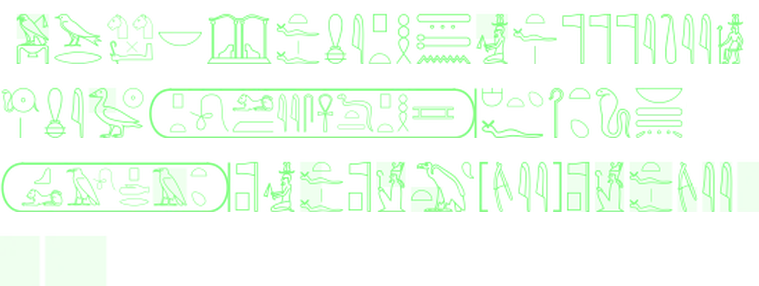
ḥrw-nbw wr pḥtj nb ḥb-sd mj jt=f ptḥ-tꜣ-ṯnn jt nṯr.w jtj mj rꜥ sꜣ-rꜥ ptwlmys-[ꜥnḫ-ḏ.t-mrj-ptḥ]
(South column) The Golden Horus: great of strength, lord of jubilees like his father Ptah-Tatenen, father of the gods, sovereign like Ra; the Son of Ra: Ptolemy, living forever, beloved of Ptah.
Note · Line 170
Ptah-Tatenen joins Ptah, the creator worshipped at Memphis, with the first land to rise from the primeval waters. The royal jubilees were Sed festivals, rites that renewed the king’s power to reign. - 171
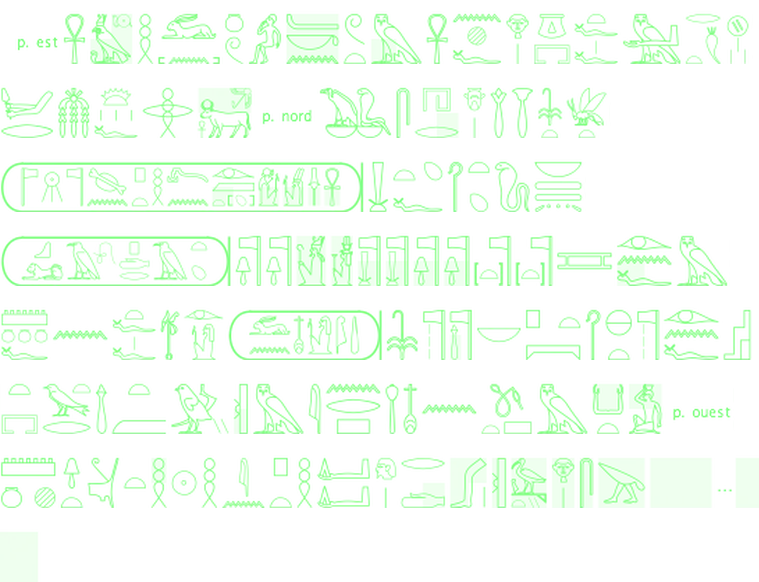
ḥrw-rꜥ ḥwn ḥkn=tw m ꜥnḫ=f ḥr.(j)-ns.t jt=f mꜥr.{t} [sp.w ḏsr msḫꜥ.w=f ḥnꜥ ḥp ꜥnḫ ḥm.t]=f ḥḳꜣ.t nb.(t)-tꜣ.wj ḳlꜣwpdrꜣ
(North column) The Horus-Ra: the youth in whose life all rejoice, who sits on his father's throne, fortunate in deeds, holy in his appearings, together with the living Apis; and his wife, the ruler, lady of the Two Lands, Cleopatra.
Note · Line 171
Apis was a living sacred bull kept at Memphis and revered as the herald of Ptah. - 172Opet 96-97
nḫb.t ḥḏ.(t) nḫn dmꜣ.(t) pḏ.(w)t ꜣwj.(t) ꜥ nb.(t) fꜥg wnm.t n.(t) rꜥ m hrw […] dj=s ꜥnḫ wꜣs nb snb nb ꜣw.t-jb nb.(t) n nswt-bj.tj jwꜥ-n-nṯr.wj-prj.wj-stp.n-ptḥ-jrj-mꜣꜥ.t-rꜥ-sḫm-ꜥnḫ-jmn p(ꜣ) nṯr mnḫ
Nekhbet, the White One of Nekhen, who binds the Bows and stretches out her arm, Lady of Fag, Right Eye of Ra by day … May she give all life and dominion, all health and all joy to the King of Upper and Lower Egypt, Heir-of-the-Theoi-Epiphaneis-Chosen-of-Ptah-Who-Does-the-Maat-of-Ra-Living-Image-of-Amun, the god Euergetes.
Note · Line 172
Nekhbet is the vulture goddess of Upper Egypt. The Bows she binds stand for the foreign enemies of Egypt, traditionally called the Nine Bows. - 173
wꜣḏ.t nb.(t) p [dp] […] [dj=s] ḥḏ.t dšr.t ḥr-tp [tꜣ] n sꜣ-rꜥ ptwlmys-ꜥnḫ-ḏ.t-mrj-ptḥ p(ꜣ) nṯr mnḫ
Wadjet, Lady of Pe and Dep … may she give the White Crown and the Red Crown upon earth to the Son of Ra, Ptolemy-Living-Forever-Beloved-of-Ptah, the god Euergetes.
Note · Line 173
Pe and Dep were the twin towns of Buto in the Delta, home of Wadjet, the cobra goddess of Lower Egypt. - 174
[…] [nsw]t-bj.tj jwꜥ-n-nṯr.wj-prj.wj-stp.n-ptḥ-jrj-mꜣꜥ.t-rꜥ-sḫm-ꜥnḫ-jmn p(ꜣ) nṯr mnḫ
… to the King of Upper and Lower Egypt, Heir-of-the-Theoi-Epiphaneis-Chosen-of-Ptah-Who-Does-the-Maat-of-Ra-Living-Image-of-Amun, the god Euergetes.
- 175
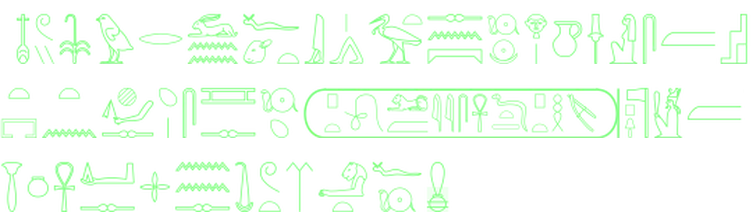
[…] [sꜣ-rꜥ] p[t]wlmys-ꜥnḫ-ḏ.t-mrj-ptḥ p(ꜣ) nṯr mnḫ
… to the Son of Ra, Ptolemy-Living-Forever-Beloved-of-Ptah, the god Euergetes.
- 176Opet 98
ꜥnḫ ḥrw-rꜥ ḥwn ḥkn=tw m ꜥnḫ=f ḥr.(j)-ns.t jt=f mꜥr.{t} sp.w ḏsr msḫꜥ.w=f ḥnꜥ ḥp ꜥnḫ nb.tj shrj tꜣ.wj nswt-bj.tj jwꜥ-n-nṯr.wj-prj.wj-stp.n-ptḥ-jrj-mꜣꜥ.t-rꜥ-sḫm-ꜥnḫ-jmn sn.t=f ḥḳꜣ.t nb.(t)-tꜣ.wj ḳlꜣwpdrꜣ nṯr.wj mnḫ.wj <mrj> nṯr.wj sn.wj nṯr.wj mnḫ.wj nṯr.wj mrj.wj jt.wj jrj.n=f m mnw=f n jt=f wsjr wnn-nfr mꜣꜥ-ḫrw nswt nṯr.w nṯr ꜥꜣ nb p.t ḥḳꜣ psḏ.t jrj.n=f s.t wr.t ꜥꜣ.t m-mꜣwj m jnr ḥḏ nfr n rwḏ.t m kꜣ.t mnḫ.t n.t nḥḥ jn ptḥ djdj tp-rd […]
Long live the Horus-Ra, the youth in whose life all rejoice, who sits on his father's throne, whose deeds prosper, sacred in splendour with the living Apis; He of the Two Ladies, who gladdens the Two Lands; the King of Upper and Lower Egypt, Heir-of-the-Theoi-Epiphaneis-Chosen-of-Ptah-Who-Does-the-Maat-of-Ra-Living-Image-of-Amun; and his sister, the Ruler, Lady of the Two Lands, Cleopatra: the Theoi Euergetai, beloved of the Theoi Adelphoi, the Theoi Euergetai and the Theoi Philopatores. He made it as his monument for his father Osiris Wennefer, justified, king of the gods, the great god, lord of heaven, ruler of the Ennead. He made the great and mighty seat anew in fine white sandstone, an excellent work for eternity. It was Ptah who gave the instructions …
Note · Line 176
The Greek titles name earlier royal couples worshipped as gods, including the Sibling Gods and the Father-loving Gods. The “seat” rebuilt in sandstone is the temple itself. - 177
[…] mrj jp.t wr.t msj.(t) nṯr.w
… beloved of Opet the Great, who gives birth to the gods.
- 178Opet 99
ꜥnḫ ḥrw-nbw wr pḥtj nb ḥb-sd mj jt=f ptḥ-tꜣ-ṯnn jt nṯr.w jtj mj rꜥ sꜣ-rꜥ ptwlmys-ꜥnḫ-ḏ.t-mrj-ptḥ ḥm.t[=f] ḥḳꜣ.t nb.(t)-tꜣ.[wj] ḳ[l]ꜣwpd[r]ꜣ <mrj> nṯr.wj prj.wj p(ꜣ) nṯr ṯnj jt=f p(ꜣ) nṯr mrj mw.t=f p(ꜣ) nṯr mrj jt=f nṯr.wj mnḫ.wj jrj.n=f m mnw=f n [jt]=f ws[jr] [ḥr.(j)]-jb wꜣs.t jtj m jp.t-wr.t nswt nṯr.w nṯr ꜥꜣ nb p.t ḥḳꜣ psḏ.t jrj.n=f s.t wr.t ꜥꜣ.t m-mꜣwj mj ꜣḫ.t{t} n.t p.t bꜣk.tj m nbw mḥ m ꜥꜣ.t nb.(t) šps.(t) ḥꜣj.tj psḏ jm=s rꜥ [nb] […]
Long live the Horus of Gold, great of strength, lord of jubilees like his father Ptah-Tatenen, father of the gods, sovereign like Ra; the Son of Ra, Ptolemy-Living-Forever-Beloved-of-Ptah; and his wife, the Ruler, Lady of the Two Lands, Cleopatra, beloved of the Theoi Epiphaneis, the god Eupator, the god Philometor and the god Philopator: the Theoi Euergetai. He made it as his monument for his father Osiris, who dwells in Thebes, sovereign in Opet the Great, king of the gods, the great god, lord of heaven, ruler of the Ennead. He made the great and mighty seat anew like the horizon of heaven, overlaid with gold and filled with every precious stone, where the Two Luminaries shine every day …
Note · Line 178
The Two Luminaries are the sun and the moon. - 179
[…] mrj nswt nṯr.w
… beloved of the king of the gods.
- 180Opet 100

rs=k nfr nṯr ꜥꜣ ḥḳꜣ ḏ.t sꜣ smsw tp.(j) n gb ḥwn nfr rꜥ nb
Well do you wake, great god, ruler of eternity, eldest son, firstborn of Geb, fair youth every day.
- 181
prj ṯꜣw m fnḏ=k šw m ḥtj.t=k bnbn ḥꜥpj m fd.t n.(t) ḥꜥ.w=k
Air goes out from your nose, light from your throat,
and the flood wells up from the sweat of your flesh. - 182
ḫꜥj=k psḏ=k wsjr m ḥr.t psḏ=k […]
You rise and you shine, Osiris, in the sky; you shine …
- 183
bꜣ=k m sꜣḥ m ḥḳꜣ ḫꜣbꜣs.w sn.t=k spd.t m sꜣ=k
Your ba is Orion, ruler of the stars;
your sister Sothis is your protection.Note · Line 183
Osiris appears in the constellation Orion and Isis in Sothis, the star Sirius. The stars trace the couple’s companionship across the sky. - 184Opet 101
ṯꜣw nfr n mḥj.t ḳb rn=f mḥj.t n.(t) ꜥnḫ js-nꜣw sḥtp ꜣḫ.wt sꜣḫ nwn r-tp tꜣ dj mḥj.t ꜥnḫ.(t) r fnḏ n wsjr ḥr.(j)-jb wꜣs.t
The good north wind. "The Cool One" is its name: the breath of life, the wind that contents the fields and makes the flood fruitful across the land, that gives the breath of life to the nose of Osiris who dwells in Thebes.
- 185
ṯꜣw nfr n rsj ntf šd ḥꜥpj m ṯpḥ.t nwn r bꜥḥj tꜣ m ꜣḫ.w=f nb.(w) sḏfꜣ ṯ.t m jḫ.t nb.(t) nfr.(t) n wsjr wnn-nfr mꜣꜥ-ḫrw
The good south wind. It is he who draws the flood from the cavern of Nun to drench the land with all its good things, and stocks the offering table with every fine thing for Osiris Wennefer, justified.
- 186
ṯꜣw nfr n jꜣbt.t ntf wsjr wtṯ m ẖ.t n.(t) ?nw.t? rꜥ nb twꜣ.n=f bꜣ=k r p.t m-ꜥb nṯr.w wsjr wnn-nfr nswt nṯr.w
The good east wind. He is Osiris, begotten in the womb of Nut every day. He has lifted your ba to the sky among the gods, Osiris Wennefer, king of the gods.
- 187

ṯꜣw nfr n jmnt.t ntf sḫpr ḥwj ḥꜥpj n p.t r sṯḥn tꜣ m rnp.wt sḫpr ḥrr.wt nb.w(t) n wsjr wnn-nfr nswt nṯr.w ꜣs.t wr.t mw.t-nṯr ḥnw.t nṯr.w nb.(w)
The good west wind. It is he who brings on the downpour, the flood of the sky, to make the earth gleam with green shoots, and brings every flower into being for Osiris Wennefer, king of the gods, and for Isis the great, the god's mother, mistress of all the gods.
- 188Opet 126
ḥw.t s.t bꜣ.w
The Mansion, the Seat of Power.
- 189

ꜣs.t wr.t mw.t-nṯr nb.(t) p.t ḥnw.t nṯr.w nb.(w)
Isis the Great, the god's mother, lady of heaven, mistress of all the gods.
- 190
ḥrw-sꜣ-ꜣs.t sꜣ wsjr
Harsiese, son of Osiris.
- 191
jwꜥ-n-nṯr.wj-prj.wj-stp.n-ptḥ-jrj-mꜣꜥ.t-rꜥ-sḫm-ꜥnḫ-jmn ptwlmys-ꜥnḫ-ḏ.t-mrj-ptḥ
Heir of the Two Gods Epiphaneis, Chosen of Ptah, Who Performs the Maat of Ra, Living Image of Amun; Ptolemy, living forever, beloved of Ptah.
- 192
jwꜥ-n-nṯr.wj-prj.wj-stp.n-ptḥ-jrj-mꜣꜥ.t-rꜥ-sḫm-ꜥnḫ-jmn ptwlmywwwwws-ꜥnḫ-ḏ.t-mrj-ptḥ
Heir of the Two Gods Epiphaneis, Chosen of Ptah, Who Performs the Maat of Ra, Living Image of Amun; Ptolemy, living forever, beloved of Ptah.
- 193
nb.(t)-tꜣ.wj ḳlꜣwpdrꜣ
The lady of the Two Lands, Cleopatra.
- 194
nb.(t)-tꜣ.wj ḳlꜣwpdrꜣ
The lady of the Two Lands, Cleopatra.
- 195Opet 126-7
jp.t wr.t mw.t-nṯr ḥm.t-nswt tp.(j).t n.(t) wnn-nfr [mꜣꜥ-ḫrw nswt nṯr.w] m ḥw.t wtṯ sn=s wbn.(t) m wꜣs.t jrj s(j) mw.t=s m jp.t-wr.t nb.(t) ꜥntjw ḥnw.t nḫb m sꜣ […] ḏ.t
Opet the Great, the god's mother, first royal wife of Wennefer, true of voice, king of the gods, in the Mansion where her brother is begotten; she who rose in Thebes, whom her mother made in the temple of Opet; lady of myrrh, mistress of the lotus, behind … forever.
Note · Line 195
Opet here takes the family role of Isis. This is why the Osiris whom she bears elsewhere can appear here as her brother and husband. - 196
jp.t wr.t mw.t-nṯr n.(t) ḥrw kꜣ nḫt […] nb.(t) p.t ḥnw.t nṯr.w nb.(w) šps.t wsr.t jnj.(t) ḥꜥpj r tr=f r rdj.t [ ?ꜥnḫ?] n nṯr.w […] [mj] rꜥ ḏ.[t]
Opet the Great, god's mother of Horus, the mighty bull, … lady of heaven, mistress of all the gods, the noble, the powerful, who brings the inundation in its season to give life to the gods … like Ra forever.
- 197
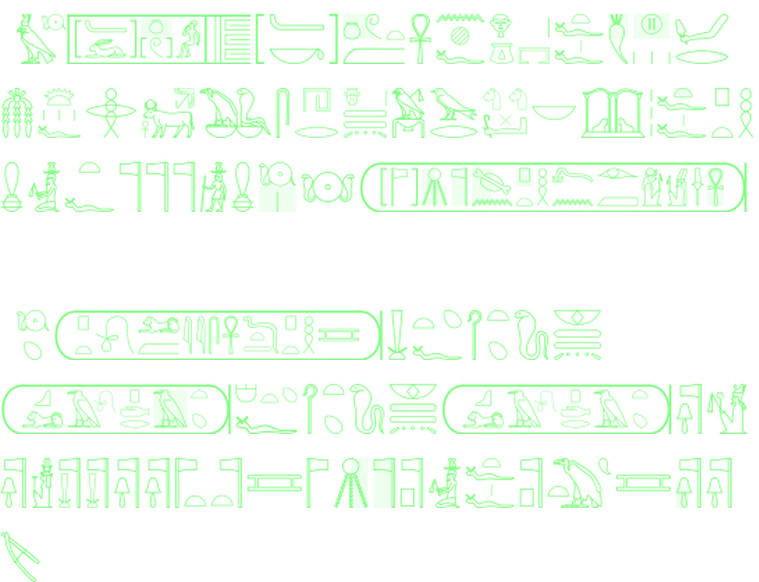
ḥrw-rꜥ [ḥwn ḥkn]=tw m ꜥnḫ=f ḥr.(j)-ns.t jt=f mꜥr sp.w ḏsr msḫꜥ.w=f ḥnꜥ ḥp ꜥnḫ nb.tj shrj tꜣ.wj ḥrw-nbw wr pḥtj nb ḥb-sd.w mj jt=f ptḥ-tꜣ-ṯnn jt nṯr.w jtj mj rꜥ nswt-bj.tj jwꜥ-n-nṯr.wj-prj.wj-stp.n-ptḥ-jrj-mꜣꜥ.t-rꜥ-sḫm-ꜥnḫ-jmn sꜣ-rꜥ ptwlmys-ꜥnḫ-ḏ.t-mrj-ptḥ sn.t=f ḥḳꜣ.t nb.(t)-tꜣ.wj ḳlꜣwpdrꜣ ḥm.t=f ḥḳꜣ.t nb.(t)-tꜣ.wj ḳlꜣwpdrꜣ nṯr.wj mnḫ.wj mrj nṯr.wj sn.wj nṯr.wj mnḫ.wj nṯr.wj mrj.wj jt.wj ntr.wj prj.wj p(ꜣ) nṯr ṯnj jt=f p(ꜣ) nṯr mrj mw.t=f nṯr.wj mnḫ.wj
The Horus-Ra: Youth in whose life men rejoice, heir of his father, successful in deeds, holy in his radiance with the living Apis; He of the Two Ladies: Who gladdens the Two Lands; the Golden Horus: Great of strength, lord of jubilees like his father Ptah-Tatenen, father of the gods, sovereign like Ra; the King of Upper and Lower Egypt: Heir of the Two Gods Epiphaneis, Chosen of Ptah, Who Performs the Maat of Ra, Living Image of Amun; the Son of Ra: Ptolemy, living forever, beloved of Ptah; with his sister, the ruler, lady of the Two Lands, Cleopatra, and his wife, the ruler, lady of the Two Lands, Cleopatra: the Two Gods Euergetai, beloved of the Two Gods Adelphoi, the Two Gods Euergetai, the Two Gods Philopatores, the Two Gods Epiphaneis, the god Eupator, the god Philometor, and the Two Gods Euergetai.
Note · Line 197
The two women named Cleopatra are mother and daughter. Cleopatra II was the king’s sister, and her daughter Cleopatra III was his niece and wife. - 198
ḥrw-rꜥ ḥwn ḥkn=tw m ꜥnḫ=f ḥr.(j)-ns.t jt=f mꜥr sp.w ḏsr msḫꜥ.w=f ḥnꜥ ḥp ꜥnḫ nb.tj shrj tꜣ.wj ḥrw-nbw wr pḥtj nb ḥbw-sd mj jt=f ptḥ-tꜣ-ṯnn jt nṯr.w [jtj] mj rꜥ nswt-bj.tj jwꜥ-n-nṯr.wj-prj.wj-[stp.n]-p[tḥ-jrj-mꜣꜥ.t-rꜥ]-sḫm-ꜥnḫ-[jmn] sꜣ-rꜥ ptwlmys-ꜥnḫ-ḏ.t-mrj-ptḥ sn.t=f ḥḳꜣ.t nb.(t)-tꜣ.wj ḳlꜣwpdrꜣ ḥm.t=f ḥḳꜣ.t nb.(t)-tꜣ.wj ḳlꜣwpdrꜣ nṯr.wj mnḫ.wj mrj nṯr.wj sn.wj nṯr.wj mnḫ.wj nṯr.wj mrj.wj jt.wj ntr.wj prj.wj p(ꜣ) nṯr ṯnj jt=f [p(ꜣ) nṯr mrj mw.t=f] nṯr.wj mnḫ.wj
The Horus-Ra: Youth in whose life men rejoice, heir of his father, successful in deeds, holy in his radiance with the living Apis; He of the Two Ladies: Who gladdens the Two Lands; the Golden Horus: Great of strength, lord of jubilees like his father Ptah-Tatenen, father of the gods, sovereign like Ra; the King of Upper and Lower Egypt: Heir of the Two Gods Epiphaneis, Chosen of Ptah, Who Performs the Maat of Ra, Living Image of Amun; the Son of Ra: Ptolemy, living forever, beloved of Ptah; with his sister, the ruler, lady of the Two Lands, Cleopatra, and his wife, the ruler, lady of the Two Lands, Cleopatra: the Two Gods Euergetai, beloved of the Two Gods Adelphoi, the Two Gods Euergetai, the Two Gods Philopatores, the Two Gods Epiphaneis, the god Eupator, the god Philometor, and the Two Gods Euergetai.
- 199Opet 127
bḥd.tj nṯr ꜥꜣ nb p.t sꜣb šw.t prj m ꜣḫ.t dj ꜥnḫ
The Behdetite, the great god, lord of heaven, dappled of plumage, who comes forth from the horizon, given life.
- 200
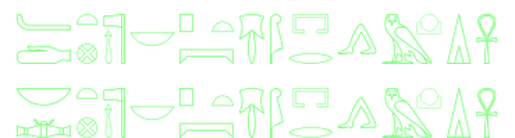
nb msn nṯr ꜥꜣ nb p.t sꜣb šw.t prj m ꜣḫ.t dj ꜥnḫ
The lord of Mesen, the great god, lord of heaven, dappled of plumage, who comes forth from the horizon, given life.
- 201Opet 128
nswt-bj.tj wsjr šps m nn.t psḏ […] wbn m ḥtp […] sḫnj.tj ḥꜥpj ḥr swr […] ?snḏ ḥr=k wr.t? […] ḥr.w-nb.w m tꜣ […] ḥr-tp=sn [spꜣ].t jgr.t nb.[t]j n […] ꜥnḫ nṯr nfr sꜣ jmn ḥr.(j)-ns.t=f ḫnt.(j) ꜥnḫ.w nswt-bj.tj jwꜥ-n-nṯr.wj-prj.wj-stp.n-ptḥ-jrj-mꜣꜥ.t-rꜥ-sḫm-ꜥnḫ-jmn p(ꜣ) nṯr mnḫ mrj jmn-rꜥ nswt nṯr.w
The King of Upper and Lower Egypt, Osiris, noble in the nether sky, who shines … who rises in peace … held within, the inundation swelling … awe of your face, great … everyone on earth … over them; they rule the necropolis, fashioned … Long live the perfect god, son of Amun, his heir, foremost of the living, the King of Upper and Lower Egypt, Heir of the Two Gods Epiphaneis, Chosen of Ptah, Who Performs the Maat of Ra, Living Image of Amun, the god Euergetes, beloved of Amun-Ra, king of the gods.
- 202
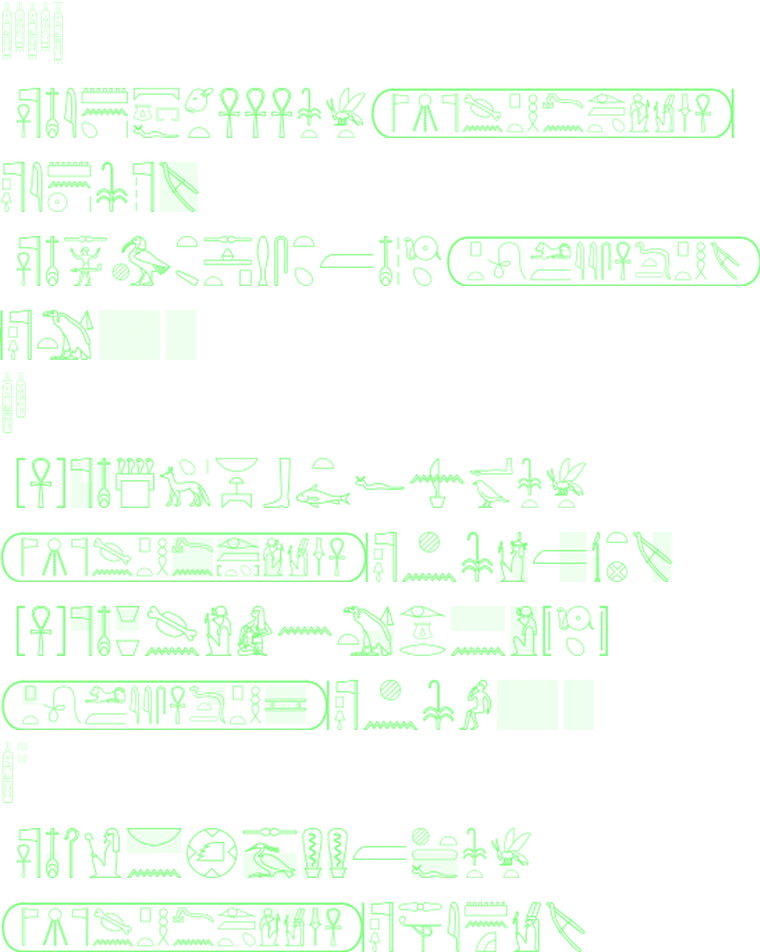
ꜥnḫ nṯr nfr sḥꜥj ꜣḫ.t sḥtp ḥms.t m nfrw sꜣ-rꜥ ptwlmys-ꜥnḫ-ḏ.t-mrj-ptḥ p(ꜣ) nṯr mnḫ mrj mw.t […] ꜥnḫ nṯr] nfr sꜣ ṯꜣtj sꜣb nb wḏꜥ bw.t=f nmꜥ nswt-bj.tj jwꜥ-n-nṯr.wj-prj.wj-stp.n-ptḥ-jrj-mꜣꜥ.t-rꜥ-sḫm-ꜥnḫ-jmn p(ꜣ) nṯr mnḫ mrj ḫnsw m wꜣs.t
Long live the perfect god, who gladdens the Radiant One and contents Hemeset with beauty, the Son of Ra, Ptolemy, living forever, beloved of Ptah, the god Euergetes, beloved of Mut … Long live the perfect god, son of the Vizier and Judge, lord of judgment, to whom partiality is an abomination, the King of Upper and Lower Egypt, Heir of the Two Gods Epiphaneis, Chosen of Ptah, Who Performs the Maat of Ra, Living Image of Amun, the god Euergetes, beloved of Khonsu in Thebes.
- 203
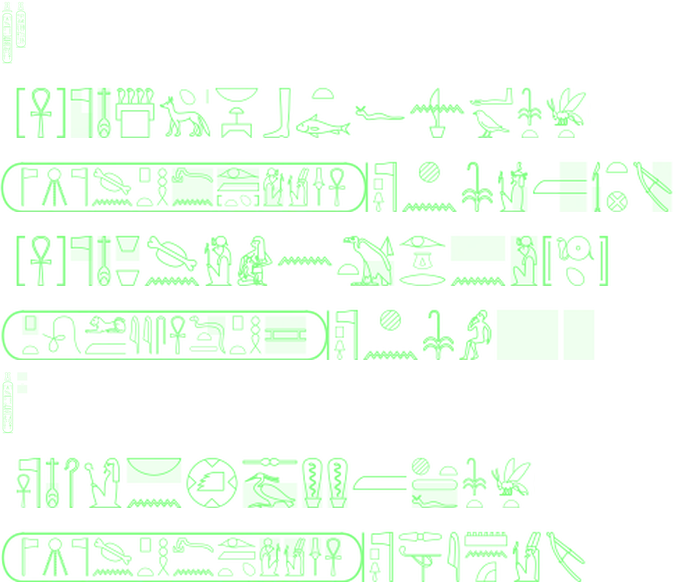
[ꜥnḫ nṯr] nfr jwꜥ n rꜥ rnn.n mw.t jrj ẖr.(t) n rꜥ sꜣ-rꜥ ptwlmys-ꜥnḫ-ḏ.t-mrj-ptḥ p(ꜣ) nṯr mnḫ [mrj] ḫnsw ẖrd […] ꜥnḫ nṯr nfr ḥḳꜣ nb n km.t sbꜥḥj jtr.tj m jḫ.t=f nswt-bj.tj jwꜥ-n-nṯr.wj-prj.wj-stp.n-ptḥ-jrj-mꜣꜥ.t-rꜥ-sḫm-ꜥnḫ-jmn p(ꜣ) nṯr mnḫ mrj mnw-jmn-rꜥ
Long live the perfect god, heir of Ra, whom his mother reared, who makes provision for Ra, the Son of Ra, Ptolemy, living forever, beloved of Ptah, the god Euergetes, beloved of Khonsu the Child … Long live the perfect god, the ruler, lord of Egypt, who floods the Two Shrines with his offerings, the King of Upper and Lower Egypt, Heir of the Two Gods Epiphaneis, Chosen of Ptah, Who Performs the Maat of Ra, Living Image of Amun, the god Euergetes, beloved of Min-Amun-Ra.
Note · Line 203
The Two Shrines are the national sanctuaries of Upper and Lower Egypt. Together they stand for the temples of the whole country. - 204Opet 129
nswt-bj.tj ꜣs.t wr.t mw.t-nṯr ḥm.t-nswt tp.(j).t n.(t) [wsjr] mw.t-nswt n.(t) ḥrw kꜣ [nḫt] [šp]s.t m wꜣs.t sꜣ.t nw.t wsr.t […] ?ḥm.t? rꜥ m ḥb ḥr ḥb.w n jtn nḏ.tj […] jṯj tꜣ.wj ḥnw.t nṯr.w nṯr.wt nfr.wj […] m ḥtp sꜣ wsjr ḥḳꜣ.n=f šmꜥw mḥw ḫꜥj.tj m […] nṯr.w nṯr.wt m ḥb ḥr ḥb nb.t-ḥw.t ḥr ḫwj.(t) […] ꜥnḫ nṯr nfr sꜣ jmn msj.n mw.t nb.(t) p.t nswt-bj.tj jwꜥ-n-nṯr.wj-prj.wj-stp.n-ptḥ-jrj-mꜣꜥ.t-rꜥ-sḫm-ꜥnḫ-jmn p(ꜣ) nṯr mnḫ mrj jmn-rꜥ nb ns.wt-tꜣ.wj ḫnt.(j) jp.t-s.wt
The King of Upper and Lower Egypt. Isis the great, the god's mother, first royal wife of Osiris, royal mother of Horus, the mighty bull, the noble lady in Thebes, daughter of Nut, the powerful … wife of Ra, is in feast upon feasts for the Sun Disk, the protector … who seizes the Two Lands, mistress of gods and goddesses. How beautiful … in peace, the son of Osiris! He has ruled Upper and Lower Egypt, having appeared in … the gods and goddesses are in feast upon feast, Nephthys guarding … Long live the perfect god, son of Amun, born of Mut, lady of the sky, the King of Upper and Lower Egypt, Heir-of-the-Two-Manifest-Gods-Chosen-of-Ptah-Who-Does-the-Maat-of-Ra-Living-Image-of-Amun, the god Euergetes, beloved of Amun-Ra, lord of the thrones of the Two Lands, foremost in Ipet-sut.
- 205
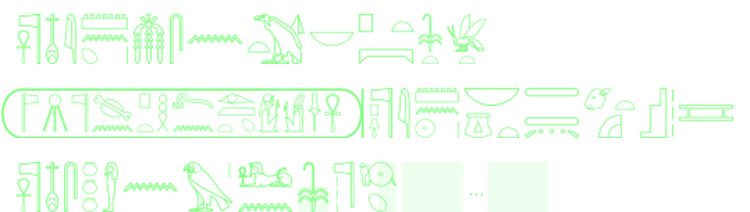
ꜥnḫ nṯr nfr snn n ḥrw šsp ꜥnḫ [n] nswt nṯr.w sꜣ-rꜥ […] ꜥnḫ nṯr nfr ?jrj nw.t n rꜥ? […]
Long live the perfect god, likeness of Horus, living image of the king of the gods, Son of Ra … Long live the perfect god, whom Nut made for Ra …
- 206
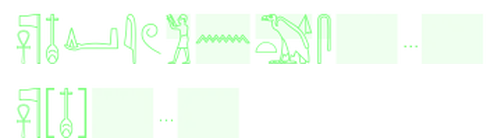
ꜥnḫ nṯr nfr rnn […] ꜥnḫ nṯr nfr dj jꜣw n mw.t […]
Long live the perfect god, reared … Long live the perfect god, who gives praise to his mother …
- 207Opet 130
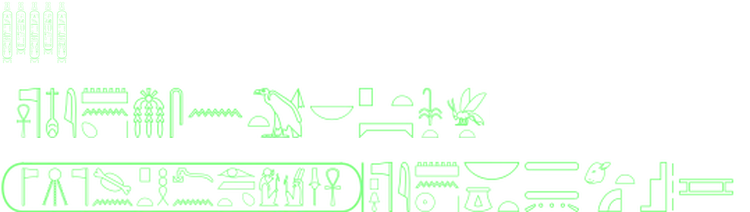
nswt-bj.tj jwꜥ-n-nṯr.wj-prj.wj-stp.n-ptḥ-jrj-mꜣꜥ.t-rꜥ-sḫm-ꜥnḫ-jmn sꜣ-rꜥ ptwlmys-ꜥnḫ-ḏ.t-mrj-ptḥ p(ꜣ) nṯr mnḫ ꜥꜣ ꜥꜣb.t ḫr nṯr.w nb.(w)
The King of Upper and Lower Egypt, Heir-of-the-Two-Manifest-Gods-Chosen-of-Ptah-Who-Does-the-Maat-of-Ra-Living-Image-of-Amun, Son of Ra, Ptolemy-Living-Forever-Beloved-of-Ptah, the god Euergetes, abounding in offerings before all the gods.
- 208
fꜣj.(t) jḫ.t n jt=f jrj.n=f dj.(t) ꜥnḫ
Raising up the offerings to his father. He has made the gift of life.
- 209

ḏd-mdw jn wsjr nb kꜣw ꜥšꜣ ḏfꜣ.w jrj ẖr.(t) n rꜣ nb
Words spoken by Osiris, lord of food, rich in provisions, who provides sustenance for every mouth.
- 210
ḏd-mdw dj=j n=k rwḏ nb ḥr-sꜣ tꜣ pr.t nb.(t) prj.(t) m ꜣḫ.t
Words spoken: I give you every plant that grows on the back of the earth, every seed that sprouts from the field.
- 211
dj=j n=k ḫꜣs.wt nb.(wt) dmḏ ẖr ṯb.tj=k
I give you all the foreign lands, gathered beneath your sandals.
- 212
nswt-bj.tj jwꜥ-n-nṯr.wj-prj.wj-stp.n-ptḥ-jrj-mꜣꜥ.t-rꜥ-sḫm-ꜥnḫ-jmn sꜣ-rꜥ ptwlmys-ꜥnḫ-ḏ.t-mrj-ptḥ p(ꜣ) nṯr mnḫ stp.n jmn ḏs=f
The King of Upper and Lower Egypt, Heir-of-the-Two-Manifest-Gods-Chosen-of-Ptah-Who-Does-the-Maat-of-Ra-Living-Image-of-Amun, Son of Ra, Ptolemy-Living-Forever-Beloved-of-Ptah, the god Euergetes, chosen by Amun himself.
- 213
jrj.(t) snṯr n jt=f sḥtp nṯr=f m jr.t ḥrw jrj=f dj.(t) ꜥnḫ
Performing the censing for his father, appeasing his god with the Eye of Horus. He makes the gift of life.
- 214
ḏd-mdw jn ḥrw-nḏ-jt=f sꜣ wsjr jwꜥ mnḫ prj m ꜣs.t nb wꜣs.t m jmn wr nswt nṯr.w ḥḳꜣ s.t jt=f m jp.t-s.wt
Words spoken by Harendotes, son of Osiris, excellent heir come forth from Isis, lord of Thebes as Amun the Elder, king of the gods, ruler of his father's throne in Ipet-sut.
- 215

dj=j n=k ḫꜣs.wt tꜣ-nṯr ẖr bꜣk=sn
I give you the foreign lands and God's Land, bearing their tribute.
- 216Opet 131
nswt-bj.tj jwꜥ-n-nṯr.wj-prj.wj-stp.n-ptḥ-jrj-mꜣꜥ.t-rꜥ-sḫm-ꜥnḫ-jmn sꜣ-rꜥ ptwlmys-ꜥnḫ-ḏ.t-mrj-ptḥ p(ꜣ) nṯr mnḫ sḥtp nṯr=f m jr.t ḥrw
King of Upper and Lower Egypt, Heir of the Two Gods Manifest, Chosen of Ptah, Who Does the Truth of Ra, Living Image of Amun; Son of Ra, Ptolemy, May He Live Forever, Beloved of Ptah; the Beneficent God, who contents his god with the Eye of Horus.
- 217
jrj.(t) snṯr ḳbḥw n jt=f
Burning incense and pouring cool water for his father.
- 218
ḏd-mdw jn wsjr ḥr.(j)-jb wꜣs.t […] jp.t-wr.t wr tp ꜣṯt=f
Words spoken by Osiris, who dwells in Thebes, … Opet the Great, the great one upon his bed.
Note · Line 218
The bed is Osiris’s funeral bier. In this sanctuary the place where his body lies is also the place where he will be born again. - 219
dj=j n=k ꜥḥꜥw ꜣwj m nḏm-jb
I give you a long lifetime in gladness of heart.
- 220
nswt-bj.tj jwꜥ-n-nṯr.wj-prj.wj-stp.n-ptḥ-jrj-mꜣꜥ.t-rꜥ-sḫm-ꜥnḫ-jmn sꜣ-rꜥ ptwlmys-ꜥnḫ-ḏ.t-mrj-ptḥ p(ꜣ) nṯr mnḫ sḥtp jt=f nb nṯr.w
King of Upper and Lower Egypt, Heir of the Two Gods Manifest, Chosen of Ptah, Who Does the Truth of Ra, Living Image of Amun; Son of Ra, Ptolemy, May He Live Forever, Beloved of Ptah; the Beneficent God, who contents his father, the lord of the gods.
- 221
ḥnk mꜣꜥ.t n jt=f sḥtp nṯr=f m mrj=f jrj=f dj.(t) ꜥnḫ
Presenting Maat to his father, contenting his god with what he loves, that he may be one given life.
- 222

ḏd-mdw jn ptḥ nfr ḥr ḫnt.(j) wꜣs.t
Words spoken by Ptah, Fair of Face, Foremost of Thebes.
- 223
ḏd-mdw dj=(j) n=k mꜣꜥ.t wr.tj m jb=k r jrj.(t)=s n nṯr.w nb.(w)
Words spoken: I give you Maat, great within your heart, that you may do her for all the gods.
- 224Opet 132
nswt-bj.tj jwꜥ-n-nṯr.wj-prj.wj-stp.n-ptḥ-jrj-mꜣꜥ.t-rꜥ-sḫm-ꜥnḫ-jmn sꜣ-rꜥ ptwlmys-ꜥnḫ-ḏ.t-mrj-ptḥ p(ꜣ) nṯr mnḫ
King of Upper and Lower Egypt, Heir of the Two Gods Manifest, Chosen of Ptah, Who Does the Truth of Ra, Living Image of Amun; Son of Ra, Ptolemy, May He Live Forever, Beloved of Ptah; the Beneficent God.
- 225
ḏd-mdw jn ḥrw-wr nb šmꜥw mꜣj ꜥꜣ pḥtj ḫnt.(j) nṯr.w ṯmꜣ ꜥ wsr ḫpš=f
Words spoken by Haroeris, lord of Upper Egypt, the lion great of strength, foremost of the gods, strong of arm, mighty of sword.
- 226
dj=j n=k tꜣ.wj nb
I give you the Two Lands entire.
- 227
nswt-bj.tj jwꜥ-n-nṯr.wj-prj.wj-stp.n-ptḥ-jrj-mꜣꜥ.t-rꜥ-sḫm-ꜥnḫ-jmn sꜣ-rꜥ ptwlmys-ꜥnḫ-ḏ.t-mrj-ptḥ p(ꜣ) nṯr mnḫ mstjw n jtm
King of Upper and Lower Egypt, Heir of the Two Gods Manifest, Chosen of Ptah, Who Does the Truth of Ra, Living Image of Amun; Son of Ra, Ptolemy, May He Live Forever, Beloved of Ptah; the Beneficent God, offspring of Atum.
- 228
ḥnk šb.t n mw.t=f sḥtp ḥnw.t=f m mrj=s jrj=f dj.(t) ꜥnḫ
Offering the shebet-meal to his mother, contenting his lady with what she loves, that he may be one given life.
- 229
ḏd-mdw jn jp.t wr.t nw.t msj.(t) nṯr.w njs.(t) n jt=s jj jmn […] dj=j mrw.t=k ẖnm.tj m jb.w ḥr dwꜣ nfrw=k mj rꜥ
Words spoken by Opet the Great, Nut who bore the gods, she who calls to her father so that Amun comes … I set the love of you deep within hearts, as they hail your beauty like Ra's.
- 230Opet 133
nswt-bj.tj jwꜥ-n-nṯr.wj-prj.wj-stp.n-ptḥ-jrj-mꜣꜥ.t-rꜥ-sḫm-ꜥnḫ-jmn sꜣ-rꜥ ptwlmys-ꜥnḫ-ḏ.t-mrj-ptḥ p(ꜣ) nṯr mnḫ stp.n rꜥ ḏs=f
King of Upper and Lower Egypt, Heir-of-the-Two-Gods-Epiphanes-Chosen-of-Ptah-Who-Does-the-Maat-of-Ra-Living-Image-of-Amun, Son of Ra, Ptolemy-Living-Forever-Beloved-of-Ptah, the god Euergetes, whom Ra himself has chosen.
- 231
rdj.t nwd.t jwḥ.(t) ntš.(t)(71) m sšn
Presenting the swaddling bands, steeped and sprinkled with lotus.
Note · Line 231
The lotus perfumes the strips of cloth. The gods who speak next welcome Horus as an infant, and the swaddling bands are a gift for him. - 232
ḏd-mdw jn ẖnmw nḥp rmṯ jrj nṯr.w ḥb.wj ḥr=k nṯr nṯr.w jwꜥ mnḫ n wnn-nfr mꜣꜥ-ḫrw nṯr m tꜣ nb jtr.tj ꜣḫ.t=k ḏsr.tj m nn.t ḳrḥ.t=k wr.t ꜥpr.tj m jrw=s sḫm nṯr.w ḫpr ḫnt ntk pw nb=sn
Words spoken by Khnum, who fashions people, who makes the gods: How festive is your face, god of gods, excellent heir of Onnophris, true of voice, god on earth, lord of the two shrines! Your horizon is made holy in the lower sky; your great serpent Qerehet is equipped with her form, mighty image of the gods, who came into being first. You are their lord.
Note · Line 232
Khnum is the ram-headed god who shapes living beings on a potter’s wheel. Qerehet is a serpent who guards the divine family. - 233
dj=j n=k ꜥnḫ wꜣs r fnḏ=k rꜥ nb ḥrw-p(ꜣ)-ẖrd
I give life and dominion to your nose every day, Horus the Child.
- 234
ḏd-mdw jn ḏḥwtj ꜥꜣ ꜥꜣ nb ḫmnw nb mdw-nṯr nb nṯr.w jꜣw sp-sn sꜣ-tꜣ m ꜥḥ n wsjr […] tꜣ-nṯr.w m hj n ḥr=f wbn.tj ḥtp.tj ẖnm.n=f jwnn=f mꜣꜣ=f pr=f ꜥpr.tj m ršw.t sṯj ḥb pẖr m njw.t=f
Words spoken by Thoth, twice great, lord of Hermopolis, lord of the gods' words, lord of the gods: Praise, praise, and rejoicing in the palace of Osiris … the land of the gods is in acclamation before his face, when he rises and when he sets. He has joined his sanctuary and sees his house filled with joy, while the fragrance of festival goes round his city.
Note · Line 234
Thoth is the ibis god of writing, worshipped at Hermopolis. The “gods’ words” are hieroglyphs. - 235

nḫb=j n=k nswj.t m ḥḥ n ḥb-sd ḥfn.w rnp.wt
I inscribe kingship for you in millions of jubilees, in hundreds of thousands of years.
- 236
ḏd-mdw jn wꜣḏ.t wḏ.(t) ꜥnḫ jꜥr.t sšm.(t) tꜣ.wj rr.(t) ḥrw tp nwd.t=f
Words spoken by Wadjet, who gives life, the uraeus, who guides the Two Lands, who nurses Horus in his swaddling bands.
- 237
wnn=j m mḥnj.t ḥr=k wꜣḏ ḥr dgj.(t) r sꜣ wsjr
I am Mehenit. Your face, fresh and green, gazes upon the son of Osiris.
Note · Line 237
Mehenit means “the Coiled One,” a name for the protecting cobra. The Egyptian word for “fresh and green,” wadj, lets the listener hear Wadjet’s name again. - 238
bḥd.tj
He of Edfu.
- 239Opet 134
nswt-bj.tj jwꜥ-n-nṯr.wj-prj.wj-stp.n-ptḥ-jrj-mꜣꜥ.t-rꜥ-sḫm-ꜥnḫ-jmn sꜣ-rꜥ ptwlmys-ꜥnḫ-ḏ.t-mrj-ptḥ p(ꜣ) nṯr mnḫ tj.t n.(t) rꜥ ḫnt.(j) tꜣ.wj
King of Upper and Lower Egypt, Heir-of-the-Two-Gods-Epiphanes-Chosen-of-Ptah-Who-Does-the-Maat-of-Ra-Living-Image-of-Amun, Son of Ra, Ptolemy-Living-Forever-Beloved-of-Ptah, the god Euergetes, image of Ra, foremost of the Two Lands.
- 240
ḥnk jrṯ.t n jt=f ḥrw-sꜣ-ꜣs.t jrj.n=f dj.(t) ꜥnḫ
Offering milk to his father, Harsiese. He has achieved the gift of life.
- 241
ḏd-mdw jn nḫb.t ḥḏ.(t) nḫn dj.(t) ṯꜣw nḏm rꜥ […] hj […] šps
Words spoken by Nekhbet, the White One of Nekhen, who gives the sweet breath … Ra … acclamation … noble.
- 242
Msḫ[n.t] nfr.[t] ?s[nḏm.t]? jb […] ḥr ?ꜣṯ.t msw.t? sꜣ.(t) ḥrw […] šps jw=f m [nswt] n [nṯr].w rmṯ ḥw.wt-ḥrw m sꜣ n ḥꜥ.w=f ḏ.t ?[…]? n=f mk.(t) nb.(t)
Meskhenet the beautiful, who gladdens the heart … upon the birth-bed, who protects Horus … noble, while he is king of gods and people, the Hathors being the protection of his flesh forever … for him every protection.
Note · Line 242
The Hathors were a company of goddesses, usually seven, who came to a birth to foretell the child’s fate. - 243
nḏm.wj (72) ?… msj r jrj ꜣs.t n ḥrw?
How sweet … bearing, as Isis did for Horus …
- 244
ḏd-mdw jn ꜣs.t wr.t mw.t-nṯr jr.t rꜥ nb.(t) p.t [ḥnw.t] nṯr.w nb.(w) šps.t wsr.t m ḥw.t wtṯ sn=s ḥḳꜣ.t msj.(t) ḥḳꜣ m rn=f ḥrw-sꜣ-ꜣs.t nb.(t) njw.wt ḥnw.t spꜣ.wt nb.(t) ꜥntjw ḥnw.t nḫb
Words spoken by Isis the great, the god's mother, the Eye of Ra, lady of the sky, mistress of all the gods, the noble, the mighty, in the Mansion where her Brother was Begotten, the ruler who bore the ruler in his name of Harsiese, lady of the cities, mistress of the nomes, lady of myrrh, mistress of the lotus.
- 245
bḥd.tj
He of Edfu.
- 246Opet 135
nswt-bj.tj jwꜥ-n-nṯr.wj-prj.wj-stp.n-ptḥ-jrj-mꜣꜥ.t-rꜥ-sḫm-ꜥnḫ-jmn sꜣ-rꜥ ptwlmys-ꜥnḫ-ḏ.t-mrj-ptḥ p(ꜣ) nṯr mnḫ
King of Upper and Lower Egypt, Heir-of-the-Two-Manifest-Gods, Chosen-of-Ptah, Who-Performs-the-Maat-of-Ra, Living-Image-of-Amun, Son of Ra, Ptolemy-may-he-live-forever-beloved-of-Ptah, the god Euergetes.
- 247
mn n=k ꜥnḫ ꜣm n=k ḏd ḫfꜥ=k wꜣs m ꜥ.wj=k ꜥnḫ=k m p.t wsr=k m tꜣ ḏd ḏ.t=k m štꜣ msw.w(t)
Take life for yourself, grasp endurance for yourself, seize power in your two arms, that you may live in heaven, be powerful on earth, and that your body may endure as Secret-of-Births.
Note · Line 247
These are gifts the recipient can grasp. Life is represented by the looped ankh, endurance by the djed pillar, and power by the was-sceptre. - 248

kꜣ nswt […] ḫnt.j ?pr-gb?
The royal ka … who presides over Per-Geb.
Note · Line 248
The royal ka could be pictured as a separate figure following the king, his divine double. - 249
nḫb.t
Nekhbet.
- 250
ḏd-mdw jn jmn.t ꜥꜣ.(t) wr.t nb.(t) tꜣ.wj ḥr.(j.t)-jb jp.t-s.wt jr.t rꜥ nb.(t) p.t ḥnw.t nṯr.w nb.w ḥḳꜣ.t m wꜣs.t nb.(t) jšrw ꜥꜣ.(t) ḫꜥ m jp.t-s.wt
Words spoken by Amaunet, the very great, lady of the Two Lands, who dwells in Ipet-Sut, Eye of Ra, lady of heaven, mistress of all the gods, ruler in Thebes, lady of the Isheru, great in her appearing in Ipet-Sut.
- 251
wnn=j ḥꜣ=k sꜣ sn=(j) ḫwj=j ḥꜥ.w=k
I am all about you, son of my brother; I guard your limbs.
- 252
ḏd-mdw jn ḥrw-sꜣ-ꜣs.t sꜣ wsjr jwꜥ mnḫ prj m ꜣs.t sꜣ smsw n wsjr wr spꜣ.t=f r njw.t nb.(t) mj wr kꜣ.t=f r nṯr.w
Words spoken by Harsiese, son of Osiris, the excellent heir who came forth from Isis, eldest son of Osiris, whose nome is greater than any city, just as his work is greater than the gods'.
- 253
?…? ḥrw tꜣ ḥḏ.t ẖnm.n=f tꜣ dšr.t dmḏ.n=f sḫm.tj jw=f nswt n tꜣ nb
… Horus, the White Crown; he has joined the Red Crown, he has united the Double Crown, he is king of all the land.
- 254Opet 136
ḏd-mdw jn wsjr wnn-nfr mꜣꜥ-ḫrw nswt nṯr.w jt nṯr.w jtj m jp.t-wr.t nswj=f nṯr.w hrw jrj sw mw.t=f
Words spoken by Osiris Wennefer, true of voice, king of the gods, father of the gods, sovereign in Great Opet. He has ruled the gods since the day his mother made him.
- 255
dj=j n=k ꜥnḫ ꜥnḫ=k jm=f wꜣs wsr=k r nṯr.w
I give you life, that you may live by it; power, that you may be more powerful than the gods.
- 256
ḏd-mdw jn ꜣs.t wr.t mw.t-nṯr jr.t rꜥ nb.(t) p.t spd.t wr.t jnj.(t) ḥꜥpj r tr=f r sꜥnḫ ḥr-nb
Words spoken by Isis the great, mother of the god, Eye of Ra, lady of heaven, Sothis the great, who brings the inundation in its season to give life to everyone.
Note · Line 256
Sirius’s first appearance at dawn after weeks out of sight heralded the annual Nile flood. This is how Isis, as a star, could announce the coming of the water. - 257
dj=j n=k šn n p.t ḥr sḫn.wt=s (73) ḫꜣs.t nb.(t) dmḏ ẖr ṯb.tj=k
I give you the circuit of heaven upon its pillars, and every foreign land gathered beneath your sandals.
- 258
ḏd-mdw jn nb.t-ḥw.t sn.t-nṯr nṯr.t mnḫ.(t)-jb ršw.(t) ḫnt sꜣ wnn-nfr mꜣꜥ-ḫrw ḫnt ḥw.t wtṯ=f m sn-nw.(t) n.(t) nb.tj-rḫj.t
Words spoken by Nephthys, the god's sister, the goddess of loyal heart, who rejoices in the pen of Wennefer, true of voice, in the Mansion of his Begetting, as companion of the Lady of the Rekhyt.
Note · Line 258
The Rekhyt are the common people. Their lady here is Isis, the sister whom Nephthys accompanies. - 259
wbn=k m p.t ḫꜥj=k m tꜣ ršw ḥr-nb n mꜣꜣ=k
You rise in heaven, you appear on earth, and everyone rejoices to see you.
- 260Opet 137
nswt-bj.tj jwꜥ-n-nṯr.wj-prj.wj-stp.n-ptḥ-jrj-mꜣꜥ.t-rꜥ-sḫm-ꜥnḫ-jmn sꜣ-rꜥ ptwlmys-ꜥnḫ-ḏ.t-mrj-ptḥ p(ꜣ) nṯr mnḫ
King of Upper and Lower Egypt, Heir-of-the-Two-Manifest-Gods, Chosen-of-Ptah, Who-Does-the-Maat-of-Ra, Living-Image-of-Amun, Son of Ra, Ptolemy-Living-Forever-Beloved-of-Ptah, the Beneficent God.
- 261
ḥnk mnḫ.t
Offering cloth.
- 262

ḏd-mdw jn ꜣs.t wr.t mw.t-nṯr jr.t rꜥ nb.(t) p.t ḥnw.t nṯr.w nb.(w)
Words spoken by Isis the great, the god's mother, Eye of Ra, lady of heaven, mistress of all the gods.
- 263
ḏd-mdw {j} dj=j snḏ=k swr=j šfj.t=k
Words to be spoken: I give you the power to strike dread; I make your majesty great.
- 264
nswt-bj.tj jwꜥ-n-nṯr.wj-prj.wj-stp.n-ptḥ-jrj-mꜣꜥ.t-rꜥ-sḫm-ꜥnḫ-jmn sꜣ-rꜥ ptwlmys-ꜥnḫ-ḏ.t-mrj-ptḥ p(ꜣ) nṯr mnḫ
King of Upper and Lower Egypt, Heir-of-the-Two-Manifest-Gods, Chosen-of-Ptah, Who-Does-the-Maat-of-Ra, Living-Image-of-Amun, Son of Ra, Ptolemy-Living-Forever-Beloved-of-Ptah, the Beneficent God.
- 265
dwꜣ nṯr sḥtp jt=f jrj=f dj.(t) ꜥnḫ
Adoring the god, pleasing his father, that he may be given life.
- 266
ḏd-mdw jn gb jt nṯr.w nṯr ꜥꜣ nb p.t tꜣ
Words spoken by Geb, father of the gods, the great god, lord of heaven and earth.
- 267
ḏd-mdw {j} dj=j n=k šn nb n jtn ḥr ns.t ḥrw
Words to be spoken: I give you all that the sun disc encircles, upon the throne of Horus.
- 268Opet 138
msj ꜣs.t sꜣ=s ḥrw m-ẖnw ꜣḫ-bj.t ꜥḳ=s ẖr=f m-bꜣḥ jmn hrw ḥb rnnwt.t jrj=f n=f jm.j.t-pr n.(t) jt=f wsjr r ḥḳꜣ šn nb n jtn
Isis gives birth to her son Horus in Chemmis, and carrying him she goes in before Amun on the day of the feast of Renenutet, so that he may draw up for him the deed to the estate of his father Osiris, that he may rule all that the sun disc encircles.
Note · Line 268
Chemmis is the marsh in the Nile Delta where Isis hid the infant Horus. The deed she seeks from Amun treats the kingship as property that Horus can legally inherit from Osiris. - 269
wꜣḏ.t nb.(t) p dp dj.(t) ꜥnḫ
Wadjet, lady of Pe and Dep, given life.
- 270
nḫb.t ḥḏ.(t) nḫn dj.(t) ꜥnḫ
Nekhbet, the White One of Nekhen, given life.
- 271
ꜣs.t jp.t sꜣ.(t) sꜣ=s ḥrw
Isis the hippopotamus, who protects her son Horus.
Note · Line 271
Isis takes the hippopotamus form of Opet to guard Horus. In the next scene she tends the same child as a lioness. - 272
ꜣs.t ḥm.t nwj.(t) ḥrw
Isis the lioness, who tends Horus.
- 273Opet 139
jnḏ ḥr=ṯ wr.t m ꜣḫ.t ḥr.(j).t-tp m ꜥḥ štꜣ ꜣs.t wr.t mw.t-nṯr jr.t rꜥ nb.(t) p.t [šp]s.t [wsr.tḫnt.j.t] ḥw.t wtṯ jꜥr.t ḫwj.(t) tꜣ.wj ḥḳꜣ.t mnḫ.(t) ḥkꜣ shrj.(t) nṯr.w m mdw=s šdj.(t) <m> ḥr-[n]-ḥr mnḫ.(t) sš tštš sbj.w […] snj.(t) p.t tꜣ dwꜣ.t <m>-ḳꜣb jm.j.w ḥꜥp.(t) ẖꜣ.t n.(t) sn=s wsjr pšš.(t) gꜣb.tj=s ḥr=f ḫwj=s ḥꜥ.w=f jrj.(t) ṯꜣj n ḥm.t ꜣḫ.t wr.t ḥnw.t m jp.t-s.wt rꜥ.t n.(t) p.t n.(t) km.t ꜣs.t m wꜣs.t ḥḳꜣ.t m jwnw mrj.(t) ptḥ m ꜥnḫ-tꜣ.wj nb.(t) ꜥntjw snṯr nḏm.wj sṯj=ṯ r pwn.t nfr mꜣꜣ=ṯ r ḥsp ṯḥn r ꜥ.t n.t mfkꜣ.t ḥwn.t jj.tj m ḥtp ꜣs.tj wḥm.n=s šn ḥḳꜣ.t n.(t) spꜣ.wt m ḥb rꜥ nb nṯr.w nw p.t m ṯḥḥw.(t) mꜣꜣ=s pr=s ꜥḳ=s r=f ḳn m kꜣ.t=f swꜣḏ m jrw nfr.wj sw r wnn=f ḫnt jj bꜣ.t=s n p.t rꜥ nb ḥr ẖnm sḫm=s m s.t tn ḫwj=s sꜣ=s mrj=s sꜣ-rꜥ ptwlmys-ꜥnḫ-ḏ.t-mrj-ptḥ p(ꜣ) nṯr mnḫ m wꜣḏ n ꜥnḫ dj=s wnn=s mn.tj m ḥꜣ.t=f mj rꜥ
Hail to you, great one in the horizon,
uraeus in the hidden palace,
Isis the great, the god's mother, Eye of Ra, lady of heaven,
the noble, the mighty, foremost of the House of Begetting,
the cobra who protects the Two Lands,
the sovereign whose magic is potent,
who contents the gods with her words,
who rescues from calamity,
whose writings are potent,
who hacks the rebels to pieces …,
who passes through heaven, earth and the Duat among those who dwell there,
who hides the corpse of her brother Osiris,
who spreads her two arms over him, who guards his flesh,
who made the male for the female,
the great glorious one, mistress in Ipet-sut,
the female Ra of the heaven of Egypt,
Isis in Thebes, ruler in Heliopolis,
beloved of Ptah in Memphis,
lady of myrrh and incense.
How sweet your scent, sweeter than Punt!
Lovelier the sight of you than a garden aglow, than a chamber of turquoise.
The maiden has come in peace; hastening, she has renewed herself.
The sovereign of the nomes keeps festival every day,
the gods of heaven are in jubilation.
When she sees her house, she enters it,
perfect in its workmanship, rich in its form.
How beautiful it is, more than it ever was before!
Her ba comes from heaven every day
to join her cult image in this place.
May she protect her son whom she loves,
the Son of Ra, Ptolemy-Living-Forever-Beloved-of-Ptah, the Beneficent God, with the papyrus sceptre of life;
may she remain fixed upon his brow, as upon Ra's. - 274Opet 140
nswt-bj.tj jwꜥ-n-nṯr.wj-prj.wj-stp.n-ptḥ-jrj-mꜣꜥ.t-rꜥ-sḫm-ꜥnḫ-jmn sꜣ-rꜥ ptwlmys-ꜥnḫ-ḏ.t-mrj-ptḥ ḥm.t=f ḥḳꜣ.t nb.(t)-tꜣ.wj ḳlꜣwpdrꜣ nṯr.wj mnḫ.wj
King of Upper and Lower Egypt, Heir-of-the-Two-Manifest-Gods, Chosen-of-Ptah, Who-Does-the-Maat-of-Ra, Living-Image-of-Amun; Son of Ra, Ptolemy-May-He-Live-Forever-Beloved-of-Ptah; and his wife, the ruler, the Lady of the Two Lands, Cleopatra: the Two Beneficent Gods.
- 275
ḫn=j n kꜣ=ṯ jḥj=j n sꜣ=ṯ swꜣš=j ṯn m sns.w
I make music for your ka, I shake the sistrum for your son, I glorify you with hymns.
- 276
ḏd kꜣ=ṯ m gs.w-pr.w wnn=ṯ wnn p.t wnn tꜣ wnn=ṯ
Your ka endures in the temples.
So long as you are, the sky is;
so long as the earth is, you are.Note · Line 276
The queen speaks these words to the goddess. - 277
ḏd-mdw jn ḥw.t-ḥrw nb.(t) jwn.t jr.t rꜥ nb.(t) p.t ḥnw.t nṯr.w nb.(w) nswj.t wr.t nb.(t) tꜣ.wj rꜥ.t m bꜣw ḥḳꜣ.t m šn n jtn nb.(t) wnm ḥnw.t sꜥm nts pw wnn m njw.t nb.(t) spꜣ.t nb.(t) ḥnꜥ sꜣ=s ḥrw sn=s wsjr
Words spoken by Hathor, Lady of Dendera, Eye of Ra, Lady of Heaven, Mistress of all the gods, the great Queen, Lady of the Two Lands, Raet in the Coptite nome, ruler in the circuit of the sun-disk, Lady of food, Mistress of eating: it is she who dwells in every city and every nome, with her son Horus and her brother Osiris.
Note · Line 277
Raet is a female form of Ra. The Coptite nome is the province centred on Coptos, north of Thebes. - 278Opet 141
ḏd-mdw jn ḥw.t-ḥrw ḥr.(j.t)-tp wꜣs.t ꜣs.t njs.(t) ḥr sꜣ=s spr.(t) wꜣs.t mw.t ḥr.(j.t) nṯr.w smꜣ.(t) tꜣ.wj ẖr ns.t jwꜥ=s
Words spoken by Hathor, chief of Thebes; Isis who calls to her son, who reaches Thebes, the mother set above the gods, who unites the Two Lands beneath the throne of her heir.
- 279

ḏd-mdw jn ṯnn.t rꜥ.t-tꜣ.wj jr.t rꜥ nb.(t) p.t ḥnw.t nṯr.w nb.w
Words spoken by Tjenenet, Raettawy, Eye of Ra, Lady of Heaven, Mistress of all the gods.
Note · Line 279
Raettawy means “female Ra of the Two Lands.” Like Tjenenet, she was worshipped as a consort of Montu in the Theban region. - 280
ḏd-mdw {j} dj=j n=k bjꜣ.wt nb.(wt) ḥr.(j.wt) tp ḏw.wj jpw
Words to be spoken: I give you all the precious stones that lie on the summit of these two mountains.
- 281
ḏd-mdw jn ꜣs.t n.(t) pr-hjn-rsj jr.t rꜥ nb.(t) p.t ḥnw.t nṯr.w nb.(w)
Words spoken by Isis of Per-hyn-resy, Eye of Ra, Lady of Heaven, Mistress of all the gods.
- 282
ḏd-mdw {j} dj=j wn n=k štꜣ.w ẖnw=sn
Words to be spoken: I make the mountains open for you, and what lies within them.
- 283Opet 142
nswt-bj.tj jwꜥ-n-nṯr.wj-prj.wj-stp.n-ptḥ-jrj-mꜣꜥ.t-rꜥ-sḫm-ꜥnḫ-jmn sꜣ-rꜥ ptwlmys-ꜥnḫ-ḏ.t-mrj-ptḥ p(ꜣ) nṯr mnḫ
King of Upper and Lower Egypt, Heir-of-the-Two-Manifest-Gods, Chosen-of-Ptah, Who-Does-the-Maat-of-Ra, Living-Image-of-Amun; Son of Ra, Ptolemy-Living-Forever-Beloved-of-Ptah, the Beneficent God.
- 284
ḥnk jrp n jt=f sḥtp nb=f m jr.t ḥrw jrj.n=f dj.(t) ꜥnḫ
Presenting wine to his father, contenting his lord with the Eye of Horus. He has made the gift of life.
- 285
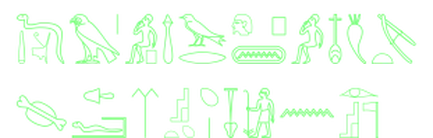
ḏd-mdw jn ḥrw-p(ꜣ)-ẖrd ꜥꜣ wr tp.(j) jmn ḫj nfr bnr mrw.t jwꜥ mnḫ prj m ꜣs.t sꜣ smsw n wsjr
Words spoken by Harpocrates, the very great, eldest of Amun, the fair child, sweet to love, the worthy heir come forth from Isis, the eldest son of Osiris.
Note · Line 285
Harpocrates means “Horus the Child.” Calling him the eldest of Amun gives the child of Isis and Osiris a place in the divine family of Thebes as well. - 286
jrj n=f jt=f jmn ꜣḫ.t=f ns.t=f jw=f ḫꜥj.tj m wꜣs.t m nswt nṯr.w
His father Amun makes for him his horizon and his throne, now that he has appeared in glory in Thebes as king of the gods.
- 287

ḏd-mdw jn jmn-rꜥ nb ns.wt-tꜣ.wj ḫnt.(j) jp.t-s.wt nswt nṯr.w nṯr ꜥꜣ n ḏr-ꜥ pꜣw.(tj) tꜣ.wj ḏsr ꜥ ḳmꜣ p.t tꜣ mw ḏw.wj jt jwt n ḫmn.w nwn wr prj m tꜣ n(n) rḫ
Words spoken by Amun-Ra, lord of the Thrones of the Two Lands, foremost in Karnak, king of the gods, the great god of the beginning, the primeval one of the Two Lands, holy of arm, who created sky and earth, water and the two mountains, father of the fathers of the Eight, the great Nun come forth from the earth, unknown.
- 288
mn n=k ꜥnḫ wꜣs r fnḏ=k
Take life and dominion to your nostrils.
- 289
ḏd-mdw jn ḫnsw m wꜣs.t nfr-ḥtp ḥrw nb ꜣw.t-jb m jp.t-s.wt sꜥ smsw n jmn-rn=f
Words spoken by Khonsu-in-Thebes Neferhotep, Perfect-in-Peace, Horus, lord of joy in Karnak, eldest son of Him-Whose-Name-Is-Hidden.
Note · Line 289
“Him-Whose-Name-Is-Hidden” is Amun. In Egyptian the word for “hidden” sounds like the god’s name. - 290
dj=j n=k jnw n tꜣ.w fnḫw
I give you the tribute of the lands of the Fenkhu.
Note · Line 290
The Fenkhu were peoples of the eastern Mediterranean coast, in the region of Phoenicia. - 291Opet 143
nswt-bj.tj jwꜥ-n-nṯr.wj-prj.wj-stp.n-ptḥ-jrj-mꜣꜥ.t-rꜥ-sḫm-ꜥnḫ-jmn sꜣ-rꜥ ptwlmys-ꜥnḫ-ḏ.t-mrj-ptḥ p(ꜣ) nṯr mnḫ
King of Upper and Lower Egypt, Heir-of-the-Two-Manifest-Gods, Chosen-of-Ptah, Who-Does-the-Maat-of-Ra, Living-Image-of-Amun; Son of Ra, Ptolemy-Living-Forever-Beloved-of-Ptah, the Beneficent God.
- 292
ḥnk jrp n jt=f sḥtp nṯr=f m jr.t ḥrw wꜣḏ.(t) jrj=f dj.(t) ꜥnḫ
Presenting wine to his father, contenting his god with the green Eye of Horus, that he may make the gift of life.
- 293

ḏd-mdw jn ḥrw-p(ꜣ)-ẖrd ꜥꜣ wr tp.(j) jmn-rꜥ sꜣ ꜣs.t bnr mrw.t nb n wꜣs.t gbtjw jtj m njw.wt spꜣ.wt
Words spoken by Harpocrates, the very great, eldest of Amun-Ra, son of Isis, sweet to love, lord of Thebes and Coptos, sovereign in the cities and the nomes.
- 294
jrj n=f jt=f jmn jm.j.t-pr r ḥḳꜣ šn nb n jtn
His father Amun makes out for him the deed of title, to rule all that the sun disc encircles.
- 295
ḏd-mdw jn jmn-rꜥ nswt nṯr.w sḫm šps ḥr.(j) nṯr.w nb.(w) nṯr ꜥꜣ nb p.t tꜣ dwꜣ.t mw ḏw.wj jt nṯr.w ḫpr ḏs=f šꜣꜥ ḫpr n ḫpr ḫprw swḥ pw mn m jḫ.t nb.(t) ꜥnḫ=tw jm=f ḏ.t
Words spoken by Amun-Ra, king of the gods, the noble Power, chief of all the gods, the great god, lord of sky and earth, of the Duat, the water and the two mountains, father of the gods, who came to be of himself, who began to be before any being had come to be. He is the breath that abides in all things, by which one lives forever.
Note · Line 295
The Egyptian repeats the same verb for coming into being four times. Each repetition leads back to Amun-Ra, who already existed when everything else began. - 296
mn n=k ꜥnḫ wꜣs r fnḏ=k
Take life and dominion to your nostrils.
- 297
ḏd-mdw jn mw.t wr.t nb.(t) jšrw sḫm.t bꜣst.t jr.t rꜥ nb.(t) p.t ḥnw.t nṯr.w nb.(w)
Words spoken by Mut the great, lady of Isheru, Sekhmet, Bastet, Eye of Ra, lady of the sky, mistress of all the gods.
Note · Line 297
Mut appears as both the lioness goddess Sekhmet and the cat goddess Bastet. - 298
dj=j n=k sḫm.tj ḥr.(j.t)-tp=j r=k wꜣḏ.tj n ḥm=j
I give you the Double Crown; my uraeus is yours, and the Two Uraei of my majesty.
- 299Opet 144
nswt-bj.tj jwꜥ-n-nṯr.wj-prj.wj-stp.n-ptḥ-jrj-mꜣꜥ.t-rꜥ-sḫm-ꜥnḫ-jmn sꜣ-rꜥ [ptw]lmys-ꜥnḫ-ḏ.t-mrj-ptḥ sn.t=f ḥḳꜣ.t nb.(t)-tꜣ.wj ḳlꜣwpdrꜣ nṯr.wj mnḫ.wj
King of Upper and Lower Egypt, Heir of the Two Manifest Gods, Chosen of Ptah, Who Does the Maat of Ra, Living Image of Amun; Son of Ra, Ptolemy, may he live forever, beloved of Ptah; and his sister, the ruler, lady of the Two Lands, Cleopatra: the Two Beneficent Gods.
- 300
ḥnk mḏ.t n mw.t=f jrj=f dj.(t) ꜥnḫ
Offering ointment to his mother, that he may be granted life.
- 301
mn n=ṯ šꜣ rwḏ m s.t jb=ṯ wꜣḏ.w wbg m-ḥꜣ.t ḥꜥpj
Take for yourself the meadow that flourishes in your favourite place, and the papyrus greening ahead of the flood.
Note · Line 301
Cleopatra speaks here, addressing the goddess directly. - 302

ḏd-mdw jn nb.t-ḥw.t sn.t-nṯr sšꜣ.t wr.t nb.(t) sš sjp.(t) rꜣ.w-pr.w rꜥ.t-tꜣ.wj šps.t ḥr.(j.t)-jb mꜣdw
Words spoken by Nephthys, the god's sister, Seshat the great, lady of writing, who inspects the temples, Raettawy the noble, who dwells in Medamud.
Note · Line 302
Seshat oversaw writing, temple records and the founding of temples. Nephthys takes on her duties here. - 303
ḏd-mdw {j} dj=j n=k nswj.t ꜥꜣ.t m mꜣꜥ-ḫrw
Words to be spoken: I give you great kingship in triumph.
- 304Opet 145
nswt-bj.tj jwꜥ-n-nṯr.wj-prj.wj-stp.n-ptḥ-jrj-mꜣꜥ.t-rꜥ-sḫm-ꜥnḫ-jmn sꜣ-rꜥ ptwlmys-ꜥnḫ-ḏ.t-mrj-ptḥ p(ꜣ) nṯr mnḫ pẖr ḥꜣ sp-fdw
King of Upper and Lower Egypt, Heir of the Two Manifest Gods, Chosen of Ptah, Who Does the Maat of Ra, Living Image of Amun; Son of Ra, Ptolemy, may he live forever, beloved of Ptah, the Beneficent God. Going around four times.
- 305
ḏd-mdw jn jmn.t ꜥꜣ.(t) wr.t nb.(t) tꜣ.wj ḥr.(j.t)-jb jp.t-s.wt mw.t mw.wt jwtj sn-nw=s pꜣw.(tj.t) jj.(t) ḫr pꜣw.(tj) jwr.(t) m-ḥꜣ.t ḳmꜣ.(t) ḥmws.t m šꜣꜥ
Words spoken by Amaunet, the very great, lady of the Two Lands, who dwells in Karnak, mother of mothers, who has no equal, the Primeval One who came to the Primeval One, who conceived at the beginning and created the hemuset at the dawn of time.
Note · Line 305
The hemuset are female spirits paired with the kas, the life forces of the beings Amaunet brings forth. - 306
ḏd-mdw dj=(j) n=k ḫꜥ n rꜥ ḥr-sꜣ tꜣ jḫ.t nb.(t) prj.(t) m ḥꜥpj
Words to be spoken: I give you the rising of Ra over the earth, and everything that comes forth from the flood.
- 307
ḏd-mdw jn rꜥ.t-tꜣ.wj ḥr.(j.t)-tp wꜣs.t ꜣs.t wr.t mw.t-nṯr jr.t rꜥ nb.(t) p.t ḥnw.t nṯr.w nb.(w) šps.t wsr.t ḫwj.(t) sꜣ=s ḥrw ḥr ns.t jt=f
Words spoken by Raettawy, chief of Thebes, Isis the great, the god's mother, Eye of Ra, lady of the sky, mistress of all the gods, the noble, the mighty, who protects her son Horus on his father's throne.
- 308
ḏd-mdw {j} dj=j rnpj=k mj ḫprj ntk ḥrw nḫn.j tp.j (75) sḫm.t
Words to be spoken: I make you young again like Khepri. You are Horus of Nekhen, the eldest of Sekhmet.
Note · Line 308
Khepri is the rising sun in the form of a scarab beetle. Each dawn gives the king an image of his own renewed youth. - 309Opet 146
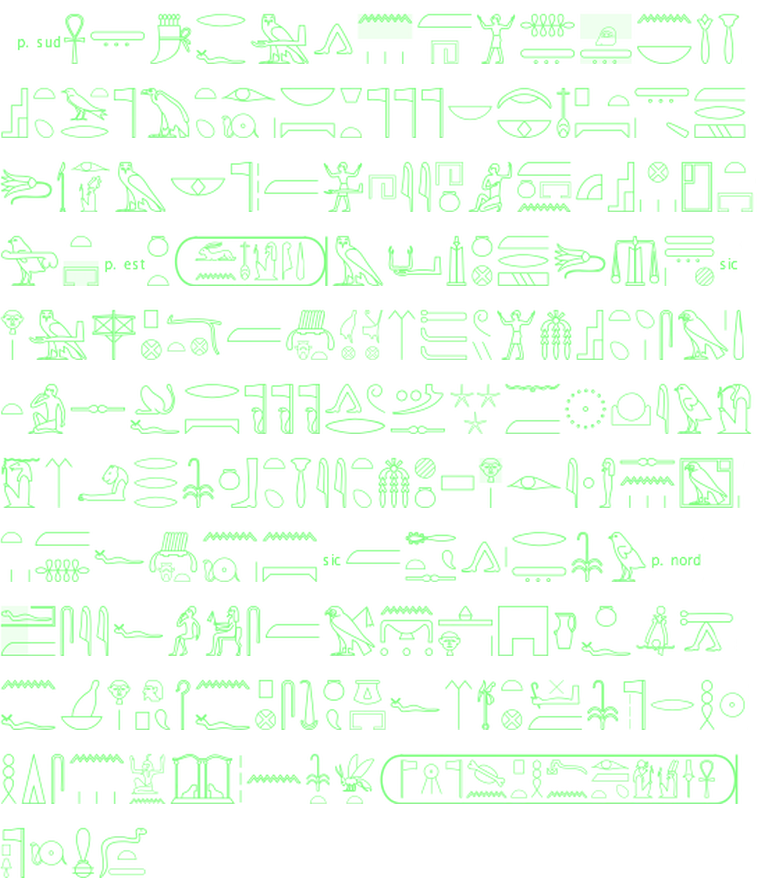
ꜥnḫ tꜣ ḏr=f mj n m hj sꜣ-tꜣ [sn]-tꜣ n nb.(t) tꜣ.wj ꜣs.t wr.t mw.t-nṯr jr.t rꜥ nb.(t) p.t ḥnw.t nṯr.w nb.(w) ꜣbd nfr p.t tꜣ m ršw.t wsjr m ḥb nṯr.w m ḥꜥj hj hnw m-ẖnw-n jp.t-s.wt ḥw.t wtṯ n.t wnn-nfr mꜣꜥ-ḫrw m mk jwnw m ršw.t mḫꜣ.t-tꜣ.wj ḥr mꜣꜥw p dp m ꜣw.t-jb tꜣ.wj m ṯḥḥw.(t) msj ꜣs.t sꜣ=s ḥrw ḫrw.{t}=s pḥ=f r p.t nṯr.w nṯr.wt jw r mꜣꜣ=s nṯr.w dmḏ m-ẖnw ꜣḫ.t jw ḏḥwtj ẖnm m-ḥꜣ.t jr.j.w nḫb.t wꜣḏ.t msḫn.t ḥr jrj.(t) jrw=sn ḥw.wt-ḥrw m sꜣ=f ꜣw.t-jb n.(t) rꜥ n prj (76) m ẖ.t=s jw r tꜣ sw prj m sfj šps m bjk n nbw ḥtp ḥr srḫ ẖnm.n=f ꜣtf jṯj.n=f wrr.t ḥr tp=f ḥḳꜣ.n=f p smn.n=f ns.t=f m wꜣs.t nḫt.(t) m nswt nṯr.w r nḥḥ dj=sn ḥḥ m ḥb.w-sd n nswt-bj.tj jwꜥ-n-nṯr.wj-prj.wj-stp.n-ptḥ-jrj-mꜣꜥ.t-rꜥ-sḫm-ꜥnḫ-jmn p(ꜣ) nṯr mnḫ mj rꜥ ḏ.t
Let the whole land live!
Come, let us cheer and rejoice, let us kiss the ground
for the lady of the Two Lands, Isis the great, the god's mother, Eye of Ra, lady of the sky, mistress of all the gods,
at the beautiful feast of the month!
Sky and earth are in joy, Osiris is in festival,
the gods are jubilant, cheering and acclaim fill Karnak,
the Mansion of the Begetting of Wennefer, justified, is in festival,
Heliopolis is in joy, Memphis has a fair wind,
Pe and Dep are in joy, the Two Lands are jubilant,
when Isis gives birth to her son Horus.
Her voice reaches the sky.
The gods and goddesses come to see her,
the gods are gathered within the horizon,
Thoth and Khnum at their head,
Nekhbet, Wadjet and Meskhenet performing their rites,
and the Hathors as his protection.
The joy of Ra belongs to the one who came forth from her womb, who came to earth.
He has come forth as the noble child, as the falcon of gold resting on the serekh,
having joined himself to the atef crown, set the wereret crown on his head,
ruled over Pe, and established his throne in Thebes the Victorious
as king of the gods forever.
May they give millions of jubilees to the King of Upper and Lower Egypt, Heir of the Two Manifest Gods, Chosen of Ptah, Who Does the Maat of Ra, Living Image of Amun, the Beneficent God, like Ra, forever.Note · Line 309
A serekh is a frame shaped like a palace façade, with the royal falcon perched on top. The newborn Horus already appears as this emblem of kingship. - 310Opet 147
ꜥnḫ nfr.wj ḥr=k ḥtp.tj m pr=k jwꜥ mnḫ n wnn-nfr mꜣꜥ-ḫrw nṯr.w m ḥb ḥkn tꜣ.w ḏw.wj šsp=sn ršw jm.j.w wꜣs.t m ṯḥḥw.(t) nb nṯr.w ḥtp.tj m ꜥḥ=f mj p.t stj m ṯḥn.(t) gb.t ṯḥn.tj ꜣḫ.t ꜣḫ.tj ḥꜥpj jj m rnpj jtn psḏ n(n) ḥꜣtj ḥnw.t njw.wt m nfrw jtr.tj nṯr.w dmḏ m jꜣw sp-sn psḏ.t tp.j.w-ꜥ m swꜣš bꜣw=k ꜣfꜣf n=k ẖ.t tp.t m-rwtj ḥḏ=k sḥtp ṯw nṯr.wt m smd.wt=sn wbn rꜥ jmn ḥtp.tj ḫr=k ṯḥn ḥr=k jm=f rꜥ nb sr=f nfrw=k r šn n jtn jrj=f s.t=f jmj.tw jnḥ.wj=k sjꜥr=f ṯꜣw nḏm r fnḏ=k rꜥ nb mꜣꜣ=k pr=k ḫpr m ḥb sṯj ḥb pẖr m njw.t=k ḫwj=k sꜣ=k mrj=k sꜣ-rꜥ ptwlmys-ꜥnḫ-ḏ.t-mrj-ptḥ p(ꜣ) nṯr mnḫ mj rꜥ ḏ.t
Life! How beautiful is your face, now that you rest in your house,
beneficent heir of Wennefer, justified!
The gods are in festival, the lands give praise,
the Two Mountains take up their joy,
those in Thebes are jubilant,
for the lord of the gods rests in his palace, which is like a sky sown with faience;
the sky is glazed with light, the field is ashine,
the flood has come renewed, the disk shines with no cloud.
The Mistress of Cities is in beauty,
the two rows of the gods' shrines are gathered in praise upon praise,
the Ennead and the ancestors extol your might.
The first generation acclaims you around your shrine,
the goddesses please you with their necklaces.
Ra rises, and Amun rests beside you,
so that your face shines with him every day.
May he proclaim your beauty to the circuit of the disk,
may he make his seat between your brows,
may he raise a sweet breeze to your nose every day.
May you see your house become a festival,
with the scent of festival spread through your city.
May you protect your son whom you love, the Son of Ra, Ptolemy, may he live forever, beloved of Ptah, the Beneficent God, like Ra, forever.Note · Line 310
The “Mistress of Cities” is Thebes. Faience, a material with a gleaming glaze often coloured blue or green, gives the image of the palace sky its colour and shine. - 311Opet 148
ḏd-mdw jn jmn […] nb p.t […] dj=j n=k wnn.t nb.(t) ḫpr.(t) m tꜣ
Words spoken by Amun … lord of the sky … "I give you all that exists, all that has come to be on earth."
- 312
nswt-bj.tj jwꜥ-n-nṯr.wj-prj.wj-stp.n-ptḥ-jrj-mꜣꜥ.t-rꜥ-sḫm-ꜥnḫ-jmn sꜣ-rꜥ ptwlmys-ꜥnḫ-ḏ.t-mrj-ptḥ p(ꜣ) nṯr mnḫ jrj.(t) šns n jt=f jmn-[rꜥ]
The King of Upper and Lower Egypt, Heir-of-the-Manifest-Gods-Chosen-of-Ptah-Who-Does-the-Right-of-Ra-Living-Image-of-Amun, the Son of Ra, Ptolemy-Living-Forever-Beloved-of-Ptah, the god Euergetes. Making shenes-bread for his father Amun-Ra.
Note · Line 312
Shenes-bread was a kind of loaf made for offerings. - 313
ḏd-mdw jn jmn-rꜥ nb ns.wt-tꜣ.wj ḫnt.(j) jp.t-s.wt nswt nṯr.w nṯr ꜥꜣ n ḏr-ꜥ pꜣw.(tj) tꜣ.wj ḏsr ꜥ nb p.t tꜣ dwꜣ.t mw ḏw.wj
Words spoken by Amun-Ra, lord of the Thrones of the Two Lands, foremost in Karnak, king of the gods, the great god of the first time, the primeval one of the Two Lands, holy of arm, lord of the sky, the earth, the Duat, the waters and the two mountains.
- 314
mn n=k ꜥnḫ wꜣs ḏd nb […] m=k ꜥnḫ […] ḏd-mdw jn wsjr wnn-nfr mꜣꜥ-ḫrw nswt nṯr.w ḥḳꜣ nfr mrj[tj] ḥwn nfr
"Take for yourself all life, dominion and stability … in you, life …" Words spoken by Osiris Wennefer, true of voice, king of the gods, the good ruler, Meryty, the beautiful youth.
Note · Line 314
Meryty means “the Beloved One,” a name for Osiris as a beautiful youth. - 315
dj=j n=k ꜥnḫ ḏd m p.t wsr m tꜣ
"I give you life and stability in the sky, and power on earth."
- 316
nswt-bj.tj [jwꜥ-n-nṯr.wj-prj.wj-stp.n-ptḥ-jrj-mꜣꜥ.t-rꜥ-sḫm-ꜥnḫ-jmn] sꜣ-rꜥ [ptwlmys-ꜥnḫ-ḏ.t-mrj-ptḥ] p(ꜣ) nṯr mnḫ ḥnk jrṯ.t n jt=f jrj=f dj.(t) ꜥnḫ
The King of Upper and Lower Egypt, Heir-of-the-Manifest-Gods-Chosen-of-Ptah-Who-Does-the-Right-of-Ra-Living-Image-of-Amun, the Son of Ra, Ptolemy-Living-Forever-Beloved-of-Ptah, the god Euergetes. Offering milk to his father, so that he may be given life.
- 317
ḏd-mdw jn ḥrw […] jwꜥ šw prj […] dj=j n=k ꜥnḫ wꜣs nb snb nb ꜣw.t-jb nb.(t)
Words spoken by Horus … heir of Shu, who came forth … "I give you all life and dominion, all health and all joy."
- 318Opet 149
nswt-bj.tj jwꜥ-n-nṯr.wj-prj.wj-stp.n-ptḥ-jrj-mꜣꜥ.t-rꜥ-sḫm-ꜥnḫ-jmn [sꜣ-rꜥ ptwlmys-ꜥnḫ-ḏ.t-mrj-ptḥ]
The King of Upper and Lower Egypt, Heir of the Two Manifest Gods, Chosen of Ptah, Who Does the Maat of Ra, Living Image of Amun, the Son of Ra, Ptolemy, May He Live Forever, Beloved of Ptah.
- 319
ḥnk mḏ.t n mw.t=f sḥtp ḥnw.t=f m jr.t ḥrw
Presenting ointment to his mother, pleasing his lady with the Eye of Horus.
- 320
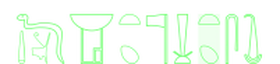
ḏd-mdw jn nb.t-ḥw.t sn.t-nṯr smn.(t) wḏ.w nṯr.w nb.(t) p.t
Words spoken by Nephthys, sister of the god, who makes firm the decrees of the gods, lady of heaven.
- 321
dj=j n=k ḳn nḫt m nswj.t=k
I give you valour and victory in your kingship.
- 322
nswt-bj.tj jwꜥ-n-nṯr.wj-prj.wj-[stp.n-ptḥ-jrj-mꜣꜥ.t-rꜥ-sḫm-ꜥnḫ-jmn] sꜣ-rꜥ pt[w]lm[ys-ꜥnḫ-ḏ.t-mrj-ptḥ] p(ꜣ) nṯr mnḫ ḥnk sšš.t n mw.t=f sḥtp ḥnw.t=f m sḫm
The King of Upper and Lower Egypt, Heir of the Two Manifest Gods, Chosen of Ptah, Who Does the Maat of Ra, Living Image of Amun, the Son of Ra, Ptolemy, May He Live Forever, Beloved of Ptah, the Beneficent God. Presenting the sistrum to his mother, pleasing his lady with the sistrum.
Note · Line 322
The two mentions of the sistrum use different Egyptian words. One imitates its rattling sound, while the other also means “power.” - 323
ḏd-mdw jn ?ḥw.t-ḥrw? nb.(t) nṯr.w ḥm.t-nṯr ḫwj.(t) wnn-nfr mꜣꜥ-ḫrw
Words spoken by Hathor, mistress of the gods, the god's wife, who protects Wennefer, the justified.
- 324
dj=j n=k ṯꜣj.w m […] ḏd-mdw jn ptḥ nfr ḥr ḫnt.(j) wꜣs.t wtṯ šꜣw m-ẖnw-n jp.t-wr.t
I give you males in … Words spoken by Ptah, fair of face, foremost of Thebes, who begets Fate within Great Opet.
- 325
dj=j n=k mꜣꜥ.t wr.tj m jb=k
I give you Maat, great within your heart.
- 326
nswt-bj.tj jwꜥ-n-nṯr.wj-prj.wj-stp.n-ptḥ-jrj-mꜣꜥ.t-rꜥ-sḫm-ꜥnḫ-jmn sꜣ-rꜥ ptwlmys-ꜥnḫ-ḏ.t-mrj-ptḥ p(ꜣ) nṯr mnḫ fꜣj.(t) jḫ.t n jt=f jrj.n=f dj.(t) ꜥnḫ
The King of Upper and Lower Egypt, Heir of the Two Manifest Gods, Chosen of Ptah, Who Does the Maat of Ra, Living Image of Amun, the Son of Ra, Ptolemy, May He Live Forever, Beloved of Ptah, the Beneficent God. Raising offerings to his father. He has made the gift of life.
- 327
ḏd-mdw jn wsjr nb kꜣw jrj ḏfꜣ r ẖr.(t)=f nb wnm ?…?
Words spoken by Osiris, lord of sustenance, who lays up provisions for his needs, lord of eating …
- 328
dj=j n=k jḫ.t nb.(t) dj p.t ḏr nwn […]
I give you every thing the sky gives and the flood creates …
- 329Opet 150
nswt-bj.tj jwꜥ-n-nṯr.wj-prj.wj-stp.n-[ptḥ]-jrj-mꜣꜥ.t-rꜥ-sḫm-ꜥnḫ-jmn sꜣ-rꜥ ptwlmys-ꜥnḫ-ḏ.t-mrj-ptḥ
The King of Upper and Lower Egypt, Heir-of-the-Two-Manifest-Gods-Chosen-of-Ptah-Who-Does-the-Truth-of-Ra-Living-Image-of-Amun, the Son of Ra, Ptolemy-Living-Forever-Beloved-of-Ptah.
- 330
ḏd-mdw <jn> wsjr wnn-nfr nswt nṯr.w nṯr ꜥꜣ ḥḳꜣ ḏ.t
Words spoken by Osiris Wennefer, king of the gods, the great god, ruler of eternity.
- 331
dj=j ḫpr n=k [nwn] wr r tr=f
I make the great flood come for you in its season.
- 332
ḏd-mdw jn ḥrw-sꜣ-ꜣs.t sꜣ wsjr
Words spoken by Harsiese, son of Osiris.
- 333

dj=j n=k ꜥnḫ ḏd wꜣs nb snb nb
I give you all life, stability and dominion, and all health.
- 334
nswt-bj.tj jwꜥ-n-[nṯr.wj-prj.wj-stp.n-ptḥ-jrj-mꜣꜥ.t-rꜥ-sḫm-ꜥnḫ-jmn] sꜣ-rꜥ ptwl[mys-ꜥnḫ-ḏ.t-mrj-ptḥ] p(ꜣ) nṯr mnḫ sḥtp mw.t=f m jr.t ḥrw
The King of Upper and Lower Egypt, Heir-of-the-Two-Manifest-Gods-Chosen-of-Ptah-Who-Does-the-Truth-of-Ra-Living-Image-of-Amun, the Son of Ra, Ptolemy-Living-Forever-Beloved-of-Ptah, the Beneficent God, who contents his mother with the Eye of Horus.
- 335
ḥnk jrp n mw.t=f jrj=f dj.(t) ꜥnḫ
Presenting wine to his mother. He has made the gift of life.
- 336

ḏd-mdw jn jp.t wr.t msj.(t) nṯr.w
Words spoken by Opet the Great, who gives birth to the gods.
- 337
ḏd-mdw wn n=k ꜥꜣ.wj p.t
Words to be spoken: The two doors of heaven are opened for you.
- 338
[…] p.t njw.wt spꜣ.wt m mk nw.t dj.(t) s(w) r tꜣ n wsjr […] ḥw.t nbw
… the sky, the cities and the nomes are in festival; Nut is she who sets him down on earth as Osiris … The Mansion of Gold.
Note · Line 338
The “Mansion of Gold” is a name for the sanctuary where the birth of Osiris is celebrated. - 339Opet 151
nswt-bj.tj [jwꜥ-n]-nṯr.wj-prj.wj-[stp.n-ptḥ-jrj-mꜣꜥ.t-rꜥ-sḫm-ꜥnḫ-jmn] sꜣ-rꜥ ptw[lmys-ꜥnḫ-ḏ.t-mrj-ptḥ] p(ꜣ) nṯr mnḫ ḥm.t=f ḥḳꜣ.t nb.(t)-tꜣ.wj ḳlꜣwpdrꜣ
The Dual King, Heir of the Two Manifest Gods, Chosen of Ptah, Who Does the Truth of Ra, Living Image of Amun, the Son of Ra, Ptolemy, Living Forever, Beloved of Ptah, the god Euergetes, and his wife, the ruler, the Lady of the Two Lands, Cleopatra.
- 340
ḏd-mdw <jn> wsjr wnn-nfr […] nṯr ꜥꜣ […] dj=j [ḫpr] n=k nwn wr r tr=f
Words spoken by Osiris Onnophris … the great god … : I make the great flood come for you in its season.
- 341
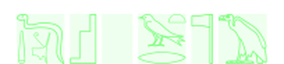
ḏd-mdw jn ꜣs.t wr.t mw.t-nṯr
Words spoken by Isis the great, the god's mother.
- 342
dj=(j) n=k ḳn nb nḫt nb
I give you all valour and all victory.
- 343
nswt-bj.tj [jwꜥ-n]-nṯr.wj-prj.wj-[stp.n-ptḥ-jrj-mꜣꜥ.t-rꜥ-sḫm-ꜥnḫ-jmn] sꜣ-rꜥ ptw[lmys-ꜥnḫ-ḏ.t-mrj-ptḥ] p(ꜣ) nṯr mnḫ sḥtp mw.t=f m jr.t ḥrw
The Dual King, Heir of the Two Manifest Gods, Chosen of Ptah, Who Does the Truth of Ra, Living Image of Amun, the Son of Ra, Ptolemy, Living Forever, Beloved of Ptah, the god Euergetes, who contents his mother with the Eye of Horus.
- 344
ḥnk jrp [n mw.t=f] jrj=f dj.(t) ꜥnḫ
Offering wine to his mother, that he may be given life.
- 345

ḏd-mdw jn nw.t wr.t msj.(t) nṯr.w
Words spoken by Nut the great, who gives birth to the gods.
- 346
ḏd-mdw [wn] n=k ꜥꜣ.wj p.t
Words to be spoken: The double doors of heaven are opened for you.
- 347

p.t tꜣ m ršw.t wnn-nfr prj ḥr tꜣ […] ?r nfrw? ḥw.t nbw
Heaven and earth rejoice: Onnophris has come forth upon the earth … beauty … The Mansion of Gold.
- 348Opet 152-3
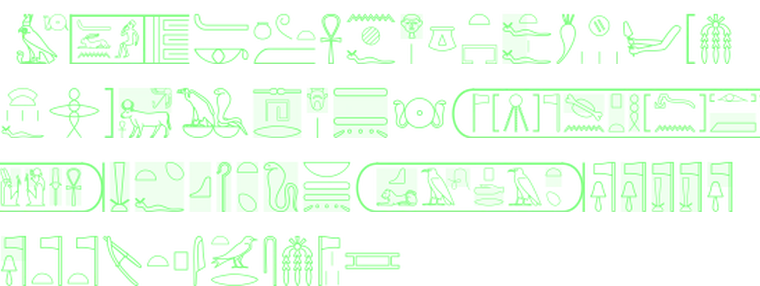
ḥrw-rꜥ ḥwn ḥkn=tw m ꜥnḫ=f ḥr.(j)-ns.t jt=f mꜥr sp.w ḏsr [msḫꜥ.w=f ḥnꜥ] ḥp ꜥnḫ nb.tj shrj tꜣ.wj nswt-bj.tj jwꜥ-n-nṯr.wj-prj.wj-stp.n-ptḥ-jrj-mꜣꜥ.t-rꜥ-sḫm-ꜥnḫ-jmn sn.t=f ḥḳꜣ.t nb.(t)-tꜣ.wj ḳlꜣwpdrꜣ nṯr.wj mnḫ.wj mrj nṯr.wj sn.wj nṯr.wj mnḫ.wj nṯr.wj mrj.wj jt.wj jp.t wr.t msj.(t) nṯr.w
The Horus-Ra: The youth in whose life there is rejoicing, who sits on his father's throne, whose deeds prosper, holy in his appearings together with the living Apis; He of the Two Ladies: Who gladdens the Two Lands; the Dual King: Heir of the Two Manifest Gods, Chosen of Ptah, Who Does the Truth of Ra, Living Image of Amun; and his sister, the ruler, the Lady of the Two Lands, Cleopatra, the Two Gods Euergetes, beloved of the Two Gods Adelphoi, the Two Gods Euergetes, the Two Gods Philopatores, and Opet the great, who gives birth to the gods.
- 349
ḥrw-nbw wr pḥtj nb ḥb-sd mj jt=f ptḥ-tꜣ-ṯnn [jt nṯr.w] jtj mj rꜥ sꜣ-rꜥ ptwlmys-ꜥnḫ-ḏ.t-mrj-ptḥ ḥm.t=f ḥḳꜣ.t nb.(t)-tꜣ.wj ḳlꜣwpdrꜣ mrj ntr.wj prj.wj p(ꜣ) nṯr ṯnj jt=f p(ꜣ) nṯr mrj mw.t=f nṯr.wj mnḫ.wj nw.t jp.t wr.t ḥnw.t nṯr.wt
The Golden Horus: Great of strength, lord of jubilees like his father Ptah-Tatenen, father of the gods, sovereign like Ra; the Son of Ra: Ptolemy, Living Forever, Beloved of Ptah; and his wife, the ruler, the Lady of the Two Lands, Cleopatra, beloved of the Two Manifest Gods, of the god Eupator, of the god Philometor, of the Two Gods Euergetes, of Nut and Opet the great, mistress of the goddesses.
- 350Opet 154
[…] n jt=f jrj=f dj.(t) ꜥnḫ
… to his father, that he may be granted life.
- 351
ḏd-mdw jn kꜣ fꜣj ꜥ ṯꜣj nṯr.w ptḥ ṯnn ḫnt.(j) ꜥ rsj
Words spoken by the bull with upraised arm, who sires the gods, Ptah-Tatenen, foremost of Upper Egypt.
Note · Line 351
The raised arm is the characteristic pose of Min, the god of fertility. Ptah-Tatenen assumes it here in his power to father the gods. - 352
dj=j n=k mꜣꜣ nb n jr.t jtm
I give you all that the Eye of Atum beholds.
- 353
nswt-bj.tj jwꜥ-n-nṯr.wj-prj.wj-stp.n-ptḥ-jrj-[mꜣꜥ.t-rꜥ-sḫm-ꜥnḫ-jmn]
King of Upper and Lower Egypt, Heir of the Two Manifest Gods, Chosen of Ptah, Who Does the Maat of Ra, Living Image of Amun.
- 354
ḏd-mdw jn mnw-[jmn-rꜥ] kꜣ-mw.t=f [nswt] nṯr.w ḥrw fꜣj ꜥ ꜥb=tw m nfrw=f
Words spoken by Min-Amun-Ra, Bull of His Mother, king of the gods, Horus with upraised arm, whose beauty is boasted of.
Note · Line 354
“Bull of His Mother” describes a god who fathers himself on his own mother. Each birth renews his life. - 355
[dj=j n]=k tꜣ-nṯr ẖr jḫ.t=sn
I give you the God's Land, laden with its riches.
- 356Opet 155
nswt-bj.tj jwꜥ-n-nṯr.wj-prj.wj-stp.n-ptḥ-jrj-mꜣꜥ.t-rꜥ-sḫm-ꜥnḫ-jmn sꜣ-rꜥ ptwlmys-ꜥnḫ-ḏ.t-mrj-ptḥ p(ꜣ) nṯr mnḫ sḥtp mw.t=f m [mꜣꜥ.t]
King of Upper and Lower Egypt, Heir of the Two Manifest Gods, Chosen of Ptah, Who Does the Maat of Ra, Living Image of Amun, Son of Ra, Ptolemy, may he live forever, beloved of Ptah, the Beneficent God, who contents his mother with Maat.
- 357
ḥnk mꜣꜥ.t n mw.t=f jp.t wr.t msj.(t) nṯr.w [jrj.n=f] dj.(t) ꜥnḫ
Offering Maat to his mother Opet the Great, who bore the gods. So has he won the gift of life.
- 358
ḏd-mdw jn jp.t wr.[t] […] [mw.t-nṯr] wtṯ.(t) mrjtj […]
Words spoken by Opet the Great, … the god's mother, who brought forth the Beloved One …
- 359
[dj=j] n=k mꜣꜥ.t m ?nḏm-jb=s? nṯr.w nb.(w)
I give you Maat in her gladness, and all the gods.
- 360
[jwꜥ-n-nṯr.wj-prj.wj-stp.n-ptḥ-jrj-mꜣꜥ.t-rꜥ]-sḫm-ꜥnḫ-[jmn] [ptwlmys-ꜥnḫ-ḏ.t]-mrj-[p]t[ḥ]
Heir of the Two Manifest Gods, Chosen of Ptah, Who Does the Maat of Ra, Living Image of Amun, Ptolemy, may he live forever, beloved of Ptah.
- 361Opet 156
nswt-bj.tj [jwꜥ-n]-nṯr.wj-prj.wj-[stp.n-ptḥ-jrj-mꜣꜥ.t-rꜥ]-sḫm-ꜥnḫ-[jmn] sꜣ-rꜥ [ptwlmys-ꜥnḫ-ḏ.t-mrj-ptḥ] p(ꜣ) nṯr mnḫ ḥm.[t]=f ḥḳꜣ.t nb.(t)-tꜣ.wj [ḳlꜣwpdrꜣ]
King of Upper and Lower Egypt, Heir of the Two Manifest Gods, Chosen of Ptah, Who Does the Maat of Ra, Living Image of Amun, Son of Ra, Ptolemy, may he live forever, beloved of Ptah, the Beneficent God, and his wife, the ruler, the lady of the Two Lands, Cleopatra.
- 362
[…] ẖr smj […]
… under the declaration …
- 363Opet 157
nswt-bj.tj jwꜥ-n-nṯr.wj-prj.wj-stp.n-ptḥ-[jrj-mꜣꜥ.t-rꜥ-sḫm-ꜥnḫ-jmn] sꜣ-rꜥ ptwlm[ys-ꜥnḫ-ḏ.t-mrj-ptḥ] p(ꜣ) nṯr mnḫ sḥ[t]p nṯr=f sn.[t]=f ḥḳꜣ.t nb.(t)-tꜣ.wj ḳlꜣwpdrꜣ nṯr.wj mnḫ.wj
The King of Upper and Lower Egypt, Heir-of-the-Two-Manifest-Gods-Chosen-of-Ptah-Who-Does-the-Maat-of-Ra-Living-Image-of-Amun, the Son of Ra, Ptolemy-Living-Forever-Beloved-of-Ptah, the Beneficent God, who satisfies his god; and his sister, the ruler, the Lady of the Two Lands, Cleopatra: the two Beneficent Gods.
- 364
ḏd-mdw jn ẖnmw nḥp rmṯ jrj [nṯr.w] […] =ṯn nṯr.w m […] hnw [m] tꜣ […] m ršw.t [sp]-sn [nw].t sꜣ wsjr ḥḳꜣ ?…? […] msj […] nswt-bj.tj wsjr wnn-nfr mꜣꜥ-ḫrw nswt nṯr.w nṯr ꜥꜣ ḥr.(j)-jb jp.t-s.wt ḥḳꜣ ḫꜥ.w n […] ḏd-mdw jn jmn-rꜥ nswt nṯr.w p(ꜣ) nṯr ꜥꜣ n ḏr-ꜥ šꜣꜥ ḫpr n ḫpr ḫprw dj ṯꜣw n ꜥnḫ r fnḏ nb
Words spoken by Khnum, who shapes humankind, who makes the gods … you … the gods in … jubilation in the land … in joy, in joy; Nut; the son of Osiris, the ruler … who gives birth … The King of Upper and Lower Egypt, Osiris Wennefer, true of voice, king of the gods, the great god who dwells in Karnak, ruler of appearances … Words spoken by Amun-Ra, king of the gods, the great god of the first times, who came into being first, before any being had come into being, who gives the breath of life to every nose.
- 365
dj=j n=k ḥḥ n ḥb.w-sd tp-tꜣ ḥꜥ.w=k tm ꜥnḫ
I give you millions of jubilees on earth, your body whole with life.
- 366
ḏd-mdw jn ḫnsw m wꜣs.t nfr-ḥtp ḥrw nb ꜣw.t-jb m jp.t-s.wt
Words spoken by Khonsu in Thebes Neferhotep, Horus, lord of joy in Karnak.
- 367
spẖr[=j nswj.t=k] m ḥḥ n ḥb.w-sd ḥfn.w ḫꜣ.w m rnp.wt
I inscribe your kingship in millions of jubilees, in hundreds of thousands and thousands of years.
- 368Opet 158
ḥnk mnj.t n mw.t=f sḥtp ḥnw.[t]=f […] jrj=f dj.(t) ꜥnḫ
Presenting the menat to his mother, pacifying his mistress … may he attain "given life".
Note · Line 368
A menat is a heavy beaded necklace with a counterweight. Its beads could be shaken to make music for the goddess. - 369
ḏd-mdw jn rꜥ.t-tꜣ.wj ḥr.(j.t)-jb mꜣdw sšꜣ.t wr.t nb.(t) sš sfḫ.(t) ꜥb.wj ḥnw.t pr-mḏꜣ.t jr.t rꜥ nb.(t) p.t
Words spoken by Raettawy, who dwells in Medamud, Seshat the great, lady of writing, Sefkhet-abwy, mistress of the House of Books, Eye of Ra, lady of heaven.
Note · Line 369
At Medamud near Thebes, Raettawy takes the role of Seshat. The “House of Books” is the temple library. - 370
dj=j n=k kꜣw nb wnn.wt nb.(wt) ḫpr.(wt) m tꜣ
I give you all provisions, and all that exists, all that has come into being on earth.
- 371
nswt-bj.tj [jwꜥ-n-nṯr.wj-prj.wj-stp.n-ptḥ-jrj-mꜣꜥ.t-rꜥ]-sḫm-ꜥnḫ-[jmn] sꜣ-rꜥ [ptwlmys-ꜥnḫ-ḏ.t]-mrj-ptḥ [p(ꜣ) nṯr mnḫ]
The King of Upper and Lower Egypt, Heir-of-the-Two-Manifest-Gods-Chosen-of-Ptah-Who-Does-the-Maat-of-Ra-Living-Image-of-Amun, the Son of Ra, Ptolemy-Living-Forever-Beloved-of-Ptah, the Beneficent God.
- 372
ḏd-mdw jn rꜥ.t-tꜣ.wj ḥr.(j.t)-tp wꜣs.t nswj.t wr.t nb.(t) tꜣ.wj ḥnw.t šn.{t} nb n jtn
Words spoken by Raettawy, who presides over Thebes, the great queen, Lady of the Two Lands, mistress of all that the sun disc encircles.
- 373
dj=j ḥsw=k m jb.w nṯr.w šfj.t=k ḫr ḥr-nb
I set the praise of you in the hearts of the gods, and awe of you in everyone.
- 374Opet 159
nswt-bj.tj jwꜥ-n-nṯr.wj-prj.wj-stp.n-ptḥ-jrj-mꜣꜥ.t-rꜥ-sḫm-ꜥnḫ-jmn sꜣ-rꜥ ptwlmys-ꜥnḫ-ḏ.t-mrj-ptḥ p(ꜣ) nṯr mnḫ stp.n jmn ḏs=f
The King of Upper and Lower Egypt, Heir of the Two Manifest Gods, Chosen of Ptah, Who Does the Maat of Ra, Living Image of Amun; the Son of Ra, Ptolemy, may he live forever, beloved of Ptah; the Beneficent God, whom Amun himself has chosen.
- 375
jrj.t snṯr n jt=f jrj=f dj.(t) ꜥnḫ
Offering incense to his father, that he may be one given life.
- 376

ḏd-mdw jn šw sꜣ rꜥ jt nṯr.w nṯr ꜥꜣ nb p.t
Words spoken by Shu, son of Ra, father of the gods, the great god, lord of the sky.
- 377
ḏd-mdw {j} dj=j n=k jꜣ.t=j ns.t=j
Words spoken: I give you my office and my throne.
- 378
dj=j n=k nḥḥ m ꜥnḫ ḏ.t
I give you eternity as life, forever and ever.
- 379
nswt-bj.tj jwꜥ-n-nṯr.wj-prj.wj-stp.n-ptḥ-jrj-mꜣꜥ.t-rꜥ-sḫm-ꜥnḫ-jmn sꜣ-rꜥ ptwlmys-ꜥnḫ-ḏ.t-mrj-ptḥ p(ꜣ) nṯr mnḫ
The King of Upper and Lower Egypt, Heir of the Two Manifest Gods, Chosen of Ptah, Who Does the Maat of Ra, Living Image of Amun; the Son of Ra, Ptolemy, may he live forever, beloved of Ptah; the Beneficent God.
- 380
[jrj.t s]šš.tj m ḥr=ṯ nfr.(t) jrj.(t) n=f (77) nhm m p.t tꜣ
Shaking the two sistra before your beautiful face, raising jubilation for him in sky and on earth.
- 381
ḏd-mdw jn tfn.t sꜣ.t rꜥ mw.t-nṯr msj.(t) nṯr.w jr.t rꜥ nb.(t) p.t ḥnw.t nṯr.w nb.(w)
Words spoken by Tefnut, daughter of Ra, mother of the god, who bore the gods, Eye of Ra, lady of the sky, mistress of all the gods.
Note · Line 381
Tefnut is the goddess of moisture, the twin and consort of Shu. - 382
[…] dwꜣ n dgj[=k]
… praise at the sight of you.
- 383Opet 160
nswt-bj.tj jwꜥ-[n]-nṯr.wj-prj.wj-[stp.n-ptḥ-jrj-mꜣꜥ.t-rꜥ]-sḫm-ꜥnḫ-[jmn] sꜣ-rꜥ ptw[l]m[ys-ꜥnḫ-ḏ.t-mrj-ptḥ] sḥtp nbw.t m sšš.tj jḥj n nb.t nṯr.wt m bnr.w dj=sn n=ṯ mnj.t=sn nhm=w n=ṯ m ?rd.wj ḥm [ḥr] ꜥḳ prj.t? r b(w) nb
The King of Upper and Lower Egypt, Heir of the Two Manifest Gods, Chosen of Ptah, Who Does the Maat of Ra, Living Image of Amun, the Son of Ra, Ptolemy, may he live forever, beloved of Ptah, who pleases the Golden One with the two sistrums, who shakes the sistrum sweetly for the Lady of the Goddesses. They give you their menats, they dance for you with their feet; the Majesty goes in and comes out to every place.
Note · Line 383
The “Golden One” is Hathor, whom the dancers honour with music. - 384
ḥnk […] n mw.t=f […] jrj=f dj.(t) ꜥnḫ
Presenting … to his mother … so that he may be given life.
- 385
ḏd-mdw jn mw.t wr.t nb.(t) jšrw jr.t rꜥ nb.(t) p.t ḥnw.t nṯr.w nb.(w) [jh.t] wr.t tmꜣ.t n.(t) rꜥ
Words spoken by Mut the Great, Lady of Isheru, Eye of Ra, Lady of Heaven, Mistress of all the gods, the great Cow, mother of Ra.
- 386
dj=(j) n=k […] tꜣ nb rdj […] nswt-bj.tj ḫnsw-p(ꜣ)-ẖrd ꜥꜣ wr tp.(j) jmn ḥwn nfr ḏfḏ n wḏꜣ.t rꜥ wḥm.n=f msḫꜥ.w rꜥ nb
I give you … every land; given … The King of Upper and Lower Egypt, Khonsu the Child, the very great, firstborn of Amun, the beautiful youth, the pupil in the Eye of Ra, who has renewed his glittering every day.
- 387
dj=j n=k ?šbw? m ẖr.t-hrw n.t rꜥ nb
I give you food as the daily portion of every day.
- 388
ḥw.t-ḥrw nb.(t) jwn.t jr.t rꜥ nb.(t) p.t
Hathor, Lady of Dendera, Eye of Ra, Lady of Heaven.
- 389
?…? m ḥb tꜣ nb m […] ḥw.t-ḥrw ḥr.(j.t)-tp wꜣs.t jr.t rꜥ nb.(t) p.t
… in festival, every land in … Hathor, Chief of Thebes, Eye of Ra, Lady of Heaven.
- 390
ḥw.t-ḥrw nb.(t) ḥtp jr.t rꜥ nb.(t) p.t
Hathor, Lady of Hetepet, Eye of Ra, Lady of Heaven.
- 391
nfr.wj ?ḫrw? hj m tꜣ [p]n
How fair the sound! Rejoicing fills this land.
- 392Opet 161
nswt-bj.tj jwꜥ-n-nṯr.wj-prj.wj-stp.n-ptḥ-jrj-mꜣꜥ.t-rꜥ-sḫm-ꜥnḫ-jmn sꜣ-rꜥ ptwlmys-ꜥnḫ-ḏ.t-mrj-ptḥ p(ꜣ) nṯr mnḫ sḥtp mw.t=f m jr.t ḥrw wꜣḏ.t
The King of Upper and Lower Egypt, Heir-of-the-Two-Gods-Manifest-whom-Ptah-has-chosen-who-performs-the-Maat-of-Ra-living-image-of-Amun, the Son of Ra, Ptolemy-may-he-live-forever-beloved-of-Ptah, the Beneficent God, who contents his mother with the green Eye of Horus.
Note · Line 392
The offering called the green Eye in this scene is milk. “Green” can mean fresh and flourishing. - 393
ḥnk jrṯ.t n mw.t=f jrj=f dj.(t) ꜥnḫ
Offering milk to his mother, so that he may be given life.
- 394
ḏd-mdw jn jp.t wr.t nw.t msj.(t) nṯr.w wr.t m wꜣs.t
Words spoken by Opet the Great, Nut who bore the gods, great in Thebes.
- 395
ḏd-mdw {j} dj=j n=k ꜥnḫ wꜣs nb snb nb
Words spoken: I give you all life and dominion, and all health.
- 396
nswt-bj.tj wsjr wnn-nfr mꜣꜥ-ḫrw nswt nṯr.w nṯr ꜥꜣ ḥḳꜣ wꜣs.t nb n p.t ḥḳꜣ tꜣ.wj
The King of Upper and Lower Egypt, Osiris Wennefer, true of voice, king of the gods, the great god, ruler of Thebes, lord of the sky, ruler of the Two Lands.
- 397
ḏd-mdw {j} dj=j n=k wsr ḫnt ḳbḥ.wj
Words spoken: I give you power at the head of the Two Cool Waters.
Note · Line 397
The Two Cool Waters are the paired flood sources imagined for Upper and Lower Egypt. Authority over both extends to the whole country. - 398
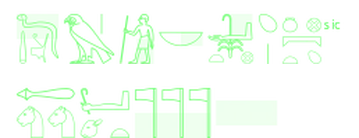
ḏd-mdw jn ḥrw-wr nb šmꜥw sꜣ nw.t ꜥꜣ pḥtj ḫnt.(j) nṯr.w
Words spoken by Haroeris, lord of Upper Egypt, son of Nut, great of strength, foremost of the gods.
- 399
dj=j mn ḫꜥ=k ḥr-sꜣ tꜣ mj rꜥ wbn ḥtp
I make your appearing in glory endure upon the earth, like Ra who rises and sets.
- 400
ḏd-mdw jn ꜣs.t wr.t mw.t-nṯr jr.t rꜥ nb.(t) p.t ḥnw.t nṯr.w nb.(w)
Words spoken by Isis the Great, mother of the god, Eye of Ra, lady of the sky, mistress of all the gods.
- 401
dj=j n=k ḫꜥ n ḥrw ḥnꜥ ḥr.(j).t-tp=f ḥr-tp tꜣ ḫnt ꜥnḫ.w
I give you the crown of Horus, with his uraeus, upon the earth at the head of the living.
- 402

ḏd-mdw jn nb.t-ḥw.t sn.t-nṯr mnḫ.t
Words spoken by Nephthys, the god's excellent sister.
- 403
dj=j n=k tꜣ.w nb.(w) ḫꜣs.wt nb.(wt)
I give you all lands and all foreign countries.
- 404Opet 162-3
nswt-bj.tj jwꜥ-n-nṯr.wj-prj.wj-stp.n-ptḥ-jrj-mꜣꜥ.t-rꜥ-sḫm-ꜥnḫ-jmn sꜣ-rꜥ ptwlmys-ꜥnḫ-ḏ.t-mrj-ptḥ p(ꜣ) nṯr mnḫ
The King of Upper and Lower Egypt, Heir-of-the-Two-Manifest-Gods-Chosen-of-Ptah-Who-Does-the-Maat-of-Ra-Living-Image-of-Amun, the Son of Ra, Ptolemy-May-He-Live-Forever-Beloved-of-Ptah, the Beneficent God.
- 405
šms ꜥntjw n jt=f m-ꜥb psḏ.t=f
Offering myrrh to his father and his Ennead.
- 406
ḏd-mdw jn gb jt nṯr.w ḏfn wtṯ nswwt nṯr ꜥꜣ nb p.t
Words spoken by Geb, father of the gods, the forefather who begot the kings, the great god, lord of the sky.
- 407
dj=j n=k tꜣ.{wj}-nṯr.w ẖr jḫ.t=f
I give you God's Land, laden with its goods.
- 408
ḏd-mdw jn nw.t wr.t msj.(t) nṯr.w nn.t n.(t) wbn m psḏ.t
Words spoken by Nut the great, who bore the gods, the sky of sunrise among the Ennead.
- 409
dj=(j) wnn ḥr.(j).w-rnp.t ḥr jrj.(t) sꜣ=k
I make the epagomenal days keep watch over you.
Note · Line 409
“Epagomenal” means added on. Here the birthdays at the end of the year themselves keep guard over the king. - 410
ḏd-mdw jn wsjr wnn-nfr mꜣꜥ-ḫrw nswt nṯr.w psḏ m mḥn nṯr wr m-ḥꜣ.t nṯr.w
Words spoken by Osiris Wennefer, true of voice, king of the gods, who shines as the uraeus, the great god who was before the gods.
- 411
dj=j n=k kꜣw ḏfꜣ ḥr jrj.(t) ẖr.t n ḥr-nb
I give you food and provisions, to supply every living soul.
- 412
ḏd-mdw jn ḥrw-wr nb šmꜥw ḫnt.(j)-n-jr.tj ṯmꜣ ꜥ jrj m ḳsj
Words spoken by Haroeris, lord of Upper Egypt, Khenty-irty, strong of arm, made in Qus.
Note · Line 412
Khenty-irty means “Foremost of the Two Eyes.” Horus the Elder was worshipped under this name at Qus in Upper Egypt. - 413
dj=j n=k ḳn nḫt ḥr ns.t rꜥ
I give you valor and victory upon the throne of Ra.
- 414
ḏd-mdw jn ꜣs.t wr.t mw.t-nṯr ḥḳꜣ.t m šn n jtn jr.t rꜥ nb.(t) p.t
Words spoken by Isis the great, the god's mother, sovereign in the circuit of the sun disk, Eye of Ra, lady of the sky.
- 415
dj=j n=k šmꜥw mḥw m jm.j.t-pr=j
I give you Upper and Lower Egypt as my legacy.
- 416
ḏd-mdw jn Nb.t-ḥw.t sn.t-nṯr mnḫ.t smn.(t) wḏ.w nṯr.w jr.t rꜥ nb.(t) p.t ḥnw.t nṯr.w nb.(w)
Words spoken by Nephthys, the excellent divine sister, who makes firm the decrees of the gods, Eye of Ra, lady of the sky, mistress of all the gods.
- 417
dj=j n=k wnf-jb m ẖr.(t)-hrw
I give you gladness of heart as your daily portion.
- 418Opet 164
nswt-bj.tj jwꜥ-n-nṯr.wj-prj.wj-stp.n-ptḥ-jrj-mꜣꜥ.t-rꜥ-sḫm-ꜥnḫ-jmn sꜣ-rꜥ ptwlmys-ꜥnḫ-ḏ.t-mrj-ptḥ tj.t n.(t) rꜥ ḫnt tꜣ.wj p(ꜣ) nṯr mnḫ
The King of Upper and Lower Egypt, Heir-of-the-Epiphanes-Gods-Chosen-of-Ptah-Who-Does-the-Maat-of-Ra-Living-Image-of-Amun, the Son of Ra, Ptolemy-Living-Forever-Beloved-of-Ptah, image of Ra, foremost of the Two Lands, the god Euergetes.
- 419
rdj.t rnp.wt n mw.t=f jrj=f dj.(t) ꜥnḫ
Giving the first fruits to his mother, that he may be granted life.
- 420
ḏd-mdw jn ḥḳꜣ.t wr.t mw.t-nṯr jr.t rꜥ nb.(t) p.t ḥnw.t nṯr.w nb.w
Words spoken by Heqet the Great, the god's mother, Eye of Ra, lady of the sky, mistress of all the gods.
Note · Line 420
Heqet is a frog goddess who presides over childbirth and renewal. - 421
dj=j ꜣḫꜣḫ n=k šꜣ ḥrr.t nb.(t)
I make the meadow and every flower grow green for you.
- 422
nswt-bj.tj jwꜥ-n-nṯr.wj-prj.wj-stp.n-ptḥ-jrj-mꜣꜥ.t-rꜥ-sḫm-ꜥnḫ-jmn sꜣ-rꜥ ptwlmys-ꜥnḫ-ḏ.t-mrj-ptḥ p(ꜣ) nṯr mnḫ
The King of Upper and Lower Egypt, Heir-of-the-Epiphanes-Gods-Chosen-of-Ptah-Who-Does-the-Maat-of-Ra-Living-Image-of-Amun, the Son of Ra, Ptolemy-Living-Forever-Beloved-of-Ptah, the god Euergetes.
- 423
ḥnk mḏ.t n mw.t=f
Offering ointment to his mother.
- 424
ḏd-mdw jn jmn.t ꜥꜣ.t wr.(t) nb.(t) tꜣ.wj [ḥr.(j.t)]-jb jp.t-s.wt
Words spoken by Amaunet, the great, the mighty, lady of the Two Lands, who dwells in Ipet-sut.
- 425
dj=j n=k pwn.t ẖr jm.j=f
I give you Punt, laden with all it holds.
- 426
dj=j n=k ḫꜣs.wt tꜣ-nṯr ẖr bꜣk=sn
I give you the foreign lands and God's Land, laden with their tribute.
- 427Opet 165
nswt-bj.tj jwꜥ-n-nṯr.wj-prj.wj-stp.n-ptḥ-jrj-mꜣꜥ.t-rꜥ-sḫm-ꜥnḫ-jmn sꜣ-rꜥ ptwlmys-ꜥnḫ-ḏ.t-mrj-ptḥ sn.t=f ḥḳꜣ.t nb.(t)-tꜣ.wj ḳlꜣwpdrꜣ ḥm.t=f ḥḳꜣ.t nb.(t)-tꜣ.wj ḳlꜣwpdrꜣ nṯr.w mnḫ.w
The King of Upper and Lower Egypt, Heir of the Manifest Gods, Chosen of Ptah, Who Does the Maat of Ra, Living Image of Amun; the Son of Ra, Ptolemy, may he live forever, beloved of Ptah; and his sister, the ruler, lady of the Two Lands, Cleopatra; and his wife, the ruler, lady of the Two Lands, Cleopatra: the Benefactor Gods.
- 428
rdj.t nwd.t jwḥ.(t) m sšn.{t}
Giving the swaddling cloth steeped in lotus.
- 429
ḏd-mdw jn wꜣḏ.t wḏ.(t) ꜥnḫ
Words spoken by Wadjet, who gives life.
- 430
ḏd-mdw jn jp.t wr.t nw.t msj.(t) nṯr.w wr.t ḥnw.t {nfr}nṯr.w (79) jr.t rꜥ nb.(t) p.t
Words spoken by Opet the Great, Nut, who bore the gods, the Great One, mistress of the gods, Eye of Ra, lady of heaven.
- 431
ḏd-mdw {j} dj=j n=k ꜥnḫ wꜣs nb
Words to be spoken: I give you all life and dominion.
- 432
ḏd-mdw jn nḫb.t ḥḏ.(t) nḫn dj=s ꜥnḫ wꜣs ḏd-mdw jn ḏḥwtj ?…?
Words spoken by Nekhbet, the White One of Nekhen: may she give life and dominion. Words spoken by Thoth …
- 433
ḥꜥj wr.t ḫnt ꜥb.t-wsḫ.t
The Great One rejoices in Abet-usekhet.
- 434
ḏd-mdw jn ḥw nb p.t dj ꜥnḫ mj rꜥ
Words spoken by Hu, lord of heaven, who gives life like Ra.
Note · Line 434
Hu personifies creative speech and Sia, who follows, personifies insight. Through these powers the sun god conceives the world and speaks it into existence. - 435
wbn ꜣḫ.t m-ḫnt sbḫ.t ḥwn.t r nḥḥ
Lighting the fields within the Maiden's gateway, forever.
- 436
ḏd-mdw jn sjꜣ dj ꜥnḫ mj rꜥ
Words spoken by Sia, who gives life like Ra.
- 437
dwꜣ ḏd.t nb.(t) ꜣḫ.t ḥꜥj.(t) tꜣ m nbw
Adoring Djedet, lady of the horizon, who lights the land with gold.
- 438Opet 166
nswt-bj.tj jwꜥ-n-nṯr.wj-prj.wj-stp.n-ptḥ-jrj-mꜣꜥ.t-rꜥ-sḫm-ꜥnḫ-jmn sꜣ-rꜥ ptwlmys-ꜥnḫ-ḏ.t-mrj-ptḥ p(ꜣ) nṯr mnḫ sḥtp nb=f m mrj=f
King of Upper and Lower Egypt, Heir-of-the-Epiphanes-Gods-Chosen-of-Ptah-Who-Does-the-Maat-of-Ra-Living-Image-of-Amun; Son of Ra, Ptolemy-May-He-Live-Forever-Beloved-of-Ptah, the Euergetes god, who contents his lord with what he loves.
- 439
jj=j ḫr=k ḥnꜥ nṯr.w wḏ=k n=j […] =k n=j
I have come to you and to the gods; you decree for me your … for me.
- 440
ḏd-mdw jn tfn.t
Words spoken by Tefnut.
- 441
sḫpr=j n=k ḥkn ?ḫwj=(j) kꜣr=f wr [jrj=(j)] nn r ꜣw?
I bring rejoicing into being for you; I guard his great shrine; I do all this, every bit of it.
- 442
ḏd-mdw jn [šw]
Words spoken by Shu.
- 443
snsn=j sḫm=k štꜣ m ḥw.t=k sḳꜣ=j nfrw=k r nṯr.w nb.(w)
I join your hidden image in your temple;
I exalt your beauty above all the gods. - 444
ḏd-mdw jn ḏḥwtj
Words spoken by Thoth.
- 445
dwꜣ=j tj.t=k ḏsr.(t) sḫpr kꜣ.wt=k ntk ṯꜣw prj m-ḥꜣ.t
I adore your sacred image, which brings your works into being.
You are the breath that came forth in the beginning. - 446
ḏd-mdw jn jmn-rꜥ nswt nṯr.w sḫm šps ḥr.(j) nṯr.w nḥj dgj sḏm ꜥš=tw n=f n pr-msw.(t) ḏwj kꜣ=f ḫnt wꜣḏ-wr
Words spoken by Amun-Ra, king of the gods, the noble image of power, chief of the gods, whom all long to see, who hears when he is called in the House of Birth, whose name is cried out in Wadj-wer.
Note · Line 446
Wadj-wer means “the Great Green,” a name for a great body of water, here the sea. - 447
dj=j n=k ḥb.w-sd ꜥšꜣ wr.w ḫꜥj.tj ḥr ns.t=j {ḏd-mdw j} hn=j ḏbꜣ.w=ṯn r nfr rdj=j ms.w nw.t m ḥḳꜣ šn n jtn
I give you jubilees, very many and very great, as you appear in glory upon my throne.
I furnish your offerings to perfection;
I set the children of Nut as rulers of all the sun disk encircles. - 448
nṯr.w ꜥꜣ.w ḥr dwꜣ bꜥ ꜥnḫ msḫꜥ.w jwꜥ jmn nḥj nw.t n pꜥpꜥ s(w) psḏ.t ꜥ.wj=sn m jꜣw ḥr rdj.t ṯꜣw ?…? (81) jꜣw=sn js r jrj ṯꜣw nṯr wr jj n ꜥš n=f dj=sn jꜣw n jt=sn gb r smn jwꜥ=f ḥr-tp tꜣ nḏm jb=k jt nṯr.w wnn-nfr mꜣꜥ-ḫrw wbn m wꜣs.t sꜣ=k jm=f jrj m wꜣs.t ?…? […] jṯj=f tꜣ.wj m wsr […]
The great gods adore the living ba of appearings, the heir of Amun, whom Nut longed to bear. The Ennead, their arms are raised in praise, giving breath … Their praise is for the one who makes breath, the great god who comes to whoever calls him. They give praise to their father Geb, to set his heir upon earth: "Be glad of heart, father of the gods! Wennefer, true of voice, who rises in Thebes, is your son, made in Thebes … he seizes the Two Lands by might …"
- 449Opet 167
nswt-bj.tj jwꜥ-n-nṯr.wj-prj.wj-stp.n-ptḥ-jrj-mꜣꜥ.t-rꜥ-sḫm-ꜥnḫ-jmn sꜣ-rꜥ ptwlmys-ꜥnḫ-ḏ.t-mrj-ptḥ sḥtp nṯr=f m jr.t ḥrw wꜣḏ.(t) p(ꜣ) nṯr mnḫ
The King of Upper and Lower Egypt, Heir-of-the-Two-Manifest-Gods, Chosen-of-Ptah, Who-Does-the-Maat-of-Ra, Living-Image-of-Amun; the Son of Ra, Ptolemy, may-he-live-forever, Beloved-of-Ptah; who pleases his god with the green Eye of Horus, the Beneficent God.
- 450
ḥnk jrp n jt=f jrj=f dj.(t) ꜥnḫ
Offering wine to his father, that he may be granted life.
- 451
ḏd-mdw jn ḏḥwtj ꜥꜣ ꜥꜣ nb ḫmnw jb n rꜥ ns n tꜣ-ṯnn ḥtj.t n.(t) jmn-rn=f nb mdw-nṯr nṯr ꜥꜣ nb mꜣꜥ.t
Words spoken by Thoth, twice great, lord of Hermopolis, heart of Ra, tongue of Tatenen, throat of Him-Whose-Name-Is-Hidden, lord of the god's words, the great god, lord of Maat.
Note · Line 451
The heart was the seat of thought. As heart, tongue and throat of the creators, Thoth gives words to what the gods conceive. - 452
dj=(j) n=k nwn r bꜣ šps n km-ꜣ.t=f dj.n=f ꜥnḫ wꜣs mj rꜥ (82)
I give you Nun as the noble ba of Kematef. He has given life and dominion, like Ra.
Note · Line 452
Thoth’s gift answers the king’s offering of wine. The liquid in the cup takes on the power of Nun, the waters from which the world began. - 453
mn n=k jm.j.t-pr n.(t) šn n jtn jrj=k ḥḥ rnp.wt
Take for yourself the title deed to the circuit of the sun disk; may you spend a million years.
- 454
nswt-bj.tj jrj m wꜣs.t nswt šsp nswj.t m ꜥ jt=f jmn wsjr wnn-nfr mꜣꜥ-ḫrw nswt nṯr.w tp.(j) n jt=f smsw n mw.t=f
The King of Upper and Lower Egypt, begotten in Thebes, the king who received the kingship from the hand of his father Amun: Osiris Wennefer, true of voice, king of the gods, firstborn of his father, eldest of his mother.
- 455
dj=j n=k tꜣ.wj nb [ ?ršw?] m nfrw=k
I give you the Two Lands entire, rejoicing in your beauty.
- 456
ḏd-mdw jn jmn-rꜥ pꜣw.(tj) tꜣ.wj ḏsr ꜥ.w twꜣ p.t jrj n ntj ḳmꜣ wnn.wt
Words spoken by Amun-Ra, the Primeval One of the Two Lands, holy of arms, who lifts up the sky, maker of what is, creator of all that exists.
- 457
dj=j n=k ꜥnḫ wꜣs mj ḏꜣḏꜣ.t n.(t) rꜥ
I give you life and dominion like the council of Ra.
- 458
ḏd-mdw jn mw.t wr.t nb.(t) jšrw nn.t jr.t rꜥ nb.(t) p.t ḥnw.t nṯr.w nb.(w)
Words spoken by Mut the great, lady of Isheru, Naunet, Eye of Ra, lady of the sky, mistress of all the gods.
- 459
dj=j n=k sḫm.tj ḥr.(j.t)-tp=j n<=k> wꜣḏ.tj ḥm.t=(j)
I give you the Double Crown; my uraeus is yours, the twin cobras of my Majesty.
- 460Opet 168
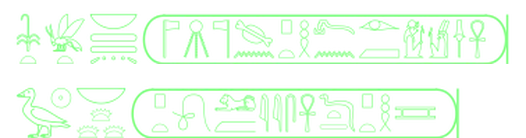
nswt-bj.tj nb tꜣ.wj jwꜥ-n-nṯr.wj-prj.wj-stp.n-ptḥ-jrj-mꜣꜥ.t-rꜥ-sḫm-ꜥnḫ-jmn sꜣ-rꜥ nb-ḫꜥ.w ptwlmys-ꜥnḫ-ḏ.t-mrj-ptḥ p(ꜣ) nṯr mnḫ jrj […]
The King of Upper and Lower Egypt, Lord of the Two Lands, Heir-of-the-two-Manifest-Gods-chosen-of-Ptah-who-does-the-Maat-of-Ra-living-image-of-Amun, Son of Ra, Lord of Crowns, Ptolemy-may-he-live-forever-beloved-of-Ptah, the Beneficent God, who makes …
- 461
dwꜣ nṯr.t sp-fdw
Adoring the goddess, four times.
- 462
ḏd-mdw jn jp.t wr.t msj.(t) nṯr.w nb.(t) p.t ḥnw.t tꜣ.wj šps.t m wꜣs.t
Words spoken by Opet the Great, who bears the gods, Lady of Heaven, Mistress of the Two Lands, the noble one in Thebes.
- 463
dj=j n=k tꜣ.wj nb ḥr dwꜣ n=k
I give you the Two Lands entire, worshipping you.
- 464
ḏd-mdw jn jp.t w[r.t] […] wr.t ws[r.t] […] nw.t […] wn[j] […] ꜥꜣ.t […]
Words spoken by Opet the Great … the great, the mighty … Nut … light … great …
- 465
nswt-bj.tj nb tꜣ.wj jwꜥ-n-nṯr.wj-prj.wj-stp.n-ptḥ-jrj-mꜣꜥ.t-rꜥ-sḫm-ꜥnḫ-jmn sꜣ-rꜥ nb-ḫꜥ.w ptwlmys-ꜥnḫ-ḏ.t-mrj-ptḥ p(ꜣ) nṯr mnḫ […]
The King of Upper and Lower Egypt, Lord of the Two Lands, Heir-of-the-two-Manifest-Gods-chosen-of-Ptah-who-does-the-Maat-of-Ra-living-image-of-Amun, Son of Ra, Lord of Crowns, Ptolemy-may-he-live-forever-beloved-of-Ptah, the Beneficent God …
- 466
rdj.t šb.t n mw.t=f jrj.[n]=f dj.(t) ꜥnḫ
Giving the shebet to his mother. He has won "given life".
- 467
ḏd-mdw jn jp.t wr.t msj.(t) nṯr.w nb.(t) p.t ḥnw.t nṯr.w nb.(w) šps.t m wꜣs.t
Words spoken by Opet the Great, who bears the gods, Lady of Heaven, Mistress of all the gods, the noble one in Thebes.
- 468

dj=j n=k ꜥnḫ wꜣs nb snb nb ꜣw.t-jb nb.(t) ḫr=j
I give you all life and dominion, all health, all gladness that is mine.
- 469Opet 169
hj hnw m-ẖnw-n jp.t-s.wt pr-jp.t-wr.t m ršw.t sp-sn ḥw.t wtṯ n.t wnn-nfr mꜣꜥ-ḫrw m ḥb ḥr ḥb
Shouting and jubilation within Ipet-sut, the house of Opet the Great in joy upon joy, the mansion where Osiris Wennefer, true of voice, was begotten, in festival upon festival.
- 470
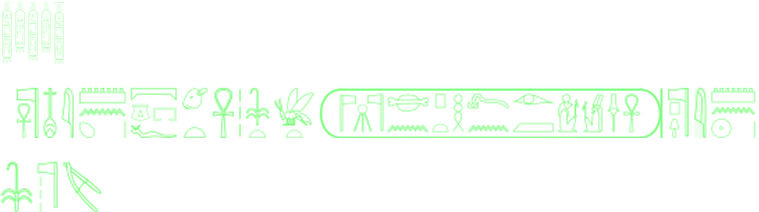
jwꜥ-n-nṯr.wj-prj.wj-stp.n-ptḥ-jrj-mꜣꜥ.t-rꜥ-sḫm-ꜥnḫ-jmn [ptwl]my[s]-ꜥnḫ-ḏ.t-mrj-ptḥ jwꜥ-n-nṯr.wj-prj.wj-stp.n-ptḥ-jrj-mꜣꜥ.t-rꜥ-sḫm-ꜥnḫ-jmn ptwlmys-ꜥnḫ-ḏ.t-mrj-ptḥ ꜥnḫ nswt-bj.tj jwꜥ-n-nṯr.wj-prj.wj-[stp.n]-ptḥ-[jrj-mꜣꜥ.t]-rꜥ-sḫm-ꜥnḫ-jmn p(ꜣ) nṯr mnḫ mrj jp.t wr.t msj.(t) nṯr.w ḥnw.t nṯr.wt
Heir-of-the-two-Manifest-Gods-chosen-of-Ptah-who-does-the-Maat-of-Ra-living-image-of-Amun, Ptolemy-may-he-live-forever-beloved-of-Ptah; Heir-of-the-two-Manifest-Gods-chosen-of-Ptah-who-does-the-Maat-of-Ra-living-image-of-Amun, Ptolemy-may-he-live-forever-beloved-of-Ptah. Long live the King of Upper and Lower Egypt, Heir-of-the-two-Manifest-Gods-chosen-of-Ptah-who-does-the-Maat-of-Ra-living-image-of-Amun, the Beneficent God, beloved of Opet the Great, who bears the gods, Mistress of the goddesses.
- 471
ꜥnḫ sꜣ-rꜥ ptwlmys-ꜥnḫ-ḏ.t-mrj-ptḥ [p(ꜣ)] nṯr [mnḫ] mrj jp.[t] [w]r.t msj.(t) nṯr.w
Long live the Son of Ra, Ptolemy-may-he-live-forever-beloved-of-Ptah, the Beneficent God, beloved of Opet the Great, who bears the gods.
- 472Opet 170
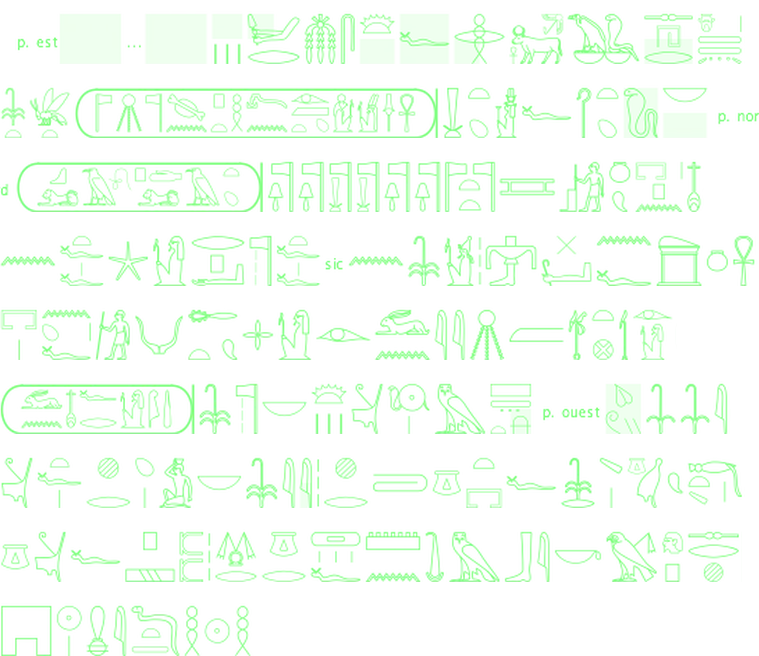
[ꜥnḫ ḥrw-rꜥ ḥwn ḥkn=tw m ꜥnḫ=f ḥr.(j)-ns.t jt=f mꜥr.{t} sp.w] ḏsr msḫꜥ.[w=f] ḥnꜥ ḥp ꜥnḫnb.tj shrj tꜣ.wj nswt-bj.tj jwꜥ-n-nṯr.wj-prj.wj-stp.n-ptḥ-jrj-mꜣꜥ.t-rꜥ-sḫm-ꜥnḫ-jmn sn.t=f ḥḳꜣ.t <nb.t-tꜣ.wj> ḳlꜣwpdrꜣ nṯr.wj mnḫ.wj <mrj> nṯr.wj sn.wj nṯr.wj mnḫ.wj nṯr.wj mrj.wj jt.wj ḫwsj.n=f pr pn nfr n jt=f gb jr.j-pꜥ.t nṯr.w jt{=f} n nswwt nbj.n=f kꜣr n ꜥnḫ n sꜣ=f smsw wpj ẖ.t wn jrj wnj m wꜣs.t wsjr wnn-nfr mꜣꜥ-ḫrw nswt nṯr.w nb ḫꜥ.w bj.tj rꜥ m šṯj.t jsw nn jn jt ḫr sꜣ=f {nb} nswj.t rꜥ ḫr pẖr-ns.t=f rsj ẖr ḥḏ.t=f mḥw ẖr dšr.t=f psš.{w}tj dmḏ r ẖr.(t)=f mn m bjk tp srḫ mj rꜥ ḏ.t nḥḥ
Long live the Horus-Ra, "the youth in whose life men rejoice, who holds the throne of his father, whose deeds prosper, holy of appearance together with the living Apis"; He of the Two Ladies, "who gladdens the Two Lands"; the King of Upper and Lower Egypt, Heir-of-the-two-Manifest-Gods-chosen-of-Ptah-who-does-the-Maat-of-Ra-living-image-of-Amun; and his sister, the ruler, the Lady of the Two Lands, Cleopatra: the two Beneficent Gods, beloved of the two Sibling Gods, the two Beneficent Gods, and the two Father-loving Gods. He has built this fair house for his father Geb, prince of the gods, father of kings. He has fashioned the shrine of life for his eldest son, who opened the womb, Wen, who makes the light in Thebes, Osiris Wennefer, true of voice, king of the gods, lord of crowns, King of Lower Egypt, Ra in the hidden shrine. The reward for this, from a father to his son, is the kingship of Ra for his heir: the South beneath his White Crown, the North beneath his Red Crown, the two halves joined as his possession, enduring as the falcon upon the serekh, like Ra, for ever and ever.
Note · Line 472
The newborn’s name makes a play on sound. Osiris is called Wen just as he brings wenj, “light,” to Thebes. - 473Opet 171
[ꜥnḫ ḥrw-nbw wr pḥtj nb ḥb-sd mj jt=f ptḥ-tꜣ-ṯnn jt nṯr.w jtj] mj [rꜥ] sꜣ-rꜥ ptwlmys-ꜥnḫ-ḏ.t-mrj-ptḥ ḥm.t=f ḥḳꜣ.t nb.(t)-tꜣ.wj ḳlꜣwpdrꜣ <mrj> ntr.wj prj.wj p(ꜣ) nṯr ṯnj jt=f p(ꜣ) nṯr mrj mw.t=f nṯr.wj mnḫ.wj jrj.n=f m mnw=f n mw.t=f jp.t wr.t msj.(t) nṯr.w nw.t wr.t ḥr.(j.t) psḏ.t msḫn.(t) nfr.t grg.(t) tꜣ m ms.w=s sjp.n=f pr=s m-mꜣwj m kꜣ.t mnḫ.t n.t nḥḥ nfr.wj sw [r] ẖr ḥꜣ.t ḥꜣj.(t)=s mj ꜣḫ.t n.t p.t msj.(t) sꜣ=s wsjr m-ẖnw-n pr-jp.t-wr.t r-gs jmnt.t n pr-ḫnsw njw.t r ꜣw=s m ršw.t sp-sn jsw ḫ[r]=f m ꜥnḫ ḏd wꜣs ḫꜥj.tj mj rꜥ ḏ.t nḥḥ
Long live the Golden Horus, "great of strength, lord of jubilees like his father Ptah-Tatenen, father of the gods, sovereign like Ra"; the Son of Ra, Ptolemy-may-he-live-forever-beloved-of-Ptah, and his wife, the ruler, the Lady of the Two Lands, Cleopatra, beloved of the two Manifest Gods, the god noble of father, the god who loves his mother, and the two Beneficent Gods. He made it as his monument for his mother Opet the Great, who bears the gods, Nut the Great, chief of the Ennead, Meskhenet the beautiful, who founded the land with her children. He has set her house in order anew, as a beneficent work of eternity. How much more beautiful it is than before! Her chapel is like the horizon of heaven, she who bore her son Osiris within the house of Opet the Great, on the west side of the temple of Khonsu. The whole city is in joy upon joy. His reward is life, stability, and dominion, risen in glory like Ra, for ever and ever.
- 474Opet 173
[…] r nfr sš.tj ?…? […] m ?…? […]
… beautifully, unrolled ? … ? … in ? … ? …
- 475
ḏd-mdw jn wsjr wnn-nfr mꜣꜥ-ḫrw nswt nṯr.w šw wbn m jp.t-wr.t
Words spoken by Osiris Wennefer, true of voice, king of the gods, the light that rises in the Great Opet.
- 476Opet 174-5
[…] ?… bkꜣ.(t) n [pr]-msw.t? […] [m] pḥwj ḥbb.(t) m b(w) prj nṯr.w jm=f […] nṯr.w nṯr.wt jb=sn nḏm ḥnmm.t m mk wnn-nfr mꜣꜥ-ḫrw [prj] dj=f sw r ḥꜣ m ḥb=f nfr n wn ḥr=f […] [pšš]=f ḥdd[=f] […] ?šd?.n=f nw.t ḥr msḫn.(t) smn=f jb=s m hr.(t) […] n jp.t-wr.t […] [b]ẖ.tw wsjr jm=f jn nw.t m djw hrw.w ḥr.(j).w-rnp.t […] kkw dmꜣ.tj m bjk nṯr.(j) ꜥẖj=f […] ?…? […] [g]nẖ.wj=f ꜥ.wj=f pgꜣ ḥpt jstj […] spꜣ.wt […] ?…? tꜣ šsp.n=f njw.[w]t=f ꜣm.n=f ḥw.t-nṯr=f […] ?…? ḥr […] .n=f jwnn=f štꜣ wsjr wnn-nfr mꜣꜥ-ḫrw nswt nṯr.w […] m jp.t-wr.t tꜣ ḥr ndb[=f] […] nṯr […] sḫm n spꜣ.wt jtj ḫnt ḥw.wt n.t nṯr.w
… the pregnant woman in the House of Birth … in the waters of the flood, in the place from which the gods come forth … the gods and goddesses, their hearts are glad, the henmemet keep festival, for Onnophris, true of voice, has come forth. He goes forth at his beautiful festival of Unveiling the Face … he spreads his wings … he has delivered Nut upon the birth-brick, and so set her heart at joy … of the temple of Opet … in which Osiris is born of Nut during the five days upon the year … darkness, his wings like a divine falcon's, he flies … … his two wings and his two arms spread wide to embrace Egypt … the nomes … … the land; he has taken his cities, he has seized his temple … … upon … he has … his secret sanctuary, Osiris Onnophris, true of voice, king of the gods … in the temple of Opet, the earth upon its foundations … the god … the mighty image of the nomes, the sovereign foremost in the mansions of the gods.
Note · Line 476
The henmemet are heavenly beings associated with the sun who join the celebration of Osiris’s birth. - 477Opet 175
ꜥḏ mr nṯr.(j) n nb sjꜥr ṯꜣw sꜣ-rꜥ nb-ḫꜥ.w kysꜣrs
Divine steward of the Lord who sends up the breath, Son of Ra, Lord of Crowns, Caesar.
Note · Line 477
“Caesar” marks the shift to Roman rule. The Roman emperor takes the pharaoh’s place in the temple rites and bears the same Egyptian titles. - 478
ḏd-mdw jn ḫnsw m wꜣs.t nfr-ḥtp šw sꜣ rꜥ ḏꜣj rꜣ n jt=f wsjr m jmn.t wꜣs.t rꜥ nb
Words spoken by Khonsu-in-Thebes Neferhotep, Shu son of Ra, who feeds his father Osiris in the West of Thebes every day.
- 479
dj=j n=k ?ḫtꜣ ? (83) ẖr jm.j.(w)=f nb.w
I give you Hatti, bearing all that is in it.
Note · Line 479
Hatti was an Egyptian name for the Hittite lands in Anatolia. Khonsu offers the king a foreign country together with its produce. - 480Opet 176
[…] msḫn.(t)=f […] jtr.tj n(n) njw.t šw.tj m kꜣ=f […] wr ḫpr m-ḥꜣ.t jw ḥm=f m kꜣ […] ?msj.tw? […] nwn […] m […] n=f […] .w […] ?…? m-ḫt=k […] ?… jwḥ nb? […] ?nṯr.w? […] tp-ꜥ […] ḥm=f r […] ?…? […] .tj m ?…? jm.j ?…? […]
… his birth-brick … the two shrines, with no city empty of his ka … the great one, who came into being at the beginning, when his majesty was the ka … was born … the Nun … in … for him … … after you … … every … gods … before … his majesty to … … … in … which is in … …
- 481Opet 177

[…] ?…? nswt-bj.tj nb-tꜣ.wj ꜣwdwgrdr
… King of Upper and Lower Egypt, Lord of the Two Lands, Autocrator.
Note · Line 481
Autocrator is a Greek imperial title meaning “sole ruler.” - 482
rwḏ šꜣ nb mrj=k hrw ḫꜥj=k m njw.t=k
Every field flourishes as you will it, on the day you appear in your city.
- 483

nswt-bj.tj wsjr wnn-nfr [mꜣꜥ-ḫrw] […] ?n mꜣwj ḥw.t-nṯr? […]
King of Upper and Lower Egypt, Osiris Onnophris, true of voice … anew, the temple …
- 484
dj=j n=k dsds ẖr jrp wr
I give you Djesdjes, bearing great wine.
Note · Line 484
Djesdjes is Bahariya, a western desert oasis known for its wine. The next offerings also come from the oases. - 485
[ḏd]-mdw [jn] ḥrw […]
Words spoken by Horus …
- 486
dj=j n=k knm.t ẖr ḫpr jm=f
I give you Kenmet, bearing all that comes to be in it.
Note · Line 486
Kenmet is the Kharga Oasis. - 487
[ḏd-mdw jn] nb.t-ḥw.t sn.t-nṯr mnḫ.t sꜣ.(t) sn=s […] =f ḫwj.(t) wnn-nfr mꜣꜥ-ḫrw m ḥw.t <wtṯ>=f msḫn.(t) nb.(t) ḥw.t-sḫm
Words spoken by Nephthys, the excellent divine sister, who protects her brother … who protects Onnophris, true of voice, in the Mansion of his Begetting, Meskhenet, lady of Hu.
Note · Line 487
Hu is a town in Upper Egypt. Here Nephthys guards her brother in the role of Meskhenet, who tends the newborn. - 488
dj=j n=k sḫ.t-jmꜣw […] ?wr.t?
I give you Sekhet-imau … great.
Note · Line 488
Sekhet-imau means “Field of Date Palms,” an Egyptian name for the Siwa Oasis. - 489Opet 178
[…] ḥm[=s ḥr] jrj.(t) nh.t ḥꜣ[j.t] sbḫ.n=s sw […] smn wḏ.wt nṯr.w sn.t n.(t) ḥḳꜣ ḥw.wt ḏsr ḥr=f r=s […] kkw nb ?msḫn.t=s? nb jmꜣ.t ?ḏr mrj=f? […] mnḫ n wnn-nfr mꜣꜥ-ḫrw […] ?mj? jmn […]
… her majesty is guarding the shrine, she has enclosed it … who makes firm the decrees of the gods, sister of the ruler of the temples, for whom his face is holy … darkness, lord of her birth-brick, lord of grace, since he wished … excellent … of Onnophris, true of voice … like Amun …
- 490
[…] ?ꜣḫ.t n(n) ḫm jb ḥr ḏd? […] ?… ꜥḳ=s r? […]
… the field, with no heart that holds back from speaking … she enters into …
- 491Opet 179
msḫn.(t) ?…?
Meskhenet …
- 492
msḫn.(t) mnḫ.t
Meskhenet the excellent
- 493
jj.wj sw m ḥtp wjn wr wnn-nfr mꜣꜥ-ḫrw nṯr ꜥꜣ ḥḳꜣ ḥḏ.t […] n rꜥ nḫw n ḫprj […] ?m nw? ḫꜥj=k n=n
How welcome he is, coming in peace,
the great light, Wennefer, true of voice,
the great god, ruler of the White Crown …
… of Ra, protector of Khepri …
… when you appear for us! - 494
[…] ?…?
[gap in the text]
- 495
[ky]sꜣrs
Caesar