~/sacred-texts/old-kingdom-tomb-inscriptions
Egyptian Tomb Curse: Trial Before God for Unclean Visitors
- Date
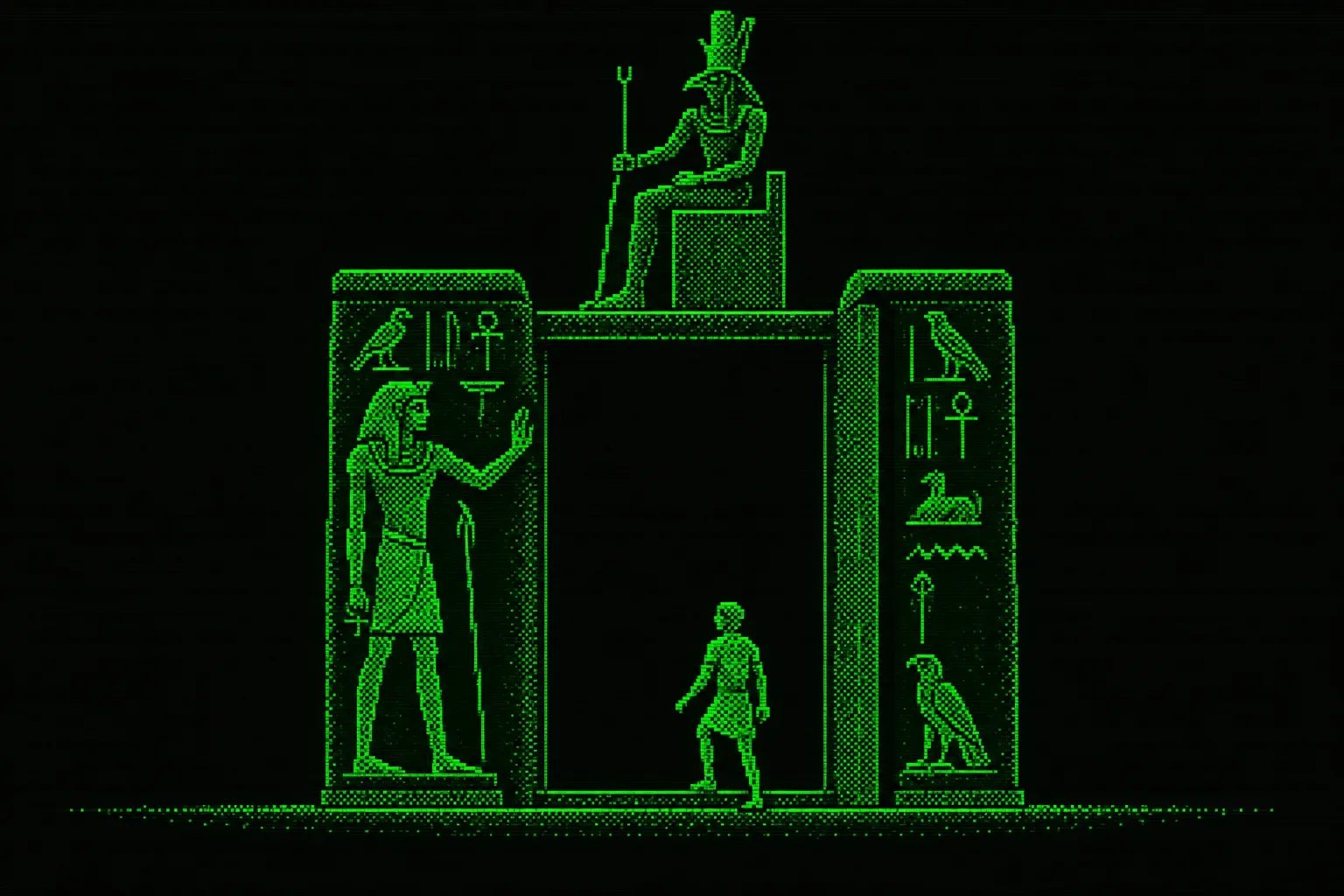
- Carved in the Old Kingdom (c. 2500–2181 BC) on the left jamb, east side, of a tomb doorway
- Language
- Old Egyptian · Hieroglyphic
- 1
[jr] [rmṯ] [nb] [ꜥq.tj] =[sn] [r] [jz] [pn] [n,j] ḏ,t ⸢m⸣ ⸢ꜥb,w⸣ =⸢sn⸣ ⸢wnm.n⸣ =sn bw,t bwi̯.t ꜣḫ n,tj ḫpi̯ r ẖr(,t)-nṯr [n] [wꜥb] =[sn] [r] [tr] [mj] [wꜥb] =[sn] [r] [ḥw,t-nṯr] [n,j.t] [nṯr]
As for any people who shall enter this tomb of eternity in their uncleanness, having eaten the loathsome thing that an akh who has passed to the necropolis loathes, and who are not pure at that time as they would be pure for the temple of a god:
Note · Line 1
The tomb owner is threatening anyone who enters ritually impure. - 2
[wnn] ⸢wḏꜥ-mdw⸣ ⸢ḥnꜥ⸣ =sn ḥr =s jn nṯr ꜥꜣ m bw n,tj wḏꜥ-mdw jm mꜣꜥ
judgment shall be passed on them for it by the great god, in the place where judgment is rightly given.
Note · Line 2
The Egyptian for “judging” literally means “separating words,” that is, deciding between two parties. - 3
[jnk] [ꜣḫ] [jqr] [...]
I am an excellent akh …
- 4
[jw] ⸢jri̯⸣(.w) ⸢n⸣ =(j) (j)⸢ḫ,t⸣ nb(.t) ꜣḫ(.t) ⸢šp⸣ss(.t) jri̯.t n jqr jm,j n ꜣḫ.pl [m] [wnw,t] [ẖr,j-ḥꜣb,t]
Everything useful and splendid that is done for an excellent one among the akhs through the service of the lector priest has been done for me.
Note · Line 4
The word for “useful, effective” (akh) is the same word as the spirit-name akh: a spirit is “akh” because it is effective. The lector priest recited the spells that transfigured the dead into akhs. - 5
[jw] =[(j)] [gr] [j:bzi̯.k(w)] [ḥr] [sštꜣ] [nb] [...]
Moreover, I have been initiated into every secret …
- 6
⸢jw⸣ =(j) j⸢gr⸣ ⸢rḫ.k(w)⸣ ⸢(j)ḫ,t⸣ ⸢nb(.t)⸣ ꜣḫ.t ꜣḫ n,y n,tj ḫpi̯ jr ẖr(,t)-nṯr
Moreover, I know every thing by which an akh who has passed to the necropolis is made an akh.
- 7
[jw] =(j) [gr] [rḫ.k(w)] [...]
Moreover, I know …
- 8
⸢jw⸣ =(j) rḫ.k(w) (j)ḫ,t nb(.t) špss.t =f n,y ḫr nṯr
I know every thing by which he is made splendid in the presence of the god.
- 9
[...] ⸢jr⸣ ⸢ḥw,t-nṯr⸣ n,j.t nṯr ꜥꜣ
… to the temple of the great god.
- 10
jw =(j) ḥꜣ,y =f m ḏꜣḏꜣ,t =f šps.t [n,j.t] [nṯr] [ꜥꜣ]
I shall be his protector in the noble tribunal of the great god.
Note · Line 10
“His” is presumably the respectful visitor, described in a lost passage. The spirit promises to plead for him in the court of the dead. - 11
[ny] [rḏi̯] =(j) [ḫp]⸢r⸣ [...] ⸢msḏḏ⸣,t =f nb(.t) ḏ,t
I will not let … come to pass, anything he hates, for ever.
- 12
ny rḏi̯ =(j) ḫpr ꜥꜣp =f nb ḫr nṯr [...]
I will not let any slander against him arise before the god …
- 13
[...] ḥnꜥ pr(,t)-ḫrw n,j.t ḏ,t m ẖr,t-hrw nb ꜣw,t ḏ,t
… together with invocation offerings of the funerary estate, as the daily provision for the length of eternity.
Note · Line 13
“Invocation offerings” is literally “going forth at the voice”: the bread, beer and other goods that come forth for the dead when the offering formula is spoken aloud.