~/sacred-texts/new-kingdom-letters
Medjay Chief Min-inuy to Vizier Khay: Beaten and Robbed
- Date
- Copied in the 19th Dynasty (reign of Ramesses II, c. 1279–1213 BC) on a limestone ostracon at Western Thebes
- Found
- Found at Western Thebes; now in the Royal Ontario Museum, Toronto (oToronto A 11)
- Language
- Late Egyptian · Hieratic
- 1
ḥr,j-mḏꜣ,y Mn,w-jn,wy ḥr swḏꜣ jb n nb (j)m(,j)-rʾ-nʾ,t ṯꜣ,tj Ḫꜥi̯≡j m ꜥnḫ-wḏꜣ-s(nb)
Min-inuy, chief of the Medjay, sends greetings to the lord Khay, governor of Thebes and vizier, in life, prosperity and health.
Note · Line 1
The Medjay were Egypt’s desert police. As vizier, Khay was one of Pharaoh’s highest officials. - 2
hꜣb pw r ḏi̯.t rḫ pꜣy =j nb
This letter is to let my lord know.
- 3
ky swḏꜣ-jb [n] [pꜣ]y =j nb r-n,tj tꜣ s,t ⸢ꜥꜣ⸣ pr-ꜥꜣ ꜥnḫ-wḏꜣ-s(nb) r-n,tj 〈r〉-ḫt pꜣy =j nb m-šs jqr nꜣ jnb.w m swꜣ,w [wḏ]ꜣ snb
A further report to my lord: the great residence of Pharaoh (life, prosperity and health to him!), which is in my lord’s charge, is in excellent order. The walls round about are safe and sound.
- 4
fꜣi̯ pꜣ ḥtr.pl 〈s〉t m-šs jqr m ḫt sm,w rmj.pl ḥnq,t mꜣwi̯.t
The dues have been delivered, all in excellent order: wood, fodder, fish and fresh beer.
- 5
sw ḏd n Jmn Pꜣ-Rꜥw nṯr.pl nb.pl s,t-mꜣꜥ,t ssnb pr-ꜥꜣ pꜣy =j nb nfr jmi̯ pꜣy =j nb m ḥz(w),t{.n} =f m-mn,t
He says to Amun, Ra and all the gods of the Place of Truth: “Keep Pharaoh, my good lord, in health, and keep my lord in his favor day after day.”
Note · Line 5
Min-inuy speaks of himself here in the third person. He asks the gods of the Theban necropolis to keep the king healthy and the vizier in the king’s favor. - 6
ky swḏꜣ-jb n pꜣy =j nb r-n,tj jnk pꜣ jꜣy n bꜣk n pꜣy =j nb m-šꜣꜥ rnp,t 7 n nswt Ḏsr-ḫpr,w-〈Rꜥw〉
A further report to my lord: I am an old servant of my lord, in his service since the seventh year of King Djeserkheperure.
Note · Line 6
Djeserkheperure was the throne name of Horemheb, who reigned decades before Khay became vizier. - 7
sḫ{ð}sḫ 〈=j〉 r-ḥꜣ,t pꜣ ḥtr pr-ꜥꜣ ꜥnḫ-wḏꜣ-s(nb) ṯꜣi̯ 〈=j〉 n =f ḫ〈n〉r ḥt〈r〉 nḥb n =f
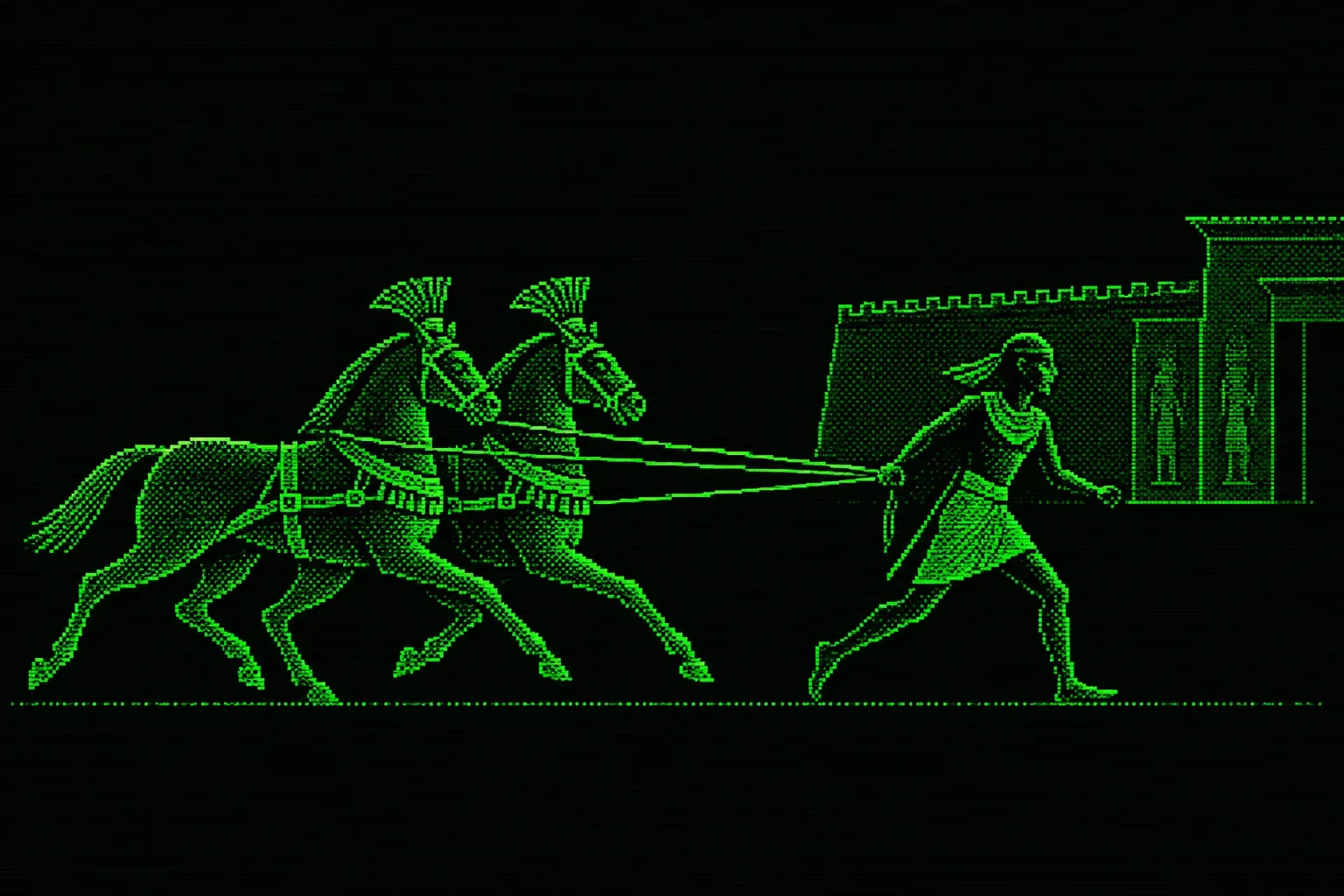
I ran ahead of Pharaoh’s team of horses (life, prosperity and health to him!). I took the reins for him and yoked and harnessed the horses for him.
- 8
ḏd 〈=j〉 n =f smj ꜥš =f ḥr rn =j m-bꜣḥ mꜥbꜣ,yt bw gmi̯ n 〈=j〉 ṯꜣy
I laid my complaint before him. He called my name before the Court of Thirty, but no fault was found in me.
- 9
jri̯.y =j mḏꜣ.y n jmn,t Wꜣs,t jw =j zꜣu̯ nꜣ-n jnb.w n tꜣy =f s,t ꜥꜣ.t
I served as a Medjay in western Thebes, guarding the walls of his great residence.
- 10
tw=j ḏḏ n ḥr,j-mḏꜣ,y ḏbꜣ.kw mnḫ,t ḥr nfr pꜣ sḫr.pl =f
I am appointed chief of the Medjay and clothed in a robe befitting the dignity of the office.
- 11
ptr ḥr,j-mḏꜣ,y Nḫt-Sbk-j sqn tꜣ s,t ꜥꜣ.t pr-ꜥꜣ ꜥnḫ-wḏꜣ-s(nb) n,tj tw=j m-j:⸢m⸣ [=s]
Look, it was Nakhtsobeki, chief of the Medjay, who damaged the great residence of Pharaoh (life, prosperity and health to him!), where I am stationed.
- 12
[...] m pꜣy =j nb nꜣy =f jꜣw ⸮jm? 〈=j〉 ⸮tw? qn nꜣj mḏꜣ,y.pl m sšm
… my lord … his veterans … He beat these Medjay by way of instruction.
- 13
nꜣ〈y〉 =k jꜣy jnk šrj ḫ{t}〈ru̯〉 =f n =j
“The old men are yours, but I am young,” he said to me.
- 14
ḥnn 〈=j〉 tꜣ s,t{.tw.n} =k m hrw [...] ḫ{t}〈ru̯〉{ḫ} =f n =j
“I took over your post on the day …,” he said to me.
- 15
jṯi̯ =f n{t}〈ꜣ〉y =w ꜣḥ,t.pl m sḫ,t
He seized their fields in the marshland.
- 16
jṯi̯ =f 2 m wꜣḏ,w [...] jw n,j-s(w) pꜣy =j nb m pn ṯꜣ,tj
He seized two beds of greens … though the land belonged to my lord as vizier.
- 17
ḏi̯ =f sw ḥr,j-mḏꜣ,y Mnṯ,w{tw}-rḫ ḏi̯ =f ktḫ pꜣ ḥm-nṯr-tp,j-Mnṯ,w
He gave one to Monturekh, chief of the Medjay, and the other to the high priest of Montu.
- 18
jṯi̯ =f nꜣy 〈=j〉 sšr jw =sn mn m sḫ,t
He seized my grain while it was still in the field.
- 19
hꜣb pw r rḏi̯.t rḫ pꜣy =j nb
This letter is to let my lord know.
- 20
zẖꜣ(,w) Zꜣ-Jmn
The scribe Siamun.