~/sacred-texts/middle-kingdom-hymns-to-osiris
Middle Kingdom Hymns to Osiris: I Strike Your Enemies for You
- Date
- Carved in the 13th Dynasty (about 1780–1650 BC) on two limestone stelae: that of the god's sealer Wenemi at Abydos and that of the seal-bearer Amenemhat at Thebes
- Found
- Stela of Wenemi: from Abydos, now in the Museum August Kestner, Hannover (1976.80). Stela of Amenemhat: brought from Thebes by Captain R. Bruce, now in the British Museum, London (EA 893).
- Language
- Middle Egyptian · Hieroglyphic
On a stela from Abydos the god’s sealer Wenemi greets Osiris with a chain of titles: crowned before the Ennead, feared in Rosetau, vindicated against Seth, the god for whom slaughter was wrought in the great hall at Herwer and before whom the great powers tremble. Offering prayers for his father Idi and for Idi’s son Nekhti close the stone.
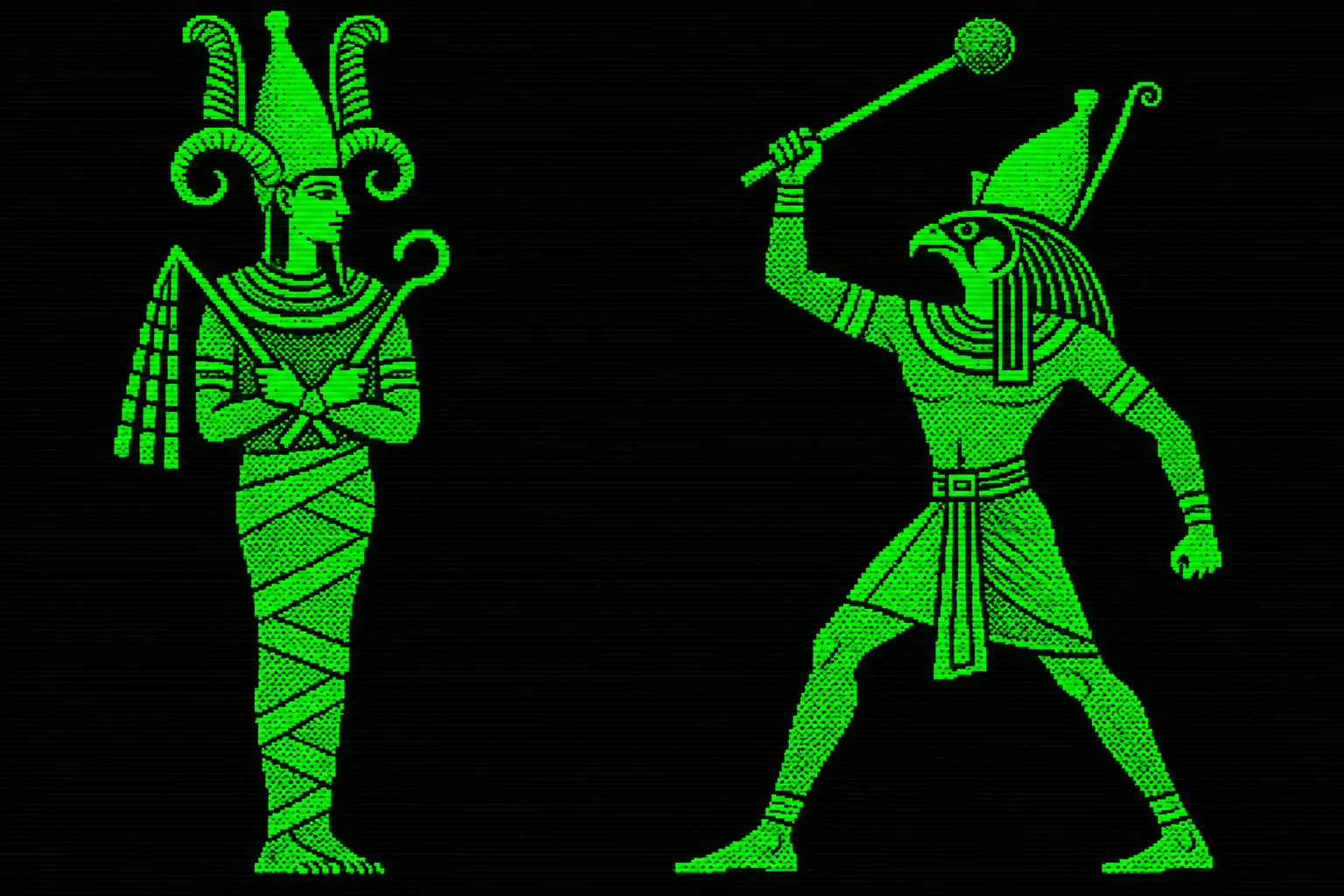
On a stela from Thebes the seal-bearer Amenemhat praises Osiris, then speaks as Horus to his dead father: I am your son Horus. He orders him up, Rise, then, Osiris, Foremost of the Westerners!, and promises: I strike your enemies for you.
Hymn to Osiris on the Stela of Wenemi (Abydos)
- 1
𓇓𓏏𓈖𓏙 𓊨𓁹 𓊹𓉻 𓎟𓍋𓈋𓃀
ḥtp-di̯-nswt Wsjr nṯr-ꜥꜣ nb-ꜣbḏw
An offering given by the king and by Osiris, the great god, lord of Abydos.
Note · Line 1
This formula opens the appeal for offerings. Abydos was a chief center of the worship of Osiris. - 2
𓂞 𓆑 𓏐 𓏋 𓃿 𓅿𓏪 𓈖 𓂓 𓈖 𓊹𓋩𓈖𓍋𓈋𓃀 𓈎𓈎𓇋𓀀 𓎟𓄪𓐍𓏤 𓁹𓈖 𓃂𓈗𓈖𓍋𓈋𓃀 𓇋𓂧𓄔𓇋𓀀 𓌴𓊤 𓄟𓊃𓈖 𓎟𓉐𓏏𓏤 𓌢𓈖𓀀𓈓𓋹𓈖𓐍𓁐 𓌴𓊤
di̯ =f pr,t-ḫrw tʾ ḥnq,t kꜣ(.pl) ꜣpd.pl n kꜣ n ḫtm,w-nṯr-n-ꜣbḏ,w Wnm,j nb-jmꜣḫ jri̯.n wꜥb-n-ꜣbḏ,w Jd,j mꜣ〈ꜥ〉-ḫrw msi̯.n nb(,t)-pr Sn,pl-ꜥnḫ mꜣ〈ꜥ,t〉-ḫrw
May he grant an invocation offering of bread and beer, bulls and fowl, for the ka of Wenemi, god’s sealer of Abydos, lord of honor, fathered by Idi, wab-priest of Abydos, justified, and born to Senuankh, mistress of the house, justified.
Note · Line 2
The ka was the life force that offerings sustained after death. - 3
𓊹𓋩𓈖𓍋𓃀𓈋𓊖 𓈎𓈎𓇋 𓐙𓊤 𓆓𓂧 𓆑
ḫtm,w-nṯr-n-ꜣbḏ,w Wnm,j mꜣꜥ-ḫrw ḏd =f
Wenemi, god’s sealer of Abydos, justified, says:
Note · Line 3
“Justified” means that the dead person has been judged to be in the right. Wenemi now speaks in his own voice. - 4
𓇋𓐩 𓁷𓏤 𓎢 𓊩𓁹 𓅭 𓏌𓏏𓇯 𓎟 𓄏𓄏 𓀠 𓄿𓏏𓆑
j:nḏ ḥr =k Wsjr zꜣ Nw,t nb ꜥb.du qꜣ ꜣtf
Hail to you, Osiris, son of Nut,
lord of the two horns, whose Atef crown rises high,Note · Line 4
The Atef is the tall, plumed crown of Osiris. Nut is the sky goddess. - 5
𓂋𓂝𓇋𓇋 𓈖 𓆑 𓅨𓂋𓂋𓏏𓋑 𓄫𓄣 𓅓𓂸𓏛 𓇷𓏏𓊹𓊹𓊹
rdi̯.y n =f wrr,t ꜣw,t-jb m-bꜣḥ Psḏ,t
to whom the Wereret crown and joy were given before the Ennead,
Note · Line 5
The Wereret, “the Great One,” is a crown of Upper Egypt. The Ennead is the company of nine gods. - 6
𓂋𓂝𓈖 𓍃𓅓 𓄃𓏏𓏛 𓆑 𓅓 𓄣𓏤 𓈖 𓂋𓍿𓀀𓁐𓏥 𓊹𓊹𓊹 𓅜𓅱𓏥 𓅓𓏏𓀐𓏥
rdi̯.n Tm šf,(y)t =f m jb n r(m)ṯ.pl nṯr.pl ꜣḫ.w.pl m(w)t.pl
whose majesty Atum set in the hearts of mortals and gods,
transfigured spirits and the dead,Note · Line 6
The transfigured spirits, called akhs, are the dead who have attained power in the afterlife. - 7
𓂋𓂝𓇋𓇋 𓈖 𓆑 𓋾𓏏𓏛 𓅓 𓉺𓏌𓊖 𓉻 𓆣𓅱 𓅓 𓊽𓊽𓅱𓊖
rdi̯.y n =f ḥqꜣ,t m Jwn,w ꜥꜣ ḫpr.w m Ḏd,w
to whom dominion was given in Heliopolis,
great in form in Busiris, - 8
𓎟 𓅾 𓅓 𓈏𓏏𓏥 𓉻 𓈖𓂋𓅱 𓅓 𓂋𓍬𓏥𓈉
nb snḏ m jꜣ,t.pl ꜥꜣ nr,w m Rʾ-sṯꜣ,pl
lord of dread upon the hills,
great in terror in Rosetau,Note · Line 8
Rosetau was a sacred region associated with the necropolis and the ways into the underworld. - 9
𓎟 𓌂𓏤𓏥 𓅓 𓍿𓇑𓇑𓈖𓏏𓉐
nb sḫm.pl m Ṯnn,t
lord of powers in the Tjenenet sanctuary,
- 10
𓉻 𓌻𓂋𓅱𓏏 𓅓 𓁶𓏤𓇿𓈇𓏤
ꜥꜣ mrw,t m tp-tꜣ
greatly loved in life on earth,
- 11
𓎟 𓋴𓆼𓀁 𓄤 𓅓 𓉦𓏏𓉐
nb sḫꜣ nfr m ꜥḥ,t
lord of fair remembrance in the palace,
- 12
𓉻 𓈍𓂝𓅱𓏛𓏥 𓅓 𓍋𓃀𓈋𓊖
ꜥꜣ ḫꜥ.w.pl m ꜣbḏw
great in your appearances at Abydos,
Note · Line 12
At festivals in Abydos the image of Osiris was carried out of the temple in procession. - 13
𓂋𓂝𓇋𓇋 𓈖 𓆑 𓐙𓊤 𓅓𓂸𓏛 𓇷𓏏𓊹𓊹𓊹 𓋬𓇋
rdi̯.y n =f mꜣꜥ-ḫrw m-bꜣḥ Psḏ,t dmḏ.〈t〉j
to whom vindication was granted before the assembled Ennead,
Note · Line 13
The gods sit in judgment: Osiris is declared in the right in his dispute with Seth. - 14
𓌙𓏛 𓈖 𓆑 𓄬𓏏𓏥 𓅓 𓉧 𓉻 𓏶𓅓𓏏 𓁷𓏤𓅨𓂋
qmꜣ n =f šꜥ,t.pl m wsḫ,t ꜥꜣ(.t) jm(,j).t Ḥr-wr
for whom slaughter was wrought in the great hall at Herwer,
- 15
𓈖𓂋𓂋𓅱 𓈖 𓆑 𓌂𓏤𓏥 𓉻
nrr.w n =f sḫm.pl ꜥꜣ(.pl)
before whom the great powers tremble,
- 16
𓊢𓅱 𓈖 𓆑 𓅨𓂋𓅱𓏥 𓁷𓏤 𓏏𓌳𓄿𓎅𓏪 𓋴𓈖𓏥
ꜥḥꜥ.w n =f wr.w.pl ḥr tmꜣ.w.pl =sn
for whom the great ones stand up on their mats,
- 17
𓂋𓂝𓈖 𓆄𓅱 𓅾 𓆑 𓌙𓏛𓈖 𓏏𓆑𓈖𓏏𓁐 𓄃𓏏𓏛 𓆑
rdi̯.n Šw snḏ =f qmꜣ.n Tfn,t šf,(y)t =f
whom Shu made fearsome,
whose majesty Tefnut fashioned,Note · Line 17
Shu and Tefnut are the grandparents of Osiris. - 18
𓏎𓈖 𓈖 𓆑 𓇋𓏏𓂋𓏏𓉐𓉐 𓅓𓎡𓋴𓅱𓀓
⸢⸮jyi̯?⸣.n n =f jtr.du ⸢m⸣-k⸢s⸣.w
to whom the two rows of shrines came bowing.
Note · Line 18
The two rows stand for the sanctuaries of Upper and Lower Egypt. Here the shrines themselves bow in homage. - 19
𓊪𓅮𓄿 𓊪𓅱 𓊨𓁹 𓇋𓍘𓇋𓇋 𓊹𓊹𓊹 𓌂 𓉻 𓅓 𓊪𓏏𓇯 𓋾 𓋹𓈖𓐍𓅱
pꜣ pw Wsjr jty nṯr.pl sḫm ꜥꜣ m p,t ḥqꜣ ꜥnḫ.pl
Such is Osiris, sovereign of the gods,
great power in heaven, ruler of the living. - 20
𓂋𓂝𓏏 𓀢 𓈖 𓊨𓁹 𓊹𓉻 𓎟𓍋𓈋𓃀𓊖 𓅓 𓉐𓂋𓏏 𓆑 𓌴𓁹 𓄤𓄤𓄤 𓆑
rdi̯.t jꜣ,w n Wsjr nṯr-ꜥꜣ nb-ꜣbḏw m pr,t =f mꜣ(ꜣ) nfr.pl =f
Giving praise to Osiris, the great god, lord of Abydos, as he comes forth; beholding his beauty.
- 21
𓇓𓏏𓊵𓏙 𓊨𓁹 𓈖 𓂓 𓈖 𓃂𓈗𓁷𓐟 𓈖 𓍋𓈋𓃀 𓇋𓂧𓄔𓇋𓀀 𓌴𓊤
ḥtp-ḏi̯-nswt Wsjr n kꜣ n wꜥb-ḥr(,j)-zꜣ n ꜣbḏw Jd,j mꜣ〈ꜥ〉-ḫrw
An offering given by the king and by Osiris for the ka of Idi, chief wab-priest of the phyle of Abydos, justified.
Note · Line 21
A phyle was a company of priests who served together on a rotating schedule. - 22
𓇓𓏏𓊵𓏙 𓈖 𓂓 𓈖 𓅭 𓆑 𓃂𓈗𓁷𓐟 𓈖 𓍋𓈋𓃀 𓈖𓆱𓐍𓏏𓇋𓀀 𓌴𓊤
ḥtp-ḏi̯-nswt n kꜣ n zꜣ =f wꜥb-ḥr(,j)-zꜣ n ꜣbḏw Nḫt,j mꜣ〈ꜥ〉-ḫrw
An offering the king gives for the ka of his son Nekhti, chief wab-priest of the phyle of Abydos, justified.
- 23
… 𓐙𓊤 𓄟𓋴𓈖 𓎟𓏏𓉐 𓌢𓈖𓀀𓏥𓋹𓈖𓐍 𓐙𓏏𓊤
[...] mꜣꜥ-ḫrw msi̯.n nb,t-pr Sn,pl-ꜥnḫ mꜣꜥ,t-ḫrw
…, justified, born to Senuankh, mistress of the house, justified.
Hymn to Osiris on the Stela of Amenemhat (Thebes)
- 24
𓌃𓆓 𓇋𓈖 𓋔𓇋𓏏𓋩 𓄓𓐛𓉐 𓇋𓈖𓏠𓅓𓄂𓏏𓏤
ḏ(d)-mdw jn ḫtm(,w)-bj,tj jm,j-rʾ-gs-pr J{n}mn-m-ḥꜣ,t
Words spoken by Amenemhat, seal-bearer of the king of Lower Egypt and overseer of the temple estate:
- 25
𓇋𓐩𓆓𓏛 𓁷𓏤 𓎢 𓊩𓁹 𓏄𓋀𓅂𓀭 𓊹𓉻 𓎟𓍋𓈋𓃀
j:nḏ ḥr =k Wsjr Ḫnt(,j)-jmn,tj nṯr-ꜥꜣ nb-ꜣbḏw
Hail to you, Osiris, Foremost of the Westerners,
great god, lord of Abydos.Note · Line 25
The Westerners are the dead. The west, where the sun sets, was the realm of the dead, and Osiris was their ruler. - 26
𓇼𓀢 𓀀 𓏏𓅱
dwꜣ =j tw
I will worship you.
- 27
𓇋𓐩𓆓𓏛 𓁷𓏤 𓎢 𓅭𓏤 𓊪𓅱𓇋𓇋 𓁶𓊪𓏭 𓈖 𓅬𓃀𓀭 𓊹𓏤 𓅨𓂋 𓉐𓂋𓂻 𓅓 𓏌𓏏𓇯
j:nḏ ḥr =k zꜣ pwy tp,j n Gb nṯr wr pri̯ m Nw,t
Hail to you, Geb’s firstborn son,
great god who came forth from NutNote · Line 27
Geb is the earth god and Nut the sky goddess. They are the parents of Osiris. - 28
𓇓𓏏𓈖𓀭 𓁷𓄣 𓋅 𓏄𓋀𓅂 𓎟𓍋𓃀𓈋
〈⸮m?〉 nswt ḥr(,j)-jb Tꜣ-wr Ḫnt(,j)-jmn,tj nb-ꜣbḏw
as king in the heart of Tawer,
Foremost of the Westerners, lord of Abydos,Note · Line 28
Tawer was the district of Upper Egypt that included Abydos, a chief place of worship of Osiris. - 29
𓎟 𓅢 𓉻𓂝 𓈙𓆑𓈙𓆑𓏏𓄆𓏪 𓎟 𓄿𓏏𓆑𓅱𓋚𓏪 𓅓 𓈍𓂝𓅱𓏥 𓆑
nb bꜣ,pl ꜥꜣ šfšf,t.pl nb ꜣtf.w.pl m ḫꜥ,w.pl =f
lord of deeds of power, great in majesty,
lord of the atef crowns whenever he appears, - 30
𓎟 𓌂𓏤𓏥 𓅓 𓋅 𓎟𓀭 𓅓𓊢𓂝𓏏𓉐𓏥 𓉻𓏛 𓅡𓏤 𓅓 𓊽𓂧𓏏𓊖
nb sḫm.pl m Tꜣ-wr nb mꜥḥꜥ,t.pl ꜥꜣ bꜣ m Ḏd,t
lord of the divine powers in Tawer,
lord of tombs, whose ba is great in Mendes,Note · Line 30
A ba is the power of a god or a person to take form and act beyond the body. At Mendes, the ba of Osiris was worshipped in the form of a ram. - 31
𓎟 𓐍𓂋𓏏𓏪 𓆈𓏥 𓎛𓃀𓎱𓏥 𓅓 𓊽𓅱𓊖
nb ḫr,(y)t.pl ꜥšꜣ ḥ(ꜣ)b.pl m Ḏd,w
lord of the beasts offered in sacrifice,
whose feasts are many in Busiris. - 32
𓋴𓈎𓄿𓏛𓈖 𓅃 𓇋𓏏𓆑𓀭 𓆑 𓊩𓁹 𓏄𓋀𓅂𓀭 𓅓 𓃀𓅱 𓎟
sqꜣi̯.n Ḥr jt =f Wsjr Ḫnt(,j)-jmn,tj m bw nb
In every place Horus has raised his father high,
Osiris, Foremost of the Westerners. - 33
𓎸𓅓𓈖 𓊨𓏏𓆇𓊹𓂋𓏏 𓎛𓈖𓂝 𓉠𓁐
ẖnm.n ꜣs,t-nṯr,t ḥnꜥ Nb,t-ḥw,t
Divine Isis has joined with Nephthys.
Note · Line 33
Isis and Nephthys are the sisters who mourn Osiris and help restore him to life. - 34
𓆓𓂧𓈖 𓈖 𓆑 𓅝 𓋴𓅜𓐍𓏛𓏥 𓆑 𓅨𓂋 𓇋𓏶 𓄡𓏏 𓆑 𓉐𓂋𓂻 𓅓 𓂋 𓆑 𓋴𓅱𓍑𓏛 𓈖 𓅃 𓋔 𓊹𓏤 𓎟
ḏd.n n =f Ḏḥw,tj sꜣḫ.pl =f wr(.pl) jm,j(.pl) ẖ,t =f pri̯(.w) m rʾ =f swḏꜣ(.w) 〈jb〉 n Ḥr n nṯr nb
Thoth has recited for him his great spells of transfiguration,
which are in his body and have come forth from his mouth,
which gladden the heart of Horus and of every god.Note · Line 34
These spells make the dead one an effective spirit, able to act after death. - 35
𓍿𓊃𓍞 𓏏𓅱
ṯsi̯ tw Ḥr-zꜣ-ꜣs,t
Rise, Horus, son of Isis!
- 36
𓈖𓆓𓐩𓂝 𓎢 𓏄𓋀𓅂 𓅓 𓇳𓏤 𓊪𓈖 𓄤
nḏ =k Ḫnt(,j)-jmn,tj m hrw pn nfr
May you guard the Foremost of the Westerners on this fair day!
- 37
𓉔𓄿𓂻 𓊩𓁹 𓏄𓋀𓅂 𓇍𓈖 𓈖 𓎢
hꜣ Wsjr Ḫnt(,j)-jmn,tj jyi̯.n =(j) n =k
O Osiris, Foremost of the Westerners, I have come to you.
Note · Line 37
The reciter now speaks as Horus, addressing his father. - 38
𓏌𓎢 𓅭𓏤 𓎢 𓅃
jnk zꜣ =k Ḥr
I am your son Horus.
- 39
𓐩𓏌𓏛 𓀀 𓅓 𓇳𓏤 𓊪𓈖 𓄤 𓋔 𓉓𓃿𓅿𓏥 𓊪𓈖 𓄤 𓋔 𓊩𓁹 𓏄𓋀𓅂
nḏ =j [t]w m hrw pn nfr n pr-ḫrw pn nfr n Wsjr Ḫnt(,j)-jmn,tj
I will guard you on this fair day of this fair invocation offering
for Osiris, Foremost of the Westerners.Note · Line 39
An invocation offering is a gift of food and drink made available to the dead by reciting the offering formula. - 40
𓍿𓊃𓍞 𓏏𓅱 𓇋𓂋 𓎢 𓊩𓁹 𓏄𓋀𓅂
ṯsi̯ tw jr =k Wsjr Ḫnt(,j)-jmn,tj
Rise, then, Osiris, Foremost of the Westerners!
- 41
𓎛𓇋𓇋𓏲 𓀀 𓈖 𓎢 𓐍𓏏𓆑𓏥 𓎢 𓐩𓏌𓏛 𓀀 𓏏𓅱 𓅓𓂝 𓋴𓈖𓏥
ḥ{y}wi̯ =j n =k ḫft(,j).pl =k nḏ =j tw m-ꜥ =sn
I strike your enemies for you
and so guard you from them. - 42
𓏌𓎢 𓅃 𓅓 𓇳𓏤 𓊪𓈖 𓄤 𓋔 𓈍𓂝𓅱𓏛𓏥 𓄤 𓋔 𓅢𓏥 𓎢
jnk Ḥr m hrw pn nfr n ḫꜥ,w.pl nfr(.pl) n(.w) bꜣ.pl =k
I am Horus on this fair day,
the day of the fair manifestations of your powers. - 43
𓋴𓈎𓄿𓈖 𓆑 𓏏𓅱 𓎛𓈖𓂝 𓆑 𓄤 𓅓 𓇳𓏤 𓊪𓈖 𓄤 𓅓 𓐖𓏏𓀭𓏪 𓎟𓏏 𓊩𓁹 𓏄𓋀𓅂
sqꜣi̯.n =f tw ḥnꜥ =f nfr m hrw pn nfr m ḏꜣḏꜣ,t.pl nb.t Wsjr Ḫnt(,j)-jmn,tjw
He has raised you high beside him,
perfect on this fair day before every tribunal,
O Osiris, Foremost of the Westerners.