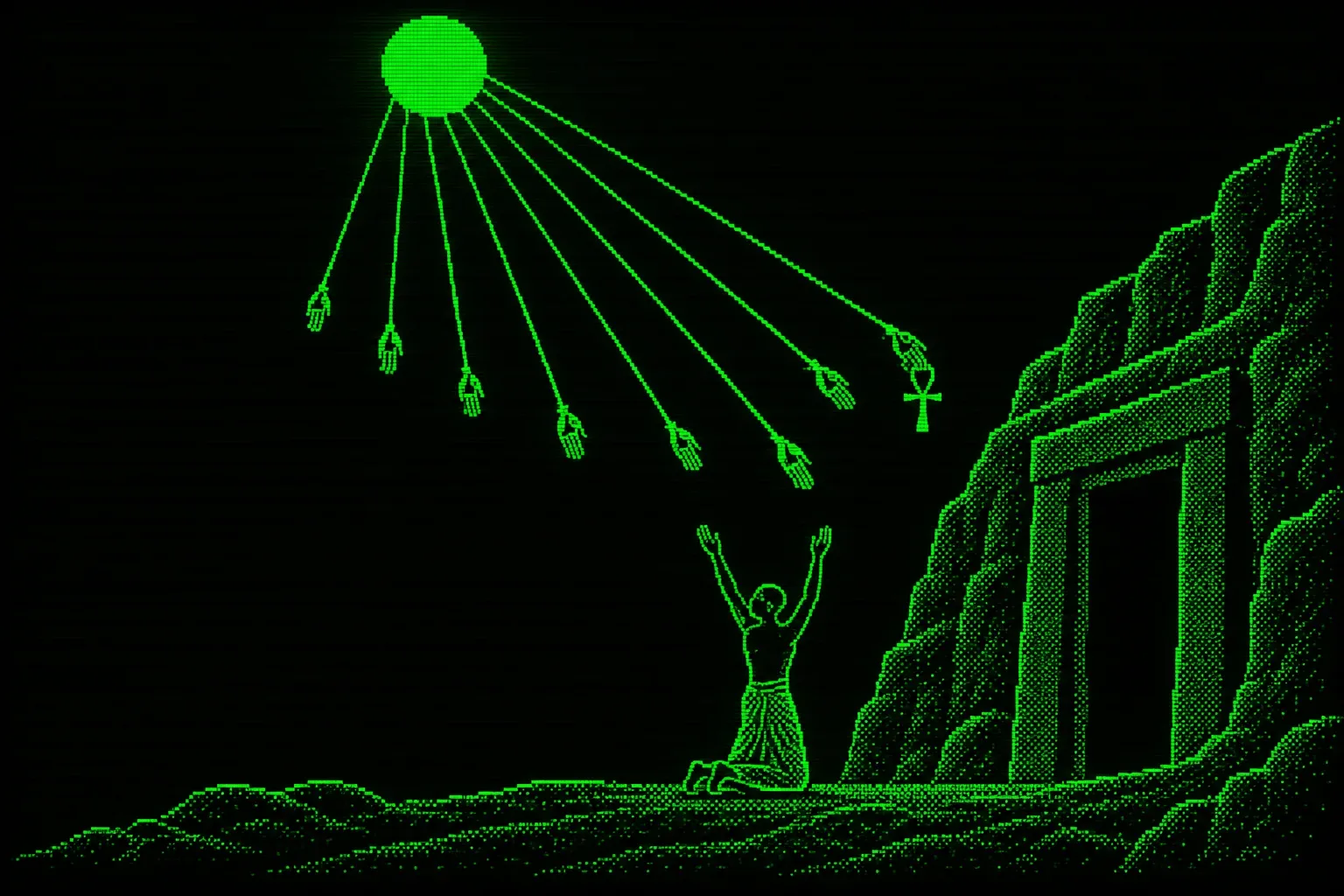
~/sacred-texts/amarna-tomb-inscriptions
Tomb of Meryre, Amarna: Prayers to Aten and Nefertiti
- Date
- Carved in the reign of Akhenaten, 18th Dynasty (c. 1353–1336 BC), on a doorway of the tomb of Meryre at Amarna
- Found
- Tomb of Meryre (Amarna Tomb 4), Northern Tombs, Tell el-Amarna, Egypt; still in place
- Language
- Egyptian · Hieroglyphic
- 1
𓇋𓀢𓏥 𓈖 𓎡 𓅮 𓋹 𓂔 𓋹𓐝𓐙𓏏 𓎟𓇿𓇿 𓇳𓄤𓆣𓇳𓌡𓈖 𓏙 𓋹
jꜣ,w n =k pꜣ Jtn ꜥnḫ kꜣ [nzw] ꜥnḫ-m-Mꜣꜥ,t nb-tꜣ.du Nfr-ḫpr.pl-Rꜥw-wꜥ-n-Rꜥw ḏi̯ ꜥnḫ
Praise to you, O living Aten, and to the ka of the King who lives on Maat, Lord of the Two Lands, Neferkheperure-Waenre, given life.
Note · Line 1
This is a door inscription from the Amarna tomb of the high priest Meryre, and its pattern repeats: praise to the Aten, the sun disc and sole god of Akhenaten’s reign, and to a royal figure, then a prayer for the tomb owner. - 2
𓂞 𓆑 𓅧𓈎𓂻 𓎿𓅱 𓉐𓂋𓂻 𓌸𓂋𓅱 𓊐𓊪𓂝 𓎿𓅱𓏥 𓈖 𓎟𓇿𓇿
ḏi̯ =f ꜥq ḥz,w pri̯ mr,w šzp ḥz,w n nb-Tꜣ.du
May he grant going in as one favoured, coming out as one beloved, and receiving the favours of the Lord of the Two Lands.
Note · Line 2
“He” is the king. The wish is for easy access to the palace: to come and go in royal favour and be rewarded. The same Egyptian word underlies both “favoured” and “favours.” - 3
𓐙𓊤
⸢n⸣ [kꜣ] [n] [wr-mꜣ,pl-n-pꜣ]-⸢Jtn⸣-m-Ꜣḫ,t-Jtn Mri̯-Rꜥw mꜣꜥ-ḫrw
For the ka of the Greatest of Seers of the Aten in Akhetaten, Meryre, true of voice.
Note · Line 3
“Greatest of Seers” was the title of the high priest; here it is applied to the Aten’s cult. - 4
𓇋𓀢𓏥 𓈖 𓎡 𓅮 𓇋𓏏𓈖𓇳 𓋹 𓂔 𓇓 𓋹𓐝𓐙𓏏 𓎟𓈍𓏥
jꜣ,w n =k pꜣ Jtn ꜥnḫ kꜣ nzw ꜥnḫ-m-Mꜣꜥ,t nb-ḫꜥ.pl [Ꜣḫ-n]-Jtn ꜥꜣ-m-ꜥḥꜥ,(w)≡f
Praise to you, O living Aten, and to the ka of the King who lives on Maat, Lord of Crowns, Akhenaten, great in his lifetime.
Note · Line 4
Akhenaten, “Effective for the Aten,” is the king’s personal name, which he took in place of Amenhotep. - 5
𓂞 𓆑 𓅓 𓉗𓏏𓉐 𓎡 𓈖 𓊨𓏏𓉐 𓎡 𓈖 𓂜 𓆣 𓊃𓐝𓐍 𓏲𓏏 𓂋𓈖 𓎡
ḏi̯ =f m ḥw,t =k n nḥḥ s,t =k n ⸢ḏ,t⸣ n ḫpr smḫ =tw rn =k
May he grant it as your mansion of eternity and your seat of everlastingness, that your name may never be forgotten.
Note · Line 5
The tomb itself was a gift from the king. Egyptian has two words for eternity, rendered here as “eternity” and “everlastingness.” - 6
𓈖 𓂋𓊪𓂝 𓄂𓂝 𓆤𓋨𓏏 𓈘𓂋𓂋𓎟𓏤𓆑 𓇳𓏤𓌸𓇋𓇋𓀼 𓐙𓊤
[n] ⸢kꜣ⸣ n jr,j-pꜥ,t ḥꜣ,tj-ꜥ ḫtm,tj-bjt mrr-nb≡f Mri̯-Rꜥw mꜣꜥ-ḫrw
For the ka of the hereditary noble and count, royal seal-bearer, beloved of his lord, Meryre, true of voice.
Note · Line 6
“Hereditary noble,” “count” and “royal seal-bearer” are court titles of high rank. They do not describe actual duties. - 7
𓇋𓀢𓏥 𓈖 𓎡 𓅮 𓇋𓏏𓈖𓇳 𓋹 𓇓𓈞𓏏𓅨𓏏 𓈘𓏏 𓆑 𓎟𓇿𓇿 𓋹 𓆓𓏏𓇿 𓎛𓇳𓎛
jꜣ,w n =k pꜣ Jtn ꜥnḫ ḥm,t-nzw-wr,t mri̯.t =f nb,t-Tꜣ.du Nfr-nfr.pl-Jtn-[Nfr,t-jy,tj] ꜥnḫ.[t] ḏ,t nḥḥ
Praise to you, O living Aten, and to the great royal wife whom he loves, Lady of the Two Lands, Neferneferuaten-Nefertiti, may she live for ever and ever.
Note · Line 7
Nefertiti means “The beautiful one has come.” Early in the reign it was lengthened with “Beautiful are the beauties of the Aten.” - 8
𓂞 𓆑 𓂋𓂧𓌗𓏛 𓊵𓏏𓊪 𓎡 𓐝 𓎡 𓂋𓈖 𓎡 𓂋 𓈖𓎛𓇳𓎛 𓆓𓏏𓇿
ḏi̯ ={f}〈s〉 rwḏ ḥtp =k m js =k dm rn =k r nḥḥ ḏ,t
May she grant that your rest endure in your tomb, and that your name be spoken for ever and ever.
Note · Line 8
The scribe carved “he” here, but the prayer is addressed to the queen, so “she” is meant. - 9
𓈖 𓇳𓏤𓌸𓇋𓇋𓀼 𓐙𓊤
⸢n⸣ [kꜣ] [n] [wr-mꜣ,pl-n]-pꜣ-Jtn-m-Ꜣḫ,t-Jtn Mri̯-Rꜥw mꜣꜥ-ḫrw
For the ka of the Greatest of Seers of the Aten in Akhetaten, Meryre, true of voice.
- 10
𓈖 𓎡 𓅮 𓇋𓏏𓈖𓇳 𓋹 𓂔 𓇓 𓋹𓐝𓐙𓏏 𓎟𓇿𓇿 𓏙 𓋹
jꜣ,w n =k pꜣ Jtn ꜥnḫ kꜣ nzw ꜥnḫ-m-Mꜣꜥ,t nb-tꜣ.du Nfr-ḫpr.pl-Rꜥw-⸢wꜥ⸣-[n]-Rꜥw ḏi̯ ꜥnḫ
Praise to you, O living Aten, and to the ka of the King who lives on Maat, Lord of the Two Lands, Neferkheperure-Waenre, given life.
- 11
𓂞 𓆑 𓏂𓈖𓈖𓈖 𓈖 𓎡 𓄟𓋴𓅂𓏥 𓈖 𓉐𓏤 𓎡 𓂋 𓂋𓏤 𓈖 𓎡
ḏi̯ =f qbḥ n =k ms,tw n pr =k r rʾ n js =k
May he grant that the children of your house pour cool water for you at the mouth of your tomb.
Note · Line 11
Pouring water at the tomb entrance was the basic offering that kept the dead alive. The word used for it means “to cool.” - 12
𓈖 𓆤𓋨𓏏
n [kꜣ] [n] ⸢ḫtm,tj-bjt⸣ smr-wꜥ,tj ⸢ṯꜣ,y⸣-[ḫw-ḥr-wnm,j-nzw] ⸢Mri̯-Rꜥw⸣ [mꜣꜥ-ḫrw]
For the ka of the royal seal-bearer, sole companion, fan-bearer on the king's right hand, Meryre, true of voice.
Note · Line 12
“Sole companion” and “fan-bearer on the king’s right hand” are honorific titles marking a man’s closeness to the king.