~/sacred-texts/egyptian-tales
Meryre and the Man of Clay: A Tale from Papyrus Vandier
- Text
- Egyptian tales, Papyrus Vandier, the tale of Meryre and Pharaoh Sisobek
- Date
- Copied in the Late Period, 26th Dynasty (about 664–525 BC), in hieratic
- Found
- Papyrus Vandier, now at the University of Lille (P. Lille 139)
- Language
- Late Egyptian · Hieratic
- 1
𓇋𓏲 𓌡𓂝𓏤 𓏞𓏲𓀀 𓈖 𓅯𓄿 𓉔𓏲𓈐𓇳𓏤 𓈖 𓇓𓏏𓆤 𓅭𓏤𓋴𓃀𓎢𓆊 𓆄𓊤 𓁷𓂋𓁶𓏤𓀀 𓇳𓌻𓅆𓀀 𓂋𓈖𓀁 𓆑 𓇋𓏲 𓈖𓄿𓈙𓂋𓇋𓏲𓅪 𓆑 𓈖 𓇋𓏲 𓈖𓄿𓄤𓆑𓂋𓏛 𓆑 𓈖 𓏞𓏲𓀀 𓅓𓍱𓏤𓏛 𓇋𓏲 𓃀𓏲 𓁹𓂋𓏭 𓈖𓄿 𓁷𓂋𓁶𓏤𓀀𓏥 𓂞𓏏 𓂋𓐍𓏛 𓉻𓉐𓉐 𓋹𓍑𓋴 𓅯𓄿𓇋𓇋 𓆑 𓄤𓆑𓂋𓏭𓏛𓀀 𓈖 𓏞𓏲𓀀 𓆓𓂧 𓃹𓈖 𓇋𓏲 𓉻𓉐𓉐 𓎛𓏲𓍯𓄿𓈐𓂻 𓈖𓄿𓏫 𓁷𓂋𓁶𓏤𓀀𓏥 𓂋𓈐𓂻 𓈖 𓆑
⸮jw? wꜥ zẖꜣ,w ⸢ḫpr⸣ n pꜣ h(ꜣ)w n nsw-byt Zꜣ-Sbk mꜣꜥ-ḫrw ḥr(,j)-dp Mri̯-Rꜥ rn =f jw nꜣ:šrjw =f ⸢n⸣ [ms]⸢,w⸣ jw nꜣ:nfr =f n zẖꜣ,w m-sš jw bw jri̯ nꜣ ḥr(,j).pl-dp ḏi̯.t rḫ pr-ꜥꜣ ꜥnḫ-(w)ḏꜣ-s(nb) pꜣy =f nfrj n zẖꜣ,w (r-)ḏd wn jw pr-ꜥꜣ [ꜥnḫ]-(w)ḏꜣ-s(nb) (r) ḥw~wꜣ nꜣ ḥr(,j).pl-dp r-bn(r) n =⸮f?
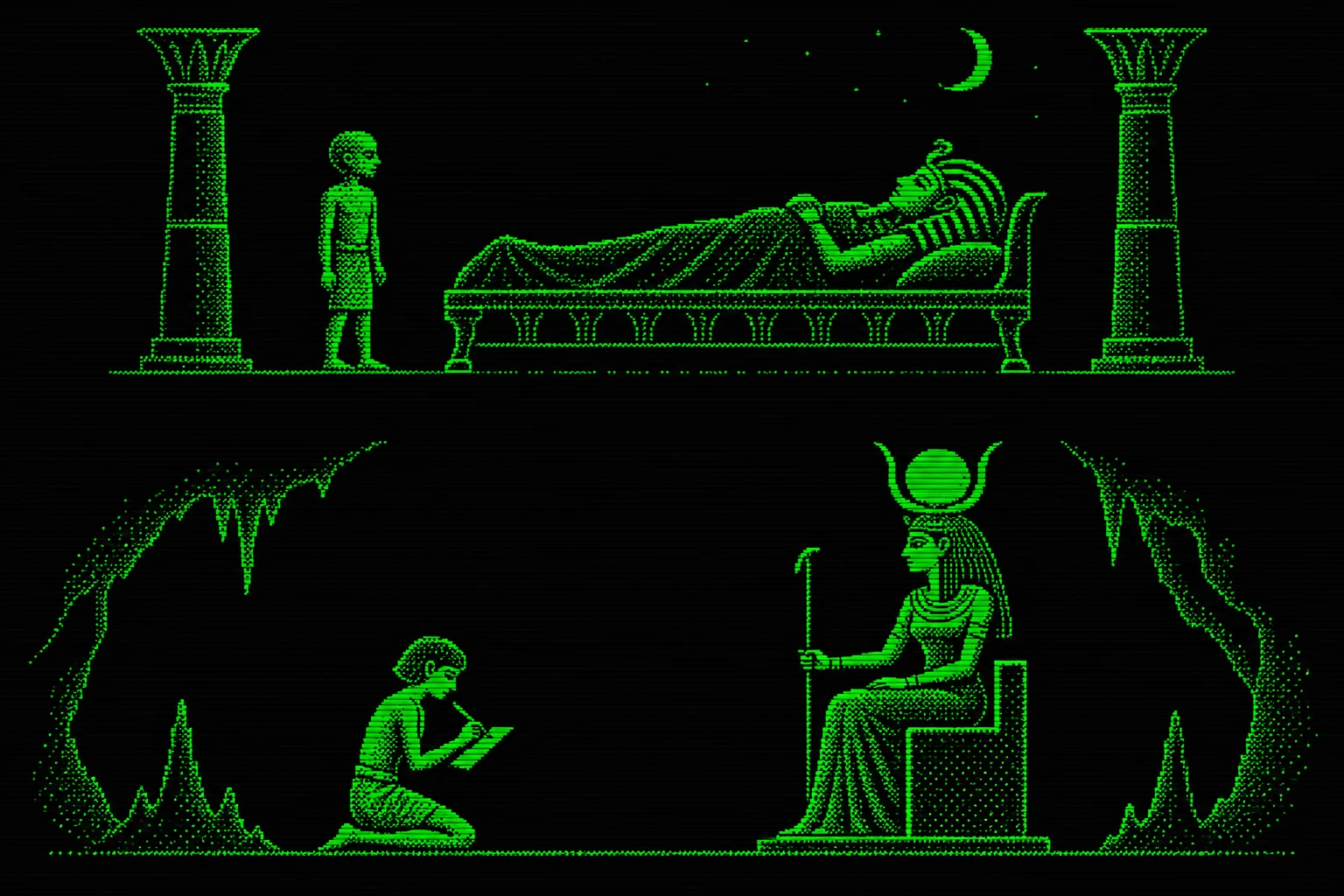
In the days of the King of Upper and Lower Egypt, Sisobek the Justified, there lived a scribe. His name was Meryre the magician. He was as young as a child, yet already a very fine scribe. The magicians never let Pharaoh (life, prosperity, health!) know how fine a scribe he was, for Pharaoh (life, prosperity, health!) would have driven them out on his account.
Note · Line 1
“The Justified” looks back on Sisobek as a dead king found worthy in the judgment of the dead. “Life, prosperity, health!” is the customary blessing for Pharaoh as the living king in the story. - 2
𓐍𓂋 𓃀𓏲 𓁹𓂋𓏭 𓉻𓉐𓉐 𓋹𓍑𓋴 𓂋 𓏶𓅓𓀁 𓂝𓈎𓏲𓏛𓏥 𓈖 𓎼𓂋𓎛𓏲𓇳 𓇋𓏲 𓈖𓄿𓏫𓉻𓂝𓏛 𓁹𓏏𓏤 𓈖 𓉻𓉐𓉐 𓋹𓍑𓋴 𓅓𓍱𓏤𓏛
ḫr bw jri̯ pr-ꜥꜣ ꜥnḫ-(w)ḏꜣ-s(nb) hꜣ~wꜣ~šꜣ r wnm ꜥq,w n grḥ jw nꜣ:ꜥꜣi̯ jr,t n pr-ꜥꜣ ꜥnḫ-(w)ḏꜣ-s(nb) m-sš
Now Pharaoh (life, prosperity, health!) never missed his meal at night, and the eye of Pharaoh (life, prosperity, health!) was very large indeed.
Note · Line 2
The large eye suggests a hearty appetite. That makes the sudden change in how Pharaoh’s supper tastes all the more alarming. - 3
𓇋𓀁𓁹𓂋𓏏 𓌡𓂝𓏤 𓎼𓂋𓎛𓏲𓇳 𓆣𓂋𓏛 𓎝𓎛𓏛 𓉻𓉐𓉐 𓋹𓍑𓋴 𓂝𓈎𓏲𓏛𓏥 𓂋 𓅯𓄿𓇋𓇋 𓆑 𓏶𓅓𓀁 𓈖 𓋴𓆑𓇳𓏤
j:jri̯{.t} wꜥ grḥ ḫpr wꜣḥ pr-ꜥꜣ ꜥnḫ-(w)ḏꜣ-s(nb) ꜥq,w r pꜣy =f wnm n sf
One night Pharaoh (life, prosperity, health!) added still more food to his usual fare.
- 4
𓁹𓂋 𓅯𓄿 𓂝𓈎𓏲𓏛𓏥 𓂧𓊪𓄓𓏛𓀁 𓈎𓄿𓇉𓄿𓇋𓇋𓏏𓈇𓏤
jri̯ pꜣ ꜥq,w dp(,t) qꜣ~ḥꜣ~,⸢y⸣t
The food tasted of clay,
- 5
𓁹𓂋 𓈖𓄿𓏫 𓎛𓈎𓏏𓏊𓏫 𓂧𓊪𓄓𓏛𓀀 𓈗 𓈖 𓂋𓏤 𓆑
jri̯ nꜣ ḥ(n)q,t dp(,t) mw n rʾ =f
and the beers tasted of water in his mouth.
- 6
𓊢𓂝𓂻 𓁹𓏏𓏤𓄹 𓈖 𓈖𓄿𓏫 𓐍𓇋𓇋𓃭𓏤𓏱𓏥 𓈖 𓉻𓉐𓉐 𓋹𓍑𓋴
⸢ꜥḥꜥ⸣ ⸢jr,t⸣ n nꜣ ḫj~y~rw.pl n pr-ꜥꜣ ⸢ꜥnḫ-(w)ḏꜣ-s(nb)⸣
Up went the eye of the enemies of Pharaoh (life, prosperity, health!).
Note · Line 6
It is Pharaoh’s own eye that lifts. When something bad happens to the king, the storyteller speaks as though it had happened to his enemies instead. - 7
𓃀𓈖𓏛𓊪 𓆑
bn-p(w) =f nꜣ:⸢qd⸣qd{.t}
He could not sleep.
- 8
𓃀𓈖𓊪𓏛 𓈖𓄿𓇋𓇋 𓆑 𓎛𓃀𓋴𓍱𓏥 𓂧𓏇𓇋𓇋𓆈𓂡 𓈖 𓆑
bn-p(w) nꜣy =f ḥbs.pl dmy n =f
His clothes would not stay on him.
- 9
𓆣𓂋𓏛 𓆑 𓇋𓏲 𓆑 𓏇𓇋𓐪𓂧𓏌𓏛 𓂋𓎀𓀀𓏥 𓇋𓏲 𓆑 𓂻𓏲 𓂋𓇯 𓈖 𓅯𓄿
ḫpr =f ⸢jw⸣ =⸢f⸣ mj-qd r(m)ṯ{.pl} jw =f jwi̯ r-ḥr n pꜣ ⸢jtr,w⸣
He was like a man who had just come up out of the river.
Note · Line 9
The comparison suggests that Pharaoh is drenched in sweat. - 10
𓂞 𓆑 𓂝𓈙𓀞𓀁 𓏲𓏫 𓂋 𓈖𓄿𓇋𓇋 𓆑 𓁷𓂋𓁶𓏤𓀀𓏥 𓇥𓂋 𓏲𓏫
ḏi̯ =f ꜥš =w r nꜣy =f ḥr(,j).pl-dp ḏr =[w]
He had all his magicians summoned.
Note · Line 10
The court magicians were experts in written spells and rituals. Meryre’s skill as a scribe makes him a rival in their own field. - 11
𓆓𓂧 𓋹𓍑𓋴 𓅯𓄿 𓈎𓄿𓀾 𓈖𓏏𓏭 𓆣𓂋𓏛 𓈖𓇋𓅓 𓆑 𓇋𓀁𓁹𓂋𓁷𓏤Ff203 𓏲𓏫
ḏd pr-ꜥꜣ ꜥnḫ-(w)ḏꜣ-s(nb) pꜣ qꜣ n,tj ḫpr n-jm =f j:jri̯-ḥr =w
Pharaoh (life, prosperity, health!) described to them what had come over him.
- 12
𓁹𓂋 𓈖𓄿𓇋𓇋 𓆑 𓁷𓂋𓁶𓏤𓀀𓏥 𓆷𓄿𓂋𓂋𓀞 𓅓𓍱𓏤𓏛
jri̯ nꜣy =f ḥr(,j).pl-dp šꜣ~rr m-sš
His magicians let out a great wail.
- 13
𓆓𓂧 𓏲𓏫 𓈖 𓆑
ḏd =w n =f
They said to him:
- 14
𓅯𓄿𓇋𓇋 𓀀 𓎟 𓉻𓅆 𓅯𓄿𓏭 𓐪𓂧𓏌𓏛 𓈖𓏏𓏭 𓆣𓂋𓏛 𓈖 𓈖𓄿 𓈖 𓉐𓉻𓅆 𓆣𓂋𓏛 𓆑 𓈖 𓇳𓊽𓂓𓏤
pꜣy =j nb ꜥꜣ pꜣj qd n,tj ḫpr n nꜣ ḫr⸢y⸣[.pl] n pr-ꜥꜣ ḫpr =f n ⸢Ḏd⸣-kꜣ-Rꜥ
“My great lord, what has come upon the enemies of Pharaoh once came upon Djedkare.”
Note · Line 14
Djedkare was an earlier king. His case gives the magicians both a warning about Sisobek’s illness and a reason to hope that someone can intervene. - 15
𓊪𓃭𓏤𓐍𓆸 𓈖𓄿𓇋𓇋 𓆑 𓁷𓂋𓁶𓏤𓀀𓏥 𓈖𓄿𓇋𓇋 𓏲𓏫 𓍑𓄿𓌷𓂝𓎅𓍼𓏥
prwḫ nꜣy =f ḥr(,j).pl-dp nꜣy =w ḏꜣ~mꜣꜥ.pl
His magicians unrolled their papyrus scrolls.
- 16
𓇋𓀁𓁹𓂋𓏭 𓏲𓏫 𓅠𓅓𓏛𓍘 𓆑 𓇋𓏲 𓉔𓏲𓂋𓇳𓏤𓏫 𓅯𓄿 𓈖𓏏 𓏭𓂢 𓈖 𓅯𓄿𓇋𓇋 𓆑 𓊢𓂝𓇳𓏤 𓇋𓏲 𓃀 𓂋𓐍𓏛 𓂋𓈖𓀁 𓆑 𓅯𓄿 𓇋𓀁𓁹𓂋𓏭 𓂧𓃀𓎛𓏲𓏭𓄑𓀁 𓈖 𓆑 𓊢𓂝𓇳𓏤
j:jri̯ =w gmi̯.ṱ =f jw 7 ⸢hwr⸣[.pl] pꜣ n,t(j) (ḥr) zpi̯ n pꜣy =f ꜥḥꜥ [[jw]] b(w) rḫ =〈w〉 rn [n] [pꜣy] =[f] ḥr(,j)-[dp] pꜣ j:jri̯ dbḥ n =f ꜥḥꜥ
They found that he had just seven days left to live. They did not know the name of Djedkare’s magician, the one who had asked for more life for him.
- 17
𓆣𓂋𓏛 𓆑 𓇋𓏲 𓈖𓄿𓏫 𓐍𓏭𓇋𓇋𓃭𓏤𓏱𓏥 𓈖 𓉻𓉐𓉐 𓋹𓍑𓋴 𓊪𓎼𓄿𓇋𓏲𓅪
ḫpr =f jw nꜣ ḫj~y~rw.pl n pr-ꜥꜣ ꜥnḫ-(w)ḏꜣ-s(nb) p[g]ꜣ m-[sš]
Then the enemies of Pharaoh (life, prosperity, health!) fell into deep dejection.
- 18
𓆓𓂧 𓆑 𓈖 𓈖𓄿𓇋𓇋 𓆑 𓁷𓂋𓁶𓏤𓀀𓏥
ḏd =f n nꜣy =f ḥr(,j).pl-dp
He said to his magicians:
- 19
𓇋𓈖 𓃹𓈖 𓌃𓂧𓏏𓀁 𓃀𓇋𓏏𓈖𓅪 𓇋𓏲 𓀀 𓇓𓏲 … 𓈖𓇋𓅓 𓏏𓈖𓏥 𓂞𓏏 𓅓𓏏𓏱 𓀀 𓇋𓀁𓁹𓂋𓏭𓁷𓏤Ff203 𓇋𓏲 𓃀𓈖𓊪𓏛 𓏏𓈖𓏥 𓂧𓃀𓎛𓏲𓄑𓀁 𓈖 𓀀 𓊢𓂝𓇳𓏤
jn wn mdw,t bjn.t jw ⸢jri̯⸣ =j ⸢sw⸣ [...] n-jm =tn (ḥr) ḏi̯.t m(w)t =[j] j:jri̯-ḥr =t[n] jw bn-p(w) =tn dbḥ n =j ꜥḥꜥ
“Is it some wrong I did … to one of you that is killing me before your eyes, since you have not asked for more life for me?”
- 20
𓂋𓂋𓅓𓁻 𓈖𓄿𓇋𓇋 𓆑 𓅓𓍱𓏤𓏛
rrmi̯ nꜣy =⸢f⸣ [ḥr(,j)].pl-dp m-sš
His magicians wept bitterly.
- 21
𓆓𓂧 𓏲𓏫
ḏd =w
They said:
- 22
𓅯𓄿𓇋𓇋 𓀀 𓎟 𓉻𓅆 𓋹𓈖𓐍𓏛 𓁷𓏤𓅆 𓎢
pꜣy =j nb ꜥꜣ ꜥnḫ ḥr =k
“My great lord, as surely as your face lives,
Note · Line 22
This is an oath: the magicians swear by the life of the king they are addressing. - 23
𓅓𓈖𓏥𓂜𓅪 𓂋𓎀𓀀𓏥 𓈖𓇋𓅓 𓈖𓏥 𓇋𓏲 𓇋𓏲 𓆑 𓂋𓐍𓏛 𓂧𓃀𓎛𓏲𓄑𓀁 𓊢𓂝𓇳𓏤 𓈖 𓉻𓉐𓉐 𓋹𓍑𓋴
mn r(m)ṯ[{.pl}] n-jm =n jw jw =f (r) rḫ dbḥ ꜥḥꜥ n pr-ꜥꜣ ꜥnḫ-(w)ḏꜣ-s(nb)
there is not a man among us who will know how to ask for more life for Pharaoh (life, prosperity, health!).
- 24
𓇋𓀁 𓂋𓐍𓏛 𓇳𓌻𓅆𓀀 𓂧𓃀𓎛𓏲𓄑𓀁 𓊢𓂝𓇳𓏤 𓈖 𓉻𓉐𓉐 𓋹𓍑𓋴
j~ rḫ Mri̯-Rꜥ dbḥ ꜥḥꜥ n pr-ꜥꜣ ꜥnḫ-(w)ḏꜣ-s(nb)
Meryre will know how to ask for more life for Pharaoh (life, prosperity, health!).”
- 25
𓈍𓂝𓏭𓂋𓏲𓏛𓀜 𓉻𓉐𓉐 𓆄𓊤 𓇋𓀁𓂋 𓏲𓏥 𓅓𓍱𓏤𓏛 𓆓𓂧
ḫꜥr pr-ꜥꜣ mꜣꜥ-ḫrw j-r =w m-sš (r-)ḏd
Pharaoh the Justified flew into a rage at them and said:
- 26
𓇋𓈖 𓃹𓈖 𓅯𓄿𓏭 𓂋𓎀𓀀𓏥 𓂧𓈐 𓇋𓏲 𓃀𓈖𓊪𓏛 𓏏𓈖𓏥 𓂋𓐍𓏛𓏭 𓀀 𓅯𓄿𓇋𓇋 𓆑 𓄤𓆑𓂋𓏛 𓈖 𓏞𓏲𓀀 𓈖 𓅯𓄿 𓋴𓋴𓏲𓇳 𓈖 𓂞𓏏 𓉻𓂝𓏛 𓆑 𓇋𓀁𓃹𓈖 𓇋𓏲 𓀀 𓂋 𓁹𓂋 𓆑
jn wn j[w] pꜣj r(m)ṯ{.pl} nfr dj jw ⸢b⸣n-p(w) =tn ḏi̯.t rḫj =j pꜣy =f nfr n zẖꜣ,w n pꜣ ssw n ḏi̯.t ꜥꜣi̯ =f j:wn jw =j r jri̯ =f
“Was this fine man here, and you never let me know how fine a scribe he was when I would have raised him to high rank?
- 27
𓊪𓏏𓂋𓆳𓁻𓏥 𓇓𓏲 𓇋𓀁𓁹𓂋 𓏏𓈖𓏥 𓂞𓏏 𓂋𓐍𓏛 𓀀 𓅯𓄿𓇋𓇋 𓆑 𓄤𓆑𓂋𓏛 𓈖 𓏞𓏲𓀀 𓈖 𓅯𓄿 𓋴𓋴𓏲𓇳 𓈖 𓅓𓏏𓏱 𓈖𓏏𓏭 𓇋𓏲 𓀀 𓂋 𓁹𓂋 𓆑
ptr sw j:jri̯ =tn ḏi̯.t rḫ =j pꜣy =f nfr n zẖꜣ,w n pꜣ ssw n m(w)t n,t[j] ⸢jw⸣ =j r jri̯ =f
Look! Now that my time has come to die, you let me know how fine a scribe he is!”
- 28
𓂞𓏏 𓉻𓉐𓉐 𓋹𓍑𓋴 𓂝𓈙𓀞 𓏲𓏫 𓂋 𓇳𓌻𓅆𓀀
ḏi̯{.t} pr-ꜥꜣ ꜥnḫ-(w)ḏꜣ-s(nb) ꜥš =w r Mri̯-Rꜥ
Pharaoh (life, prosperity, health!) had Meryre summoned,
- 29
𓇋𓏲 𓆑 𓂻𓏲𓂻 𓂋𓁷𓂋𓇯 𓅓𓂺 𓉻𓉐𓉐 𓋹𓍑𓋴
jw =f jwi̯ r-ḥr m-bꜣḥ pr-ꜥꜣ ꜥnḫ-(w)ḏꜣ-s(nb)
and he came up into the presence of Pharaoh (life, prosperity, health!).
- 30
𓆓𓂧 𓉻𓉐𓉐 𓆄𓊤 𓈖 𓇳𓌻𓅆𓀀
ḏd pr-ꜥꜣ mꜣꜥ-ḫrw n Mri̯-Rꜥ
Pharaoh the Justified said to Meryre:
- 31
𓊏𓊪𓀜 𓏲𓏏𓎢 𓅯𓄿𓇳𓅆 𓈖 𓊏𓊪𓀜
šsp tw≡k Pꜣ-Rꜥ n šsp ⸢⸮nfr?⸣
“May Ra welcome you with a fair welcome!
Note · Line 31
Meryre’s name means “beloved of Ra.” Pharaoh greets him by calling on the sun god whose name he bears. - 32
𓀞 𓋹𓈖𓐍𓏛 𓆑
j ꜥnḫ =f
Oh, may he live!
Note · Line 32
A speaker could wish someone life in the third person even while addressing them directly. - 33
𓂧𓃀𓎛𓏲𓏭𓄑𓀁 𓈖 𓀀 𓊢𓂝𓇳𓏤
dbḥ n =j ꜥḥꜥ
Ask for more years of life for me!”
Note · Line 33
The request means a journey to the realm of the dead. What terrifies Meryre is not that his plea might fail, but that he might never come back. - 34
𓂋𓂋𓅓𓁿 𓇳𓌻𓅆𓀀 𓅓𓍱𓏤𓏛
rrmi̯ Mri̯-Rꜥ m-sš
Meryre wept bitterly.
- 35
𓆓𓂧 𓆑 𓈖 𓉻𓉐𓉐 𓋹𓍑𓋴
ḏd =f n pr-ꜥꜣ ꜥnḫ-(w)ḏꜣ-s(nb)
He said to Pharaoh (life, prosperity, health!):
- 36
𓅯𓄿𓇋𓇋 𓀀 𓎟 𓉻𓅆 𓇋𓏲 𓀀 𓂋𓐍𓏛 𓂧𓃀𓎛𓏲𓄑𓀁 𓊢𓂝𓇳𓏤 𓈖 𓉻𓉐𓉐 𓋹𓍑𓋴
pꜣy =j nb ꜥꜣ jw =j (r) rḫ dbḥ ⸢ꜥḥꜥ⸣ n pr-ꜥꜣ ꜥnḫ-(w)ḏꜣ-s(nb)
“My great lord, I shall be able to ask for more years of life for Pharaoh (life, prosperity, health!).
- 37
𓏌𓀀𓎢 𓇋𓏲 𓀀 𓇋𓀁 𓅓𓏏𓏱
jnk ⸢jw⸣ =j j~ m(w)t
But I—I shall die.”
- 38
𓆓𓂧 𓉻𓉐𓉐 𓆄𓊤 𓈖 𓇳𓌻𓀁𓀀
ḏd pr-ꜥꜣ mꜣꜥ-ḫrw n Mri̯-Rꜥ
Pharaoh, the justified, said to Meryre:
- 39
𓀞 𓋹𓈖𓐍𓏛 𓆑
j ꜥnḫ =f
“Oh, may he live!
- 40
𓇋𓏲 𓀀 𓎛𓎿𓋴𓀁𓏲𓏏 𓎢 𓅓𓍱𓏤𓏛
jw =j (r) ḥsi̯.ṱ =k m-sš
I will show you great favor.
- 41
𓇋𓏲 𓀀 𓈖 𓅯𓄿𓇋𓇋 𓎢 𓀔𓈙𓂋𓇋𓏲𓅪
jw =j (r) 〈⸮rjrj?〉 ⸢n⸣ ⸢pꜣ⸣y =k šrjw
I will raise your son.
- 42
𓇋𓏲 𓀀 𓂞𓏏 𓄖𓂻 𓆑 𓅯𓄿𓇋𓇋 𓎢 𓉻𓂝𓏛𓏫
[jw] =⸢j⸣ (r) ḏi̯.t pḥ =f pꜣy =k ꜥꜣ,pl
I will see that he rises to your stature.
- 43
𓇋𓏲 𓀀 𓎛𓎿𓋴𓀁𓏲𓏏 𓎢 𓈖 𓈖𓄿𓏫 𓂋𓏥𓉐𓏫𓊖𓏥 𓇥𓂋 𓏲𓏫
jw =j (r) ḥsi̯.ṱ =k n nꜣ rʾ.pl-pr ḏr =w
I will honor you in all the temples.
- 44
𓇋𓏲 𓂞𓏏 𓏠𓈖𓏌𓏲𓍖 𓎢 𓈖 𓉺𓏌𓊖𓅆
jw =〈j〉 (r) ḏi̯.t mnw =⸢k⸣ n Jwn,w
I will make you endure in Heliopolis.
Note · Line 44
Heliopolis was the great center of Ra’s worship. Pharaoh is promising Meryre a lasting place in the god’s city. - 45
𓇋𓏲 𓀀 𓂞𓏏 𓉐𓂋𓂻 𓈖 𓎢 𓅯𓄿 𓇾𓏤𓈇 𓈖 𓈖𓐍𓇋𓇋𓁿
jw =j (r) ḏi̯.t pri̯ n =k pꜣ tꜣ n nḫy
I will have the land come out to you in mourning.
- 46
𓇋𓏲 𓀀 𓂞𓏏 𓏠𓈖𓈎𓍼𓏥 𓈖 𓎢 𓈖𓄿𓇋𓇋 𓎢 𓊵𓏏𓊪𓄦𓆰𓏫
jw =j (r) ḏi̯.t mnq n =k nꜣy =k ḥtp[.⸮w?].pl
I will see that your food offerings are made in full for you.
Note · Line 46
Food offerings were meant to sustain the dead. Keeping Meryre’s name in use, as Pharaoh goes on to promise, would also help him continue to exist after death. - 47
𓇋𓏲 𓀀 𓂞𓏏 𓏠𓈖𓏌𓏲𓇳𓏤 𓂋𓈖 𓎢𓅆 𓂋𓅘𓎛𓎛𓇳𓆓𓏏𓇾
jw =j (r) ḏi̯.t mnw rn =k r-nḥḥ-ḏ,t
I will make your name endure forever and ever.
- 48
𓃀𓈖 𓇋𓏲 𓀀 𓂞𓏏 𓄿𓈎𓄿𓅪 𓂋𓈖 𓎢𓅆 𓈖 𓈖𓄿𓏫
bn jw =j (r) ḏi̯.t ꜣqꜣ rn =k n nꜣ rʾ.pl-[pr]
I will not let your name perish in the temples.”
- 49
𓌃𓂧𓏏𓀁 𓇳𓌻𓂋𓏲𓏏𓀁𓀀 𓂋𓏤𓅓𓂝 𓄂𓏏𓏭𓄣𓏤𓄹 𓆑
mdwi̯{.t} Mr⸢,wt⸣-Rꜥ rʾ~mꜥ ḥꜣ,tj =f
Meryre spoke with his own heart.
Note · Line 49
Egyptians understood the heart as the seat of thought as well as feeling. Meryre is thinking the offer over in silence. - 50
𓂋𓂋𓅓𓁿 𓆑 𓇋𓏲 𓆑 𓈖𓐪𓂧𓏌𓏛 𓈗𓈘𓈇 𓇋𓏲 𓆑 𓌫𓂡
rrmi̯ =f jw =f n-qd mw jw =f šꜥd
He wept. He was like water; he was cut to the quick.
- 51
𓆓𓂧 𓆑
⸢ḏd⸣ =f
He said:
- 52
𓅯𓄿𓇋𓇋 𓀀 𓎟 𓉻𓅆 𓅯𓄿 𓀞𓋴𓆰𓈖 𓈖 𓅯𓄿 𓏲𓐎𓏏𓏤𓍱𓀜𓀀 𓅯𓄿 𓈖𓇋𓅓 𓀀 𓁹𓂋𓏭 𓏲𓏫 𓂝𓈙𓀞 𓆑 𓂋 𓌡𓂝𓏤 𓉔𓏲𓂋𓇳𓏤
pꜣy =j nb ꜥꜣ pꜣ ꜥš-sḥn n pꜣ wt pꜣ j[:jri̯] [ḫpr] n-jm =j n,tj-[jw] [bw] jri̯ =w ꜥš [r] =f r wꜥ hrw
“My great lord, what is happening to me is the embalmer’s business, and no one sends for him before the day comes.
Note · Line 52
The embalmer prepared a dead person’s body for burial. To Meryre, Pharaoh’s generous promises sound like arrangements for his funeral. - 53
𓊪𓏏𓂋𓆳𓁻 𓇓𓏲 𓏌𓀀𓎢 𓏲𓏫 𓏲𓆼𓄿𓐍𓂻 𓅓𓏏𓏱 𓀀 𓇋𓏲 𓃀𓈖𓊪𓏛 𓏲𓏫 𓂞𓏏 𓌴𓁹𓄿𓄿 𓀀 𓅯𓄿 𓄤𓆑𓂋𓏛 𓈖 𓉻𓉐𓉐
ptr sw jnk j:[jri̯] =w wḫꜣḫ [r] [ḏi̯.t] m(w)t =j ⸢jw⸣ bn-p(w) =w ḏi̯.t mꜣꜣ =j pꜣ nfr n pr-ꜥꜣ [ꜥnḫ-(w)ḏꜣ-s(nb)]
Look, it is me they seek to kill, and they have not let me see the goodness of Pharaoh (life, prosperity, health!).
- 54
𓂋 𓅯𓄿 𓅓𓏏𓏱 𓇋𓏲 𓀀 𓈙𓂋𓇋𓏲𓅪𓎢𓏲𓀀 𓈖 𓄟𓋴𓏲𓀔 𓅓𓍱𓏤𓏛
⸮[j:jri̯]? =⸮[w]? ⸮⸢ḏi̯⸣[.t]? ⸮[šmj]? =⸮[j]? r ⸢pꜣ⸣ m(w)t jw =j šr.kwj n ms,w m-sš
They are sending me to my death when I am still so young, a mere child.”
- 55
𓆓𓂧 𓉻𓉐𓉐 𓈖 𓇳𓌻𓀀𓅆
⸢ḏd⸣ pr-ꜥꜣ [ꜥnḫ]-(w)ḏꜣ-s(nb) n ⸢Mri̯-Rꜥ⸣
Pharaoh (life, prosperity, health!) said to Meryre:
- 56
𓀞 𓋹𓈖𓐍𓏛 𓆑
⸢j⸣ ⸢ꜥnḫ⸣ =f
“Oh, may he live!
- 57
𓇋𓏲 𓀀 𓂋 𓂞𓏏 𓂋𓐍𓏛 𓎢 𓇓𓏲 𓆓𓂧
jw =j r ḏi̯.t rḫ =k ⸢sw⸣ (r-)ḏd
I will have you know this:
- 58
𓇋𓏲 𓎢 𓂋 𓋹𓈖𓐍𓏛
jw =k r ꜥnḫ
You will live.
- 59
𓃀𓈖 𓇋𓏲 𓎢 𓅓𓏏𓏱
⸢bn⸣ ⸢jw⸣ =k (r) m(w)t
You will not die.
- 60
… 𓈖𓂝𓂾𓂻𓏲𓏏 𓂋 𓋹𓈖𓐍𓏛 𓀀
[...] nꜥi̯.ṱ r [ḏi̯]⸢.t⸣ ⸢ꜥnḫ⸣ =[⸮j?]
… traveling to keep me alive.”
- 61
𓇋𓈖 𓈖𓏏𓎡 𓅯𓄿 𓈖𓏏𓏭 𓃀𓈖 𓇋𓏲 𓎢 𓋹𓈖𓐍𓏛
jn ntk pꜣ n,tj bn jw =k (r) ꜥnḫ
“Are you the one who will not live?”
- 62
𓆓𓂧 𓇳𓌻𓀁𓅆𓀀
ḏd Mri̯-Rꜥ
Meryre said:
- 63
𓀀 𓎟 𓉻𓅆 𓌃𓂧𓏏𓀁 … 𓇋𓏲 𓃀𓈖𓊪𓏛 𓇓𓏲 𓆣𓂋𓏛 𓂝𓈖𓂽 𓂋𓍿𓀀𓏥 𓇋𓏲 𓆑 …
⸢pꜣy⸣ =⸢j⸣ ⸢nb⸣ ⸢ꜥꜣ⸣ mdw,t [...] jw ⸢bn⸣-p(w) =⸢sw⸣ ḫpr ꜥn r(m)ṯ{.pl} jw =[f] (ḥr) d[bḥ] ⸢ꜥḥꜥ⸣ [...]
“My great lord, such a thing … has never happened: that a man should come back after asking for more years of life …”
- 64
𓆑 𓆓𓂧
[jw] =⸢f⸣ (ḥr) ḏd
He went on:
- 65
𓅯𓄿𓇋𓇋 𓀀 𓎟𓅆 𓉻𓂝𓏛 𓆣𓂋𓏛 𓇋𓏲 𓈖𓏏𓎢 𓅯𓄿 𓈖𓏏 𓇋𓏲 𓆑 𓂋 𓂞𓏏 𓅓𓏏𓏱 𓀀
pꜣy =j ⸢nb⸣ ꜥꜣ ⸢ḫpr⸣ jw ntk pꜣ n,tj jw =f r ḏi̯.t m(w)t =j
“My great lord, then it is you who will send me to my death.
- 66
𓅓𓂝𓇋𓇋𓀁 𓁹𓂋 𓂋 𓆓𓂧𓏲𓏏 𓏫 𓈖 𓆑
my jri̯ [⸮n?] =[⸮j?] pr-ꜥꜣ [ꜥnḫ-(w)ḏꜣ]-s(nb) [⸮nꜣ?] [⸮n,tj?] [⸮jw?] =[⸮j?] r ḏd.ṱ =w n =f
May Pharaoh (life, prosperity, health!) do for me what I am about to ask of him.”
- 67
𓆓𓂧 𓈖 𓆑 𓉻𓉐𓉐 𓋹𓍑𓋴
ḏd n =f pr-ꜥꜣ ꜥnḫ-(w)ḏꜣ-s(nb)
Pharaoh (life, prosperity, health!) said to him:
- 68
𓋹𓈖𓐍𓏛 𓆑
[j] ⸢ꜥnḫ⸣ =f
“Oh, may he live!
- 69
𓇋𓀁𓆓𓂧 𓎢 𓋴𓏏𓏥
⸢j:ḏd⸣ [⸮pꜣ?] [⸮n,tj?] [⸮mri̯?] =k st
Say what you wish.
- 70
𓁹𓂋𓏭 𓈖 𓎢
jri̯ =[j] [st] ⸢n⸣ =⸢k⸣
I will do it for you.”
- 71
𓆓𓂧 𓇳𓌻𓀁𓅆𓀀
⸢ḏd⸣ [n] =[f] Mri̯-Rꜥ
Meryre said to him:
- 72
𓂝𓂋𓈎𓍼𓏛 𓈖 𓀀 𓅓𓂺𓏛 𓊪𓏏𓎛𓅆 𓆓𓂧
ꜥrq n =j m-bꜣḥ Ptḥ (r-)ḏd
“Swear to me before Ptah:
Note · Line 72
Ptah, the chief god of Memphis, is to witness the oath. Meryre dictates the words: “I” is Pharaoh, and “your wife” is Meryre’s wife. - 73
𓃀𓈖 𓇋𓏲 𓀀 𓂞𓏏 𓏏𓄿𓇋𓇋𓏯 𓎢 𓈞𓏏𓁐 𓂋𓈐𓂻 𓈖 𓅯𓄿𓇋𓇋 𓎢 𓉐𓏤
bn jw =j (r) ⸢ḏi̯⸣.t _ Ḥnw,t-nfr[,t] tꜣy =k ḥm,t r-bnr n pꜣy =k pr
‘I will not let Henutnofret, your wife, be turned out of your house.
- 74
𓀙𓀀 𓇋𓀁𓂋 𓊃 𓇋𓏲 𓀀 𓍘𓏏𓍘𓏏𓏛𓏥 𓇓𓏲 𓈖𓏏𓏭 𓇋𓏲 𓀀 𓁹𓂋 𓆑 𓈖 𓏏𓄿𓇋𓇋 𓀀 𓇓𓏏𓈖𓈞𓏏𓁗
j:[⸮jri̯?] [n]w[ꜣ] (n) sr j~r =s ⸢jw⸣ =⸢j⸣ (r) tjttjt =⸢sw⸣ [r-ẖ,t] [pꜣ] n,tj jw =j (r) jri̯ =f n tꜣy =j ⸢ḥm⸣,t-nsw
If a nobleman casts his eye on her, I will rebuke him, just as I would for my own queen.
- 75
𓐍𓂋𓀁 𓃀𓈖 𓏲𓏫 𓇓𓏲 𓈖 𓅯𓄿𓇋𓇋 𓀀 𓉔𓄿𓈐𓇳𓏤 𓀀
ḫr [b]n [jw] =[j] [(r)] [ḏi̯.t] [ꜣ]tj =w ⸢sw⸣ ⸢n⸣ ⸢pꜣ⸣y =j hꜣ(w) ={j}
And I will let no one harm her in my time.
- 76
𓐍𓂋 𓃀𓈖 𓇋𓏲 𓀀 𓀙𓀀 𓂋 𓎢 𓉐𓏤
ḫr bn jw =j (r) [ḏi̯].t [jw]i̯ sr ⸢r⸣ ⸢pꜣy⸣ =k pr
Nor will I let a nobleman come to your house.
- 77
𓃀𓈖 𓇋𓏲 𓀀 𓈖𓍇𓏌𓏲𓁻 𓂋𓂋 𓊃 𓎛𓏯𓂝𓄹
bn jw =j (r) nw(ꜣ) r-r =s ḥꜥ
I myself will not look at her.
- 78
𓈖𓄿 𓐍𓏭𓇋𓇋𓃭𓏤𓏱𓏥 𓈖 𓉻𓉐𓉐 𓋹𓍑𓋴 𓂋 𓅓𓏲𓏏 𓆑 𓏹𓂋𓏤𓍯𓄿𓄑𓏛𓀉 𓅯𓄿 𓋹𓈖𓐍𓏛 𓂋𓌥𓃀𓏲𓏛 𓋴 𓂝𓈖𓏌𓏲𓁻
⸮[b]n? ⸮⸢jri̯⸣? nꜣ ḫj~y~rw.pl n pr-ꜥꜣ ꜥnḫ-(w)ḏꜣ-s(nb) (r) nw(ꜣ) r pꜣ[y] =[s] [ꜥn],w mtw =f rʾ~wꜣ~ḥw pꜣ ꜥnḫ [j:]jri̯ ⸢r-ḏbꜣ⸣ [pꜣ]⸢y⸣ =⸢s⸣ ꜥn,w
The enemies of Pharaoh (life, prosperity, health!) will not look on her beauty, nor will he break the oath sworn on account of her beauty.’”
- 79
𓄔𓅓𓏛 𓉻𓉐𓉐 𓋹𓍑𓋴 𓌃𓂧𓏏𓀁 … 𓇋𓀁𓆓𓂧 𓈖 𓆑 𓇳𓌻𓅆𓀀
sḏm pr-ꜥꜣ ⸢ꜥnḫ⸣-(w)ḏꜣ-s(nb) mdw,t [...] j:ḏd n =f Mri̯-Rꜥ
Pharaoh (life, prosperity, health!) heard the words … that Meryre spoke to him.
- 80
𓆓𓂧 𓈖 𓆑 𓉻𓉐𓉐 𓋹𓍑𓋴
ḏd n =f pr-ꜥꜣ ꜥnḫ-(w)ḏꜣ-s(nb)
Pharaoh (life, prosperity, health!) said to him:
- 81
𓇋𓈖 𓃹𓈖 𓎼𓂋𓏏𓏛 𓌃𓂧𓏏𓀁 𓇋𓏲 𓎢 𓏲𓆼𓄿𓐍𓂻 𓈖𓇋𓅓 𓋴𓏏
jn wn gr,t mdw,t jw =k (r) wḫꜣḫ n-jm =st
“Is there anything else you would ask?
- 82
𓇋𓀁𓆓𓂧 𓋴
j:ḏd s(j)
Name it.
- 83
𓁹𓂋𓏭 𓀀 𓇓𓏲 𓈖 𓎢
jri̯ =j sw n =k
I will do it for you.”
- 84
𓆓𓂧 𓇳𓌻𓅆𓀀 𓈖
ḏd [Mri̯-Rꜥ] n [pr-ꜥꜣ] 〈ꜥnḫ-(w)ḏꜣ-s(nb)〉
Meryre said to Pharaoh (life, prosperity, health!):
- 85
𓈖𓄿𓏫 𓁷𓂋𓁶𓏤𓀀𓏥 𓈖𓏏𓏭 𓋴𓎝𓎢𓇋𓇋𓂻 𓈖𓇋𓅓 𓀀 𓂋 𓈝𓇋𓂻 𓀀 𓂋 𓅯𓄿 𓅓𓏏𓏱 𓅓𓂝𓇋𓇋 𓂞 𓏲𓏥 𓂞𓏏 𓂻𓏲𓂻 𓈖𓄿𓇋𓇋 𓏲𓏫 𓀔𓏥𓏲𓏪 𓈖 𓄟𓋴𓏯𓀔 𓏲𓏫 𓂋𓏤𓅓𓂝 𓀀
nꜣ ḥr(,j).pl-dp n,tj (ḥr) sky n-jm =j r [ḏi̯.t] šmj =j r pꜣ m(w)[t] my ḏi̯ =w ḏi̯.t jwi̯ nꜣy =w ẖrd.w.pl ⸮n? ⸮ms? =⸮{w}? rʾ~mꜥ =⸢j⸣
“The magicians who are wearing me down to send me to my death—make them send their little children with me!
- 86
𓐍𓂋𓀁 𓅯𓄿𓇋𓇋 𓀀 𓎟 𓉻𓅆 𓋹𓈖𓐍𓏛 𓁷𓏤𓅆 𓎢
ḫr pꜣy =j nb ꜥꜣ ⸢ꜥnḫ⸣ [ḥr] =k
For, my great lord, as surely as your face lives,
- 87
𓅓𓂝𓈖𓏥𓂜𓅪 𓈖𓈎𓇋𓏲𓅪 𓈖𓇋𓅓 𓏲𓏫 𓇥𓂋 𓏲𓏫 𓅯𓄿 𓂞𓏏 𓏲𓏫 𓂋 𓅯𓄿 𓅓𓏏𓏱 𓇋𓀁𓁹𓂋 𓏲𓏫 𓅓𓐠𓏤𓏯𓂻 𓏏𓄿𓏭 𓌃𓂧𓏏𓀁 𓃀𓇋𓈖𓅪 𓇋𓀁𓁹𓂋𓏭 𓏲𓏫 𓏏𓍃𓅓𓏛 𓂞𓏏 𓂋𓐍𓏛 𓉻𓉐𓉐 𓋹𓍑𓋴 𓅯𓄿𓇋𓇋 𓀀 𓄤𓆑𓂋𓏛 𓈖 𓏞𓏲𓀀 𓈖 𓀀 𓋴𓋴𓏲𓇳 𓈖 𓁹𓂋𓏏 𓈖 𓀀 𓌃𓂧𓏏𓀁 𓂋𓃹𓈖 𓇋𓏲 𓆑 𓂋 𓁹𓂋 𓆑
m[n] nqjw n-jm =w ḏr =w pꜣ ḏi̯.t =w ⸢r⸣ pꜣ m(w)t j:jri̯ =w m-sꜣ tꜣj mdw,t bjn(.t) j:jri̯ =w [⸮r?] =[⸮j?] tm ḏi̯.t rḫ pr-ꜥꜣ ꜥnḫ-(w)ḏꜣ-s(nb) pꜣy =j nfr n zẖꜣ,w ⸢⸮n?⸣ pꜣy =j ssw n jri̯.t n =j mdw,t r:wn jw =f r jri̯ =f
it is no loss to send them all to the death they have brought about, after the wrong they did me: they kept Pharaoh (life, prosperity, health!) from knowing my worth as a scribe when he could still have done something for me.
- 88
𓊪𓏏𓂋𓆳𓁻 𓊃 𓇋𓀁𓁹𓂋𓏏 𓏲𓏫 𓂞𓏏 𓂋𓐍𓏛 𓆑 𓀀 𓇋𓏲 𓀀 𓂋 𓅓𓏏𓏱
ptr s(w) ⸢j⸣:jri̯{.t} =w ḏi̯.t rḫ =f (w)j jw =j r [m(w)t]
Look! Only now, when I am about to die, have they made me known to him.”
- 89
𓆓𓂧 𓉻𓉐𓉐 𓋹𓍑𓋴 𓈖 𓇳𓌻𓅆𓀀
ḏd pr-ꜥꜣ ꜥnḫ-(w)ḏꜣ-s(nb) n Mri̯-Rꜥ
Pharaoh (life, prosperity, health!) said to Meryre:
- 90
𓏏𓄿𓇋𓇋 𓎢 𓈙𓃀𓏲𓏴𓏛𓀁 𓈖𓄿𓏲
tꜣy =k šbw(,t) nꜣw
“They are your payment.”
Note · Line 90
“They” means the magicians’ children. Pharaoh grants them to Meryre as payment for the journey, making their fathers bear some of its cost. - 91
𓋹𓈖𓐍𓏛 𓇳𓅆𓅃𓈃𓅆
ꜥnḫ Rꜥ-Ḥr,w-ꜣḫ,t,du
“As surely as Ra-Horakhty lives,
Note · Line 91
Ra-Horakhty is Ra as “Horus of the Two Horizons”: the eastern horizon where the sun rises and the western horizon where it sets. - 92
𓇋𓏲 𓎢 𓂋 𓊢𓂝𓂻 𓂋𓏤𓅓𓂝 𓀀 𓂝𓈖𓂽
jw =k r ꜥḥꜥ rʾ~mꜥ =j ꜥn
you and I will meet again.”
- 93
𓈝𓇋𓂻 𓁷𓂋𓁶𓏤𓀀 𓇳𓌻𓅆𓀀 𓂋 𓅯𓄿𓇋𓇋 𓆑 𓉐𓏤
šmj ḥr(,j)-dp Mri̯-Rꜥ r pꜣ⸢y⸣ =f pr
The magician Meryre went home.
- 94
𓂞 𓆑 𓄡𓂝𓈎D222𓀜 𓏲𓏫 𓇓𓏲 𓃹𓈖𓍼𓐍𓍱𓀜 𓈖 𓆑 𓎛𓃀𓋴𓍱 𓈖 𓊪𓎼𓄿𓍱
ḏi̯ =f ẖꜥq =w ⸢sw⸣ ⸢wnḫ⸣ =〈w〉 n =f ḥbs n p[g]ꜣ
He had them shave him and dress him in a robe of the finest linen.
Note · Line 94
Shaving and putting on clean linen were ways of preparing to approach a god. Meryre is getting ready for a divine audience. - 95
𓁹𓂋 𓆑 𓅯𓄿 𓈎𓇋𓀾 𓈖 𓋴𓏇𓇋𓇋𓄑𓀁 𓅓𓂺𓏛 𓆑 𓂋 𓁹𓂋 𓆑
jri̯ =[f] [pꜣ] qj n smy m-[bꜣḥ] Pꜣ-Rꜥ [n,tj] [jw] =f r ⸢jri̯⸣ =f
He framed the petition he was to lay before Ra.
- 96
𓈝𓇋𓂻 𓆑 𓂋 𓅯𓄿 𓉐𓏤 𓈖 𓉻𓉐𓉐 𓋹𓍑𓋴
šmj =f r pꜣ pr n ⸢pr-ꜥꜣ⸣ ꜥnḫ-⸢(w)ḏꜣ⸣-s(nb)
He went to the palace of Pharaoh (life, prosperity, health).
- 97
𓂞 𓆑 𓇓𓏲
ḏi̯ =f _ sw pr-ꜥꜣ [ꜥnḫ]-(w)ḏꜣ-s(nb)
He had Pharaoh (life, prosperity, health) … him.
- 98
𓆓𓂧 𓆑 𓈖 𓉻𓉐𓉐 𓋹𓍑𓋴
ḏd =f n pr-ꜥꜣ ꜥnḫ-(w)ḏꜣ-s(nb)
He said to Pharaoh (life, prosperity, health):
- 99
𓅯𓄿𓇋𓇋 𓀀 𓎟 𓉻𓅆 𓇋𓅓𓅓𓂝 𓂻𓏲𓂻 𓉻𓉐𓉐 𓋹𓍑𓋴 𓂋 𓉺𓏌𓏲𓊖 𓂋 𓂞𓏏 𓂋𓐍𓏛 𓆑 𓈝𓇋𓂻 𓂋 𓇼𓄿𓏏𓉐 𓈖𓏏𓏭 𓇋𓏲 𓀀 𓂋 𓁹𓂋 𓆑
pꜣy =j nb ꜥꜣ jmm jwi̯ pr-ꜥꜣ ꜥnḫ-(w)ḏꜣ-s(nb) r Jwn,w r ḏi̯.t rḫ =[w] [n] =f [pꜣ] 〈ꜥ〉 [n] šmj r dwꜣ,t n,tj jw =[j] r jri̯ =f
“My great lord, let Pharaoh (life, prosperity, health) come to Heliopolis to have them show him the road I am to take to the underworld.”
- 100
𓂞𓏏 𓂝𓃀𓏏𓏯𓇎𓏛𓏥 𓄂𓏏𓏤 𓆑 𓈖𓅷𓄿𓂷𓂡𓈖 𓏠𓈖𓄤𓉴𓊖 𓂋𓉔𓄿𓈖𓂢𓀜𓂋 𓅯𓄿 𓈙𓏏𓏤𓈗 𓈖 𓈖 𓇋𓏲 𓐍𓏭𓈖𓄿𓍘𓇋𓏭𓄦𓆰 𓊪𓂋𓐍𓏏𓂻 𓆑 𓇋𓏲 𓁹𓂋 𓆑 𓂧𓎢𓋴𓂾𓂻 𓂋 𓅯𓄿 𓇋𓏏𓈖𓏌𓏲𓐎𓏏𓈇𓏫
ḏi̯{.t} ⸢pr-ꜥꜣ⸣ [ꜥnḫ]-(w)ḏꜣ-s(nb) ⸢jri̯⸣[{.t}] =[w] ꜥb,t (r-)ḥꜣ,t =f n-ṯꜣ-n Mn-nfr r-hꜣn-r pꜣ š{,t} n wꜥb ⸢n⸣ ⸮[bj]⸢k⸣? jw [wꜥ] ḫj~nꜣ~tj [_]n[_] wḥꜥ.pl prḫ.t ⸮ẖr-[__]? =f jw [bw] jri̯ =f dks r pꜣ jtn{,wt.pl}
Pharaoh (life, prosperity, health) had offerings made before him all the way from Memphis to the Lake of the Falcon’s Purification. A carpet of … plants and … was spread beneath him, so that he never set foot on the ground.
- 101
𓇋𓏲 𓉻𓉐𓉐 𓋹𓍑𓋴 𓁹𓂋𓏏 𓁶𓏤𓂾𓏤𓏛𓏥 𓌨𓂋𓄂𓏏𓏤𓏲𓏏 𓆑 𓂋 𓅯𓄿 𓈖𓏏𓏭 𓇋𓏲 𓆑 𓁹𓂋 𓆑 𓈖 𓅯𓄿
jw pr-ꜥꜣ ꜥnḫ-(w)ḏꜣ-s(nb) (ḥr) jri̯.t dp-rd ẖr-ḥꜣ,t.ṱ =f r pꜣ n,tj jw =f (r) jri̯ =f n pꜣ nṯr-ꜥꜣ-[ꜥnḫ]
Then, in Meryre’s presence, Pharaoh (life, prosperity, health) gave instructions on what Meryre was to lay before the Great Living God.
Note · Line 101
The Great Living God is Osiris, ruler of the dead. It is in his court that Meryre must plead for Pharaoh’s life. - 102
𓉻𓉐𓉐 𓋹𓍑𓋴 𓂋 𓆑 𓁷𓂋𓁶𓏤𓀀𓏥
⸢nw(ꜣ)⸣ pr-ꜥꜣ ꜥnḫ-(w)ḏꜣ-s(nb) r [nꜣ]y =f ḥr(,j).pl-dp
Pharaoh (life, prosperity, health) looked at his magicians.
- 103
𓈍𓂝𓏭𓂋𓏲𓏛𓀜
⸮ḫꜥr? [...]
He grew angry …
- 104
… 𓂋𓎀𓀀𓏥 𓂋 𓂋𓎀𓀀𓏥 𓃀𓇋𓈖𓅪
[...] ⸢r(m)ṯ⸣{.pl} nfr r ⸢r(m)ṯ.pl⸣ bjn
“… one good man against wicked men.”
- 105
𓄖𓂻 𓉻𓉐𓉐 𓋹𓍑𓋴 𓂋 𓂋 𓅯𓄿 𓐍𓆑𓏏𓁷𓏤𓅆 𓈖
pḥ pr-ꜥꜣ ꜥnḫ-(w)ḏꜣ-s(nb) r [Jwn,w] r pꜣ ḫft-ḥr n Pꜣ-Rꜥ
Pharaoh (life, prosperity, health) reached Heliopolis and came to the processional avenue of Ra.
Note · Line 105
On festival days priests carried the god’s image along this avenue. - 106
𓁹𓂋 𓆑 𓎼𓄿𓂋𓂋 …
⸢jri̯⸣ =f gꜣ~[rr] [...]
He made a burnt offering …
- 107
𓅓𓂧𓏏𓏤𓈖 𓅓𓂋𓍱𓏤𓀀𓏥 𓇳𓌻𓅆𓀀 𓁹𓂋𓏭 𓈖 𓆑 𓈖𓄿 𓋹𓈖𓐍𓏛𓄑𓀁𓏲𓏫 𓇋𓀁𓆓𓂧 𓂋 𓋴𓏏𓏥 𓈖 𓀀
[⸮šsp?] [⸮pr-ꜥꜣ?] [⸮ꜥnḫ-(w)ḏꜣ-s(nb)?] [⸮ḏr,t?] ⸢⸮m-ḏr,t?⸣-n (j)m(,j)-r(ʾ)-mšꜥ Mri̯-Rꜥ (r) ⸢⸮jri̯?⸣ n =f nꜣ ꜥnḫ.w.pl j:⸢ḏd⸣ =[f] [j:]jri̯{.t} st n =j
Pharaoh (life, prosperity, health) clasped General Meryre’s hand in pledge to swear him the oaths Meryre had asked of him: “Swear them to me.”
Note · Line 107
“General” is a new title for the same Meryre. No appointment to military rank is described. - 108
𓆓𓂧 𓆑
ḏd =f
He said:
- 109
𓇋𓈖 𓄙𓅓𓏛 𓂋 𓈖𓏏𓏭 𓊵𓏏𓊪𓏛 … 𓏲𓏏 𓇉𓄿𓊪𓏲𓀁 𓇋𓏲 𓏲𓇋𓄿𓏏𓏭𓂢𓂻 𓅯𓄿 𓇾𓏤𓈇 𓇋𓏲 𓃀𓈖 𓇋𓏲 𓀀 𓂋𓈖 𓎢𓅆 𓂝𓈖𓂽
jn wḥm ⸢ꜥnḫ⸣ [⸮pꜣ?] n,tj (ḥr) ḥtp [...] [jw] [bw] {rꜥ}〈jri̯〉 =tw [tꜣ] ⸮mdw,t? ḥꜣp jw wjꜣ,ṱ [tꜣ] [p,t] ⸢wjꜣ,ṱ⸣ pꜣ tꜣ jw bn jw =j (r) [ḏi̯.t] [ꜣqꜣ] rn =k ꜥn
“Is it the oath sworn again that brings satisfaction? … without the matter being kept secret, heaven being one thing and earth another. Nor will I let your name die.
- 110
𓇳𓅆𓅃𓈃𓅆
[...] ⸢Rꜥ-Ḥr,w-ꜣḫ,t,du⸣
… Ra-Horakhty.”
- 111
𓆓𓂧 𓈖 𓆑 𓉻𓉐𓉐 𓋹𓍑𓋴
ḏd ⸢n⸣ =⸢f⸣ pr-ꜥꜣ ꜥnḫ-(w)ḏꜣ-s(nb)
Pharaoh (life, prosperity, health) said to him:
- 112
𓇋𓈖 𓃹𓈖 𓇋𓏲 𓎢 𓈖𓇋𓅓 𓋴𓏏
jn wn ⸢gr,t⸣ [mdw,t] [j]w =k (r) wḫꜣḫ n-jm =st
“Is there anything else you ask?
- 113
𓇋𓀁𓆓𓂧 𓋴
j:ḏd s(j)
Name it,
- 114
𓀀 𓋴 𓈖 𓎢
jr[i̯] =[j] s(j) ⸢n⸣ =⸢k⸣
and I will do it for you.”
- 115
𓆓𓂧 𓇳𓌻𓅆𓀀
ḏd Mri̯-Rꜥ [n] [pr-ꜥꜣ] [ꜥnḫ-(w)ḏꜣ-s(nb)]
Meryre said to Pharaoh (life, prosperity, health):
- 116
… 𓂧𓈙𓂋𓏏𓏯𓅠 𓎛𓈖𓂝 𓎟𓏲𓏫𓇼𓄿𓏏𓉐 … 𓅯𓄿 𓄿𓂝𓂝𓈖𓏭𓍱
[...] ⸢dš⸣r.t ḥnꜥ [n]⸢ꜣ⸣ nb.w.pl-dwꜣ,t ḥ[n]⸢ꜥ⸣ [...] ⸢pꜣ⸣ ꜣꜥꜥnj
“… Hathor, Lady of the Red Lake, and the lords of the underworld, and … the Baboon.
Note · Line 116
The Baboon is Thoth, the god of writing, who could be depicted in that form. - 117
𓅓𓂝𓇋𓇋𓀁 𓉻𓉐𓉐 𓋹𓍑𓋴 … 𓈖𓄿𓇋𓇋 𓆑 … 𓇥𓂋 𓏲𓏫
my ⸢šm⸣[j] pr-ꜥꜣ ꜥnḫ-(w)ḏꜣ-s(nb) [...] [p]⸢ꜣ⸣ ꜣ⸢ꜥꜥ⸣[nj] [...] [ḥ]nꜥ nꜣy =f ⸢sr⸣.y[.pl] [...] ⸢ḏr⸣ =⸢w⸣
Let Pharaoh (life, prosperity, health) go … the Baboon … with his officials … all of them.
- 118
… 𓈝𓇋𓂻 𓈖𓄿𓇋𓇋 𓏲𓏫 𓂋𓎀𓀀𓏥 𓂋 𓅓𓏏𓏱 𓀀
[...] šmj nꜣy =⸢w⸣ r(m)ṯ.pl r ⸢pꜣ⸣ ⸢m(w)t⸣ rʾ~⸢mꜥ⸣ =j
… their people go with me to their deaths.”
- 119
𓂞𓏏 𓉻𓉐𓉐 𓋹𓍑𓋴 𓏎𓈖 𓏲𓏫 𓈖𓄿 𓈞𓏏𓁐𓏥 𓈖𓄿𓏫 𓂋𓎀𓀀𓏥 𓆑 𓅓𓂝𓇋𓇋𓀁 𓋴𓏏𓏥
ḏi̯{.t} pr-ꜥꜣ [ꜥnḫ-(w)ḏꜣ]-s(nb) jni̯ =w ⸢nꜣ⸣ ḥm,t[.pl] [n] ⸢nꜣ⸣ r(m)ṯ.pl [⸮r:?]⸢ḏd⸣ =⸢f⸣ ⸢my⸣ ⸢jni̯⸣ =[w] ⸢st⸣
Pharaoh (life, prosperity, health) had the wives of the men brought, the ones of whom Meryre had said, “Have them brought.”
Note · Line 119
Meryre had asked for the magicians’ children; now wives are brought as well. Too little of the intervening request survives to tell exactly what he asked. - 120
𓆓𓂧 𓅓𓂋𓍱𓏤𓀀𓏥 𓋹𓍑𓋴
ḏd (j)m(,j)-r(ʾ)-mšꜥ ⸢Mri̯-Rꜥ⸣ [n] pr-ꜥꜣ ꜥnḫ-(w)ḏꜣ-s(nb)
General Meryre said to Pharaoh (life, prosperity, health):
- 121
𓂋 𓂋𓐍𓏛 𓅯𓄿 𓈎𓇋𓀾 𓆣𓂋𓏛 𓇋𓏲 𓃀𓈖 𓇋𓏲 𓀀 𓅓𓏏𓏱
r [nm] rḫ pꜣ qj [n] ḫpr jw bn [jw] =[j] (r) m(w)t
“Who will know a way for me not to die?”
- 122
𓆓𓂧 𓈖 𓆑 𓋹𓍑𓋴
ḏd n =f [pr]⸢-ꜥꜣ⸣ ꜥnḫ-(w)ḏꜣ-s(nb)
Pharaoh—life, prosperity, health!—said to him:
- 123
𓇋𓀁𓆓𓂧 𓅓𓂝𓇋𓇋 𓈖 𓀀 𓈎𓇋𓀾 𓈖 𓊢𓂝𓂻 𓎢 𓂝𓈖𓂽 𓂋𓐍𓏛 𓁹𓂋 𓆑
j:ḏd m⸢y⸣ n =j ⸢pꜣ⸣ ⸢q⸣j n ꜥḥꜥ [j~]rʾ~mꜥ =k ꜥn n,[tj] [jw] =[j] (r) rḫ jri̯ =⸢f⸣
“Tell me, please, what I can do to meet you again.”
- 124
𓆓𓂧𓇋𓈖 𓇳𓌻𓅆𓀀
ḏd.jn [(j)m(,j)-r(ʾ)-mšꜥ] Mri̯-Rꜥ
Then General Meryre asked:
- 125
𓇋𓐍𓏛 𓅯𓄿 𓈖 𓂋𓐍𓏛 𓊢𓂝𓂻 𓂋𓏤𓅓𓂝 𓀀 𓂝𓈖𓂽 𓈖𓏏𓏭 𓇋𓏲 𓂋𓐍𓏛 𓈖𓄿 𓐍𓏭𓇋𓇋𓃭𓏤𓏱𓏥 𓈖 𓉻𓉐𓉐 𓋹𓍑𓋴 𓁹𓂋
jḫ pꜣ [qj] n rḫ ꜥḥꜥ ⸢rʾ⸣~mꜥ =((j)) ꜥn n,tj ⸢jw⸣ rḫ nꜣ ⸢ḫj⸣~y~⸢rw⸣ ⸢n⸣ ⸢pr-ꜥꜣ⸣ ꜥnḫ-(w)ḏꜣ-s(nb) ⸢jri̯⸣ =[f]
“What can the enemies of Pharaoh—life, prosperity, health!—do to meet me again?
- 126
𓇓𓏲 𓇋𓀁𓁹𓂋 𓈖𓂝𓂾𓂻𓎢𓏲𓀀 𓂋 𓅯𓄿 𓅓𓏏𓏱
[ptr] sw j:jri̯ nꜥi̯.kwj r pꜣ m(w)t
Look, I am bound for death!”
- 127
𓆓𓂧 𓈖 𓆑 𓉻𓉐𓉐 𓋹𓍑𓋴
ḏd n =f pr-ꜥꜣ ꜥnḫ-(w)ḏꜣ-⸢s(nb)⸣
Pharaoh—life, prosperity, health!—said to him:
- 128
𓇳𓅆𓅃𓈃𓅆
⸢ꜥnḫ⸣ Rꜥ-Ḥr,w-ꜣḫ,t,du
“As Ra-Horakhty lives,
- 129
𓇋𓏲 𓎢 𓂋 𓊢𓂝𓂻 𓂋𓏤𓅓𓂝 𓀀 𓂝𓈖𓂽
jw =k r ꜥḥꜥ rꜥ~mꜥ =⸢j⸣ ꜥn
you will meet me again.”
- 130
𓆓𓂧 𓈖 𓆑 𓈖𓄿𓏫 𓁷𓂋𓁶𓏤𓀀𓏥
ḏd n =f nꜣ ḥr(,j).pl-dp
The magicians said to him:
- 131
𓇋𓏲 𓎢 𓂋 𓊢𓂝𓂻 𓇋𓀁𓂋𓏤𓅓𓂝 𓂝𓈖𓂽
jw =k r ꜥḥꜥ j~rʾ~mꜥ =⸢n⸣ ꜥn
“You will meet us again.”
- 132
𓇳𓌻𓅆𓀀 𓆓𓂧
[⸮ḏd.jn?] [(j)m(,j)-r(ʾ)-mšꜥ] Mri̯-Rꜥ (r-)ḏd
Then General Meryre said:
- 133
𓇋𓐍𓏛 𓅯𓄿 𓂋𓐍𓏛 𓊢𓂝𓂻 𓇋𓀁𓂋𓏤𓅓𓂝 𓂝𓈖𓂽
jḫ pꜣ [q]j 〈n〉 rḫ ꜥḥꜥ j~rʾ~[mꜥ] =[⸮tn?] ꜥn
“How can I meet you all again?
- 134
𓊪𓏏𓂋𓆳𓁻𓏥 𓇓𓏲 𓇋𓀁𓁹𓂋 𓀀 𓂋 𓅯𓄿 𓅓𓏏𓏱
ptr sw j:jri̯ =j nꜥi̯.k[{k}wj] r pꜣ m(w)t
Look, I am bound for death!”
- 135
𓆓𓂧𓇋𓈖 𓅓𓂋𓍱𓏤𓀀𓏥 𓇳𓌻𓅆𓀀 𓅓𓂺
ḏd.jn (j)m(,j)-r(ʾ)-mšꜥ Mri̯-Rꜥ m-bꜣḥ pr-ꜥꜣ [ꜥnḫ-(w)ḏꜣ-s(nb)]
Then General Meryre spoke in the presence of Pharaoh, life, prosperity, health:
- 136
𓎛𓏌𓏏𓏯𓁐𓋀𓏏𓏏𓈉𓊖 𓏏𓄿 𓈖𓏏𓏭 𓂞𓏏 𓈝𓇋𓂻 𓂋𓎀𓀀𓏥 𓂋 𓋀𓏏𓏏𓈉𓊖
[Ḥw,t-ḥr,t] ḥn,wt-jmn,tt tꜣ n,tj (ḥr) ḏi̯.t ⸢šm⸣j r(m)ṯ.pl r jmn,tt
“Hathor, Lady of the West, is the one who sends people to the West.
Note · Line 136
The West, where the sun sets, is also the Egyptian land of the dead. As Lady of the West, Hathor welcomes those who enter it. - 137
𓈖𓏏𓏭 𓁹𓂋𓏭 𓈖𓄿𓇋𓇋 𓆑 𓌃𓂧𓏏𓀁𓏫 𓅓𓂺 𓅯𓄿 𓊹𓅆𓉻𓂝𓏛𓋹𓈖𓐍𓏛
[mnt]s t[ꜣ] n,tj (ḥr) ⸢jri̯⸣ nꜣy =⸢f⸣ mdw,t.pl m-bꜣḥ ⸢pꜣ⸣ nṯr-⸢ꜥꜣ⸣-ꜥnḫ
It is she who pleads each person’s case before the Great Living God.
- 138
𓅓𓂝𓇋𓇋𓀁 𓂞𓏏 𓉻𓉐𓉐 𓂞 𓏲𓏥 𓅯𓄿 S126𓅓𓅆 𓈖 𓅷𓄿𓂷𓂡 𓀀 𓇓𓏲 𓂋 𓇼𓄿𓏏𓉐
my ḏi̯{.t} pr-ꜥꜣ [ꜥnḫ]-(w)ḏꜣ-s(nb) ḏi̯ =w pꜣ sšm n ⸢Ḥw,t-ḥr⸣,t-n-š{,t}-dšr{,t} ⸢ṯꜣi̯⸣ =j sw r dwꜣ,t j~rʾ~[mꜥ] =[j]
Let Pharaoh—life, prosperity, health!—have them give me the sacred image of Hathor of the Red Lake, so I may take it with me to the underworld.
Note · Line 138
A sacred image could make a goddess present to her worshippers. Meryre asks to carry the image of the very goddess who can speak for him before Osiris. - 139
𓀀 𓅓𓏏𓏱 𓇋𓏲 𓀀 𓆼𓄿𓂝𓂻 𓆑 𓈖𓇋𓅓𓏛
[j]⸢w⸣ =⸢j⸣ m(w)t jw =j (r) ḫꜣꜥ =f n-jm
If I die, I will leave it there.
- 140
𓀀 𓋹𓈖𓐍𓏛 𓇋𓏲 𓀀 𓏎𓈖𓏲𓏏 𓆑 𓂋𓇯 𓂋𓏤𓅓𓂝 𓀀
[jw] =[j] ꜥnḫ jw =j (r) jni̯.ṱ =f r-ḥr rʾ~[mꜥ] =j
If I live, I will bring it up with me.”
- 141
𓆓𓂧 𓈖 𓆑 𓉻𓉐𓉐 𓋹𓍑𓋴
ḏd n =f pr-ꜥꜣ ꜥnḫ-(w)ḏꜣ-s(nb)
Pharaoh—life, prosperity, health!—said to him:
- 142
𓏏𓄿 𓈖𓏏𓏭 𓌻𓂋𓏲𓏏𓀁 𓎢 𓋴 𓎟𓏏 𓊗 𓇋𓀁𓁹𓂋𓏭 𓋴
tꜣ ⸢mdw⸣[,t] n,tj ⸢mri̯⸣{.t} =k s(j) nb.t zp-2 j:jri̯ s(j)
“Whatever you wish, anything at all—do it!”
- 143
𓆓𓂧𓇋𓈖 𓅓𓂋𓍱𓏤𓀀𓏥 𓇳𓌻𓅆𓀀 𓈖
ḏd.jn (j)m(,j)-r(ʾ)-mšꜥ Mri̯-Rꜥ n pr-ꜥꜣ [ꜥnḫ-(w)ḏꜣ-s(nb)]
Then General Meryre said to Pharaoh, life, prosperity, health:
- 144
𓇋𓅓 𓇋𓀁 𓈝𓇋𓂻 𓈖𓄿𓇋𓇋𓏯 𓎢 𓅓𓂺 𓅯𓄿 𓊹𓅆𓉻𓂝𓏛𓋹𓈖𓐍𓏛
⸮j{m}〈w〉? =⸮〈j〉? j~ šmj (r) jr[i̯] nꜣy =k s[mꜣꜥ].pl m-bꜣḥ pꜣ nṯr-ꜥꜣ-ꜥnḫ
“I will go and lay your petitions before the Great Living God.
- 145
𓍯𓄿𓏲𓈐𓂻 𓇋𓀁𓂋 𓀀
wꜣw j~r =j
Keep away from me!
- 146
𓅓𓁹 𓈖𓍇𓏌𓏲𓁻 𓅓𓐠𓏤𓏯𓂻 𓀀
m-jri̯ nw(ꜣ) m-sꜣ =⸢j⸣
Do not watch me go!
- 147
𓅓𓂝𓇋𓇋𓀁 𓈝𓇋𓂻 𓀀
[m]y [šm]j =j
Let me go!
- 148
𓀞 𓄔𓅓𓏛 𓅯𓄿𓇳𓅆 𓊤𓏲𓏲𓀁 𓆑
j sḏm Pꜣ-Rꜥ ḫrww =f
Oh, may Ra hear his voice!
Note · Line 148
“His voice” is Pharaoh’s. Meryre is still speaking to the king, as the “you” in his next words makes clear. - 149
𓇋𓀁 𓇳𓂋𓂝𓅆𓅃𓈃𓅆 𓊢𓂝𓂻 𓀀 𓂋𓏤𓅓𓂝 𓎢 𓂝𓈖𓂽
j[~] [rḫ] Rꜥ-Ḥr,w-ꜣḫ,t,du [ḏi̯.t] ⸢ꜥḥꜥ⸣ =[[j]] rʾ~mꜥ =k ⸢ꜥn⸣
Ra-Horakhty will have the power to let me meet you again!”
- 150
𓈝𓇋𓂻 𓅓𓂋𓍱𓏤𓀀𓏥 𓇳𓌻𓅆𓀀 𓂋 𓇼𓄿𓏏𓉐
šmj (j)m(,j)-r(ʾ)-mšꜥ Mri̯-Rꜥ r ⸢dwꜣ⸣,t
General Meryre went to the underworld.
- 151
𓅠𓅓𓏛 𓆑 𓉗𓏏𓁷𓂋𓏏𓆇𓁐
gmi̯ =f Ḥw,t-ḥr,t ḥn,wt-jmn,tt
He found Hathor, Lady of the West.
- 152
𓆓𓂧 𓋴 𓈖 𓆑
⸢ḏd⸣ =⸢s⸣ n =f
She said to him,
- 153
𓇋𓄿𓏲 𓏏𓏭𓀢𓎢 𓅓𓂋𓍱𓏤𓀀𓏥 𓇳𓌻𓅆𓀀
jꜣw tj≡k ⸢(j)m(,j)-r(ʾ)-mšꜥ⸣ Mri̯-Rꜥ
“Praise to you, General Meryre!
- 154
𓇋𓐍𓏛 𓂋 𓎢 𓅓𓂋𓍱𓏤𓀀𓏥
jḫ r =k (j)m(,j)-r(ʾ)-mšꜥ Mri̯-Rꜥ
What do you ask, General Meryre?”
- 155
𓇋𓀁𓁹𓂋𓏭 𓀀 𓇍𓇋𓂻 𓂋 𓂧𓃀𓎛𓏲𓄑𓀁 𓊢𓂝𓇳𓏤 𓈖 𓉻𓉐𓉐 𓋹𓍑𓋴
⸢j:⸣jri̯ =j jy r dbḥ ꜥḥꜥ n pr-ꜥꜣ ꜥnḫ-(w)ḏꜣ-s(nb)
“I have come to ask for a span of life for Pharaoh—life, prosperity, and health to him!
- 156
𓏠𓈖𓈎𓍼𓏛 𓅯𓄿 𓊢𓂝𓇳𓏤 𓈖 𓈖𓄿𓇋𓇋 𓆑 𓐍𓏭𓇋𓇋𓃭𓏤𓏱𓏥
mnq pꜣ ꜥḥꜥ n nꜣy =f ḫj~y~rw.pl
The days of his enemies have run their course.”
- 157
𓉗𓏏𓁷𓂋𓏏𓆇𓁐 𓈖 𓅓𓂋𓍱𓏤𓀀𓏥
ḏd.[j]n Ḥw,t-ḥr,t n (j)m(,j)-r(ʾ)-mšꜥ 〈Mri̯-Rꜥ〉
Then Hathor said to General Meryre,
- 158
𓇋𓏲 𓀀 𓂞𓏏 𓊢𓂝𓂻 𓎢 𓅓𓂺𓏛 𓅯𓄿 𓊹𓅆𓉻𓂝𓏛𓋹𓈖𓐍𓏛
jw =j (r) ḏi̯.t ꜥḥꜥ =k m-bꜣḥ pꜣ nṯr-ꜥꜣ-ꜥnḫ
“I will have you stand before the Great Living God.”
Note · Line 158
In Egyptian, “stand” sounds like “span of life.” Hathor’s offer to let Meryre stand before Osiris echoes the request he has just made. - 159
𓆑 𓈖 𓊃
[ḏd] =⸢f⸣ ⸢n⸣ =⸢s⸣
He said to her,
- 160
𓅓𓂝𓇋𓇋𓀁 𓊢𓂝𓂻 𓀀 𓅓𓂺𓏛𓅆 𓅯𓄿 𓊹𓅆𓉻𓂝𓏛𓋹𓈖𓐍𓏛
my ꜥḥꜥ =j m-bꜣḥ pꜣ nṯr-ꜥꜣ-ꜥnḫ
“Let me stand before the Great Living God.”
- 161
𓈝𓇋𓂻 𓉗𓏏𓁷𓂋𓏏𓆇𓁐 𓇋𓀁𓂋𓏤𓅓𓂝 𓅓𓂋𓍱𓏤𓀀𓏥 𓇳𓌻𓅆𓀀
šmj Ḥw,t-ḥr,t j~rʾ~mꜥ (j)m(,j)-r(ʾ)-mšꜥ Mri̯-Rꜥ
Hathor went with General Meryre
- 162
𓂞𓏏 𓋴 𓊢𓂝𓂻 𓆑 𓅓𓂺𓏛
ḏi̯{.t} =s ꜥḥꜥ =f m-bꜣḥ ⸢pꜣ⸣ [nṯr-ꜥꜣ-ꜥnḫ]
and had him stand before the Great Living God.
- 163
𓆓𓂧𓇋𓈖 𓅯𓄿 𓊹𓅆𓉻𓂝𓏛𓋹𓈖𓐍𓏛𓅆
⸢ḏd⸣.jn pꜣ nṯr-ꜥꜣ-ꜥnḫ
Then the Great Living God said,
- 164
𓇳𓌻𓅆𓀀 …
Mri̯-Rꜥ [...]
“Meryre, …”
- 165
𓇋𓀁𓁹𓂋𓏭 𓀀 𓇍𓇋𓂻 𓅓𓂺𓏛 𓎢 𓂋𓌥𓃀𓏲𓏛 𓉻𓉐𓉐 𓋹𓍑𓋴
[j:]jri̯ =j jy m-bꜣḥ =⸢k⸣ r-ḏbꜣ pr-ꜥꜣ ⸢ꜥnḫ-(w)ḏꜣ-s(nb)⸣
“I have come before you on behalf of Pharaoh—life, prosperity, and health to him!”
- 166
𓅯𓄿 …
[ḏd] ⸢pꜣ⸣ nṯr-⸢ꜥꜣ⸣-[ꜥnḫ] [...]
The Great Living God said …
- 167
𓅓𓂝𓇋𓇋 𓈖 𓀀 𓅯𓄿 𓐪𓂧𓏌𓏛 𓈖𓏏𓏭 𓆣𓂋𓏛 𓈖 …
[j:ḏd] my ⸢n⸣ =⸢j⸣ pꜣ qd n,tj ḫpr ⸢n⸣ [nꜣ] [rʾ.pl-pr] [...]
“Tell me, please, how the temples fare …”
- 168
[ḏd] [Mri̯-Rꜥ] [n] [pꜣ] [nṯr]-ꜥꜣ-ꜥnḫ
Meryre said to the Great Living God,
- 169
𓈖𓄿𓏫 𓄤𓆑𓂋𓏛 𓅓𓍱𓏤𓏛
nꜣ rʾ.pl-pr nfr m-sš
“The temples fare very well.
- 170
𓅯𓄿 … 𓅯𓄿𓇋𓇋 𓆑 … 𓈖𓄿𓏫 𓂋𓏥𓏤𓉐𓏥𓊖 𓋴𓌉𓆓𓇳 𓇾𓏤𓈇 … 𓋴𓌉𓆓𓇳𓇾𓏤𓈇 … 𓋞𓈒𓏥
pꜣ ⸢ḥtp⸣-nṯr [...] pꜣy =f [...] nꜣ rʾ.pl-pr sḥḏ tꜣ [...] sḥḏ.ṱ [...] [ḥḏ] nbw mnḫ,t
The divine offering … his … the temples light up the land … light up … silver, gold, and garments.”
- 171
𓈖 𓇳𓌻𓅆𓀀
[ḏd] [pꜣ] [nṯr]-⸢ꜥꜣ⸣-ꜥnḫ n Mri̯-Rꜥ
The Great Living God said to Meryre,
- 172
𓅓𓂝𓇋𓇋 𓈖 𓀀 𓅯𓄿 𓐪𓂧𓏌𓏛 𓈖𓏏𓏭
j[:ḏd] my n =j pꜣ qd n,tj [ḫpr] [n] ⸢nꜣ⸣ ḫꜣr,t[.pl]
“Tell me, please, how the widows fare.”
Note · Line 172
Caring for widows was a traditional test of just rule. Osiris asks not only whether the gods’ temples are provided for, but how people without powerful protectors fare. - 173
𓈖 𓅯𓄿 𓊹𓅆𓉻𓂝𓏛𓋹𓈖𓐍𓏛
[ḏd] [(j)m,(j)-r(ʾ)-mšꜥ] [Mri̯-rꜥ] n pꜣ nṯr-ꜥꜣ-ꜥnḫ
General Meryre said to the Great Living God,
- 174
𓋴𓏠𓈖𓏌𓏲𓍖 … 𓆓𓂧
[___] [ḫꜣ]r,t.pl smn [...] (r-)ḏd
“... of the widows is settled … in these words:
- 175
𓅝𓅆 𓅯𓄿 𓈖𓏏𓏭 𓏌𓉐𓈖 𓏲𓏫 𓊤𓏲𓀁 𓅯𓄿 𓊤𓏲𓀁 𓅯𓄿 𓎼𓄿𓈖𓄿𓐠𓏤𓅪 𓂋𓎀𓀀𓏥
Ḏḥw,tj pꜣ n,tj (ḥr) [wpi̯] (m-ẖ)nw =w (r) ḫrw (n) pꜣ [⸮šrj?] (r) ḫrw (n) pꜣ [⸮n,tj?] [⸮(ḥr)?] [⸮smi̯?] [⸮ṯꜣy?] [⸮n?] gꜣ~nꜣ~sꜣ r(m)ṯ.pl
It is Thoth who judges among them, listening to the voice of the lowly and the voice of one who reports that people have been taken by force.
- 176
𓂋𓎀𓀀𓏥
[bw] [jri̯] r(m)ṯ{.pl} hꜣ~wꜣ~[šꜣ] [pꜣy] =[f] jr,y
No one neglects his neighbor.
- 177
𓃀𓏲 𓁹𓂋𓏭 𓂋𓎀𓀀𓏥 𓊗 𓂷𓂡 𓅯𓄿
bw jri̯ r(m)ṯ{.pl} _ zp-2 ṯꜣi̯ pꜣ šrjw (m) [gꜣ~nꜣ]~sꜣ
No man, however …, robs a child by force.”
- 178
𓅓𓍱𓏤𓏛
_ [pꜣ] ⸢nṯr-ꜥꜣ-ꜥnḫ⸣ m-sš
The Great Living God rejoiced greatly.
- 179
𓆓𓂧𓇋𓈖 𓅯𓄿
ḏd.jn pꜣ [nṯr-ꜥꜣ-ꜥnḫ]
Then the Great Living God said,
- 180
𓅓𓂝𓇋𓇋 𓊢𓂝𓇳𓏤 𓈖 … 𓎆𓎆
_ my ꜥḥꜥ n [pr-ꜥꜣ] [ꜥnḫ-(w)ḏꜣ-s(nb)] [...] [rnp,t] 25
“Please … the span of Pharaoh’s life—life, prosperity, and health to him!—… twenty-five years.”
Note · Line 180
Despite the gap, the answer appears to grant Pharaoh twenty-five more years. Meryre now turns to the question of his own life. - 181
𓌃𓂧𓏏𓀁
mdwi̯ (j)m(,j)-r(ʾ)-mšꜥ [Mri̯-Rꜥ] ⸢m-bꜣḥ⸣ [pꜣ] [nṯr-ꜥꜣ]-ꜥnḫ
General Meryre spoke before the Great Living God:
- 182
… 𓏲𓄖𓂻 𓈖 𓀀
[...] ⸢__⸣ n =j ⸢ꜥḥꜥ⸣
“… a span of life for me.”
- 183
𓆓𓂧 𓅯𓄿
ḏd pꜣ nṯr-⸢ꜥꜣ-ꜥnḫ⸣
The Great Living God said:
- 184
… 𓆑 𓊢𓂝𓇳𓏤 𓆷𓄿𓂝𓂻 … 𓂋 𓎔𓏛 𓆳𓏏𓏤𓇳 𓍢𓏫
[...] [pꜣy] =⸢f⸣ ꜥḥꜥ šꜣꜥ-m [___] [...] r mḥ rnp,t ⸮100{.pl}?
“… his span of life from … until a hundred years are complete.”
- 185
𓅓𓂺𓏛
mdwi̯{.t} [(j)m(,j)-r(ʾ)-mšꜥ] [Mri̯-Rꜥ] m-⸢bꜣḥ⸣ [pꜣ] [nṯr]-ꜥꜣ-[ꜥnḫ]
General Meryre spoke before the Great Living God:
- 186
𓀀 𓎟𓅆 𓉻 𓂷𓂡 𓏲𓏫 𓂋𓁷𓂋𓇯
⸢pꜣ⸣y =j nb ꜥꜣ ⸢my⸣ ṯꜣi̯ =w 〈wj〉 r-ḥr
“My great lord, let them take me up!”
Note · Line 186
For Meryre, being taken “up” means returning to the world of the living. - 187
𓆑
[ḏd] [n] =f [pꜣ] [nṯr-ꜥꜣ-ꜥnḫ]
The Great Living God said to him:
- 188
𓎡 𓂋𓁷𓂋𓇯 𓇋𓏲 𓃀𓈖 𓎢 𓂧𓈐
[(j)m(,j)-r(ʾ)-mšꜥ] Mri̯[-Rꜥ] [b]n [j]w =k (r) [r]ḫ [jy.t] r-ḥr jw bn[-p(w)] =k ⸢wꜣi̯⸣ [r] dj
“General Meryre, you will not be able to come up unless you have gone far from here.”
- 189
𓇋𓊪𓀁
jp [⸮(j)m(,j)-r(ʾ)-mšꜥ?]
The general weighed his words:
- 190
𓃹𓈖 𓇋𓏲 𓆑
jri̯ =[j] [s(w)] [j]w wn jw =f 7 [n] [hw]r.pl
“I will do it, even if it takes seven days.”
- 191
𓆑 𓇋𓏲 𓅓𓂋𓍱𓏤𓀀𓏥 𓇳𓌻𓅆𓀀
⸮ḫpr? =f jw (j)m(,j)-r(ʾ)-mšꜥ Mri̯-Rꜥ n-j[m] [ꜥḥ]ꜥ Ḥw,t-ḥr,t [j~rʾ~mꜥ] =[f]
Now General Meryre stood there, and Hathor was with him.
- 192
𓆓𓂧 𓈖 𓉗𓏏𓁷𓂋𓏏𓆇𓁐
⸢ḏd⸣ (j)m(,j)-r(ʾ)-mšꜥ n Ḥw,t-ḥr,t
The general said to Hathor:
- 193
𓀞 𓇓𓏲
j ⸢ꜥnḫ⸣ =⸢sw⸣
“Oh, may she live!
- 194
𓁐 𓈖 𓅯𓄿 𓂋𓇯 𓈖𓏏 𓇋𓏲 𓁐 𓁹𓂋 𓆑
{j:}my [j]⸢mꜣ⸣m =t n pꜣ ⸮h[rw]? ⸮[n]? ⸮[šmj]? r-ḥr n,t(j) jw =⸢t⸣ (r) ⸢jri̯⸣ =f
May you be gracious on the day you go up.
- 195
𓊪𓏏𓂋𓆳𓁻𓏥 𓇓𓏲 𓇋𓏲 𓐍𓂋𓀁 𓈝𓇋𓂻 𓂋 𓈖 𓊏𓊪𓀜𓏛 𓈖 𓈖𓏏𓏯𓎱𓇳
ptr sw jw ḫr ⸢šmj⸣ =〈t〉 r [__] [hw]r ⸢n⸣ šsp snn,w n 6-n,t
Look, it is your custom to go up on the day the offering loaves are received at the Senut festival.”
Note · Line 195
The Senut festival fell on the sixth day of each lunar month. It gives Meryre a chance to send word home with Hathor. - 196
𓆓𓂧 𓈖 𓆑
ḏd n =f Ḥw,t-ḥr,t
Hathor said to him:
- 197
𓇋𓏲 𓀀 𓂋 𓂞𓏏 𓂋𓐍𓏛 𓎢 𓅯𓄿 𓋴𓋴𓏲𓇳 𓅯𓄿 𓂋 𓈖𓏏𓏯𓎱𓇳
jw =⸢j⸣ r ḏi̯.t ⸢rḫ⸣ =k pꜣ ssw pꜣ hw⸢r⸣ [n] [šmj] r 6-n,t
“I will tell you the date, the day I go to the Senut festival.
- 198
𓇋𓏲 𓀀 𓂋𓐍𓏛 𓎢
jw =j [__] ⸢ḏi̯⸣[.t] rḫ =k s(w)
I will make it known to you.”
- 199
𓄖𓂻 𓅯𓄿 𓋴𓋴𓏲𓇳 𓅯𓄿 𓂋𓇯 𓈖𓏏𓇋𓏲 𓋴 𓁹𓂋 𓆑 𓏏𓈖𓏌𓏲𓌙 𓈖𓏏𓏯𓎱𓇳
pḥ pꜣ ssw pꜣ h[wr] [n] [šmj] r-ḥr n,t(j)-jw =s (ḥr) ⸢jri̯⸣ =⸢f⸣ ⸢tn⸣w 6-n,t
The time came, the day for her to go up as she did at every Senut festival.
- 200
𓆓𓂧𓇋𓈖 𓉗𓏏𓁷𓂋𓏏𓆇𓁐
ḏd.jn Ḥw,t-ḥr,t [n] (j)m(,j)-r(ʾ)-[mšꜥ] Mri̯-Rꜥ
Then Hathor said to General Meryre:
- 201
𓊪𓏏𓂋𓆳𓁻𓏥 𓇓𓏲 𓇋𓏲 𓁐 𓂋
p[t]r sw jw =j ⸢r⸣ ⸢šm⸣[j] [r-ḥr]
“Look, I am about to go up.”
- 202
𓆓𓂧 𓆑 𓈖 𓊃
ḏd =f n =s
He said to her:
- 203
𓀞
j ꜥnḫ =[s]
“Oh, may she live!
- 204
𓈖 𓀀 𓅯𓄿 𓆣𓂋𓏛 𓈖
[nḏ]nḏ n =j pꜣ qd [n,t](j) ḫpr n pꜣ[y] =[j] [pr]
Ask for me how my household has fared.
- 205
𓐩𓏌𓐩𓏌𓀁 𓅯𓄿 𓋹𓍑𓋴 𓈖 𓉻𓉐𓉐 𓋹𓍑𓋴 𓏇𓏏𓏏𓏛
nḏnḏ pꜣ ⸢ꜥnḫ-(w)ḏꜣ-s(nb)⸣ ⸢n⸣ pr-ꜥꜣ ꜥnḫ-(w)ḏꜣ-s(nb) mj,tt
Ask after Pharaoh’s life, prosperity and health as well—life, prosperity and health to him!”
Note · Line 205
The two sets of wishes do different work: the first is a real inquiry about Pharaoh’s health, the second the formal blessing after his title. - 206
𓆓𓂧 𓉗𓏏𓁷𓂋𓏏𓆇𓁐
ḏd Ḥw,t-ḥr,t
Hathor said:
- 207
𓅯𓄿 𓆓𓂧 𓎢
⸢pꜣ⸣ ḏd =k
“As you say.”
- 208
𓆓𓂧 𓈖 𓊃
⸢ḏd⸣ =[f] ⸢n⸣ =⸢s⸣
He said to her:
- 209
𓇋𓈖 𓇍𓇋𓂻 𓀀 𓂋𓇯 𓇋𓀁𓂋𓏤𓅓𓂝
jn jy =j r-ḥr j~rʾ~mꜥ =[t]
“May I come up with you?”
- 210
𓆓𓂧 𓋴 𓈖 𓆑
[ḏd] =s ⸢n⸣ =⸢f⸣
She said to him:
- 211
… 𓌃𓂧𓏏𓀁 𓀀 𓇋𓀁𓂋𓏤𓅓𓂝 𓅯𓄿
[...] mdwi̯.t =j j~rʾ~mꜥ pꜣ ⸢nṯr⸣-ꜥꜣ-ꜥ[nḫ]
“… I will not argue with the Great Living God.”
- 212
𓈝𓇋𓂻 𓋴 …
⸢šm⸣j =s [...]
She went …
- 213
𓊢𓂝𓂻 𓋴 𓅯𓄿 𓊹𓅆𓉻𓂝𓏛𓋹𓈖𓐍𓏛
⸢ꜥḥꜥ⸣ =s [j~rʾ]mꜥ pꜣ nṯr-ꜥꜣ-ꜥnḫ
She met the Great Living God.
- 214
𓂞 𓊃 𓈖 𓆑 𓋹𓈖𓐍𓏛
ḏi̯ =s n =f ꜥnḫ
She gave him life.
- 215
𓈝𓇋𓂻 𓂋𓁷𓂋𓇯
⸢šm⸣j Ḥw,t-[ḥr,t] r-ḥr
Hathor went up.
- 216
𓊢𓂝𓂻 𓋴 𓈖𓄿 𓁷𓂋𓇯
ꜥḥꜥ =s rʾ~⸢mꜥ⸣ nꜣ [⸮n,tj?] ḥr
She met those who were above,
- 217
𓇋𓏲 𓋴 𓇍𓇋𓂻 𓂋𓌨𓂋𓏛 𓂝𓈖𓂽
jw =s ⸢jy.ṱ⸣ ⸢r-ẖr⸣ ꜥn
then came down again.
- 218
𓊢𓂝𓂻 𓋴 𓂋𓏤𓅓𓂝 𓅯𓄿
ꜥḥꜥ =s rʾ~mꜥ pꜣ [nṯr]-⸢ꜥꜣ-ꜥnḫ⸣
She met the Great Living God.
- 219
𓊢𓂝𓂻 𓋴 𓅓𓂋𓍱𓏤𓀀𓏥 𓇳𓌻𓅆𓀀
⸢ꜥḥꜥ⸣ =⸢s⸣ rʾ~[m]ꜥ (j)m(,j)-r(ʾ)-mšꜥ Mri̯-Rꜥ
She met General Meryre.
- 220
𓆓𓂧 𓋴
ḏd =s
She said:
- 221
𓅓𓂋𓍱𓏤𓀀𓏥 𓈖𓄿𓏫 𓇼𓄿𓏏𓉐 𓈖 𓊏𓊪𓀜 𓄤𓆑𓂋𓏛
(j)m(,j)-r(ʾ)-mšꜥ ⸢Mri̯-Rꜥ⸣ šsp [tw≡k] nꜣ(-n) dwꜣ,t n šsp nfr
“General Meryre, may those of the underworld welcome you well!
- 222
𓇋𓏲 𓀀 𓂞𓏏 𓂋𓐍𓏛 𓎢 𓈖𓄿𓏫 … 𓈖𓇋𓅓 𓎢
jw =j (r) ḏi̯.t [rḫ] =[k] nꜣ [...] n-jm =k
I will let you know the … that concern you.”
- 223
𓇋𓀁𓆓𓂧 𓈖 𓅯𓄿 𓐪𓂧𓏌𓏛 𓈖𓏏𓏭 𓅯𓄿𓇋𓇋 𓀀 𓉐𓏤
j:ḏd [my] n =[j] pꜣ qd n,tj [ḫpr] [n] pꜣy =j pr
“Please tell me what has become of my household.”
- 224
𓅷𓄿𓂷𓂡 𓉻𓉐𓉐 𓏏𓄿𓇋𓇋𓏯 𓎢
ṯꜣi̯ pr-ꜥꜣ ꜥnḫ-[(w)ḏꜣ-s(nb)] [tꜣ]y =k [ḥm,t]
“Pharaoh—life, prosperity, and health to him!—has taken your wife.
- 225
𓁹𓂋 𓆑 𓇓𓏲 𓈖 𓇓𓏏𓈖𓈞𓏏𓁐 𓉻𓂝𓏏𓏛
jri̯ =f sw n ḥm,t-nsw ꜥꜣ.t
He has made her Great Royal Wife.
Note · Line 225
The Great Royal Wife was the king’s principal wife. Pharaoh had sworn to protect Henutnofret as he would his own queen, not to make her his queen. - 226
𓂷𓂡 𓆑 𓅯𓄿𓇋𓇋 𓎢 𓉐𓏤
ṯꜣi̯ =f ⸢pꜣ⸣y =k pr
He has taken your house
- 227
𓂞 𓆑 𓇓𓏲 𓈖 𓎔𓏤
ḏi̯ =f sw n [__] mḥ-1
and given it to the first …
- 228
𓄡𓂧𓃀𓏲𓌫𓂡 𓆑
ẖdb =f p[ꜣy] =[k] [⸮šrjw?]
He has killed your son.”
- 229
𓂋𓂋𓅓𓁿 𓅓𓂋𓍱𓏤𓀀𓏥 𓇳𓌻𓅆𓀀 𓅓𓍱𓏤𓏛
rrmi̯ (j)m(,j)-r(ʾ)-mšꜥ Mri̯-Rꜥ m-[sš]
General Meryre wept bitterly.
- 230
𓆓𓂧 𓆑 𓈖 𓉗𓏏𓁷𓂋𓏏𓆇𓁐
ḏd =f n Ḥw,t-ḥr,t
He said to Hathor:
- 231
𓇋𓀁𓆓𓂧 𓈖 𓀀 𓋴𓎝𓎢𓇋𓇋𓌕𓂡𓏲𓏏 𓆑 𓂋 𓂞𓏏 𓁹𓂋 𓆑 𓇓𓏲 𓅯𓄿 𓂷𓂡 𓅯𓄿𓇋𓇋 𓀀 𓀀 𓈞𓏏𓁐 𓇋𓏲 𓆑 𓂞𓏏 𓅯𓄿𓇋𓇋 𓀀 𓀔𓏲𓅪
j:ḏd ⸢my⸣ n =j ⸢nꜣ⸣ [j:]jri̯ sky.ṱ =f r ḏi̯.t jri̯ =f sw pꜣ ṯꜣy pꜣy =j [pr] t[ꜣ]y =j ḥm,t jw =f (ḥr) ḏi̯.t ⸢ẖ⸣[db] =w pꜣy =j ⸮šrj[w]?
“Please tell me who wore him down to make him do this—take my house and my wife and have my son killed.”
- 232
𓆓𓂧 …
ḏd [...] [Ḥw,t-ḥr,t] [n] [(j)m(,j)-r(ʾ)-mšꜥ] [Mri̯-Rꜥ]
… Hathor said to General Meryre:
- 233
𓁷𓂋𓁶𓏤𓀀𓏥 𓈖𓄿𓏫
ḥr(,j).pl-dp nꜣ j:jr[i̯] [sky.ṱ] =[f] [r] [ḏi̯.t] [jri̯] =[f] [sw]
“It was the magicians who wore him down to make him do it.”
- 234
𓅷𓄿𓂷𓂡 𓅓𓂋𓍱𓏤𓀀𓏥 𓇳𓌻𓅆𓀀 𓂝𓌴𓂝𓐎𓏏𓈇𓏤
ṯꜣi̯ (j)m(,j)-r(ʾ)-mšꜥ Mri̯-Rꜥ wꜥ [__] ꜥmꜥ,t
General Meryre took a lump of Nile clay.
- 235
⸮qdjw? =[f] [⸮sw?] [⸮m?] [⸮r(m)ṯ{.pl}?]
He shaped it into a man.
- 236
… 𓀀 𓇋𓀁𓂋 𓆑
[...] [__] =⸮j? j~r =f
… I … over him.
Note · Line 236
The papyrus is badly damaged just where the clay figure begins to act. When the exchange becomes clear again, the figure is speaking to Pharaoh on Meryre’s behalf. - 237
… 𓅯𓄿 𓋹𓈖𓐍𓏛
wp[i̯] [...] [rʾ~]wꜣ~ḥw pꜣ ꜥnḫ
He opened … break the oath.
- 238
… 𓅓𓐠𓏤𓏯𓂻 𓈖𓄿 …
[...] m-sꜣ nꜣ [...]
… after the …
- 239
… 𓅯𓄿𓏭 … 𓂻𓏲𓂻 𓂋𓇯
[...] pꜣj h[__] [...] [__].pl jwi̯ r-ḥr
… this … they came up.
- 240
šm[j] [...]
… went …
- 241
𓆑 𓅠𓅓𓏛𓏏 … 𓁹𓂋 …
[⸮j;jri̯?] =f gmi̯.⸮ṱ? =[f] [...] [__]n,wt.w ⸮⸢ꜥḥꜥ⸣? [...] ⸮[j:]jri̯? ⸮ḏꜣḏꜣ? [...] [rs]-dp
… he found him … a lifetime … over … watchful …
- 242
𓆓𓂧 𓆑 𓈖 …
ḏd =f n [...]
He said to …:
- 243
… 𓈖𓄿𓏫 …
mn [...] ⸮[m]⸢-sꜣ⸣? ⸮⸢nꜣ⸣? [...]
“There is no … behind the …
- 244
𓇋𓀁𓁹𓂋 𓅯𓄿 𓇋𓀁𓁹𓂋 𓂞𓏏 … 𓅯𓄿 𓆓𓂧 𓆑
⸢⸮j:?⸣jri̯ pꜣ j:jri̯ ḏi̯.t [...] [__].t pꜣ ḏd =f
Do what brings about … what he said.
- 245
𓇋𓏲 𓎢 … 𓈖 𓎡 𓇋𓀁𓁹𓂋 𓀀 𓂋 … 𓏯𓂻 𓏯𓂻 𓇋𓀁𓂞𓏏 … 𓋹𓈖𓐍𓏛 … 𓋹𓈖𓐍𓏛
jw =k [...] ⸢n⸣ =⸢k⸣ j:jri̯ =j r [...] ⸮[r(m)ṯ{.pl}]? ⸮[n]? ⸮[sꜣ~tꜣ]{,t}? j:⸮ḏi̯.t? [...] ꜥnḫ [...] ꜥnḫ
You shall … for yourself, that I may act against … a man of earth who causes … life … an oath.
Note · Line 245
The words for “life” and “oath” are written alike in Egyptian. Both are at stake: Meryre secured Pharaoh’s life, and Pharaoh broke his oath. - 246
𓇋𓏲 𓎢 𓁹𓂋𓏭 𓏏𓄿 𓀀 𓂋 𓆓𓂧𓏲𓏏 𓋴 𓈖 𓎢
jw =k (r) jri̯ tꜣ ⸢mdw⸣[,t] [n],t[j] [jw] =j r ḏd.ṱ =s n =k
Will you do what I am about to tell you?”
- 247
𓆓𓂧 𓈖 𓆑 𓋹𓈖𓐍𓏛 𓋹𓈖𓐍𓏛
ḏd n =f [pr-ꜥꜣ] [ꜥnḫ-(w)ḏꜣ-s(nb)]
Pharaoh (life, prosperity, health!) said to him:
- 248
𓋹𓈖𓐍𓏛 𓋹𓈖𓐍𓏛 𓌃𓂧𓏏𓀁𓏥 𓎟 𓆑 𓇋𓀁𓁹𓂋 𓋴𓏏𓏥
[⸮jri̯?] =[⸮j?] [mdw,t] nb [j:]ḏd =f j:jri̯ st
“Whatever the task, if he says, ‘Do it,’ I will do it.”
- 249
𓆓𓂧 𓅯𓄿 𓈖 𓉻𓉐𓉐
ḏd pꜣ [r](m)ṯ{.pl} [n] [sꜣ~tꜣ] n pr-ꜥꜣ [ꜥnḫ-(w)ḏꜣ-s(nb)]
The man of earth said to Pharaoh (life, prosperity, health!):
- 250
𓎢 𓁷𓂋𓁶𓏤𓀀𓏥 𓂋 𓅯𓄿 𓂝𓐍𓇋𓏲𓊮 𓅓𓂺𓏛 𓅐𓏏𓆇𓁐 𓌨𓂋𓋴𓍲𓈖𓅆𓋴 𓈖
[⸮my?] [nꜣ]⸢y⸣ =⸢k⸣ ḥr(,j).pl-dp r pꜣ ꜥḫjw m-bꜣḥ Mw,t ẖr(,yt)-sn(,wt)≡s n [Jwn,w]
“Put your magicians into the brazier before Mut, she who is beneath her flagstaffs in Heliopolis.”
Note · Line 250
A brazier is a vessel for burning fuel or offerings. Mut’s title evokes the tall flagstaffs that stood at a temple entrance. - 251
𓇓𓏲 𓉐𓅆𓉻 𓆑 𓐍𓏭𓇋𓇋𓃭𓏤𓏱𓏥
[⸮dwn?] sw pr-ꜥꜣ 〈ꜥnḫ-(w)ḏꜣ-s(nb)〉 [jw] [nꜣ]y =f ḫj~⸢y~rw.pl⸣ [ḫ]pi̯
Pharaoh (life, prosperity, health!) rose, his enemies gone.
Note · Line 251
Pharaoh seems to be stunned. By the time he looks for the messenger, no one is there. - 252
𓆑 𓂋 𓂋𓎀𓀀𓏥 𓇋𓏲
[b]n-p(w) =f ⸢nw(ꜣ)⸣ r r(m)ṯ{.pl} jw =[f] [ꜥḥꜥ]
He saw no one standing there.
- 253
𓇓𓏲 𓉻𓉐𓉐 𓋹𓍑𓋴
[dwn] sw pr-ꜥꜣ ꜥnḫ-(w)ḏꜣ-s(nb)
Pharaoh (life, prosperity, health!) rose.
- 254
𓂞 𓆑 𓂝𓈙𓄑𓀁 𓏫 𓂋 𓈖𓄿𓇋𓇋 𓆑 𓁷𓂋𓁶𓏤𓀀𓏥 𓇥𓂋 𓏲𓏫
ḏi̯ =f ꜥš =w ((r)) nꜣy =f ḥr(,j).pl-dp ḏr =w
He had all his magicians summoned.
- 255
… 𓆓𓂧
⸮nf[ꜥ]? [...] ⸢⸮ḏdḥ?⸣ [jw] =[f] (ḥr) ḏd
… drove … into prison, saying:
- 256
𓆷𓄿𓂝𓏛𓏲𓏏 𓀀 𓊪𓏏𓂋𓆳𓁻 𓌃𓂧𓏏𓀁 …
šꜣꜥ.ṱ =j ptr mdw,t [...]
“Until I see the matter …!”
- 257
𓈝𓇋𓂻
⸢šm⸣j pr-ꜥꜣ [ꜥnḫ-(w)ḏꜣ-s(nb)] [r] [sḏr]
Pharaoh (life, prosperity, health!) went to bed.
- 258
𓃀𓈖𓊪𓏛 𓈖𓄿𓇋𓇋 𓆑 𓐍𓏭𓇋𓇋𓃭𓏤𓏱𓏥
bn-p(w) nꜣy =f ḫj~y~rw.pl ⸢mdw⸣i̯.t
His enemies said not a word.
- 259
𓅯𓄿 𓂋𓎀𓀀𓏥 𓈖 𓅭𓇾𓈇𓏤 …
pꜣ r(m)ṯ{.pl} n sꜣ~tꜣ [...]
The man of earth …
- 260
𓆓𓂧 𓆑 𓈖𓄿𓏫 𓈖 𓉐𓅆𓉻 𓋹𓍑𓋴 𓂋𓆓𓂧 𓆑 𓈖 𓆑
ḏd =f nꜣ [mdw,t.pl] ⸢n⸣ pr-ꜥꜣ ꜥnḫ-(w)ḏꜣ-s(nb) r:ḏd =f n =f ⸢ꜥn⸣
Once more he spoke to Pharaoh (life, prosperity, health!), saying the words he had spoken to him before.
- 261
𓇓𓏲 𓉻𓉐𓉐 𓋹𓍑𓋴 𓆑 𓐍𓊪𓂻
[dwn] ⸢sw⸣ pr-ꜥꜣ ꜥnḫ-(w)ḏꜣ-s(nb) [jw] [nꜣy] =⸢f⸣ [ḫj~y]~rw.pl ḫpi̯
Pharaoh (life, prosperity, health!) rose, his enemies gone.
- 262
𓃀𓈖𓊪 𓆑 𓈖𓍇𓏌𓏲𓁻 𓂋 𓂋𓎀𓀀𓏥 𓇋𓏲 𓆑 𓊢𓂝𓂻
bn-p(w) =f nw(ꜣ) ⸢r⸣ r(m)ṯ{.pl} jw =f ꜥḥꜥ
He saw no one standing there.
- 263
𓂧𓃹𓈖𓂻 𓆑 𓂻𓏲𓂻
dwn [sw] [pr-ꜥꜣ] [ꜥnḫ-(w)ḏꜣ-s(nb)] [jw] =f ⸢jwi̯⸣ [__]
Pharaoh (life, prosperity, health!) rose and came …
- 264
𓂞 𓆑 𓏎𓈖 𓏲𓏫 𓈖𓄿𓇋𓇋 𓆑 𓁷𓂋𓁶𓏤𓀀𓏥 𓇥𓂋 𓏲𓏫 𓂋𓈐𓂻 𓈖 𓉐𓏤 𓆓𓂧𓎛𓏲𓂉𓉐
ḏi̯ =f jni̯ =w nꜣy =f ḥr(,j).pl-dp ḏr =w r-bnr n pr ḏdḥ
He had all his magicians brought out of prison.
- 265
𓉺𓏌𓊖𓅆
[⸮ḏi̯?] =[⸮f?] [⸮jni̯?] =[⸮w?] [⸮st?] [⸮r?] ⸢Jwn,w⸣
He had them taken to Heliopolis.
- 266
𓈝𓇋𓂻 𓉻𓉐𓉐 𓋹𓍑𓋴 𓏲𓏫 𓂋 𓉺𓏌𓊖𓅆
šmj pr-ꜥꜣ ꜥnḫ-(w)ḏꜣ-s(nb) rʾ~[mꜥ] =w r Jwn,w
Pharaoh (life, prosperity, health!) went with them to Heliopolis.
- 267
𓂞 𓆑 𓄡𓂧𓃀𓏲𓌫𓂡 𓂞𓏏 𓏲𓏫 𓂋 𓂝𓐍𓇋𓏲𓊮 𓅓𓂺𓏛 𓅐𓏏𓆇𓁐 𓈖 𓉺𓏌𓊖𓅆
ḏi̯ =f ẖdb =w [jw] =[f] [(ḥr)] [ḏi̯.t] ḏi̯[{.t}] =w 〈st〉 r [pꜣ] ꜥḫjw m-bꜣḥ [Mw,t] ẖr(,yt)-sn(,wt)[≡s] n Jwn,w
He had them killed and had them put into the brazier before Mut, she who is beneath her flagstaffs in Heliopolis.
- 268
𓉻𓉐𓉐 𓋹𓍑𓋴 𓏲𓏫
⸢ḏi̯⸣[{.t}] pr-ꜥꜣ ꜥnḫ-(w)ḏꜣ-s(nb) [⸮ḫ,t?] [ḥr-]ꜣ,t =w
Pharaoh (life, prosperity, health!) set fire to them.
- 269
𓈝𓇋𓂻 𓉻𓉐𓉐 𓂋 𓅯𓄿𓇋𓇋 𓆑 𓉐𓏤 𓇋𓏲 𓈖𓄿𓏫 𓅯𓄿𓇳𓅆 𓇋𓏲 𓂋𓎀𓀀𓏥 𓈖 𓅭𓇾𓏏𓈇𓏤 𓊢𓂝𓂻 𓏲𓏫 𓇋𓏲 𓃀𓏲 𓁹𓂋 𓂋𓎀𓀀𓏥 𓈖𓏏 𓆑
šmj pr-ꜥꜣ [ꜥnḫ-(w)ḏꜣ-s(nb)] r pꜣy =f pr jw nꜣ ḥr(,j).pl-dp [⸮m-bꜣḥ?] Pꜣ-Rꜥ ⸢jw⸣ [pꜣ] r(m)ṯ{.pl} n sꜣ~tꜣ{,t} ꜥḥꜥ j:jri̯,t-[ḥr] =w jw bw jri̯ r(m)ṯ.pl n,t(j) [⸮n-jm?] [nw(ꜣ)] [r] =f
Pharaoh (life, prosperity, health!) went home. The magicians were before Ra, and the man of earth stood facing them, but the people there did not see him.
- 270
𓈝𓇋𓂻 𓅯𓄿 𓈖 𓂋 𓅯𓄿 𓈖𓏏𓇋𓏲 𓅓𓂋𓍱𓏤𓀀𓏥
šmj pꜣ [r(m)ṯ{.pl}] n [sꜣ~tꜣ] r pꜣ n,t(j)-jw (j)m(,j)-r(ʾ)-mšꜥ ⸢Mri̯⸣[-Rꜥ] [n-j]m
The man of earth went to where General Meryre was.
- 271
𓆣𓂋𓏛 𓅓𓂺𓏛 𓅓𓂋𓍱𓏤𓀀𓏥
[⸮ḏd?] =[⸮f?] [pꜣ] [j:]jri̯{.t} ḫpr m-bꜣḥ (j)m(,j)-r(ʾ)-mšꜥ ⸢Mri̯⸣[-Rꜥ]
He recounted what had happened in the presence of General Meryre.
- 272
𓂞 𓆑 𓈖 𓆑 𓅯𓄿 𓋹𓈖𓐍𓏛𓆰
ḏi̯ =f n =f pꜣ ꜥnḫ [__]
He gave him the bouquet …
Note · Line 272
The Egyptian word for “bouquet” also means “life” and echoes the title “Great Living God.” The messenger brings flowers back from the very world Meryre longs to rejoin. - 273
𓅓𓂋𓍱𓏤𓀀𓏥 𓇳𓌻𓅆𓀀 𓅓𓍱𓏤𓏛 𓂋𓎀𓀀𓏥 𓇋𓏲 𓈝𓇋𓂻 𓂋𓇯 𓂋 𓅯𓄿𓇋𓇋
_ (j)m(,j)-r(ʾ)-mšꜥ Mri̯-Rꜥ m-sš mj-⸢qd⸣ r(m)ṯ{.pl} jw =〈f〉 šmj r-⸢ḥr⸣ ⸢r⸣ [pꜣ]y =[f] ⸢pr⸣
General Meryre rejoiced greatly, like a man who had gone up to his own home.
- 274
𓇳𓌻𓅆𓀀 𓅯𓄿 𓇋𓀁𓏎𓈖 𓅯𓄿 𓈖
_ [__] [(j)m(,j)-r(ʾ)-mšꜥ] Mri̯-Rꜥ pꜣ ꜥnḫ j:jni̯ pꜣ [r(m)ṯ]{.pl} n sꜣ~tꜣ[{,t}] [m-bꜣḥ] [pꜣ] [nṯr-ꜥꜣ]-ꜥnḫ
… General Meryre laid before the Great Living God the bouquet the man of earth had brought.
- 275
𓆓𓂧 𓅯𓄿 𓈖 𓅓𓂋𓍱𓏤𓀀𓏥 𓇳𓌻𓅆𓀀
ḏd pꜣ nṯr-ꜥꜣ-⸢ꜥnḫ⸣ n (j)m(,j)-r(ʾ)-mšꜥ Mri̯-Rꜥ
The Great Living God said to General Meryre:
- 276
𓈝𓇋𓂻 𓎢
j[n] ⸢šmj⸣ r-[ḥr] [pꜣ] [j:jri̯] =[k]
“Did you go up, then?”
Note · Line 276
The bouquet gives Osiris reason to suspect that Meryre has been back among the living himself. - 277
[ḏd] [n] =[f] [Mri̯-Rꜥ]
Meryre said to him:
- 278
𓅯𓄿𓇋𓇋 𓀀 𓎟𓅆 𓂋𓎀𓀀𓏥 𓈖 𓅯𓄿 𓇋𓏲 𓉔𓄿𓃀𓂻 𓆑 𓇋𓏲 𓆑 𓅯𓄿𓏭 𓋹𓈖𓐍𓏛𓆰𓏫
⸢pꜣ⸣y =j nb [ꜥꜣ] [pꜣ] r(m)ṯ{.pl} n [sꜣ~tꜣ]{,t} pꜣ [j:jri̯] [šmj] [r]-ḥr jw hꜣb =f jw =f (ḥr) [jni̯] pꜣj ꜥnḫ [n] =[j]
“My great lord, it was the man of earth who went up. He had been sent, and he brought me this bouquet.”
- 279
𓅯𓄿 … 𓎼𓄿𓇋𓇋𓎼𓄿𓄑𓀁
_ pꜣ nṯr[-ꜥꜣ-ꜥnḫ] [...] [jw] =[f] (ḥr) gꜣy~gꜣ ⸮m[-sš]?
The Great Living God let out a cry …, squawking at the top of his voice.
- 280
… 𓇋𓏲 𓆑 𓋴𓈖𓂧𓏲𓅾
[...] [j]tn{,w} jw =f snd
… to the ground in fear.
- 281
[m]dwi̯[{.t}] Mri̯-Rꜥ ⸮[j~]rʾ~mꜥ? ⸮[ḥꜣ,tj]? =⸮[f]? [...]
Meryre spoke to his own heart …
- 282
𓆓𓂧 𓆑 𓈖
ḏd =⸢f⸣ n [pꜣ] [nṯr-ꜥꜣ-ꜥnḫ]
He said to the Great Living God:
- 283
… 𓅓 …
[...] ⸮⸢m⸣? [...]
[gap in the text]
- 284
𓈖 𓀀 … 𓎢 …
[j:]ḏd n =j j[__] [...] [__].ṱ =k [...]
Tell me … your …!”
- 285
𓂝𓈎𓂻 𓇓𓏲 𓂋 𓈖𓏏𓏭 …
ꜥq =sw r n,tj [__] ⸮[p]ꜣ? ⸮nṯr-ꜥꜣ-[ꜥnḫ]? [...]
She went in where … the Great Living God …
- 286
𓀀 𓈝𓇋𓂻 𓂋𓇯
j[w] =⸢j⸣ (r) šmj r-ḥr
“I will go up.”
- 287
𓆑 𓉐𓅆𓉻 …
[ḏd] [n] =f ⸢pr-ꜥꜣ⸣ Mn-Pt[ḥ] [...]
Pharaoh Menptah said to him: “…
Note · Line 287
Menptah is a different king from Sisobek. Too little of the ending survives to explain his appearance or to say whose burial follows. - 288
𓋹𓈖𓐍𓏛 𓅯𓄿 𓈖𓄿 𓊹𓅆𓏫 𓋹𓈖𓐍𓏛 … 𓈖 𓊪𓏏𓎛𓅆 𓇋𓀁𓁹𓂋 𓌻𓂋𓀁 … 𓉺𓏌𓏲𓊖 𓂋𓎛𓎛𓇳𓆓𓇾
ꜥnḫ pꜣ nṯr-ꜥꜣ-[ꜥn]ḫ nꜣ nṯr.pl ꜥnḫ [...] n Ptḥ j:jri̯ mri̯ [...] Jwn,w r-nḥḥ-⸢ḏ,t⸣
As surely as the Great Living God and the gods live, as surely as … lives, … of Ptah, who loved … Heliopolis forever and ever,
- 289
𓃀𓈖 … 𓅯𓄿 𓆼𓄿𓃭𓏤𓉐 𓂋𓎀𓀀𓏥 𓎟𓏏 …
⸢b⸣n j[w] =[j] [r] _ [...] pꜣ ḫꜣrw [j]w r(m)ṯ{.pl} nb{.t} ⸮⸢dg⸣? [...]
I will not … the road while everyone walks …
- 290
𓊵𓏏𓊪𓏛 𓆑 𓈖 𓌡𓂝𓏤 𓈖 𓌡𓂝𓏤 𓂋𓏥𓏤𓉐𓏥 …
⸮[jm]m? ḥtp =f n wꜥ [__] n wꜥ rʾ{.pl}-pr [...]
Let him rest in a coffin, in a temple …”
- 291
𓁹𓂋 𓆑 𓈎𓂋𓇋𓋴𓀿𓍱 …
jri̯ =f qrs [...] [__]
He buried …
- 292
𓂞 𓆑 𓁹𓂋𓏏 …
ḏi̯ =f jri̯{.t} [...]
He had … do …
- 293
𓆓𓂧 𓈖 𓆑
ḏd n =f 〈Mn-〉Ptḥ
Menptah said to him:
- 294
… 𓈝𓇋𓂻 …
[...] ⸢n⸣[,t]j šmj [...]
“… who goes …”
- 295
𓆣𓂋𓏛 𓆑 𓇋𓏲 𓆑 …
ḫpr =f jw =f (ḥr) ⸮dwꜣ? [...]
He began to praise …
- 296
𓆑 𓈖 𓆑
[ḏd] =⸢f⸣ n =f
He said to him:
- 297
⸮j[:__]? [...]
“Do …!
- 298
… 𓈖 𓈖𓄿𓏫 𓊹𓅆𓏫 …
[...] n nꜣ nṯr.pl ⸢⸮pꜣ?⸣ [...]
… of the gods, the …
- 299
… 𓉔𓏲𓂋𓇳𓏤
[...] hrw
… day.
- 300
𓊪𓏏𓂋𓆳𓁻𓏥 …
ptr [sw] [...]
Look at it …”
- 301
… 𓈖𓄿𓏭 𓌃𓂧𓏏𓀁𓏫 …
[...] nꜣj mdw,t.pl [...]
… these words …
- 302
𓎟 𓈖𓏏𓏭 𓅯𓄿 𓇾𓏤𓈇 𓈖𓉔𓅓𓎱𓇳𓏤 𓈖 𓅯𓄿𓏭 𓉔𓏲𓂋𓇳𓏤
[jw] =[j] [(r)] [ḏi̯.t] [ṯꜣi̯] [r(m)ṯ].pl nb(.pl) n,tj pꜣ tꜣ nhm n pꜣj hrw
I will have everyone on earth raise a shout of joy on this day.
Note · Line 302
Pharaoh is speaking to Meryre. The public celebration is part of what the king promises him in return for his help. - 303
𓇋𓏲 𓀀 𓂞𓏏 …
jw =j (r) ḏi̯.t [_] [...]
I will have …
- 304
𓇋𓏲 𓀀 𓂞𓏏 𓅷𓄿𓂷𓂡 𓂋𓎀𓀀𓏥 𓅯𓄿𓇋𓇋𓏭 𓅡𓎢𓇋𓏲𓏛𓀜 𓈖 …
jw =j (r) ḏi̯.t ṯꜣi̯ r(m)ṯ.pl pꜣ{y}j bꜣkjw n [...]
I will have the people collect this payment for …
- 305
𓂞𓏏 𓂋𓐍𓏛 𓏲𓏫 𓈖𓄿 𓎛𓃀𓎱𓇳 𓏲𓏫 𓈖𓏏 𓇋𓏲 𓎢 𓂋 𓁹𓂋 𓆑
[jw] =[j] (r) ḏi̯.t rḫ =w nꜣ ḥb〈.w.pl〉 ={w} n,t(j) jw =k r jri̯ ={f}〈st〉
I will make known to them the festivals you will celebrate.
- 306
𓇋𓏲 𓀀 𓂞𓏏 𓋴𓂓𓏤𓍁 …
jw =j (r) ḏi̯.t skꜣ [...]
I will have … plow …
- 307
… 𓈖𓄿𓇋𓇋 𓎢 𓊹𓅆𓏫
[jw] =[j] [(r)] [ḏi̯.t] [...] nꜣy =k nṯr.pl
I will have … your gods.
- 308
𓇋𓏲 𓀀 𓂞𓏏 𓏠𓈖𓏌𓏲𓍖 𓈖 𓎢 𓆼𓄿𓅡𓏤𓐠𓏤𓊮 …
jw =j (r) ḏi̯.t mnw n =k ḫꜣ~bꜣ~sꜣ [__] [...]
I will keep a lamp burning for you …
- 309
𓂋𓈖𓅆 𓎢 𓈖 𓈖𓄿 𓂋𓏥𓏤𓉐𓏥𓊖 𓇥𓂋 𓏲𓏫 𓎢 𓉺𓏌𓊖𓅆 …
[jw] =[j] [(r)] [ḏi̯.t] [ꜥḥ]ꜥ rn =k n nꜣ rʾ.pl-pr ḏr =w ḥwꜥ =k [n] Jwn,w [...]
I will make your name stand in every temple and have your body borne to Heliopolis …
- 310
𓇋𓏲 …
⸢jw⸣ [...]
[gap in the text]
- 311
𓇋𓏲 𓀀 …
⸮⸢j⸣w? =j [...]
I …
- 312
… 𓊃𓈖𓎢 … 𓈖𓄿𓇋𓇋 …
[...] ⸢snk⸣ [...] nꜣ⸢⸮y?⸣ [...]
[gap in the text]
- 313
… 𓉔𓄿𓇋𓇋 𓂋 …
[...] ḫr~rw~⸢y⸣[.pl] [...] hꜣy ⸢r⸣ [...]
… enemies … go down to …
- 314
… 𓀨𓇋𓏲𓏛𓀜 𓈖 𓏏𓄿 𓁷𓂋𓇋𓇋𓏏𓐡𓊮 …
[...] ⸢j:⸣jri̯ qdjw ⸮n? tꜣ ḥry,t [...]
… shaped in the smelting furnace …
- 315
… 𓈖 𓏏𓄿𓇋𓇋 𓎢 𓀔𓏏𓁐 𓈖 𓎆 𓊃𓊪𓊗
[...] n tꜣy =k šr,t n 10 〈n〉 sp
… for your daughter ten times.
- 316
… 𓌟𓏤𓏏𓈖𓅪 𓏏𓄿𓏲 𓅯𓄿 𓇋𓄿𓂧𓏏𓏯𓅪𓀀 …
[...] [__,t] qsn.t{n} tꜣw pꜣ jꜣd{,t} [...]
… she is a … in distress, and the wretch …
- 317
… 𓋹𓍑𓋴 … 𓏏𓄿𓏲 𓅯𓄿 𓇋𓄿𓂧𓏏𓏯𓅪𓀀
[...] [pr-ꜥꜣ] ⸢ꜥnḫ-(w)ḏꜣ-s(nb)⸣ [...] ⸢⸮tꜣ?⸣w pꜣ jꜣd{,t}
… Pharaoh—life, prosperity, health!—… she is, and the wretch.
- 318
𓇋𓏲 𓋴 𓏲𓈙𓂝𓀁 𓌟𓏤 …
jw =s (ḥr) wšꜥ [__].pl ⸮qsn? [...]
She is devouring … in distress …
- 319
𓈖 𓀀 𓆓𓂧
[⸮ꜥrq?] n =j (r-)ḏd
Swear to me in these words:
- 320
𓋴 𓉻𓉐𓉐 𓋹𓍑𓋴 𓅓𓂺𓏛 𓆓𓂧
[ꜥr]q s(w) pr-ꜥꜣ ꜥnḫ-(w)ḏꜣ-s(nb) m-bꜣḥ Pꜣ[-Rꜥ] ⸢(r-)ḏd⸣
Pharaoh—life, prosperity, health!—swore it before Ra, saying:
Note · Line 320
Pharaoh calls on Ra to witness his promise. Only a few words of the oath survive, including a reference to Meryre’s house. - 321
… 𓅯𓄿 𓉐𓏤 𓈖 … 𓅯𓄿𓇋𓇋 𓏲𓏫 𓉐𓏤
[...] pꜣ pr n (j)m(,j)-r(ʾ)[-mšꜥ] [Mri̯-Rꜥ] [...] pꜣy =w pr
… the house of General Meryre … their house.
- 322
𓏎𓈖 𓏲𓏫 𓅯𓄿 𓉐𓏤 𓈖 𓅯𓄿 …
jni̯ =w pꜣ pr n pꜣ [...]
They acquired the house of the …
- 323
… 𓇥𓂋 𓏲𓏫 …
[...] ⸮[ḥꜣ]p?.w ḏr =⸢w⸣ [...]
… all the hidden ones …
- 324
𓊢𓂝𓂻
[pr-ꜥꜣ] [ꜥnḫ-(w)ḏꜣ-]s(nb) ꜥḥꜥ
Pharaoh—life, prosperity, health!—stood there.
- 325
𓂞 𓆑 𓂝𓈙𓀞 𓏲𓏫 𓂋 𓈖𓄿𓇋𓇋𓏲 𓆑 …
ḏi̯ =f ꜥš =w r nꜣyw =f sr⸢.y⸣[.pl] [...]
He had his officials summoned …
- 326
… 𓅯𓄿 …
[...] pꜣ [...]
… the …
- 327
… 𓈖 𓃹𓈖 …
[...] ⸢sw⸣ n ⸢__⸣ wn [...]
… him to …
- 328
𓆑
[jw] =⸢f⸣ (ḥr) [r]r[m]i̯
He was weeping.
- 329
𓃹 …
⸮wn? [...]
There was …
- 330
… 𓋹𓍑𓋴 …
[...] [pr-ꜥꜣ] ꜥnḫ-(w)ḏꜣ-s(nb) j:[__] [...]
… Pharaoh—life, prosperity, health!—…
- 331
𓌂𓐍𓏏𓏯𓁐 …
Sḫm,t [...]
Sekhmet …
Note · Line 331
Sekhmet was a lioness goddess believed to have the power both to send disease and to heal it. - 332
… 𓏏𓄿 …
[...] ⸢ꜥn⸣[,w] tꜣ [...]
… beauty the …
- 333
[...] pꜣ [...]
… the …
- 334
… 𓂋𓎀𓀀𓏥 …
[...] ⸢r(m)ṯ⸣.pl [...]
… people …
- 335
… 𓂋𓎀𓀀𓏥 … 𓅯𓄿 …
[...] r(m)ṯ.pl [...] pꜣ [...]
… people … the …
- 336
𓅓𓂝𓇋𓇋 𓁹𓂋 … 𓌡𓂝𓏤 𓂋𓎀𓀀𓏥 …
my ⸮jri̯? [...] [pr-ꜥꜣ] [ꜥnḫ]-(w)ḏꜣ-s(nb) [...] ⸢wꜥ⸣ ⸢r(m)ṯ⸣{.pl} [j]~rʾ~[mꜥ] [...]
May … do … Pharaoh (life, prosperity, health!) … a man together with …”
- 337
𓆓𓂧 𓈖 𓆑
[jw] [⸮pr-ꜥꜣ?] [⸮ꜥnḫ-(w)ḏꜣ-s(nb)?] [⸮(ḥr)?] ḏd n =f
Pharaoh (life, prosperity, health!) said to him:
- 338
… 𓂋 …
j:[___].w [...] ⸮[r(m)ṯ].pl? r [...]
“… people to …!”
- 339
𓁹𓂋 𓆑 𓏏𓄿 𓌃𓂧𓏏𓀁 𓇋𓀁𓆓𓂧 𓆑
⸢jri̯⸣ =f tꜣ mdw,t j:⸢ḏd⸣ [n] =f pr-[ꜥꜣ] ⸢ꜥnḫ-(w)ḏꜣ-⸣[s(nb)]
He did what Pharaoh (life, prosperity, health!) had told him to do.
- 340
… 𓏲𓏫 𓇓𓏲 𓂋 𓅯𓄿 𓇋𓏏𓏲𓂋𓈗𓈘𓈇
[...] [ḥw~wꜣ]w =w ⸢sw⸣ r pꜣ jt{w}r〈w〉
… they threw him into the river.
Note · Line 340
The river is the Nile. The surviving words do not identify the person thrown in. - 341
… 𓉻𓉐𓉐 𓋹𓍑𓋴 𓂋𓏤𓅓𓂝 𓇳𓌻𓀀
[__] [...] pr-ꜥꜣ ꜥnḫ-(w)ḏꜣ-⸢s(nb)⸣ [__].pl rʾ~mꜥ (j)m(,j)-r(ʾ)-mšꜥ ⸢Mri̯-Rꜥ⸣
… Pharaoh (life, prosperity, health!) … together with General Meryre.
- 342
𓅓𓂋𓍱𓏤𓀀𓏥 𓇳𓌻𓀀
⸢d⸣[wn] [sw] ⸢(j)m(,j)-r(ʾ)⸣-mšꜥ Mri̯-Rꜥ
General Meryre rose.
- 343
𓇋𓏲 𓆑 𓂋𓈐𓂻 𓂋𓏤𓅓𓂝 𓎛𓏌𓏏𓁐𓄤𓆑𓂋𓏏𓏛𓁐 𓏏𓄿𓇋𓇋 𓆑 𓈞𓏏𓁐
jw =f [jw]i̯ r-bnr ⸢rʾ~mꜥ⸣ ⸢Ḥnw,t-nfr,t⸣ tꜣy =f ḥm,t
He came out with Henutnofret, his wife.
Note · Line 343
Meryre and Henutnofret are together again, but how they came to be reunited is lost. - 344
𓇋𓏲 𓏫
jw =w (ḥr) ⸮rrn[t]j?
Then they rejoiced.
- 345
𓇋𓏲 𓏫 … 𓈗𓈘𓈇 𓇋𓂋𓊪𓏲𓏊
jw =w (ḥr) _ [...] mw ⸢r⸣[ʾ~mꜥ] jrp
Then they … water and wine.
- 346
ḏd pr-ꜥꜣ 〈ꜥnḫ-(w)ḏꜣ-s(nb)〉 n _
Pharaoh (life, prosperity, health!) said to …:
- 347
𓂋𓈖𓍇𓏌𓏲𓁻 𓂋 𓅯𓄿 𓇳𓌻𓀀 𓁹𓂋 𓈖𓇋𓅓 𓆑
⸮r:?nw(ꜣ) m⸢y⸣ r ⸢pꜣ⸣ n,t[j-j]w Mri̯-Rꜥ (ḥr) jri̯ n-jm =f
“Just look at what Meryre is doing!
- 348
𓇋𓀁𓁹𓂋𓏭 𓅠𓅓𓏛𓏲𓏏 𓆑 𓇋𓅓
j:jri̯ =〈j〉 gmi̯.ṱ =f ⸮jm?
That’s where I found him.”
- 349
𓈝𓇋𓂻 … 𓂋𓇯 𓂋 𓅯𓄿 𓉻𓉐𓉐 𓋹𓍑𓋴
⸢šmj⸣ ⸢pꜣ⸣ _ [...] r-ḥr r ⸢pꜣ⸣ n[,tj]-jw pr-ꜥꜣ ꜥnḫ-(w)ḏꜣ-s(nb) n-j[m]
The … went … up to where Pharaoh (life, prosperity, health!) was.
- 350
… 𓆓𓂧 𓆑 𓇓𓏲 𓅓𓂺𓏛 𓋹𓍑𓋴
j[__] [...] ḏd =f sw m-bꜣḥ [pr-ꜥꜣ] ꜥnḫ-(w)ḏꜣ-s(nb)
… he had said it in the presence of Pharaoh (life, prosperity, health!).
- 351
𓂧𓃹𓈖𓂻 𓇓𓏲 𓋹𓍑𓋴
d⸢wn⸣ sw pr-ꜥꜣ ꜥnḫ-(w)ḏꜣ-s(nb)
Pharaoh (life, prosperity, health!) rose.
- 352
𓈝𓇋𓂻 𓆑 𓂋 𓏏𓄿 𓃭𓏤𓄿𓈖𓏏𓁐𓏥
šmj =f r tꜣ rw~ꜣ~n,t{.pl}
He went to the young girl.
- 353
𓇋𓀁𓁹𓂋 𓆑 …
j:jri̯ =⸢f⸣ [...]
He did …
- 354
… 𓆑 𓈖 𓏲𓏥 …
[...] [__] =f n =w 50 [...]
… he … for them, fifty …
- 355
… 𓏲𓏫
[...] [n-]jm =w
… with them.
- 356
𓇋𓀁𓁹𓂋 𓎟𓅆 … 𓏲𓏫 𓂋 …
j:jri̯ nb [...] [__]t[_] =w ⸮r? ms[_] [...]
The lord does … them … to …
- 357
… 𓉻𓉐𓉐 𓋹𓍑𓋴
[...] pr-ꜥꜣ ꜥnḫ-(w)ḏꜣ-s(nb)
… Pharaoh (life, prosperity, health!).
- 358
𓇋𓏲 … 𓋹𓍑𓋴 𓈖 𓂝𓍑𓄿𓅪
jw [...] pr-ꜥꜣ ꜥnḫ-(w)ḏꜣ-s(nb) n ꜥḏꜣ
… Pharaoh (life, prosperity, health!) falsely.
- 359
𓀞 … 𓇋𓀁 𓂋𓐍𓏛 𓅯𓄿𓇋𓇋 𓀀 𓎟 𓉻𓅆 … 𓆑
j [...] j~ ⸢rḫ⸣ pꜣy =j nb ꜥꜣ [...] [__] =f
“O …! My great lord will know how to … him!
- 360
𓇋𓏲 𓀀 𓇋𓀁 𓈝𓇋𓂻 …
jw =j j~ šmj (r) smy [...]
I will go and report …
- 361
𓈖𓅪𓏲𓏏 𓈖𓄿𓏫 𓅯𓄿 𓅠𓅓𓏛 𓆑
šni̯{.ṱ} nꜣ ḫj~y~⸢rw⸣[.pl] [n] [pr-ꜥꜣ] [ꜥnḫ-(w)ḏꜣ-s(nb)] pꜣ gmi̯ =f
The enemies of Pharaoh—life, prosperity, health!—were heartsick over what he had found.
- 362
𓇋𓀁𓁹𓂋𓏭 𓆑 …
⸮j:jri̯? =⸮f? [...]
He did …
- 363
𓇋𓏲 𓏫 … 𓆑 𓂋 𓅯𓄿 … 𓅯𓄿𓇋𓇋 𓀀 𓎟 …
jw =w (ḥr) gꜣygꜣ[y] [...] [__] =f r pꜣ [...] pꜣy =j nb ꜥꜣ [...]
They were clamoring … him to the … my great lord …
- 364
𓇋𓏲 𓆑 𓂞𓏏 …
[j]w =f (ḥr) ḏi̯.t ⸢⸮ꜥnḫ?⸣ [...] [_]y[_]
He swore an oath …
- 365
j:[_]k[_] [...]
[gap in the text]
- 366
… 𓂋𓌥 𓃀𓏲𓏛𓄤𓏏𓏛
[...] r-ḏbꜣ bw-⸮nfr⸢{.t}⸣?
… in exchange for what is beautiful.
- 367
𓃀𓈖𓊪𓏛 𓎢 𓂋𓎀𓀀𓏥 𓎟 𓈖 𓅯𓄿 𓇾𓏤𓈇 …
⸢bn⸣-p(w) =k _ r(m)ṯ.pl nb(.pl) n pꜣ tꜣ [...]
You have not … all the people on earth …
- 368
… 𓅓𓏲𓏏 𓏫 𓆓𓂧 𓄤𓆑𓂋 𓅓𓏲𓏏 𓏫 𓍃𓅓𓏛 𓁹𓂋 …
[...] mtw =w ḏd j[___] ⸮nfr? mtw =w tm jri̯ [...]
… and they said, “ἀ… is good,” and they did not do …
- 369
… 𓅯𓄿 … 𓁹𓂋 𓋴𓏏
[...] pꜣ [...] jri̯ =st
… the … do it.
- 370
𓂷𓂡 𓎢 …
ṯꜣi̯ =k [...]
You took …
- 371
… 𓇓𓏲 …
[...] sw [...]
… him …
- 372
… 𓅯𓄿 𓈖𓏏𓏭 …
[...] pꜣ n,tj [...]
… the one who …
- 373
… 𓈖 𓅯𓄿 𓇾𓏤𓈇 𓋴𓎝𓎡𓇋𓇋 …
[...] [⸮r(m)ṯ.pl?] [⸮nb.w?] n pꜣ tꜣ ⸮sky? [...]
… all the people on earth perished …
- 374
… 𓋹𓍑𓋴
[...] ⸢pr⸣[-ꜥꜣ] ꜥnḫ-(w)ḏꜣ-s(nb)
… Pharaoh—life, prosperity, health!
- 375
𓆓𓂧 𓆑
ḏd =f
He said:
- 376
𓀞 …
j pꜣ[y] =[j] [nb] [ꜥꜣ] [...]
O my great lord, …
- 377
… 𓋹𓈖𓐍𓏛𓀀𓏥
[...] ꜥnḫ.pl
… the living.
- 378
𓇋𓏲 𓈖𓄿 …
jw nꜣ [__] [...]
The …
- 379
… 𓇋𓏲 𓆑 …
[...] jw [j]r[i̯] =⸢f⸣ [h]ꜣ~wꜣ~šꜣ [...]
… after he had failed to …
- 380
[...] [j~]rʾ~⸢mꜥ⸣ [...]
… together with …
- 381
… 𓄿𓂝𓂝𓈖𓏭𓍱𓆳 … 𓇋𓏲 …
[...] ꜣꜥꜥnj [...] ⸢jw⸣ [...]
… the Baboon …; …
- 382
… 𓂋𓍿𓀀𓏥 …
[...] ⸢r(m)ṯ⸣.pl [...] ⸮[_]ꜥ,w? [...]
… people …
- 383
… 𓆑 𓊡𓏲𓏫
[...] [__] =f ṯꜣw
… him breath.
- 384
𓆑 𓈖 …
⸮ꜥḥꜥ? =f n [...]
He stood in …
- 385
… 𓅯𓄿𓇳𓅆 …
[...] Pꜣ-Rꜥ pꜣ [...]
… Ra, the …
- 386
[...] ⸮ꜥq,pl? [...]
… bread …
- 387
𓆓𓂧 𓆑 𓈖 𓊃
ḏd =f n =s
He said to her:
- 388
𓇋𓐍𓏛 𓈖 …
jḫ n [...]
What of …?
- 389
… 𓅯𓄿𓇳𓅆 𓈖 𓅯𓄿 𓇾𓏤𓈇 …
[...] ⸢Pꜣ-Rꜥ⸣ n ⸢pꜣ⸣ tꜣ j[__] [...]
… Ra for the land …
- 390
𓇋𓏲 𓎢 …
jw =k [...]
You …
- 391
… 𓂻𓏲 𓀀 𓂋𓇯
[...] ⸢jwi̯⸣ =j r-ḥr
… I came up.
Note · Line 391
From here to the end, too little survives to follow the conversation or tell who is speaking. - 392
𓅯𓄿 … 𓈖 𓅯𓄿 …
pꜣ [...] n ⸢pꜣ⸣ [...]
The … to the …
- 393
[...] [wjꜣ].ṱ [...]
… the one thing …
- 394
[...] ⸢pr-ꜥꜣ⸣ ꜥnḫ-(w)ḏꜣ-[s(nb)] [...]
… Pharaoh—life, prosperity, and health to him—…
- 395
… 𓏞𓏲𓀀 …
[...] zẖꜣ,w [...] [_]y[_] [...]
… scribe …
- 396
𓅯𓄿 …
pꜣ [...]
The …
- 397
𓇋𓏲 𓎢 𓂋𓐍𓏛 𓂞𓏏 …
jw =k rḫ ḏi̯.t [...]
You know how to give …
- 398
𓈖 …
[__] n [...]
[gap in the text]
- 399
… 𓇋𓏲 𓃀𓏲 𓂋𓐍𓏛 𓏲𓏫 …
[...] jw bw rḫ =w [...]
… without their knowing …
- 400
… 𓇋𓏲 …
[...] [_]ꜣ.t jw [...]
[gap in the text]
- 401
… 𓆑 … 𓈖 𓈖𓄿 …
[...] [__] =f [_],t [...] n nꜣ [...]
… he … building … for the …
- 402
𓊢𓂝𓂻𓏲𓏏 𓈖 …
ꜥḥꜥ.tw n [...]
May you rise before …
- 403
… 𓇋𓏲 𓃀𓈖𓊪𓏛 …
[...] j⸢w⸣ ⸢b⸣n-p(w) =⸢w⸣ _ [...]
… without their having …
- 404
… 𓈖𓏏𓏭 𓇋𓏲 𓀀 𓆓𓂧 …
[...] ⸢n,tj⸣ ⸢jw⸣ =⸮j? ḏd [...]
… that I say …
- 405
𓊢𓂝𓂻𓏲𓏏
[...] ꜥḥꜥ [...]
… stand …
- 406
𓂋𓐍𓏛 …
⸮b[n]? ⸮[jw]? =⸮[k]? rḫ [...]
You will not know …
- 407
𓉻𓉐𓉐 𓋹𓍑𓋴 …
pr-ꜥꜣ ⸢ꜥnḫ-(w)ḏꜣ-s(nb)⸣ [...]
Pharaoh—life, prosperity, and health to him—…
- 408
𓐍𓏏𓍘𓇋𓇋 …
⸢ḫty⸣ [...]
drew back …
- 409
… 𓅯𓄿𓇳𓅆 …
[...] ⸢Pꜣ⸣-Rꜥ [...]
… Pre …
Note · Line 409
Pre is Ra, not a different god. The initial p comes from the Egyptian word for “the.” - 410
… 𓅯𓄿 … 𓆑 …
[...] pꜣ [...] [__] =⸢f⸣ gmi̯ [...]
… the … he finds …
- 411
… 𓂋 𓈖𓄿𓏫 … 𓂞𓏏 …
[...] r nꜣ [...] [Pꜣ]-Rꜥ ḏi̯.t [...]
… to the … Pre gives …
- 412
… 𓂋 𓈖𓄿 …
[...] [__],w r nꜣ j[__] [...]
… to the …
- 413
… 𓇋𓏲 𓄓𓊃𓏭𓏛 …
[...] jw nsj [...]
… while it belongs to …
- 414
… 𓅯𓄿 …
[...] ⸢pꜣ⸣ [...]
… the …
- 415
[...] [__]mꜥ pꜣ [...]
… the …
- 416
… 𓌥𓃀𓏲 …
[...] ḏbꜣ,w [...]
… payment …
- 417
… 𓅯𓄿 …
[...] ⸢pꜣ⸣ ⸮[(j)m(,j)-r(ʾ)]-⸢mšꜥ⸣? ⸮[Mri̯-Rꜥ]? [...]
… the general Meryre …
- 418
[...] ⸮[m-]⸢bꜣḥ⸣? [...]
… in the presence of …
- 419
… 𓎔𓏤 𓂋 …
[...] [__] ⸢⸮mḥ-1?⸣ r [...]
… first to …
- 420
[...] ⸮⸢pꜣ⸣[j]?
It is …
- 421
[__] [...]
[gap in the text]
- 422
[...] j:jri̯ n[___] [...]
… that … did …
- 423
… 𓏲𓏫
[...] [g]mi̯ =⸮w?
… found them.
- 424
𓇋𓏲 𓏫 …
jw =w ⸮dr? [...]
They drove … away.
- 425
[...] [rr]mi̯ [...]
… weep …
- 426
… 𓈞𓏏𓁐 𓎛𓈖𓂝 …
[...] ⸢ḥm,t⸣ ḥnꜥ [...]
… wife together with …
- 427
[...] -GN- [_] j:[__] [...]
… the god … said to …, “…” …
- 428
[...] [m-]bꜣḥ [...]
… before …
- 429
… 𓎔𓏤 …
[...] [__] mḥ-1 [...]
… the first …
- 430
… 𓆑
[...] [__] =f [__]
… he …
- 431
𓇋𓏲 𓆑 … 𓄖𓂻 …
jw =f [...] pḥ [...]
He … reach …
- 432
… 𓂝𓈖𓂽 … 𓎢 …
[...] ꜥn [...] [__]nw =k [...]
… again … you …
- 433
… 𓈖 …
[...] ⸮[j~rʾ~]mꜥ? [_]r[_] [...] ⸮⸢n⸣? ⸮⸢qn⸣[_]? [...] [__]m [...]
… together with … building …
- 434
… 𓇋𓏲 𓁹𓂋 𓏲𓏫 𓁹𓂋 𓏞𓏲 … 𓏞𓏲 …
[...] jw jri̯ =w jri̯ ⸮⸢zẖꜣ,w⸣? [...] ⸮⸢zẖꜣ,w⸣? [...]
… after they had drawn up a document … scribe …