~/sacred-texts/letters-to-the-dead
Letter to the Dead Wife Ankhiri: What Wrong Have I Done You?
- Date
- Written in the 19th Dynasty (1292–1189 BC) in hieratic on a papyrus, three years after Ankhiri's death
- Found
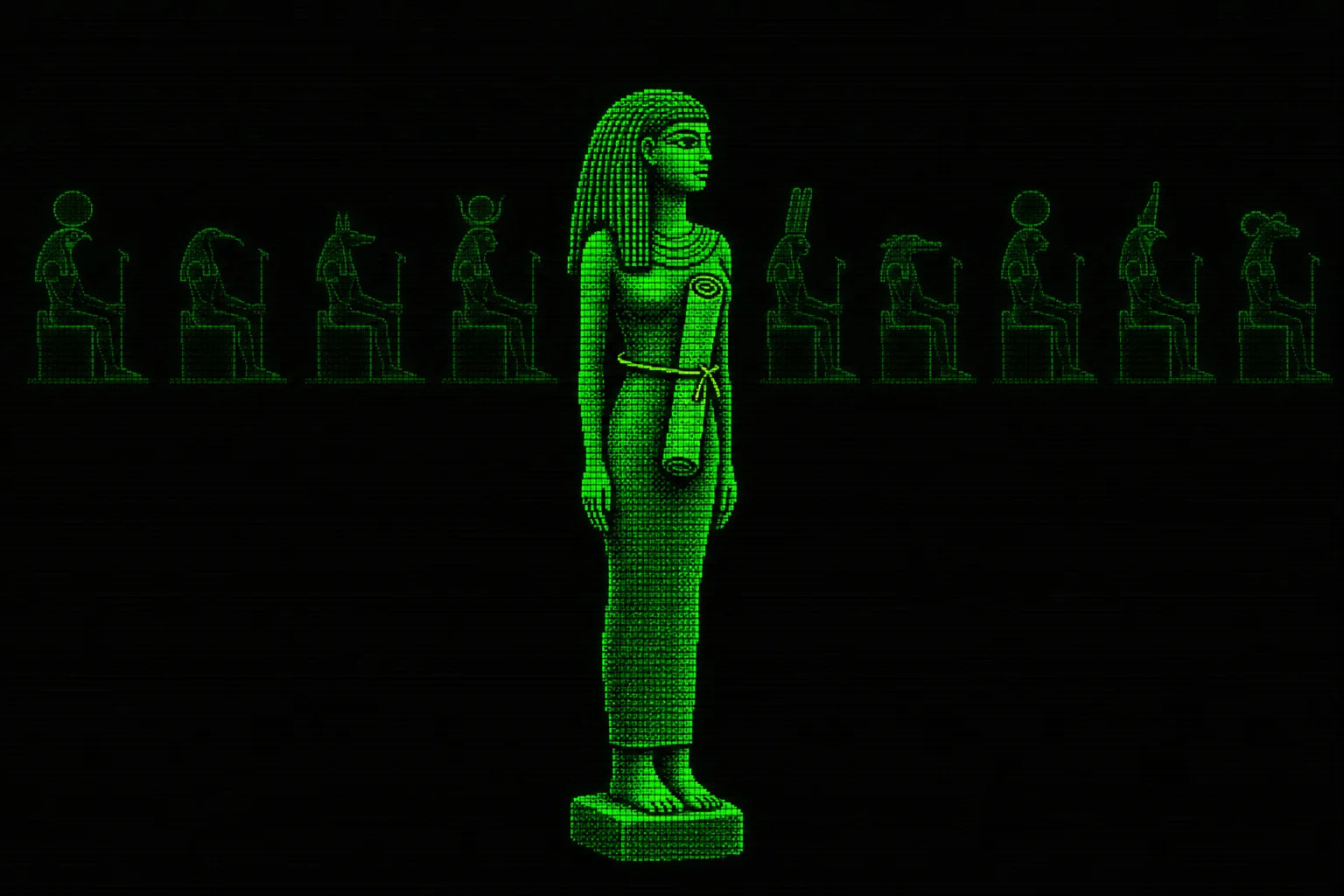
- From the Memphite necropolis at Saqqara, where it was tied to a wooden statuette of a woman; now in the Rijksmuseum van Oudheden, Leiden (Papyrus Leiden I 371)
- Language
- Late Egyptian · Hieratic
A widower, an officer of Pharaoh’s chariotry, writes to his dead wife Ankhiri three years after her death. He is suffering and he blames her: What is this you have done, laying your hand on me when I have done you no wrong? He sets out his record as a husband. He married her young, kept her through every office he held, had the chief physician attend her sickbed, wrapped her corpse in fine cloth, and has had sex with no woman of the household since.
The letter is a lawsuit. I will plead my case against you with my own mouth before the Ennead of the West. He expects to win: They will judge between you and me.
- 1
n ꜣḫ-jqr Ꜥnḫ-jr,j
To Ankhiri, the excellent spirit:
- 2
jri̯ =j jḫ r{r} =t m btꜣ(,w) pꜣ =t ḫpr m pꜣy sḫr.w bjn n,tj tw j:m =f
What wrong have I done you, that you should have come to this evil state you are in?
- 3
jri̯ =j jḫ r{r} =t
What have I done against you?
- 4
pꜣ jri̯.n pꜣj =t ḏi̯.t ḏr,t j:m =j jw bw jri̯ =j btꜣ(,w) r{r} =t
What is this you have done, laying your hand on me when I have done you no wrong?
- 5
jr m-ḏr wnn =j m-ꜥ =t m hꜣy r-šꜣꜥ pꜣ-hrw jri̯ =j jḫ r{r} =t pꜣ jri̯ =j ḥꜣp
From the time I first lived with you as your husband down to this day, what have I done against you that I should have to hide?
- 6
j jḫ r{jr} =t
… What have I done against you?
- 7
pꜣ j:jri̯ pꜣ =j smj.t =t jw =j jri̯ =j jḫ r{r} =t
What has been done is why I bring a complaint against you. But what have I done against you?
- 8
jw =j 〈r〉 sḫn ḥnꜥ m md(w),t rʾ =j m-bꜣḥ tꜣ psḏ,t n,tj jmn,t mtw =tw wpi̯.wt tw ḥnꜥ 〈=j〉 〈m〉 pꜣ zẖꜣ,w pꜣ wnn md(w),t ḥnꜥ 〈=t〉 pꜣ hꜣb ḥr =f
I will plead my case against you with my own mouth before the Ennead of the West. They will judge between you and me on the evidence of this letter. It is my dispute with you that I have written about.
Note · Line 8
The Ennead is a council of nine gods. The West, where the sun sets, is the realm of the dead. - 9
jri̯ =j jḫ r{jr} =t
What have I done against you?
- 10
jri̯ =j tw m ḥm,t jw =j m ꜥḏd jw =j ḥnꜥ 〈=t〉 jw =j ḥr jri̯.t m jꜣw,t nb jw =t ḥnꜥ =j
I took you as my wife when I was a young man. I was with you, and in every office I held, you were with me.
- 11
bw-pw =j ḫꜣꜥ bw-pw =j rḏi̯.t šni̯.tw ḥꜣ,tj =t ḫr jw =j jri̯ =f jw =j m ꜥḏd jw =j ḥr jri̯.t m jꜣw,t nb ꜥꜣ n pr-ꜥꜣ ꜥnḫ-wḏꜣ-s(nb) jw ((=j)) bn tw=j ḥr ḫꜣꜥ r-ḏd ḫpr sw ḥnꜥ 〈=j〉 ḫru̯ =j
I did not leave you. I never let anyone grieve your heart. I married you when I was a young man, and in every high office I held for Pharaoh—life, prosperity and health to him!—I did not leave you. “Let her be with me,” I said.
- 12
ḫr jw jri̯ nb jy.t n =j m-bꜣḥ =t bw-pw =j šzp =w ẖr-s,t-rʾ =t r-ḏd jri̯ =j n ḥꜣ,tj =t
And all those who came to me in your presence—did I not receive them for your sake, saying, “I will do what your heart desires”?
- 13
ḫr ptr bn tw=t ḥr ḏi̯.t nḏm ḥꜣ,tj =j
Yet look: you give my heart no joy.
- 14
jw =j r wpi̯.t ḥnꜥ =t mtw =tw ptr ꜥḏꜣ r mꜣꜥ,t
I will go to judgment with you, so that they may tell falsehood from truth.
- 15
ḫr ptr wnn =j ḥr sbꜣ znn n pꜣ mšꜥ n(,j) pr-ꜥꜣ ꜥnḫ-wḏꜣ-s(nb) ḥnꜥ tꜣy =f tꜣ-n,t ḥtr jw =j 〈ḥr〉 〈ḏi̯.t〉 jwt =sn r sḏr ḥr ẖ,t.pl =sn n{n} =t jw m jni̯ =sn ꜣḫ,t nb nfr r wꜣḥ =f m-bꜣḥ 〈=t〉
Look: when I trained the chariot fighters of Pharaoh’s army—life, prosperity and health to him!—and its teams of horses, I had the men come and lie on their bellies before you, bringing every fine thing to lay before you.
- 16
bw-pw =j ḥꜣp m nkt r{r} =t m hrw =t n(,j) ꜥnḫ
I hid nothing from you while you lived.
- 17
bw-pw =j ḏi̯.t šni̯ [=t] [mr] ⸢j:jri̯⸣ ⸢=j⸣ nb,t m-dj =t m sḫr n(,j) nb
In all my dealings with you as master of the house, I never caused you pain.
- 18
bw-pw gmi̯.t wj ḥr jri̯.t ṯḥr j:m =t m sḫr n(,j) ꜥḥ,wtj ḥr ꜥq r ky pr
No one ever found me doing you harm like a field hand going into another man’s house.
Note · Line 18
The charge he seems to have in mind is infidelity: going into another man’s house to see his wife. - 19
bw-pw =j ḏi̯.t ṯꜣy n =j ṯꜣ,y j:jri̯ =j nb m-ꜥ =t jw =tw ḥr ḏi̯.t wj r tꜣ s,t n,tj tw j:m =st jw =j ḥr ḫpr
I never gave any man cause to reproach me for anything I did while I was with you. I was put in the place where you were, and there I came to live.
- 20
bn tw=j ḥr rḫ pri̯ r-bnr m pꜣy =j sḫr jw =j ḥr ḫpr ḥr jri̯.t pꜣ jri̯.t pꜣ n,tj mj-qd jw =f ḫn pꜣ =t sgnn mj,tt pꜣ ꜥq,w mj,tt pꜣy =t ḥbs,w mtw =tw jni̯.t =f n =t
I could not get away from my duties. I did what a man in my position does: I saw to your ointment, the bread and your clothes, and had them brought to you.
- 21
bw-pw =j ḏi̯.t =f r ky.t s,t r-ḏd tꜣ r(m)ṯ ḫpr [...] ḫru̯ =j mtw =j tm jri̯.t m ṯḥr ((j:m)) =((t))
I sent none of it elsewhere. “The woman is …,” I said, and I did you no harm.
- 22
ḫr ptr bn tw=t rḫ nfr jri̯.y =j m =t
Yet look: you do not recognize the good I did you.
- 23
jw =j ḥr hꜣb [=t] r ḏi̯.t ꜥmꜣm m nꜣ n,tj tw=t ḥr jri̯.t
I am writing to you so that what you are doing may be known.
- 24
ḫr-jr tw〈=t〉 ḥr mr m pꜣ mr j:jri̯ =t jw =j ḥr [...] jm,j-rʾ-zwn,w jw =f ḥr jri̯.t ḫr =t jw =f ḥr jri̯.t pꜣ n,tj tw=t ḥr ḏd j:jri̯ st
When you lay sick with the illness you suffered, I … the chief physician. He attended you, and whatever you told him, “Do it,” he did.
- 25
ḫr-jr tw=j ((ḥr)) ((šmi̯.t)) ((m-sꜣ)) pr-ꜥꜣ ꜥnḫ-wḏꜣ-s(nb) ḥr šmi̯.t r rs,j jw pꜣ sḫr ḥr ḫpr m-ꜥ =t jw =j ḥr jri̯.t pꜣ ḥmn 8 ꜣbd.pl jw bn tw=j ḥr wnm ḥr zwr m sḫr n(,j) r(m)ṯ
It was while I was following Pharaoh—life, prosperity and health to him!—on the journey south that this befell you. For eight months I neither ate nor drank as other people do.
Note · Line 25
“This befell you” is how he speaks of her death. - 26
ḫr-jr tw=j ḥr spr r Mn-nfr jw =j ḥr dbḥ m-dj pr-ꜥꜣ ꜥnḫ-wḏꜣ-s(nb) jw =j ḥr [...] pꜣ n,tj tw=t jm jw =j ḥr rmi̯ r-jqr ḥnꜥ nꜣy =w r(m)ṯ m-bꜣḥ tꜣy =j jwꜥ,y jw =j ḥr ḏi̯.t ḥbs šmꜥ r wt =t jw =j ḥr ḏi̯.t jri̯ =tw ḥbs qn,w jw =j tm wꜣḥ nfr r tm ḏi̯.t jri̯.t =f n =t
When I reached Memphis, I asked leave of Pharaoh—life, prosperity and health to him!—to … the place where you were. I wept bitterly with their people before my own quarter of the city. I gave fine cloth to wrap you in and had many cloths made. There was not a good thing I left undone for you.
- 27
ḫr ptr jri̯ =j 3 rnp,t r nꜣ jw =j ḥmsi̯.k jw bn tw=j ḥr ꜥq r pr jw bn šꜣ.w ḏi̯.t jri̯ sw pꜣ n,tj mj-qd
Look: for three years now I have sat alone. I have not entered another house, though no one would ask that of a man in my position.
- 28
ḫr ptr jri̯ =j sw =t ẖr-s,t-rʾ =t
Look: I did it for you, for your sake.
- 29
ḫr ptr bn tw=t rḫ nfr r bjn
Yet look: you do not know good from evil.
- 30
jw =tw r wpi̯.t tw ḥnꜥ 〈=j〉
They will judge between you and me.
- 31
ḫr ptr nꜣ =w sn,t.pl m pꜣ pr bw-pw =j ꜥq n wꜥ j:m =sn
And look, I have not gone in to a single one of their sisters in the household.
Note · Line 31
The widower is telling his dead wife that he has not had sex with any of these women.