~/sacred-texts/late-ramesside-letters
Tjary’s Letter to Hori: Ferry the Tomb Workmen Across
- Date
- Written in the late 20th Dynasty (c. 1090–1070 BC) on papyrus at Medinet Habu in western Thebes.
- Found
- From Western Thebes; now in the Ägyptisches Museum und Papyrussammlung, Berlin (P. 10494).
- Language
- Late Egyptian · Hieratic
- 1
jdn,w Ḥr(,w)-j n pr Jmn-Rꜥw nswt-nṯr,pl zẖꜣ(,w)- Ṯry -n-pꜣ-ḫr zẖꜣ(,w)-mšꜥ Pꜣ-n-tꜣ-ḥw,t-nḫt(,w) n tꜣ ḥw,t nswt Wsr-Mꜥꜣ,t-Rꜥw-mr,y-Jmn ꜥnḫ-wḏꜣ-s(nb) m pr Jmn m ꜥnḫ-wḏꜣ-s(nb) ḥzw,t Jmn-Rꜥw nswt-nṯr,pl
To Hori, deputy of the temple of Amun-Ra, king of the gods, from Tjary, scribe of the royal necropolis, and Pen-ta-hut-nakht, army scribe of the temple of King Usermaatre-Meryamun (life, prosperity, and health!) in the estate of Amun: in life, prosperity, and health, and in the favor of Amun-Ra, king of the gods.
Note · Line 1
Usermaatre-Meryamun was the throne name of Ramesses III. His temple stood at Medinet Habu, on the west bank of the Nile opposite Thebes. - 2
tw={t}n ḏd n Jmn-Pꜣ-Rꜥw Ptḥ nṯr nb [nṯr.]y,t nb.t n,tj dy ḥtp jmi̯ n =k ꜥnḫ-wḏꜣ-s(nb) ꜥḥꜥ,w qꜣi̯ jꜣw,t ꜥꜣ.t jmi̯ ⸢n⸣ =k ⸢ḥz(w),t⸣ qn,pl-ꜥšꜣ.pl m-bꜣḥ Jmn-Rꜥw nswt-nṯr.pl pꜣ ptr tj rꜥw-nb
We ask Amun-Pa-Ra, Ptah, and every god and goddess at rest here to grant you life, prosperity, and health, a long life and a ripe old age, and to grant you favor in abundance in the sight of Amun-Ra, king of the gods, who sees you every day.
- 3
ḥnꜥ-ḏd sḏm =tn r-ḏd tw=k jy.tj pḥ =k r nʾ,t pꜣ dmj
Further, we hear that you are back and have reached the city of Thebes.
- 4
šzp tj Jmn m šzp nfr jry =f n =k nfr nb
May Amun give you a good welcome and do you good in every way.
- 5
ḫr tw=n dy ḥmsi̯.tj m tꜣ ḥw,t jw =k rḫ pꜣy =n sḫr ḥmsi̯ n,tj tw={t}n j:m =f yꜣ ḥr-ẖnw ḥr-bnr
Here we are, living in the temple. You know how we live, both inside and out.
- 6
ḫr nꜣ ms.pl-ḫr jwi̯
But now the apprentices of the royal necropolis have come.
- 7
st ḥmsi̯ m Nʾ,t jw =j dy ḥmsi̯ wꜥi̯.kj jrm zẖꜣ(,w)-mšꜥ Pꜣ-n-tꜣ-ḥw,t-nḫt(,w)
They are staying in Thebes, while I am staying here with only Pen-ta-hut-nakht, the army scribe, for company.
Note · Line 7
Tjary now speaks for himself rather than for both writers. - 8
jḫ ḏi̯ =k twt =tw nꜣ r(m)ṯ.pl n pꜣ ḫr n,tj jm m Nʾ,t mtw =k ḏi̯.t jni̯〈t〉.tw n =j r tꜣj rj,t
Please have the men of the necropolis who are there in Thebes gathered together and brought to me on this bank.
- 9
r rḏi̯.t rḫ =k st Pꜣ-n-ns,t-tꜣ,wj Nfr-Jmn Ḥr(,w)-j-ms-(,w) Wn-Jmn Pꜣ-nḫt-n-jp,t zꜣ Pꜣ-nb-ꜥq,w Jmn-ḥtp,w Qꜣ-ḏꜣḏꜣ z 7
So you know who they are: Pa-en-neset-tawy, Neferamun, Horimesu, Wenamun, Pa-nakht-en-ipet son of Pa-neb-aqu, Amenhotep, and Qa-djadja—seven men.
- 10
jmi̯ st r-ḥꜣ,t zẖꜣ(,w) Bw-th-Jmn
Put them in the care of the scribe Butehamun.
Note · Line 10
Butehamun was Tjary’s son and, like his father, a scribe of the royal necropolis. - 11
jmi̯ jni̯.tw =w jw ꜣs zp-2 jw m-dj ꜥḥꜥ =w m ꜥḥꜥ nb ḥnꜥ Pꜣ-ḫrw Ꜥwḏr z 9
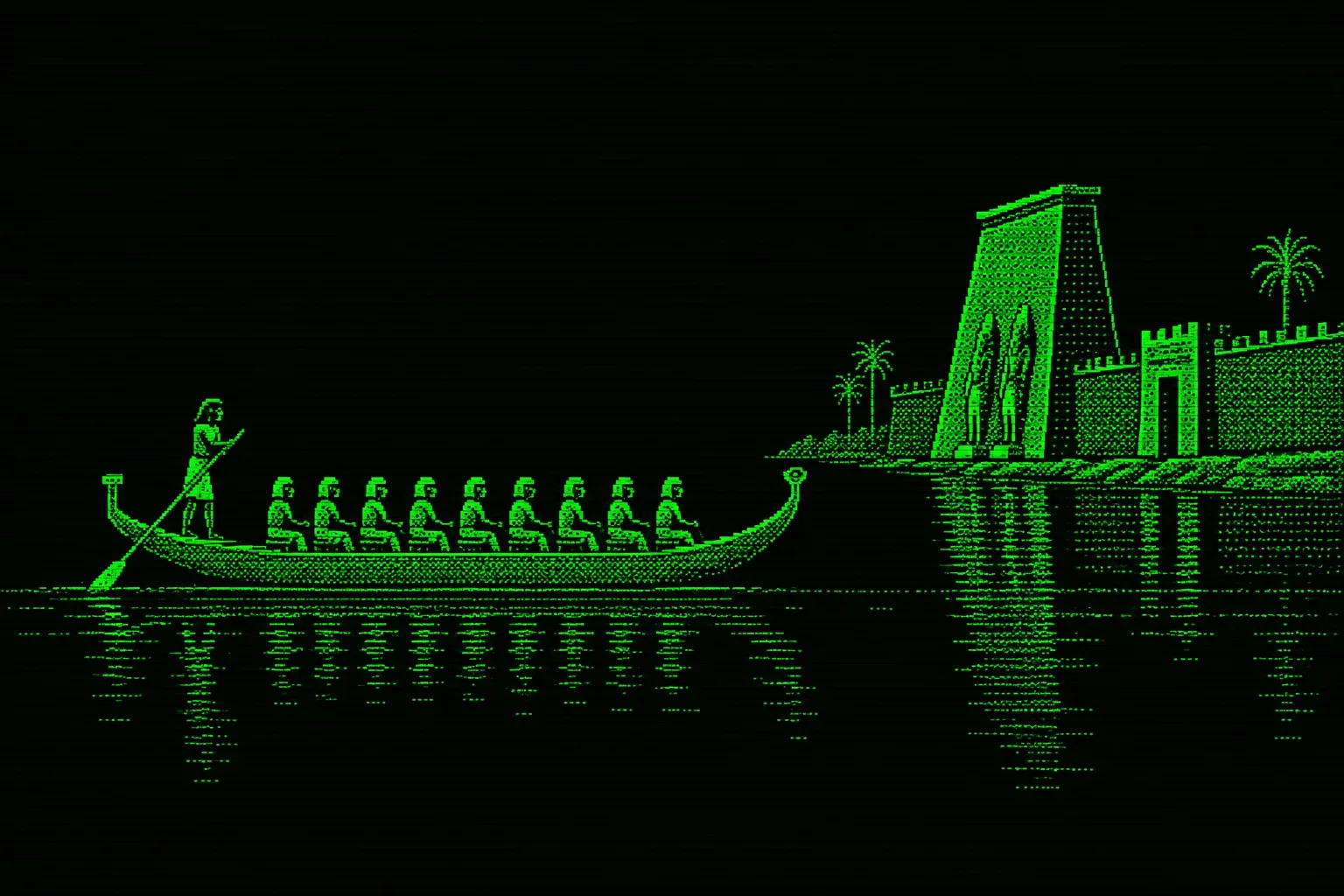
Have them brought over quickly, quickly! Don’t let them stop anywhere. Bring Pakheru and Audjer with them: nine men in all.
- 12
mtw =k hꜣb n =n pꜣ sḏm =k r rḏi̯.t ꜥꜣy ḥꜣ,tj =n
And send us word of what you have heard, to give us heart.
- 13
ḫr m-ḏr wꜣwꜣ wꜥ ꜥḏd ꜥꜣ jw jw =k ḏi̯.t jy =f r ḥmsi̯ dy jrm =n mj-qd Ḥr≡f-r-nʾ,t≡f ky mj-qd =f
Now since one of the older boys is plotting trouble, have him come and live here with us, like Horef-er-niutef and another like him.
- 14
gr bw rḫ tw=tw pḥ.n nꜣ mšwš r-mjn jw jw =f mdwi̯ jrm =f
Nor is there any word yet of the Meshwesh having come, so that he might have spoken with him.
Note · Line 14
The Meshwesh were a Libyan people. The letter does not name the two who might have spoken. - 15
tw=k rḫ r-ḏd jr pꜣ n,tj nb jy j:jri̯ =f ḏi̯.t ḥr =f r pꜣj jnb r-ḥꜣ,t swḏ
You know that whoever comes back turns his face toward this wall before the handover.
- 16
(j)n j:jri̯ =k ḏi̯.t ḥꜣ [⸮n?] ꜥš-ḥꜣ,t dy
Do you give the ship’s pilot here anything extra?
- 17
jdn,w Ḥr(,w)-j n pr Jmn-Rꜥw nswt-nṯr,pl zẖꜣ(,w) Ṯꜣry zẖꜣ(,w)-mšꜥ Pꜣ-n-tꜣ-ḥw,t-nḫt(,w)
To Hori, deputy of the temple of Amun-Ra, king of the gods, from the scribe Tjary and the army scribe Pen-ta-hut-nakht.