~/sacred-texts/egyptian-letters-on-papyrus
Egyptian Letter on a Wet Nurse’s Death: Gone Where the Multitudes Go
- Date
- Written in hieratic on papyrus in the New Kingdom (c. 1550–1077 BC)
- Found
- Find-spot unknown. Now in the Ägyptisches Museum und Papyrussammlung, Berlin (P 10497).
- Language
- Egyptian · Hieratic
- 1
šmꜥ,y [...] m ꜥnḫ-wḏꜣ-s(nb) ḥz(w),t [...]
The singer … : In life, prosperity and health, in the favor of …
Note · Line 1
“Life, prosperity and health” is a customary greeting in letters. - 2
tw=j ḥr [...] [J]tm,w ⸢nb-Tꜣ,du⸣ [ḥqꜣ] Jwn,w n ⸢snṯi̯⸣ [=f]
I … Atum, lord of the Two Lands, ruler of Heliopolis, the city he founded.
Note · Line 2
The Two Lands are Upper and Lower Egypt. Heliopolis was the chief seat of Atum’s worship. - 3
t[w=j] [...] Bꜣs,tt [...] ꜥšꜣ m-bꜣḥ pꜣ ḥꜣ,tj-ꜥ pꜣy ⸢=j⸣ ⸢nṯr⸣ ⸢jmi̯⸣ [...] jꜣw,t ꜥꜣ.t nfr.t r jmi̯ jry =ṯ [...] jmi̯ qꜣb [...] jw mn [...]
I … Bastet … in abundance before the mayor. My god, grant … a long and happy old age, that you may spend … Grant that … be doubled, while … endures.
- 4
[...] [ẖrd.w]pl wsr.w ḥfn.w nn dbḥ =sn m-dj =ṯ [...] [_] =ṯ m rḫ.n [...] nb =ṯ Jmn-Rꜥw nswt-nṯr,pl Mw,t Ḫns,w [...] jry.w šꜣ,y =ṯ m-nfr sqꜣi̯ ḫrw [=ṯ] [...] pḥ =ṯ jmꜣḫ,w m ꜥḏ wḏꜣ jw rʾ =ṯ wḏꜣ nmt,t [...]
… children, mighty ones by the hundred thousand, who ask nothing of you … you among those known to … your lord Amun-Ra, king of the gods, Mut and Khonsu … who shape your fate for good and raise your voice high. … May you join the ranks of the honored, safe and sound, your mouth sound, your steps …
Note · Line 4
Amun, Mut and Khonsu were worshipped together at Thebes as father, mother and son. - 5
[...] zp =ṯ jw =ṯ sḫn ḥnꜥ sn =ṯ nn tši̯ =tn n-zp
… your case, as you go to law against your brother, and the two of you will never part.
- 6
r-n,tj [ḥr-ḏd] [ꜥnḫ,t-n-nʾ,t] [Jw]⸢n⸣ry ḥn.tw r pꜣ ḥn pꜣ ꜥḥꜥ.pl [n] [rmṯ] [m-jm] jw jry =st mnꜥ,t =ṯ n 3 r(m)ṯ.pl m-dj =ṯ jw jry =st sḫpr
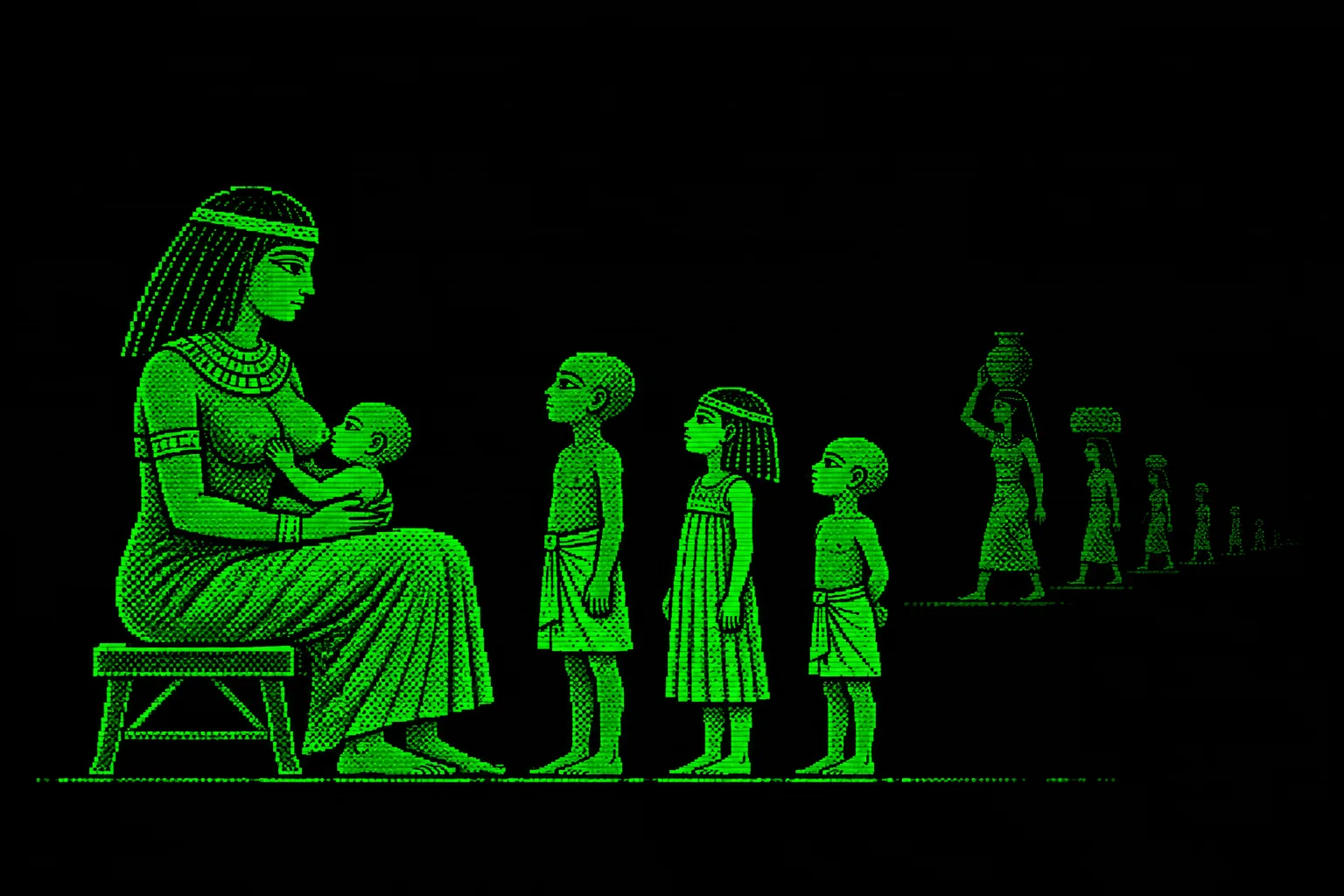
Now for my news: the townswoman Iunery has gone where the multitudes go. She was your wet nurse to three children in your household and brought them up.
Note · Line 6
The singer is telling his correspondent that Iunery has died. - 7
[...] jrm [=ṯ] jw bw-pw =st nni̯
… with you, and she never tired.
- 8
ḫr tw=j jy.kw
So I have come.
- 9
tw=j [...] pr jw j:jri̯ =j ꜥq m-jm r-ḏd tm =ṯ pꜣ pr [...]
I … the house, but I went in, saying, “May the whole house be yours!” …
- 10
[...] [pꜣ] ḥꜣ,tj-ꜥ jtj =j jw =ṯ jri̯.t n =j mw,t m pꜣ smn rd.wj =j j:jri̯.t =tn
… the mayor was my father, and you were a mother to me. What you both did set me firmly on my own two feet.
- 11
[...] ⸢ꜥḥ,t⸣ m pꜣy =ṯ mnj,w jḥ,t.pl ꜥnḫ.pl ꜥꜣ.pl mj,tt jw =j [...]
… in the field as your herdsman, tending cows, flocks and donkeys. I also …
- 12
[...] jw =j m-dj =ṯ šrj mj-qd nꜣy =ṯ ẖrd.pl ꜥqꜣ zp-2
… when I was a child in your care, no different at all from your own children.
- 13
[...] pꜣj ḥdb n,tj ḫpr m-dj =j
… this crushing blow that has fallen on me.
- 14
ḫr Jmn 〈r〉-ḥꜣ,t =f
Yet Amun stands at its head.
Note · Line 14
The writer sees Amun’s will in what has happened. - 15
bn jnn j:jri̯ pꜣ mwt
It was not we who brought about her death.
- 16
yꜣ jḫ pꜣy =ṯ sḏm nꜣ mdw,t n nꜣ r(m)ṯ.pl mtw =j whn pꜣ pr j:qd =ṯ mtw =ṯ ḫnr =f ẖr-s,t-rʾ-n jḫ
Why, then, do you listen to people saying I tore down the house you built? Why do you spread the story?
- 17
jṯꜣ.y 〈Tꜣ〉-nfr,t n,tj jw =ṯ ḏi̯.t n =w 〈m〉 r(m)ṯ〈,t〉 tm.t r-ḥꜣ,t =j jw =ṯ [gmi̯] =ṯ njm mj-qd =j m pꜣ n,tj jw =j jri̯.t =f n =w
Take back Tanofret, the woman you meant to give them. She is no longer in my charge. Who else will you find to do for them what I do?
- 18
jnn [wn] ⸢bw⸣ jri̯⸢.t⸣ Jwnry jri̯.t =w m-šs jw =j jri̯.t =w m-šs jw bn jw =j nni̯ [...] m pꜣ n,tj [nb,t] [tw][=tw] jri̯.t =f jw ḏi̯ =j ḥꜣ,w n pꜣ n,tj nb,t jw =j [jri̯.t] =[f] r pꜣj j:[jri̯.t] [r(m)ṯ] nb
If Iunery did not do these things well, I shall do them well. I shall not tire … in all the work there is to do. In everything I do, I shall give more than anyone else does.
- 19
ḫr-jr tꜣ šrj,t n Jwnry [...] [jri̯.t] =ṯ sḫpr =st
As for Iunery’s daughter, … you brought her up.
- 20
ṯꜣi̯ st njm m-dj =ṯ n bw jri̯ =st rḫ mjnj [...] sn,t
Who will take her off your hands, when she does not know how to tend livestock … the sister?
- 21
ḫr bn tw=j jrm =ṯ m-rʾ-ꜥ j:jri̯ =ṯ šmi̯.t r pꜣ [...] tw=ṯ ⸢šmi̯⸣.t m-jm jw =j j[r]m =ṯ wḫꜣ jri̯.t m ḏri̯ [...] [pꜣ] [j:jri̯] [=ṯ]
Nor am I with you now. But when you go to the … when you go there, I shall be with you, trying to do the work well … what you do.
- 22
bn sw [⸮m-šs?] jwnꜣ pꜣ j:jri̯.t =ṯ [...] [r(m)]ṯ.pl [j:jri̯.t] Jwnry sḫpr =w [...] [T]ꜣ-[nf]r[,t] jrm =j
What you did was not good … the people Iunery brought up … Tanofret with me.
- 23
ḫꜣi̯ pꜣ j:jri̯.yw n ⸢ꜥnḫ,t⸣-n-nʾ,t Tꜣ-nfr,t m-ḏr mwt tꜣy =j [nb,t-pr] jw =j jri̯.t ḥꜣ,w j:jry =ṯ n nꜣ r(m)ṯ.pl r [pꜣ]-h(r)y
Weigh what is to be done for the townswoman Tanofret after the death of the lady of my house. To this day I have added to what you did for those people.
Note · Line 23
“Lady of the house” was a customary title for a married woman.