~/sacred-texts/egyptian-magical-papyri
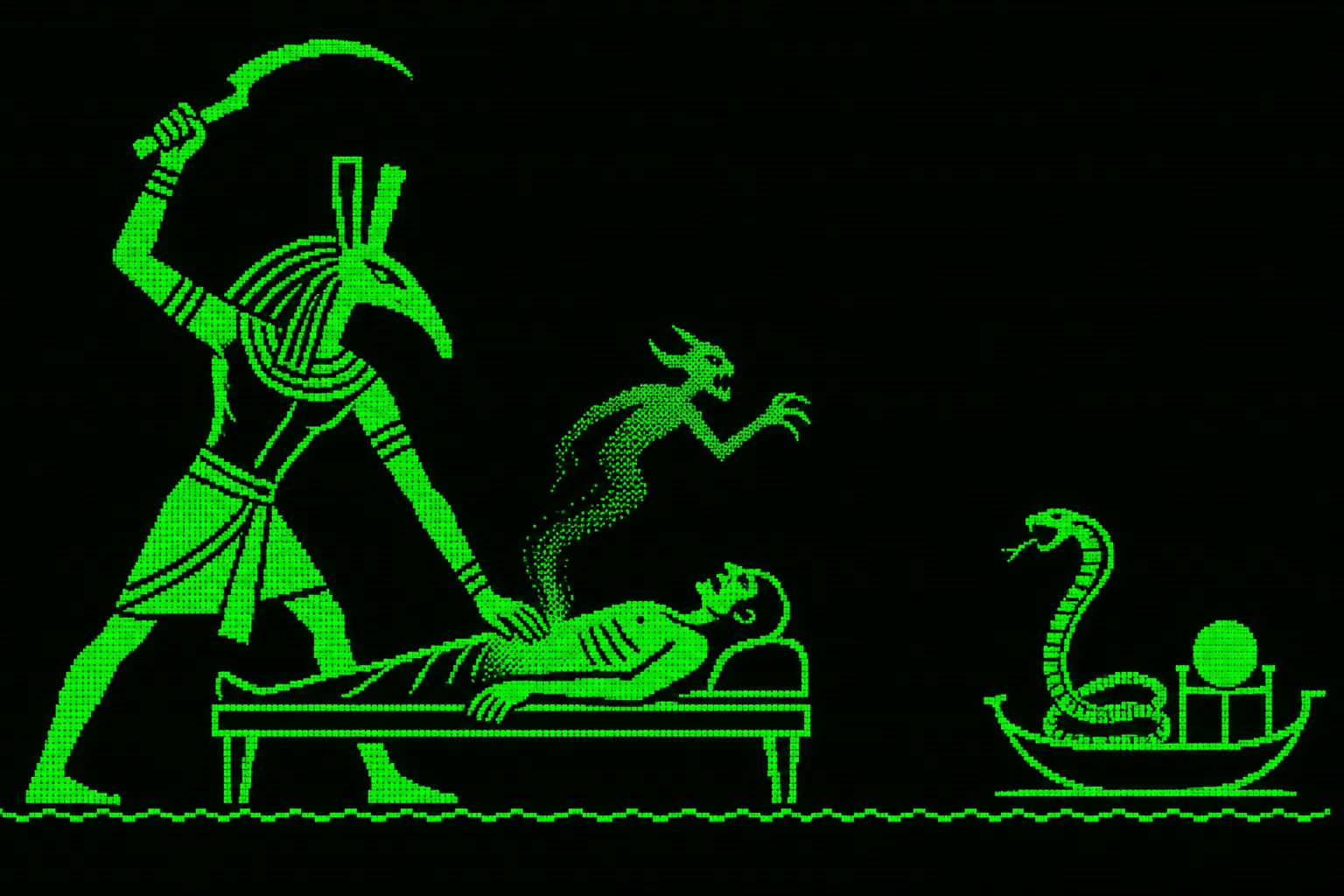
Leiden Magical Papyrus I 343: Seth Against Samanu
- Text
- Egyptian magical papyri, P. Leiden I 343 + I 345, recto
- Date
- Copied in the New Kingdom (Ramesside period), c. 1295–1186 BC
- Found
- Rijksmuseum van Oudheden, Leiden; findspot unknown
- Language
- Late Egyptian · Hieratic
The Leiden papyrus I 343 + I 345 is a healer’s handbook from the Ramesside period, when Egypt ruled the Levant and its gods came home with the army. Its spells are aimed at the akhu and samanu, demons of disease with Semitic names who sit in the vessels of the body. Against them the healer calls on Seth and on the gods of Canaan, Baal, Anat, Astarte, Reshep, Qadesh, Nikkal, whom the Egyptians took as Seth’s kin.
The spells are violent and plain. Samanu’s champions have abandoned their whores, and they are fled; he is sent to grind at the millstone of two foreign gods who deflower the girls and geld the gods. Each spell ends with its recipe: urine, emmer, melon seeds in wine, bandaged on. The papyrus is broken in places, and the gaps are marked where they fall.
- 1
… 𓏲𓀜𓏫
[...] __.pl
[gap in the text]
Note · Line 1
The surviving papyrus begins in the middle of a spell. The dots mark places where the words are lost or unreadable. - 2
𓋴𓌳𓄿𓅓𓌪 𓏏𓏲 𓅯𓄿 𓊹𓅆𓐎 … 𓄣𓏤 𓈖 𓂋𓎀𓀀𓁐𓏥
smꜣ tw pꜣ nṯr ⸢nb⸣-[⸮mꜣꜥ,t?] [...] [snꜥꜥ] jb n(,j) r(m)ṯ
May the god, the Lord of Truth, kill you … who soothes the hearts of men!
- 3
𓆓𓂧𓏏𓏲 𓂋𓏤 𓊪𓈖 𓁷𓏤 … 𓅓𓂝𓇋𓇋𓏏𓈗 𓈖𓏏 𓆷𓄿𓇋𓏏𓄛𓏫 𓂸𓏏
ḏd.tw rʾ pn ḥr ⸢m⸣[,yt] [...] [ḥ]⸢nꜥ⸣ ⸢m,y⸣t n,(j).t šꜣj 7 ṯꜣ,y
This spell is to be spoken over urine … and the urine of seven boars.
Note · Line 3
The healer recites the words over the ingredients themselves. Preparing the remedy is part of performing the spell. - 4
pfsi̯ [...]
Let it be boiled; …
- 5
𓏏𓏛𓀁
[k.t] šn,t
Another incantation:
- 6
𓄓𓏤𓄹 𓀀 𓇋𓅓𓅓𓂝 𓋴𓊪𓂧𓇮𓏛 𓅯𓄿𓇋𓇋 𓎢 … 𓂋 𓎛𓏏𓀜𓏷𓀜𓏫 𓁷𓏤 𓊪𓏏𓂋𓇋𓆳𓁻𓈇𓏤 𓏇𓇋 𓎢𓉔𓀜 … 𓅯𓄿 𓊤𓏲𓇋𓇋𓏲𓀜𓀀𓏥 𓏇𓇋 𓊤𓏲𓇋𓇋𓏲𓀜 … 𓇋𓏲 𓂞 𓈖 𓀀 𓂋𓎀𓀀𓁐𓏥 𓇋𓄿𓏏𓄧𓄹𓏥 𓋴𓈖𓏥
ns =j jmm spd pꜣy =k [...] r ḥ(wi̯).t ḥr p{t}rj mj kh [...] ⸢p⸣ꜣ ḫrw,yw mj ḫrw,yw [...] ___ jw di̯ n =j r(m)ṯ jꜣ,t.pl =sn
My tongue, make your … sharp … to strike on the battlefield like the raging of the storm … the enemy, like enemies … N., and men turn their backs to me.
Note · Line 6
N. marks a place where the reciter supplies a name. - 7
𓎢𓄿 … 𓇋𓅓 𓅓 𓈖𓄿𓈖 𓂸𓏏𓏲𓏯𓏥 𓇋𓏲 𓆑 𓀨𓀜 𓈖 𓆑 …
⸮k?ꜣ [...] [⸮s,t-ḥms?] [⸮n,tj?] [sꜣ]~mꜥw-nꜣ jm m nꜣ-n mt.w.pl jw =f qd n =f [...]
Then … the seat where Samanu dwells, in the vessels, as he builds himself …
Note · Line 7
Samanu is a disease-demon known from Mesopotamia. Egyptians understood the body’s vessels as channels through which blood, air and illness could travel. - 8
𓊪𓈖𓂝𓊜𓀜 𓃫𓅆 𓅯𓄿𓇋𓇋 𓎢 𓂧𓏇𓇋𓏏𓈇𓏤𓊖 … 𓈖𓉔𓅓𓀁 𓁷𓂋𓏤 𓎢
[kꜣ] pnꜥ Stẖ pꜣy =k d⸢mj⸣ [...] [__] nhm ḥr =k
Then Seth will turn your town upside down … … rejoices over you.
Note · Line 8
Seth is the Egyptian god of storms and the desert. The healer calls on his destructive strength to protect the patient. - 9
𓁹𓇋𓇋 𓃫𓅆 𓈖𓉔𓅓𓉔𓅓𓀁 𓅓𓄚𓈖𓏌𓏲𓉐 𓎢
jri̯.y Stẖ ḥr,yt [pꜣ] [mꜣj] nhmhm m-ẖnw =k
Let Seth spread terror, the lion roaring within you!
- 10
𓁹 … 𓇋𓅓 𓎢 𓏏𓄿 𓎟𓏏 𓈖 𓈖𓄿𓈖 𓃀𓆷𓄿𓏲𓌪𓊌𓈔𓏤
jri̯ [...] jm =k tꜣ nb,t n(,j.t) nꜣ-n bšꜣ.w šmꜣ _j_[__]
Let … act within you, the Mistress of the Axes roaming …
- 11
𓉔𓄿𓇋𓇋𓂻 𓎢 𓁷𓏤 𓁷𓂋 𓈋𓏤𓊌
hꜣi̯.y =k ḥr ḥr [=k] [ḥr] [tbn] [n(,j){.t}] ḏw
May you fall on your face on the peak of the mountain!
- 12
𓈖𓄿 𓎢 𓉔𓄿𓇋𓇋𓏏𓂻 𓁷𓏤 𓇋𓃀𓃙𓎛𓄑𓏥 𓎢 𓁷𓏤 𓅯𓄿 𓈋𓏤𓊌
nꜣ [__] [⸮jri̯?] =⸮k? hꜣi̯.yt ḥr jbḥ.pl =k ḥr n⸢ḏḥ⸣[,t.pl] [=k] [ḥr] pꜣ ḏw
The …, you shall fall on your teeth, on your fangs, on the mountain!
- 13
𓅯𓄿 𓐍𓊪𓈙𓄗 𓃫𓅆 𓂋 𓎢 𓅯𓄿 𓐠𓏤𓅓𓂝𓈖𓄿𓐎 𓅯𓄿 𓎢𓄿𓏏𓊪𓏲𓌫 𓈖 𓃀𓂝𓏭𓂋𓏤𓅆 𓅓 𓍑𓍑𓁶 𓎢 𓅯𓄿 𓈔𓏤𓈇𓏥 𓈖 𓅃𓅆 𓅓 𓄋𓏏𓏤 𓎢
pꜣ ḫpš Stẖ r =k pꜣ sꜣ~mꜥ-nꜣ pꜣ k⸢ꜣtp⸣ ⸢n(,j)⸣ Bꜥ~jrʾ m ḏꜣḏꜣ =k pꜣ [sꜣ]~mꜥ~nꜣ pꜣ ḥmt n(,j) Ḥr,w m wp,t =k
The sickle-sword of Seth is against you, Samanu! The ketep-blade of Baal is in your head, Samanu! The copper of Horus is in the crown of your skull!
Note · Line 13
Egyptians identified Seth with Baal, the Canaanite storm god. The copper driven into the demon’s skull is the metal of Horus’s weapon. - 14
𓇋𓂋 𓈖𓄿 𓄥𓄿𓅓𓇋𓇋𓏛𓀜𓀀𓏥 𓏎𓈖𓈖 𓎢 𓂚𓄿𓀜 𓈔𓏤𓈇𓏥 𓆈𓏥 𓅓 𓍑𓍑𓁶
jr nꜣ zmꜣ,yw jni̯.n =k [ḥnꜥ] [=k] [r] ꜥḥꜣ ⸮di̯.[t]w? ḥmt ꜥšꜣ m ḏꜣḏꜣ =sn
As for the confederates you brought with you to fight: let much copper be driven into their heads!
- 15
𓇋𓂋 𓅯𓄿 𓍉𓊪𓏛 𓈖 𓂋𓎀𓀀𓁐𓏥 𓎢 𓎢 𓂋 𓂚𓄿𓀜 𓆼𓄿𓂝𓂻𓈖 𓋴𓈖𓏥 𓈖𓄿𓇋𓇋𓏫 𓋴𓈖𓈖 𓋴𓏏𓏥 𓏲𓂝𓂋𓂧𓂾𓂻
jr pꜣ stp(,w) n(,j) r(m)ṯ [jni̯].n =k ḥ[n]ꜥ =k r ꜥḥꜣ ḫꜣꜥ.n =sn nꜣy =sn [nꜣ]~⸢kꜣ.pl⸣ ⸢st⸣ wꜥr{d}
As for the pick of the men you brought with you to fight: they have abandoned their whores, and they are fled.
- 16
𓅓𓂝𓇋𓂻 𓂋𓃀𓏲𓈖𓏥𓂋𓏲𓂻 𓅯𓄿 𓐠𓏤𓅓𓂝𓈖𓄿𓐎 𓅓𓂝𓇋𓂻 𓂋𓃀𓈖𓏥𓂋𓏲𓂻
mj r-bnr pꜣ sꜣ~mꜥ~nꜣ mj r-bnr
Come out, Samanu, come out!
- 17
𓎢𓄿𓀁𓏠𓈖𓁻 𓁹𓁹 𓎢𓏭
kꜣmn jr,t.du =kj
May both your eyes go blind!
- 18
𓎢𓄿𓀁 𓐩𓏌𓊌𓀓 𓎢 𓁷𓏤 𓃀𓈖𓏌𓏲𓏏𓊌
kꜣ nḏ =k ḥr bnw,t
Then you shall grind at the millstone.
- 19
𓎢𓄿𓀁 𓈖𓌰𓅓𓎛𓀔𓅪 𓎢 𓁷𓏤 𓏏𓄿 𓃀𓈖𓏌𓏲𓏏𓊌 𓈖𓏏 𓊪𓏲𓈎𓐠𓏤𓏲𓈖𓀀𓄿𓅆 𓎛𓈖𓂝 𓍑𓄿𓉔𓄿𓂋𓏤𓅆 𓈖𓏏𓏭 𓁷𓏤 𓍏𓃀𓅯𓄿𓂺 𓈖𓄿𓈖 D151𓈖𓏏𓏯𓁐𓏥 𓈖 𓈖𓏏𓏭 𓁷𓏤 𓊹𓅆𓏫
kꜣ nmḥ =k ḥr tꜣ bnw,t n,(j).t Pw~q~sꜣw~nꜣ ḥnꜥ Ḏꜣ~hꜣ~rʾ n,⸢tj⸣ ⸢ḥr⸣ wbꜣ nꜣ-n rnn,t.pl n〈ꜣ〉 n,tj ḥr [s]ꜥb.t [nꜣ-n] nṯr.pl
Then you shall be wretched at the millstone of Puqasana and Djahar, who deflower the girls and geld the gods.
Note · Line 19
Puqasana and Djahar are demons with Canaanite-sounding names. Samanu, who came to fight at the head of an army, is threatened with a captive’s work grinding grain for them. - 20
𓂞 𓋴𓈖𓏥 𓈖 𓅓 𓅯𓄿 𓉔𓂋𓏲𓇳𓏤 𓅓 𓆓𓂧 𓅯𓄿𓂋𓂝𓇳𓅆 𓇋𓏲 𓆑 𓁷𓏤 𓏲𓃀𓈖𓇳 𓅓 𓆓𓂧 𓅯𓄿 𓊹𓅆𓁷𓂋𓏭𓇯 𓐍𓆑𓏏 𓏲𓃀𓈖𓇳 𓆑 𓅓 𓆓𓂧 𓊃𓊪𓊗𓈖𓊃𓊃𓀀𓏤𓆗 𓅓 𓆓𓂧 𓅓 𓆓𓂧 𓆓𓂧𓆑𓏏𓆙𓅆 𓈖𓏏𓏭 𓅓 𓄂𓏏𓏤 𓏲𓇋𓄿𓊛𓈖𓂋𓂝𓇳𓏤 𓇋𓏏𓍃𓅓𓏏𓆗 𓋴𓌪𓐓 …
di̯ =sn n 〈=k〉 [mdw,t].pl m pꜣ hrw m ḏd Pꜣ-Rꜥw jw =f ḥr wbn m ḏd pꜣ Nṯr-ḥr,j ḫft wbn =f m ḏd Zp-n≡z-〈tꜣ〉 m ḏd [__] m ḏd ḏdf,t n,tj m ḥꜣ,t wjꜣ-n-Rꜥw Jtm,t ⸢sqr⸣ [...]
They shall give you words on the day, as Ra speaks when he rises, as the god above speaks when he rises, as Sepnesta speaks, as … speaks, as the snake speaks that is at the prow of the bark of Ra, Itemet, who is struck …
Note · Line 20
Ra is the sun god. The snake at the front of his boat guards him as he sails across the sky. - 21
𓊪𓈖 𓁷𓏤 𓏏𓊪𓈖𓈖𓈒𓏥 𓎼𓄿𓇋𓇋𓏲𓆰𓏫 𓈖 𓐎𓏏𓌙𓈉 … 𓆤𓏏𓏯𓏊𓏫
[⸮ḏd.tw?] [⸮rʾ?] [⸮pn?] ⸢ḥr⸣ [__] ⸢tp⸣nn gꜣy n(,j) wḥꜣ,t snṯr [...] bj,t
This spell is to be spoken over …, cumin, sedge of the Oasis, incense, … honey.
- 22
𓐩 𓏞𓏛 𓅓 𓐍𓏏𓏛𓏥 𓌡𓂝𓏏
nḏ snꜥꜥ m (j)ḫ,t wꜥ,t
Ground and pounded fine into a single mass.
- 23
[di̯.w] [r] [=f]
Apply to it.
- 24
𓎢𓏏
k.t šn,t
Another incantation:
- 25
𓅯𓄿 𓂝𓐍𓏲𓐎 𓅯𓄿 𓐠𓏤𓅓𓂝𓈖𓄿𓐎 𓅯𓄿 𓈙𓂋𓇋𓅪𓀀 𓈖 𓏏𓄿 𓍛𓏏𓏤𓁐 𓉔𓄿𓏏𓏲𓅓𓂝𓁐 𓅯𓄿 𓅓𓂝𓈙𓂋𓂾𓐎 𓅯𓄿 𓐠𓏤𓅓𓂝𓏲𓈖𓄿𓐎 𓈖𓏏𓏭 𓁷𓏤 𓎛𓏏𓀜𓏷𓀜 𓂋 𓍑𓍑𓁶 𓅯𓄿 𓅷𓏤𓅓𓂝𓂓𓏤𓈖𓄿𓐎 𓈖𓏏𓏭 𓁷𓏤 𓎛𓏏𓀜𓏷𓀜 𓅯𓄿 𓇋𓃀𓏲𓇓𓏲𓈖𓄿𓐎 𓈖𓏏𓏭 𓁷𓏤 𓎛𓏏𓀜𓏷𓀜 𓂋 𓄡𓏏𓏤 … 𓈖𓏏𓏭 𓁷𓏤 𓈝𓅓𓏏𓂻 𓅓𓅷𓄿𓇋𓇋𓂷𓂡
pꜣ ꜥḫ,w pꜣ sꜣ~mꜥ~nꜣ pꜣ šrj n(,j) tꜣ ḥm,t Hꜣ~tw~mꜥ ⸮__? pꜣ mšr khꜣ[b] pꜣ sꜣ~⸢mꜥ⸣~nꜣ ⸢n,tj⸣ ḥr ḥ(wi̯).t r ⸢ḏꜣḏꜣ⸣ pꜣ Ṯꜣ~⸢mꜥ⸣~kꜣ~nꜣ n,tj ḥr ḥ(wi̯).t [⸮r?] [rʾ]-jb pꜣ ⸢Jb⸣~sw~nꜣ n,tj ⸢ḥr⸣ ḥ(wi̯).t r ẖ,t pꜣ ⸢Dꜣ⸣~[___] [...] n,tj ḥr šmi̯.t mṯꜣ.y
O Akhu, O Samana, O son of the slave-woman Hatum …, O Mesher who rages, O Samana who strikes at the head, O Tjamkana who strikes at the stomach, O Ibsuna who strikes at the belly, O Da… … who goes about veiled!
Note · Line 25
Samana is another spelling of Samanu. Several of the other names are Semitic, and the healer singles out particular attackers by the part of the body that hurts. - 26
𓂞 𓀀 𓏏𓏲 𓈖 𓅓𓂝 𓅯𓄿 𓂝𓐍𓏲𓐎
di̯ =j tw n m pꜣ ꜥḫ,w
To whom shall I give you, Akhu?
- 27
𓂞 𓀀 𓏏𓏲 𓈖 𓅓𓂝 𓅯𓄿 𓐠𓏤𓅓𓂝𓈖𓄿𓐎
⸢di̯⸣ ⸢=j⸣ tw n m pꜣ sꜣ~mꜥ~nꜣ
To whom shall I give you, Samana?
- 28
𓇋𓏲 𓎢 𓈖 𓈖𓄿𓈖 𓉻𓂸𓏏𓏲𓏹𓄛𓏫 𓈙𓌴𓄿𓅓𓅱𓀦𓍱𓏥 𓈖𓏏𓏭 𓁷𓏤 𓈉𓏏𓏤
jw =k n nꜣ-n ꜥꜣ.pl šmꜣ.⸢w⸣ n,tj ḥr ḫꜣs,t
You belong to the wild donkeys that roam the desert.
Note · Line 28
Wild donkeys were associated with Seth. The healer assigns the illness a home among the desert herds, away from the patient. - 29
𓅯𓄿𓇳𓅆 𓂞 𓆑 𓇋𓄿𓏏𓄧𓄹 𓆑 𓂋 𓏏𓄿 𓈉𓏏𓏤 𓂋𓏠𓈖𓂢𓏤𓄹 𓆑 𓂋 𓅯𓄿 𓈋𓏤𓊌 𓈖 𓄑𓏛𓅓𓂝𓂋𓏤𓈎𓄿𓅆
Pꜣ-Rꜥw di̯ =f jꜣ,t =f r tꜣ ḫꜣs,t rmn =f r pꜣ ḏw n(,j) Ḥ~mꜥ~rʾ~qꜣ
Ra turns his back to the desert, his shoulder to the mountain of Hamraqa.
- 30
𓎔𓂡𓈖 𓆑 𓅓 𓋁𓃀𓂢 𓆑 𓇋𓏲 𓆑 𓁷𓏤 𓈙𓂝𓂧𓄧𓌪𓂡 𓅓 𓋀𓅓𓂢 𓆑
mḥ.n =f m jꜣb(,j) =f jw =f ḥr šꜥd m wnm(,j) =f
Once he has seized with his left hand, he slits with his right.
- 31
𓇋𓏲 𓈖𓄿𓇋𓇋𓏥 𓆑 𓊃𓈖𓆑𓂐𓏥 𓁷𓏤 𓉔𓄿𓏏𓂻 𓁷𓏤 𓂋𓂧𓏲𓂾𓄹 𓆑 𓉔𓄿𓇋𓇋𓂻𓈖 𓋴𓈖𓏥 𓅓 𓂋𓏤 𓈖 𓅯𓄿 𓃛𓏲𓏏𓈖𓈇𓏥
jw ⸢n⸣ꜣy =f znf ḥr hꜣi̯.t ḥr rd =f hꜣi̯{n} =sn m rʾ n(,j) pꜣ jwtn
His blood runs down onto his foot, and it falls into the mouth of the earth.
- 32
𓅯𓄿 𓃛𓏲𓏏𓈖𓈇𓏥 𓁷𓏤 𓁷𓂋𓇋𓇋𓏏𓐡𓀁𓏫 𓁷𓏤 𓆓𓂧
⸢p⸣ꜣ ⸢jwtn⸣ ⸢ḥr⸣ ḥri̯.yt ḥr ḏd
The earth takes fright, saying:
- 33
𓅓𓂝𓇋𓇋𓂻𓏥 𓈖 𓀀 𓊗
my n =j zp-2
Come to me, come to me!
- 34
𓈖𓅓𓂝 𓋴𓇼𓄿𓏏𓀁 𓂋 …
n(j)m sbꜣ ⸮z? ⸢r⸣ [...]
Who is it that disciplines the man to …?
- 35
𓂝𓈖𓍘𓇋𓅆 𓈖 𓇋𓀁𓂧𓏭𓏏𓄿𓈎𓏭𓈖𓄿𓌙𓈉 𓇋𓅱 𓋴 𓁷𓏤 𓏎𓈖𓏏 𓂧𓂧𓏊 𓈖𓏏 𓌉𓋞 𓂧𓂧𓏊 𓈖𓏏 𓈔𓏤𓈇𓏥 𓇋𓏲 𓋴 𓁷𓏤 𓈖𓃛𓏲𓇋𓇋𓏛𓀜 𓈖𓄿𓈖 𓊃𓈖𓆑𓂐𓏥 𓈖 𓅯𓄿𓂋𓂝𓇳𓏤 𓁷𓏤 𓅯𓄿 𓃛𓏲𓏏𓈖𓈇𓏥 𓇋𓏲 𓋴 𓁷𓏤 𓍏𓃀𓏲𓏊𓀜 𓋴𓏏𓏥 𓈖𓄿𓈖 𓈖 𓅯𓄿𓂋𓂝𓇳𓏤 𓈖𓏏𓏭 𓂧𓁷𓂋𓅪 𓋴𓏏𓏥 𓂋 𓈞𓅓𓇋𓇋𓏲𓆰𓏫
ꜥn⸢⸮tj?⸣ n(,j.t) J~dj~tꜣ~qj~nꜣ jw =s ḥr jni̯.t 7 dd n,(j.)t ḥḏ 8 dd n,(j.)t ḥmt jw =s ḥr {n}jw.y nꜣ-n znf n(,j.w) Pꜣ-Rꜥw ḥr pꜣ jwtn jw =s ḥr rdi̯[.t] wbꜣ st nꜣ-n kḥb.pl n(,j.w) Pꜣ-Rꜥw n,tj dḥr s⸢t⸣ r ḥmy.w.pl
Anat of Idteqen brings seven bowls of silver and eight bowls of copper; she parts the blood of Ra from the ground, and she has the Kehbu of Ra pour it out, blood more bitter than the hemy-plant.
Note · Line 35
Anat is a Syrian warrior goddess worshipped in Egypt. The Kehbu who handle the sun god’s blood are otherwise unknown. - 36
𓉔𓏏𓀜𓏷𓇋𓇋𓀜 𓋴𓈖𓏥 𓁷𓏤 𓈙𓂋𓇋𓏏𓂉𓄹 𓈖 𓅯𓄿 𓂝𓐍𓏲𓐎 𓎛𓏏𓀜𓏷𓇋𓇋𓀜 𓋴𓈖𓏥 𓁷𓏤 𓈖𓄿𓇋𓇋𓏥 𓆑
ḥ(w)i̯.y =sn ḥr šrj n(,j) pꜣ ꜥḫ,w ḥ(wi̯).y =sn ḥr nꜣ⸢y⸣ =f [q]⸢n,y⸣.pl
Let them dash it against the nose of the Akhu, let them dash it against his champions.
Note · Line 36
“It” is Ra’s blood. The blood that frightened the earth now serves as a weapon against the illness. - 37
𓅓𓂝𓇋𓂻 𓂋𓏲𓇋𓂻 𓎢 𓏏𓏲 𓉻𓈐 𓅯𓄿 𓂝𓐍𓏲𓐎
mj rwi̯.j =k tw ꜥꜣ pꜣ ꜥḫ,w
Come, take yourself off from here, O Akhu!
- 38
𓅓𓂝𓇋𓂻 𓏏𓏲 𓉻𓈐 𓅯𓄿 𓐠𓏤𓅓𓂝𓏲𓈖𓄿𓐎
mj ⸢rwi̯⸣.j [=k] tw ꜥꜣ pꜣ sꜣ~mꜥ~nꜣ
Come, take yourself off from here, O Samanu!
- 39
𓅓𓂝𓇋𓂻 𓅓𓐠𓏤 𓏏𓄿 𓎔𓎛𓏏𓁸 𓈖𓏏𓏭 𓅓 𓂧𓏏𓏤 𓀀
mj m-sꜣ tꜣ mḥ,t n,tj m ḏr,t =j
Come, follow the feather that is in my hand.
Note · Line 39
The healer holds out a feather for the demon to follow, giving it a path out of the patient. - 40
𓉔𓄿𓇋𓇋𓂻 𓁷𓏤 𓅯𓄿 𓃛𓏲𓏏𓈖𓈇𓏥 𓋴𓆣𓂋 𓏏𓏲 𓁷𓏤 𓏏𓄿 𓇋𓄿𓏏𓏹𓈇𓏤 𓁹𓏏
⸢m⸣[j] ⸢hꜣi̯.y⸣ ḥr ⸢p⸣ꜣ jwtn sḫpr tw ḥr tꜣ j⸢ꜣ⸣,t jri̯.t ⸮b[wꜣ]?
Come, fall upon the ground that made you, upon the mound that paid you honour!
- 41
𓏌𓎢𓀀 𓃫
jnk Stẖ
I am Seth!
Note · Line 41
The healer now speaks as Seth himself. The threat to tread on the demon’s neck comes from the god in the first person. - 42
𓉔𓄿𓂻𓈖 𓀀 𓅓 𓊪𓏏𓇯 𓂋 𓂧𓎼𓄿𓋴𓂾𓂻 𓁷𓏤
hꜣi̯.n =j m p,t r dgꜣs ḥr ⸢nḥ⸣[b,t] [=k]
I have come down from the sky to tread upon your neck.
- 43
𓁷𓏤 𓈖 𓇣𓏏𓏭𓌾𓏥
⸢ḏd-mdw⸣ ḥr ꜥmꜥ[ꜥ] n(,j) btj
Words to be spoken over grains of emmer.
Note · Line 43
Emmer is an ancient variety of wheat. - 44
𓐩𓏌𓀜 𓊮 𓁷𓏤 𓎛𓋴𓐠𓄿𓈗𓏊𓏥
nḏ psi̯ ḥr ḥsꜣ
Ground, then boiled in a slime.
- 45
𓂞 𓂋 𓈖 𓂭𓏤𓄹
di̯ r [=f] [m] [s]rf n(,j) ḏbꜥ
Applied to it at the warmth of a finger.
- 46
𓎢𓏏
k.t šn,t
Another incantation:
- 47
𓅯𓄿 𓎢𓉔𓄿𓃀𓏲𓃫𓀜 𓈖 𓃫𓅆 𓂋 𓅯𓄿 𓅯𓄿 𓎛𓆓𓈖𓆓𓈖𓀜 𓈖 𓃫𓅆 𓂋 𓎢
pꜣ khꜣbw n(,j) Stẖ r pꜣ [ꜥḫ,w] pꜣ ḥḏnḏn ⸢n(,j)⸣ ⸢Stẖ⸣ r =k
The rampage of Seth is against the Akhu, the fury of Seth is against you!
- 48
𓅯𓄿 𓎢𓉔𓄿𓃀𓏲𓃫𓀜 𓈖 𓅯𓄿 𓇋𓏲 𓆑 𓁷𓏤 𓇋𓃀𓃙𓈗𓀜 𓈗 𓂋 𓏏𓄿 𓊪𓏏𓇯 𓂋 𓎢
⸢p⸣ꜣ khꜣbw n(,j) pꜣ ẖꜣẖꜣ[,tj] jw ⸢=f⸣ ḥr jbi̯ mw r tꜣ p,t r =k
The rampage of the storm, as it thirsts for water from the sky, is against you!
- 49
𓎢𓄿𓀁 𓐖𓈖𓏛 𓆑 𓏏𓄿 … 𓅯𓄿𓇋𓇋 𓆑 𓐍𓊪𓈙𓄗 𓁷𓏤 𓎢
kꜣ ꜥḏn =f tꜣ pḥ,tj(t) [...] ⸢p⸣ꜣy =f ḫpš ⸢2⸣ ⸢ḥr⸣ =k
Then he will bring to an end the strength … with his two arms upon you.
- 50
𓎢𓄿𓀁 𓂧𓊪𓏏𓄓𓀁 𓎢 𓈖𓄿 𓂧𓊪𓏲𓄓𓀁 𓅯𓄿 𓅓 𓂧𓏏𓏤 𓆑
kꜣ ⸢dp⸣ =k nꜣ dp pꜣ [⸮y?]~nw~mꜥ m ḏr,t =f
Then you will taste what the Sea tasted from his hand.
Note · Line 50
In Canaanite myth the Sea is a god named Yam, whom Baal defeats with clubs. The healer threatens Samanu with the same defeat. - 51
𓎢𓄿𓀁 𓁹𓇋𓇋 𓅯𓄿 𓈗 𓋴𓐠𓄿𓎛𓃅𓂻𓏥
kꜣ jri̯.y pꜣ ⸢mw⸣ sꜣḥ [⸮=k?]
Then the water will close in on you.
- 52
𓎛𓏏𓀜𓏷𓇋𓇋𓀜 𓃀𓂝𓏭𓂋𓏤𓅆 𓂋 𓎢 𓅓 𓅯𓄿 𓂝𓈙𓐎𓆭 𓈖𓏏𓏭 𓅓 𓂧𓏏𓏤 𓆑
ḥ(wi̯){t}.y Bꜥ~jrʾ r =k m pꜣ ꜥš n,tj m ḏr,t =f
Baal will strike at you with the cedar that is in his hand.
- 53
𓄙𓅓𓏛 𓆑 𓏏𓏲 𓅓 𓈖𓄿𓈖 𓎛𓆰𓈖𓇋𓇋𓏏𓈔𓏫 𓈖 𓂝𓈙𓐎𓆭 𓈖𓏏𓏭 𓅓 𓂧𓏏𓏤 𓆑
wḥm =f tw m nꜣ-n ḥny,t.pl n(,j.t) ꜥš n,⸢tj⸣ ⸢m⸣ ḏr,t =f
He will strike you again and again with the cedar spears that are in his hand.
- 54
𓏇𓇋 𓈖𓄿𓏫 𓅓𓂋𓂝𓏤 𓅯𓄿 𓐠𓏤𓅓𓂝𓏲𓈖𓄿𓐎 𓇋𓏲 𓈖𓄿𓈖 𓊹𓅆 𓁷𓏤 𓁹𓏏 𓂋 𓎢 𓅯𓄿 𓋴𓐍𓂋𓏏𓀁 𓈖 𓁹𓂋𓏲 𓅯𓄿 𓊹𓅆 𓎛𓈖𓂝 𓅯𓄿 𓈗 𓎛𓈖𓂝 𓈖𓄿𓈖 𓂸𓏏𓏲𓏏𓂺𓏥 𓆈𓏲𓏥 𓈖 𓃫𓅆 𓎛𓈖𓂝 𓈖𓄿𓈖 𓅓𓏏𓏲𓏏𓂺𓏥 𓂧𓁷𓂋𓏲𓅪𓏥 𓈖 𓆄𓏲𓅆 𓅭𓏤𓅆 𓇳𓅆 𓎛𓈖𓂝 𓈖𓄿𓈖 𓂸𓏏𓏲𓏏𓂺𓏥 𓈖 𓄋𓈐𓏏𓏥𓅆 𓈖𓏏𓏭 𓏇𓇋 𓎛𓆑𓄫𓏲𓆙 𓎛𓈖𓂝 𓈖𓄿𓈖 𓂸𓏏𓏲𓏏𓂺𓏥 𓈖 𓅯𓄿 𓊹𓅆𓁷𓂋𓏭𓇯 𓎛𓈖𓂝 𓈖𓍇𓏌𓏲𓎢𓄿𓂋𓏤𓅆 𓏏𓄿𓇋𓇋 𓆑 𓈞𓏏𓁐 𓈖𓄿𓈖 𓂸𓏏𓏲𓏏𓂺𓏥 𓈖 𓂋𓈙𓊪𓏲𓅆 𓎛𓈖𓂝 𓇋𓀁𓏏𓏲𓅓𓂝𓅆 𓏏𓄿𓇋𓇋 𓆑 𓈞𓏏𓁐
wn[n] [=k] mj n⸢ꜣ⸣((w)) m-rʾ-ꜥ pꜣ sꜣ~mꜥw~nꜣ jw nꜣ-n nṯr.pl ḥr jri̯.t r =k pꜣ srḫ.t ⸢n(,j)⸣ jri̯ pꜣ nṯr ḥn⸢ꜥ⸣ pꜣ mw ḥn⸢ꜥ⸣ nꜣ-⸢n⸣ mtw,t.pl ꜥšꜣ.w n(,j.t) Stẖ ḥnꜥ nꜣ-n mtw,t.pl dḥr.w n(,j.t) Šw zꜣ Rꜥw ḥnꜥ nꜣ-n mtw,t.pl n(,j.t) Wp-wꜣ,wt n,tj mj ḥfꜣ,w ḥnꜥ nꜣ-n mtw,t.pl n(,j.t) pꜣ Nṯr-ḥr,j ḥnꜥ Nw~kꜣ~rʾ tꜣy =f ḥm,t nꜣ-n mtw,t.pl n(,j.t) Ršpw ḥnꜥ J~tw~mꜥ tꜣy =f ḥm,t
So you too will be like them, O Samanu, as the gods act against you: the rebuke the god made, and the water, and the many poisons of Seth, and the bitter poisons of Shu, son of Ra, and the poisons of Wepwawet, which are like those of snakes, and the poisons of the Upper God and of Nikkal his wife, the poisons of Reshep and of Adamma his wife.
Note · Line 54
Nikkal, Reshep and Adamma are deities known from Syria. The spell calls on them alongside the Egyptian gods, giving Samanu enemies even among the gods of his own region. - 55
𓈖𓄿𓈖 𓂸𓏏𓏲𓏏𓂺𓏥 𓈖 𓏏𓄿 𓐍𓏏𓊮 𓂋 𓅯𓄿 𓂝𓐍𓏲𓐎
nꜣ-n mtw,t.pl n(,j.t) tꜣ ḫ,t r 〈=k〉 pꜣ ꜥḫ,w
The poisons of fire are against you, O Akhu!
- 56
𓅓 𓂸𓏏𓏲𓏏𓂺𓏥 𓈖𓏏 𓐍𓏏𓊮 𓂝𓐍𓅓𓊮 𓋴𓈖𓏥 𓏏𓏲
m mtw,t.pl n(,j).t ḫ,t ꜥḫm =sn tw
It is the poisons of fire that will put you out.
Note · Line 56
Akhu is a burning illness whose name echoes the Egyptian words for a brazier and for putting out a fire. Even the sound of the command turns against the demon. - 57
𓎢𓄿𓀁 𓐖𓈖𓏛 𓎢 𓏇𓇋 𓐖𓈖𓏛 𓋴𓆑𓇳
kꜣ ꜥḏn =k mj ꜥḏn sf
Then you will end as yesterday ended.
- 58
𓎢𓄿𓀁 𓂝𓐍𓅓𓇋𓇋𓊮 𓎢 𓏇𓇋 𓂝𓐍𓅓𓏲𓊮 𓌉𓈋𓇋𓇋𓏏𓏊𓏥 𓈖 𓈖𓄿 𓈖𓏏𓏭 𓁷𓏤 𓌨𓂋𓏭𓏛 𓏱
kꜣ ꜥḫm.y =k mj ꜥḫm ḥḏw,yt n(,j.t) nꜣ n,tj ḥr ẖr,j mwt
Then you will go out as the lamp of the doomed went out.
- 59
𓎢𓄿𓀁 𓁹𓇋𓇋 𓎢 𓇋𓋴 𓇋𓅓 𓁷𓏤 𓃛𓏲𓏏𓈖𓈇𓏥
kꜣ jri̯.y =k js qnqn jm ḥr jwtn
Then you too will sink there, beaten, to the ground.
- 60
𓎢𓄿𓀁 𓅓𓏏𓏱 𓎢
kꜣ m(w)t =k
Then you will die.
- 61
𓎢𓄿𓀁 𓂋𓐍𓏛 𓈖𓄿𓈖 𓊹𓅆𓏫 𓂋𓆓𓂧 𓏏𓏲𓎢 𓅓𓏏𓏱𓍘𓇋
kꜣ rḫ nꜣ-n nṯr.pl r-ḏd tw≡k m(w)t.tj
Then the gods will know that you are dead.
- 62
𓎢𓄿𓀁 𓂋𓐍𓏛 𓈖𓄿𓈖 𓉗𓁷𓂋𓏲𓏏𓆗𓏫 𓂋𓆓𓂧 𓄂𓏏𓏭𓄣 𓎢 𓉐𓂋𓏲𓂻 𓂋𓃀𓏲𓈖𓏥𓂋𓏲𓂻
kꜣ rḫ nꜣ-n Ḥw,t-ḥr,wt.pl r-ḏd ḥꜣ,tj =k pri̯ r-bnr
Then the Hathors will know that your heart has gone out of you.
Note · Line 62
The Hathors are a group of goddesses, usually seven, who pronounce a person’s fate at birth. Here they witness the fate of the demon. - 63
𓆓𓂧 𓀀 𓇓𓅱 𓈖 𓅯𓄿 𓊹𓅆𓇼𓄿𓏲𓇳 𓎛𓈖𓂝 𓅱𓍑𓄿𓏛 𓋴𓈖𓃀𓏛𓅆 𓋴𓇛𓅓𓏛 𓄣𓏤 𓂻𓏲 𓂋 𓉐𓏤 𓂋𓂝𓇳𓅆 𓂋𓆓𓂧
ḏd =j sw n pꜣ Nṯr-dwꜣ,w ḥnꜥ wḏꜣ snb snḏm jb jwi̯ r pr Rꜥw r-ḏd
I will tell it to the Morning God, and well-being, health and gladness of heart will come to the house of Ra, saying:
Note · Line 63
The Morning God is the morning star. - 64
𓈎𓈖𓇋𓇋𓏲𓀜 𓅃𓅆 𓅯𓄿
qni̯.yw Ḥr,w pꜣ sꜣ~[mꜥ]w~[n]ꜣ
"Horus has overpowered Samanu!"
- 65
𓆓𓂧𓌃𓏤𓏫 𓁷𓏤 𓉐𓂋𓏏𓏹𓈒𓏥 … 𓁷𓏤 𓇋𓂋𓊪𓏊𓏥
ḏd-mdw ḥr pr,t šb[⸮n,t?] [...] ḥr jrp
To be recited over melon seeds … in wine.
- 66
𓁹𓏲 𓅓 𓐍𓏏𓏛𓏥 𓌡𓂝𓀀𓏤
jri̯.w m (j)ḫ,t wꜥ
Make it into a single mass.
- 67
𓂞𓏲 𓂋 𓆑
di̯.w r =f
Apply it to it.
- 68
𓎢𓏏 𓏏𓏛𓀁
k.t šn,t
Another spell:
- 69
𓅓𓂝 𓎢 𓁹𓈖 𓀀 𓄂𓏏𓏤 𓎢 𓅯𓄿 𓐠𓏤𓅓𓂝𓏲𓈖𓄿𓐎
m =k jri̯.n =j ḥꜣ,t =k pꜣ sꜣ~mꜥw~nꜣ
Look, I have got the better of you, Samanu!
- 70
𓅓𓂝 𓎢 𓅯𓄿 𓈖𓏏𓏭 𓉔𓂋𓊪𓏲𓈗 𓅓 𓂝𓏏𓄹𓏫 𓈖 𓏠𓈖𓏛𓀀 𓏯𓈖 𓏠𓈖𓏛𓁐 𓏇𓇋 𓅯𓄿 𓈖𓏏𓏭 𓁷𓏤 𓅯𓄿𓇋𓇋𓆃 𓎛𓈖𓂝 𓈖𓏏𓆑 𓊢𓂝𓂻 𓋴𓏠𓈖𓏌𓏲𓍖𓏛 𓁷𓏤 𓊨𓏏𓉐 𓈎𓄿𓏏𓀠𓏛 𓏇𓇋 𓅯𓄿𓇋𓇋𓆃 𓅯𓄿𓂋𓂝𓇳𓅆 𓇋𓏲 𓆑 𓁷𓏤 𓏲𓃀𓈖𓇳
m [=k] jri̯[.n] [=j] ḥꜣ[,t] ⸢=k⸣ pꜣ n,tj hrp m ꜥ,t.pl n(,j.t) mn msi̯.n mn(,t) mj pꜣ n,tj ḥr pꜣi̯.y ḥnꜥ ntf ꜥḥꜥ smn ḥr s,t qꜣ.t mj pꜣi̯.y Pꜣ-Rꜥw jw =f ḥr wbn
Look, I have got the better of you, you who are sunk in the limbs of N, born of N, like the one who flies up and stands firm on the high seat, like Ra when he flies up as he rises.
Note · Line 70
In “N, born of N,” the healer names the patient and then the patient’s mother. The Egyptian for “stands firm,” smen, also echoes the name Samanu. - 71
𓁹𓈖 𓀀 𓄂𓏏𓏤 𓎢 𓏇𓏏𓏏𓏛 𓅯𓄿 𓐠𓏤𓅓𓂝𓏲𓈖𓄿𓐎 𓁹𓈖 𓀀 𓄂𓏏𓏤 𓎢 𓏇𓏏𓏏𓏛 𓅯𓄿 𓈖𓏏𓏭 𓉔𓂋𓊪𓏲𓈗
jri̯.n =j ḥꜣ,t =k mj,t(j)t pꜣ sꜣ~mꜥw~nꜣ jri̯.n =j ḥꜣ,t =k mj,t(j)t ⸢p⸣ꜣ n,tj hrp
I have got the better of you, just so, Samanu; I have got the better of you, just so, you who are sunk in.
- 72
𓇋𓈖𓇋𓏲 𓂜𓈖 𓂋𓐍𓏛 𓎢 𓏲𓀀 𓅯𓄿 𓐠𓏤𓅓𓂝𓏲𓈖𓄿𓐎
jn-jw nn rḫ =k wj pꜣ sꜣ~mꜥw~nꜣ
Do you not know me, Samanu?
- 73
𓅓𓂝 𓎢 𓅓 𓅓𓂝𓏲𓂋𓏤𓇋𓄿𓅆 𓂋𓐍𓏛 𓏲𓀀 𓂋𓆓𓂧
m =k ⸢m⸣ ⸢Mꜥ⸣w~rʾ~jꜣ rḫ wj r-ḏd
Look, it is Meri who knows me, and says:
- 74
𓈖 𓏲𓀀 𓏏𓄿 𓂧𓈖𓇋𓇋𓀀𓁐𓏥 𓈖 𓈖𓄿 𓈖𓏏𓏭 𓁷𓏤 𓌃𓂧𓏏𓀁𓏫 𓅓𓂝 𓈖𓄿𓈖 𓎛𓆑𓄫𓏲𓆙𓏫 𓈖𓏏𓏭 𓁷𓏤 𓄡𓂧𓃀𓏲𓌪𓂡 𓈖𓄿𓈖 𓆑𓄫𓏲𓆙 𓈖𓄿𓈖 𓁹 𓐖𓈖𓏛 𓅯𓄿 𓊡𓏲𓏫 𓈖 𓈎𓏭𓏏𓏐𓈀𓏥𓇋𓇋𓆙 𓏏𓄿𓇋𓇋 𓋴𓈖𓏥 𓅓𓏏𓁐
n(,j) w⸢j⸣ tꜣ dny n(,j.t) J~jrʾ~tj~q[ꜣ]~〈n〉ꜣ nꜣ n,tj ḥr mdwi̯.t m-ꜥ n⸢ꜣ⸣-n ḥfꜣ,w.pl n,tj ḥr ẖdb nꜣ-n 〈ḥ〉f⸢ꜣ⸣,w nꜣ-n jri̯ ꜥḏn pꜣ ṯꜣw n(,j) Qj~tʾ~y tꜣy =sn m(w),t
"I belong to the kin of Irteqen, those who talk with the snakes, who kill the snakes, who put an end to the breath of Qety, their mother."
Note · Line 74
Meri claims kinship with people who can command and kill snakes. Qety is named as the snakes’ mother. - 75
𓅓𓂝 𓎢 𓊃𓈖𓈎𓏲𓄓𓀁𓈖 𓀀 𓅓 𓏠𓈖𓂧𓏲𓂑𓏥 𓈖 𓂝𓈖𓍘𓇋𓆗 𓏏𓄿 𓂝𓅓𓂋𓏤𓇋𓇋𓏏𓃒 𓉻𓏏𓏛 𓈖𓏏 𓃫𓅆
m =k znq.n =j m mnd.w.pl n(,j.w) ꜥntj tꜣ ꜥm~rʾ~y ꜥꜣ.t n(,j).t Stẖ
Look, I have sucked at the breasts of Anat, the great milch-cow of Seth.
Note · Line 75
Anat was known in Egypt as a consort of Seth. By claiming to have nursed at her breast, the speaker claims a child’s share in her power. - 76
𓅓𓂝 𓎢 𓈎𓈖𓏌𓏲𓏛𓏥 𓈖 𓌃𓂧𓏏𓀁𓏫 𓎛𓈖𓂝 𓀀 𓂋 𓎢
m =k qn,w n(,j.w) md(w),t.pl ḥnꜥ =j r =k
Look, I have many words against you.
- 77
𓋴𓅨𓂋𓇋𓈗𓀁𓈖 𓀀 𓋴𓏏 𓅓 𓅯𓄿 𓂓𓏤𓅷𓏤𓏊 𓉻𓂝𓄿𓏛 𓈖 𓃫𓅆 𓁹𓈖 𓀀 𓐖𓈖𓏛 𓋴𓅨𓂋𓇋𓈗𓀁 𓋴𓏏𓏥 𓅓 𓅯𓄿𓇋𓇋 𓆑 𓈖𓌰𓅓𓏊
swrj.n =j st m pꜣ kꜣ~ṯꜣ ꜥꜣ n(,j) Stẖ jri̯.n =j ꜥḏn swrj st m pꜣy =f nm
I have drunk them from the great goblet of Seth; I have drained them to the last from his cup.
Note · Line 77
What the speaker drank was the “many words” of the preceding line. The spell pictures the healer taking Seth’s words into his own body before speaking them aloud. - 78
𓄔𓅓 𓊗 𓅯𓄿 𓐠𓏤𓅓𓂝𓏲𓈖𓄿𓐎 𓄔𓅓 𓊤𓏲𓀁 𓃫𓅆 … 𓄔𓅓 𓈖𓄿𓇋𓇋𓏥 𓆑 𓋴𓅱𓉔𓄿𓃫𓀜
sḏm zp-2 pꜣ sꜣ~mꜥw~nꜣ sḏm ḫrw Stẖ [...] sḏm nꜣy =f swhꜣ
Hear, hear, Samanu! Hear the voice of Seth …, hear his roaring!
Note · Line 78
Seth’s roar is thunder. - 79
𓇋𓂋 𓃹𓈖𓈖 𓏏𓏲𓎢 …
jr wnn tw≡k ⸢ḏr⸣[_] [...]
If you are … …
- 80
𓆑𓄿𓇋𓇋𓀋𓀜 𓏏𓏲 𓃫𓅆 𓁷𓂋𓏭𓇯 𓂧𓏏𓏤 𓆑
⸢f⸣ꜣi̯.y ⸢t⸣w Stẖ 〈r〉-ḥr,j 〈m〉 ḏr,t =f
Seth shall lift you up in his hand.
- 81
𓄙𓅓𓏛 𓆑 𓏏𓏲 𓁷𓏤 …
wḥm =⸢f⸣ tw ḥr [fꜣi̯.t] [〈r〉-ḥr,j] [...]
Let him lift you up, again and again …
- 82
𓎛𓏏𓀜𓏷𓇋𓇋𓀜 𓏏𓏲 𓁷𓏤 𓅯𓄿 𓇋𓏏𓂋𓏏𓈗
ḥ(wi̯){t}.y 〈=f〉 tw ḥr pꜣ jtr,w
Let him strike you down upon the river.
- 83
𓆓𓂧 …
ḏd Ḏꜣ~r[_]~[___] [...]
Let Djar… say: …
- 84
… 𓏏𓏲 𓈖 𓅃𓅆 𓎛𓈖𓂝 𓃫𓅆 𓁷𓏤 𓆑
[...] tw n Ḥr,w ḥnꜥ Stẖ ḥr =f
… you for Horus and Seth because of it.
- 85
𓋴𓅨𓂋𓇋𓈗𓀜 𓏏𓏲 …
swrj tw ⸢nꜣ⸣[-n] [...]
Let the … drink you up …
- 86
𓋴𓅨𓂋𓇋𓈗𓀁 𓏏𓏲 𓈖𓄿𓈖 𓈉𓏏𓏥 𓅯𓄿 𓈖𓏏𓏭 𓉔𓂋𓊪𓏲𓈗
swrj tw nꜣ-n ⸢ḫꜣs⸣,t.pl pꜣ n,tj hrp
Let the deserts drink you up, you who lie sunken in!
- 87
… 𓇋𓏲 𓏫 𓇋𓃀𓃙𓏏𓈗𓀁
s⸢wrj⸣ [tw] [...] ⸢jw⸣ ⸢=w⸣ jbi̯
Let the … drink you up, for they are thirsty.
- 88
𓋴𓅨𓂋𓇋𓈗𓀁 𓏏𓏲 𓈖𓄿𓈖 𓈉𓏏𓏥 𓇋𓅱 𓏫 𓍑𓄿𓅓𓂝𓂝𓂝𓏲𓅪𓏥
swrj tw nꜣ-n ḫꜣs,t.pl jw =w ḏꜣ~mꜥ~ꜥꜥ.w
Let the deserts drink you up, for they are parched.
- 89
𓏏𓄿 𓄿𓎛𓏏𓈇𓏫 𓍑𓄿𓅓𓂝𓏏𓅪𓏥 𓆼𓄿𓏭𓂋𓏤𓃀𓏲𓌙𓈉 𓏏𓄿 𓎛𓏏𓈇𓏫 𓁹𓏏 𓍃𓅓 … 𓏏𓄿 𓁹𓏏 𓏏𓍃𓅓 𓋴𓐠𓄿𓏏𓀁 𓅓 𓈖𓄿𓈖 𓈗 … 𓈖
[swrj] [tw] tꜣ ꜣḥ,t ḏꜣ~mꜥ.t ḫꜣ~⸢j⸣rʾ~bw tꜣ 〈ꜣ〉ḥ,t jri̯.t ⸢t⸣m sꜣi̯⸢.t⸣ [...] t⸢ꜣ⸣ jri̯⸢.t⸣ tm sꜣi̯.t m nꜣ-n mw ḫꜣ,y [...] n(,j) ⸢Pꜣ⸣-[Rꜥw]
Let the parched field drink you up, the wasteland, the field that is never sated … the one that is never sated with the waters that … of Ra.
- 90
𓈖𓏏𓋴 𓁹 𓊃 𓋴𓅨𓂋𓇋𓈗𓀁 𓎢 𓅯𓄿 𓐠𓏤𓅓𓂝𓏲𓈖𓄿𓐎 𓈖𓏏𓋴 𓁹𓂋 𓋴𓅨𓂋𓇋𓈗𓀁 𓅯𓄿 𓈖𓏏𓏭 𓉔𓂋𓊪𓏲𓈗 𓅓 𓅯𓄿 𓂋𓂧𓂾𓄹 𓈖𓏏𓏭 𓁷𓏤 𓈝𓅓𓏏𓂻 𓅓 𓏏𓄿 𓏠𓈖𓏏𓏲𓂾𓄹 𓁷𓏤 𓋴𓐍𓋴𓐍𓂻 𓅓 𓅯𓄿 𓄖𓏲𓏭 𓈖𓏏𓏭 𓁷𓏤 𓎢𓊃𓏏𓀓 𓆑 𓅓 𓈖𓄿 𓇋𓄿𓄿𓏏𓄧𓄹 𓅯𓄿 𓂝𓏏𓄹 𓅓 𓅯𓄿𓇋𓇋 𓆑 𓂋𓏠𓈖𓅯𓏤𓄹 𓅓 𓅘𓎛𓃀𓏏𓄹 𓆑 𓅓 𓏏𓄿𓇋𓇋 𓆑 𓂧𓏏𓏭 𓈖𓏏𓏭 … 𓈖 𓆑 𓈖𓏏𓏭 𓅓𓂝 𓆑 𓅓 𓃛𓏲𓍑𓄿𓅓𓂝𓏭𓈖𓄿𓁸 𓈖𓏏𓏭 𓅓 𓅓𓂝𓄡𓏏𓏤𓄹 𓆑 𓈖𓏏𓏭 𓌷𓂝𓏛 𓎼𓎼𓏏𓄹 𓎛𓈖𓂝 𓅯𓄿 𓄂𓏏𓏭𓄣 𓅓 𓅱𓆑𓄿𓏲𓄹 𓆑 𓎛𓈖𓂝 𓇥𓂋𓏲𓏲𓄹 𓆑 𓅓 𓅯𓄿𓇋𓇋 𓆑 … 𓅓 𓏏𓄿𓇋𓇋 𓆑 𓋴𓊪𓏏𓂏 𓈖𓏏𓏭 𓁷𓏤 𓌃𓂧𓏏𓀁𓏫 𓅓 𓂋𓈙𓏏𓂉𓄹 𓆑 𓏏𓄿 𓆑 𓁹𓁹 𓏏 𓈖𓏏𓏭 𓁷𓏤 𓊪𓏏𓂋𓇋𓆳𓁻 𓅓 𓏏𓄿 𓎀𓏲𓏥 𓈖𓏏 𓍑𓍑𓁶 𓆑
nts jri̯ =s swrj =k pꜣ sꜣ~mꜥw~nꜣ nts jri̯ 〈=s〉 swrj [=k] pꜣ ⸢n,tj⸣ hrp m pꜣ rd 2 n,tj ḥr šmi̯.t m tꜣ mn,t 2 n,t[j] ḥr sḫs⸢ḫ⸣ m pꜣ pḥ,wj n,tj ḥr kzi̯.t =f m {n}〈t〉ꜣ jꜣ,t pꜣ zꜣy ꜥ,t m pꜣy =f rmn ⸢2⸣ ⸢m⸣ ⸢n⸣ḥb,t =f m tꜣy =f ḏr,t 2 n,tj [...] n =f n,tj m-ꜥ =f m jw~ḏꜣ~mꜥj~nꜣ n,tj m mẖt(,w) =f n,tj mꜣꜥ [m] [tꜣy] [=f] gg,t 2 ḥnꜥ pꜣ ḥꜣ,tj m wfꜣ =f ḥnꜥ ḏrw,w =f m pꜣy =f [...] m tꜣy =f sp,t 2 n,tj ḥr mdwi̯.t m šr,t =f tꜣ bꜥbꜥ.y [m] [tꜣy] =f jr,t.du 2.t n,tj ḥr ptrj m tꜣ ṯꜣz(,t) 7 n,(j).t ḏꜣḏꜣ =f
It is she who shall drink you up, Samanu; it is she who shall drink you up, you who lie sunken in the two feet that walk, in the two thighs that run, in the buttocks that bend, in the spine, the beam of the body, in his two shoulders, in his nape, in his two hands that … for him, which is with him in the idmen, which is in his bowels that are sound, in his two kidneys, and the heart, in his lungs and his sides, in his …, in his two lips that speak, in his nose, the bubbling one, in his two eyes that see, in the seven knots of his head.
Note · Line 90
“She” is the parched field. The healer names the patient’s body part by part, from the feet to the head, leaving the demon nowhere to hide. - 91
𓎢𓄿𓀁 𓎢 𓅓𓏏𓏱
kꜣ [rḫ] [nꜣ-n] [nṯr.pl] [pꜣ]y =k m(w)t
Then the gods will learn of your death.
- 92
𓎢𓄿𓀁 𓂋𓐍𓏛 𓈖𓄿𓈖 𓉗𓏏𓉐𓁷𓂋𓏲𓏏𓆗𓏫 𓉐𓂋𓂻 𓈖
kꜣ rḫ nꜣ-n Ḥw,t-ḥr,wt⸢.pl⸣ ⸢pꜣ⸣ ⸢pri̯⸣ ⸢n(,j)⸣ ⸢ḥꜣ,tj⸣ [=k]
Then the Hathors will learn that your heart has gone forth.
- 93
𓂋 𓉐𓏤 𓂋𓂝𓇳𓅆 𓂋𓆓𓂧
[sḏm,yt] [spr].tj r pr Rꜥw r-ḏd
The news will have reached the house of Ra, saying:
- 94
𓈎𓈖𓇋𓇋𓏲𓀜 𓅃𓅆 𓅯𓄿 … 𓂜𓏏𓏭𓅪 𓄖𓏏𓏭𓀜 𓆑𓏭 𓅯𓄿 𓈖𓏏𓏭 𓉔𓂋𓊪𓏲𓈗 𓂜𓈖 𓉔𓉔𓊮 𓂋 … 𓊹𓅆 𓌷𓂝𓏏𓏭𓆄𓏛𓀀
qni̯.y Ḥr,w ⸢pꜣ⸣ ⸢sꜣ~mꜥ~nꜣ⸣ [...] jw,tj pḥ,tj =f pꜣ n,tj hrp ⸢n⸣n ⸢hh⸣ ⸢⸮r?⸣ [...] nṯr mꜣꜥ,tj
"Horus has overpowered the Samanu …, who has no strength, you who lie sunken in, with no fiery breath against … the righteous god."
- 95
𓆓𓂧𓏏𓏲 𓂋𓏤 𓊪𓈖 𓁷𓏤 𓎛𓋴𓐎𓏥 … 𓈖𓏏
ḏd.tw rʾ pn ḥr ḥs kn[__] [...] [⸮mny,t?] ⸢n,(j).t⸣ ⸢šꜣb,t⸣
This spell is to be spoken over the dung of kn… … roots of the shabet-plant.
- 96
𓐩𓏌𓀜 …
⸢nḏ⸣ [...]
Ground up …
- 97
𓎢𓏏
k.t šn,t
Another incantation:
- 98
𓈖𓄿𓈖 𓋴𓂋𓐍𓅱𓀁𓏥 𓈖 𓈖𓄿𓈖 𓊹𓅆𓏫 𓂋 𓅯𓄿 𓂝𓐍𓏲𓐎 𓈖𓄿𓈖 𓅯𓄿 𓈖𓏏𓏭 𓉔𓂋𓊪𓏲𓈗 𓈖𓄿𓇋𓇋𓏫 𓋴𓈖𓏥 𓋴𓂋𓐍𓏲𓀁𓏫 𓇋𓏲 … 𓈖 𓈖𓄿𓈖 𓀔𓏲𓅆𓏥 𓈖 𓏌𓏏𓇯𓆗 𓈖𓄿𓈖 𓂝𓂝𓏏𓏲𓅪𓏥 𓈖 𓊹𓅆 𓎟𓏏 𓈖𓄿 𓈖𓏏𓏭 𓁷𓏤 𓅓𓂝𓎢𓏛 𓄂𓏏𓏭𓄣 𓈖 𓅯𓄿 𓈖𓏏𓏭 𓅓𓏏𓏲𓏱 𓇥𓂋 𓁹𓈖 𓅯𓄿 𓈙𓂋𓇋𓀔𓅆 𓉻𓂝𓄿𓏛 𓅯𓄿𓂋𓂝𓇳𓅆 𓎝𓎛𓏛 𓂧𓏏𓏤𓄹 𓁷𓏤 𓅯𓄿 𓇋𓄿𓏲𓀗 𓁹 𓆑𓄿𓏏𓀋𓀜 𓈖𓄿𓈖 𓈋𓏲𓏲𓊌𓏫 𓅯𓄿 𓈖𓏏𓏭 𓁷𓏤 𓅯𓄿𓇋𓇋𓂺 𓏇𓇋 𓂓𓂸𓃒 𓈖 𓋴𓌴𓄿𓅓𓏲𓃒
nꜣ-n srḫ.w.pl n(,j.w) nꜣ-n nṯr.pl r pꜣ ꜥḫ,w nꜣ-n s[rḫ.w.pl] [⸮n(,j.w)?] [⸮nꜣ-n?] [⸮nṯr.pl?] [r] pꜣ n,tj hrp nꜣy =sn srḫ.w.pl jw [...] ⸮___? [s]⸢rḫ.w.pl⸣ ⸢n(,j.w)⸣ nꜣ-n ẖrd.w.pl n(,j.w) Nw,t 〈r〉 nꜣ-n ꜥꜥ,wt.pl n(,j.t) nṯr nb{.t} ⸢nꜣ⸣ ⸢n,tj⸣ ⸢ḥr⸣ ⸢mki̯⸣ ḥꜣ,tj n(,j) pꜣ n,tj m(w)t ḏr jri̯.n pꜣ šrj ꜥꜣ 〈n(,j)〉 ⸢Pꜣ⸣-Rꜥw wꜣḥ ḏr,t ḥr pꜣ j⸢ꜣ⸣w jri̯ fꜣi̯.t nꜣ-n ḏw.w.pl pꜣ n,tj ḥr pꜣy mj kꜣ n(,j) smꜣ
The reproaches of the gods are against the akhu; the reproaches of the gods are against the one who is sunk under; their reproaches, while … … the reproaches of the children of Nut, against the accusations of every god, those who guard the heart of the dead man, ever since the eldest son of Ra laid his hand on the Old One, who carried the mountains, who mounted like a wild bull.
Note · Line 98
Nut is the sky goddess. Her children include Osiris, Isis, Seth and Nephthys. - 99
𓎢𓄿𓀁 𓆑𓎼𓄿𓂷𓂡 𓆑 𓂋𓏤 𓈖 𓅯𓄿 𓐠𓏤𓅓𓂝𓏲𓈖𓄿𓐎
kꜣ fgꜣ =f rʾ n(,j) ⸢pꜣ⸣ sꜣ~mꜥw~nꜣ
Then he shall tear out the mouth of the Samanu.
- 100
𓎢𓄿𓀁 𓆑𓎼𓄿𓂷𓂡 𓆑 𓏏𓄿𓇋𓇋 𓆑 𓏏 𓎛𓈖𓂝 𓏏𓄿𓇋𓇋 𓆑 𓂝𓂝𓏏𓅪𓏥 𓈖𓏏𓏭 𓈍𓂝𓅓𓂻𓍘𓇋 𓈖 𓄂𓏏𓏭𓄣 𓆑
kꜣ fgꜣ =f tꜣy =f sp[,t] 2.t ḥnꜥ tꜣy =f ꜥꜥ,t n,tj ḫꜥm.tj n ḥꜣ,tj =f
Then he shall tear out its two lips, and its accusation that has come up against his heart.
Note · Line 100
The demon appears here as an accuser. Tearing out its mouth takes away its power to testify against the patient. - 101
𓆑𓎼𓄿𓏏𓂷𓂡 𓋴𓏏𓏥 𓏏𓄿 𓂧𓏏𓏤
fgꜣ{t} st tꜣ ⸢ḏr,t⸣ ⸢2⸣
They shall tear out the two hands.
- 102
𓆼𓄿𓐍𓏲𓂻𓏥𓈖 𓃫𓅆 𓊪𓏏𓂋𓇋𓆳𓁻 𓏏𓏲 𓏎𓈖𓈐𓇯𓅆 𓇋𓏲 𓎢 … 𓎢 𓇋𓏲 𓆑 𓁷𓏤 𓎛𓏏𓀜𓏷𓀜 𓂋 𓎢 𓅓 𓏏𓄿 … 𓆑 𓅓 𓅓 𓅯𓄿𓇋𓇋 𓆑 … 𓏏𓄿 𓊪𓏏𓇯 … 𓉻𓂝𓄿𓏛 𓇥𓂋𓇋𓀜 𓂝𓅓𓂝𓇋𓇋𓏏𓆱 … 𓈖 𓅓𓏏𓏱
ḫꜣḫ.n Stẖ ptrj tw Jn-ḥr,t j⸢w⸣ =⸢k⸣ wꜣi̯.[tj] [...] [m]-⸢ꜥqꜣ⸣ =k jw =f ḥr ḥ(wi̯).t ⸢r⸣ =⸢k⸣ m tꜣ ⸢ḥny,t⸣ [...] ___.tw =f m šꜥ⸢d⸣ ⸢m⸣ ⸢pꜣy⸣ ⸢=f⸣ [...] ⸢tꜣ⸣ ⸢p,t⸣ [...] ⸢šꜥd⸣ [...] [___] ꜥꜣ ḏrj ꜥmꜥ,y⸢t⸣ m-mj [...] n m(w)t
Seth has made haste, and Onuris sees you while you are far off … before you, as he strikes at you with the spear … he is …-ed with a sword in his … the sky … sword … great …, a hard throwstick, likewise … for the dead.
Note · Line 102
Onuris is an Egyptian hunter and warrior god. - 103
𓎢𓄿𓀁 𓏲𓆼𓄿𓐍𓂻 𓆑 𓏏𓄿𓇋𓇋 𓎢 𓇏𓏏𓈇𓏤 𓈖𓏏 …
k⸢ꜣ⸣ wḫꜣ =f tꜣy =k sḫ,t n,(j).t [...]
Then he shall hunt out your field of ….
- 104
𓏏𓏲 𓁷𓏤 𓁷𓂋𓏭𓇯 𓈖 𓂧𓏏𓏤 𓆑
[fꜣi̯.]y 〈=f〉 tw ḥr ḥr,j n ḏr,t =f
He shall lift you up high on his hand.
- 105
𓄙𓅓𓏛 𓆑 𓏏𓏲 …
wḥm ⸢=f⸣ ⸢tw⸣ [...]
He shall do it to you again …
- 106
𓏏𓏲 𓅓𓂝𓈎𓄿𓂭𓂭𓏛 𓎢 𓂋 𓅯𓄿 … 𓊹𓅆
⸢ḥ⸣(wi̯){t}.y 〈=f〉 tw m-ꜥqꜣ =k r pꜣ qḥn [...] [p]⸢ꜣ⸣ ⸢nṯr⸣
He shall strike you, face to face, toward the cauldron … the god.
- 107
𓎢𓄿𓀁 𓂞 𓏏𓏲 𓂋 𓅯𓄿 𓈎𓏲𓎛𓈖𓏊 𓈖 𓅯𓄿 𓉔𓇋𓂺 𓈖
⸢kꜣ⸣ di̯ 〈=f〉 tw r ⸢pꜣ⸣ qwḥn n(,j) pꜣ hj n(,j) ⸢Nw⸣~[kꜣ]~⸢rʾ⸣
Then he shall put you into the cauldron of the husband of Nikkal.
Note · Line 107
Nikkal’s husband is Yarikh, the moon god worshipped at Ugarit on the Syrian coast. - 108
𓉔𓄿𓇋𓇋𓂻 𓅯𓄿 𓐠𓏤𓅓𓂝𓏲𓈖𓄿𓐎 𓂋 𓅯𓄿 𓃛𓏲𓏏𓈖𓈇𓏥
⸢h⸣ꜣi̯.y pꜣ sꜣ~mꜥw~nꜣ r pꜣ jwtn
The Samanu shall fall to the ground.
- 109
𓎢𓄿𓀁 𓐖𓈖𓏛 𓏏𓏲 𓈖𓄿𓈖 𓍘𓈖𓏥𓂋𓏤𓇋𓇋𓏲𓀜𓏥 𓈖 𓃫𓅆
kꜣ ꜥḏn tw nꜣ-n tj~nw~rʾ.yw.pl n(,j.w) Stẖ
Then the strong men of Seth shall make an end of you.
- 110
𓃹𓈖𓉿𓂡𓏫 𓂋𓏤𓏫 𓏏𓈖𓏥 𓈖𓄿𓈖 𓂸𓏏𓏲𓏯𓏫 𓈖 𓏠𓈖𓏛𓀀 𓏯𓈖 𓏠𓈖𓏛𓁐
wn.pl rʾ.pl =tn nꜣ-n mt.w.pl n(,j.w) mn msi̯.n mn(,t)
Open your mouths, you vessels of N, whom N bore!
Note · Line 110
The healer turns from threatening Samanu to addressing the patient’s own vessels. Each is given a mouth through which it can expel the illness. - 111
𓃀𓈙𓂐𓏫 𓏏𓈖𓏥 𓅯𓄿 𓂝𓐍𓏲𓐎 𓈖𓏏𓏭 𓇋𓅓 𓏏𓈖𓏥
bši̯.pl tn pꜣ ꜥḫ,w n,tj jm =tn
Spit out the akhu that is in you!
- 112
𓅓𓂝 𓎢 𓂜𓈖 𓆓𓂧 𓀀 𓈖 𓂸𓏏𓏯 𓎟
m =k nn ḏd ⸢=j⸣ n mt nb
Look, I do not speak to just any vessel.
- 113
𓅓𓂝 𓎢 𓆓𓂧 𓀀 𓈖 𓈖𓄿𓈖 𓂸𓏏𓏲𓏯𓏥 𓁹 𓊏𓊪𓀜 𓅯𓄿 𓂝𓐍𓏲𓐎
m =k ḏd =j n nꜣ-n mt.w.pl jri̯ šzp pꜣ ꜥḫ,w
Look, I speak to these vessels that have taken in the akhu-disease.
- 114
𓎢𓄿𓀁 𓈞𓊃𓀔𓏫 𓊪𓎼𓄿𓂘𓂡𓅂𓈖𓏭 𓁷𓏤 𓃛𓏲𓏏𓈖𓈇𓏥
kꜣ ḥmzi̯ [=tn] pgꜣ.twnj ḥr jwtn
Then you shall sit down, crouched on the ground.
- 115
𓎢𓄿𓀁 𓂋𓐍𓏛 𓅯𓄿𓇳𓅆 𓂋𓆓𓂧 𓅯𓄿 𓐠𓏤𓅓𓂝𓏲𓈖𓄿𓐎 𓅓𓏏𓏱
kꜣ rḫ Pꜣ-Rꜥw r-ḏd pꜣ sꜣ~⸢mꜥw⸣~nꜣ m(w)t
Then Ra shall learn that the samanu is dead.
- 116
𓎢𓄿𓀁 𓂋𓐍𓏛 𓈖𓄿𓈖 𓉗𓏏𓉐𓁷𓂋𓏲𓏏𓆗𓏥 𓅯𓄿 𓉐𓂋𓂻 𓈖 𓄂𓏏𓏭𓄣 𓅯𓄿 … 𓂜𓏏𓏭𓅪 𓄖𓏏𓏭𓏹𓀜 𓆑𓏭 𓎛𓈖𓂝 𓅯𓄿 𓐠𓏤𓅓𓂝𓏲𓈖𓄿𓐎 𓈖𓏏𓏭 …
kꜣ rḫ nꜣ-n Ḥw,t-ḥr,wt.pl ⸢pꜣ⸣ ⸢p⸣ri̯ n(,j) ḥꜣ,⸢tj⸣ 〈=k〉 pꜣ sꜣ~⸢mꜥw⸣~[nꜣ] [...] jw,tj pḥ,tj =fj ḥnꜥ pꜣ sꜣ~mꜥw~⸢nꜣ⸣ ⸢n,tj⸣ [...]
Then the Hathors shall learn that the samanu has gone out of your heart, … who has no strength, and the samanu that …
- 117
… 𓅓 …
[...] ⸢m⸣ [...]
… in …
- 118
… 𓌡𓂝𓏏𓏤
[...] [m] [(j)ḫ,t] ⸢wꜥ.t⸣
… into a single mass.
- 119
𓐎𓏏𓏲𓀜 𓁷𓂋 𓋴
⸢wt⸣ ḥr =s
Let it be bandaged on.
- 120
𓇍𓇋𓂻𓈖 𓎢 … 𓉔𓂋𓊪𓏲𓈗
ji̯.n =k tnj [...] [pꜣ] [n,tj] hrp
Where have you come from, … you who lie sunk down?
- 121
𓇋𓈖𓇋𓏲 𓂞𓈖 𓎢 𓁷𓏤 𓎢 𓂋 𓈝𓅓𓏏𓂻 𓈖 …
jn-jw di̯.n =k ḥr =k r šmi̯.t ⸢⸮n?⸣ [...]
Have you set your face to go to …?
- 122
𓎢𓏲𓀀 𓂋𓄂𓏏𓏤 𓅯𓄿 𓏌𓏲𓀁𓀀 𓂋𓄂𓏏𓏤 𓅯𓄿 𓅡𓎢𓀀 𓈖 𓅃𓅆 𓋴𓆼𓄿𓀁 𓅓 𓂋𓈖𓀁 𓈖 𓅃𓅆 𓅓𓂋𓂝𓏤 𓅓 𓂋𓈖𓀁 𓈖 𓃫𓅆 𓅯𓄿 𓎟 𓈖 𓏏𓄿 𓊪𓏏𓇯
[wꜥr] =k{wj} r-ḥꜣ,t pꜣ šn,w r-ḥꜣ,t pꜣ ⸢bꜣk⸣ ⸢n(,j)⸣ Ḥr,w ⸢sḫꜣ⸣ [=f] ⸢m⸣ ⸢rn⸣ n(,j) Ḥr,w m-rʾ-ꜥ m rn n(,j) Stẖ pꜣ nb n(,j) tꜣ p,t
You shall flee before the reciter, before the servant of Horus, as he calls on the name of Horus and on the name of Seth too, lord of heaven.
- 123
𓆑𓄿𓇋𓇋𓀋𓀜 𓆑 𓐍𓊪𓈙𓄗 𓆑 𓋴𓐍𓂋𓀒 𓆑 𓅯𓄿𓇋𓇋 𓎢 𓎔𓂢𓏤 𓎛𓈖𓂝 𓏏𓄿𓇋𓇋 𓎢 𓎛𓏏𓇋𓇋𓏏𓂻
f⸢ꜣi̯.y⸣ ⸢=f⸣ ḫpš =f sḫr =f pꜣy =k mḥ ḥnꜥ tꜣy =k ḥty,t
Let him raise his sickle-sword, let him hew down your forearm along with your throat.
Note · Line 123
The Egyptian name for the curved sword, khepesh, can also mean a foreleg or a strong arm. The wordplay gives the god an “arm” with which to cut down the demon’s arm. - 124
𓉔𓄿𓇋𓇋𓂻 𓎢 𓁷𓏤 𓅯𓄿 𓃛𓏲𓏏𓈖𓈇𓏥 𓈖𓏏𓏭 𓊪𓂧𓌒𓈖 𓎢 𓅯𓄿𓇋𓇋 𓎢 𓈀𓏲𓍱 𓁷𓏤 𓆑
hꜣi̯.y =k ḥr pꜣ jwtn n,tj pd.n =k pꜣy =k dꜣj,w ḥr =f
May you fall to the ground where you spread out your linen sheet.
- 125
𓅓𓂝 𓎢 𓏏𓏲 𓇋𓅓 𓅓𓐠𓏤 𓄂𓏏𓏤 𓎢
m =k tw jm m-sꜣ ḥꜣ,tj =k
There you are, just as your heart desired.
- 126
𓅓𓏏𓏱 𓎢 𓁷𓏤 𓆑
m(w)t =k ḥr =f
May you die upon it.
- 127
𓄔𓅓𓇋𓇋𓀁 𓄭𓂋𓂻𓍘𓇋 𓂋 𓉐𓏤 𓇳𓅆 𓂋𓆓𓂧
sḏm,y spr.tj r pr Rꜥw r-ḏd
Word has reached the House of Ra, saying:
- 128
𓈎𓈖𓇋𓇋𓏲𓀜 𓅃𓅆 𓅯𓄿
qni̯.yw [Ḥr,w] [pꜣ] [⸮sꜣ~mꜥw~nꜣ?] [...]
"Horus has triumphed over the samanu …"
- 129
𓎢𓏏
k.t
Another spell:
- 130
𓍟𓁻 𓊗 𓅯 𓂝𓐍𓏲𓐎 𓍟𓁻 𓊗 … 𓅯𓄿 𓈖𓏏𓏭 𓈖𓌰𓅓𓂝𓏲𓁀 … 𓃫𓅆 𓅯 …
rs zp-2 pꜣ ꜥḫ,w ⸢rs⸣ ⸢zp-2⸣ [...] pꜣ n,tj nmꜥ.w [...] Stẖ ⸢pꜣ⸣ [...] ⸢rs⸣ [...]
Wake up, wake up, O Akhu! Wake up, wake up … you who lie asleep … Seth, the … wake …
Note · Line 130
The command to wake is addressed to the illness asleep inside the patient. Rousing it is the first step in driving it out. - 131
… 𓈖𓄿 …
[...] ⸢nꜣ⸣ ⸢mdw,t⸣ [...]
… the words …
- 132
𓆑𓄿𓇋𓇋𓀋 …
⸢fꜣi̯.y⸣ [...]
May … lift …
- 133
𓁹 𓃫𓅆 … 𓎢 … 𓁷𓏤 𓍑𓍑𓁶 𓎢
jri̯ ⸢Stẖ⸣ [...] ⸢=k⸣ [...] [ḥ(w)i̯] ḥr ḏꜣḏꜣ =k
May Seth do … you … strike upon your head.
- 134
𓎢𓄿𓀁 𓈝𓅓𓂻 𓎢 𓐍𓆑𓏏 𓈖𓄿 𓈖𓏏𓏭 𓂋𓈙𓊪𓏲𓅆 𓁷𓏤 𓄡𓂧𓃀𓏲𓌪𓂡 𓋴𓏏𓏥 𓎛𓈖𓂝 𓈖𓄿 𓈖𓏏𓏭 𓁷𓏤 𓈝𓅓𓏏𓂻 𓐍𓆑𓏏 𓅯𓄿 𓍯𓄿𓇋𓇋𓏲𓈐𓂻 𓈖 𓏎𓈖𓇯𓅆 𓏠𓈖𓏏𓁐 …
kꜣ šmi̯ ⸢=k⸣ ḫft nꜣ n,tj Ršpw ḥr ẖdb st ḥnꜥ nꜣ n,tj ḥr šmi̯.t ḫft pꜣ wꜣ.y n(,j) Jn-ḥr,t 〈m〉 mn,t [⸮jr,j?] [...]
Then you shall go to those whom Reshef is slaying, and to those who are walking before the Distant One of Onuris, in like manner …
Note · Line 134
Reshef, also called Reshep, is a Syrian war god. The Distant One is the fierce goddess who wandered far from Egypt and whom Onuris brought home. - 135
… 𓋴𓈖𓏥
[...] [j]m =sn
… among them.
- 136
𓂜𓈖 𓏌𓎡𓀀 𓄡𓂧𓃀𓏲𓌪𓂡 𓏏𓏲
nn jnk ẖdb tw
It is not I who will kill you.
- 137
𓅓 𓅃𓅆 𓄡𓂧𓃀𓏲𓌪𓂡 𓏏𓏲 𓅓 𓇋𓇋𓊪𓎼𓂧𓂧𓌙𓅯 𓄂𓏏𓏭𓄣 𓎢
m Ḥr,w ẖdb tw m ypgdd 〈⸮m?〉 ḥꜣ,tj =k
It is Horus who will kill you, piercing your heart.
- 138
𓂋𓂝𓇳𓅆 𓎛𓈖𓂝 𓇴𓏌𓏏𓊹𓅆𓏫 𓆑 𓅓 𓂸𓏏𓂋𓏲𓂭𓂭𓀁𓀀
Rꜥw ḥnꜥ psḏ,t =f m mtr,w
Ra and his Ennead are witnesses.
Note · Line 138
An Ennead is a company of nine gods. Their presence as witnesses gives the healer’s declaration the force of a verdict. - 139
… 𓅓 𓆓𓂧 𓅯𓄿 𓈖𓏏𓏭 𓁷 𓈖𓈞𓅓𓀜 𓅓 𓄿𓇋𓇋𓂝𓄏 𓎟 𓎛𓈖𓂝 𓅯𓄿 𓈖𓏏𓏭 …
[...] [__]w m ḏd pꜣ n,tj ḥr nḥm m ꜣyꜥ nb ḥnꜥ pꜣ n,tj [...]
… as says the one who rescues with all might, and the one who …
- 140
… 𓏏𓄿 𓈙𓂋𓇋𓏏𓅪𓁐 … 𓎛𓇳𓎛 𓈖 𓏏𓄿 𓊪𓏏𓇯 𓈖𓏏𓏭 𓈎𓄿𓀠𓏛𓍘𓇋 𓂋𓁷𓂋𓏭𓇯 𓏏𓄿 𓌢𓈖𓏏𓁐 𓈖 𓏏𓄿 𓇋𓄿𓂧𓏏𓏯𓈗 𓎛𓈖𓂝 …
[...] [___]-Ḥr,w tꜣ šrj,t [...] nḥḥ [t]ꜣ [š]rj,t n(,j.t) tꜣ p,t n,tj qꜣi̯.tj r-ḥr,j tꜣ sn,t ⸢n(,j.t)⸣ tꜣ jꜣd,t ḥnꜥ [...]
… -Horus, the daughter of … eternity, the daughter of the sky, who is high above, the sister of the dew, and …
- 141
𓆓𓂧𓆑𓏏𓆙 𓂋𓄂𓏏𓏤 𓇋𓂋𓂝𓏲𓏏𓆗𓏫 𓅓 𓆓𓂧 𓇋𓏠𓈖𓅆 𓇋𓏠𓈖𓏏𓅆 𓅓 𓆓𓂧 𓇋𓀁𓅐𓏏𓏯𓅆 …
ḏdf,t r-ḥꜣ,t jrꜥ⸢w,t⸣ m ḏd Jmn ⸢Jmn⸣,t m ḏd ⸮Jꜣ?~mw,t [...]
The Djedfet serpent before the uraeus, as Amun and Amaunet say, as Imet says …
Note · Line 141
The uraeus is the rearing cobra worn on the brow of gods and kings for protection. Amun and Amaunet are a pair of primeval gods. - 142
… 𓊨𓁻𓅆 𓁷𓏤 𓆑 𓊃𓈖𓏭 … 𓋴𓂧𓏏𓈅𓀜 𓉐𓂋𓏏𓂻 𓅓 𓇾𓏤𓈇 𓁷𓏤 𓆑 𓇋𓏲 𓃹𓈖 𓅧𓈎𓏲𓈀𓏥 …
[...] Wsjr ⸢ḥr⸣ ⸢=f⸣ ⸮snj? [...] sd pri̯.t m tꜣ ḥr =f jw wn ꜥq,w [...]
… Osiris over him … break what has come forth from the earth upon him, while there is bread …
- 143
𓅓𓏇𓏏𓏏𓏛 𓅓 𓆓𓂧 𓇋𓏠𓈖𓅆 𓊃𓊪𓊗𓈖𓏭𓅆 𓄭𓏏𓏤𓃫𓅆 𓇋𓂋𓈖𓏲𓏏𓆗 𓈖 𓊹𓅆𓏫 𓁶𓊪𓏭𓇳𓅆 𓆓𓂧𓆑𓏏𓆗 𓅃𓅆
⸢m-mj⸣,t(j)t m ḏd Jmn Zp-nj Sp,t-Stẖ Jrn⸢w,t⸣ 70 n(,j) nṯr.w.pl Tp,j-Rꜥw Ḏdf,t Ḥr,w
Likewise, as Amun, Zepni, Sepet-Seth, Renenutet, the seventy gods, Tepi-Ra, Djedfet and Horus say.
- 144
𓆓𓂧𓏏𓏲 𓂋𓏤 𓊪𓈖 𓊃𓊪𓊗
ḏd.tw rʾ pn zp 4
This spell is to be recited four times.
- 145
𓂢
grḥ
End.
Note · Line 145
“End” closes this particular incantation. The papyrus collects a number of spells that could be used separately. - 146
𓎢𓏏
k.t
Another spell:
- 147
𓅯 …
pꜣ [...]
O you …
- 148
𓂜 𓁹𓏏 𓎢𓏏𓏴𓏛𓏥 𓂋 𓆑
⸮___jzp,w-m(w),t≡f? n jri̯.t(w) ktḫ r =f
… (?): nothing else has been done against him.
- 149
𓇋𓂋 𓇥𓂋 𓈖𓄿𓈖 𓏠𓈖𓏲𓏏𓆭𓏫 𓎛𓈖𓂝 𓈖𓄿𓈖 𓌥𓃀𓏲𓆰𓏫 𓏌𓏤 𓇋𓇋𓏏𓅯𓄿𓏹𓏹 …
jr ḏr šwi̯.y ⸢nꜣ-n⸣ mn,wt.pl ḥnꜥ nꜣ-n ḏbꜣ,⸢w⸣.pl n(,j).w ⸮ytpꜣ⸢y⸣? [...]
Now, since the roots and the leaves of the ytpꜣy … have gone bare …
- 150
𓎢 𓅯𓄿 … 𓋴𓈖𓏥 𓂝𓈖𓍘𓇋𓅆 𓎛𓈖𓂝 𓂝𓊃𓍘𓇋𓂋𓏤𓏏𓏲𓅆
[__]ꜣw~nꜣ~[_] [_] =k pꜣ [...] =sn ꜥntj ḥnꜥ ꜥz~tj~rʾ~tw
… you … the … they … Anat and Astarte.
Note · Line 150
Astarte is a warrior goddess from the eastern Mediterranean who, like Anat, was worshipped in New Kingdom Egypt. - 151
𓄞𓂧𓇋𓇋𓀜 𓋴𓈖𓏥 𓈖𓄿𓇋𓇋𓏥 𓎢 𓊃𓈖𓆑𓂐𓏥 𓎛𓈖𓂝 𓈖𓄿𓇋𓇋𓏥 𓎢 𓂸𓏏𓏲𓏏𓂺𓏥 𓈖𓏏𓏭 …
šdi̯.y =sn nꜣy =k znf ḥnꜥ nꜣy =k mtw,t.pl n,tj [...]
May they draw out your blood and your seeds of venom, which …
Note · Line 151
The Egyptian word for venom also means semen. “Seeds of venom” brings both senses into play as the goddesses draw the substance from the demon. - 152
… 𓈋𓏤𓊌
[...] ḏw
… mountain.
- 153
𓄡𓂧𓃀𓏲𓌪𓂡 𓆑 𓇋𓄿𓏏𓏯𓄛𓏫 𓎟𓏏 𓈖𓏏𓏭 𓅓𓄚𓈖𓏌𓏲𓉐 𓆑
ẖdb =f jꜣ,t nb.t n,tj m-ẖnw =f
He shall kill every beast of the flocks that is in it.
- 154
𓊢𓂝𓈖 𓇋𓂝𓈙𓀁𓈖 …
ꜥḥꜥ,n jꜥš.n [...]
Then … cried out …
- 155
𓆑 𓇓𓏲
[___].n =f sw
… he … him.
- 156
𓅓𓂝 𓎢 𓂋𓂝𓏏𓏲 𓆑 𓂋 𓈎𓈖𓇋𓂘𓂡 𓆑 𓅯𓄿𓆃 𓆑 𓂋 𓍑𓍑𓁶 𓆑
m =k rdi̯.tw =f r qnj =f pꜣi̯.n =f r ḏꜣḏꜣ =f
Look, it was laid in his arms, and it flew up onto his head.
- 157
𓅓𓂝 𓎢 …
m =k mḥ[⸮.n?] [...]
Look, … has filled …
- 158
… 𓃀𓎛𓈖𓌪𓀜 … 𓇋𓏲 𓀀 𓂋 𓎢 𓅓 𓅭𓏏𓏲𓏤𓈇𓏥
[...] ⸢bḥni̯⸣ [...] jw =j r =k m zꜣt,w
… cutting … I am against you, here on the ground.
- 159
𓅓 𓊢𓂝𓂻 𓅓 𓈎𓄿𓃀𓏏𓄹 𓆑
m ꜥḥꜥ m qꜣb,t =f
Do not rise up in his breast!
- 160
𓆄𓏲𓅆 𓂋 𓎢 𓎟 𓈎𓄿𓃀𓏏𓄹
Šw r =k nb qꜣb,t
Shu is against you, the lord of the breast!
Note · Line 160
Shu is the god of air. His title here connects the breath that fills the patient’s chest with the god who can protect it. - 161
𓏏𓏛𓀁𓈖 𓆑 𓏏𓏲 𓃀𓎛𓈖𓌪𓀜 𓏏𓏏𓏲 𓏏𓏲 𓋴𓊢𓂝𓂻𓈖 𓊃 𓌃𓂧𓏏𓀁𓏥 𓀀 𓂋 𓎢
šn{t}i̯.n =f tw bḥni̯〈.n〉 ⸢⸮Nw,t?⸣ tw sꜥḥꜥ.n =s md(w),t.pl =j r =k
He has conjured you, and Nut has cut you to pieces, for she has raised up my words against you.
- 162
𓃹𓈖𓈖 𓇋𓂝𓎛𓇹𓅆 𓂋 𓎢 𓅓 𓊪𓏏𓇯 𓇋𓏲 𓀀 𓂋 𓎢 𓅓 𓅭𓏏𓏲𓈇𓏥
wnn Jꜥḥ r =k m p,t jw =j r =k m zꜣt,w
The Moon will be against you in the sky, while I am against you on the ground.
Note · Line 162
The Moon is Iah, the Egyptian moon god. He and the healer confront the demon from above and below. - 163
𓅓 𓊢𓂝𓂻 𓅓 … 𓈖𓈙𓂧𓀜𓈖 𓏏𓏲
m ꜥḥꜥ m pd [...] {{⸢nšd.n⸣}} {{⸢tw⸣}}
Do not rise up on the knee …
- 164
𓄋𓈐𓏏𓏫𓅆 𓂋 𓎢 𓎟
Wp-wꜣ,wt r =k nb pd
Wepwawet is against you, the lord of the knee.
Note · Line 164
Wepwawet is a jackal god whose name means “Opener of the Ways.” - 165
… 𓐠𓏤𓅓𓂝𓏲𓈖𓄿𓐎 𓊪𓏲 𓎔𓂡 … 𓅓 𓍑𓍑𓁶 𓆑 𓂋 𓁷𓏤 𓆑 𓈖𓄿𓈖 𓋭𓏏𓄹𓏫 𓈖𓏏 𓇋𓄿𓏏𓄧𓄹 𓆑 …
[...] [pꜣ] ⸢sꜣ⸣~⸢m⸣ꜥw~nꜣ pw mḥ [...] m ḏꜣḏꜣ =f r ḥr =f r-⸢mn⸣-[m] nꜣ-n ṯꜣz,t.pl n,(j).t j⸢ꜣ⸣,t =f r-⸢mn⸣-[m] [...]
… It is the samana that seizes … in his head, over his face, as far as the vertebrae of his spine, as far as …
- 166
… 𓎢 …
[...] [_]⸢y⸣ =k j[___] [...]
… your …
- 167
𓅓 𓆓𓂧
mj [pri̯] [m] [___] m ⸢ḏd⸣ Qdš,t
Come, come out of …, as Qadesh says.
Note · Line 167
Qadesh is a Syrian goddess worshipped in Egypt. - 168
𓅓𓂝𓇋𓂻 𓉐𓂋𓂻 𓏠𓈖𓏛𓀁 𓏯𓈖 𓏠𓈖𓏛𓁐 𓅓 𓆓𓂧
⸢m⸣j pri̯ [m] mn ⸢msi̯⸣.n ⸢mn(,t)⸣ m ḏd Ḥ~mꜥ~rʾ~[qw]
Come, come out of N, whom N bore, as Hamarqu says.
- 169
𓆓𓂧 𓋷𓄿𓀁𓅆
[mj] [pri̯] [m] ḏd Sjꜣ
Come, come out, as Sia says.
Note · Line 169
Sia is the god who embodies perception. His voice joins the others ordering the illness to leave. - 170
𓉐𓂋𓂻 𓅓 𓇾𓏤𓈇 𓇳𓅆 …
pri̯ m tꜣ Rꜥw [...]
Come out of the land of Ra …
- 171
… 𓏌𓏏𓇯𓅆
[...] Nw,t
… Nut.
- 172
𓅓𓂝𓇋𓏲𓂻 𓉐𓂋𓂻 𓅓 …
mj pri̯ ⸢⸮m?⸣ [...]
Come, come out of …
- 173
[...] pr,t-⸮šn[j]? [...]
… pine kernels …
- 174
… 𓏯𓈖 …
[...] [mn] ⸢msi̯.n⸣ [mn(,t)] [...]
… N, whom N bore …
- 175
… 𓁹𓏲 𓅓 …
[...] jri̯.w m [(j)ḫ,t] [wꜥ.t] [ḥr] [...]
… is made into one mass with …
- 176
𓐛𓊃𓏲𓏊𓀜𓐍𓂋 𓎢 𓇓𓏲 𓅓 𓏌𓏤 𓂋 𓇳𓏫
gz.ḫr =k sw m ___ ⸢⸮n,(j).w?⸣ ⸢⸮š?⸣ꜣm r hrw 4
Then you anoint him with … of fuller's slop-water for four days.
Note · Line 176
A fuller washed and worked cloth. The slop-water is the used water from that work. - 177
𓎢𓏏
k.t
Another (spell):
- 178
𓊃𓈖𓆑𓂐𓏥 𓎢 𓇑𓇑𓈖𓈖 𓅃𓅆 𓂋𓇋𓇋𓏏𓐎𓏫 𓎢 𓇑𓇑𓈖𓈖 𓃫𓅆 𓎛𓍯𓄿𓏲𓏏𓐎𓏥 𓎢 𓇑𓇑𓈖𓈖 𓃫𓅆 𓆑𓂧𓏏𓈗 𓎢 𓇑𓇑𓈖𓈖 𓅓𓅯𓈖𓏏𓏭𓂜𓈒𓈒𓅆 𓏎𓈖𓈖 𓀀 𓂋 𓂧𓂋𓀜 𓊨𓏏𓂝𓅪𓏥 𓊨𓏏𓂝𓏤𓏱𓏥 𓅓𓏏𓏱 𓊨𓏏𓂝𓏤𓏱𓏥 𓐍𓆑𓏏𓀀𓏱 𓊨𓏏𓂝𓏤 𓐍𓆑𓏏𓁐𓏱 𓊨𓏏𓂝𓏤𓏱𓏥 𓍑𓄿𓇋𓇋𓏲𓏱 … 𓏠𓈖𓏛𓀀 𓏯𓈖 𓏠𓈖𓏛𓁐
znf =k nn Ḥr,w ry,t =k nn Stẖ ḥwꜣ,wt =k nn Stẖ fd,t =k nn Mḫnt,j-n-jr,tj jni̯.n =j r dr ⸢s,t-ꜥ⸣ 〈nṯr〉 〈s,t-ꜥ〉 nṯr,t s,t-ꜥ m(w)t 〈s,t-ꜥ〉 〈m(w)t(,t)〉 s,t-⸢ꜥ⸣ ḫf⸢t⸣(,j) s,t-ꜥ ḫft(,t) s,t-ꜥ ḏꜣ,yw [s,t-ꜥ] [ḏꜣ,yt] [...] mn msi̯.n mn(,t)
This is your blood, Horus; this is your pus, Seth; this is your rot, Seth; this is your sweat, Mekhenti-en-irti, which I have brought to drive out the touch of a god, the touch of a goddess, the touch of a dead man, the touch of a dead woman, the touch of a male enemy, the touch of a female enemy, the touch of an adversary, the touch of a female adversary … of N, born of N.
Note · Line 178
Mekhenti-en-irti is a blind form of Horus. The “touch” that the healer seeks to drive out is an illness attributed to contact with a god, a dead person or an enemy. - 179
𓆓𓂧𓌃𓏤𓏫 𓊃𓊪𓊗
ḏd-mdw zp 7
To be spoken seven times.
- 180
… 𓐍𓂋 𓎢 𓇓𓏲 𓅓 𓈖 𓂝𓂋𓏲𓆭 …
[...] [___].ḫr =k sw m _⸢⸮b?⸣_ n(,j) ꜥr,w [...]
… then you are to … it in the … of the aru-tree ….
- 181
𓈖𓏏 𓂧𓂋𓀜 𓈙𓆑𓏲𓏏𓐎𓏥 𓅓 𓂾𓂾 𓅓 𓂝𓏏𓄹𓏫 𓎟𓏏
[k.t] [pẖr,t] n,(j).t dr šf,wt m rd.du m ꜥ,t.pl nb.t
Another remedy to drive out swellings in the two legs and in any limb:
- 182
… 𓏤 𓂧𓈎𓏲𓂷𓈒𓏥 𓈖 𓍑𓄿𓂋𓏏𓈒𓏫 𓏤 𓇜𓏤𓌾𓏥 𓏤 …
[...] __rʾ~y,t 1 dq,w n(,j) ḏꜣr,t 1 bnj 1 ḥ[⸮smn?] [1] [...]
…ryt: 1; carob flour: 1; dates: 1; natron: 1 …
Note · Line 182
Natron is a naturally occurring mixture of alkaline salts. The repeated ones call for equal measures of the listed ingredients. - 183
… 𓅓 𓐍𓏏𓏛𓏥 𓌡𓂝𓏏 𓁷𓏤 𓆤𓏏𓏹𓏊𓏫
[...] [⸮jri̯.w?] ⸢m⸣ (j)ḫ,t wꜥ.t ḥr bj,t
…to be made into a single mass, in honey.
- 184
𓐎𓂡 𓁷𓂋 𓋴 𓂋 𓇳
wt ḥr =s r hrw 4
To be bandaged with it for four days.
- 185
𓎢𓏏 𓄲𓂋𓏏𓈒𓏫
k.t pẖr,t
Another remedy:
- 186
𓏲𓈙𓏏𓏲𓂺𓐎 𓈖𓏏 𓏤 𓏠𓈖𓈙𓏏𓏴𓈒𓏥 𓏤 𓈙𓃀𓏏𓏴𓏊𓏥 𓏤 𓎛𓋴𓐠𓄿𓈗𓏊𓏥 𓈖 𓂝𓍯𓄿𓇋𓇋𓏏𓏊𓏥
w(z)š,t ⸢n⸣,(j).t r(m)ṯ 1 mnš,t 1 šb,t 1 ḥsꜣ n(,j) ꜥwꜣ,yt 〈1〉
Human urine: 1; red ochre: 1; mash: 1; slime of fermented matter: 1.
- 187
𓐎𓏏𓏲𓀜 𓁷𓂋 𓋴
wt ḥr =s
To be bandaged with it.
- 188
𓎢𓏏 𓄲𓂋𓏏𓈒𓏫
k.t pẖr,t
Another remedy:
- 189
𓇋𓆛𓈖𓇋𓇋𓏏𓈒𓏫 𓈖𓏏 𓇜𓌾𓏥 𓏤 𓈙𓃀𓏏𓏴𓏊𓏥 𓎛𓋴𓏠𓈖𓍖𓈒𓏥 𓏤
jny,t n,(j).t bnj 1 šb,t 〈1〉 ḥsmn 1
Date stones: 1; mash: 1; natron: 1.
- 190
𓐩 𓏞
nḏ snꜥꜥ
To be ground fine.
- 191
𓊮
psi̯
To be cooked.
- 192
𓐎𓂡𓀜 𓁷𓂋 𓋴
wt ḥr =s
To be bandaged with it.
- 193
𓎢𓏏
k.t
Another remedy:
- 194
𓆓𓂧 𓏠𓈖𓆑𓏏𓈒𓏫 𓎛𓌴𓏏𓏹𓈒𓏥𓎔𓏏𓏹 𓎛𓋴𓐠𓄿𓈗𓏊𓏥
{{ḏd}} mn{f}〈š〉,t ḥmꜣ,t-mḥ,tj ḥsꜣ
Red ochre, salt of Lower Egypt, plant mucilage.
Note · Line 194
Mucilage is the thick, sticky substance some plants release in water. It helps the powdered ingredients hold together under the bandage. - 195
𓐎𓏏𓏲𓀜 𓋴
wt 〈ḥr〉 =s
Let it be bandaged on with this.
- 196
𓎢𓏏 𓏏𓏛𓀁 𓈖𓏏 𓈖𓄓𓊃𓊮 𓆣𓂋 𓁷𓏤 𓋴𓍑𓄿𓂾𓄹
k.t šn,t n,(j).t nz(r) ḫpr ḥr sḏꜣ
Another incantation, against a burn that has broken out on the shin:
- 197
𓍇𓏌𓏲 𓈖 𓂋𓂝𓇳𓅆 𓈖𓄓𓊃𓌪𓏥 𓎢 𓊪𓏲 𓈖 𓇳𓏤 𓈖 𓈙𓂝𓂧𓄧𓌪𓂡 𓁶𓏤𓏫 𓏏𓈖𓏥 𓅓 𓇏𓏏𓈇𓏤𓇋𓄿𓈖𓏥𓂋𓏲𓆰𓏫𓊖
znf nw n Rꜥw nz(r) =k pw n (J)tm(,w) [⸮__?] ⸢hrw⸣ n(,j) š⸢ꜥ⸣d tp.pl =tn m sḫ,t-jꜣ~nw~rw.pl
This blood is Ra's, this burning of yours is Atum's … on the day your heads were cut off in the Field of Reeds.
Note · Line 197
The Field of Reeds is a blessed region of the Egyptian afterlife. The beheading falls on the hostile powers blamed for the burn. - 198
𓊪𓏏𓇯 𓏴𓂡𓍘𓇋 𓈖𓈙𓈖𓏌𓏲𓃫𓀜
p,t sḏ.tj zꜣ[t,w] ⸢nš⸣ni̯.w
The sky is split open, the earth rages.
- 199
𓊪𓏏𓇯 𓅓 𓋴𓉔𓄿𓃫𓀜 𓇾𓏤𓈇 𓅓 𓇋𓏏𓍃𓅓𓀜
p,t m swhꜣ tꜣ m jtm
The sky is all roaring, the earth all gasping for breath.
- 200
𓏏𓍃𓅓 𓆑 𓄔𓅓 𓆓𓂧𓏏𓏥 𓀀 𓂜𓈖 𓂞 𓀀 𓁹𓏏𓏤 𓏏𓏲𓇋𓇋 𓈖𓏏 𓅃𓅆 𓈖 𓆑 𓂜𓈖 𓂞 𓀀 𓌨𓂋𓏲𓏭𓄹𓄹 𓈖 𓃫𓅆 𓈖 𓆑 𓅓 𓇾𓏤𓈇 𓊪𓈖 𓆓𓏏𓈀
tm ⸢=f⸣ ⸢sḏm⸣ ḏd.t.pl =j nn di̯ =j jr,t twy n,(j).t Ḥr,w n =f nn ((di̯)) ((=j)) ẖr,wj.du n(,j.wj) Stẖ n =f m tꜣ pn ḏ,t
If he does not hear what I say, I will not give him this Eye of Horus, I will not give him these testicles of Seth, in this land, for ever.
Note · Line 200
Horus lost an eye and Seth his testicles in their struggle for kingship. By threatening to withhold what each god needs to be whole again, the healer makes the patient’s recovery a matter for the gods themselves. - 201
𓂝𓈖𓈖𓂽 𓈖𓄓𓈖𓏲𓊮 𓊪𓏲 𓂋 𓂧𓂋𓀜 𓊨𓏏𓉐
ꜥnn nz{n}(r) pw r dr s,t-〈ꜥ〉
So the burning will turn back and drive out the affliction.
- 202
𓊵𓏏𓊪 𓊹𓅆𓏫 𓅓 𓂓𓂋𓇋𓉐𓏫 𓋴𓈖𓏥 𓇋𓏲 𓂧𓂋𓀜 𓊨𓏏𓂝𓏤𓅪𓏥 𓊹 𓊹𓏏𓂋𓏏𓏹𓅆 𓊨𓏏𓂝𓏤𓅪𓏥 𓅓𓏏𓏱
ḥtp nṯr.w.pl m kꜣrj.pl =sn jw dr s,t-ꜥ nṯr nṯr,t s,t-ꜥ m(w)t [m(w)t(,t)]
The gods shall rest content in their shrines, once the affliction of a god or a goddess, the affliction of a dead man or a dead woman, has been driven out.
- 203
𓂋𓏤 𓊪𓈖 𓊃𓊪𓏲𓊗
[ḏd].⸢t⸣w rʾ pn zp 4
This spell is to be recited four times.
- 204
𓎢𓏏 𓏏𓏛𓀁
k.t ⸢šn,t⸣
Another incantation:
- 205
𓋭𓏏𓏤 𓏏𓈖 𓋭𓏏𓏤 𓈖𓏏 𓐑𓊪𓏲𓃒𓅆 𓈖 𓌢𓅆 𓆑 𓂋𓈖𓏌𓏲𓇋𓇋𓏹𓅆 𓉐𓂋𓂻 𓅓 𓊪𓃹𓈖𓏏𓈉 𓉐𓂋𓂻 𓅓 𓆼𓄿𓇋𓇋𓏏𓐎𓅪𓏥
ṯꜣz,t tn ṯꜣz,t n,(j).t Ḥp n sn ⸢=f⸣ Rn⸢w⸣y pri̯ m Pwn,t pri̯ m ḫꜣ,yt
This knot is the knot of Apis for his brother Renui, who came out of Punt, who came out of sickness.
Note · Line 205
Apis is the sacred bull of Memphis, and Punt was a southern land known to Egyptians as a source of incense. The knot the healer holds is a healing amulet modelled on the one Apis made for his brother. - 206
𓆓𓂧𓈖 𓀀 𓁷𓏤 𓎢 𓆓𓊃 𓎢 𓏠𓈖𓏛𓀀 𓏯𓈖 𓏠𓈖𓏏𓏛𓁐 𓏇𓇋 𓆓𓂧𓏏𓈖 𓂋𓂝𓇳𓅆 𓁷𓏤 𓆑 𓆓𓊃 𓆑
ḏd.n =j ḥr =k ḏz =k mn msi̯.n mn,t mj ḏd.t.n Rꜥw ⸢ḥr⸣ =f ḏz =f
I have spoken over you, your very self, N whom N bore, just as Ra spoke over himself.
Note · Line 206
The healer addresses the patient directly. Each repetition calls on a different god’s act of self-healing as a precedent for the patient’s cure. - 207
𓆓𓂧𓈖 𓀀 𓁷𓏤 𓎢 𓆓𓊃 𓎢 𓏠𓈖𓏛𓀀 𓏯𓈖 𓏠𓈖𓏏𓏛𓁐 𓏇𓇋 𓆓𓂧𓂧𓈖 𓆄𓏲𓅆 𓁷𓏤 𓆑 𓆓𓊃 𓆑
ḏd.n =j ḥr =k ḏz =k mn msi̯.n mn,t mj ḏd{d}.〈t〉.n Šw ḥr =f ḏz =f
I have spoken over you, your very self, N whom N bore, just as Shu spoke over himself.
- 208
𓆓𓂧𓈖 𓀀 𓁷𓏤 𓎢 𓆓𓊃 𓎢 𓏠𓈖𓏛𓀀 𓏯𓈖 𓏠𓈖𓏏𓏛𓁐 𓏇𓇋 𓆓𓂧𓏏𓈖 𓇮𓏲𓅆 𓁷𓏤 𓆑 𓆓𓊃 𓆑
ḏd.n =j ḥr =k ḏz =k mn msi̯.n mn,t ((mj)) ḏd.t.n Spd,w ḥr =f ḏz =f
I have spoken over you, your very self, N whom N bore, just as Sopdu spoke over himself.
Note · Line 208
Sopdu is a warrior god who guarded Egypt’s eastern frontier. - 209
𓆓𓂧𓈖 𓀀 𓆓𓊃 𓏠𓈖𓏛𓀀 𓏯𓈖 𓏠𓈖𓏛𓀀 𓏇𓇋 𓆓𓂧𓏏𓈖 𓎸𓅓𓏲𓅆 𓁷𓏤 𓆑 𓆓𓊃 𓆑
ḏd.n =j 〈ḥr〉 〈=k〉 ḏz 〈=k〉 mn msi̯.n mn(,t) mj ḏd.t.n H̱nm,w ḥr =f ḏz =f
I have spoken over your very self, N, whom N bore, as Khnum spoke over his own self.
Note · Line 209
Khnum is the ram-headed creator god who shapes human bodies on a potter’s wheel. - 210
𓆓𓂧𓈖 𓀀 𓁷𓏤 𓎢 𓆓𓊃 𓎢 𓏠𓈖𓏛𓀀 𓏯𓈖 𓏠𓈖𓏏𓏛𓁐 𓏇𓇋 𓆓𓂧𓏏𓈖 𓅃𓅆 𓁷𓏤 𓆑 𓆓𓊃 𓆑
ḏd.n =j ḥr =k ḏz =k mn msi̯.n mn,t mj ḏd.t.n Ḥr,w ḥr =f ḏz =f
I have spoken over your very self, N, whom N bore, as Horus spoke over his own self.
- 211
𓆓𓂧𓈖 𓀀 𓁷𓏤 𓎢 𓆓𓊃 𓎢 𓏠𓈖𓏛𓀀 𓏯𓈖 𓏠𓈖𓏛𓁐 𓏇𓇋 𓆓𓂧𓏏𓈖 𓃫𓅆 𓁷𓏤 𓆑 𓆓𓊃 𓆑
ḏd.n =j ḥr =k ḏz =k mn msi̯.n mn(,t) mj ḏd.t.n Stẖ ḥr =f ḏz =f
I have spoken over your very self, N, whom N bore, as Seth spoke over his own self.
- 212
𓆓𓂧𓈖 𓀀 𓁷𓏤 𓎢 𓆓𓊃 𓎢 𓏠𓈖𓏛𓀀 𓏯𓈖 𓆓𓂧𓏏𓈖 𓅝𓅆 𓁷𓏤 𓆑 𓆓𓊃 𓆑
ḏd.n =j ḥr =k ḏz =k mn msi̯.n [m]n[,t] [m]j ḏd.t.n Ḏḥw,tj ḥr =f ḏz =f
I have spoken over your very self, N, whom N bore, as Thoth spoke over his own self.
- 213
𓆓𓂧𓈖 𓀀 𓁷𓂋𓏤 𓎢 𓆓𓊃 𓎢 𓏠𓈖𓏛𓀀 𓏯𓈖 𓏠𓈖𓏛𓁐 𓏇𓇋 𓆓𓂧𓏏𓈖 𓊨𓏏𓆇𓅆 𓁷𓂋 𓋴 𓆓𓊃 𓊃
ḏd.n =j ḥr =k ḏz ⸢=k⸣ mn msi̯.n mn(,t) mj ḏd.t.n ꜣs,t ḥr =s ḏz =s
I have spoken over your very self, N, whom N bore, as Isis spoke over her own self.
- 214
𓆓𓂧𓈖 𓀀 𓁷𓏤 𓎢 𓆓𓊃 𓎢 𓏠𓈖𓏛𓀀 𓏯𓈖 𓏠𓈖𓏛𓁐 𓏇𓇋 𓆓𓂧𓏏𓈖 𓎟𓏏𓉗𓏏𓉐𓅆 𓁷𓂋 𓋴 𓆓𓊃 𓊃
ḏd⸢.n⸣ ⸢=j⸣ ḥr =k ḏz =k mn msi̯.n mn(,t) mj ḏd.t.n Nb,t-ḥw,t ḥr =s ḏz =s
I have spoken over your very self, N, whom N bore, as Nephthys spoke over her own self.
- 215
𓆓𓂧𓏏𓏲 𓂋𓏤 𓊪𓈖 𓊗𓊪𓊗 𓁷𓏤 𓋭𓏏𓏤 𓇋𓆛𓈖𓋴𓏭𓍱𓏥
ḏd.tw rʾ ⸢pn⸣ zp 7 ḥr ṯꜣz,t [jri̯.t] [m] ⸢jns,j⸣
This spell is to be recited seven times over a knot made of red linen.
- 216
𓂞𓏲 𓈖 𓊃𓀀𓏤 𓂋 𓋴𓍑𓄿𓂾𓄹 𓆑
di̯.w ⸢n⸣ z r sḏꜣ =f
It is then placed on the man, at his shin.