~/sacred-texts/klu-bum-khra-bo-the-variegated-klu-bum
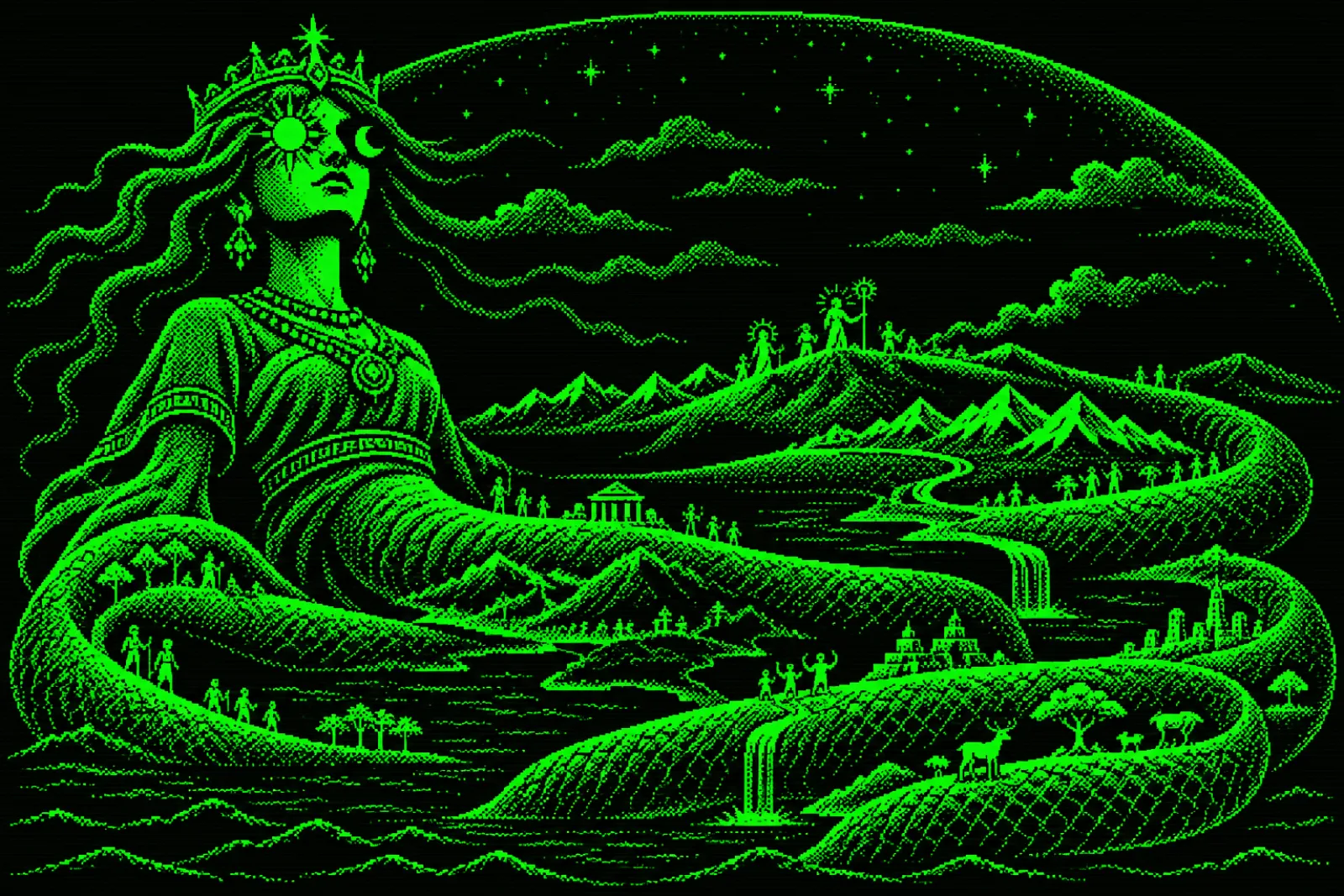
Klu 'bum: The Serpent Queen Whose Body Became the World
Translated by AI straight from the Classical Tibetan, not from a modern translation, then checked against the editions and studies listed below. How we translate
- Text
- Klu 'bum khra bo (the Variegated Klu 'bum), The cosmogony, the nine lake goddesses and the kinds of klu (chapters 54–55): vol. 2, pp. 35–52
- Date
- Redacted 11th–14th century; this text, the Dolanji print of 2018, checked against the 1983 reproduction of the Jonang blockprint and the Dolanji manuscript of 1977
- Found
- Bon canon, Tibet (China); recited to the klu at springs and in drought
- Language
- Classical Tibetan · Tibetan (dbu can, typeset print)
The Klu ‘bum, in full the gTsang ma klu ‘bum, “the Pure Hundred Thousand of the Klu”, is a scripture of Bon, the native religion of Tibet. The klu are the serpent spirits of springs, lakes, rivers and the soil, the Tibetan counterpart of the Indian nāgas; the oldest sense of the word, by Jäschke’s dictionary, is the hooded snake. The scripture comes in three books, the White, the Variegated and the Black, and is recited to the klu to make peace with them: when the spring is poisoned, when a family falls sick, and in drought, when monasteries were ordered to read all three books together.
This passage opens the second section of the Variegated book, the khra bo, and it is spoken by the serpent queen herself. It runs from a becoming in which nothing had become, through a rainbow and a seed the size of a sesame grain, to the birth of the Klu Queen. Then her body becomes the world, part by part. From her come the first serpents, the gods and the demons, the music of the gods, Bon itself and the peoples of Zhangzhung, Sumpa, Tibet and Iran with their separate tongues; then the poisons of the mind, medicine and farming. Then she teaches on desire: in desire there is buddhahood, and each of the five afflictions, desire, hatred, delusion, envy and pride, holds the others. Last she seats nine klu goddesses in the nine great lakes, one for each quarter and one at the centre. They feed the beings of the waters with amṛta and milk, teach and protect the klu’s subjects, and still the oceans. A new section then opens on another klu queen. From her come the kinds of klu and of the sman goddesses, the black ones from hatred, pride and envy, and the text turns to the signs by which a priest knows which kind is at work: beauty, herds and harvests for the white, and sores, tumours, ulcers and the rock ogress inside the white klu woman for the harm. The translation stops on page 52, where the text sums up: the klu are half white and half black.
The cosmogony has never been translated in full into a European language. Schiefner put the White book into German in 1880, Laufer an abridgement of all three in 1898, and Hoffmann reduced this passage to a paragraph that stops at the landscape. Every being in it is named in the language of Zhangzhung first, the old kingdom of western Tibet that Bon claims as its homeland. The text here follows the clean Dolanji print of 2018, checked against the older blockprint. A few stretches use words we cannot construe; they are marked as missing, with a summary of what can be made out, and a single syllable we cannot read shows as a question mark. For the same pattern of a first body that becomes the world in China, see How the Gods Came East.
Each numbered line gives the Classical Tibetan first: the original script, then the same words in Latin letters. Our English is underneath. Tap a dotted word for its meaning, and Note for our comment on the line; our comments are in the right margin.

Page 35. Scan of the 2018 Dolanji print (BDRC W1KG14365, vol. 2) Full source - 135,6–36,1
འདི་ནས་མར་ནེ། ཀླུའི་རྒྱལ་མོ་གཞུང་སྟོན་ཏེ། དང་པོ་སྲིད་པ་ཅི་ཡང་མི་སྲིད་པ་ལས། སྟོང་པའི་རང་བཞིན་དུ་གནས་པ་ལས། དེ་ལས་སྟོང་པའི་ངང་དེ་ལས།
'di nas mar ne/ ཀླུ klu: serpent spirits of springs, lakes and the underworld, the Tibetan for Sanskrit nāga; Jäschke: originally a hooded snake, the cobra · Tibetan-English dictionary རྒྱལ་མོ rgyal mo: queen · Tibetan-English dictionary mo gzhung ston te/ dang po སྲིད་པ srid pa: becoming, coming-into-being; existence, a life; the world (Jäschke); also procreation (Rangjung Yeshe) · Tibetan-English dictionary pa ci yang mi སྲིད་པ srid pa: becoming, coming-into-being; existence, a life; the world (Jäschke); also procreation (Rangjung Yeshe) · Tibetan-English dictionary pa las/ སྟོང་པ stong pa: empty; emptiness · Tibetan-English dictionary pa'i rang bzhin du gnas pa las/ de las སྟོང་པ stong pa: empty; emptiness · Tibetan-English dictionary pa'i ngang de las/
From here on the klu: serpent spirits of springs, lakes and the underworld, the Tibetan for Sanskrit nāga; Jäschke: originally a hooded snake, the cobra rgyal mo: queen teaches the root text. In the beginning, out of a srid pa: becoming, coming-into-being; existence, a life; the world (Jäschke); also procreation (Rangjung Yeshe) in which nothing at all had srid: to come into being, to become, to arise; also: to be possible, out of what abode in the nature of stong pa: empty; emptiness, out of that state of emptiness:
Note on line 1
The whole cosmogony is built on one word. Srid pa is becoming, coming-into-being, existence; Jäschke gives “existence, state of being, life” and “things existing, the world”; it is also the word for each life passed through, birth after birth, and the Rangjung Yeshe dictionary adds “procreation”. The verb srid runs through every clause that follows: nothing had srid, then a rainbow srid, then a seed. The serpent queen speaks the text herself: it is her gzhung, her root teaching. The 2018 print spells mar ne for W23443’s mar ni. 
Page 36. Scan of the 2018 Dolanji print (BDRC W1KG14365, vol. 2) Full source - 236,1
སྲིད་པ་རླངས་པ་ཆ་ཕྲ་མོ་ཙམ་ཅིག་མི་སྲིད་དེ་ཡོད་པར་བྱེད་མེད་པར་ཡང་མི་བྱེད།
སྲིད་པ srid pa: becoming, coming-into-being; existence, a life; the world (Jäschke); also procreation (Rangjung Yeshe) · Tibetan-English dictionary pa རླངས་པ rlangs pa: steam, vapour, breath · Tibetan-English dictionary pa cha phra mo tsam cig mi སྲིད srid: to come into being, to become, to arise; also: to be possible · Tibetan-English dictionary de yod par byed med par yang mi byed/
not even a subtle fraction, a wisp of the rlangs pa: steam, vapour, breath of srid pa: becoming, coming-into-being; existence, a life; the world (Jäschke); also procreation (Rangjung Yeshe), srid: to come into being, to become, to arise; also: to be possible: it neither made anything exist nor made anything not exist.
Note on line 2
The 2018 print reads srid pa rlangs pa cha phra mo, “a subtle fraction of the steam of becoming”; W23443’s worn line had been read srid pa’i cha phra mo. The verbs differ too: W23443 yod par yang mi srid, med par yang mi srid (“it did not become existing, nor not-existing”), the print yod par byed med par yang mi byed (“it did not make for existing, nor for not-existing”). Steam comes back three lines on: the sky is made from the steam of the queen’s crown. - 336,1–2
རླན་བདེ་བའི་ངང་ལས། འཇའ་ཚོན་འདྲ་བ་ཅིག་སྲིད། འཇའ་ཚོན་འདྲ་བ་དེ་བལྟ་བར་སྡུག་ལ་མདོག་གསོལ་ཏེ། གཟུང་དུ་མེད་པ་ཅིག་སྲིད།
རླན rlan: moist, damp; moisture · Tibetan-English dictionary bde ba'i ngang las/ འཇའ་ཚོན 'ja' tshon: rainbow · Tibetan-English dictionary tshon 'dra ba cig སྲིད srid: to come into being, to become, to arise; also: to be possible · Tibetan-English dictionary འཇའ་ཚོན 'ja' tshon: rainbow · Tibetan-English dictionary tshon 'dra ba de blta bar sdug la mdog gsol te/ gzung du med pa cig སྲིད srid: to come into being, to become, to arise; also: to be possible · Tibetan-English dictionary
Out of a rlan: moist, damp; moisture state of bliss one thing like a 'ja' tshon: rainbow srid: to come into being, to become, to arise; also: to be possible. That rainbow-like thing was beautiful to look at and its colour was clear, but it became a thing that could not be grasped.
Note on line 3
Rlan, “moist”, stands before bde ba’i ngang in the 2018 print; W23443 has only “a state of bliss”. Blta bar sdug, “beautiful to look at”, replaces W23443’s blta bar snang, “could be seen”. The print’s mdog gsol is a slip for mdog gsal, “its colour clear”, as in W23443. Gzung du med pa, “ungraspable”, is the same in both: the rainbow can be seen but not held. - 436,2–3
དེ་དངོས་པོར་ཡང་ཡོད་ཁ་དོག་ཀྱང་གསལ་བ་ལས། དེའི་བཅུད་ལས་ཏིལ་གྱི་འབྲས་བུ་ཙམ་སྲིད། ཏིལ་གྱི་འབྲས་བུ་ཙམ་དེ་རང་བརྡོལ་བའི་བཅུད་ལས།
de dngos por yang yod kha dog kyang gsal ba las/ de'i བཅུད bcud: essence, nourishing sap · Tibetan-English dictionary las ཏིལ til: sesame · Tibetan-English dictionary gyi འབྲས་བུ 'bras bu: fruit; seed · Tibetan-English dictionary bu tsam སྲིད srid: to come into being, to become, to arise; also: to be possible · Tibetan-English dictionary ཏིལ til: sesame · Tibetan-English dictionary gyi འབྲས་བུ 'bras bu: fruit; seed · Tibetan-English dictionary bu tsam de rang བརྡོལ brdol: to burst open, to break out · Tibetan-English dictionary ba'i བཅུད bcud: essence, nourishing sap · Tibetan-English dictionary las/
It existed as a thing, and its colour too was clear; from its bcud: essence, nourishing sap, something the size of a til: sesame 'bras bu: fruit; seed became. That sesame seed brdol: to burst open, to break out by itself, and from its essence
Note on line 4
The print has til gyi ‘bras bu, “the fruit (seed) of sesame”, where W23443 has ti la yi ‘bru, “a grain of sesame”, and de dngos por yang yod, “it existed as a thing”, where W23443 has yod par yang yod. The rainbow and the seed are Bon’s usual first stages of creation: light, then a germ. Hoffmann’s summary passes over them straight to the queen. - 536,3
སྐུ་ཆང་གང་གི་དབྱལ་བུད་མེད་ཅིག་སྲིད་པ་ལས། དབྱལ་བུད་མེད་དེ་སྐུ་ཆང་གང་ལ་ཡན་ལག་ར་སྲས་པ་ཅིག་འཁྲུངས་སོ༎
སྐུ sku: body (honorific) · Tibetan-English dictionary chang gang gi dbyal བུད་མེད bud med: woman · Tibetan-English dictionary med cig སྲིད་པ srid pa: becoming, coming-into-being; existence, a life; the world (Jäschke); also procreation (Rangjung Yeshe) · Tibetan-English dictionary pa las/ dbyal བུད་མེད bud med: woman · Tibetan-English dictionary med de སྐུ sku: body (honorific) · Tibetan-English dictionary chang gang la ཡན་ལག yan lag: limb · Tibetan-English dictionary lag ra sras pa cig འཁྲུངས 'khrungs: to be born (honorific: used of gods and kings) · Tibetan-English dictionary so//
a bud med: woman whose sku: body (honorific) was whole and complete became. To that woman of the complete body one with yan lag: limb was 'khrungs: to be born (honorific: used of gods and kings).
Note on line 5
Here the 2018 print overturns the old reading. W23443’s cramped run, read earlier as skra chen dgang gi bu yu skyu mo and taken to be “a woman full with child”, is plainly sku chang gang gi dbyal bud med in the print: sku, body (honorific), chang gang for cha gang, “whole in its parts”, and bud med, woman. Nothing says she was pregnant. Before bud med the print has dbyal; the 1977 manuscript has dpyang in the first place and dbyal in the second. Ra sras pa after yan lag is corrupt; earlier readings of W23443 gave rags pa (“coarse”) and rdzogs pa (“complete”), and the 1977 manuscript has ldags ba. The postposition la makes the one with limbs the woman’s child, and the naming that follows goes to the one born. From here the verbs are honorific: she is born (‘khrungs), as gods and kings are, not merely become. - 636,3–4
ཞལ་བྱེ་བྲག་ཏུ་གསུངས་པ་ཅིག་འཁྲུངས། ཐུགས་ཀྱིས་སྟོང་གསུམ་གྱི་སྟོང་ཁམས་ཁྱབ་པ། སྐུ་རྫུ་འཕྲུལ་དང་ཐུགས་རྗེ་ཆེན་པོ་ཡོངས་སུ་ཁྱབ་པ་ཅིག་འཁྲུངས་སོ༎
zhal bye brag tu gsungs pa cig འཁྲུངས 'khrungs: to be born (honorific: used of gods and kings) · Tibetan-English dictionary thugs kyis སྟོང་གསུམ stong gsum: the three-thousandfold world: the whole universe · Tibetan-English dictionary gsum gyi stong khams khyab pa/ སྐུ sku: body (honorific) · Tibetan-English dictionary rdzu 'phrul dang ཐུགས་རྗེ thugs rje: compassion (honorific: the heart-mind's care) · Tibetan-English dictionary rje chen po yongs su khyab pa cig འཁྲུངས 'khrungs: to be born (honorific: used of gods and kings) · Tibetan-English dictionary so//
One whose mouth spoke each thing distinctly was born. One whose mind pervades the thousand realms of the stong gsum: the three-thousandfold world: the whole universe, whose body's magic and great thugs rje: compassion (honorific: the heart-mind's care) pervade everything, was born.
Note on line 6
Bye brag tu, “distinctly, in its particulars”, is clear in the print, where W23443 had been read ye drag tu, “with force”. The print also has thugs kyis stong gsum gyi stong khams khyab pa, “whose mind pervades the thousand realms of the three-thousandfold world”, for the earlier reading thugs kyis thams cad mkhyen pa, “whose mind knows all”. Mouth, speech, mind and body all take the honorific words (zhal, gsung, thugs, sku): the text speaks of her as a deity from her first breath. - 736,4–5
དེ་ལ་མིང་བཏགས་པ། ཞང་ཞུང་སྐད་དུ། སང་ཀ་ར་སྟེ་ཀུན་ཏུ་ཁྱབ། སུམ་པའི་སྐད་དུ། མོལ་གཞི་ཀུན་ཁྱབ། བོད་སྐད་དུ། ཀླུའི་རྒྱལ་མོ་སྲིད་པ་གཏན་ལ་ཕབ་པ་ཞེས་བྱའོ༎
de la ming btags pa/ ཞང་ཞུང zhang zhung: Zhangzhung, the old kingdom of western Tibet, homeland of Bon · Tibetan-English dictionary zhung སྐད skad: language, tongue; voice · Tibetan-English dictionary du/ sang ka ra ste kun tu khyab/ སུམ་པ sum pa: Sumpa, an old people of north-eastern Tibet · Tibetan-English dictionary pa'i སྐད skad: language, tongue; voice · Tibetan-English dictionary du/ mol gzhi kun khyab/ བོད bod: Tibet · Tibetan-English dictionary སྐད skad: language, tongue; voice · Tibetan-English dictionary du/ ཀླུ klu: serpent spirits of springs, lakes and the underworld, the Tibetan for Sanskrit nāga; Jäschke: originally a hooded snake, the cobra · Tibetan-English dictionary རྒྱལ་མོ rgyal mo: queen · Tibetan-English dictionary mo སྲིད་པ srid pa: becoming, coming-into-being; existence, a life; the world (Jäschke); also procreation (Rangjung Yeshe) · Tibetan-English dictionary pa གཏན་ལ་ཕབ་པ gtan la phab pa: brought down to a settled state: set in order once and for all · Tibetan-English dictionary la phab pa zhes bya'o//
When she was named, in the language of zhang zhung: Zhangzhung, the old kingdom of western Tibet, homeland of Bon she was Sang ka ra ste kun tu khyab; in the language of sum pa: Sumpa, an old people of north-eastern Tibet, Mol gzhi kun khyab; in Tibetan she is called the klu: serpent spirits of springs, lakes and the underworld, the Tibetan for Sanskrit nāga; Jäschke: originally a hooded snake, the cobra rgyal mo: queen who srid pa: becoming, coming-into-being; existence, a life; the world (Jäschke); also procreation (Rangjung Yeshe) gtan la phab pa: brought down to a settled state: set in order once and for all.
Note on line 7
Srid pa gtan la phab pa: gtan la phab pa is to bring something down to a settled state, to fix it once and for all (Jäschke lists gtan la ‘bebs pa under “to arrange” and “to put in order”). Her name says she gave becoming, the process of birth itself, its settled shape. Hoffmann’s “the kLu Queen who put the World into Order” turns a mother of becoming into an administrator of a finished world. The print spells the Zhangzhung and Sumpa names sang ka ra ste kun tu khyab and mol gzhi kun khyab (W23443 was read sang ga ra ste ku tu khyab and mol ga zhi kun khyab); both end in khyab, “pervading”. Every being in this text is named in Zhangzhung first, which claims a pre-Tibetan pedigree for her. - 836,5–6
དེའི་སྤྱི་བོའི་རླངས་པ་ལས། གནམ་སྔོན་པོ་གཡུ་མདོག་དུ་སྲིད། རླངས་པ་ལས་སྲིད་ཆགས་པས་བལྟར་ཡོད་ཀྱང་དངོས་པོ་མེད། ནམ་མཁའ་དེ་མ་ཁེབས་པ་གང་ཡང་མེད་དོ༎
de'i སྤྱི་བོ spyi bo: crown of the head · Tibetan-English dictionary bo'i རླངས་པ rlangs pa: steam, vapour, breath · Tibetan-English dictionary pa las/ གནམ gnam: sky · Tibetan-English dictionary sngon po གཡུ g.yu: turquoise · Tibetan-English dictionary mdog du སྲིད srid: to come into being, to become, to arise; also: to be possible · Tibetan-English dictionary རླངས་པ rlangs pa: steam, vapour, breath · Tibetan-English dictionary pa las སྲིད srid: to come into being, to become, to arise; also: to be possible · Tibetan-English dictionary chags pas bltar yod kyang dngos po med/ nam mkha' de ma khebs pa gang yang med do//
From the rlangs pa: steam, vapour, breath of her spyi bo: crown of the head the blue gnam: sky became, the colour of g.yu: turquoise. Because it formed out of steam, it can be seen, yet it has no substance. There is nothing that sky does not cover.
Note on line 8
The print’s first word, gnas, is a printer’s slip for gnam, sky. Bltar yod, “it can be seen”, is the print’s reading; W23443’s cramped word had been read bla ru, “above”. The print has srid chags pas, “because it formed”, where W23443 has srid par chags pas. Rlangs pa is steam, vapour or warm breath. - 936,6
དེ་ལ་ཞང་ཞུང་སྐད་དུ། སྟོང་པ་ཀུན་ཏུ་ཁེབས་ཞེས་བྱའོ། སུམ་པའི་སྐད་དུ། ཁེབས་བརྡལ་ཞེས་བྱ། བོད་སྐད་དུ་གནམ་ཞེས་བྱ། གཡུང་དྲུང་བོན་གྱི་སྐད་དུ་གནམ་ཞེས་བྱ།
de la ཞང་ཞུང zhang zhung: Zhangzhung, the old kingdom of western Tibet, homeland of Bon · Tibetan-English dictionary zhung སྐད skad: language, tongue; voice · Tibetan-English dictionary du/ སྟོང་པ stong pa: empty; emptiness · Tibetan-English dictionary pa kun tu khebs zhes bya'o/ སུམ་པ sum pa: Sumpa, an old people of north-eastern Tibet · Tibetan-English dictionary pa'i སྐད skad: language, tongue; voice · Tibetan-English dictionary du/ khebs brdal zhes bya/ བོད bod: Tibet · Tibetan-English dictionary སྐད skad: language, tongue; voice · Tibetan-English dictionary du གནམ gnam: sky · Tibetan-English dictionary zhes bya/ གཡུང་དྲུང g.yung drung: the swastika; everlasting, unchanging: Bon's word for its own eternal teaching · Tibetan-English dictionary drung བོན bon: Bon, the native religion of Tibet; also its teaching · Tibetan-English dictionary gyi སྐད skad: language, tongue; voice · Tibetan-English dictionary du གནམ gnam: sky · Tibetan-English dictionary zhes bya/
It is called Stong pa kun tu khebs in the language of Zhangzhung, Khebs brdal in the language of Sumpa, gnam in Tibetan, and gnam too in the language of g.yung drung: the swastika; everlasting, unchanging: Bon's word for its own eternal teaching bon: Bon, the native religion of Tibet; also its teaching.
Note on line 9
The print settles the names: Zhangzhung stong pa kun tu khebs, “emptiness covering all” (W23443 was read stong ra), Sumpa khebs brdal (W23443 khebs ba dza la), and the fourth name, “in the language of Yungdrung Bon”, which could not be read in W23443, is gnam again, the same word as the Tibetan. - 1036,6–37,1
ཡང་ན་དོན་དབྱིངས་ཉིད་མཚན་མ་གཟུང་དུ་མེད་པའོ། འོད་དེས་མ་ཁྱབ་པ་གང་ཡང་མེད་པས། ཀུན་ཏུ་ཁྱབ་བསལ་ཆེན་པོས་བྱའོ། དེ་ལྟས་བལྟས་པས། མི་མངོན་པ་གང་ཡང་མེད་དོ༎
yang na don dbyings nyid མཚན mtshan: mark, sign; also name · Tibetan-English dictionary ma gzung du med pa'o/ 'od des ma khyab pa gang yang med pas/ kun tu khyab bsal chen pos bya'o/ de ltas bltas pas/ mi mngon pa gang yang med do//
Or else: it is the very expanse of meaning, with no mark to be grasped. Since there is nothing its light does not reach, it is called the Great All-Pervading Clarity. Looked at in this way, there is nothing that does not show.
Note on line 10
A gap in W23443, legible in the print. The print’s bsal chen pos bya’o stands for gsal chen po zhes bya’o, and its de ltas bltas pas for de ltar bltas pas. Don dbyings, “the expanse of meaning”, is the ground of all things. 
Page 37. Scan of the 2018 Dolanji print (BDRC W1KG14365, vol. 2) Full source - 1137,1–2
ཀླུའི་རྒྱལ་མོ་སྲིད་པ་གཏན་ལ་འབེབས་པ་དེའི་སྤྱན་གཡས་པའི་འོད་ཟེར་ལས། གསལ་བའི་འོད་ཟེར་ལས་ཟླ་བ་སྲིད། དེ་ནས་མ་གསལ་བ་གང་ཡང་མེད་དོ༎
ཀླུ klu: serpent spirits of springs, lakes and the underworld, the Tibetan for Sanskrit nāga; Jäschke: originally a hooded snake, the cobra · Tibetan-English dictionary རྒྱལ་མོ rgyal mo: queen · Tibetan-English dictionary mo སྲིད་པ srid pa: becoming, coming-into-being; existence, a life; the world (Jäschke); also procreation (Rangjung Yeshe) · Tibetan-English dictionary pa གཏན་ལ་འབེབས་པ gtan la 'bebs pa: to bring down to a settled state, to set in order (present of phab pa) · Tibetan-English dictionary la 'bebs pa de'i སྤྱན spyan: eye (honorific) · Tibetan-English dictionary g.yas pa'i འོད་ཟེར 'od zer: ray of light · Tibetan-English dictionary zer las/ gsal ba'i འོད་ཟེར 'od zer: ray of light · Tibetan-English dictionary zer las ཟླ་བ zla ba: moon · Tibetan-English dictionary ba སྲིད srid: to come into being, to become, to arise; also: to be possible · Tibetan-English dictionary de nas ma gsal ba gang yang med do//
From the 'od zer: ray of light of the right spyan: eye (honorific) of the Klu Queen who gtan la 'bebs pa: to bring down to a settled state, to set in order (present of phab pa) srid pa: becoming, coming-into-being; existence, a life; the world (Jäschke); also procreation (Rangjung Yeshe) in order, from clear light, the zla ba: moon became. After that nothing was left unlit.
Note on line 11
From here her name is given with the present stem, gtan la ‘bebs pa, “who sets in order”: she goes on doing it. - 1237,2–3
དེ་ལ་ཞང་ཞུང་སྐད་དུ། ད་དུང་ལས་སུམ་པའི་སྐད་དུ། མ་ཡེལ་ཀུན་ཏུ་བདལ། བོད་དུ་ཟླ་བ། བོད་སྐད་དུ་གཡུང་དྲུང་སེམས་དཔའ་ཞེས་བྱའོ༎
de la ཞང་ཞུང zhang zhung: Zhangzhung, the old kingdom of western Tibet, homeland of Bon · Tibetan-English dictionary zhung སྐད skad: language, tongue; voice · Tibetan-English dictionary du/ da dung las སུམ་པ sum pa: Sumpa, an old people of north-eastern Tibet · Tibetan-English dictionary pa'i སྐད skad: language, tongue; voice · Tibetan-English dictionary du/ ma yel kun tu bdal/ བོད bod: Tibet · Tibetan-English dictionary du ཟླ་བ zla ba: moon · Tibetan-English dictionary ba/ བོད bod: Tibet · Tibetan-English dictionary སྐད skad: language, tongue; voice · Tibetan-English dictionary du གཡུང་དྲུང g.yung drung: the swastika; everlasting, unchanging: Bon's word for its own eternal teaching · Tibetan-English dictionary drung སེམས་དཔའ sems dpa': hero of mind: the word for a bodhisattva · Tibetan-English dictionary dpa' zhes bya'o//
Its name in the language of Zhangzhung is Da dung; in the language of Sumpa, Ma yel kun tu bdal; in Tibet, zla ba; in the language of [Bon], Yungdrung Sempa, the Everlasting Hero.
Note on line 12
The Zhangzhung name, illegible in W23443, is printed da dung las; the las is a slip, and the name is Da dung. After giving zla ba “in Tibet”, the print has bod skad du, “in Tibetan”, again before g.yung drung sems dpa’; W23443 has bon skad du, “in the language of Bon”, which the pattern of the other names wants. Sems dpa’ is the word Buddhists use for a bodhisattva. - 1337,3
སྤྱན་གཡོན་པའི་འོད་ཟེར་ལས། ཉི་མ་དྲོ་བར་བྱེད་པ་སྲིད། དེ་སྟོང་གསུམ་དུ་དྲོད་ཕེབས་དང་མ་ཁྱབ་པ་གང་ཡང་མེད་དོ། ང་དང་བདག་ཏུ་མེད་པས།
སྤྱན spyan: eye (honorific) · Tibetan-English dictionary g.yon pa'i འོད་ཟེར 'od zer: ray of light · Tibetan-English dictionary zer las/ ཉི་མ nyi ma: sun · Tibetan-English dictionary ma dro bar byed pa སྲིད srid: to come into being, to become, to arise; also: to be possible · Tibetan-English dictionary de སྟོང་གསུམ stong gsum: the three-thousandfold world: the whole universe · Tibetan-English dictionary gsum du དྲོད drod: warmth, heat · Tibetan-English dictionary phebs dang ma khyab pa gang yang med do/ nga dang bdag tu med pas/
From the rays of her left eye the nyi ma: sun became, the one that makes warmth. Its warmth came down on the stong gsum: the three-thousandfold world: the whole universe, and there is nothing it does not reach, for it is without "I" and without self.
Note on line 13
W23443 was read drod phab pas na, “because it brought warmth down”; the print has drod phebs dang, “its warmth came, and”. The clause nga dang bdag tu med pas, “since [it is] without I and self”, is in the print only, and belongs with what goes before. Right eye moon, left eye sun: the reverse of the Chinese Pangu, whose left eye became the sun and right eye the moon. - 1437,3–4
དེ་ལ་ཞང་ཞུང་སྐད་དུ། ཁྱབ་བདལ་ཆེན་པོ་ཞེས་བྱའོ། དེ་ལ་སུམ་པའི་སྐད་དུ། མ་ཀུན་སྟོམས་ཞེས་བྱའོ། པ་མ་དེ་ཀུན་ལ་གཅེས་བྱ་བའོ། བོད་སྐད་དུ་ཉི་མ་ཞེས་བྱའོ། བོད་སྐད་དུ་གཡུང་དྲུང་གི་བླ་ན་མེད་པ་ཞེས་བྱའོ། སྣང་སྲིད་ཀུན་གྱི་རྒྱན་དུ་ཉི་ཟླ་བཞག་པའོ༎
de la ཞང་ཞུང zhang zhung: Zhangzhung, the old kingdom of western Tibet, homeland of Bon · Tibetan-English dictionary zhung སྐད skad: language, tongue; voice · Tibetan-English dictionary du/ khyab bdal chen po zhes bya'o/ de la སུམ་པ sum pa: Sumpa, an old people of north-eastern Tibet · Tibetan-English dictionary pa'i སྐད skad: language, tongue; voice · Tibetan-English dictionary du/ ma kun stoms zhes bya'o/ pa ma de kun la gces bya ba'o/ བོད bod: Tibet · Tibetan-English dictionary སྐད skad: language, tongue; voice · Tibetan-English dictionary du ཉི་མ nyi ma: sun · Tibetan-English dictionary ma zhes bya'o/ བོད bod: Tibet · Tibetan-English dictionary སྐད skad: language, tongue; voice · Tibetan-English dictionary du གཡུང་དྲུང g.yung drung: the swastika; everlasting, unchanging: Bon's word for its own eternal teaching · Tibetan-English dictionary drung gi bla na med pa zhes bya'o/ སྣང་སྲིད snang srid: all that appears and exists: the phenomenal world · Tibetan-English dictionary srid kun gyi rgyan du nyi zla bzhag pa'o//
It is called Khyab bdal chen po in the language of Zhangzhung and Ma kun stoms in the language of Sumpa: that father-and-mother is called dear to all. In Tibetan it is called nyi ma; in [the language of Bon] it is called the Everlasting Unsurpassed. Sun and moon were set as the ornament of snang srid: all that appears and exists: the phenomenal world.
Note on line 14
W23443’s names had been read Khrub gdal chen po and Ma kun sgom; the print has khyab bdal chen po, “Great All-Spreading”, and ma kun stoms. In Pa ma de kun la gces bya ba’o, pa ma is pha ma, so “that father-and-mother is called dear to all” (gces, dear), a gloss on the Sumpa name. Again the print has bod skad du twice, the second for the Bon name; g.yung drung gi bla na med pa, “the Everlasting Unsurpassed”, had been read in W23443 only as g.yung drung gi snang …. - 1537,4–5
དེ་ནས་ཀླུའི་རྒྱལ་མོ་སྲིད་པ་གཏན་ལ་འབེབས་པའི་ཡས་ཀྱི་མཆེ་བ་བཞིའི་དོན་གཟེར་ལས་གཟའ་ཕོ་བཞི་བྱུང་ངོ༎
de nas ཀླུ klu: serpent spirits of springs, lakes and the underworld, the Tibetan for Sanskrit nāga; Jäschke: originally a hooded snake, the cobra · Tibetan-English dictionary རྒྱལ་མོ rgyal mo: queen · Tibetan-English dictionary mo སྲིད་པ srid pa: becoming, coming-into-being; existence, a life; the world (Jäschke); also procreation (Rangjung Yeshe) · Tibetan-English dictionary pa གཏན་ལ་འབེབས་པ gtan la 'bebs pa: to bring down to a settled state, to set in order (present of phab pa) · Tibetan-English dictionary la 'bebs pa'i yas kyi མཆེ་བ mche ba: canine tooth, tusk, fang (Jäschke) · Tibetan-English dictionary ba bzhi'i don gzer las གཟའ gza': planet · Tibetan-English dictionary pho bzhi byung ngo//
Then from the light of the four upper mche ba: canine tooth, tusk, fang (Jäschke) of the Klu Queen who sets becoming in order, the four male gza': planet came about.
Note on line 15
Don gzer is a misprint for ‘od zer, “light”. The print has gza’ pho bzhi, “four male planets”, where W23443 had been read gza’ chen po bzhi, “four great”; the lower fangs give the female ones (line 16). Mche ba is the canine tooth, the tusk and the fang (Jäschke): of a serpent, the fang. - 1637,5–6
དེ་ལ་ཟླ་བ་དང་གཅིག། ཕུར་བུ་དང་གཉིས། པ་ཝ་སངས་དང་གསུམ། བྱི་ཏི་པ་ཕྲས་ཀྱང་བྱ། གཟའ་སྒྲ་གཅན་འཛིན་ཅེས་ཀྱང་བྱ། དུ་བ་འཇུག་རིང་ཞེས་ཀྱང་བྱ། གཟའ་བདུད་ཆེན་པོ་ཡོངས་སུ་ཆེ་བ་ཞེས་ཀྱང་བྱ། མས་ཀྱི་མཆེ་བ་བཞི་ལ། ཉི་མ་སྤེན་པ། གཟའ་ལག་པ་དང། མིག་དམར་ཡང་མོ་ཡིན་ནོ༎
de la ཟླ་བ zla ba: moon · Tibetan-English dictionary ba dang gcig/ phur bu dang gnyis/ pa wa sangs dang gsum/ byi ti pa phras kyang bya/ གཟའ gza': planet · Tibetan-English dictionary སྒྲ sgra: sound, voice · Tibetan-English dictionary gcan 'dzin ces kyang bya/ du ba 'jug ring zhes kyang bya/ གཟའ gza': planet · Tibetan-English dictionary བདུད bdud: bdud: demons, the class of Māra · Tibetan-English dictionary chen po yongs su che ba zhes kyang bya/ mas kyi མཆེ་བ mche ba: canine tooth, tusk, fang (Jäschke) · Tibetan-English dictionary ba bzhi la/ ཉི་མ nyi ma: sun · Tibetan-English dictionary ma spen pa/ གཟའ gza': planet · Tibetan-English dictionary lag pa dang/ mig dmar yang mo yin no//
Of these, the moon is one, Jupiter two, Venus three. The fourth is also called Byi ti pa phras; it is also called the planet Rāhu the Seizer; it is also called Long-Tailed Smoke; it is also called the Great Demon Planet, vast in every way. Of the four lower fangs: the sun, Saturn, the planet Mercury and Mars; these too are female.
Note on line 16
A gap in W23443, legible in the print. The four upper fangs give four planets: the moon, Jupiter (phur bu) and Venus (pa ba sangs; printed pa wa sangs) are numbered one to three, and the fourth is the one with the string of names that follows. Sgra gcan ‘dzin is Rāhu, the eclipse demon who seizes sun and moon, and du ba mjug ring, “long-tailed smoke” (printed ‘jug ring), is the comet; byi ti pa phras is not Jupiter, who is already number two. Gza’ lag pa is a misprint for lhag pa, Mercury. The lower fangs also number four: nyi ma (sun), spen pa (Saturn, Jäschke), lhag pa (Mercury) and mig dmar (Mars). The print has no dang after nyi ma, but four fangs call for four planets, so the sun counts as the first; the clause ends yang mo yin no, “these too are female”, the sun being female here. - 1737,6–38,1
དེ་ལྟར་ཡིན་ཡང་མེད་པ། གཏན་ཆ་གཅིག་དང་སྦྱར་ཏེ། ཉི་མ་དང་ཟླ་བ། ཀླུའི་རྒྱལ་མོ་སྤྱན་ཕྱེ་བས། མཚན་མང་ངོ། སྤྱན་གཡོན་ཕྱེ་བས་ཉིན་མོ་ཡིན་ནོ༎
de ltar yin yang med pa/ gtan cha gcig dang sbyar te/ ཉི་མ nyi ma: sun · Tibetan-English dictionary ma dang ཟླ་བ zla ba: moon · Tibetan-English dictionary ba/ ཀླུ klu: serpent spirits of springs, lakes and the underworld, the Tibetan for Sanskrit nāga; Jäschke: originally a hooded snake, the cobra · Tibetan-English dictionary རྒྱལ་མོ rgyal mo: queen · Tibetan-English dictionary mo སྤྱན spyan: eye (honorific) · Tibetan-English dictionary phye bas/ མཚན mtshan: mark, sign; also name · Tibetan-English dictionary mang ngo/ སྤྱན spyan: eye (honorific) · Tibetan-English dictionary g.yon phye bas ཉིན་མོ nyin mo: day · Tibetan-English dictionary mo yin no//
So it is, and yet it is not; joined as one pair, sun and moon: when the Klu Queen opens [her right] eye it is [night]; when she opens her left eye it is nyin mo: day.
Note on line 17
Gtan cha gcig is “one lasting pair”: sun and moon. The print’s mtshan mang ngo, “many marks”, stands for mtshan mo’o, “it is night”, since her right eye was the moon and her left the sun; the eye opened for night is not named. Her eyelids make night and day. 
Page 38. Scan of the 2018 Dolanji print (BDRC W1KG14365, vol. 2) Full source - 1838,1–2
དེ་ནས་ཀླུའི་རྒྱལ་མོ་སྲིད་པ་གཏན་ལ་འབེབས་པའི་ཚེམས་ཡས་ཀྱི་བཅུ་གཉིས་ལས་སྐར་མ་ཕོ་མ་སོ་བཅུ་གཉིས་ལས་ནི་སྐར་མ་མོ། གཟའི་དུས་ཚོད་དང་ནམ་ཟླ་གཟུང་བ་ཡང་དེའོ། སྐར་མ་ཡང་དུས་དང་ཚོད་དེ་དང་འདྲའོ༎
de nas ཀླུ klu: serpent spirits of springs, lakes and the underworld, the Tibetan for Sanskrit nāga; Jäschke: originally a hooded snake, the cobra · Tibetan-English dictionary རྒྱལ་མོ rgyal mo: queen · Tibetan-English dictionary mo སྲིད་པ srid pa: becoming, coming-into-being; existence, a life; the world (Jäschke); also procreation (Rangjung Yeshe) · Tibetan-English dictionary pa གཏན་ལ་འབེབས་པ gtan la 'bebs pa: to bring down to a settled state, to set in order (present of phab pa) · Tibetan-English dictionary la 'bebs pa'i ཚེམས tshems: teeth (honorific) · Tibetan-English dictionary yas kyi bcu gnyis las སྐར་མ skar ma: star · Tibetan-English dictionary ma pho ma so bcu gnyis las ni སྐར་མ skar ma: star · Tibetan-English dictionary ma mo/ gza'i dus tshod dang nam zla gzung ba yang de'o/ སྐར་མ skar ma: star · Tibetan-English dictionary ma yang dus dang tshod de dang 'dra'o//
Then from the twelve upper tshems: teeth (honorific) of her who sets becoming in order, the male skar ma: star; from the twelve lower teeth, the female stars. They also fix the times of the planets and the reckoning of the months; the stars, too, are like that in time and season.
Note on line 18
W23443 had been read “twelve stars, male and female”. The print divides them: the twelve upper teeth give the male stars, and ma so bcu gnyis, that is mas so, “the twelve lower teeth”, give the female ones. An earlier reading gave her remaining teeth the 28 lunar mansions; neither print says so here. - 1938,2
ཀླུའི་རྒྱལ་མོའི་གསུང་ལས་འབྲུག་སྟོང་གསུམ་གྲགས་པ་ཡིན་དེས་མི་ཐོས་པ་གང་ཡང་མི་འོང་ངོ༎
ཀླུ klu: serpent spirits of springs, lakes and the underworld, the Tibetan for Sanskrit nāga; Jäschke: originally a hooded snake, the cobra · Tibetan-English dictionary རྒྱལ་མོ rgyal mo: queen · Tibetan-English dictionary mo'i གསུང gsung: speech, voice (honorific) · Tibetan-English dictionary las འབྲུག 'brug: thunder; also dragon (Jäschke) · Tibetan-English dictionary སྟོང་གསུམ stong gsum: the three-thousandfold world: the whole universe · Tibetan-English dictionary gsum grags pa yin des mi thos pa gang yang mi 'ong ngo//
From the gsung: speech, voice (honorific) of the Klu Queen the 'brug: thunder; also dragon (Jäschke) resounds through the three-thousandfold world; no one fails to hear it.
Note on line 19
‘Brug is both “thunder” and “dragon” (Jäschke): in Tibetan the thunder is the dragon’s roar. Here it is the serpent queen’s voice. The print gives the last clause plainly; W23443’s line was crowded. - 2038,2–3
ལྗགས་ཀྱི་འོད་ཟེར་ལས། གློག་འགྱུར་བ་ཁམས་གསུམ་གསལ་བ་དེ་སྲིད།
ལྗགས ljags: tongue (honorific) · Tibetan-English dictionary kyi འོད་ཟེར 'od zer: ray of light · Tibetan-English dictionary zer las/ གློག glog: lightning · Tibetan-English dictionary 'gyur ba khams gsum gsal ba de སྲིད srid: to come into being, to become, to arise; also: to be possible · Tibetan-English dictionary
From the light of her ljags: tongue (honorific) came the changing glog: lightning that lights up the three worlds.
Note on line 20
The print has glog ‘gyur ba, “changing lightning”, where W23443 had been read glog ‘khyug, “flashing”, and khams gsum gsal ba, “lighting up the three worlds”, for a clause illegible in W23443. The serpent’s flickering tongue is the lightning. - 2138,3
ཞལ་གྱི་ཁ་རླངས་ལས། སྤྲིན་དང་ན་བུན་དུ་བྱུང། སྤྱན་གྱིས་མཆི་མ་ལས་ཆར་པ། མཆི་མ་མང་ན་ཆར་པ་ཆེ། མཆི་མ་ཉུང་ན་ཆར་པ་ཆུང།
zhal gyi kha rlangs las/ སྤྲིན sprin: cloud · Tibetan-English dictionary dang na bun du byung/ སྤྱན spyan: eye (honorific) · Tibetan-English dictionary gyis མཆི་མ mchi ma: tears · Tibetan-English dictionary ma las ཆར་པ char pa: rain · Tibetan-English dictionary pa/ མཆི་མ mchi ma: tears · Tibetan-English dictionary ma mang na ཆར་པ char pa: rain · Tibetan-English dictionary pa che/ མཆི་མ mchi ma: tears · Tibetan-English dictionary ma nyung na ཆར་པ char pa: rain · Tibetan-English dictionary pa chung/
From the vapour of her mouth came sprin: cloud and mist. From the mchi ma: tears of her eyes, the char pa: rain: when her tears are many the rain is heavy, when her tears are few the rain is light.
Note on line 21
The print gives the whole clause on the clouds, which W23443’s crowded line gave only in part. - 2238,3–4
ལྗགས་ཀྱི་མཆིལ་མ་ལས་སེར་བ། ཀླུ་སྣ་གཡས་གཡོན་སྦུགས་ལས། ཧྲི་རླུང་ནས་ལྷ་དུས་མེད་པར་འོང་ངོ། སྦུགས་ཆེ་ན་ཧྲི་ཆེ། སྦུགས་ཆུང་ན་ཧྲི་ཆུང། ཞལ་དང་བྲུས་ནས་འབྱུང་ངོ། ཞལ་དུ་བྲུས་ན་གྲོ་བ་འབྱུང།
ལྗགས ljags: tongue (honorific) · Tibetan-English dictionary kyi མཆིལ་མ mchil ma: spittle · Tibetan-English dictionary ma las སེར་བ ser ba: hail · Tibetan-English dictionary ba/ ཀླུ klu: serpent spirits of springs, lakes and the underworld, the Tibetan for Sanskrit nāga; Jäschke: originally a hooded snake, the cobra · Tibetan-English dictionary sna g.yas g.yon སྦུགས sbugs: hollow, cavity; nostril · Tibetan-English dictionary las/ hri རླུང rlung: wind; also breath and the wind humour of Tibetan medicine · Tibetan-English dictionary nas ལྷ lha: god · Tibetan-English dictionary dus med par 'ong ngo/ སྦུགས sbugs: hollow, cavity; nostril · Tibetan-English dictionary che na hri che/ སྦུགས sbugs: hollow, cavity; nostril · Tibetan-English dictionary chung na hri chung/ zhal dang brus nas 'byung ngo/ zhal du brus na gro ba 'byung/
From the mchil ma: spittle of her tongue, ser ba: hail. From the right and left sbugs: hollow, cavity; nostril of the Klu [Queen], the whistling rlung: wind; also breath and the wind humour of Tibetan medicine: [from it …] comes at no fixed time. When the nostrils are wide the whistling is great; when the nostrils are narrow the whistling is small. […] comes from her mouth; when […] in her mouth, wheat comes.
Note on line 22
A gap in W23443, read in the print. Ser ba is hail. Hri, printed twice, is the whistle of the wind from her nostrils. Gro ba is wheat. - 2338,4–6
རྒྱལ་མོ་སྲིད་པ་གཏན་ལ་འབེབས། སྦུགས་ལས་རླུང་གི་དཀྱིལ་འཁོར་བྱུང་ངོ། རླུང་དེའི་འཁོར་ལོ་ལས། རླུང་གི་འཁོར་ལོ་ཆེན་པོ་བཞི་བྱུང་བ་ལས། ནམ་མཁའ་ལ་རྒྱུ་བའི་རླུང། དྲོད་སེར་འབེབས་པའི་རླུང། སྦུ་བུ་གུ་སེལ་བའི་རླུང། སྐྱེད་པར་བྱེད་པའི་རླུང་དེ་ལྟར་བཞིའོ༎
རྒྱལ་མོ rgyal mo: queen · Tibetan-English dictionary mo སྲིད་པ srid pa: becoming, coming-into-being; existence, a life; the world (Jäschke); also procreation (Rangjung Yeshe) · Tibetan-English dictionary pa gtan la 'bebs/ སྦུགས sbugs: hollow, cavity; nostril · Tibetan-English dictionary las རླུང rlung: wind; also breath and the wind humour of Tibetan medicine · Tibetan-English dictionary gi དཀྱིལ་འཁོར dkyil 'khor: circle, ring; a maṇḍala · Tibetan-English dictionary 'khor byung ngo/ རླུང rlung: wind; also breath and the wind humour of Tibetan medicine · Tibetan-English dictionary de'i 'khor lo las/ རླུང rlung: wind; also breath and the wind humour of Tibetan medicine · Tibetan-English dictionary gi 'khor lo chen po bzhi byung ba las/ nam mkha' la rgyu ba'i རླུང rlung: wind; also breath and the wind humour of Tibetan medicine · Tibetan-English dictionary དྲོད drod: warmth, heat · Tibetan-English dictionary ser 'bebs pa'i རླུང rlung: wind; also breath and the wind humour of Tibetan medicine · Tibetan-English dictionary sbu bu gu sel ba'i རླུང rlung: wind; also breath and the wind humour of Tibetan medicine · Tibetan-English dictionary skyed par byed pa'i རླུང rlung: wind; also breath and the wind humour of Tibetan medicine · Tibetan-English dictionary de ltar bzhi'o//
From the nostrils of the Queen who sets srid pa: becoming, coming-into-being; existence, a life; the world (Jäschke); also procreation (Rangjung Yeshe) in order the dkyil 'khor: circle, ring; a maṇḍala of rlung: wind; also breath and the wind humour of Tibetan medicine came about. From the wheel of that wind the four great wheels of wind came about, and from them: the wind that moves through the sky, the wind that brings down warmth and frost, the wind that clears the pores of the skin, and the wind that makes things grow. Those are the four.
Note on line 23
This is the largest change the 2018 print makes. W23443 had been read here as klu’i dkyil ‘khor, “the circle of the klu”, and the four kinds as the first serpents (“klu that race through the sky, klu that strike the rocks …”). The print has rlung, wind, every time: the four great winds come from her nostrils, as the clouds came from her mouth. Drod ser ‘bebs pa, “bringing down warmth and frost” (ser, frost or hail), where W23443 had been read rdo se ra ’thebs pa, “striking the rocks”. The first serpents in this text now come from her lungs and liver (line 32). - 2438,6
ཁྲག་ལས་བསྐྱེད་པས། རྒྱ་མཚོ་ཆེན་པོ་བཞི་དབུས་ཀྱི་རྒྱ་མཚོ་དང་ལྔ་བྱུང་ངོ༎
ཁྲག khrag: blood · Tibetan-English dictionary las bskyed pas/ རྒྱ་མཚོ rgya mtsho: ocean · Tibetan-English dictionary mtsho chen po bzhi dbus kyi རྒྱ་མཚོ rgya mtsho: ocean · Tibetan-English dictionary mtsho dang lnga byung ngo//
From her khrag: blood were born the four great rgya mtsho: ocean, and with the ocean of the centre, five.
Note on line 24
Hoffmann’s summary has “her blood the oceans”, which both prints confirm. The print has bskyed pas, “being brought forth”, for W23443’s skyes pas. - 2538,6–39,1
དེ་ནས་རྩ་སུམ་བརྒྱ་དྲུག་ཅུ་ལས། ཆུ་བྲན་རེ་རེ་ལས་ཆུ་སྔོན་སྔོན་སྲིད། ཆུ་བྲན་སྔོན་སྔོན་ལས། ཀླུང་གིས་གསོལ་བའི་རྩི་ཐོག་དང། ཀླུང་དེ་ལས་མི་སྐྱེ་བ་གང་ཡང་མེད་པ་སྲིད་དོ༎
de nas རྩ rtsa: vein, channel, nerve · Tibetan-English dictionary sum brgya drug cu las/ chu bran re re las chu sngon sngon སྲིད srid: to come into being, to become, to arise; also: to be possible · Tibetan-English dictionary chu bran sngon sngon las/ ཀླུང klung: river · Tibetan-English dictionary gis gsol ba'i rtsi thog dang/ ཀླུང klung: river · Tibetan-English dictionary de las mi skye ba gang yang med pa སྲིད srid: to come into being, to become, to arise; also: to be possible · Tibetan-English dictionary do//
Then from her three hundred and sixty rtsa: vein, channel, nerve, from each little stream, blue waters came to be; from the blue streams, klung: river, and the herbs and crops the rivers feed. Nothing came to be that does not grow from those rivers.
Note on line 25
The 360 are rtsa, veins or channels, not bones. The print gives chu sngon sngon and klung plainly, and spells the small waters chu bran (W23443 chu phran). Hoffmann gives “her veins the rivers”; the text has the veins become waters, the waters rivers, and the rivers feed the crops. 
Page 39. Scan of the 2018 Dolanji print (BDRC W1KG14365, vol. 2) Full source - 2639,1–2
དེ་ནས་ཤའི་འོད་ཟེར་ལས་ཐེག་པ་གསེར་གྱིས་ས་གཞི་སྲིད་དོ། དེ་ནས་མ་རྟོགས་པ་གང་ཡང་མེད་དོ། དེ་ནས་མི་སྐྱེ་བ་གང་ཡང་མེད་དོ། དེས་མ་གསོས་པ་གང་ཡང་མེད་དོ༎
de nas ཤ sha: flesh · Tibetan-English dictionary འོད་ཟེར 'od zer: ray of light · Tibetan-English dictionary zer las theg pa gser gyis ས་གཞི sa gzhi: ground, the earth's surface · Tibetan-English dictionary gzhi སྲིད srid: to come into being, to become, to arise; also: to be possible · Tibetan-English dictionary do/ de nas ma rtogs pa gang yang med do/ de nas mi skye ba gang yang med do/ des ma gsos pa gang yang med do//
Then from the light of her sha: flesh the golden sa gzhi: ground, the earth's surface that bears [all] came to be. After that there was nothing unknown; there was nothing that did not grow; there was nothing it did not gso ba: to nourish, to heal.
Note on line 26
The print has theg pa, “bearing, supporting” (W23443 had been read thog pa), ma rtogs pa, “not known”, for W23443’s ma rtags pa, “unmarked”, and des ma gsos pa, “nothing it did not nourish”. Hoffmann: “her flesh the earth”. - 2739,2–3
དེ་ནས་དྲོད་ཀྱི་འོད་ཟེར་ལས་བསྐལ་པའི་འོད་ཡེ་ནས་སྲིད་པས། དྲོད་དེས་མ་བསྐྱེད་པ་གང་ཡང་མེད་དོ། རུས་པའི་འོད་ཟེར་ལས། རི་རབ་ལྷུན་པོ་དེ་ཡང་སྲིད་དོ། སྲིད་པའི་བྲག་དང་རྡོ་དེ་ནས་སྲིད་དོ༎
de nas དྲོད drod: warmth, heat · Tibetan-English dictionary kyi འོད་ཟེར 'od zer: ray of light · Tibetan-English dictionary zer las བསྐལ་པ bskal pa: aeon (Sanskrit kalpa) · Tibetan-English dictionary pa'i 'od ye nas སྲིད srid: to come into being, to become, to arise; also: to be possible · Tibetan-English dictionary pas/ དྲོད drod: warmth, heat · Tibetan-English dictionary des ma bskyed pa gang yang med do/ རུས་པ rus pa: bone · Tibetan-English dictionary pa'i འོད་ཟེར 'od zer: ray of light · Tibetan-English dictionary zer las/ རི་རབ ri rab: Mount Meru, the mountain at the centre of the world · Tibetan-English dictionary rab lhun po de yang སྲིད srid: to come into being, to become, to arise; also: to be possible · Tibetan-English dictionary do/ སྲིད་པ srid pa: becoming, coming-into-being; existence, a life; the world (Jäschke); also procreation (Rangjung Yeshe) · Tibetan-English dictionary pa'i brag dang rdo de nas སྲིད srid: to come into being, to become, to arise; also: to be possible · Tibetan-English dictionary do//
Then from the light of her drod: warmth, heat the light of the bskal pa: aeon (Sanskrit kalpa) came to be from the very first, and there was nothing that warmth did not bring to life. From the light of her rus pa: bone, ri rab: Mount Meru, the mountain at the centre of the world too came to be. The crags and stones of the world came to be from there.
Note on line 27
The print reads drod kyi ‘od zer, “the light of her warmth”, where W23443 had been read rus kyi ‘od zer, “the light of her bones”; the 1977 manuscript (OCR) agrees with the print. So the bones give only Meru and the rocks, as Hoffmann’s “her bones the mountains” has it. - 2839,3
དེ་ནས་ཀླུའི་རྒྱལ་མོ་སྲིད་པ་གཏན་ལ་འབེབས་པ་དེའི་དབུའི་སྐྲ་རེ་རེ་བ་སྤུ་ཉག་མ་རེ་རེ་ལས། རྩི་ཤིང་དང་ནགས་ཚལ་ལ་སོགས་པ་ཐམས་ཅད་སྲིད་དོ༎
de nas ཀླུ klu: serpent spirits of springs, lakes and the underworld, the Tibetan for Sanskrit nāga; Jäschke: originally a hooded snake, the cobra · Tibetan-English dictionary རྒྱལ་མོ rgyal mo: queen · Tibetan-English dictionary mo སྲིད་པ srid pa: becoming, coming-into-being; existence, a life; the world (Jäschke); also procreation (Rangjung Yeshe) · Tibetan-English dictionary pa གཏན་ལ་འབེབས་པ gtan la 'bebs pa: to bring down to a settled state, to set in order (present of phab pa) · Tibetan-English dictionary la 'bebs pa de'i dbu'i སྐྲ skra: hair of the head · Tibetan-English dictionary re re ba སྤུ spu: body hair · Tibetan-English dictionary nyag ma re re las/ rtsi shing dang ནགས་ཚལ nags tshal: forest · Tibetan-English dictionary tshal la sogs pa thams cad སྲིད srid: to come into being, to become, to arise; also: to be possible · Tibetan-English dictionary do//
Then from each skra: hair of the head of the head of the Klu Queen who sets becoming in order, and from each single spu: body hair, herbs, trees, nags tshal: forest and all such came to be.
Note on line 28
The print adds the honorific dbu’i, “of her head”. - 2939,3–4
དེ་ནས་ཡན་ལག་བཞིའི་འོད་ཟེར་ལས། འཛམ་བུ་གླིང་སྲིད་དོ༎
de nas ཡན་ལག yan lag: limb · Tibetan-English dictionary lag bzhi'i འོད་ཟེར 'od zer: ray of light · Tibetan-English dictionary zer las/ འཛམ་བུ་གླིང 'dzam bu gling: Jambudvīpa, the southern continent where humans live · Tibetan-English dictionary bu gling སྲིད srid: to come into being, to become, to arise; also: to be possible · Tibetan-English dictionary do//
Then from the light of her four yan lag: limb, 'dzam bu gling: Jambudvīpa, the southern continent where humans live, the continent of humans, came to be.
- 3039,4
སྐུ་ལུས་ཀྱི་འོད་ཟེར་ལས། རི་རབ་ལྷུན་པོ་སྲིད། མདུན་རྒྱབ་གཉིས་ལས་གདགས་དང་སྲིབ་སུ་སྲིད་དོ༎
སྐུ་ལུས sku lus: body (honorific) · Tibetan-English dictionary lus kyi འོད་ཟེར 'od zer: ray of light · Tibetan-English dictionary zer las/ རི་རབ ri rab: Mount Meru, the mountain at the centre of the world · Tibetan-English dictionary rab lhun po སྲིད srid: to come into being, to become, to arise; also: to be possible · Tibetan-English dictionary mdun rgyab gnyis las gdags dang སྲིབ srib: the shady side (of a mountain) · Tibetan-English dictionary su སྲིད srid: to come into being, to become, to arise; also: to be possible · Tibetan-English dictionary do//
From the light of her sku lus: body (honorific), ri rab: Mount Meru, the mountain at the centre of the world came to be; from her front and back, its sunlit side and its srib: the shady side (of a mountain).
Note on line 30
The print names Meru (ri rab lhun po) where W23443 had been read ri bo lhun po. Srib is the shady side of a mountain, so gdags dang srib is the sunny side and the shady one. W23443 had been read gdags dang skyabs. - 3139,4
ནང་ཁྲོལ་གྱི་འོད་ཟེར་ལས། མིད་པའི་འོད་ཟེར་ལས། འབུམ་ཕྲག་སྲིད་དོ༎
ནང་ཁྲོལ nang khrol: entrails, viscera · Tibetan-English dictionary khrol gyi འོད་ཟེར 'od zer: ray of light · Tibetan-English dictionary zer las/ མིད་པ mid pa: gullet, throat · Tibetan-English dictionary pa'i འོད་ཟེར 'od zer: ray of light · Tibetan-English dictionary zer las/ 'bum phrag སྲིད srid: to come into being, to become, to arise; also: to be possible · Tibetan-English dictionary do//
From the light of her nang khrol: entrails, viscera, from the light of her mid pa: gullet, throat, hundreds of thousands came to be.
Note on line 31
What the hundreds of thousands are is not said. The working notes made the throat the source of “song, dance and music”; on the page the throat word is mid pa, the gullet, and what comes from it is “hundreds of thousands”. The music comes two lines later. - 3239,4–5
གློ་བའི་འོད་ཟེར་ལས། ཀླུ་དཀར་པོ་སྲིད་དོ། མཆིན་པའི་འོད་ཟེར་ལས་ཀླུ་ནག་པོ་སྲིད་དོ། སྙིང་གི་འོད་ཟེར་ལས་སྣང་སྲིད་ཀྱི་ལྷ་འདྲེ་མིང་བཏགས་པ་སྲིད་དོ༎
གློ་བ glo ba: lungs · Tibetan-English dictionary ba'i འོད་ཟེར 'od zer: ray of light · Tibetan-English dictionary zer las/ ཀླུ klu: serpent spirits of springs, lakes and the underworld, the Tibetan for Sanskrit nāga; Jäschke: originally a hooded snake, the cobra · Tibetan-English dictionary dkar po སྲིད srid: to come into being, to become, to arise; also: to be possible · Tibetan-English dictionary do/ མཆིན་པ mchin pa: liver · Tibetan-English dictionary pa'i འོད་ཟེར 'od zer: ray of light · Tibetan-English dictionary zer las ཀླུ klu: serpent spirits of springs, lakes and the underworld, the Tibetan for Sanskrit nāga; Jäschke: originally a hooded snake, the cobra · Tibetan-English dictionary ནག་པོ nag po: black · Tibetan-English dictionary po སྲིད srid: to come into being, to become, to arise; also: to be possible · Tibetan-English dictionary do/ སྙིང snying: heart · Tibetan-English dictionary gi འོད་ཟེར 'od zer: ray of light · Tibetan-English dictionary zer las སྣང་སྲིད snang srid: all that appears and exists: the phenomenal world · Tibetan-English dictionary srid kyi ལྷ་འདྲེ lha 'dre: gods and demons · Tibetan-English dictionary 'dre ming btags pa སྲིད srid: to come into being, to become, to arise; also: to be possible · Tibetan-English dictionary do//
From the light of her glo ba: lungs, the white klu: serpent spirits of springs, lakes and the underworld, the Tibetan for Sanskrit nāga; Jäschke: originally a hooded snake, the cobra came to be. From the light of her mchin pa: liver, the black klu came to be. From the light of her snying: heart, the lha 'dre: gods and demons of snang srid: all that appears and exists: the phenomenal world came to be, each given its name.
Note on line 32
The organ word that was cramped in W23443 is plainly glo ba, lungs, in the print. White and black klu are the beneficent and the harmful serpents of the later books. The gods and the demons both come out of the serpent’s heart. - 3339,5–6
སེམས་ཅན་བདེ་བའི་བོན་ཆོས་བསམ་གྱིས་མི་ཁྱབ་པར་སྲིད་དོ། ལྷའི་རོལ་མོ་ལ་སོགས་པ་ཐམས་ཅད་ཀྱང་སྲིད་དོ༎
སེམས་ཅན sems can: sentient being, any living thing with a mind · Tibetan-English dictionary can bde ba'i བོན bon: Bon, the native religion of Tibet; also its teaching · Tibetan-English dictionary chos bsam gyis mi khyab par སྲིད srid: to come into being, to become, to arise; also: to be possible · Tibetan-English dictionary do/ ལྷ lha: god · Tibetan-English dictionary རོལ་མོ rol mo: music; instrumental music · Tibetan-English dictionary mo la sogs pa thams cad kyang སྲིད srid: to come into being, to become, to arise; also: to be possible · Tibetan-English dictionary do//
The bon: Bon, the native religion of Tibet; also its teaching teaching of the happiness of sems can: sentient being, any living thing with a mind came to be, past what thought can reach. The rol mo: music; instrumental music of the lha: god and all such came to be too.
Note on line 33
The first clause, read only in part in W23443 (sems can bde ba’i phun tshogs …), is in the print sems can bde ba’i bon chos bsam gyis mi khyab par srid do. Rol mo is music, especially instrumental music: here it comes into being with the rest of her body’s issue. - 3439,6
ཀླད་པའི་འོད་ཟེར་ལས། མཚོ་ཆེན་མཚེའུ་ཐམས་ཅད་སྲིད་དོ། ཕོ་བའི་འོད་ཟེར་ལས་ལྟེང་ཀ་དང་རྫིང་བུ་སྲིད།
ཀླད་པ klad pa: brain · Tibetan-English dictionary pa'i འོད་ཟེར 'od zer: ray of light · Tibetan-English dictionary zer las/ མཚོ mtsho: lake · Tibetan-English dictionary chen mtshe'u thams cad སྲིད srid: to come into being, to become, to arise; also: to be possible · Tibetan-English dictionary do/ ཕོ་བ pho ba: stomach · Tibetan-English dictionary ba'i འོད་ཟེར 'od zer: ray of light · Tibetan-English dictionary zer las lteng ka dang rdzing bu སྲིད srid: to come into being, to become, to arise; also: to be possible · Tibetan-English dictionary
From the light of her klad pa: brain, all the great mtsho: lake and the little lakes came to be. From the light of her pho ba: stomach, pools and ponds came to be.
Note on line 34
The print confirms klad pa, the brain, and has mtshe’u, “small lake”, for mtsho phran. - 3539,6–40,1
རྒྱུ་མའི་ལམ་རྒྱུ་སྲིད་དོ། དེའི་ཕྱིར་ཡུལ་མཁར་སྲིད། མཚན་ལས་སྐྱེ་བའི་རྒྱུན་ལམ་སྲིད། མ་སྲིད་པ་གང་ཡང་མ་མཆིས་སོ༎
རྒྱུ་མ rgyu ma: intestines · Tibetan-English dictionary ma'i lam rgyu སྲིད srid: to come into being, to become, to arise; also: to be possible · Tibetan-English dictionary do/ de'i phyir yul mkhar སྲིད srid: to come into being, to become, to arise; also: to be possible · Tibetan-English dictionary མཚན mtshan: mark, sign; also name · Tibetan-English dictionary las skye ba'i rgyun lam སྲིད srid: to come into being, to become, to arise; also: to be possible · Tibetan-English dictionary ma སྲིད་པ srid pa: becoming, coming-into-being; existence, a life; the world (Jäschke); also procreation (Rangjung Yeshe) · Tibetan-English dictionary pa gang yang ma mchis so//
From her rgyu ma: intestines the roads came to be, and so lands and castles came to be. From her mtshan: mark, sign; also name came the courses of the streams that spring from them. There is nothing at all that did not srid: to come into being, to become, to arise; also: to be possible.
Note on line 35
The print, with the 1977 manuscript, differs here from W23443 twice. For W23443’s rgyu ma las chu bo srid, “from her intestines the rivers”, it has rgyu ma’i lam rgyu srid, “from her intestines the roads” (lam, road), followed by “therefore lands and castles (yul mkhar) came to be”. And where W23443 had been read mchan, the armpit, both have mtshan, which in medical Tibetan is the genitals (Jäschke, mtshan 2: “genitals”; also “sign, mark”): the streams flow from her sex. 
Page 40. Scan of the 2018 Dolanji print (BDRC W1KG14365, vol. 2) Full source - 3640,1
This line is missing from the open Classical Tibetan text we translate from.
Paraphrase With the outer lands made, the queen is given another name, *Srid pa mo chags ma* ("the Mother in whom Becoming Formed"), and becoming is said to be "divided into halves" (*srid pa cha phyed do*). Between the two stands *de ltar go brag phyed bar ma byas na*, "had it not been divided like this…".
Taken from the published translations until we can translate the Classical Tibetan ourselves.
- 3740,1–2
ཀླུའི་རྒྱལ་མོའི་སེམས་ལས། སྲིད་པའི་བོན་མཐའ་དག་པ་ཡང་རང་བྱུང་དུ་སྲིད་དོ། བོན་ལ་ཞང་ཞུང་དང། སུམ་པ་དང། བོད་དང། སྟག་གཟིག་དང། སྐད་མི་མཐུན་པ་སྐྱོགས་དང་དེར་སྲིད།
ཀླུ klu: serpent spirits of springs, lakes and the underworld, the Tibetan for Sanskrit nāga; Jäschke: originally a hooded snake, the cobra · Tibetan-English dictionary རྒྱལ་མོ rgyal mo: queen · Tibetan-English dictionary mo'i སེམས sems: mind · Tibetan-English dictionary las/ སྲིད་པ srid pa: becoming, coming-into-being; existence, a life; the world (Jäschke); also procreation (Rangjung Yeshe) · Tibetan-English dictionary pa'i བོན bon: Bon, the native religion of Tibet; also its teaching · Tibetan-English dictionary mtha' dag pa yang rang byung du སྲིད srid: to come into being, to become, to arise; also: to be possible · Tibetan-English dictionary do/ བོན bon: Bon, the native religion of Tibet; also its teaching · Tibetan-English dictionary la ཞང་ཞུང zhang zhung: Zhangzhung, the old kingdom of western Tibet, homeland of Bon · Tibetan-English dictionary zhung dang/ སུམ་པ sum pa: Sumpa, an old people of north-eastern Tibet · Tibetan-English dictionary pa dang/ བོད bod: Tibet · Tibetan-English dictionary dang/ སྟག་གཟིག stag gzig: Tazig: Iran, the Persians · Tibetan-English dictionary gzig dang/ སྐད skad: language, tongue; voice · Tibetan-English dictionary mi mthun pa skyogs dang der སྲིད srid: to come into being, to become, to arise; also: to be possible · Tibetan-English dictionary
From the sems: mind of the Klu Queen all the bon: Bon, the native religion of Tibet; also its teaching of the world came to be, of itself. With Bon, zhang zhung: Zhangzhung, the old kingdom of western Tibet, homeland of Bon, sum pa: Sumpa, an old people of north-eastern Tibet, bod: Tibet and stag gzig: Tazig: Iran, the Persians, with their skad: language, tongue; voice that do not agree, [and …], came to be there.
Note on line 37
The print confirms rang byung du, “of itself”, and reads bon la, “with (or in) Bon”, where W23443 had been read yul, “the lands”. The four peoples of Bon’s world, west, north-east, centre and far west, and their languages, come from her mind with Bon. Skyogs (a ladle? a turn?) we cannot construe. Stag gzig is Iran. - 3840,2–3
བོན་གསོན་དང་གཤིན་དང། གདུག་པ་དང་ཡང་དག་པའི་སེམས་ཕྱོགས་ཀྱང་དེར་སྲིད་དོ༎
བོན bon: Bon, the native religion of Tibet; also its teaching · Tibetan-English dictionary gson dang gshin dang/ གདུག་པ gdug pa: malicious, venomous · Tibetan-English dictionary pa dang yang dag pa'i སེམས sems: mind · Tibetan-English dictionary phyogs kyang der སྲིད srid: to come into being, to become, to arise; also: to be possible · Tibetan-English dictionary do//
Bon for the living and the dead, and the two sides of the mind, the gdug pa: malicious, venomous and the pure, came to be there too.
Note on line 38
The print has gshen, priest, a slip for gshin, dead, in the pair gson gshin, living and dead. Gdug pa is malicious and venomous: the same word is used of poisonous snakes. - 3940,3–4
ལྷ་ལ་ཡང་དག་ལྷ་དབྱིངས་ན་གནས་པ་ཡང་འདྲེས་འགྲོས་བྱེད་པ་དང། ལྷ་བཀྲེན་འདྲེ་རུ་ཟ་བ་ཡང་དེར་སྲིད། དེ་ལྷ་སྲོག་ལྷར་བྱ་བ་དང། བསྙེན་པའི་ལྷར་འཆས་པ་དང། སྒྲུབ་པའི་ལྷ་རྟེན་དབང་དུ་བསྡུས་པ་དེ་ཡང་སྲིད་དོ༎
ལྷ lha: god · Tibetan-English dictionary la yang dag ལྷ lha: god · Tibetan-English dictionary dbyings na gnas pa yang 'dres 'gros byed pa dang/ ལྷ lha: god · Tibetan-English dictionary bkren 'dre ru za ba yang der སྲིད srid: to come into being, to become, to arise; also: to be possible · Tibetan-English dictionary de ལྷ lha: god · Tibetan-English dictionary srog lhar bya ba dang/ bsnyen pa'i lhar 'chas pa dang/ sgrub pa'i ལྷ lha: god · Tibetan-English dictionary rten dbang du bsdus pa de yang སྲིད srid: to come into being, to become, to arise; also: to be possible · Tibetan-English dictionary do//
Among the lha: god: true gods who dwell in the expanse of the gods and yet mingle [with beings], and needy gods who feed as demons, came to be there. Gods to be made gods of the life-force, gods to be taken as gods of worship, and the god-supports of practice brought under control: these too came to be.
Note on line 39
A gap in W23443, legible in the print. Lha bkren ‘dre ru za ba: bkren is “needy, starving”, so gods who, hungry, feed as demons. Bsnyen pa is the ritual approach to a deity; sgrub pa, its practice; lha rten, the image or object in which a god is installed. - 4040,4
དེ་ནས་སེམས་ཅན་ལས་ཞེ་སྡང་དང། ང་རྒྱལ་དང། གཏི་མུག་དང། འདོད་ཆགས་དང། ཕྲག་དོག་དང། དེ་ལྔ་ཡོངས་སུ་སྲིད་དོ༎
de nas སེམས་ཅན sems can: sentient being, any living thing with a mind · Tibetan-English dictionary can las ཞེ་སྡང zhe sdang: hatred, anger · Tibetan-English dictionary sdang dang/ ང་རྒྱལ nga rgyal: pride, conceit (literally "I-king") · Tibetan-English dictionary rgyal dang/ གཏི་མུག gti mug: delusion, stupidity · Tibetan-English dictionary mug dang/ འདོད་ཆགས 'dod chags: desire, lust · Tibetan-English dictionary chags dang/ ཕྲག་དོག phrag dog: envy, jealousy · Tibetan-English dictionary dog dang/ de lnga yongs su སྲིད srid: to come into being, to become, to arise; also: to be possible · Tibetan-English dictionary do//
Then from beings came zhe sdang: hatred, anger, nga rgyal: pride, conceit (literally "I-king"), gti mug: delusion, stupidity, 'dod chags: desire, lust and phrag dog: envy, jealousy: those five came to be in full.
Note on line 40
W23443 had been read chags pa, “attachment”, in the second place; the print has nga rgyal, pride, and calls them five (de lnga): the five poisons of the queen’s teaching on pp. 42–43. It also has sems can las, “from beings”, for sems can la, “in beings”. - 4140,4–6
དེ་ལྔ་ལས་ཞེ་སྡང་དུ་སྲིད་པ་ལས། མ་ཡང་མང་བར་གསུངས་ན། བགེགས་པོ་རྒྱུད་ཐམས་ཅད་ཡང་ཞེ་སྡང། དེ་ལ་ཡང་བདུད་ལ་སོགས་པ་ཐམས་ཅད་ཡང་ཞེ་སྡང། སྲིད་པའི་རྒྱལ་མོ་ཉི་མ་ལ་སོགས་པ་རྒྱལ་རིགས་བསམ་གྱིས་མི་ཁྱབ་པ་ཐམས་ཅད་ཡང་ཞེ་སྡང། བཙན་བསམ་གྱིས་མི་ཁྱབ་པ་ཡང་ཞེ་སྡང། མ་བདུད་ལ་སོགས་པ་མོ་རིགས་ཐམས་ཅད་ཀྱང་ཞེ་སྡང། ཀླུ་ཕོ་རྒྱུད་ལ་སོགས་པ་ཐམས་ཅད་ཀྱང་ཞེ་སྡང།
de lnga las ཞེ་སྡང zhe sdang: hatred, anger · Tibetan-English dictionary sdang du སྲིད་པ srid pa: becoming, coming-into-being; existence, a life; the world (Jäschke); also procreation (Rangjung Yeshe) · Tibetan-English dictionary pa las/ ma yang mang bar gsungs na/ bgegs po rgyud thams cad yang ཞེ་སྡང zhe sdang: hatred, anger · Tibetan-English dictionary sdang/ de la yang བདུད bdud: bdud: demons, the class of Māra · Tibetan-English dictionary la sogs pa thams cad yang ཞེ་སྡང zhe sdang: hatred, anger · Tibetan-English dictionary sdang/ སྲིད་པ srid pa: becoming, coming-into-being; existence, a life; the world (Jäschke); also procreation (Rangjung Yeshe) · Tibetan-English dictionary pa'i རྒྱལ་མོ rgyal mo: queen · Tibetan-English dictionary mo ཉི་མ nyi ma: sun · Tibetan-English dictionary ma la sogs pa rgyal རིགས rigs: kind, class, lineage, family · Tibetan-English dictionary bsam gyis mi khyab pa thams cad yang ཞེ་སྡང zhe sdang: hatred, anger · Tibetan-English dictionary sdang/ བཙན btsan: btsan: fierce red spirits of rocks · Tibetan-English dictionary bsam gyis mi khyab pa yang ཞེ་སྡང zhe sdang: hatred, anger · Tibetan-English dictionary sdang/ ma བདུད bdud: bdud: demons, the class of Māra · Tibetan-English dictionary la sogs pa mo རིགས rigs: kind, class, lineage, family · Tibetan-English dictionary thams cad kyang ཞེ་སྡང zhe sdang: hatred, anger · Tibetan-English dictionary sdang/ ཀླུ klu: serpent spirits of springs, lakes and the underworld, the Tibetan for Sanskrit nāga; Jäschke: originally a hooded snake, the cobra · Tibetan-English dictionary pho rgyud la sogs pa thams cad kyang ཞེ་སྡང zhe sdang: hatred, anger · Tibetan-English dictionary sdang/
Of those five, of what became zhe sdang: hatred, anger, to tell it at length: the lines of the obstructing demons are all hatred; the bdud: bdud: demons, the class of Māra and all such are hatred; the Queen of Becoming, Nyi ma, and all the royal kinds past counting are hatred; the btsan: btsan: fierce red spirits of rocks past counting are hatred; the female bdud and all the female kinds are hatred; the lines of the male klu: serpent spirits of springs, lakes and the underworld, the Tibetan for Sanskrit nāga; Jäschke: originally a hooded snake, the cobra and all such are hatred.
Note on line 41
Page 40 of the print gives the list that W23443 yielded only in part. Srid pa’i rgyal mo nyi ma, a “Queen of Becoming” named Nyi ma (Sun), is not further identified here. Ma yang mang bar gsungs na is “if it is told at length”. - 4240,6–41,1
ཀླུ་མོ་ལ་སོགས་པ་ཏེ་ས་བདག་དང། སྲོག་བདག་ཐམས་ཅད་ཀྱང་ཞེ་སྡང། སྦྲང་བུ་མཆུ་སྡུང་ཡན་ཆད་ཀྱི་མཆེ་བ་ཅན་ཐམས་ཅད་ཀྱང་ཞེ་སྡང། འདབ་ཆགས་ཁྲ་དང་བྱིན་ལག་ལ་སོགས་པ་ཐམས་ཅད་ཀྱང་ཞེ་སྡང།
ཀླུ klu: serpent spirits of springs, lakes and the underworld, the Tibetan for Sanskrit nāga; Jäschke: originally a hooded snake, the cobra · Tibetan-English dictionary mo la sogs pa te ས་བདག sa bdag: earth-owners: spirits of the soil and the land · Tibetan-English dictionary bdag dang/ srog bdag thams cad kyang ཞེ་སྡང zhe sdang: hatred, anger · Tibetan-English dictionary sdang/ sbrang bu mchu sdung yan chad kyi མཆེ་བ mche ba: canine tooth, tusk, fang (Jäschke) · Tibetan-English dictionary ba can thams cad kyang ཞེ་སྡང zhe sdang: hatred, anger · Tibetan-English dictionary sdang/ 'dab chags khra dang byin lag la sogs pa thams cad kyang ཞེ་སྡང zhe sdang: hatred, anger · Tibetan-English dictionary sdang/
The female klu and the rest, that is the sa bdag: earth-owners: spirits of the soil and the land and the life-owners, are all hatred. From the stinging-mouthed flies upward, everything with mche ba: canine tooth, tusk, fang (Jäschke) is hatred. The hawks among the birds, the byin lag and all such are hatred.
Note on line 42
The print has sbrang bu mchu sdung: sbrang bu, flies, and mchu sdung, a stinging mouth. The fanged beasts are hatred, as in W23443. 
Page 41. Scan of the 2018 Dolanji print (BDRC W1KG14365, vol. 2) Full source - 4341,1–3
ཞེ་སྡང་གི་དཔོན་པོ་མི། འདོད་ཆགས་བྱ་སྟེ། ཡོངས་སུ་འདོད་ཆགས་པའོ། འདོད་ཆགས་ཀྱི་དཔོན་ནི་མི། ང་རྒྱལ་ནི་དོམ་དང། ཕག་རྒོད་དང། སྲིན་བྱ་དང། སྲམ་ལ་སོགས་པ་ཐམས་ཅད་ཀྱང་ང་རྒྱལ་ལོ། གཏི་མུག་བྱ་བ་དང། བ་གླང་དང། ཕག་པ་དང། སྦལ་འཇོང་གྲོག་སྦུར་ཡན་ཆད་གཏི་མུག་གོ། ཕྲག་དོག་བྱ་བ་ནི་ཁྱི་ལ་སོགས་པ་སེམས་ཅན་སྦུགས་ཡོད་པ་ཐམས་ཅད་ལ་ཡང་ཡོད་དེ། ཕྲག་དོག་གི་དཔོན་པོ་ཡང་མི།
ཞེ་སྡང zhe sdang: hatred, anger · Tibetan-English dictionary sdang gi dpon po mi/ འདོད་ཆགས 'dod chags: desire, lust · Tibetan-English dictionary chags bya ste/ yongs su འདོད་ཆགས 'dod chags: desire, lust · Tibetan-English dictionary chags pa'o/ འདོད་ཆགས 'dod chags: desire, lust · Tibetan-English dictionary chags kyi dpon ni mi/ ང་རྒྱལ nga rgyal: pride, conceit (literally "I-king") · Tibetan-English dictionary rgyal ni dom dang/ phag rgod dang/ srin bya dang/ སྲམ sram: otter · Tibetan-English dictionary la sogs pa thams cad kyang ང་རྒྱལ nga rgyal: pride, conceit (literally "I-king") · Tibetan-English dictionary rgyal lo/ གཏི་མུག gti mug: delusion, stupidity · Tibetan-English dictionary mug bya ba dang/ ba glang dang/ phag pa dang/ sbal 'jong grog sbur yan chad གཏི་མུག gti mug: delusion, stupidity · Tibetan-English dictionary mug go/ ཕྲག་དོག phrag dog: envy, jealousy · Tibetan-English dictionary dog bya ba ni khyi la sogs pa སེམས་ཅན sems can: sentient being, any living thing with a mind · Tibetan-English dictionary can སྦུགས sbugs: hollow, cavity; nostril · Tibetan-English dictionary yod pa thams cad la yang yod de/ ཕྲག་དོག phrag dog: envy, jealousy · Tibetan-English dictionary dog gi dpon po yang mi/
The chief of zhe sdang: hatred, anger is man. Desire, that is: wholly desiring; the chief of 'dod chags: desire, lust is man. As for nga rgyal: pride, conceit (literally "I-king"): bears, wild boars, bats, sram: otter and all such are pride. As for gti mug: delusion, stupidity: oxen, pigs, and from frogs, tadpoles, ants and beetles upward, it is delusion. phrag dog: envy, jealousy is in dogs and in every being that has a hollow inside; and the chief of envy, too, is man.
Note on line 43
The print reorders what W23443 had been read to say: the otters (sram) are pride, not desire, with bears, wild boars and bats (srin bya, bat, Jäschke; W23443 had been read srin bu, insects). Humans (mi) are named as the chief (dpon po) of hatred, of desire and of envy. Sems can sbugs yod pa, “beings that have a hollow”, are all animals with a body cavity; ‘jong is the tadpole. - 4441,3–4
ཀླུའི་རྒྱལ་མོ་སྲིད་པ་གཏན་ལ་འབེབས་པ་སྤུ་ཉག་མ་རེ་རེ་མཚོན་གྱི་བསྐལ་པ་ཆར་བཞིན་དུ་འབབས་པ་ཡང་སྲིད་དོ། ཕྱག་གི་ཆོ་འཕྲུལ་ལས་སྨན་དང། དཔྱད་ཀྱང་དེ་ནས་སྲིད་དོ།
ཀླུ klu: serpent spirits of springs, lakes and the underworld, the Tibetan for Sanskrit nāga; Jäschke: originally a hooded snake, the cobra · Tibetan-English dictionary རྒྱལ་མོ rgyal mo: queen · Tibetan-English dictionary mo སྲིད་པ srid pa: becoming, coming-into-being; existence, a life; the world (Jäschke); also procreation (Rangjung Yeshe) · Tibetan-English dictionary pa གཏན་ལ་འབེབས་པ gtan la 'bebs pa: to bring down to a settled state, to set in order (present of phab pa) · Tibetan-English dictionary la 'bebs pa སྤུ spu: body hair · Tibetan-English dictionary nyag ma re re མཚོན་གྱི་བསྐལ་པ mtshon gyi bskal pa: the aeon of weapons: the age of war, one of the three lesser aeons (with disease and famine) that end a world · Tibetan-English dictionary gyi bskal pa char bzhin du 'babs pa yang སྲིད srid: to come into being, to become, to arise; also: to be possible · Tibetan-English dictionary do/ ཕྱག phyag: hand (honorific) · Tibetan-English dictionary gi cho 'phrul las སྨན sman: medicine · Tibetan-English dictionary dang/ དཔྱད dpyad: diagnosis, examination of the sick · Tibetan-English dictionary kyang de nas སྲིད srid: to come into being, to become, to arise; also: to be possible · Tibetan-English dictionary do/
From each single spu: body hair of the Klu Queen who sets becoming in order, the mtshon gyi bskal pa: the aeon of weapons: the age of war, one of the three lesser aeons (with disease and famine) that end a world came to be too, falling like rain. From the magic of her phyag: hand (honorific), sman: medicine and dpyad: diagnosis, examination of the sick came to be.
Note on line 44
W23443 had been read only as “something falls like rain from each hair-pore”. The print, with the 1977 manuscript (OCR), names it: mtshon gyi bskal pa, the aeon of weapons, the age of war that with the aeons of disease and famine ends a world. It rains from her hair. And the print says whose magic gives medicine: phyag gi cho ‘phrul, the magic of her hands. - 44a41,4–5
དེ་ནས་རྩི་ཤིང་ནགས་ཚལ་རྒྱས་ནས་མཆི་བའི་མཚོན་ནོ། ཐལ་མོ་གཉིས་སྦྱར་བའི་འོད་ཟེར་གྱིས། སྟངས་དང་དབྱལ་ཡང་དེར་སྲིད་དོ།
de nas rtsi shing ནགས་ཚལ nags tshal: forest · Tibetan-English dictionary tshal rgyas nas mchi ba'i མཚོན mtshon: weapon · Tibetan-English dictionary no/ ཐལ་མོ thal mo: palm of the hand · Tibetan-English dictionary mo gnyis sbyar ba'i འོད་ཟེར 'od zer: ray of light · Tibetan-English dictionary zer gyis/ stangs dang dbyal yang der སྲིད srid: to come into being, to become, to arise; also: to be possible · Tibetan-English dictionary do/
Then the herbs, trees and forests flourished: [that is] the sign of their going forth. By the light of her two thal mo: palm of the hand joined, husbands and wives came to be there.
Note on line 44a
Mchi ba’i mtshon no is “the sign of going forth”. W23443 had been read nyin mo dang mtshan mo gnyis su ‘byar ba’i ‘od zer, “light divided into day and night”; the print has thal mo gnyis sbyar ba’i ‘od zer, “the light of her two palms joined”, the gesture of prayer. What comes from it is stangs dbyal, husband and wife, the married couple (Jäschke does not list it; his word for a married couple is khyo sug). - 4541,5
སོར་མོ་རིང་ཐུང་འོད་ཟེར་ལས། ཕུ་དང་ནུ་ཡང་དེར་སྲིད་དོ།
སོར་མོ sor mo: finger, toe · Tibetan-English dictionary mo ring thung འོད་ཟེར 'od zer: ray of light · Tibetan-English dictionary zer las/ ཕུ phu: the head of a valley · Tibetan-English dictionary dang nu yang der སྲིད srid: to come into being, to become, to arise; also: to be possible · Tibetan-English dictionary do/
From the light of her long and short sor mo: finger, toe, elder and younger siblings came to be there.
Note on line 45
The print has phu dang nu, phu nu, elder and younger brothers or siblings, where W23443 had been read phu dang mda’, the heads and mouths of valleys. Her joined palms give married couples, her long and short fingers elder and younger siblings, her toes the ranks of society: the family and the social order come from her hands and feet. - 45a41,5
རྐང་པའི་སོར་མོར་འོད་ཟེར་ལས། རྗེ་དང་རྨངས་དང་ཁོལ་དེ་ལས་སྲིད་དོ། ནད་སྣ་ཚང་བ་དང། དེ་ནས་སྲིད་དོ།
རྐང་པ rkang pa: foot, leg · Tibetan-English dictionary pa'i sor mor འོད་ཟེར 'od zer: ray of light · Tibetan-English dictionary zer las/ རྗེ rje: lord, master · Tibetan-English dictionary dang རྨངས rmangs: commoner, subject · Tibetan-English dictionary dang ཁོལ khol: servant, slave · Tibetan-English dictionary de las སྲིད srid: to come into being, to become, to arise; also: to be possible · Tibetan-English dictionary do/ ནད nad: illness, disease · Tibetan-English dictionary sna tshang ba dang/ de nas སྲིད srid: to come into being, to become, to arise; also: to be possible · Tibetan-English dictionary do/
From the light of her rkang pa: foot, leg, rje: lord, master, rmangs: commoner, subject and khol: servant, slave came to be. Every kind of nad: illness, disease, too, came to be from there.
Note on line 45a
Here the print overturns W23443’s reading. Where W23443 had been read as “grasses and such, and disease and medicine” from her toes, the print has rje dang rmangs dang khol: lord, commoner and servant, the ranks of Tibetan society, all from the serpent queen’s toes. The Vedic Puruṣa hymn (Ṛgveda 10.90) likewise makes the lowest order, the Śūdras, from the first body’s feet; here all three ranks come from her feet. The print has nad sna tshang ba, “every kind of disease”, for nad sman. - 4641,5–6
ཀླུའི་རྒྱལ་མོས་འདི་ལྟར་སྣང་བ་ཐམས་ཅད་ལ་མ་སྲིད་པ་གང་ཡང་མེད་ལ། མ་མཛད་པ་གང་ཡང་མེད་པ་ལས།
ཀླུ klu: serpent spirits of springs, lakes and the underworld, the Tibetan for Sanskrit nāga; Jäschke: originally a hooded snake, the cobra · Tibetan-English dictionary rgyal mos 'di ltar snang ba thams cad la ma སྲིད་པ srid pa: becoming, coming-into-being; existence, a life; the world (Jäschke); also procreation (Rangjung Yeshe) · Tibetan-English dictionary pa gang yang med la/ ma mdzad pa gang yang med pa las/
Of all that appears in this way, there is nothing that did not come to be through the Klu Queen, and nothing she did not make;
Note on line 46
The sentence runs on into the next line, which says that this is not yet enough. - 4741,6
སྲིད་པ་ཡོངས་སུ་གསོ་བ་ནི་མ་ཡིན་པས། སོ་ནམ་བྱ་བ་མེད་ན། སྣང་སྲིད་ལ་གནས་པ་ཡོངས་སུ་གསོ་བས་སོ་ནམ་བས་བྱ།
སྲིད་པ srid pa: becoming, coming-into-being; existence, a life; the world (Jäschke); also procreation (Rangjung Yeshe) · Tibetan-English dictionary pa yongs su གསོ་བ gso ba: to nourish, to heal · Tibetan-English dictionary ba ni ma yin pas/ སོ་ནམ so nam: farming, field work · Tibetan-English dictionary nam bya ba med na/ སྣང་སྲིད snang srid: all that appears and exists: the phenomenal world · Tibetan-English dictionary srid la gnas pa yongs su gso bas སོ་ནམ so nam: farming, field work · Tibetan-English dictionary nam bas bya/
but that is not what gso ba: to nourish, to heal all srid pa: becoming, coming-into-being; existence, a life; the world (Jäschke); also procreation (Rangjung Yeshe). Without so nam: farming, field work [nothing grows]: to nourish all who live in snang srid: all that appears and exists: the phenomenal world, farming must be done.
Note on line 47
The print reverses W23443’s reading of this line. W23443 had been read srid pa yongs su gso ba nyid yin pas, “for she is the one who nourishes all becoming”. The print has gso ba ni ma yin pas, “that is not what nourishes all becoming”, and goes on: without farming (so nam) there is no food, and farming must be done to feed the world. Her making is complete, but the feeding is left to human work. Gso ba is both to nourish and to heal. 
Page 42. Scan of the 2018 Dolanji print (BDRC W1KG14365, vol. 2) Full source - 4842,1–3
This line is missing from the open Classical Tibetan text we translate from.
Paraphrase Rules for farming, legible in the 2018 print but full of farming words we cannot construe: work the field with iron many times; have every field finished by the middle month of autumn; if the soil is turned many times it mixes and its depths are tamed; seed will not sprout if the soil is too coarse, or if it falls [unburied] on good ground; buckwheat (*bra*) and mustard (*nyungs*) do not sprout if the soil does not rot down; turnips (*nyung ma*) without manure (*lud*) do not grow.
Taken from the published translations until we can translate the Classical Tibetan ourselves.
- 4942,3
དེ་ནས་ཀླུའི་རྒྱལ་མོ་དང། བདུད་ཀྱི་རྒྱལ་པོ་དང། རྨུའི་རྒྱལ་པོ་དང། སྲིད་པའི་རྒྱལ་པོ་དང། བཙན་གྱི་རྒྱལ་པོ་དང། ཐམས་ཅད་བདུད་ཀྱི་རྒྱལ་ཡན་ཆད་དེ་ལྟ་བའི་འདོད་ཆགས་སོ༎
de nas ཀླུ klu: serpent spirits of springs, lakes and the underworld, the Tibetan for Sanskrit nāga; Jäschke: originally a hooded snake, the cobra · Tibetan-English dictionary རྒྱལ་མོ rgyal mo: queen · Tibetan-English dictionary mo dang/ བདུད bdud: bdud: demons, the class of Māra · Tibetan-English dictionary kyi rgyal po dang/ རྨུ rmu: mu: sky-spirits of the cord between heaven and earth (also spelled dmu, mu) · Tibetan-English dictionary rgyal po dang/ སྲིད་པ srid pa: becoming, coming-into-being; existence, a life; the world (Jäschke); also procreation (Rangjung Yeshe) · Tibetan-English dictionary pa'i rgyal po dang/ བཙན btsan: btsan: fierce red spirits of rocks · Tibetan-English dictionary gyi rgyal po dang/ thams cad བདུད bdud: bdud: demons, the class of Māra · Tibetan-English dictionary kyi rgyal yan chad de lta ba'i འདོད་ཆགས 'dod chags: desire, lust · Tibetan-English dictionary chags so//
Then the Klu Queen, the king of the bdud: bdud: demons, the class of Māra, the king of the rmu: mu: sky-spirits of the cord between heaven and earth (also spelled dmu, mu), the king of becoming and the king of the btsan: btsan: fierce red spirits of rocks: all of them, up to the king of the bdud, are of such 'dod chags: desire, lust.
Note on line 49
The print spells the sky-spirits rmu (W23443 mu). The close of the clause, insecure in W23443, is thams cad bdud kyi rgyal yan chad de lta ba’i ‘dod chags so. - 5042,3–4
དེ་ནས་ཀླུའི་རྒྱལ་མོ་སྲིད་པ་གཏན་ལ་འབེབས་པའི་ཞལ་ནས་འདོད་ཆགས་ལ་ཡང་སངས་རྒྱས་ཡོད་དོ། འདོད་ཆགས་ལ་ཡང་ཞེ་སྡང་ཡོད་དོ། ཕྲག་དོག་ལ་ཡང་གཏི་མུག་ཡོད་དོ།
de nas ཀླུ klu: serpent spirits of springs, lakes and the underworld, the Tibetan for Sanskrit nāga; Jäschke: originally a hooded snake, the cobra · Tibetan-English dictionary རྒྱལ་མོ rgyal mo: queen · Tibetan-English dictionary mo སྲིད་པ srid pa: becoming, coming-into-being; existence, a life; the world (Jäschke); also procreation (Rangjung Yeshe) · Tibetan-English dictionary pa གཏན་ལ་འབེབས་པ gtan la 'bebs pa: to bring down to a settled state, to set in order (present of phab pa) · Tibetan-English dictionary la 'bebs pa'i zhal nas འདོད་ཆགས 'dod chags: desire, lust · Tibetan-English dictionary chags la yang སངས་རྒྱས sangs rgyas: buddhahood, awakening; a Buddha · Tibetan-English dictionary rgyas yod do/ འདོད་ཆགས 'dod chags: desire, lust · Tibetan-English dictionary chags la yang ཞེ་སྡང zhe sdang: hatred, anger · Tibetan-English dictionary sdang yod do/ ཕྲག་དོག phrag dog: envy, jealousy · Tibetan-English dictionary dog la yang གཏི་མུག gti mug: delusion, stupidity · Tibetan-English dictionary mug yod do/
Then from the mouth of the Klu Queen who sets becoming in order: “In 'dod chags: desire, lust there is also sangs rgyas: buddhahood, awakening; a Buddha. In desire there is also zhe sdang: hatred, anger. In phrag dog: envy, jealousy there is also gti mug: delusion, stupidity.”
Note on line 50
The print has ‘dod chags la yang sangs rgyas, with the yang, “also”, of the whole series; W23443 lacks it. Sangs rgyas is clear in both. Like W23443, the print has phrag dog la yang gti mug, where the pattern wants desire; kept as printed. The serpent queen teaches that awakening lies inside desire. - 5142,4–43,1
འདོད་ཆགས་ལ་ཡང་ང་རྒྱལ་ཡོད། འདོད་ཆགས་ལ་ཡང་ཕྲག་དོག་ཡོད། དེ་ནས་ཕྲག་དོག་ལ་ཡང་འདོད་ཆགས་ཡོད། ཕྲག་དོག་ལ་ཡང་ཞེ་སྡང་ཡོད། ཕྲག་དོག་ལ་ཡང་གཏི་མུག་ཡོད། ཕྲག་དོག་ལ་ཡང་ང་རྒྱལ་ཡོད། དེ་ནས་ང་རྒྱལ་ལ་ཡང་ཞེ་སྡང་ཡོད། ང་རྒྱལ་ལ་ཡང་གཏི་མུག་ཡོད། ང་རྒྱལ་ལ་ཡང་འདོད་ཆགས་ཡོད། ང་རྒྱལ་ལ་ཡང་ཕྲག་དོག་ཡོད། གཏི་མུག་ལ་ཡང་ཞེ་སྡང་ཡོད། གཏི་མུག་ལ་ཡང་ང་རྒྱལ་ཡོད། གཏི་མུག་ལ་ཡང་ཕྲག་དོག་ཡོད། ཞེ་སྡང་ལ་ཡང་གཏི་མུག་ཡོད། ཞེ་སྡང་ལ་ཡང་འདོད་ཆགས་ཡོད། ཞེ་སྡང་ལ་ཡང་ང་རྒྱལ་ཡོད། ཞེ་སྡང་ལ་ཡང་ཕྲག་དོག་ཡོད།
འདོད་ཆགས 'dod chags: desire, lust · Tibetan-English dictionary chags la yang ང་རྒྱལ nga rgyal: pride, conceit (literally "I-king") · Tibetan-English dictionary rgyal yod/ འདོད་ཆགས 'dod chags: desire, lust · Tibetan-English dictionary chags la yang ཕྲག་དོག phrag dog: envy, jealousy · Tibetan-English dictionary dog yod/ de nas ཕྲག་དོག phrag dog: envy, jealousy · Tibetan-English dictionary dog la yang འདོད་ཆགས 'dod chags: desire, lust · Tibetan-English dictionary chags yod/ ཕྲག་དོག phrag dog: envy, jealousy · Tibetan-English dictionary dog la yang ཞེ་སྡང zhe sdang: hatred, anger · Tibetan-English dictionary sdang yod/ ཕྲག་དོག phrag dog: envy, jealousy · Tibetan-English dictionary dog la yang གཏི་མུག gti mug: delusion, stupidity · Tibetan-English dictionary mug yod/ ཕྲག་དོག phrag dog: envy, jealousy · Tibetan-English dictionary dog la yang ང་རྒྱལ nga rgyal: pride, conceit (literally "I-king") · Tibetan-English dictionary rgyal yod/ de nas ང་རྒྱལ nga rgyal: pride, conceit (literally "I-king") · Tibetan-English dictionary rgyal la yang ཞེ་སྡང zhe sdang: hatred, anger · Tibetan-English dictionary sdang yod/ ང་རྒྱལ nga rgyal: pride, conceit (literally "I-king") · Tibetan-English dictionary rgyal la yang གཏི་མུག gti mug: delusion, stupidity · Tibetan-English dictionary mug yod/ ང་རྒྱལ nga rgyal: pride, conceit (literally "I-king") · Tibetan-English dictionary rgyal la yang འདོད་ཆགས 'dod chags: desire, lust · Tibetan-English dictionary chags yod/ ང་རྒྱལ nga rgyal: pride, conceit (literally "I-king") · Tibetan-English dictionary rgyal la yang ཕྲག་དོག phrag dog: envy, jealousy · Tibetan-English dictionary dog yod/ གཏི་མུག gti mug: delusion, stupidity · Tibetan-English dictionary mug la yang ཞེ་སྡང zhe sdang: hatred, anger · Tibetan-English dictionary sdang yod/ གཏི་མུག gti mug: delusion, stupidity · Tibetan-English dictionary mug la yang ང་རྒྱལ nga rgyal: pride, conceit (literally "I-king") · Tibetan-English dictionary rgyal yod/ གཏི་མུག gti mug: delusion, stupidity · Tibetan-English dictionary mug la yang ཕྲག་དོག phrag dog: envy, jealousy · Tibetan-English dictionary dog yod/ ཞེ་སྡང zhe sdang: hatred, anger · Tibetan-English dictionary sdang la yang གཏི་མུག gti mug: delusion, stupidity · Tibetan-English dictionary mug yod/ ཞེ་སྡང zhe sdang: hatred, anger · Tibetan-English dictionary sdang la yang འདོད་ཆགས 'dod chags: desire, lust · Tibetan-English dictionary chags yod/ ཞེ་སྡང zhe sdang: hatred, anger · Tibetan-English dictionary sdang la yang ང་རྒྱལ nga rgyal: pride, conceit (literally "I-king") · Tibetan-English dictionary rgyal yod/ ཞེ་སྡང zhe sdang: hatred, anger · Tibetan-English dictionary sdang la yang ཕྲག་དོག phrag dog: envy, jealousy · Tibetan-English dictionary dog yod/
“In 'dod chags: desire, lust there is also nga rgyal: pride, conceit (literally "I-king"); in desire there is also phrag dog: envy, jealousy. Then: in envy there is also desire; in envy there is also zhe sdang: hatred, anger; in envy there is also gti mug: delusion, stupidity; in envy there is also pride. Then: in pride there is also hatred; in pride there is also delusion; in pride there is also desire; in pride there is also envy. In delusion there is also hatred; in delusion there is also pride; in delusion there is also envy. In hatred there is also delusion; in hatred there is also desire; in hatred there is also pride; in hatred there is also envy.”
Note on line 51
The queen’s teaching is a matrix: each of five afflictions (desire, hatred, delusion, envy, pride) holds the others, and desire, which she named first, also holds buddhahood (line 50). The recurring word is nga rgyal, pride, the fifth affliction, in both prints (an early reading of W23443 had rgyal ba, “the Victor”). The short syllable W23443 shows before the first clause of envy and of pride is de nas, “then”, in the 2018 print. Delusion is given only three partners in both prints. Bon and Buddhist writers call these five the “five poisons” (dug lnga); that word is not on this page. 
Page 43. Scan of the 2018 Dolanji print (BDRC W1KG14365, vol. 2) Full source - 5243,1–2
སེམས་ཅན་གཟུགས་ཆགས་པ་ཐམས་ཅད་ལ། གཟུགས་མེད་པར་ཡིད་ཀྱིས་བྱེད་པའོ། དེ་ལྟར་སྲིད་པ་ཆགས་པ་ནས་བྱུང་བ་ལས་དེའི་གོང་དུ་ཡེ་མ་བྱུང་བ་ཡིན་ནོ༎
སེམས་ཅན sems can: sentient being, any living thing with a mind · Tibetan-English dictionary can གཟུགས gzugs: form, body (Sanskrit rūpa) · Tibetan-English dictionary chags pa thams cad la/ གཟུགས gzugs: form, body (Sanskrit rūpa) · Tibetan-English dictionary med par ཡིད yid: mind, the thinking faculty · Tibetan-English dictionary kyis byed pa'o/ de ltar སྲིད་པ srid pa: becoming, coming-into-being; existence, a life; the world (Jäschke); also procreation (Rangjung Yeshe) · Tibetan-English dictionary pa chags pa nas byung ba las de'i gong du ye ma byung ba yin no//
In every being that has taken on a gzugs: form, body (Sanskrit rūpa), they work without form, through the yid: mind, the thinking faculty. All this came about from the forming of becoming; before that, nothing at all had come about.
Note on line 52
The print reads yid kyis, “through the mind”, correcting W23443’s yad kyis. The second sentence, illegible in W23443, closes the cosmogony: nothing existed before becoming formed. - 5343,2
ཀླུའི་རྒྱལ་མོ་སྲིད་པ་གཏན་ལ་འབེབས་བྱ་བ་དེས། རྒྱ་མཚོ་ཆེན་པོ་ལྔ། ཚལ་ཆེན་པོ་བཞི། མཚོ་ཆེན་པོ་བཞི། མཚོ་ཆེན་དགུའི་ནང་དུ། ཀླུའི་གཡུང་དྲུང་སེམས་པ་དགུ་བཞུགས་སོ༎
ཀླུ klu: serpent spirits of springs, lakes and the underworld, the Tibetan for Sanskrit nāga; Jäschke: originally a hooded snake, the cobra · Tibetan-English dictionary རྒྱལ་མོ rgyal mo: queen · Tibetan-English dictionary mo སྲིད་པ srid pa: becoming, coming-into-being; existence, a life; the world (Jäschke); also procreation (Rangjung Yeshe) · Tibetan-English dictionary pa gtan la 'bebs bya ba des/ རྒྱ་མཚོ rgya mtsho: ocean · Tibetan-English dictionary mtsho chen po lnga/ tshal chen po bzhi/ མཚོ mtsho: lake · Tibetan-English dictionary chen po bzhi/ མཚོ mtsho: lake · Tibetan-English dictionary chen dgu'i nang du/ ཀླུ klu: serpent spirits of springs, lakes and the underworld, the Tibetan for Sanskrit nāga; Jäschke: originally a hooded snake, the cobra · Tibetan-English dictionary གཡུང་དྲུང g.yung drung: the swastika; everlasting, unchanging: Bon's word for its own eternal teaching · Tibetan-English dictionary drung སེམས sems: mind · Tibetan-English dictionary pa dgu bzhugs so//
The klu: serpent spirits of springs, lakes and the underworld, the Tibetan for Sanskrit nāga; Jäschke: originally a hooded snake, the cobra rgyal mo: queen who gtan la 'bebs pa: to bring down to a settled state, to set in order (present of phab pa) srid pa: becoming, coming-into-being; existence, a life; the world (Jäschke); also procreation (Rangjung Yeshe) in order seated nine g.yung drung: the swastika; everlasting, unchanging: Bon's word for its own eternal teaching sems dpa': hero of mind: the word for a bodhisattva of the klu within the nine great mtsho: lake, that is, the five great rgya mtsho: ocean and the four great lakes (with the four great [groves?] named between).
Note on line 53
The nine are each then called g.yung drung sems ma, the female form; here the collective is sems pa (for sems dpa’), the word Buddhists use for a bodhisattva. They are her issue or her deputies: the text does not say she bore them. Tshal, “grove”, is printed in both prints; chu, “river”, would suit the waters better. The count is the page’s: the five oceans and the four lakes make the nine; the four tshal are listed between them and are not part of the nine. - 5443,2–3
ཤར་ཕྱོགས་ཀྱི་གླིང་དེ་ལ་གཡུང་དྲུང་སེམས་མ་དགའ་རབ་ཀུན་ཏུ་སྣང་ཞེས་བྱ་བ་དེ་བཞུགས་པ་ལས། རྒྱ་མཚོ་ཆེན་པོའི་དབུས་ཀྱི་གླིང་རིན་པོ་ཆེའི་སྟེང་ན་བཞུགས།
shar phyogs kyi གླིང gling: island; continent · Tibetan-English dictionary de la གཡུང་དྲུང g.yung drung: the swastika; everlasting, unchanging: Bon's word for its own eternal teaching · Tibetan-English dictionary drung སེམས་མ sems ma: lady of mind: the female counterpart of sems dpa' · Tibetan-English dictionary ma dga' rab kun tu snang zhes bya ba de bzhugs pa las/ རྒྱ་མཚོ rgya mtsho: ocean · Tibetan-English dictionary mtsho chen po'i dbus kyi གླིང gling: island; continent · Tibetan-English dictionary rin po che'i steng na bzhugs/
In the eastern gling: island; continent is the one called g.yung drung: the swastika; everlasting, unchanging: Bon's word for its own eternal teaching sems ma: lady of mind: the female counterpart of sems dpa' Dga' rab kun tu snang, "Highest Joy, Shining Everywhere": she sits on the jewel island in the middle of the great rgya mtsho: ocean.
Note on line 54
The syllable after gling, blurred in W23443, is de in the print. The name joins dga’ rab, “highest joy”, and kun tu snang, “shining everywhere”. - 5543,3–4
སྐུ་ལ་ཤུད་དུ་འབར་བའི་ན་བཟའ་གསོལ། འཕྲུལ་གྱི་སྒྲོག་བུ་བཏགས་པ་ཅིག་གསོལ། དབུ་ལ་གསེར་གྱི་ཕྲོག་ལ་གཡུའི་མེ་ཏོག་སྐྱེས་པ་ཅིག་གསོལ། ཕྱག་གཡས་པ་ན་བདུད་རྩི་བུམ་པ་བསྣམས་པ།
སྐུ sku: body (honorific) · Tibetan-English dictionary la shud du 'bar ba'i na bza' gsol/ 'phrul gyi sgrog bu btags pa cig gsol/ dbu la gser gyi phrog la གཡུ g.yu: turquoise · Tibetan-English dictionary མེ་ཏོག me tog: flower · Tibetan-English dictionary tog skyes pa cig gsol/ ཕྱག phyag: hand (honorific) · Tibetan-English dictionary g.yas pa na བདུད་རྩི bdud rtsi: amṛta, the drink of deathlessness; also medicine · Tibetan-English dictionary rtsi bum pa bsnams pa/
On her body she wears a robe that blazes; she wears a magic girdle tied on; on her head she wears a crown of gold on which turquoise flowers have grown; in her right hand she holds a vase of bdud rtsi: amṛta, the drink of deathlessness; also medicine.
Note on line 55
A gap in W23443 apart from the vase, legible in the print. Shud du ‘bar ba is “blazing”. Phrog here stands for a crown, cod pan or dbu rgyan. - 5643,4
བདུད་རྩི་དེས་རྒྱ་མཚོ་ལ་གནས་པའི་སེམས་ཅན་ཡོངས་ལ་གསོས་མཛད།
བདུད་རྩི bdud rtsi: amṛta, the drink of deathlessness; also medicine · Tibetan-English dictionary rtsi des རྒྱ་མཚོ rgya mtsho: ocean · Tibetan-English dictionary mtsho la gnas pa'i སེམས་ཅན sems can: sentient being, any living thing with a mind · Tibetan-English dictionary can yongs la gsos mdzad/
With that bdud rtsi: amṛta, the drink of deathlessness; also medicine she gso ba: to nourish, to heal all the beings who live in the ocean.
Note on line 56
Gsos is from gso ba, to nourish and to heal, the word used of the queen herself. The print has bdud rtsi des, “with that amṛta”, for W23443’s bdud rtsi yis. - 5743,4–5
དེ་ནས་རྒྱ་མཚོ་ལ་གནས་པའི་སེམས་ཅན་རྣམས་ལ་གསེར་གྱི་རུས་སྦལ་སེར་པོས་དབང་བྱས་ནས། རབ་ཏུ་འཁྲུགས་ཤིང་བརླབས་པ་དང། སེམས་ཅན་ཡོངས་སུ་མི་བདེ་བར་འགྱུར་རོ།
de nas རྒྱ་མཚོ rgya mtsho: ocean · Tibetan-English dictionary mtsho la gnas pa'i སེམས་ཅན sems can: sentient being, any living thing with a mind · Tibetan-English dictionary can rnams la gser gyi རུས་སྦལ rus sbal: turtle, tortoise · Tibetan-English dictionary sbal ser pos dbang byas nas/ rab tu 'khrugs shing brlabs pa dang/ སེམས་ཅན sems can: sentient being, any living thing with a mind · Tibetan-English dictionary can yongs su mi bde bar 'gyur ro/
Then a yellow rus sbal: turtle, tortoise of gold took power over the beings that live in the ocean, and [the ocean] churned and rose in waves, and all beings became unhappy.
Note on line 57
W23443 had been read here as the churning being stilled and “all beings became happy”. The print says the reverse: rab tu ‘khrugs shing brlabs pa, churning and waves, and sems can yongs su mi bde bar ‘gyur ro, “all beings became unhappy”. Nebesky-Wojkowitz reports that by the gTsang ma klu ‘bum the the’u rang spirits came from the fat of the golden cosmic tortoise; the print’s next words speak of something (zhag, fat) forming on the ocean’s surface (line 58). - 5843,5–44,1
This line is missing from the open Classical Tibetan text we translate from.
Paraphrase Fat (*zhag*) forms on the surface of that ocean, and beings multiply. The goddess says that the three great aeons of happiness will not come about at all; through her the lake cannot churn for an aeon, and if it does churn, twenty-three aeons pass before a lesser aeon is reached.
Taken from the published translations until we can translate the Classical Tibetan ourselves.

Page 44. Scan of the 2018 Dolanji print (BDRC W1KG14365, vol. 2) Full source - 58a44,1–2
ལྷོ་ཤར་གྱི་མཚོ་ཆེན་པོའི་གླིང་དཀྱིལ་ན། ཀླུའི་གཡུང་དྲུང་སེམས་མ་ཡོངས་སུ་ཁྱབ་ཅེས་བྱ་བ་དེས། ཡོངས་སེམས་ཅན་ལ་ང་དང་བདག་མེད་པར་བྱས་པ་ཡིས། སེམས་ཞེས་ཀྱང་དེ་ལ་བྱའོ། ཁྱབ་པ་སེམས་ཅན་ཡོངས་ལ་ཁྱབ་ཅེས་བྱ།
lho shar gyi མཚོ mtsho: lake · Tibetan-English dictionary chen po'i གླིང gling: island; continent · Tibetan-English dictionary dkyil na/ ཀླུ klu: serpent spirits of springs, lakes and the underworld, the Tibetan for Sanskrit nāga; Jäschke: originally a hooded snake, the cobra · Tibetan-English dictionary གཡུང་དྲུང g.yung drung: the swastika; everlasting, unchanging: Bon's word for its own eternal teaching · Tibetan-English dictionary drung སེམས་མ sems ma: lady of mind: the female counterpart of sems dpa' · Tibetan-English dictionary ma yongs su khyab ces bya ba des/ yongs སེམས་ཅན sems can: sentient being, any living thing with a mind · Tibetan-English dictionary can la nga dang bdag med par byas pa yis/ སེམས sems: mind · Tibetan-English dictionary zhes kyang de la bya'o/ khyab pa སེམས་ཅན sems can: sentient being, any living thing with a mind · Tibetan-English dictionary can yongs la khyab ces bya/
In the middle of the island of the great lake of the south-east is the klu's g.yung drung: the swastika; everlasting, unchanging: Bon's word for its own eternal teaching sems ma: lady of mind: the female counterpart of sems dpa' called Yongs su khyab, "All-Pervading". Because she made all beings free of "I" and self, she is called Mind; because she pervades all beings, she is called Pervading.
Note on line 58a
The second goddess, whose name W23443 did not yield and whose quarter had been guessed as north-east, is Yongs su khyab of the south-east in the print. - 5944,2–4
གླིང་ཆེན་པོའི་དབུས་ན་རིན་པོ་ཆེའི་སྟེང་ན་བཞུགས། སྐུ་ལ་དར་དཀར་གྱི་ན་བཟའ་ལ། མཚལ་གྱི་ཐིག་བཏང་བ་གསོལ། མེ་ཏོག་པདྨའི་གདན་ལ་བཞུགས། དབུ་ལ་གཡུའི་ཅོད་པན་སྔོན་པོ་གསོལ། ཕྱག་གཡས་པ་ན་ཉིན་དང་མཚན་མེད་པར་དྲི་གདའི་སྤོས་པའི་མེ་ཏོག་བསྣམས། ཕྱག་གཡོན་པ་ན་དུས་དང་བདག་ལ་བདེ་བར་རྩིས་མཛད།
གླིང gling: island; continent · Tibetan-English dictionary chen po'i dbus na rin po che'i steng na bzhugs/ སྐུ sku: body (honorific) · Tibetan-English dictionary la dar dkar gyi na bza' la/ mtshal gyi thig btang ba gsol/ མེ་ཏོག me tog: flower · Tibetan-English dictionary tog pad+ma'i gdan la bzhugs/ dbu la གཡུ g.yu: turquoise · Tibetan-English dictionary cod pan sngon po gsol/ ཕྱག phyag: hand (honorific) · Tibetan-English dictionary g.yas pa na nyin dang མཚན mtshan: mark, sign; also name · Tibetan-English dictionary med par dri gda'i spos pa'i མེ་ཏོག me tog: flower · Tibetan-English dictionary tog bsnams/ ཕྱག phyag: hand (honorific) · Tibetan-English dictionary g.yon pa na dus dang bdag la bde bar rtsis mdzad/
She sits on a jewel in the middle of the great island. On her body she wears a robe of white silk ruled with lines of vermilion; she sits on a lotus-flower seat; on her head she wears a blue diadem of turquoise. In her right hand, by day and by night alike, she holds flowers fragrant as incense; with her left she reckons out the times and the self's ease.
Note on line 59
A gap in W23443, legible in the print. In the last clause, dus dang bdag la bde bar rtsis mdzad, rtsis is reckoning, calculation. - 6044,4
ཞལ་ནས་བདེ་སྐྱིད་ལྡན་པའི་དབང་བསྐུར། དེ་ནས་ཡང་དག་པའི་དོན་ལ་སེམས་ཅན་ཡོངས་སུ་ལ་མགོན་མཛད། དེ་ལ་རྒྱ་མཚོ་ཆེན་པོ་གཡོས་མི་སྲིད་དོ༎
zhal nas bde skyid ldan pa'i dbang bskur/ de nas yang dag pa'i don la སེམས་ཅན sems can: sentient being, any living thing with a mind · Tibetan-English dictionary can yongs su la མགོན mgon: protector, lord · Tibetan-English dictionary mdzad/ de la རྒྱ་མཚོ rgya mtsho: ocean · Tibetan-English dictionary mtsho chen po g.yos mi སྲིད srid: to come into being, to become, to arise; also: to be possible · Tibetan-English dictionary do//
From her mouth she confers the empowerment of happiness. Then for the true purpose she became the mgon: protector, lord of all beings. So the great ocean could not be stirred.
Note on line 60
The print gives the first clause plainly. Each goddess ends the same way: her ocean becomes still. - 6144,4–5
དེ་ནས་ལྷོ་ཕྱོགས་ཀྱི་རྒྱ་མཚོ་ཆེན་པོའི་ཀློང་དཀྱིལ་ན། ཀླུ་གཡུང་དྲུང་སེམས་མ་བཞུགས་སོ༎
de nas lho phyogs kyi རྒྱ་མཚོ rgya mtsho: ocean · Tibetan-English dictionary mtsho chen po'i klong dkyil na/ ཀླུ klu: serpent spirits of springs, lakes and the underworld, the Tibetan for Sanskrit nāga; Jäschke: originally a hooded snake, the cobra · Tibetan-English dictionary གཡུང་དྲུང g.yung drung: the swastika; everlasting, unchanging: Bon's word for its own eternal teaching · Tibetan-English dictionary drung སེམས་མ sems ma: lady of mind: the female counterpart of sems dpa' · Tibetan-English dictionary ma bzhugs so//
Then in the middle of the depths of the southern great ocean sits a g.yung drung: the swastika; everlasting, unchanging: Bon's word for its own eternal teaching sems ma: lady of mind: the female counterpart of sems dpa' of the klu.
Note on line 61
The print has klong, “the depths”, where W23443 has gling, island. No name is given. - 6244,5–6
This line is missing from the open Classical Tibetan text we translate from.
Paraphrase The text glosses her title syllable by syllable: *g.yung* is said of her making all beings in the ocean bright and [*nga ba*?]; *drung*, of "the unerring meaning of no-I and no-self" (W23443 had been read only as "the meaning of no-self"). Her dress: a [*sbyang bu*] of no fixed [shape], a magic of [weapons?] tied on, a [*gong lag*] of water-silk; in her right hand she raises a jewelled victory banner. Too many words we cannot construe for a line-by-line translation.
Taken from the published translations until we can translate the Classical Tibetan ourselves.
- 6344,6
ཀླུ་བྲན་ཡོངས་ལ་སྟོན་པ་མཛད། དེ་ནས་རྒྱ་མཚོ་ཆེན་པོ་ཡང་མི་འགུལ་ལོ༎
ཀླུ་བྲན klu bran: the klu's servants or subjects (bran: servant, bondman, subject, Jäschke) · Tibetan-English dictionary bran yongs la སྟོན་པ ston pa: teacher; to show, to teach (Bon's title for its founder gShen rab) · Tibetan-English dictionary pa mdzad/ de nas རྒྱ་མཚོ rgya mtsho: ocean · Tibetan-English dictionary mtsho chen po yang mi 'gul lo//
She was ston pa: teacher; to show, to teach (Bon's title for its founder gShen rab) to all the klu bran: the klu's servants or subjects (bran: servant, bondman, subject, Jäschke). From then on the great ocean did not move.
Note on line 63
Ston pa mdzad, “acted as teacher, taught”: ston pa, the Teacher, is Bon’s title for its founder gShen rab. Klu bran is printed plainly in 2018 (in W23443 the first syllable was cramped); bran is a servant, bondman or subject (Jäschke), so klu bran is the klu servants or subjects under her. What W23443 had been read as bka’ yang de nas shes, “the teaching was known”, is in the print bkra yang de nas shis, “fortune then was good” (line 64). 
Page 45. Scan of the 2018 Dolanji print (BDRC W1KG14365, vol. 2) Full source - 6445,1
བཀྲ་ཡང་དེ་ནས་ཤིས། བདེ་སྐྱིད་དེ་ན་ལྡན། ལྷོ་ནུབ་མཚམས་ཀྱི་རྒྱ་མཚོ་ཆེན་པོའི་དཀྱིལ་ན། ཀླུའི་གཡུང་དྲུང་སེམས་མ་བྱམས་མ་བཞུགས་སོ། བྱམས་པ་ནི་སེམས་ཅན་ཡོངས་སུ་ལ་བྱམས་པའོ།
bkra yang de nas shis/ bde skyid de na ldan/ lho nub mtshams kyi རྒྱ་མཚོ rgya mtsho: ocean · Tibetan-English dictionary mtsho chen po'i dkyil na/ ཀླུ klu: serpent spirits of springs, lakes and the underworld, the Tibetan for Sanskrit nāga; Jäschke: originally a hooded snake, the cobra · Tibetan-English dictionary གཡུང་དྲུང g.yung drung: the swastika; everlasting, unchanging: Bon's word for its own eternal teaching · Tibetan-English dictionary drung སེམས་མ sems ma: lady of mind: the female counterpart of sems dpa' · Tibetan-English dictionary ma བྱམས་མ byams ma: the Loving One (byams pa: love, kindness) · Tibetan-English dictionary ma bzhugs so/ byams pa ni སེམས་ཅན sems can: sentient being, any living thing with a mind · Tibetan-English dictionary can yongs su la byams pa'o/
From then on there was bkra shis: good fortune, auspiciousness, and happiness was there. In the middle of the great ocean of the south-west sits the g.yung drung: the swastika; everlasting, unchanging: Bon's word for its own eternal teaching sems ma: lady of mind: the female counterpart of sems dpa' of the klu byams ma: the Loving One (byams pa: love, kindness), "the Loving". Her love is love for all beings.
Note on line 64
Bkra yang de nas shis splits bkra shis, good fortune, round yang de nas. Byams ma is also the name of Bon’s great mother of wisdom, Shes rab byams ma. The page does not say they are one. The print glosses the name: byams pa ni, “love is …”. - 6545,1–3
སྐུ་ལ་ཀླུའི་ཆུ་དར་དཀར་པོའི་ན་བཟའ་ལ་འོད་ཟེར་གྱི་གཡུང་དྲུང་རིས་དང་པདྨའི་གོང་ལག་ཅན་གསོལ། དབུ་ལ་རིན་པོ་ཆེའི་འཁོར་ལོ་གསོལ། ཕྱག་གཡས་ན་བདུད་རྩི་ཐང་མར་བདལ། ཕྱག་གཡོན་ན་རྩི་ཏོག་བསྣམས། དེའི་ཞལ་ནས་སྲིད་པའི་བདེ་སྐྱིད་འགྲོགས་སོ། རྒྱ་མཚོ་དེ་ཡང་མི་འགུལ་མི་གཡོའ།
སྐུ sku: body (honorific) · Tibetan-English dictionary la ཀླུ klu: serpent spirits of springs, lakes and the underworld, the Tibetan for Sanskrit nāga; Jäschke: originally a hooded snake, the cobra · Tibetan-English dictionary chu dar dkar po'i na bza' la འོད་ཟེར 'od zer: ray of light · Tibetan-English dictionary zer gyi གཡུང་དྲུང g.yung drung: the swastika; everlasting, unchanging: Bon's word for its own eternal teaching · Tibetan-English dictionary drung ris dang pad+ma'i gong lag can gsol/ dbu la rin po che'i 'khor lo gsol/ ཕྱག phyag: hand (honorific) · Tibetan-English dictionary g.yas na བདུད་རྩི bdud rtsi: amṛta, the drink of deathlessness; also medicine · Tibetan-English dictionary rtsi thang mar bdal/ ཕྱག phyag: hand (honorific) · Tibetan-English dictionary g.yon na rtsi tog bsnams/ de'i zhal nas སྲིད་པ srid pa: becoming, coming-into-being; existence, a life; the world (Jäschke); also procreation (Rangjung Yeshe) · Tibetan-English dictionary pa'i bde skyid 'grogs so/ རྒྱ་མཚོ rgya mtsho: ocean · Tibetan-English dictionary mtsho de yang mi 'gul mi g.yo'/
On her body she wears a robe of the klu's white water-silk, worked with swastikas of light, with collar and sleeves of lotuses; on her head she wears a jewelled wheel. In her right hand she spreads out bdud rtsi: amṛta, the drink of deathlessness; also medicine like a plain; in her left she holds herbs. From her mouth comes the happiness of becoming. That ocean too neither moves nor stirs.
Note on line 65
A gap in W23443, legible in the print. G.yung drung ris, a swastika pattern. Gong lag, collar (gong) and sleeves (lag). Thang mar bdal, “spread out like a plain”; rtsi tog, herbs (for rtsi thog). - 6645,3–4
དེ་ནས་ནུབ་ཕྱོགས་ཀྱི་རྒྱ་མཚོ་ཆེན་པོའི་གླིང་ལ། ཀླུའི་གཡུང་དྲུང་སེམས་མ་ཡོངས་སུ་གྲགས་མ་བཞུགས་སོ། ཞལ་གྱི་སྒྲ་ཆེན་པོ་དེས་སྟོང་གསུམ་གྱི་སྟོང་ཆེན་པོ་གྲགས་པས།
de nas nub phyogs kyi རྒྱ་མཚོ rgya mtsho: ocean · Tibetan-English dictionary mtsho chen po'i གླིང gling: island; continent · Tibetan-English dictionary la/ ཀླུ klu: serpent spirits of springs, lakes and the underworld, the Tibetan for Sanskrit nāga; Jäschke: originally a hooded snake, the cobra · Tibetan-English dictionary གཡུང་དྲུང g.yung drung: the swastika; everlasting, unchanging: Bon's word for its own eternal teaching · Tibetan-English dictionary drung སེམས་མ sems ma: lady of mind: the female counterpart of sems dpa' · Tibetan-English dictionary ma yongs su grags ma bzhugs so/ zhal gyi སྒྲ sgra: sound, voice · Tibetan-English dictionary chen po des སྟོང་གསུམ stong gsum: the three-thousandfold world: the whole universe · Tibetan-English dictionary gsum gyi stong chen po grags pas/
Then in the island of the western great ocean sits the Yungdrung Lady of the klu Yongs su grags ma, "Renowned Everywhere". The great sgra: sound, voice of her mouth resounds through the great thousand of the three-thousandfold world,
Note on line 66
W23443’s line broke off at zhal gyi sgra chen po; the print completes it. Her name, grags, is also “sound, renown”: her fame is her voice. - 6745,4–5
སེམས་ཅན་ཡོངས་སུ་བདེ་བ་ཐམས་ཅད་ཡང་དེར་རྒྱལ་ལོ། སྟོང་གསུམ་གྱི་ཁམས་ཐམས་ཅད་བསམ་པ་ཡང་སྐྱེས་སོ། སྐུ་ལ་པདྨ་འདབ་བཞིས་བརྒྱན་ཏེ་ཞུགས། པདྨ་དེ་ཡང་སྐུ་ལས་རང་བཞིན་དུ་འཁྲུགས།
སེམས་ཅན sems can: sentient being, any living thing with a mind · Tibetan-English dictionary can yongs su bde ba thams cad yang der rgyal lo/ སྟོང་གསུམ stong gsum: the three-thousandfold world: the whole universe · Tibetan-English dictionary gsum gyi khams thams cad bsam pa yang skyes so/ སྐུ sku: body (honorific) · Tibetan-English dictionary la pad+ma 'dab bzhis brgyan te zhugs/ pad+ma de yang སྐུ sku: body (honorific) · Tibetan-English dictionary las rang bzhin du 'khrugs/
and all the happiness of beings prevails there; thought arose in all the realms of the three-thousandfold world. Her body is adorned with a four-petalled lotus; that lotus was born of itself from her body.
Note on line 67
A gap in W23443 apart from the gist, legible in the print. The print’s ‘khrugs, “stirred”, is a slip for ‘khrungs, “was born”. Der rgyal lo, “prevails there”. - 6845,5
དབུ་ལ་འོ་མའི་མཚོ་རང་བཞིན་དུ་འཁྱིལ་བས། ཀླུ་མཐའ་དག་བསམ་གྱིས་མི་ཁྱབ་པའི་གསོས་མཛད།
dbu la འོ་མ 'o ma: milk · Tibetan-English dictionary ma'i མཚོ mtsho: lake · Tibetan-English dictionary rang bzhin du 'khyil bas/ ཀླུ klu: serpent spirits of springs, lakes and the underworld, the Tibetan for Sanskrit nāga; Jäschke: originally a hooded snake, the cobra · Tibetan-English dictionary mtha' dag bsam gyis mi khyab pa'i gsos mdzad/
On her head a lake of 'o ma: milk swirls of itself, and with it she gso ba: to nourish, to heal all the klu, past what thought can reach.
Note on line 68
We note an echo, not a stated link: the queen’s own crown gave the steam that became the sky (line 8). - 6945,5–6
ཕྱག་གཡས་པ་ན། ཀླུ་བྲན་རྣམས་ཀྱིས་རོལ་མོ་སྣ་ཚང་བ་མཛད་དོ། ཕྱག་གཡོན་པ་ན་གར་མཛད་ཅིང། ཀླུ་བྲན་བསམ་གྱིས་མི་ཁྱབ་པའི་སྐྱོས་མཛད།
ཕྱག phyag: hand (honorific) · Tibetan-English dictionary g.yas pa na/ ཀླུ་བྲན klu bran: the klu's servants or subjects (bran: servant, bondman, subject, Jäschke) · Tibetan-English dictionary bran rnams kyis རོལ་མོ rol mo: music; instrumental music · Tibetan-English dictionary mo sna tshang ba mdzad do/ ཕྱག phyag: hand (honorific) · Tibetan-English dictionary g.yon pa na gar mdzad cing/ ཀླུ་བྲན klu bran: the klu's servants or subjects (bran: servant, bondman, subject, Jäschke) · Tibetan-English dictionary bran bsam gyis mi khyab pa'i skyos mdzad/
In her right hand the klu bran: the klu's servants or subjects (bran: servant, bondman, subject, Jäschke) make rol mo: music; instrumental music of every kind. In her left hand she dances, and she [protects] the klu subjects past what thought can reach.
Note on line 69
The print has phyag g.yas pa na, “in her right hand”, where W23443 has a bare phyag g.yas pa: the klu subjects make their music in, or on, her right hand. It has sna tshang ba, “of every kind”, for sna tshogs. Skyos is a slip for skyobs, protection (W23443 skyabs, refuge). Gar mdzad is the honorific “dances” (gar, dance); with the hand it means dance-gestures. Nothing names an instrument. Music again comes with the serpent mother’s circle, as the music of the gods came from her body (line 33). - 7045,6–46,1
ཀླུ་གཡུང་དྲུང་སེམས་དཔའ་དེས། རྒྱ་མཚོ་ཆེན་པོ་དེ་ཡང་མི་གཡོ་ལ་མི་འགུལ་ལགས་སོ། བྱང་ནུབ་མཚམས་ཀྱི་རྒྱ་མཚོ་ཆེན་པོའི་གླིང་ན། ཀླུ་གཡུང་དྲུང་སེམས་མ་ཤིན་ཏུ་མཁྱེན་མ་བཞུགས་ཏེ། སྐུ་ལ་གཡུའི་འོད་འབར་བའི་ན་བཟའ་གསོལ།
ཀླུ klu: serpent spirits of springs, lakes and the underworld, the Tibetan for Sanskrit nāga; Jäschke: originally a hooded snake, the cobra · Tibetan-English dictionary གཡུང་དྲུང g.yung drung: the swastika; everlasting, unchanging: Bon's word for its own eternal teaching · Tibetan-English dictionary drung སེམས་དཔའ sems dpa': hero of mind: the word for a bodhisattva · Tibetan-English dictionary dpa' des/ རྒྱ་མཚོ rgya mtsho: ocean · Tibetan-English dictionary mtsho chen po de yang mi g.yo la mi 'gul lags so/ byang nub mtshams kyi རྒྱ་མཚོ rgya mtsho: ocean · Tibetan-English dictionary mtsho chen po'i གླིང gling: island; continent · Tibetan-English dictionary na/ ཀླུ klu: serpent spirits of springs, lakes and the underworld, the Tibetan for Sanskrit nāga; Jäschke: originally a hooded snake, the cobra · Tibetan-English dictionary གཡུང་དྲུང g.yung drung: the swastika; everlasting, unchanging: Bon's word for its own eternal teaching · Tibetan-English dictionary drung སེམས་མ sems ma: lady of mind: the female counterpart of sems dpa' · Tibetan-English dictionary ma shin tu mkhyen ma bzhugs te/ སྐུ sku: body (honorific) · Tibetan-English dictionary la གཡུ g.yu: turquoise · Tibetan-English dictionary 'od 'bar ba'i na bza' gsol/
Through that Yungdrung hero of the klu the great ocean neither stirs nor moves. In the island of the great ocean of the north-west sits the klu's Yungdrung Lady Shin tu mkhyen ma, "the Very Wise"; on her body she wears a robe blazing with turquoise light.
Note on line 70
W23443 had been read as giving this goddess to the north, with her name illegible; the print has byang nub, north-west, and Shin tu mkhyen ma. 
Page 46. Scan of the 2018 Dolanji print (BDRC W1KG14365, vol. 2) Full source - 70a46,1–2
དབུ་ལ་སྲིད་པའི་ས་གཞི་འདེགས་ཕྱག་མཚན་གཡས་ན། རིན་པོ་ཆེའི་མེ་ཏོག་བསྣམས་མེ་ཏོག་དེས་ཀྱང་ཀླུ་བྲན་གྱིས་གསོས་མཛད། ཀླུ་བྲན་ཡོ་དགྱེས་སོ། ཕྱག་གཡོན་ན་ཞི་བའི་རྒྱལ་མཚན་བསྣམས།
dbu la སྲིད་པ srid pa: becoming, coming-into-being; existence, a life; the world (Jäschke); also procreation (Rangjung Yeshe) · Tibetan-English dictionary pa'i ས་གཞི sa gzhi: ground, the earth's surface · Tibetan-English dictionary gzhi 'degs ཕྱག phyag: hand (honorific) · Tibetan-English dictionary མཚན mtshan: mark, sign; also name · Tibetan-English dictionary g.yas na/ rin po che'i མེ་ཏོག me tog: flower · Tibetan-English dictionary tog bsnams མེ་ཏོག me tog: flower · Tibetan-English dictionary tog des kyang ཀླུ་བྲན klu bran: the klu's servants or subjects (bran: servant, bondman, subject, Jäschke) · Tibetan-English dictionary bran gyis gsos mdzad/ ཀླུ་བྲན klu bran: the klu's servants or subjects (bran: servant, bondman, subject, Jäschke) · Tibetan-English dictionary bran yo dgyes so/ ཕྱག phyag: hand (honorific) · Tibetan-English dictionary g.yon na zhi ba'i rgyal མཚན mtshan: mark, sign; also name · Tibetan-English dictionary bsnams/
On her head she bears up the sa gzhi: ground, the earth's surface of srid pa: becoming, coming-into-being; existence, a life; the world (Jäschke); also procreation (Rangjung Yeshe). As the emblem in her right hand she holds a jewelled flower, and with that flower too she gso ba: to nourish, to heal the klu bran: the klu's servants or subjects (bran: servant, bondman, subject, Jäschke), and the klu subjects all rejoice. In her left hand she holds the victory banner of peace.
Note on line 70a
A gap in W23443 apart from the banner. Klu bran gyis stands for klu bran la, with the klu subjects as the ones nourished, and yo dgyes for yongs dgyes, “all rejoice”. - 7146,2
ཀླུ་བྲན་ཐམས་ཅད་ཀྱང་ཞི་བར་མཛད། རྒྱ་མཚོ་ཡང་མི་གཡོའི་མི་འགུལ་ལགས་སོ། དེས་གར་ཡང་ཟེག་པ་ཆེན་པོ་རྒྱ་མཚོ་དང་འདྲ་བར་མཛད་དོ།
ཀླུ་བྲན klu bran: the klu's servants or subjects (bran: servant, bondman, subject, Jäschke) · Tibetan-English dictionary bran thams cad kyang zhi bar mdzad/ རྒྱ་མཚོ rgya mtsho: ocean · Tibetan-English dictionary mtsho yang mi g.yo'i mi 'gul lags so/ des gar yang zeg pa chen po རྒྱ་མཚོ rgya mtsho: ocean · Tibetan-English dictionary mtsho dang 'dra bar mdzad do/
She brings all the klu bran: the klu's servants or subjects (bran: servant, bondman, subject, Jäschke) to peace. The ocean neither stirs nor moves. She dances a great leaping dance like the ocean.
Note on line 71
Zhi ba is peace and also the “peaceful” class of rite, the one that calms a hostile spirit. Gar yang zeg pa chen po is a great leaping dance (gar, dance). - 7246,2–4
དེ་ནས་བྱང་ཕྱོགས་ཀྱི་རྒྱ་མཚོ་གླིང་ལ་ནི། ཀླུའི་གཡུང་དྲུང་སེམས་མ་དགའ་བྲོད་བཞུགས། དགའ་བྲོད་བྱ་བ་ཡང་སེམས་ཅན་ཡོངས་སུ་ལ་དགའ་བའོ། བྲོད་པ་ནི་རྒྱ་མཚོ་ཆེན་པོ་ལས་མི་འགུལ་བས་བྲོད། བྲོད་པ་ཀླུ་ཐམས་ཅད་འཁོར་མང་པོས་བསྐོར་བས་བྲོད། གཡོ་འགུལ་མེད་པར་བཞུགས་པས་སེམས་ཅན་མཐའ་དག་དགའ་བས་མཆོད་པ་དབུལ་བས་བྲོད།
de nas byang phyogs kyi རྒྱ་མཚོ rgya mtsho: ocean · Tibetan-English dictionary mtsho གླིང gling: island; continent · Tibetan-English dictionary la ni/ ཀླུ klu: serpent spirits of springs, lakes and the underworld, the Tibetan for Sanskrit nāga; Jäschke: originally a hooded snake, the cobra · Tibetan-English dictionary གཡུང་དྲུང g.yung drung: the swastika; everlasting, unchanging: Bon's word for its own eternal teaching · Tibetan-English dictionary drung སེམས་མ sems ma: lady of mind: the female counterpart of sems dpa' · Tibetan-English dictionary ma dga' brod bzhugs/ dga' brod bya ba yang སེམས་ཅན sems can: sentient being, any living thing with a mind · Tibetan-English dictionary can yongs su la dga' ba'o/ brod pa ni རྒྱ་མཚོ rgya mtsho: ocean · Tibetan-English dictionary mtsho chen po las mi 'gul bas brod/ brod pa ཀླུ klu: serpent spirits of springs, lakes and the underworld, the Tibetan for Sanskrit nāga; Jäschke: originally a hooded snake, the cobra · Tibetan-English dictionary thams cad 'khor mang pos bskor bas brod/ g.yo 'gul med par bzhugs pas སེམས་ཅན sems can: sentient being, any living thing with a mind · Tibetan-English dictionary can mtha' dag dga' bas mchod pa dbul bas brod/
Then in the island of the northern ocean sits the klu's g.yung drung: the swastika; everlasting, unchanging: Bon's word for its own eternal teaching sems ma: lady of mind: the female counterpart of sems dpa' Dga' brod, "Joy and Delight". Dga', joy, is her joy in all beings. Brod, delight: delight because she does not move from the great ocean; delight because all the klu circle her, a great retinue; delight because, as she sits unmoving, all beings in their joy bring her offerings.
Note on line 72
W23443 had been read as Dkar sgron, “White Lamp”, in the north-east; the print has Dga’ brod in the north, and glosses the name. - 72a46,4–5
ཡང་དག་སྐུ་ནི་འཁོར་ལོའི་གདན་ལ་བཞུགས། སྐུ་ལ་འབར་བའི་སྦྱང་གུ་གསོལ། དབུ་ལ་ཧ་ལོའི་མེ་ཏོག་སྐྱེས། དེ་ཡང་མེ་ཏོག་རྒྱ་མཚོའི་གླིང་ལ་སྐྱེས་པས། རྒྱ་མཚོ་དེ་ཡང་མེ་ཏོག་མདོག་ཏུ་སོང་ངོ།
yang dag སྐུ sku: body (honorific) · Tibetan-English dictionary ni 'khor lo'i gdan la bzhugs/ སྐུ sku: body (honorific) · Tibetan-English dictionary la 'bar ba'i sbyang gu gsol/ dbu la ha lo'i མེ་ཏོག me tog: flower · Tibetan-English dictionary tog skyes/ de yang མེ་ཏོག me tog: flower · Tibetan-English dictionary tog རྒྱ་མཚོ rgya mtsho: ocean · Tibetan-English dictionary mtsho'i གླིང gling: island; continent · Tibetan-English dictionary la skyes pas/ རྒྱ་མཚོ rgya mtsho: ocean · Tibetan-English dictionary mtsho de yang མེ་ཏོག me tog: flower · Tibetan-English dictionary tog mdog tu song ngo/
Her true body sits on a wheel throne; on her body she wears a blazing [sbyang gu]; on her head a ha lo me tog: flower has grown. Because that flower grew on the island of the ocean, the ocean too took on the colour of the flower.
Note on line 72a
A gap in W23443, legible in the print. Ha lo is a large garden flower (Jäschke, “perh. mallow”). Sbyang gu (also sbyang bu, p. 44) we cannot identify. - 72b46,5–6
དེ་ཡང་སྲིད་པ་ལས་ཀྱང་རྒྱ་མཚོ་མི་གཡོ་མི་འགུལ་དེ་ཡང་འགུལ་ལ་ཐུག་ན། རྒྱ་མཚོ་ཆེ་བར་འགུལ་ན་བསྐལ་པ་ཆ་རེ་འོང་ངོ། རྒྱ་མཚོ་ཆུང་བར་འགུལ་ན་བསྐལ་པ་ཆུང་བར་འོང་ངོ། དེ་ནས་རྒྱ་མཚོ་ཡང་རབ་ཏུ་གཉན་པས་འགུལ་མི་སྲིད་དོ།
de yang སྲིད་པ srid pa: becoming, coming-into-being; existence, a life; the world (Jäschke); also procreation (Rangjung Yeshe) · Tibetan-English dictionary pa las kyang རྒྱ་མཚོ rgya mtsho: ocean · Tibetan-English dictionary mtsho mi g.yo mi 'gul de yang 'gul la thug na/ རྒྱ་མཚོ rgya mtsho: ocean · Tibetan-English dictionary mtsho che bar 'gul na བསྐལ་པ bskal pa: aeon (Sanskrit kalpa) · Tibetan-English dictionary pa cha re 'ong ngo/ རྒྱ་མཚོ rgya mtsho: ocean · Tibetan-English dictionary mtsho chung bar 'gul na བསྐལ་པ bskal pa: aeon (Sanskrit kalpa) · Tibetan-English dictionary pa chung bar 'ong ngo/ de nas རྒྱ་མཚོ rgya mtsho: ocean · Tibetan-English dictionary mtsho yang rab tu gnyan pas 'gul mi སྲིད srid: to come into being, to become, to arise; also: to be possible · Tibetan-English dictionary do/
By becoming, too, the ocean does not stir or move; but if it should come to move: if the ocean moves greatly, an [aeon …] comes; if the ocean moves a little, a small aeon comes. From then on the ocean is so steadfast that it cannot move.
Note on line 72b
W23443 had been read as “aeons in which the ocean grows great and aeons in which it shrinks”; the print ties the size of the aeon to how far the ocean moves. Bskal pa cha re we cannot construe. Gnyan is “fierce, firm” and also the name of the gnyan spirits. - 7346,6–47,1
བྱང་ཤར་མཚམས་ཀྱི་རྒྱ་མཚོ་ཆེན་པོའི་གླིང་ན། གཡུང་དྲུང་སེམས་མ་ཡོངས་སུ་འབར་མ་བཞུགས་སོ།
byang shar mtshams kyi རྒྱ་མཚོ rgya mtsho: ocean · Tibetan-English dictionary mtsho chen po'i གླིང gling: island; continent · Tibetan-English dictionary na/ གཡུང་དྲུང g.yung drung: the swastika; everlasting, unchanging: Bon's word for its own eternal teaching · Tibetan-English dictionary drung སེམས་མ sems ma: lady of mind: the female counterpart of sems dpa' · Tibetan-English dictionary ma yongs su 'bar ma bzhugs so/
In the island of the great ocean of the north-east sits the Yungdrung Lady Yongs su 'bar ma, "Blazing Everywhere".
Note on line 73
The quarter, illegible in W23443, is byang shar, the north-east. 
Page 47. Scan of the 2018 Dolanji print (BDRC W1KG14365, vol. 2) Full source - 7447,1–2
དེ་བཞུགས་པའི་སྐྱེད་དྲང་དཀར་པོ་བརྩེགས་པའི་གདན་ལ་བཞུགས་སོ། སྐུ་ལ་གཡུང་དྲུང་གི་པདྨ་ཡང་དག་པ་གསོལ། དབུ་ལ་རིན་པོ་ཆེའི་ཕྲོག་རེ་རེ་ལ། མཛེས་པའི་འོད་ཟེར་འཕྲོ་བ་གསོལ། ཕྱག་མཚན་དུས་དང་མཚན་མ་མེད་པ་རུ་འཇའ་ཚོན་འགྱུར་བ་མེད་པ་བསྣམས། དེས་ཡང་དག་པའི་དོན་ལ་ནི་ལྟ། གཉིས་སུ་མེད་པའི་སེམས་ཅན་ཡོངས་ལ་མགོན་མཛད་དོ། རྒྱ་མཚོ་ཆེན་པོ་དེ་བརྒྱད་ནི་གཡོ་བ་མེད་དོ།
de bzhugs pa'i skyed drang dkar po brtsegs pa'i gdan la bzhugs so/ སྐུ sku: body (honorific) · Tibetan-English dictionary la གཡུང་དྲུང g.yung drung: the swastika; everlasting, unchanging: Bon's word for its own eternal teaching · Tibetan-English dictionary drung gi pad+ma yang dag pa gsol/ dbu la rin po che'i phrog re re la/ mdzes pa'i འོད་ཟེར 'od zer: ray of light · Tibetan-English dictionary zer 'phro ba gsol/ ཕྱག phyag: hand (honorific) · Tibetan-English dictionary མཚན mtshan: mark, sign; also name · Tibetan-English dictionary dus dang མཚན mtshan: mark, sign; also name · Tibetan-English dictionary ma med pa ru འཇའ་ཚོན 'ja' tshon: rainbow · Tibetan-English dictionary tshon 'gyur ba med pa bsnams/ des yang dag pa'i don la ni lta/ gnyis su med pa'i སེམས་ཅན sems can: sentient being, any living thing with a mind · Tibetan-English dictionary can yongs la མགོན mgon: protector, lord · Tibetan-English dictionary mdzad do/ རྒྱ་མཚོ rgya mtsho: ocean · Tibetan-English dictionary mtsho chen po de brgyad ni g.yo ba med do/
Where she sits, she sits on a seat of heaped white skyed drang. On her body she wears the true lotus of Yungdrung; on her head, on each jewel of her crown, she wears beautiful spreading rays. As her emblem she holds a 'ja' tshon: rainbow that does not change, without time or mark. With it she looks to the true meaning, and is protector of all beings, without two. Those eight great oceans do not stir.
Note on line 74
A gap in W23443, legible in the print. Phrog, as on line 55, is a crown, here its jewels. The rainbow returns: it was the first thing to come to be (line 3). - 74a47,2–4
དབུས་ཀྱི་གླིང་ལ་ཀླུའི་གཡུང་དྲུང་སེམས་མ་སྲིད་པ་གཏན་ལ་འབེབས་མ་དེ་མ་བཞུགས། རྒྱ་མཚོ་ཆེན་པོའི་དབུས་ཀྱི་གཏིང་ན་ཡེ་ནས་བཞུགས་པ། མི་འགྱུར་བའི་གནས་ལ་བཞུགས། སྐུ་རིགས་པ་ཐམས་ཅད་དང་ལྡན་པ་དེ་ལ་གར་སྙན་གར་དར་དང། དགོངས་གར་དང། ཡེ་ཤེས་ཐམས་ཅད་དང་ལྡན་པར་མཛད་པ་ལས་རྒྱ་མཚོ་ཆེན་པོ་བརྒྱད་ཀྱང་དེས་བསྐྱེད།
dbus kyi གླིང gling: island; continent · Tibetan-English dictionary la ཀླུ klu: serpent spirits of springs, lakes and the underworld, the Tibetan for Sanskrit nāga; Jäschke: originally a hooded snake, the cobra · Tibetan-English dictionary གཡུང་དྲུང g.yung drung: the swastika; everlasting, unchanging: Bon's word for its own eternal teaching · Tibetan-English dictionary drung སེམས་མ sems ma: lady of mind: the female counterpart of sems dpa' · Tibetan-English dictionary ma སྲིད་པ srid pa: becoming, coming-into-being; existence, a life; the world (Jäschke); also procreation (Rangjung Yeshe) · Tibetan-English dictionary pa gtan la 'bebs ma de ma bzhugs/ རྒྱ་མཚོ rgya mtsho: ocean · Tibetan-English dictionary mtsho chen po'i dbus kyi gting na ye nas bzhugs pa/ mi 'gyur ba'i gnas la bzhugs/ སྐུ sku: body (honorific) · Tibetan-English dictionary རིགས rigs: kind, class, lineage, family · Tibetan-English dictionary pa thams cad dang ldan pa de la gar snyan gar dar dang/ dgongs gar dang/ ye shes thams cad dang ldan par mdzad pa las རྒྱ་མཚོ rgya mtsho: ocean · Tibetan-English dictionary mtsho chen po brgyad kyang des bskyed/
In the island of the centre sits the klu's g.yung drung: the swastika; everlasting, unchanging: Bon's word for its own eternal teaching sems ma: lady of mind: the female counterpart of sems dpa' Srid pa gtan la 'bebs ma, "She who Sets Becoming in Order". She has sat from the first in the depths at the centre of the great ocean, in the place that does not change. Endowed with every bodily [excellence], she made [the dances …] and the dance of the mind, and all wisdom; and from that she gave birth to the eight great oceans too.
Note on line 74a
The ninth goddess bears the queen’s own name, srid pa gtan la ‘bebs ma (W23443 had been read Yang dag g.yung drung sems ma, “the True”, a title the print also gives her at 47,4). It is she, not the queen, who is said here to have given birth (bskyed) to the eight other oceans. Gar is dance, and dgongs gar, “the dance of the mind”. - 74b47,4–6
དེ་ནས་རྒྱལ་མོ་དེ་རྣམས་ནང་ན་འདུ་བ་ཡང་དབུས་ཀྱི་ཡང་དག་གཡུང་དྲུང་སེམས་མ་དེའི་ཐབས་ཀྱིས་གསོ་རྒྱ་མཚོ་ཆེན་པོ་དགུ་ན། ཐེག་པ་ཆེན་པོ་ཇི་ལྟར་ཐེག་པ་ན། གསེར་གྱི་ས་གཞི་འདི་རྒྱ་མཚོ་ཆེན་པོའི་ཁ་ན་ཆགས་གསེར་གྱི་རི་བདུན་ཡང་རྒྱ་མཚོ་ཆེན་པོའི་ཁ་ན་ཆགས་རྩི་ཤིང་དང་ནགས་ཚལ་དང། འདི་ལྟར་སྣང་བ་ཐམས་ཅད་ཀྱང་ཆགས་སོ།
de nas རྒྱལ་མོ rgyal mo: queen · Tibetan-English dictionary mo de rnams nang na 'du ba yang dbus kyi yang dag གཡུང་དྲུང g.yung drung: the swastika; everlasting, unchanging: Bon's word for its own eternal teaching · Tibetan-English dictionary drung སེམས་མ sems ma: lady of mind: the female counterpart of sems dpa' · Tibetan-English dictionary ma de'i thabs kyis gso རྒྱ་མཚོ rgya mtsho: ocean · Tibetan-English dictionary mtsho chen po dgu na/ theg pa chen po ji ltar theg pa na/ gser gyi ས་གཞི sa gzhi: ground, the earth's surface · Tibetan-English dictionary gzhi 'di རྒྱ་མཚོ rgya mtsho: ocean · Tibetan-English dictionary mtsho chen po'i kha na chags gser gyi ri bdun yang རྒྱ་མཚོ rgya mtsho: ocean · Tibetan-English dictionary mtsho chen po'i kha na chags rtsi shing dang ནགས་ཚལ nags tshal: forest · Tibetan-English dictionary tshal dang/ 'di ltar snang ba thams cad kyang chags so/
Then, as those queens gather together, by the skill of the True g.yung drung: the swastika; everlasting, unchanging: Bon's word for its own eternal teaching sems ma: lady of mind: the female counterpart of sems dpa' of the centre the nine great oceans are gso ba: to nourish, to heal. As a great support bears [its load], this golden sa gzhi: ground, the earth's surface formed on the surface of the great ocean; the seven golden mountains formed on the surface of the great ocean too; herbs and trees and nags tshal: forest, and all that appears in this way, formed as well.
Note on line 74b
A gap in W23443, legible in the print. The world floats on the ocean: ground, the seven golden mountains round Meru, and the plants all form on its surface. - 74c47,6–48,1
དེ་ནས་ཡང་ཀླུ་ཆེན་པོ་ལ་སོགས་པ་དང། ཨ་ནི་སྤུངས་བྱ་བ་ལ་སོགས་ཐམས་ཅད་ཀླུའི་བསྐྱེད་ནས་ཐེག་དེ་ཐེག་པར་བྱེད་པ་ནི། ཀླུའི་གཡུང་དྲུང་སེམས་མའི་དབུས་ཐེག་པ་ཡིན། རྒྱ་མཚོའི་སྟེང་ན་རི་རབ་འདུག་སྟེ།
de nas yang ཀླུ klu: serpent spirits of springs, lakes and the underworld, the Tibetan for Sanskrit nāga; Jäschke: originally a hooded snake, the cobra · Tibetan-English dictionary chen po la sogs pa dang/ a ni spungs bya ba la sogs thams cad ཀླུ klu: serpent spirits of springs, lakes and the underworld, the Tibetan for Sanskrit nāga; Jäschke: originally a hooded snake, the cobra · Tibetan-English dictionary bskyed nas theg de theg par byed pa ni/ ཀླུ klu: serpent spirits of springs, lakes and the underworld, the Tibetan for Sanskrit nāga; Jäschke: originally a hooded snake, the cobra · Tibetan-English dictionary གཡུང་དྲུང g.yung drung: the swastika; everlasting, unchanging: Bon's word for its own eternal teaching · Tibetan-English dictionary drung སེམས་མ sems ma: lady of mind: the female counterpart of sems dpa' · Tibetan-English dictionary ma'i dbus theg pa yin/ རྒྱ་མཚོ rgya mtsho: ocean · Tibetan-English dictionary mtsho'i steng na རི་རབ ri rab: Mount Meru, the mountain at the centre of the world · Tibetan-English dictionary rab 'dug ste/
Then the great klu: serpent spirits of springs, lakes and the underworld, the Tibetan for Sanskrit nāga; Jäschke: originally a hooded snake, the cobra and the rest, and those called A ni spungs and the rest, were all brought forth by the klu; and what makes that support bear [the world] is the centre of the klu's Yungdrung Ladies. Meru stands upon the ocean.
Note on line 74c
Earlier readings of W23443 here had a nine-tiered palace of the gsas in a vajra cave; the print has no such words, and goes on with the world floating on the ocean. Dbus theg pa, “the centre is the support”. 
Page 48. Scan of the 2018 Dolanji print (BDRC W1KG14365, vol. 2) Full source - 7548,1–2
དེ་ལྟར་ཅིག་རི་རབ་ཀྱི་སྟེང་ནས་ཆུ་འབབ་ས་དེས་རི་རབ་ཆུ་འབབ་ཁྱེན་ལ་བསྐལ་དེའི་ཕྱིར། རྒྱ་མཚོ་ཆེན་པོའི་སྟེང་ན་རི་རབ་འདུག་པས་སྐམ་པ་ཡང་རྒྱ་མཚོ་ཕྲིས་མ་ཙམ་ཡིན། དེ་ཡང་ས་ལ་ལ་ནི་རྒྱ་མཚོ་ཆེན་པོ་ལ་འདུག་སྟེ། ཆེར་ཡང་མི་འགྲོ་ས་ཡང་མི་ཁྱེར་རོ།
de ltar cig རི་རབ ri rab: Mount Meru, the mountain at the centre of the world · Tibetan-English dictionary rab kyi steng nas chu 'bab sa des རི་རབ ri rab: Mount Meru, the mountain at the centre of the world · Tibetan-English dictionary rab chu 'bab khyen la bskal de'i phyir/ རྒྱ་མཚོ rgya mtsho: ocean · Tibetan-English dictionary mtsho chen po'i steng na རི་རབ ri rab: Mount Meru, the mountain at the centre of the world · Tibetan-English dictionary rab 'dug pas skam pa yang རྒྱ་མཚོ rgya mtsho: ocean · Tibetan-English dictionary mtsho phris ma tsam yin/ de yang sa la la ni རྒྱ་མཚོ rgya mtsho: ocean · Tibetan-English dictionary mtsho chen po la 'dug ste/ cher yang mi 'gro sa yang mi khyer ro/
So, where the waters run down from the top of Meru, [the slopes …]; and because Meru stands upon the great ocean, dry land is no more than what the ocean has left over. Some land rests on the great ocean: it does not go far, and the land is not carried away.
Note on line 75
A gap in W23443, legible in the print. Phris ma, “remainder, leftover”. - 75a48,2–3
ཆུ་མིག་ས་ལ་འདུག་ཀྱང། དེས་ཀྱང་ས་ཁྱེར་བར་སོང་ངོ། དེའི་ཕྱིར་ས་གཞི་ཡང་རྒྱ་མཚོ་ཆེན་པོ་ལ་ཆགས་ཞེས་བྱའོ། ཆུ་བོ་ཡང་རྒྱ་མཚོ་ཆེན་པོ་ལས་བྱུང་སྟེ། ཐ་མ་ཞ་ཡང་རྒྱ་མཚོ་ཆེན་པོ་ལ་ཞ་སྟེ་འགྲོ་དེ་ལྟར་ན་དབྱར་ཆུ་རང་བྱུང་ལ། རྒུན་ཆུ་རང་ལ་ཞ་དེ་ནས་སེམས་ཅན་ཐམས་ཅད་བསྐྱེད་པ་ཡང་ཀླུ་གཡུང་དྲུང་སེམས་མའོ། དེས་མ་བསྐྱེད་པ་གང་ཡང་མེད་དོ།
ཆུ་མིག chu mig: spring, source · Tibetan-English dictionary mig sa la 'dug kyang/ des kyang sa khyer bar song ngo/ de'i phyir ས་གཞི sa gzhi: ground, the earth's surface · Tibetan-English dictionary gzhi yang རྒྱ་མཚོ rgya mtsho: ocean · Tibetan-English dictionary mtsho chen po la chags zhes bya'o/ ཆུ་བོ chu bo: river · Tibetan-English dictionary bo yang རྒྱ་མཚོ rgya mtsho: ocean · Tibetan-English dictionary mtsho chen po las byung ste/ tha ma zha yang རྒྱ་མཚོ rgya mtsho: ocean · Tibetan-English dictionary mtsho chen po la zha ste 'gro de ltar na dbyar chu rang byung la/ rgun chu rang la zha de nas སེམས་ཅན sems can: sentient being, any living thing with a mind · Tibetan-English dictionary can thams cad bskyed pa yang ཀླུ klu: serpent spirits of springs, lakes and the underworld, the Tibetan for Sanskrit nāga; Jäschke: originally a hooded snake, the cobra · Tibetan-English dictionary གཡུང་དྲུང g.yung drung: the swastika; everlasting, unchanging: Bon's word for its own eternal teaching · Tibetan-English dictionary drung སེམས་མ sems ma: lady of mind: the female counterpart of sems dpa' · Tibetan-English dictionary ma'o/ des ma bskyed pa gang yang med do/
Though springs lie on the land, they too carry the land away. So the sa gzhi: ground, the earth's surface is said to have formed upon the great ocean. The chu bo: river too came from the great ocean, and in the end they sink back into the great ocean and go; so the summer waters rise of themselves, and the winter waters sink back of themselves. And the one who gave birth to all beings is the klu's g.yung drung: the swastika; everlasting, unchanging: Bon's word for its own eternal teaching sems ma: lady of mind: the female counterpart of sems dpa': there is no one she did not bear.
Note on line 75a
A gap in W23443, legible in the print. Zha is “sinking back, subsiding”. Bskyed pa is to give birth, to bring forth: all beings are the issue of the klu goddess. - 7648,4
རྒྱ་མཚོའི་གཏིང་ན་གནས་པའི་སེམས་ཅན་ཡོངས་ཀྱང་སའི་སྟེང་ན་འདུག་པའོ། རྒྱ་མཚོའི་གཏིང་གི་སྤྱོད་ཡུལ་ཡོངས་ནི་བར་སྣང་ལ་འདུག་གོ། ཀླུའི་གཡུང་དྲུང་སེམས་མའི་ལེའུ་སྟེ་ང་བཞི་པའོ༎
རྒྱ་མཚོ rgya mtsho: ocean · Tibetan-English dictionary mtsho'i gting na gnas pa'i སེམས་ཅན sems can: sentient being, any living thing with a mind · Tibetan-English dictionary can yongs kyang sa'i steng na 'dug pa'o/ རྒྱ་མཚོ rgya mtsho: ocean · Tibetan-English dictionary mtsho'i gting gi spyod yul yongs ni bar snang la 'dug go/ ཀླུ klu: serpent spirits of springs, lakes and the underworld, the Tibetan for Sanskrit nāga; Jäschke: originally a hooded snake, the cobra · Tibetan-English dictionary གཡུང་དྲུང g.yung drung: the swastika; everlasting, unchanging: Bon's word for its own eternal teaching · Tibetan-English dictionary drung སེམས་མ sems ma: lady of mind: the female counterpart of sems dpa' · Tibetan-English dictionary ma'i le'u ste nga bzhi pa'o//
All the beings who live in the depths of the ocean are on the land too; the whole range of the ocean's depths is in the sky. This is the chapter of the klu's Yungdrung Ladies, the fifty-fourth.
Note on line 76
W23443 had been read here as the goddesses dwelling “in the depths of the ocean and in the sky”, and a closing name was half read; the print has the chapter colophon, which numbers it 54 in the work. - 7748,5–49,1
ཞང་ཞུང་སྐད་དུ། ཏ་མ་ནུ་སུམ་པའི་སྐད་དུ། ལྡང་ཏམ། བོད་སྐད་དུ། ཀླུའི་རྒྱལ་མོ་གཟི་བྱིན་མ་ཀྱང་བྱ། དེ་ནས་ཀླུ་སྔོན་མོས་ཞེས་ནང་ན་དེ་ཀླུའི་རྒྱལ་མོ་གཟི་བྱིན་མ་བྱ་བ་དེ། གསེར་གྱི་ཁྲི་ལ་བཞུགས་སོ། སྐུ་ལ་འབར་བ་ཉིད་ཀྱི་དཔྱང་བུ་གསོལ། དབུ་ནི་གཙུག་ཕུད་སྟོང་དང་ལྡན་པ། ཕྱག་སྟོང་ཕྱག་བསམ་གྱིས་མི་ཁྱབ་པ་ཞལ་བྱེ་བ་སྟོང་དང་ལྡན་པ་བ་སྐུ་རེ་རེ་ལས་ཀླུ་བྲན་སྟོང་སྟོང་བྱུང། ཐུགས་ཀྱིས་མ་ཁྱབ་པས་གང་ཡང་ཅིག་རྒྱ་མཚོ་ལ་བཞུགས་པ་ལས།
ཞང་ཞུང zhang zhung: Zhangzhung, the old kingdom of western Tibet, homeland of Bon · Tibetan-English dictionary zhung སྐད skad: language, tongue; voice · Tibetan-English dictionary du/ ta ma nu སུམ་པ sum pa: Sumpa, an old people of north-eastern Tibet · Tibetan-English dictionary pa'i སྐད skad: language, tongue; voice · Tibetan-English dictionary du/ ldang tam/ བོད bod: Tibet · Tibetan-English dictionary སྐད skad: language, tongue; voice · Tibetan-English dictionary du/ ཀླུ klu: serpent spirits of springs, lakes and the underworld, the Tibetan for Sanskrit nāga; Jäschke: originally a hooded snake, the cobra · Tibetan-English dictionary རྒྱལ་མོ rgyal mo: queen · Tibetan-English dictionary mo gzi byin ma kyang bya/ de nas ཀླུ klu: serpent spirits of springs, lakes and the underworld, the Tibetan for Sanskrit nāga; Jäschke: originally a hooded snake, the cobra · Tibetan-English dictionary sngon mos zhes nang na de ཀླུ klu: serpent spirits of springs, lakes and the underworld, the Tibetan for Sanskrit nāga; Jäschke: originally a hooded snake, the cobra · Tibetan-English dictionary རྒྱལ་མོ rgyal mo: queen · Tibetan-English dictionary mo gzi byin ma bya ba de/ gser gyi khri la bzhugs so/ སྐུ sku: body (honorific) · Tibetan-English dictionary la 'bar ba nyid kyi dpyang bu gsol/ dbu ni གཙུག་ཕུད gtsug phud: crest, topknot · Tibetan-English dictionary phud stong dang ldan pa/ ཕྱག phyag: hand (honorific) · Tibetan-English dictionary stong ཕྱག phyag: hand (honorific) · Tibetan-English dictionary bsam gyis mi khyab pa zhal bye ba stong dang ldan pa ba སྐུ sku: body (honorific) · Tibetan-English dictionary re re las ཀླུ་བྲན klu bran: the klu's servants or subjects (bran: servant, bondman, subject, Jäschke) · Tibetan-English dictionary bran stong stong byung/ thugs kyis ma khyab pas gang yang cig རྒྱ་མཚོ rgya mtsho: ocean · Tibetan-English dictionary mtsho la bzhugs pa las/
In the language of zhang zhung: Zhangzhung, the old kingdom of western Tibet, homeland of Bon: Ta ma nu; in the language of sum pa: Sumpa, an old people of north-eastern Tibet: Ldang tam; in Tibetan she is also called the klu: serpent spirits of springs, lakes and the underworld, the Tibetan for Sanskrit nāga; Jäschke: originally a hooded snake, the cobra rgyal mo: queen Gzi byin ma, "the Splendid". Then she who is called, among the blue klu women, the Klu Queen Gzi byin ma sits on a golden throne. On her body she wears a blazing [pendant]; her head has a thousand gtsug phud: crest, topknot; she has a thousand hands, hands past what thought can reach, and a thousand ten-millions of faces, and from each body a thousand klu bran: the klu's servants or subjects (bran: servant, bondman, subject, Jäschke) came forth. Since there is nothing her mind does not pervade, she sits in the ocean, and from that:
Note on line 77
A gap in W23443, legible in the print. The new section names its queen in three tongues: Ta ma nu (Zhangzhung), Ldang tam (Sumpa), and klu’i rgyal mo gzi byin ma, “the Klu Queen, the Splendid” (W23443 had been read klu rje rgyal mo gzi …). Klu sngon mos zhes nang na is “among those called the blue klu women” (sngon mo, blue). Dpyang bu, a hanging ornament. Zhal bye ba stong: bye ba is ten million, so “a thousand ten-millions of faces”. Thugs kyis ma khyab pas gang yang cig drops the usual med (“nothing”). Ba sku re re las stands for sku re re las, “from each body”. 
Page 49. Scan of the 2018 Dolanji print (BDRC W1KG14365, vol. 2) Full source - 77a49,1–2
རྒྱ་མཚོ་དེ་ལ་ཆུ་མིག་བསམ་གྱིས་མི་ཁྱབ་པ་ཡང་འབྱུང་དེའི་ཁ་ཆུ་ལས་ཆུ་བོ་ཆེན་པོ་ན་ར་འཛར་འབྱུང་གི་མ་ལས་མཚེའུ་སྟང་ལྟེང་འབྱུང། ཞལ་གྱི་ངད་པ་ལས་གཤེར་དང་རླན་འབྱུང། དེ་ལས་མ་བྱུང་བ་གང་ཡང་མེད་དོ།
རྒྱ་མཚོ rgya mtsho: ocean · Tibetan-English dictionary mtsho de la ཆུ་མིག chu mig: spring, source · Tibetan-English dictionary mig bsam gyis mi khyab pa yang 'byung de'i ཁ་ཆུ kha chu: saliva, spittle · Tibetan-English dictionary chu las ཆུ་བོ chu bo: river · Tibetan-English dictionary bo chen po na ra 'dzar 'byung gi ma las mtshe'u stang lteng 'byung/ zhal gyi ngad pa las gsher dang རླན rlan: moist, damp; moisture · Tibetan-English dictionary 'byung/ de las ma byung ba gang yang med do/
in that ocean chu mig: spring, source past what thought can reach arise. From her kha chu: saliva, spittle the great chu bo: river arise, rushing; from her urine the little lakes and pools arise; from the breath of her mouth come damp and rlan: moist, damp; moisture. There is nothing that did not come from that.
Note on line 77a
A gap in W23443, legible in the print. Na ra ‘dzar is the rush of the rivers. Gi ma is a slip for gcin ma, urine, in the sequence of saliva and breath. Stang lteng is printed for lteng ka, pool. - 7849,2
ཀླུའི་རྒྱལ་མོའི་འབྱུང་བ་ལས། ཀླུའི་རྒྱལ་མོ་ཚོ་སེམས་ཀླུ་དཀར་མོའི་རིགས་བྱུང། སྨན་དཀར་བྱ་བ་ནི་ཀླུ་དཀར་མོའི་རིགས་སོ།
ཀླུ klu: serpent spirits of springs, lakes and the underworld, the Tibetan for Sanskrit nāga; Jäschke: originally a hooded snake, the cobra · Tibetan-English dictionary རྒྱལ་མོ rgyal mo: queen · Tibetan-English dictionary mo'i 'byung ba las/ ཀླུ klu: serpent spirits of springs, lakes and the underworld, the Tibetan for Sanskrit nāga; Jäschke: originally a hooded snake, the cobra · Tibetan-English dictionary རྒྱལ་མོ rgyal mo: queen · Tibetan-English dictionary mo tsho སེམས sems: mind · Tibetan-English dictionary ཀླུ klu: serpent spirits of springs, lakes and the underworld, the Tibetan for Sanskrit nāga; Jäschke: originally a hooded snake, the cobra · Tibetan-English dictionary དཀར་མོ dkar mo: white one (feminine); here a white klu woman · Tibetan-English dictionary mo'i རིགས rigs: kind, class, lineage, family · Tibetan-English dictionary byung/ སྨན sman: medicine · Tibetan-English dictionary dkar bya ba ni ཀླུ klu: serpent spirits of springs, lakes and the underworld, the Tibetan for Sanskrit nāga; Jäschke: originally a hooded snake, the cobra · Tibetan-English dictionary དཀར་མོ dkar mo: white one (feminine); here a white klu woman · Tibetan-English dictionary mo'i རིགས rigs: kind, class, lineage, family · Tibetan-English dictionary so/
From what came from the klu: serpent spirits of springs, lakes and the underworld, the Tibetan for Sanskrit nāga; Jäschke: originally a hooded snake, the cobra rgyal mo: queen: from the Klu Queen Tsho sems came the rigs: kind, class, lineage, family of the dkar mo: white one (feminine); here a white klu woman. Those called the white sman: medicine are of the white klu women's kind.
Note on line 78
W23443 had been read klu’i rgyal mo […] mas and sman dkar […] ba’i; the print has tsho sems, a name, and sman dkar bya ba ni, “those called the white sman”. Sman here is not “medicine” but the sman, the class of goddesses of lakes, glaciers and mountains that Nebesky-Wojkowitz (1956) describes; the next lines list their kinds. - 7949,2–3
ཞེ་སྡང་ལས་ཀླུ་ནག་པོ་ཞེས་བྱ་སྟེ། ས་བདག་མོའི་རིགས་བྱུང་ངོ། ང་རྒྱལ་ལས་འབྲོག་སྲིན་པོ་བྱུང་ངོ། ཕྲག་དོག་ལས་དབེན་བདག་མོ་བྱུང་ངོ། དེ་རྣམས་ནི་ཀླུ་ནག་པོའི་རིགས་སུ་གཏོགས་པའོ།
ཞེ་སྡང zhe sdang: hatred, anger · Tibetan-English dictionary sdang las ཀླུ klu: serpent spirits of springs, lakes and the underworld, the Tibetan for Sanskrit nāga; Jäschke: originally a hooded snake, the cobra · Tibetan-English dictionary ནག་པོ nag po: black · Tibetan-English dictionary po zhes bya ste/ ས་བདག sa bdag: earth-owners: spirits of the soil and the land · Tibetan-English dictionary bdag mo'i རིགས rigs: kind, class, lineage, family · Tibetan-English dictionary byung ngo/ ང་རྒྱལ nga rgyal: pride, conceit (literally "I-king") · Tibetan-English dictionary rgyal las འབྲོག 'brog: the high pastures, the wilds; 'brog mo, a woman of the wilds · Tibetan-English dictionary སྲིན་པོ srin po: ogre, man-eating demon (Sanskrit rākṣasa) · Tibetan-English dictionary po byung ngo/ ཕྲག་དོག phrag dog: envy, jealousy · Tibetan-English dictionary dog las dben bdag mo byung ngo/ de rnams ni ཀླུ klu: serpent spirits of springs, lakes and the underworld, the Tibetan for Sanskrit nāga; Jäschke: originally a hooded snake, the cobra · Tibetan-English dictionary ནག་པོ nag po: black · Tibetan-English dictionary po'i རིགས rigs: kind, class, lineage, family · Tibetan-English dictionary su gtogs pa'o/
From zhe sdang: hatred, anger came those called the nag po: black, the kind of the female sa bdag: earth-owners: spirits of the soil and the land. From nga rgyal: pride, conceit (literally "I-king") came the ogres of the 'brog: the high pastures, the wilds; 'brog mo, a woman of the wilds. From phrag dog: envy, jealousy came the female lords of solitary places. These belong to the kind of the black klu.
Note on line 79
The afflictions of the queen’s teaching (pp. 40–43) now give birth to the kinds of spirit. The print settles W23443’s half-read syllables: the cause before the ogres is nga rgyal, pride; the ogres are ‘brog srin po, ogres of the high pastures and wilds (W23443 had been read ‘brug srin po, thunder-dragon ogres); and the female class from envy is dben bdag mo, the mistresses of lonely places (dben, solitude; W23443 dpon […] mo). The 1977 manuscript agrees on nga rgyal and dben bdag mo. - 8049,3–4
མཚོ་སྨན་བྱ་བ་ཡང་ཀླུ་དཀར་མོའི་རིགས་སོ། གངས་སྨན་བྱ་བ་ཡང་ཀླུ་དཀར་མོའི་རིགས་སོ། གཡའ་སྨན་བྱ་བ་ཡང་ཀླུ་དཀར་རིགས། སྤང་སྨན་བྱ་བ་ཡང་ཀླུ་དཀར་རིགས། གནམ་སྨན་བྱ་བ་ཡང་ཀླུ་དཀར་མོའི་རིགས།
མཚོ་སྨན mtsho sman: lake sman: the sman are a class of goddesses of lakes, glaciers and mountains (Nebesky-Wojkowitz 1956); sman is also medicine · Tibetan-English dictionary sman bya ba yang ཀླུ klu: serpent spirits of springs, lakes and the underworld, the Tibetan for Sanskrit nāga; Jäschke: originally a hooded snake, the cobra · Tibetan-English dictionary དཀར་མོ dkar mo: white one (feminine); here a white klu woman · Tibetan-English dictionary mo'i རིགས rigs: kind, class, lineage, family · Tibetan-English dictionary so/ gangs སྨན sman: medicine · Tibetan-English dictionary bya ba yang ཀླུ klu: serpent spirits of springs, lakes and the underworld, the Tibetan for Sanskrit nāga; Jäschke: originally a hooded snake, the cobra · Tibetan-English dictionary དཀར་མོ dkar mo: white one (feminine); here a white klu woman · Tibetan-English dictionary mo'i རིགས rigs: kind, class, lineage, family · Tibetan-English dictionary so/ g.ya' སྨན sman: medicine · Tibetan-English dictionary bya ba yang ཀླུ klu: serpent spirits of springs, lakes and the underworld, the Tibetan for Sanskrit nāga; Jäschke: originally a hooded snake, the cobra · Tibetan-English dictionary dkar རིགས rigs: kind, class, lineage, family · Tibetan-English dictionary spang སྨན sman: medicine · Tibetan-English dictionary bya ba yang ཀླུ klu: serpent spirits of springs, lakes and the underworld, the Tibetan for Sanskrit nāga; Jäschke: originally a hooded snake, the cobra · Tibetan-English dictionary dkar རིགས rigs: kind, class, lineage, family · Tibetan-English dictionary གནམ gnam: sky · Tibetan-English dictionary སྨན sman: medicine · Tibetan-English dictionary bya ba yang ཀླུ klu: serpent spirits of springs, lakes and the underworld, the Tibetan for Sanskrit nāga; Jäschke: originally a hooded snake, the cobra · Tibetan-English dictionary དཀར་མོ dkar mo: white one (feminine); here a white klu woman · Tibetan-English dictionary mo'i རིགས rigs: kind, class, lineage, family · Tibetan-English dictionary
Those called the mtsho sman: lake sman: the sman are a class of goddesses of lakes, glaciers and mountains (Nebesky-Wojkowitz 1956); sman is also medicine too are of the white klu women's rigs: kind, class, lineage, family; those called the glacier sman are of the white klu women's kind; those called the slate-mountain sman are of the white klu kind; those called the meadow sman are of the white klu kind; those called the sky sman are of the white klu women's kind.
Note on line 80
The sman goddesses are sorted by their homes: lake, glacier, slate mountain, meadow, sky. The print reads bya ba, “those called”, where W23443’s bru ba could not be explained, and gangs, glacier, and g.ya’, slate rock, plainly. - 8149,4–5
དེ་ནས་ཆུ་མིག་ཡང་དང་སྟེ། ན་ཡང་དང་ས་ཐང་དཀར་ཡང་དང་སྟེ། ག་ནས་གནས་ཀྱང་དཀར་བས་གནོད་པ་མི་བྱེད།
de nas ཆུ་མིག chu mig: spring, source · Tibetan-English dictionary mig yang dang ste/ na yang dang sa thang dkar yang dang ste/ ga nas gnas kyang dkar bas གནོད་པ gnod pa: harm, injury; klu'i gnod pa: diseases of unknown origin (Jäschke) · Tibetan-English dictionary pa mi byed/
So too the chu mig: spring, source, the meadows and the white plains: wherever they dwell, they are white, and so they do no gnod pa: harm, injury; klu'i gnod pa: diseases of unknown origin (Jäschke).
Note on line 81
A gap in W23443, read in the print. Na is a meadow; ga nas stands for gang nas, “wherever”. - 8249,5
གལ་ཏེ་སེམས་ཅན་གྱི་མ་ལོངས་ན། དྲོས་ནས་འགྲོ་བ་ལས་འགལ་བ་མི་བྱེད་དོ།
gal te སེམས་ཅན sems can: sentient being, any living thing with a mind · Tibetan-English dictionary can gyi ma longs na/ dros nas 'gro ba las 'gal ba mi byed do/
If they are not stirred by sems can: sentient being, any living thing with a mind, even when warmed they do not turn against living things.
Note on line 82
The print has ma longs na and dros nas where W23443 had been read ma phongs na and rjes nas. Longs stands for slong, to rouse; dros nas, “having become warm”, is heated to anger. The rule is the old one of the klu cult: left alone, they leave you alone. - 8349,5–6
དེ་ནས་མི་དང་ཕྱུགས་ལ་མགོན་བྱེད་པ་ལས་མི་བཞིན་ལག་སྡུག་པར་འོང་བ་དང། ཚེམས་སྡུག་པར་འོང་བ་དང། བཀྲ་ཤིས་པར་བྱེད་པ་དང། བེའུ་འཕེལ་བར་བྱེད་པ་དང། ལོ་ཐོག་ལ་འབྲས་བུ་སྨིན་པར་བྱེད་པ་དང། དེ་ལྟར་བྱེད་ན་ཀླུ་དཀར་རིགས་ཡིན།
de nas mi dang phyugs la མགོན mgon: protector, lord · Tibetan-English dictionary byed pa las mi bzhin lag sdug par 'ong ba dang/ ཚེམས tshems: teeth (honorific) · Tibetan-English dictionary sdug par 'ong ba dang/ བཀྲ་ཤིས bkra shis: good fortune, auspiciousness · Tibetan-English dictionary shis par byed pa dang/ བེའུ be'u: calf · Tibetan-English dictionary 'phel bar byed pa dang/ lo thog la འབྲས་བུ 'bras bu: fruit; seed · Tibetan-English dictionary bu smin par byed pa dang/ de ltar byed na ཀླུ klu: serpent spirits of springs, lakes and the underworld, the Tibetan for Sanskrit nāga; Jäschke: originally a hooded snake, the cobra · Tibetan-English dictionary dkar རིགས rigs: kind, class, lineage, family · Tibetan-English dictionary yin/
Then, because they mgon: protector, lord people and livestock, people's faces grow beautiful, their tshems: teeth (honorific) grow beautiful; they bring bkra shis: good fortune, auspiciousness, they make the be'u: calf multiply, they make the fruit ripen on the lo tog: harvest, crops of the year. When they do this, it is the white klu kind.
Note on line 83
The print has be’u ‘phel, “calves multiply”, where W23443 had been read bu tsha ‘phel, “sons and grandsons multiply”. Mgon byed pa is clear in the print. Lag sdug is printed in both for legs sdug, “a fair face”. This is the list of signs by which a priest tells which klu is at work: beauty, luck, herds and harvest mean the white kind. - 8449,6–50,1
གཞན་ཡང་ངག་སྙན་པར་བྱེད་པ་དང། སྟབས་སྡུག་པར་བྱེད་པ་དང། བློ་གསལ་བར་བྱེད་པ་ཡང་ཀླུ་དཀར་རིགས་ཡིན།
gzhan yang ངག ngag: speech · Tibetan-English dictionary snyan par byed pa dang/ stabs sdug par byed pa dang/ བློ blo: mind, understanding · Tibetan-English dictionary gsal bar byed pa yang ཀླུ klu: serpent spirits of springs, lakes and the underworld, the Tibetan for Sanskrit nāga; Jäschke: originally a hooded snake, the cobra · Tibetan-English dictionary dkar རིགས rigs: kind, class, lineage, family · Tibetan-English dictionary yin/
Then too: making ngag: speech sweet, making the bearing graceful, making the blo: mind, understanding clear: that too is the white klu kind.
Note on line 84
Stabs: Jäschke gives “mode, manner”; here, bearing. The print confirms stabs. 
Page 50. Scan of the 2018 Dolanji print (BDRC W1KG14365, vol. 2) Full source - 8550,1–2
ཤིང་ཐམས་ཅད་གཞོན་པར་བྱེད་པ་དང། གཙོ་མཆོག་མཇལ་བར་བྱེད་པ་དང། མེ་ཏོག་སྣ་ཚང་བ་ལ་སྨན་འོང་བར་བྱེད་པ་དང། ཟས་ཐམས་ཅད་ལ་བཅུད་འོང་བར་བྱེད་པ་དང། ཀླུ་དཀར་རིགས་ཡིན་པས། རབ་ཏུ་བཀྲ་ཤིས་པར་འོང་བ་ཡིན་ནོ།
shing thams cad gzhon par byed pa dang/ gtso mchog mjal bar byed pa dang/ མེ་ཏོག me tog: flower · Tibetan-English dictionary tog sna tshang ba la སྨན sman: medicine · Tibetan-English dictionary 'ong bar byed pa dang/ ཟས zas: food · Tibetan-English dictionary thams cad la བཅུད bcud: essence, nourishing sap · Tibetan-English dictionary 'ong bar byed pa dang/ ཀླུ klu: serpent spirits of springs, lakes and the underworld, the Tibetan for Sanskrit nāga; Jäschke: originally a hooded snake, the cobra · Tibetan-English dictionary dkar རིགས rigs: kind, class, lineage, family · Tibetan-English dictionary yin pas/ rab tu བཀྲ་ཤིས bkra shis: good fortune, auspiciousness · Tibetan-English dictionary shis par 'ong ba yin no/
Making all the trees young, bringing one to meet the highest lord, bringing sman: medicine into me tog: flower of every kind, bringing bcud: essence, nourishing sap into all zas: food: because that is the white klu kind, it comes out most fortunate.
Note on line 85
Gtso mchog mjal ba, “to meet the supreme chief”: who the lord is the text does not say. The print spells bkra shis in full (W23443 bkris). Here sman is medicine again: the healing power the white klu put into plants. - 8650,2–3
ཀླུ་ནག་པོ་དང་མི་འདྲ་བས། སེམས་ཅན་དཀར་མོ་སྐྱེ་བ་ཡང་ཀླུ་དཀར་རིགས་མི་ལ་ཡང་མགོ་ལུས་མེད་པར་དཀར་མོ་ལ་མཚན་གྱི་ཐིག་ཕྲན་དུ་མ་ཙམ་འོང།
ཀླུ klu: serpent spirits of springs, lakes and the underworld, the Tibetan for Sanskrit nāga; Jäschke: originally a hooded snake, the cobra · Tibetan-English dictionary ནག་པོ nag po: black · Tibetan-English dictionary po dang mi 'dra bas/ སེམས་ཅན sems can: sentient being, any living thing with a mind · Tibetan-English dictionary can དཀར་མོ dkar mo: white one (feminine); here a white klu woman · Tibetan-English dictionary mo skye ba yang ཀླུ klu: serpent spirits of springs, lakes and the underworld, the Tibetan for Sanskrit nāga; Jäschke: originally a hooded snake, the cobra · Tibetan-English dictionary dkar རིགས rigs: kind, class, lineage, family · Tibetan-English dictionary mi la yang mgo lus med par དཀར་མོ dkar mo: white one (feminine); here a white klu woman · Tibetan-English dictionary mo la མཚན mtshan: mark, sign; also name · Tibetan-English dictionary gyi thig phran du ma tsam 'ong/
Since it is unlike the black klu, a being born white is also of the white klu kind; on people too, without harm to head or body, a few small spots come on the white as a mtshan: mark, sign; also name.
Note on line 86
The print has mgo lus, “head and body”, the syllable W23443 left unread, and du ma tsam, “a number of”, for dum tsam. The white klu leave a mark on the skin, as the black ones do (line 92). - 8750,3
བྱོལ་སོང་ལ་ཡང་ཀླུའི་སྦྲུ་མཚན་དཀར་རིགས་འབྱུང། རྟ་དཀར་པོ་ལ་མཚན་གྱི་ཐིག་ལེ་ཅན་འབྱུང་ངོ།
བྱོལ་སོང byol song: animal (literally 'gone aside') · Tibetan-English dictionary song la yang ཀླུ klu: serpent spirits of springs, lakes and the underworld, the Tibetan for Sanskrit nāga; Jäschke: originally a hooded snake, the cobra · Tibetan-English dictionary sbru མཚན mtshan: mark, sign; also name · Tibetan-English dictionary dkar རིགས rigs: kind, class, lineage, family · Tibetan-English dictionary 'byung/ rta dkar po la མཚན mtshan: mark, sign; also name · Tibetan-English dictionary gyi thig le can 'byung ngo/
On byol song: animal (literally 'gone aside'), too, the klu: serpent spirits of springs, lakes and the underworld, the Tibetan for Sanskrit nāga; Jäschke: originally a hooded snake, the cobra's sbrul: snake of the white kind appear: white horses with spots as their mark appear.
Note on line 87
The print gives the first word W23443 left unread: byol song, animals. Its sbru mtshan is sbrul mtshan, “snake mark”, as in W23443. The klu mark animals with a serpent sign. - 8850,3–5
འབྲི་དཀར་མོ་ཡང་འབྱུང་ངོ། བ་དཀར་མོར་འོང་བ་དང། ལུག་དཀར་མོ་དང་མཛོ་མོ་དཀར་མོ་དང། ཤ་བ་དཀར་མོ་དང། སྙན་དཀར་མོ་དང། རྣ་བ་དཀར་མོ་དང། རྒོ་བ་དཀར་མོ་དང། བྱོལ་སོང་དེ་དག་ནི་ཀླུ་དཀར་རིགས་ཀྱིས་བྱས་པའོ། རི་བོང་དཀར་མོར་རྫུས་ནས་བྱུང་བ་དང། བྱི་བ་དང་གྲུམ་པ་དང། སྦ་བ་དང། འཇོམ་དང་ཉ་དང། སྡོམ་དང། སྡིག་པ་དང། སྦུར་པ་དང། རྟ་བླ་མོ་དང། དེ་དག་ཐམས་ཅད་དཀར་མོར་འགྱུར་རོ།
'bri དཀར་མོ dkar mo: white one (feminine); here a white klu woman · Tibetan-English dictionary mo yang 'byung ngo/ ba dkar mor 'ong ba dang/ lug དཀར་མོ dkar mo: white one (feminine); here a white klu woman · Tibetan-English dictionary mo dang mdzo mo དཀར་མོ dkar mo: white one (feminine); here a white klu woman · Tibetan-English dictionary mo dang/ ཤ sha: flesh · Tibetan-English dictionary ba དཀར་མོ dkar mo: white one (feminine); here a white klu woman · Tibetan-English dictionary mo dang/ snyan དཀར་མོ dkar mo: white one (feminine); here a white klu woman · Tibetan-English dictionary mo dang/ rna ba དཀར་མོ dkar mo: white one (feminine); here a white klu woman · Tibetan-English dictionary mo dang/ rgo ba དཀར་མོ dkar mo: white one (feminine); here a white klu woman · Tibetan-English dictionary mo dang/ བྱོལ་སོང byol song: animal (literally 'gone aside') · Tibetan-English dictionary song de dag ni ཀླུ klu: serpent spirits of springs, lakes and the underworld, the Tibetan for Sanskrit nāga; Jäschke: originally a hooded snake, the cobra · Tibetan-English dictionary dkar རིགས rigs: kind, class, lineage, family · Tibetan-English dictionary kyis byas pa'o/ ri bong dkar mor rdzus nas byung ba dang/ byi ba dang grum pa dang/ sba ba dang/ 'jom dang nya dang/ sdom dang/ sdig pa dang/ sbur pa dang/ rta bla mo dang/ de dag thams cad dkar mor 'gyur ro/
White female yaks appear; cows come white; white ewes and white mdzo cows, white deer, white snyan, white rna ba and white gazelles: those animals are made by the white klu kind. Hares that come forth changed into white, mice, badgers, frogs, 'jom, fish, spiders, scorpions, beetles and rta bla mo: all of them turn white.
Note on line 88
A gap in W23443, legible in the print. ‘Bri is the female yak; mdzo mo, the female yak-cow cross; rgo ba, the Tibetan gazelle; grum pa, the badger (Jäschke); sba ba is sbal ba, frog. Albino animals are the white klu’s doing. - 8950,5–6
སེམས་ཅན་ཀླུ་དཀར་མོའི་རིགས་ཞོ་ཆེ་ལ་བུ་གསོས་བཟང་ངོ། དེ་རྣམས་ནི་གནོད་པ་ཡང་མི་བྱེད་དོ། ཀླུ་དཀར་མོ་ལ་རིགས་ལྔ་ཡོད།
སེམས་ཅན sems can: sentient being, any living thing with a mind · Tibetan-English dictionary can ཀླུ klu: serpent spirits of springs, lakes and the underworld, the Tibetan for Sanskrit nāga; Jäschke: originally a hooded snake, the cobra · Tibetan-English dictionary དཀར་མོ dkar mo: white one (feminine); here a white klu woman · Tibetan-English dictionary mo'i རིགས rigs: kind, class, lineage, family · Tibetan-English dictionary zho che la bu gsos bzang ngo/ de rnams ni གནོད་པ gnod pa: harm, injury; klu'i gnod pa: diseases of unknown origin (Jäschke) · Tibetan-English dictionary pa yang mi byed do/ ཀླུ klu: serpent spirits of springs, lakes and the underworld, the Tibetan for Sanskrit nāga; Jäschke: originally a hooded snake, the cobra · Tibetan-English dictionary དཀར་མོ dkar mo: white one (feminine); here a white klu woman · Tibetan-English dictionary mo la རིགས rigs: kind, class, lineage, family · Tibetan-English dictionary lnga yod/
Beings of the white klu women's kind are rich in curd, and good for raising sons. They do no gnod pa: harm, injury; klu'i gnod pa: diseases of unknown origin (Jäschke). The white klu women have five rigs: kind, class, lineage, family.
Note on line 89
The print reads zho che la, “with much curd”, the two syllables W23443 left unread. - 9050,6
དེ་ལ་དཀར་མོའི་ནང་ན་དཀར་མོ་ཡོད། དཀར་མོ་ལ་སྲིན་མོ་ཡོད། དཀར་མོ་ལ་འབྲོག་མོ་ཡོད། ཀླུ་དཀར་མོ་ལ་ཀུན་ཏུ་ཁྱབ་འཇུག་བྱེད་པ་ཡང་ཡོད།
de la དཀར་མོ dkar mo: white one (feminine); here a white klu woman · Tibetan-English dictionary mo'i nang na དཀར་མོ dkar mo: white one (feminine); here a white klu woman · Tibetan-English dictionary mo yod/ དཀར་མོ dkar mo: white one (feminine); here a white klu woman · Tibetan-English dictionary mo la སྲིན་མོ srin mo: ogress, demoness (srin po: man-eating demon, Sanskrit rākṣasa) · Tibetan-English dictionary mo yod/ དཀར་མོ dkar mo: white one (feminine); here a white klu woman · Tibetan-English dictionary mo la འབྲོག 'brog: the high pastures, the wilds; 'brog mo, a woman of the wilds · Tibetan-English dictionary mo yod/ ཀླུ klu: serpent spirits of springs, lakes and the underworld, the Tibetan for Sanskrit nāga; Jäschke: originally a hooded snake, the cobra · Tibetan-English dictionary དཀར་མོ dkar mo: white one (feminine); here a white klu woman · Tibetan-English dictionary mo la kun tu khyab 'jug byed pa yang yod/
Within the dkar mo: white one (feminine); here a white klu woman there is a white one. In the white one there is an srin mo: ogress, demoness (srin po: man-eating demon, Sanskrit rākṣasa). In the white one there is a woman of the 'brog: the high pastures, the wilds; 'brog mo, a woman of the wilds. In the white klu woman there is also one who pervades and enters everything.
Note on line 90
The five kinds are given in the form of the queen’s own matrix of the afflictions (“in desire there is also pride”, line 51): each white klu woman holds the others inside her, down to a black one. The print has ‘brog mo, a woman of the high wilds, where W23443 had been read ‘brug mo, “thunder-dragoness”; and the fourth kind, half read in W23443, is kun tu khyab ‘jug byed pa, “one who pervades and enters everything”. Khyab ‘jug is also the Tibetan name of Viṣṇu; the page does not make that link. - 9150,6–51,1
ཀླུ་དཀར་མོའི་ནང་ན་ནག་མོ་ཡོད་པ་ནི། ཤ་མདོག་དཀར་ལ་ཙི་ཙི་ཛ་ལ་འོང་བ་དེ་ནི། དཀར་མོའི་ནང་ན་ནག་མོ་ཡོད་པ་ཡིན།
ཀླུ klu: serpent spirits of springs, lakes and the underworld, the Tibetan for Sanskrit nāga; Jäschke: originally a hooded snake, the cobra · Tibetan-English dictionary དཀར་མོ dkar mo: white one (feminine); here a white klu woman · Tibetan-English dictionary mo'i nang na ནག་མོ nag mo: black one (feminine) · Tibetan-English dictionary mo yod pa ni/ ཤ sha: flesh · Tibetan-English dictionary mdog dkar la tsi tsi dza la 'ong ba de ni/ དཀར་མོ dkar mo: white one (feminine); here a white klu woman · Tibetan-English dictionary mo'i nang na ནག་མོ nag mo: black one (feminine) · Tibetan-English dictionary mo yod pa yin/
There is a nag mo: black one (feminine) within the white klu woman: when a burning rash comes on flesh that is white in colour, that is the black one within the white.
Note on line 91
The print gives the syllables W23443 left unread: tsi tsi dza la. It is a sound-word for a stinging, burning rash, like tsha tsha, heat; it recurs as a disease on the next pages. 
Page 51. Scan of the 2018 Dolanji print (BDRC W1KG14365, vol. 2) Full source - 9251,1–2
ལུས་དཀར་ལ་འབྲས་དང་རྣག་ཆུ་དཀར་བར་འོང་བ་དེ་ཡང། ཀླུ་དཀར་མོའི་ནང་ན་ནག་མོ་ཡོད་པ་ཡིན། གྲང་ཞིང་དེའི་ནང་ན་ནས་རྣག་འོང་བ་དེ་ཡང། དཀར་མོའི་ནང་ན་ནག་མོ་ཡོད་པ་ཡིན།
lus dkar la འབྲས 'bras: swelling, tumour, boil · Tibetan-English dictionary dang རྣག rnag: pus, matter (Jäschke) · Tibetan-English dictionary chu dkar bar 'ong ba de yang/ ཀླུ klu: serpent spirits of springs, lakes and the underworld, the Tibetan for Sanskrit nāga; Jäschke: originally a hooded snake, the cobra · Tibetan-English dictionary དཀར་མོ dkar mo: white one (feminine); here a white klu woman · Tibetan-English dictionary mo'i nang na ནག་མོ nag mo: black one (feminine) · Tibetan-English dictionary mo yod pa yin/ grang zhing de'i nang na nas རྣག rnag: pus, matter (Jäschke) · Tibetan-English dictionary 'ong ba de yang/ དཀར་མོ dkar mo: white one (feminine); here a white klu woman · Tibetan-English dictionary mo'i nang na ནག་མོ nag mo: black one (feminine) · Tibetan-English dictionary mo yod pa yin/
When 'bras: swelling, tumour, boil and white rnag: pus, matter (Jäschke)-water come on a white body, that too is the black one within the white klu woman. When it is cold and pus comes from inside it, that too is the black one within the white.
Note on line 92
The print has ‘bras, pustules or pox (the next page lists several kinds of ‘bras the klu send; W23443 has ‘brus), and grang zhing, “is cold and”, for the syllable W23443 left unread; it prints nang na nas, a doubled postposition, for nang nas. The disease the klu send is read off the skin: the white woman’s black side shows as sores and pus. - 9351,2
དེ་ནས་ལྟག་རྒྱལ་དུ་འོང་བ་དེ་ཡང་དཀར་མོའི་ནང་ན་ནག་མོ་ཡོད་པ་ཡིན།
de nas ltag rgyal du 'ong ba de yang དཀར་མོ dkar mo: white one (feminine); here a white klu woman · Tibetan-English dictionary mo'i nang na ནག་མོ nag mo: black one (feminine) · Tibetan-English dictionary mo yod pa yin/
Then when a swelling comes at the nape of the neck, that too is the black one within the white.
Note on line 93
The print gives ltag, the nape, the syllable W23443 left unread. Ltag rgyal is a swelling or abscess at the back of the neck. - 9451,2–3
དཀར་མོའི་ནང་ན་བྲག་སྲིན་མོར་འདུག་པ་ནི། ནད་ཙི་ཙི་ཛ་ལ་འོང་བ་དང། དཀར་ཕྱུར་ཕྱུར་བ་དེ་ནི་བྲག་སྲིན་ཡིན།
དཀར་མོ dkar mo: white one (feminine); here a white klu woman · Tibetan-English dictionary mo'i nang na brag srin mor 'dug pa ni/ ནད nad: illness, disease · Tibetan-English dictionary tsi tsi dza la 'ong ba dang/ dkar phyur phyur ba de ni brag srin yin/
Within the white one there dwell brag srin mo: rock ogress: when the burning rash disease comes, and the skin heaves up white, that is the rock ogress.
Note on line 94
The print has brag srin mor, the mo ra of W23443. Phyur phyur is a word for something heaped or welling up. In later Buddhist historiography a brag srin mo is the ancestress of the Tibetans in the myth of the monkey and the ogress; the page does not tie this text’s rock ogress to her. - 9551,3
ནད་སྐྲངས་འབུར་ལ་ཁྲག་ཏུ་འོང་བ་ཡང་བྲག་སྲིན་མོ་ཡིན། ཤ་ལུས་དམར་ན་བྲག་སྲིན་མོ་ཡིན།
ནད nad: illness, disease · Tibetan-English dictionary skrangs 'bur la ཁྲག khrag: blood · Tibetan-English dictionary tu 'ong ba yang བྲག་སྲིན་མོ brag srin mo: rock ogress · Tibetan-English dictionary srin mo yin/ ཤ sha: flesh · Tibetan-English dictionary lus dmar na བྲག་སྲིན་མོ brag srin mo: rock ogress · Tibetan-English dictionary srin mo yin/
When an nad: illness, disease swells and rises and turns to khrag: blood, that too is the brag srin mo: rock ogress. When the flesh of the body is red, that is the rock ogress.
Note on line 95
W23443 had been read nad […] ‘bur la ‘khrug tu ‘ong ba, “swells and comes in turmoil”; the print has skrangs ‘bur, “swelling and rising”, and khrag tu, “into blood”. The red flesh, half read in W23443, is plain in the print. - 9651,3–4
ནང་དུ་གཏོང་བ་དེ་ཡང་ཀླུ་དཀར་མོའི་བྲག་སྲིན་མོ་ཡིན། ལེའུ་རྒན་གྱི་ནད་གཏོང་བ་དེ་ཡང་དཀར་མོའི་བྲག་སྲིན་མོ་ཡིན།
nang du gtong ba de yang ཀླུ klu: serpent spirits of springs, lakes and the underworld, the Tibetan for Sanskrit nāga; Jäschke: originally a hooded snake, the cobra · Tibetan-English dictionary དཀར་མོ dkar mo: white one (feminine); here a white klu woman · Tibetan-English dictionary mo'i བྲག་སྲིན་མོ brag srin mo: rock ogress · Tibetan-English dictionary srin mo yin/ le'u rgan gyi ནད nad: illness, disease · Tibetan-English dictionary gtong ba de yang དཀར་མོ dkar mo: white one (feminine); here a white klu woman · Tibetan-English dictionary mo'i བྲག་སྲིན་མོ brag srin mo: rock ogress · Tibetan-English dictionary srin mo yin/
Sending illness inward: that too is the white klu woman's rock ogress. Sending the illness of le'u rgan: that too is the white one's rock ogress.
Note on line 96
Nad gtong ba, “to send illness”, is the verb Jäschke gives for the klu and for epidemics (rims nad gtong ba). Le’u rgan (W23443 lo […]) is a disease the rock ogress sends. The harm comes from inside the kind that brings luck. - 9751,4
ཕྱུགས་ལ་རྫི་ལོག་གཏོང་བ་དང། མཚོན་གདུག་པ་སྣ་ཚང་བ་གཏོང་བ་དང།
phyugs la rdzi log gtong ba dang/ མཚོན mtshon: weapon · Tibetan-English dictionary གདུག་པ gdug pa: malicious, venomous · Tibetan-English dictionary pa sna tshang ba gtong ba dang/
Sending stampede on the livestock, sending gdug pa: malicious, venomous mtshon: weapon of every kind,
Note on line 97
Rdzi log, illegible in W23443, is the herd turning back on its herder, a stampede (rdzi, herdsman). Mtshon gdug pa: weapons that are venomous, the snake’s bite turned into an arsenal. - 9851,4–5
མི་ཤ་གས་སྐམས་པ་དང། མི་ལ་སྐྱེ་རིམས་བྱེད་པ་དང། ཕྱུགས་ལ་གློ་དང། རྟ་བོང་གློ་གསར་འོང་བ་དང། ལུག་ལ་དཀར་ཕྱགས་སུ་གཏོང་བ་དང། མི་ལ་གློ་ཆམ་གཏོང་བ་དང། གཟེར་ནད་གཏོང་བ་དང། ཀླུ་དཀར་མོའི་ནང་ན་ཀླུ་བྲག་སྲིན་མོ་ཡོད་པ་ཡིན།
mi ཤ sha: flesh · Tibetan-English dictionary gas skams pa dang/ mi la skye རིམས rims: epidemic, contagious fever · Tibetan-English dictionary byed pa dang/ phyugs la glo dang/ rta bong glo gsar 'ong ba dang/ lug la dkar phyags su gtong ba dang/ mi la glo cham gtong ba dang/ gzer ནད nad: illness, disease · Tibetan-English dictionary gtong ba dang/ ཀླུ klu: serpent spirits of springs, lakes and the underworld, the Tibetan for Sanskrit nāga; Jäschke: originally a hooded snake, the cobra · Tibetan-English dictionary དཀར་མོ dkar mo: white one (feminine); here a white klu woman · Tibetan-English dictionary mo'i nang na ཀླུ klu: serpent spirits of springs, lakes and the underworld, the Tibetan for Sanskrit nāga; Jäschke: originally a hooded snake, the cobra · Tibetan-English dictionary བྲག་སྲིན་མོ brag srin mo: rock ogress · Tibetan-English dictionary srin mo yod pa yin/
people's flesh cracking and withering, bringing rims: epidemic, contagious fever on people, lung disease on livestock, new lung disease coming on horses and donkeys, sending dkar phyags on sheep, sending lung catarrh on people, sending stabbing pains: within the white klu woman there is a klu rock ogress.
Note on line 98
A gap in W23443, legible in the print. Sha gas skams pa: sha, flesh, skams pa, dried up; gas is gas pa, to crack. Glo is the lung, and glo cham a lung catarrh; gzer nad is a stabbing-pain illness (gzer, spike). The whole list is the rock ogress’s work. - 10051,5–6
དེ་ནས་ཞིང་སྲིན་དང་སྨུག་པ་དང་མི་དྲི་རྐང་ལྡག་དང། ཆ་ག་པ་དང། བརྩུས་པར་བྱེད་པ་ཡང་ཀླུ་སྲིན་པོ་ཡིན།
de nas zhing srin dang smug pa dang mi dri rkang ldag dang/ cha ga pa dang/ brtsus par byed pa yang ཀླུ klu: serpent spirits of springs, lakes and the underworld, the Tibetan for Sanskrit nāga; Jäschke: originally a hooded snake, the cobra · Tibetan-English dictionary སྲིན་པོ srin po: ogre, man-eating demon (Sanskrit rākṣasa) · Tibetan-English dictionary po yin/
Then field-ogres, blight, mi dri rkang ldag, cha ga pa and making things rot: that too is the klu: serpent spirits of springs, lakes and the underworld, the Tibetan for Sanskrit nāga; Jäschke: originally a hooded snake, the cobra srin po: ogre, man-eating demon (Sanskrit rākṣasa).
Note on line 100
Zhing srin, “field ogre”, a pest of the crops; smug pa is blight or mildew. Brtsus pa stands for rul ba, rotting. - 10151,6
ཡང་ན་ཀླུ་དཀར་མོའི་ནང་ན་ནག་མོ་ཡོད་པ་ནི། ནད་ཙི་ཙི་ཛ་ལ་དང། ཤ་མདོག་ནག་པར་འོང། འབྲས་ཁོང་དུ་འོང། ལྦ་བ་ཁོང་དུ་འོང། སྐོག་པ་ཁོང་དུ་འོང།
yang na ཀླུ klu: serpent spirits of springs, lakes and the underworld, the Tibetan for Sanskrit nāga; Jäschke: originally a hooded snake, the cobra · Tibetan-English dictionary དཀར་མོ dkar mo: white one (feminine); here a white klu woman · Tibetan-English dictionary mo'i nang na ནག་མོ nag mo: black one (feminine) · Tibetan-English dictionary mo yod pa ni/ ནད nad: illness, disease · Tibetan-English dictionary tsi tsi dza la dang/ ཤ sha: flesh · Tibetan-English dictionary mdog nag par 'ong/ འབྲས 'bras: swelling, tumour, boil · Tibetan-English dictionary khong du 'ong/ ལྦ་བ lba ba: goitre, excrescence (Jäschke) · Tibetan-English dictionary ba khong du 'ong/ skog pa khong du 'ong/
Or again, the nag mo: black one (feminine) within the white klu woman: the [burning rash] disease, and the flesh turning black; 'bras: swelling, tumour, boil come inward, lba ba: goitre, excrescence (Jäschke) come inward, [skog pa] come inward;
Note on line 101
Lba ba is a goitre or excrescence (Jäschke). Khong du, “inside, inward”: the swellings turn in on the body. Skog pa we cannot identify. 
Page 52. Scan of the 2018 Dolanji print (BDRC W1KG14365, vol. 2) Full source - 10252,1
ཤུ་བ་ཁོང་དུ་འོང། མཁྲིས་པ་གཤའ་ཡ་དང། རྒྱ་སྐྱས་དང། བལ་ཆེན་དང། བལ་ཆུང་དང། ཀླུ་ནད་རྐང་པ་དང། སྣ་ཚང་བ་དེས་ཟིན་པ་ཡང་བཅོས་ཀྱང་སླ་ཞིང་སོས་པར་འོང་ངོ།
ཤུ་བ shu ba: abscess, ulcer, sore (Jäschke, su ba) · Tibetan-English dictionary ba khong du 'ong/ མཁྲིས་པ mkhris pa: bile · Tibetan-English dictionary pa gsha' ya dang/ rgya skyas dang/ bal chen dang/ bal chung dang/ ཀླུ་ནད klu nad: klu disease: illness sent by the serpent spirits, leprosy above all · Tibetan-English dictionary nad རྐང་པ rkang pa: foot, leg · Tibetan-English dictionary pa dang/ sna tshang ba des zin pa yang bcos kyang sla zhing sos par 'ong ngo/
shu ba: abscess, ulcer, sore (Jäschke, su ba) come inward; mkhris pa: bile [gsha' ya], [rgya skyas], great bal and small bal, the klu nad: klu disease: illness sent by the serpent spirits, leprosy above all of the legs: one seized by any of these is easy to treat, and will gso ba: to nourish, to heal.
Note on line 102
Shu ba is an abscess or ulcer (Jäschke, su ba). Mkhris pa gsha’ ya: bile, with a qualifier (gsha’ ya, also gsha’ yas on line 107) we cannot identify. Rgya skyas and bal we cannot identify. Klu nad, “klu disease”, is Jäschke’s klu’i gnod pa, harm done by klu; here it is one “of the legs”. These, the page says, are curable. - 10352,1–2
རྨངས་ནད་དང། དིག་པ་དང། འོན་པ་དང། མར་སྐྱུར་འོང་བ་དང། ཀླུ་དཀར་མོའི་རིགས་ཀྱི་ནག་མོ་ཡིན།
རྨངས rmangs: commoner, subject · Tibetan-English dictionary ནད nad: illness, disease · Tibetan-English dictionary dang/ dig pa dang/ 'on pa dang/ mar skyur 'ong ba dang/ ཀླུ klu: serpent spirits of springs, lakes and the underworld, the Tibetan for Sanskrit nāga; Jäschke: originally a hooded snake, the cobra · Tibetan-English dictionary དཀར་མོ dkar mo: white one (feminine); here a white klu woman · Tibetan-English dictionary mo'i རིགས rigs: kind, class, lineage, family · Tibetan-English dictionary kyi ནག་མོ nag mo: black one (feminine) · Tibetan-English dictionary mo yin/
The illness of the lower parts, stammering, deafness and mar skyur coming: these are the black one of the white klu women's kind.
Note on line 103
Rmangs nad is a disease of the lower body (rmang, foundation). Dig pa is a stammerer (Jäschke); ‘on pa, deaf. Mar skyur, “sour butter”, names a disease here. - 10452,2
དེ་ནས་ཀླུ་ནག་མོ་ལ་ལ་མར་ནད་ཙི་ཙི་ཛ་ལ་འོང་བ་དེ་ནི་ཀླུ་ནག་མོའི་ཆུ་སེར་ནག་པོས་བྱས་པ་དེའི་ཕྱིར་བྱུང་ནས་འོང་བ་ཡིན།
de nas ཀླུ klu: serpent spirits of springs, lakes and the underworld, the Tibetan for Sanskrit nāga; Jäschke: originally a hooded snake, the cobra · Tibetan-English dictionary ནག་མོ nag mo: black one (feminine) · Tibetan-English dictionary mo la la mar ནད nad: illness, disease · Tibetan-English dictionary tsi tsi dza la 'ong ba de ni ཀླུ klu: serpent spirits of springs, lakes and the underworld, the Tibetan for Sanskrit nāga; Jäschke: originally a hooded snake, the cobra · Tibetan-English dictionary ནག་མོ nag mo: black one (feminine) · Tibetan-English dictionary mo'i ཆུ་སེར chu ser: 'yellow water': serum, lymph (Jäschke); in Tibetan medicine a bodily fluid blamed for skin and joint disease · Tibetan-English dictionary ser nag pos byas pa de'i phyir byung nas 'ong ba yin/
Then, when through some black klu women the [burning rash] comes as a [mar] disease, that is the work of the black chu ser: 'yellow water': serum, lymph (Jäschke); in Tibetan medicine a bodily fluid blamed for skin and joint disease of the black klu women: that is why it comes.
Note on line 104
Chu ser, “yellow water”, is serum or lymph, one of the bodily fluids of Tibetan medicine, blamed for skin and joint disease (Jäschke: “animal water, serum”). Mar nad we cannot construe. - 10552,2–3
འབྲས་ལ་སྨད་བཅུ་གསུམ་ཡོད་དོ། སུ་རུས་པ་ལ་འབྲས་གཏོང་བ་དང། སྣག་འབྲས་དང། བྱེའུ་འབྲས་དང། ལོག་འབྲས་དང། ལྦ་འབྲས་དང་ནད་འབྲས་སེར་འབྲས་གཏོང་བ་དང། སྣ་ཚང་འབྱུང་ངོ།
འབྲས 'bras: swelling, tumour, boil · Tibetan-English dictionary la smad bcu gsum yod do/ su རུས་པ rus pa: bone · Tibetan-English dictionary pa la འབྲས 'bras: swelling, tumour, boil · Tibetan-English dictionary gtong ba dang/ snag འབྲས 'bras: swelling, tumour, boil · Tibetan-English dictionary dang/ bye'u འབྲས 'bras: swelling, tumour, boil · Tibetan-English dictionary dang/ log འབྲས 'bras: swelling, tumour, boil · Tibetan-English dictionary dang/ lba འབྲས 'bras: swelling, tumour, boil · Tibetan-English dictionary dang ནད nad: illness, disease · Tibetan-English dictionary འབྲས 'bras: swelling, tumour, boil · Tibetan-English dictionary ser འབྲས 'bras: swelling, tumour, boil · Tibetan-English dictionary gtong ba dang/ sna tshang 'byung ngo/
There are thirteen kinds of 'bras: swelling, tumour, boil: sending tumours on the bones, ink-tumours, sparrow-tumours, log-tumours, goitre-tumours, disease-tumours, yellow tumours: every kind comes.
Note on line 105
Smad is a slip for rnam, “kind”. Su rus pa la stands for rus pa la, “on the bones”. Fewer than thirteen are named; the names (snag, ink; bye’u, sparrow; ser, yellow) are kinds known to Tibetan doctors. - 10652,3–4
ལྷོག་པ་ལ་སྨན་དགུ་ཡོད་དོ། ལྷགས་རྟོགས་དང། ཐབ་ལྷོག་དང། འདྲེ་ལྷོག་དང། ལྷོག་རྒྱལ་དང། ལྷོག་པ་གཞན་བ་ལྷོག་དང། རུས་ལྷོག་དང་སྣག་ལྷོག་དང་དེ་རྣམས་ཀྱང་ཀླུ་ནག་པོས་གཏོང་བ་ཡིན།
ལྷོག་པ lhog pa: large ulcer, carbuncle; 'a cancerous ulcer' (Jäschke) · Tibetan-English dictionary pa la སྨན sman: medicine · Tibetan-English dictionary dgu yod do/ lhags rtogs dang/ thab lhog dang/ 'dre lhog dang/ lhog rgyal dang/ ལྷོག་པ lhog pa: large ulcer, carbuncle; 'a cancerous ulcer' (Jäschke) · Tibetan-English dictionary pa gzhan ba lhog dang/ རུས rus: bone · Tibetan-English dictionary lhog dang snag lhog dang de rnams kyang ཀླུ klu: serpent spirits of springs, lakes and the underworld, the Tibetan for Sanskrit nāga; Jäschke: originally a hooded snake, the cobra · Tibetan-English dictionary nag pos gtong ba yin/
Of lhog pa: large ulcer, carbuncle; 'a cancerous ulcer' (Jäschke) there are nine kinds: lhags rtogs, hearth-ulcer, demon-ulcer, king-ulcer, the other ulcer, bone-ulcer and ink-ulcer: these too are sent by the nag po: black.
Note on line 106
Lhog pa is a large ulcer or carbuncle, “a cancerous ulcer” (Jäschke). The print says sman dgu, literally “nine medicines”; the 1977 manuscript has rgyud dgu, “nine classes”, and gzhob lhog, “scorch-ulcer”, for the print’s gzhan ba lhog, “the other ulcer”. Seven are named. The first, lhags rtogs, is printed across a line break as lhags and hogs (ཧོགས). - 10752,4–5
ཀླུ་སྟོང་སྐངས་དང། དམུ་ཆུ་དང། མཁྲིས་པ་གཤའ་ཡས་དང། ཆུ་སེར་དང། དེ་ཡང་ཀླུ་ནག་མོས་བཏང་བ་ཡིན།
ཀླུ klu: serpent spirits of springs, lakes and the underworld, the Tibetan for Sanskrit nāga; Jäschke: originally a hooded snake, the cobra · Tibetan-English dictionary stong skangs dang/ དམུ་ཆུ dmu chu: probably dropsy in the chest or belly (Jäschke) · Tibetan-English dictionary chu dang/ མཁྲིས་པ mkhris pa: bile · Tibetan-English dictionary pa gsha' yas dang/ ཆུ་སེར chu ser: 'yellow water': serum, lymph (Jäschke); in Tibetan medicine a bodily fluid blamed for skin and joint disease · Tibetan-English dictionary ser dang/ de yang ཀླུ klu: serpent spirits of springs, lakes and the underworld, the Tibetan for Sanskrit nāga; Jäschke: originally a hooded snake, the cobra · Tibetan-English dictionary nag mos btang ba yin/
Klu stong skangs, dmu chu: probably dropsy in the chest or belly (Jäschke), mkhris pa: bile gsha' yas and chu ser: 'yellow water': serum, lymph (Jäschke); in Tibetan medicine a bodily fluid blamed for skin and joint disease: these too are sent by the black klu women.
Note on line 107
Dmu chu, “probably dropsy in the chest or in the belly” (Jäschke). Klu stong skangs is a disease the black klu women send. - 10852,5
རུས་ནད་དང། སྲེ་མ་ནད་དང། སྐྱ་རིམས་དང་ལྦ་བ་ཡང་ཀླུ་ཡིན། མཚོན་ལ་རང་སྡུད་པ་ཡང་ཀླུ་ནག་པོ་ཡིན། དེ་ལྟར་ཀླུ་དཀར་ནག་ཕྱེད་མའོ།
རུས rus: bone · Tibetan-English dictionary ནད nad: illness, disease · Tibetan-English dictionary dang/ sre ma ནད nad: illness, disease · Tibetan-English dictionary dang/ skya རིམས rims: epidemic, contagious fever · Tibetan-English dictionary dang ལྦ་བ lba ba: goitre, excrescence (Jäschke) · Tibetan-English dictionary ba yang ཀླུ klu: serpent spirits of springs, lakes and the underworld, the Tibetan for Sanskrit nāga; Jäschke: originally a hooded snake, the cobra · Tibetan-English dictionary yin/ མཚོན mtshon: weapon · Tibetan-English dictionary la rang sdud pa yang ཀླུ klu: serpent spirits of springs, lakes and the underworld, the Tibetan for Sanskrit nāga; Jäschke: originally a hooded snake, the cobra · Tibetan-English dictionary ནག་པོ nag po: black · Tibetan-English dictionary po yin/ de ltar ཀླུ klu: serpent spirits of springs, lakes and the underworld, the Tibetan for Sanskrit nāga; Jäschke: originally a hooded snake, the cobra · Tibetan-English dictionary dkar nag phyed ma'o/
Bone disease, sre ma disease, the grey epidemic and lba ba: goitre, excrescence (Jäschke): these too are the klu: serpent spirits of springs, lakes and the underworld, the Tibetan for Sanskrit nāga; Jäschke: originally a hooded snake, the cobra. Falling on a weapon of one's own accord: that too is the nag po: black. So the klu are half white and half black.
Note on line 108
Mtshon la rang sdud pa: mtshon is a weapon, rang “oneself”, sdud pa “to gather in”; it is running onto a blade, death by one’s own weapon. Skya rims, “grey (or pale) epidemic”. The last sentence sums up the chapter so far: the serpent spirits are half white, half black, givers of luck and senders of disease alike. The translation stops here; the chapter on the Klu Queen Gzi byin ma runs on to p. 54.

















