~/sacred-texts/late-egyptian-stories
Khonsemhab and the Ghost: No One Grows Warm Naked and Hungry
- Date
- Written in the Ramesside period, 19th–20th Dynasty (about 1292–1077 BC), in hieratic on pottery ostraca at Thebes
- Found
- From the Theban necropolis around Deir el-Medina; the ostraca are now in Turin, Vienna, Florence and the Louvre in Paris
- Language
- Late Egyptian · Hieratic
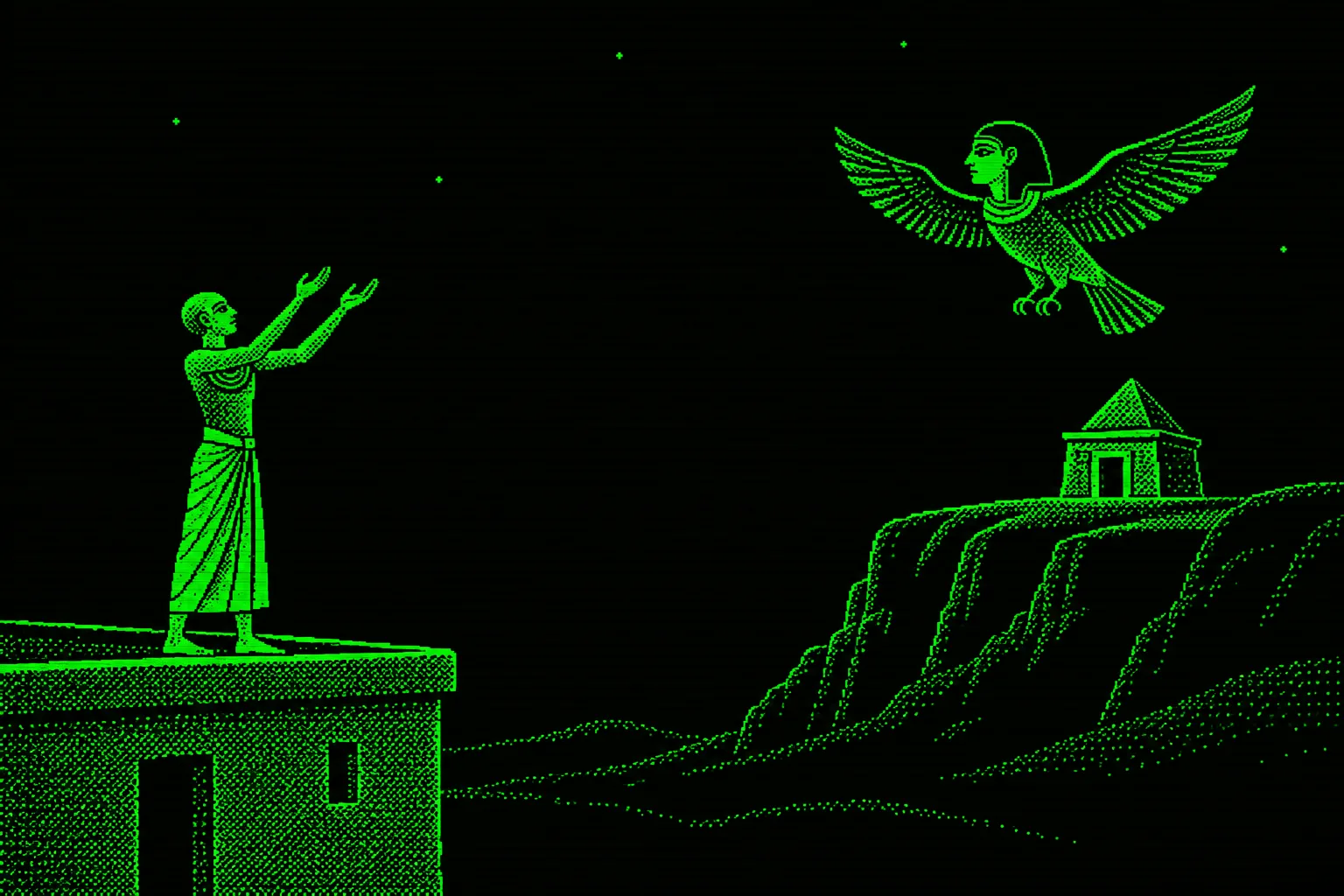
Khonsemhab, high priest of Amun, crosses the river, reaches his house, climbs onto his roof and calls on the gods of the sky, the earth and the necropolis: “Let this noble akh come to me!” The dead man comes and gives his name, Nut-bu-semekh, and the names of his father and mother. The priest promises him a burial made ready anew and an inner coffin of gold and jujube wood.
The spirit is not comforted: “No one grows warm naked and hungry in the winter winds.” Of his tomb he says: It has no neighbor. Khonsemhab sits weeping beside him. The column breaks off in the middle of the priest’s answer.
- 1
… 𓆑 …
[...] [m-sꜣ] ⸢pꜣy⸣ =f ⸢sḫ⸣r,w [...]
… in his own way …
- 2
… 𓅓𓐠𓏤 𓅯𓄿 𓋴𓐍𓂋𓏲𓏛𓏥 𓇋𓀁𓁹𓁹𓏏 …
[...] [m]-sꜣ pꜣ sḫr,w j:jri̯{.t} =[f] [...]
… as he was accustomed to do …
- 3
[jw] =[f] [ḥr] [ḏꜣ]y
Then he crossed over
- 4
𓇋𓏲 𓆑 𓄖𓏲𓏭𓂻 𓅯𓄿𓇋𓇋 𓆑 𓉐𓏤
jw =f (ḥr) pḥwj pꜣy =f pr
and reached his house.
- 5
𓇋𓏲 𓆑 𓁷𓏤 𓂞𓏏 …
jw =f ḥr ḏi̯.t jr[y.tw] [...]
He had … made.
- 6
… 𓐍𓏏𓏛𓏥 𓎟𓏏 𓄤𓆑𓂋𓏛𓏥
[...] (j)ḫ,t.pl nb.t nfr(.t).pl
“… all good things
- 7
𓇋𓏲 𓀀 𓂋 𓋀𓏏𓏏𓈇𓏤𓈉
⸢⸮__?⸣ jw =j r jmn,tt
… when I go to the West.”
Note · Line 7
The West here is the west bank of the Nile at Thebes, where the dead were buried. - 8
𓇋𓏲 𓆑 𓁷𓏤 𓎀𓊃𓍞𓂾𓂻 𓂋 𓏏𓄿
jw =f ḥr ṯsi̯ r tꜣ dp[-ḥw,t.ṱ] =[f]
Then he climbed onto his roof.
- 9
𓈖 𓊹𓅆𓏫 𓈖 𓏏𓄿 𓊪𓏏𓇯 𓈖𓄿 𓊹𓅆𓏫 𓈖 𓅯𓄿 𓇾𓏤𓈇 𓇔𓏭𓈇𓏤 𓎔𓏏𓏤𓏫 𓋀𓏏𓏏𓈇𓏤𓈉 𓋁𓃀𓏏𓏏𓈇𓏤𓈉 𓊹𓅆𓏫
[jw] =[f] [ḥr] [ḏd] n 〈nꜣ〉 nṯr.pl n tꜣ p,t nꜣ nṯr.pl n pꜣ tꜣ (n) rsj mḥ,t{.pl} jmn,tt jꜣb,tt 〈nꜣ〉 nṯr.pl [n] [⸮ẖr,t-nṯr?] [m-ḏd] [n] =[sn]
He addressed the gods of the sky, the gods of the earth—south, north, west and east—and the gods of the necropolis, saying to them:
- 10
𓈖 𓀀 𓅯𓄿𓏭 𓅜𓐍𓀀 𓀼𓋴𓏭𓏛𓅆
[jmm] [jw]j n =j pꜣj ꜣḫ ⸮šps,j?
“Let this noble akh come to me!”
Note · Line 10
An akh is the spirit of a dead person transfigured after death, still able to act among the living. - 11
𓇋𓏲 𓆑 𓁷𓏤 𓇍𓇋𓇋𓏭𓂻 𓁷𓏤 𓆓𓂧 𓈖 𓆑
jw =f ḥr jy ḥr ḏd n =f
The spirit came and said to him:
- 12
𓇋𓏌𓎢𓀀 𓅯𓄿𓇋𓇋 𓎢 𓆼𓄿𓏲𓏭𓇳𓏤 𓂋𓐛𓏤 𓏏𓄿𓇋𓇋 𓆑 𓊢𓏤𓏏𓉐
jnk pꜣy =k [___] [⸮n,tj?] [⸮ḥr?] [⸮jy.t?] [⸮r?] [⸮sḏr?] [m] ḫꜣw{,t} r-gs tꜣy =f ꜥḥꜥ,t
“I am your … who comes at evening to lie down beside his tomb.”
- 13
𓃹𓈖𓇋𓈖 𓊹𓍛𓏤𓀀 𓁶𓊪𓏭 𓈖 𓇋𓏠𓈖𓅆 𓐍𓈖𓇓𓏲𓅓𓃀𓎱𓇳𓀀
wn.jn ḥm-nṯr dp,j n Jmn Ḫns,w-m-〈ḥ〉b [ḥr] [ḏd] [n] =[f]
Then Khonsemhab, high priest of Amun, said to him:
- 14
𓇋𓏏𓆑𓅆 𓂋𓈖𓀁 𓀀 𓈖 𓅐𓏏𓏏𓁐 𓎢 𓏲𓏏𓈖𓏌𓏲𓍖𓏛 𓋴𓈖𓏥 𓁹𓇋𓇋 𓀀 𓈖 𓋴𓈖𓏥 𓇋𓀁𓁹𓂋𓏏 𓎟𓏏
[jḫ] [ḏd] =[k] [n] =[j] [rn] =[k] [rn] [n] jt =〈k〉 rn ={j} n mw,t{t} =k wtn =〈j〉 n =sn jry =j ((n)) =sn j:jri̯.t ((nb.t)) [n] [nꜣ] [n,tj] [mj-qd] =[sn]
“Please tell me your name, your father’s name and your mother’s name, so that I may make offerings to them and do for them all that is done for others like them.”
Note · Line 14
The names allowed the priest to dedicate offerings to these particular dead. - 15
𓀼𓋴𓏭𓏛𓅆 𓁷𓏤 𓆓𓂧 𓈖 𓆑
[wn.jn] [pꜣ] [ꜣḫ,w] šps,j ḥr ḏd n =f
Then the noble akh said to him:
- 16
𓊖𓏏𓏤𓃀𓏲𓋴𓅓𓐍𓂜𓀼𓀀 𓂋𓈖𓀁 𓀀
Nʾ,t-bw-smḫ rn =j
“Nut-bu-semekh is my name,
Note · Line 16
The name means “The City does not forget.” - 17
𓀀 𓈖 𓇋𓏏𓆑
ꜥnḫ-mn [rn] ={j} n jt =(j)
Ankh-men is my father’s name,
- 18
𓇋𓏏𓆑𓀀𓅓𓆷𓈇𓋴𓏏𓀁
Jt≡j-m-šꜣs,t rn [n] [mw,t] =[j]
and Iti-em-shaset is my mother’s name.”
- 19
𓃹𓈖𓇋𓈖 𓊹𓍛𓏤𓅆𓁶𓊪𓏭𓈖𓇋𓏠𓈖𓅆𓇳𓅆𓇓𓏏𓈖𓅆𓊹𓅆𓏪 𓆑
⸢wn⸣.jn ḥm-nṯr-dp,j-n-Jmn-Rꜥ-nsw-nṯr.pl Ḫns,w[-m-ḥb] [ḥr] [ḏd] [n] =f
Then Khonsemhab, high priest of Amun-Ra, king of the gods, said to him:
- 20
𓇋𓀁𓆓𓂧 𓈖 𓀀 𓅯𓄿 𓈖𓏏𓏭 𓄣𓏤 𓎢 𓂋 𓆑 𓂞 𓀀 𓁹𓇋𓇋 𓆑 𓎢 𓈖 𓀀 𓂞𓏏 𓁹𓇋𓇋𓏏𓏲 𓈖 𓎢 𓐎𓏏𓏤 𓈖 𓋞 𓈖𓃀𓋴𓏭𓆮 𓅓𓏏𓏲 𓎢 … 𓁹𓇋𓇋𓏏𓏲 𓈖 𓎢 𓇋𓀁𓁹𓂋𓏏 𓎟 𓈖 𓅯𓄿 𓈖𓏏𓏭
j:ḏd n =j pꜣ n,tj jb =k r =f ḏi̯ =j jry[.tw] =[f] [n] =k [mtw] =[j] [ḏi̯.t] [jr]⸢y⸣[.tw] n =[k] ⸢zmꜣ⸣[m,w] [m-mꜣw,t] [m]tw =j ḏi̯.t jry.tw n =k wt n nbw nbsj mtw =k [___] [...] [mtw] =[j] ḏi̯[.t] jry.tw n =k j:jri̯.t nb(.t) n pꜣ n,tj mj[-qd] =[k]
“Tell me what your heart is set on, so that I may have it done for you. I will have your burial place made ready anew and an inner coffin of gold and jujube wood made for you. And you will … and I will have everything done for you that is done for one like you.”
Note · Line 20
The inner coffin lay closest to the body. Jujube is a thorn tree valued for its wood. - 21
𓆓𓂧 𓈖 𓆑
[wn.jn] [pꜣ] [ꜣḫ,w] [šps,j] [ḥr] ḏd n =f
Then the noble akh said to him:
- 22
𓂜𓈖 𓈙𓅓𓅪𓊮
nn šm [n] [pꜣ] [n,tj] [ḥꜣi̯.y] [m] [ṯꜣw,pl] [(n)] [pr,t] [ḥqr]
“No one grows warm naked and hungry in the winter winds.
- 23
[n]n [jb] =[j] [(r)] [ḥwi̯] [mj] [ḥꜥpj]
I have no wish to flood like the Nile.
- 24
𓂜𓈖 …
nn mꜣ[ꜣ] [...]
I do not see …
- 25
… 𓀀
[...] ⸮[ḫr]y? =j
… my tomb.
- 26
nn-wn [sꜣḥ-tꜣ] =[st]
It has no neighbor.”
- 27
𓐍𓂋𓇋𓂋 𓐠𓏤 𓐖𓈖𓏌𓏲𓀁𓏛 …
[[ḫr-jr]] [[〈ḥr-〉sꜣ]] ꜥḏn ⸮⸢md⸣[w,t]? [...]
Then, when the speech had ended, …
- 28
𓂋𓐛𓏤 𓆑 𓅓𓁷𓏤 𓈖𓄿 … 𓅜𓐍𓏲𓀻 𓂋𓆓𓂧
[wn.jn] [ḥm-nṯr-dp,j-n-Jmn-Rꜥ-nsw-nṯr.pl] [Ḫns,w-m-ḥb] [(ḥr)] [ḥmsi̯] [〈ḥr〉] [rmy] r-gs =f m-ḥr ⸢⸮nꜣ?⸣ [...] [pꜣ] ꜣḫ,w r-⸢ḏd⸣
Khonsemhab, high priest of Amun-Ra, king of the gods, sat weeping beside him before the … and answered the akh:
- 29
[nn] [wnm]
“Without eating,
- 30
[nn] [s]wrj{.ṱ}
without drinking,
- 31
𓂜𓈖
nn kḥkḥ
without growing old,