~/sacred-texts/middle-kingdom-tomb-biographies
Khnumhotep III’s Dahshur Inscription: To Fetch Cedar from Ullaza
- Date
- Carved in the reign of Senusret III, 12th Dynasty (c. 1878–1840 BC), on the east wall of the mastaba of the vizier Khnumhotep III at Dahshur
- Found
- Found in fragments at Dahshur, north of the pyramid of Senusret III; excavated by Jacques de Morgan in 1894 and by the Metropolitan Museum of Art from 2001
- Language
- Middle Egyptian · Hieroglyphic
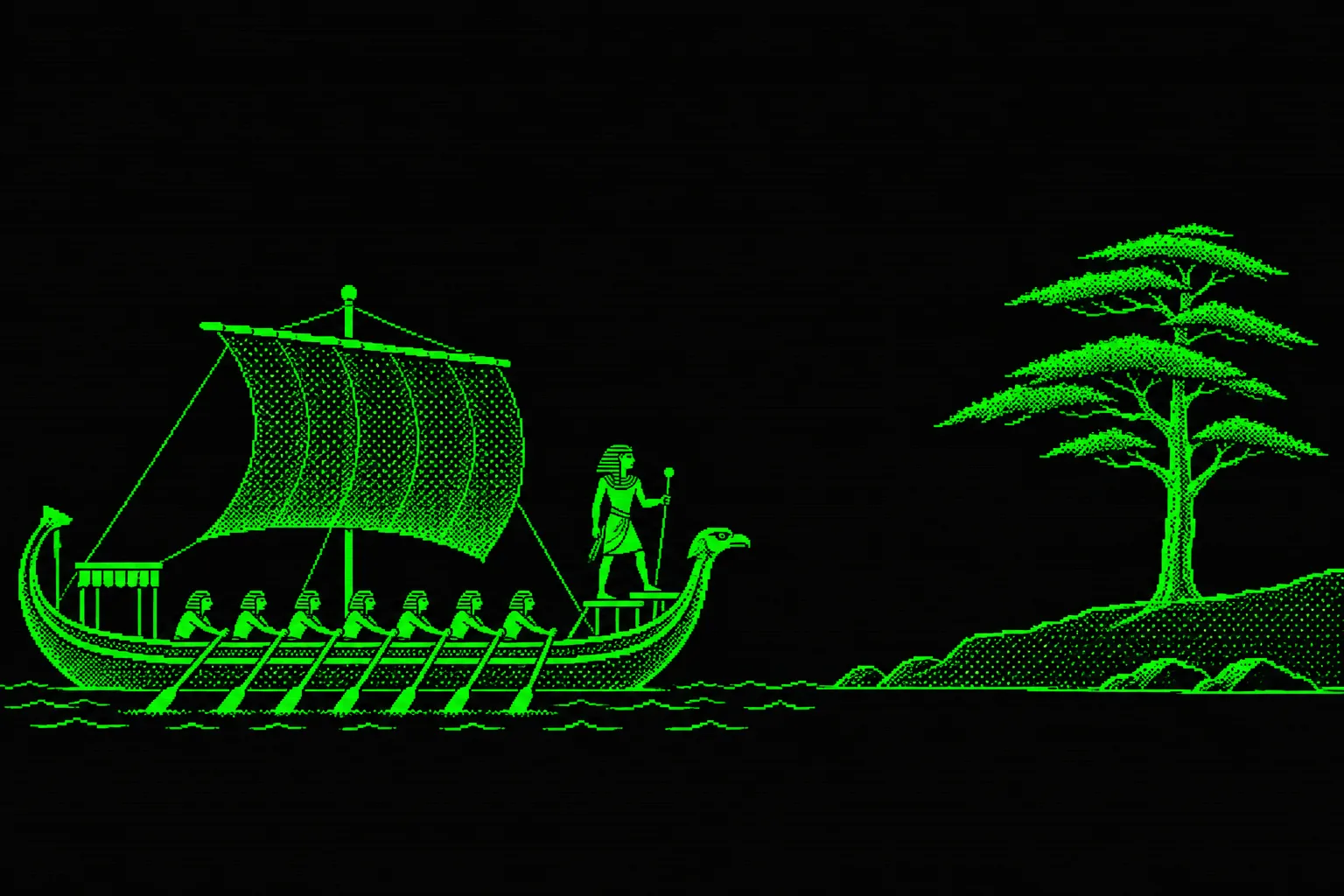
The east wall of the tomb opens with the names of Senusret III and Senusret II and offering prayers for Khnumhotep, trusted by the king to hold Setjet at bay and trample the Mentiu underfoot. Then a commander of the oarsmen speaks. He sails to fetch cedar and enters the house of the ruler of Byblos, who asks: Are you bound for the port of Ullaza?
The ruler of Byblos sends word north on an Egyptian ship. In Ullaza they found the son of that ruler of Byblos together with those hundred Asiatics. They laid plans for battle with that ruler of Ullaza. Letters pass to the palace, and the broken end praises the king: the sky is in your fist.
- 1
𓇴 𓊹𓆣𓅱 𓅒 𓊹𓄟𓏏𓅱 𓅉 𓆣𓆣 𓇓𓏏𓆤𓏏 𓇳𓈍𓂓𓂓𓂓 𓊹𓄤 𓎟𓇿𓇿 𓏙 𓋹 𓊽 𓌀 𓋴𓈖𓃀
Ḥrw Nṯr(,j)-ḫpr,w nb,tj Nṯr(,j)-msw,t Ḥrw-nbw Ḫpr nswt-bjtj Ḫꜥi̯-kꜣ,pl-Rꜥ nṯr-nfr nb-tꜣ,du nb-[jri̯.t-(j)ḫ,t] [zꜣ-Rꜥ] ⸢S⸣-n-[Wsr,t] ḏi̯ ꜥnḫ ḏd wꜣs snb [ꜣw,t-jb] [nb] [mj] [Rꜥ] [ḏ.t]
Horus, Divine in His Forms; the Two Ladies, Divine in Birth; Horus of Gold, He Who Has Taken Form; King of Upper and Lower Egypt, Khakaure, the good god, lord of the Two Lands, lord of rites; Son of Ra, Senusret, granted all life, stability, dominion, health and joy, like Ra forever.
Note · Line 1
These are the five royal names of Senusret III. The Two Ladies are the vulture goddess Nekhbet and the cobra goddess Wadjet, protectors of Upper and Lower Egypt. - 2
𓇴 𓋴𓌬𓅱𓇿𓇿 𓅒 𓅉 𓇓𓏏𓆤𓏏 … 𓅭𓇳 … 𓄫 𓄣 𓆑 𓏇 𓇳 𓆓𓏏𓇿
Ḥrw Sšm,w-tꜣ,du nb,tj [S]ḫꜥi̯-[Mꜣꜥ],t Ḥrw-nbw [Ḥtp-nṯr,pl] nswt-bjtj Ḫꜥi̯-[ḫpr]-Rꜥ [nṯr-ꜥꜣ] [nb] [...] [nb]-ḫꜥ,pl zꜣ-Rꜥ S-[n]-Wsr,t [ḏi̯] [ꜥnḫ] [...] ꜣwi̯ jb =f mj Rꜥ ḏ.t
Horus, Guide of the Two Lands; the Two Ladies, He Who Makes Maat Rise; Horus of Gold, The Gods Are at Peace; King of Upper and Lower Egypt, Khakheperre, the great god, lord of …, lord of crowns; Son of Ra, Senusret, granted life …, his heart glad like Ra forever.
Note · Line 2
This is Senusret II, father of Senusret III. Maat is both the right order of the world and the goddess who embodies it. - 3
… 𓅓 …
[ḥtp-ḏi̯-nswt] [...] [qrs,t] nfr.t m s[mj,t] [...]
An offering the king gives … a fine burial in the necropolis …
- 4
𓂋𓊪𓂝 𓄂𓂝 𓆤𓏏𓋨 𓋴𓍋𓌡𓏏𓏤𓈖𓌸𓅱𓏏 𓅓𓂋𓉐𓀗 𓎸𓃞𓊵 𓉐 𓎡 𓅓 𓊀 𓎔𓏏𓏏 𓊢𓂝 𓎡 𓇋𓅓𓇋 𓋴 𓅨𓂋 𓇋𓋴
(j)r(,j)-pꜥ(,t) ḥꜣ,t(j)-ꜥ ḫtm(,w)-bjtj smr-wꜥ,t(j)-n-mrw,t (j)m(,j)-r(ʾ)-pr-wr H̱nm,w-ḥtp pri̯ =k m rw,t mḥ,t(j).t ꜥḥꜥ =k jm,j =s wr js
Hereditary prince and count, seal-bearer of the king of Lower Egypt, beloved sole companion, high steward Khnumhotep: may you come out through the north gate and stand there as one of the great.
Note · Line 4
“Sole companion” was a court rank marking closeness to the king. - 5
[...] [__],t [...]
[gap in the text]
- 6
… 𓃥 …
[...] zꜣb (j)m(,j)-r(ʾ)-[pr-wr] [...]
… judge and high steward …
- 7
… 𓆓𓏏𓇿
[...] ḏ.t
… forever.
- 8
[...] j[mꜣḫ,y] [(j)m(,j)-r(ʾ)-pr-wr] [H̱nm,w-ḥtp]
… the revered one, the high steward Khnumhotep.
Note · Line 8
To be “revered” in death meant not only to be held in honor but also to be provided for with offerings. - 9
𓇓𓏏𓎔𓄣 𓅓 𓇥𓂋𓂡 𓋫𓏏𓏏𓈉 𓅓 𓏠𓈖𓍿𓅱𓏥 𓄓𓉐𓏤𓅨 𓎸𓃞𓊵 𓎟𓄪𓏤
ḥtp-ḏi̯-[nswt] [P]t[ḥ] [pr,t-ḫrw] [tʾ] [ḥnq,t] [kꜣ(.pl)] [ꜣpd(.pl)] [n] [kꜣ] [n] [(j)r(,j)-pꜥ(,t)] [ḥꜣ,t(j)-ꜥ] [ḫtm(,w)-bjtj] [smr]-wꜥ,t(j) mḥ-jb-nswt m ḏr St,t m pt[pt] Mnṯ,(j)w.pl (j)m(,j)-r(ʾ)-pr-wr H̱nm,w-ḥtp nb-jmꜣḫ
An offering the king and Ptah give: an invocation offering of bread and beer, oxen and fowl, for the ka of the hereditary prince and count, seal-bearer of the king of Lower Egypt, sole companion, trusted by the king to hold Setjet at bay and trample the Mentiu underfoot, the high steward Khnumhotep, lord of honor.
Note · Line 9
The ka is the life force of the deceased, for whom the offerings are called forth by name. Setjet is an Egyptian name for lands in Asia; the Mentiu were nomadic peoples to Egypt’s northeast. - 10
𓇓𓏏𓊵𓏙 𓊃𓎡𓂋 𓎟 𓂋𓏤𓍬𓍬𓍬𓈉 𓏐 𓏊 𓃿 𓅿𓏒 𓍱 𓋲 𓈖 𓂓 𓈖 𓂋𓊪𓂝 𓄂𓂝 𓋴𓅓 𓎛𓌨𓃀𓁷𓁶
ḥtp-ḏi̯-nswt Skr nb Rʾ-sṯꜣ,pl pr,t-ḫrw tʾ ḥnq,t kꜣ(.pl) ꜣpd(.pl) šs mnḫ,t n kꜣ n (j)r(,j)-pꜥ(,t) ḥꜣ,t(j)-ꜥ sm ẖr,j-ḥb-ḥr,j-tp [tꜣj,tj]-ṯꜣ,tj-[zꜣb] [H̱nm,w-ḥtp] [nb-jmꜣḫ]
An offering the king and Sokar, lord of Rosetau, give: an invocation offering of bread and beer, oxen and fowl, alabaster and linen, for the ka of the hereditary prince and count, sem-priest, chief lector priest and vizier Khnumhotep, lord of honor.
Note · Line 10
The sem-priest performed rites for the dead; the lector priest recited the sacred texts. - 11
… 𓄓𓉐𓏤𓅨
[ḥtp-ḏi̯-nswt] [Wsjr] [nb] [...] [n] [kꜣ] [n] [(j)r(,j)-pꜥ(,t)] [ḥꜣ,t(j)-ꜥ] [ḫtm(,w)-bjtj] [smr-wꜥ,t(j)] [(j)m(,j)-r(ʾ)]-pr-wr [H̱nm,w-ḥtp] [nb-jmꜣḫ]
An offering the king and Osiris, lord of …, give for the ka of the hereditary prince and count, seal-bearer of the king of Lower Egypt, sole companion, the high steward Khnumhotep, lord of honor.
- 12
𓂋𓊪𓂝 … 𓃥
(j)r(,j)-pꜥ(,t) ḥꜣ,t(j)-[ꜥ] [ḫtm(,w)-bjtj] [smr-wꜥ,t(j)] [...] zꜣb H̱nm,w-[ḥtp]
The hereditary prince and count, seal-bearer of the king of Lower Egypt, sole companion … the judge Khnumhotep.
- 13
… 𓂞 𓆑 𓅓 𓇋𓇩𓊃𓉐𓏤 𓆑 𓈖 𓈉 𓈖 𓂓 𓈖 …
[ḥtp-ḏi̯-nswt] [Jnpw] [...] ḏi̯ =f qrs,t [nfr.t] [m] [s(mj),t] [jmn,t(j).t] m js =f n ẖr,t-nṯr n kꜣ n jmꜣḫ [...]
An offering the king and Anubis give … May he grant a fine burial in the western desert, in his tomb in the necropolis, for the ka of the revered one …
- 14
… 𓆤𓏏𓋨 … 𓅡𓎡 𓈖 O90𓏏𓉐 …
[...] ḫtm(,w)-bjtj smr-[wꜥ,tj] [...] bꜣk n ḥw,t-ꜥꜣ.t [...] [H̱nm,w-ḥtp]
… seal-bearer of the king of Lower Egypt, sole companion … servant of the Great House … Khnumhotep.
- 15
… 𓏎𓈖𓈖𓏏 𓎛𓂝𓊪𓈘 𓈖 𓂓 𓈖 𓂋𓊪𓂝 𓄂𓂝 … 𓇩𓅓
[ḥtp-ḏi̯-nswt] [...] [ḏḏ.t] [p,t] [qmꜣ.t] tꜣ jnn.t ḥꜥpj n kꜣ n (j)r(,j)-pꜥ(,t) ḥꜣ,t(j)-ꜥ wr-mḏ-[šmꜥ,w] [...] smr-wꜥ,t(j) (j)m(,j)-js mnj,w-Nḫn [(j)m(,j)-r(ʾ)]-pr-wr H̱nm,w-[ḥtp] [nb-jmꜣḫ]
An offering the king gives … what the sky gives, what the earth brings forth, what the Nile flood brings, for the ka of the hereditary prince and count, chief of the Ten of Upper Egypt … sole companion, attendant of the bureau, guardian of Nekhen, the high steward Khnumhotep, lord of honor.
- 16
𓂋𓊪𓂝
(j)r(,j)-pꜥ(,t) [ḥꜣ,t(j)-ꜥ] [ḫtm(,w)-bjtj] [smr-wꜥ,t(j)] [(j)m(,j)-r(ʾ)-pr-wr] [H̱nm,w-ḥtp] [ꜥq] [=k] [m] [rw,t] [rs.t] [ḥmsi̯] [=k] [jmj] [=s] [wr] [js]
Hereditary prince and count, seal-bearer of the king of Lower Egypt, sole companion, high steward Khnumhotep: may you enter through the south gate and sit there as one of the great.
- 17
… 𓏁𓈗 𓊹𓌢𓍿𓂋𓈓 𓅓 …
[...] qbḥ snṯr m ꜣbdw [smd,t] [...]
… libations and incense at the monthly feast and the midmonth feast …
- 18
𓆓𓂧 𓇋𓈖 𓅓𓂋𓀎𓀀𓏥 𓈖 𓀌𓅱𓀀𓏥
ḏd jn (j)m(,j)-r(ʾ)-mšꜥ n(,j) sqd.w.pl
Words of the commander of the oarsmen:
- 19
𓂝𓈙𓇫𓏥 𓈖 𓂧𓏇𓇋𓈅𓏤 …
pḥ [pw] [jri̯] [r] [Rṯnw] [r] [jni̯].t ꜥš n(,j) dmj [n(,j)] [Wꜣṯj] [...] [Mn]t.[pl] [...]
Arrival in Retjenu to fetch cedar from the port of Ullaza … the Mentiu …
Note · Line 19
Retjenu was the Egyptian name for a region of the eastern Mediterranean seaboard that included parts of present-day Lebanon and Syria. - 20
𓉔𓄿𓏏𓂻 𓊪𓅱 … 𓈖
hꜣi̯.t pw [jri̯] [...] [tꜣ-s]mꜣ n(.j) K[b]nj
The descent … the landing place of Byblos.
- 21
𓉐𓂋𓏏𓂻 𓊪𓅱 …
pri̯.t pw [jri̯] [...]
The departure …
- 22
𓁹𓈖 𓄓𓀎𓏪 𓈖 𓀌𓏥 𓈖 𓎡𓃀𓈖𓏭𓈉 𓌳𓄿𓎡𓇋𓀏
[ꜥq] [pw] jri̯.n (j)m(,j)-r(ʾ)-mšꜥ n(,j) sqd.pl [r] [pr] [ḥqꜣ] n(,j) Kbnj Mꜣkj
The commander of the oarsmen entered the house of the ruler of Byblos, the malki.
Note · Line 22
Malki is a local title meaning “king.” - 23
𓆓𓂧𓇋𓈖 𓆑 𓈖 𓆑
ḏd.jn =f n =f
Then he said to him:
Note · Line 23
The ruler of Byblos is speaking to the Egyptian commander. - 24
𓊪𓏏𓂋𓆴 𓋴𓏏
ptr st
“What is it?
- 25
𓈖 𓎡 𓂧𓏇𓇋𓂋𓈅𓏤 𓈖
(j)n j[w] =k [r] dmjr n(,j) W[ꜣṯj]
Are you bound for the port of Ullaza?”
- 26
[ḏd.n] [n] [=f] [(j)m(,j)-r(ʾ)-mšꜥ] [n] [sqd.w].pl
The commander of the oarsmen said to him:
- 27
𓎁𓂡 𓎼𓂋𓏏 𓇓𓏏𓆤𓏏 𓇳𓋴𓊵𓊪𓏏𓄣 𓌶𓊤 𓈅𓈅 𓅡𓎡𓀜 𓈖 𓆑 𓌳𓄿𓎡𓇋𓀏 𓏠𓈖𓇋𓊧 𓈖𓏥 𓂋 𓎡𓃀𓈖𓏭𓈉
jṯi̯ gr.t [nṯr-ꜥꜣ] nswt-bjtj Sḥtp-jb-Rꜥ mꜣꜥ-ḫrw jdb.du bꜣk n =f ḫꜣs[,t] [nb.t] [rḏi̯.n] Mꜣkj [n(,j)] [Kbnj] mnj =n r Kbnj
“Now when the great god, the King of Upper and Lower Egypt, Sehetepibre, true of voice, took possession of the Two Banks, every foreign land served him. The malki of Byblos let us moor at Byblos.”
Note · Line 27
Sehetepibre was the throne name of Amenemhat I. “True of voice” honors him as one vindicated after death. The Two Banks are Egypt, on either side of the Nile. - 28
𓄔𓅓 𓈖𓆑 𓆓𓂧𓅱 𓏠𓈖𓏏𓀺𓏥 …
sḏm nf ḏd.w Mnt(,j).pl [...]
Those words the Mentiu spoke were heard …
- 29
[...] [_]ḏ[_] [...]
[gap in the text]
- 30
… 𓅓 𓍯𓄿𓍿𓇋𓈉
[...] m Wꜣṯj
… in Ullaza.
- 31
𓂋𓂞𓇋𓈖 …
rḏi̯.jn [ḥ]q[ꜣ] [pf] [n(,j)] [Kbnj] [Mꜣkj] [...]
Then that ruler of Byblos, the malki, gave …
Note · Line 31
Byblos was a port on the coast of what is now Lebanon. Malki echoes the local word for “king.” - 32
… 𓎛𓈖𓂝 𓌙𓅓𓀺 𓍢 𓂋𓂞 𓈖 …
[...] ḥnꜥ ꜥꜣm 100 rḏi̯ n =s[n] [...]
… together with a hundred Asiatics who gave them …
Note · Line 32
“Asiatics” was an Egyptian term for people from western Asia. - 33
… 𓅓𓐍𓂧 𓂋 𓈖𓄿 𓂧𓊪𓏏𓏥 N35_𓏏 𓆎𓏏𓀁𓁐𓏥𓊖 𓇋𓅓 𓆓𓂧𓏥 𓈖 𓋾𓈎𓀸 𓈖 𓅓 𓄋𓊪𓏏𓅱𓀁
[...] m-ḫd r Wꜣ[ṯj] [m] [wꜥ.t] [m] nꜣ dp,t.pl n.t Km,t(j).pl jm ḏd.pl n ḥqꜣ n Wꜣṯ[j] m wpw,t [n] [Kbnj] [r]-ḏ[d]
… north to Ullaza aboard one of those ships belonging to the Egyptians there, who are to speak to the ruler of Ullaza with a message from Byblos, in these words:
- 34
𓅓𓂝 𓎡 𓉔𓄿𓃀𓂻𓈖 𓋾𓈎 𓋴 𓂧𓊪𓏏 𓈖 𓆎𓏏𓀁𓁐𓏥𓊖 𓂋 … 𓎡 V30_𓏏 𓂋𓂞 … 𓈖 𓄟𓅱𓀔𓀀𓏥 𓅓 𓉔𓃀𓅡𓇋𓇋𓈉
m =k hꜣb.n ḥqꜣ =s Mꜣ[kj] [m] [tꜣ] dp,t n Km,t(j).pl r [_]t [...] [___].t =k nb.t rḏi̯ [...] n ms.w.pl m Hbꜣy
“Look, its ruler, the malki, has sent word on this ship to the Egyptians concerning … all your … give … for the children in Hebay.
- 35
𓈖 𓍯𓄿𓍿𓇋𓈉 … 𓁹𓏏 𓎡 𓎟𓏏 𓂋 𓏏𓍃𓅓 𓎡 𓈖 𓂧𓊪𓏏𓏥 𓂋 𓈖 𓎡𓃀𓈖𓏭𓈉
w[__] n Wꜣṯj [...] jri̯.t =k nb.t r tm =k r[ḏi̯] [jwi̯.t] [n]n n dp,t.pl r dmj[r] n Kbnj
… of Ullaza … all that you do, so that you do not let these ships come to the harbor of Byblos.
- 36
𓁹 𓂋 𓎡 … 𓂧𓊪𓏏𓏥 𓈖 …
jri̯ r =k [...] dp,t.pl n [...]
Act, then, … ships of …!”
- 37
𓊪𓅱 𓁹 𓂋
[___] pw jri̯ r [Rm]nn
A voyage was made to Lebanon.
- 38
𓅠𓅓𓈖 𓋴𓈖𓏥 𓅭 𓋾𓈎𓀺 𓊪𓆑 𓈖 𓎡𓃀𓈖𓏭𓈉 𓎛𓈖𓂝 𓌙𓀺𓈉 𓍢 𓏏𓆑 𓅓 𓍯𓄿𓍿𓇋𓈉
gmi̯.n =sn zꜣ ḥqꜣ pf n Kbnj ḥnꜥ ꜥꜣm 100 tf m Wꜣṯj
In Ullaza they found the son of that ruler of Byblos together with those hundred Asiatics.
- 39
𓁹𓈖 𓋴𓎛𓉲US248Y1VARB𓏥 𓈖 𓂚𓀜 𓎛𓈖𓂝 𓋾𓈎𓀸 𓊪𓆑 𓈖 𓍯𓄿𓇋𓍿𓈉
jri̯.n =[s]n sḥ,pl n ꜥḥꜣ ḥnꜥ ḥqꜣ pf n Wꜣjṯ
They laid plans for battle with that ruler of Ullaza.
- 40
[...] =[s]n w[__] [...]
… they …
- 41
… 𓂝𓏤𓅱𓏭 𓋴𓈖𓏥 …
[...] ꜥ.wy =sn [...]
… their two arms …
- 42
… 𓊪𓆑 𓈖 …
[...] [ḥqꜣ] pf n Kbnj [...]
… that ruler of Byblos …
- 43
𓁹𓇋𓈖 𓆑 US248Y1VARB𓏏𓏤 𓁷 …
jri̯.jn =f mḏꜣ,t ḥr [...]
Then he wrote a letter about …
- 44
… 𓁷 𓎡 𓊪𓅱 𓄤𓆑𓂋 𓌻𓂋𓂋𓅱 …
[...] ḥr =k pw nfr mrr.w [...]
… this fair face of yours, which … loves …
- 45
… 𓅓 𓆑 𓏏𓈖 … 𓈖 𓈖 𓋾𓈎𓀸 …
[...] [___] m [___] =f [m]j [md],t tn [_]t[_] [...] n wḏ-nswt n ḥqꜣ [...]
… in his … like this speech … of a royal decree for the ruler …
- 46
… N35_𓏏 US248Y1VARB𓏏𓏤 𓏏𓈖 𓌷𓂝𓏏US248Y1VARB𓈖 𓎡 𓂋 … 𓂧𓊪𓏏𓏥 …
[...] [___]t [m]d,t n.t mḏꜣ,t tn mꜣꜥ.t.n =k r stp-[sꜣ] [...] dp,t.pl [...]
… the matter of this letter you sent to the palace … the ships …
- 47
… 𓂝𓏤𓅱𓏭 𓆑 𓋴𓎛𓎳US248Y1VARB 𓊪𓈖 𓈖 𓁹𓂋 𓎡 …
[...] [ḥb]s ꜥ.wy =f sḥ pn n(.j) jrr =k [...]
… his two arms conceal this plan you are laying …
- 48
… 𓈖 …
[...] [__]t n j[__] ṯ[__] [...] [ḥqꜣ] [pf] [n] [Wꜣṯ]j [n] [ḥm] [=f] [r]-ḏd
… that ruler of Ullaza to His Majesty, in these words:
Note · Line 48
The ruler of Ullaza is addressing the king of Egypt. - 49
𓇋𓈖 𓂔𓅆 𓎡 𓊹𓄤 𓎟𓇿𓇿 𓌻𓂋𓂋𓅱 𓇮𓅏 𓎟 𓈉𓈉𓈉 𓉡 𓎟𓏏𓎡𓃀𓈖𓏭𓈉 𓋷𓀁 𓆑 𓈖 𓍉𓎂𓉐𓏤 𓎡
jn kꜣ =k nṯr-nfr nb-tꜣ,du mrr.w [nṯr.pl] [ḥss].w Spd,w nb ḫꜣs,t.pl Ḥw,t-Ḥrw nb,t-Kbnj sjꜣ =f [m] ḥm n stp-sꜣ [___],t =k [j]m
“It is your ka, O good god, Lord of the Two Lands—beloved of the gods, praised by Sopdu, lord of foreign lands, and by Hathor, lady of Byblos—that, as Majesty of the Palace, will recognize your … there.”
Note · Line 49
The Two Lands are Upper and Lower Egypt. - 50
… 𓂋 𓂋𓏠𓈖𓈖𓂢𓈉 … 𓇋𓅓 𓂋 𓍒𓄿𓏏𓂻 𓄚𓈖𓈘 𓎝𓎛 𓁷 𓇾𓈅𓏤 𓌙𓀺𓈉 𓃹𓈖𓈖 𓁷 …
[...] r Rmnn [...] [W]ꜣjṯ ḥn[ꜥ] [___] jm r ḏꜣ.t ẖn wꜣḥ ḥr tꜣ ꜥꜣm wnn ḥr pgꜣ [...]
… to Lebanon … Ullaza, together with … there, to cross the channel, to come ashore in the land of the Asiatics and to be on the field of battle …
- 51
… 𓊃𓊪𓂋𓄭 𓅓 …
[...] spr [n]n-n dp,t.pl [r] ẖnw m j[_] [...]
… the arrival of these ships at the Residence with …
Note · Line 51
The Residence was the seat of the Egyptian court. - 52
… 𓐍𓂧𓅱 𓇋𓅓 𓋴𓈖𓏥 𓂋 𓎡𓃀𓈖𓏭𓈉 …
[...] ḫd.w jm =sn r Kbnj [...]
… sailing north in them to Byblos …
- 53
… 𓇓𓅱
[...] sw
… him.
- 54
𓂜 𓈎𓌳𓄿𓌙 𓈖 𓆑 𓏏𓍃𓀭 …
n qmꜣ n =f Tm [...]
Atum did not create … for him.
- 55
… 𓇓𓏏𓆤𓏏 𓈍𓂝𓏛 𓂋 𓊃𓄥 𓂋 …
[...] nswt-bjtj ḫꜥi̯ r smꜣ r jwꜥ [...]
… King of Upper and Lower Egypt, who rose to unite and to inherit …
- 56
… 𓈖 𓆑 …
[...] n =f [...] [_]ḥ[_] [...]
… for him …
- 57
… 𓂝𓏤 …
[...] ꜥ =sn [...]
… their arm …
- 58
… 𓂝𓏤𓅱𓏭 𓆑 𓅓 𓅱𓎤𓎤𓏏𓅪 𓈖 𓆑 𓏇𓇋 𓆊 𓊪𓆑 …
[...] ꜥ.wy =f m wgg.t n =f mj msḥ pf s[__] [...]
… his two arms, to his hurt, like that crocodile that …
- 59
… 𓈖 𓆊 𓄣𓏤 𓉻𓂝𓄿 … 𓆑 …
[...] n ꜣd jb ꜥꜣ [...] f [...]
… of the fierce-hearted one, great … he …
- 60
[...] nd [...]
[gap in the text]
- 61
[...] ⸮[nj]s? ⸮[s]mr-[wꜥ,tj]? [...]
… summon the Sole Companion …
Note · Line 61
More than one man could hold it. - 62
… 𓁷𓂋𓏏𓇯 𓅓 𓐍𓆑𓂬 𓎡 𓆣 …
[...] ḥr,t m ḫf(ꜥ) =k ḫpr [...]
… the sky is in your fist; coming into being …
- 63
… 𓊪𓅱 𓀜𓇋𓇋 𓆑 …
[...] pw ḥwi̯.y =f mn [...]
… is the one he strikes; there remains …
- 64
… 𓋴𓈖𓏥 𓊃𓐍𓂡 𓆑 …
[...] =sn sḫ =f mr[,t.pl] [...]
… of theirs; he strikes down the serfs …
Note · Line 64
The serfs were dependent workers attached to an estate. - 65
[...] ⸮[n]j[s]? [...]
… call …