~/sacred-texts/tomb-of-kheruef-tt-192-thebes
Kheruef’s Hymn to the Rising Sun: Apophis Bound and Cut
- Date
- Carved around 1360–1350 BC, at the end of Amenhotep III's reign or the first years of Amenhotep IV (Akhenaten), on the south side of the entrance passage to the court of the tomb of Kheruef, steward of Queen Tiye, at Thebes
- Found
- Tomb of Kheruef (TT 192), el-Asasif, Theban West Bank, Luxor; still in place
- Language
- Middle Egyptian · Hieroglyphic
- 1
𓇼𓀢𓏛 𓇳𓏤𓀭 𓁶𓏤 … 𓅓 𓈖𓏏 𓊪𓏏𓇯 𓇋𓈖 𓂋𓊪𓂝 𓄂𓂝 𓏶𓄣𓏤 𓇓𓄙𓌐 𓌨𓂋𓀀𓁐𓏥𓆑𓀼
⸢dwꜣ⸣ ⸢Rꜥw⸣ ⸢tp⸣ ⸢dwꜣ⸣ [...] ⸢m⸣ ⸢ꜣḫ,t⸣ ⸢n.t⸣ ⸢p,t⸣ ⸢jn⸣ ⸢(j)r(,j)⸣-pꜥ,t ḥꜣ,tj-ꜥ ⸢jm,j-jb-Ḥr,w⸣ [nb-ꜥḥ] [(j)m(,j)-rʾ-pr-n]-ḥm,t-nswt-wr,t ⸢wḥm(,w)-tp,j-〈n〉-nswt⸣ ⸢H̱r,w≡f⸣ [mꜣꜥ-ḫrw]
Adoration of Ra at early morning, … in the horizon of heaven, by the hereditary noble and count, beloved of Horus, lord of the palace, steward of the great royal wife, first herald of the king, Kheruef, true of voice.
Note · Line 1
Kheruef was a high official under Amenhotep III and steward of Queen Tiye, the king’s chief wife. - 2
𓁷𓏤 𓎡 𓇳𓏤𓀭 𓐝 𓅱𓃀𓈖𓇶 𓆑 𓅓 …
[ḏd] [=f] ⸢j:nḏ⸣ ḥr ⸢=k⸣ ⸢Rꜥw⸣ m ⸢wbn⸣ =f ⸢Jmn⸣ ⸢m⸣ [ḥtp] [...]
He says: Hail to you, Ra in his rising,
Amun in setting …Note · Line 2
The god is greeted under two names. He is Ra as he rises at dawn and Amun as he sets in the evening, one god seen at the two ends of his daily course. - 3
… 𓊪𓊃𓂧𓄦 𓏏𓅐 𓎡
[...] [psḏ] [=k] [ḥr] ⸢p⸣sḏ ⸢mw,t⸣ ⸢=k⸣ [ḫꜥi̯.tj] [m] [nswt] [Psḏ,t]
… you shine upon the spine of your mother,
risen in glory as king of the Nine.Note · Line 3
The Egyptian plays on three words that sound alike: psḏ “to shine,” psḏ “back, spine,” and Psḏt “the Ennead,” the company of nine great gods. - 4
𓈖 𓏏𓅱 𓐙𓏏𓁧 𓂋
[jri̯.y] [Nw,t] [njnj] ⸢n⸣ ḥr [=k] ⸢ḥpt⸣ ⸢t⸣w Mꜣꜥ,t r ⸢tr,wj⸣
Nut makes the nini greeting before you,
Maat embraces you at both times, dawn and dusk. - 5
𓎡
[nmj] [=k] [ḥr,t] [jb] [=k] ⸢ꜣwi̯⸣
You cross the sky, your heart glad.
- 6
𓈘𓌫𓌫 𓆣𓂋 𓐝 𓊵𓊵𓊵
⸢mr-nḫꜣ,wy⸣ [ḫpr] m ⸢ḥtp,pl⸣
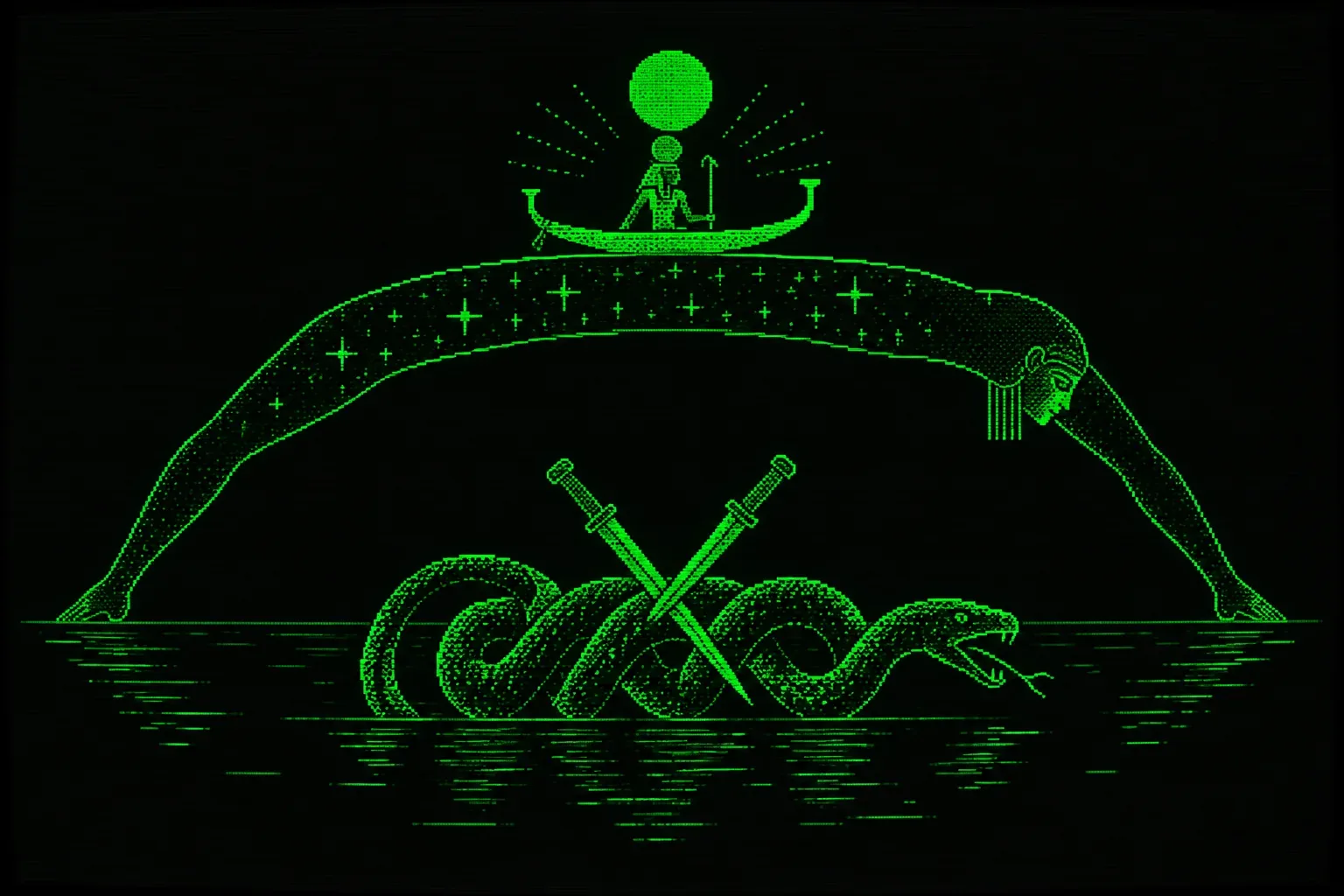
The Lake of the Two Knives has come to peace.
Note · Line 6
The Lake of the Two Knives is a perilous stretch of water on the sun’s path. - 7
𓆑 𓏲𓂡𓎛𓋴𓈎𓌫𓈖 𓆑
[sb]⸢j⸣ [ḫr] [ꜥ.ydu] ⸢=f⸣ ⸢qꜣs.w⸣ ⸢ḥsq.n⸣ ⸢d⸣[m,t.pl] [ṯꜣz.pl] [=f]
The rebel has fallen, his arms are bound,
the knives have cut through his spine.Note · Line 7
The rebel is Apophis, the sun’s enemy, who is ritually bound and cut to pieces again and again so that the sun can continue its course. - 8
𓎡
[ḏ]⸢w⸣-[qd] [nḥm] [nmt,t] [=f] [ḫft.pl] ⸢=k⸣ ḫ⸢r⸣ [r] [nm,t] =sn
The Evil-Natured has been robbed of his stride,
your enemies have fallen to their slaughter-block.Note · Line 8
“Evil-Natured” is another name for Apophis. - 9
𓊹𓊹𓊹 𓊃𓈖𓏥 𓇛𓅓𓏛 𓏏𓅱 𓐝 𓎣𓏏𓊞
⸢nṯr.pl⸣ [jb.pl] ⸢=sn⸣ ⸢nḏm⸣ [mꜣꜣ] [=sn] ⸢tw⸣ m ⸢msk,tjt⸣
The gods, their hearts are glad
when they see you in the Evening Bark.Note · Line 9
The Mesketet is the bark of the evening sun, in which Ra sails into the night. Its daytime counterpart is the Mandjet. - 10
𓃹𓈖𓈖 𓇳𓏤𓀭 𓅓 𓌷𓂝𓅱𓊡 𓐝𓂋𓏤𓂝𓏤
⸢wnn⸣ Rꜥw m ⸢mꜣꜥ,w⸣ ⸢m-rʾ-ꜥ⸣
Ra too has a fair wind.
- 11
𓋴𓎝𓎡𓏏𓏏𓊞 𓊃 𓏭𓋴
〈m〉sk.tt ⸢sk.⸣[n] [=s] [pḥ] [sy]
The Evening Bark has wiped out him who assailed her.
- 12
𓍑𓊛 𓎡 𓇯𓇯 𓎡 𓐝 𓐙𓂝𓊤 𓎡 𓐝𓆱𓐍𓏏𓂻 𓎡
⸢ḏꜣi̯⸣ ⸢=k⸣ ⸢ḥr,t.du⸣ ⸢=k⸣ ⸢m⸣ ⸢mꜣꜥ-ḫrw⸣ ⸢Psḏ.t⸣ ⸢=k⸣ ⸢m-ḫt⸣ ⸢=k⸣
You cross your two skies in triumph,
your Ennead in your train.Note · Line 12
The two skies are the daytime sky above the earth and the counter-sky of the underworld, through which the sun passes at night. - 13
𓅓𓎸𓏛 𓏏𓅱 𓎡 𓏌𓏏𓇯 𓂋 𓂋𓏤𓂝 𓎡 𓈖 𓋴𓆑𓇳
⸢ẖnm⸣ ⸢tw⸣ [mw,t] ⸢=k⸣ [Nw,t] ⸢swḏ.tj⸣ r rʾ-ꜥ ⸢=k⸣ ⸢n⸣ sf
Your mother Nut enfolds you,
and you are made over to the state you were in yesterday.Note · Line 13
Every dawn the sun is reborn from Nut exactly as it was the day before, handed on intact to its old state, so that the cycle never fails. - 14
𓇓𓏞 𓇓𓃀𓌐 𓐙𓊤
zẖꜣ(,w)-nswt wḥm-tp,j-〈n〉-nswt ⸢(j)m(,j)-rʾ-pr-n-ḥm,t-nswt-wr,t⸣ ⸢H̱r,w≡f⸣ ⸢mꜣꜥ-ḫrw⸣
The king's scribe, first herald of the king, steward of the great royal wife, Kheruef, true of voice.
Note · Line 14
This is the caption beside Kheruef’s own figure, shown in prayer. The words that follow are spoken by him. - 15
𓇼𓀢𓏛 𓇋 𓏏𓅱 𓄤𓏥 𓎡 𓐝 𓁷𓏤 𓀀 𓆣𓂋 𓇶𓅜𓐍𓏥 𓎡 𓁷𓏤 𓍵𓈖𓄹𓃀 𓇋
[ḏd] [=f] ⸢dwꜣ⸣ =j tw ⸢nfr,pl⸣ =k ⸢m⸣ ⸢ḥr⸣ =j ⸢ḫpr⸣ ⸢jꜣḫ,pl⸣ ⸢=k⸣ ⸢ḥr⸣ ⸢Šnb⸣ =j
He says: I adore you; your beauty is upon my face,
your radiance comes into being on my breast.Note · Line 15
Kheruef stands facing east toward the rising sun, so its beauty falls on his face and its light spreads across his chest.