~/sacred-texts/ramesside-royal-inscriptions
Kanais Inscription of Seti I: A Desert Well and Rock Temple
- Date
- Carved in Year 9 of Seti I (19th Dynasty, c. 1290–1279 BC) on the north wall of the pillared hall of his rock-cut temple at Kanais
- Found
- In situ in the rock-cut temple of Seti I at Kanais (Wadi Mia), Eastern Desert, Egypt
- Language
- Late Egyptian · Hieroglyphic
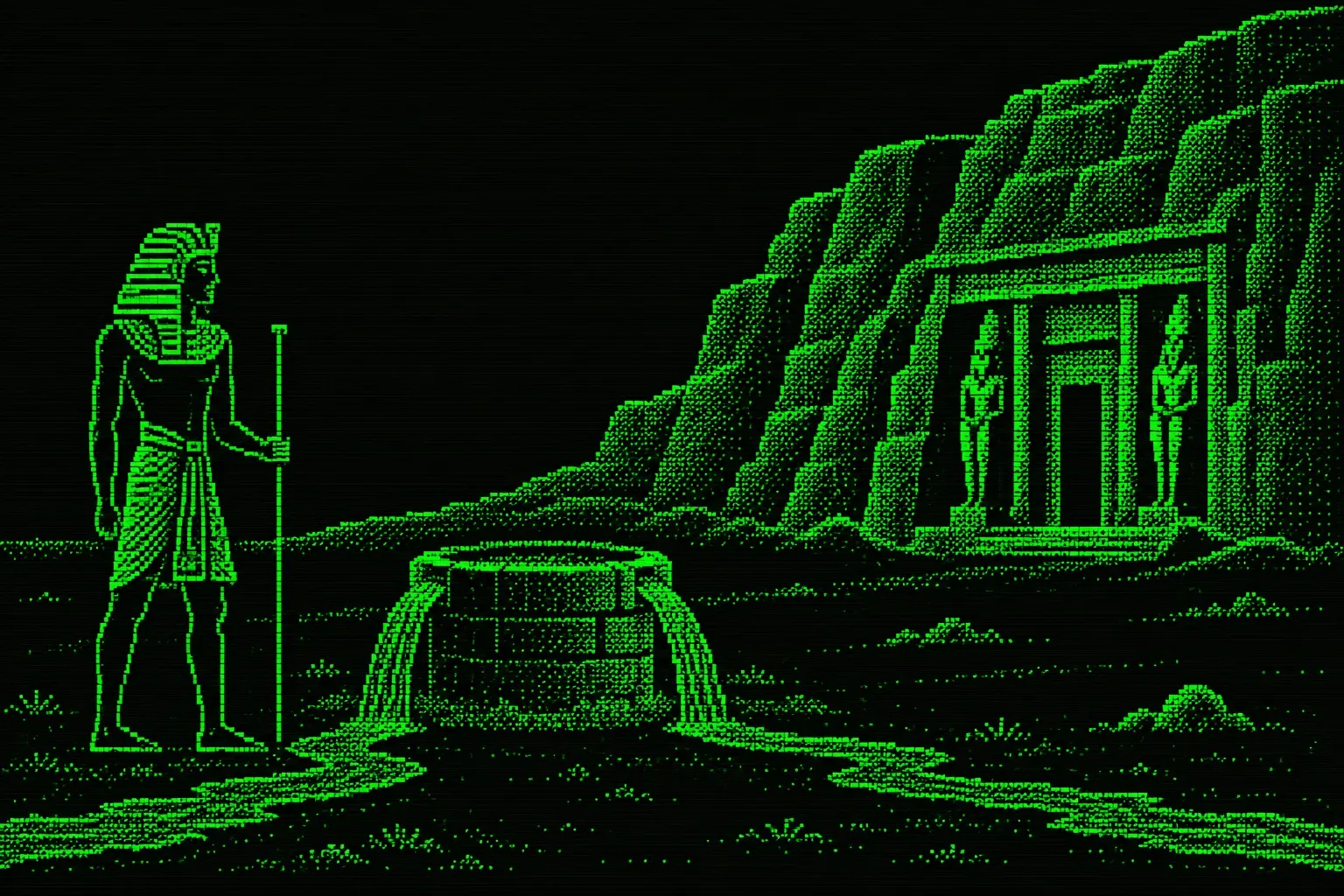
Dated to Year 9 of Seti I, the inscription shifts from royal narrative to the king’s voice on the road to the electrum quarries. Halting, Seti asks: How hard is a road that has no water! What becomes of a work crew when thirst ravages their throats? Guided by the god, stoneworkers dig a well overflowing like the cavern of the Nile’s twin springs at Elephantine.
Seti then orders stonemasons to hew a rock temple for Amun, Ra, Ptah, Osiris, Horus, Isis, and himself. Addressing the gods, he sets it under the authority of my temple at Abydos and prays: Let my monuments endure for me, my name abiding on them.
- 1
rnp,t-zp 9 ꜣbd 3 šm,w sw 20 ḫr ḥm n Ḥr,w Kꜣ-nḫt-ḫꜥi̯-m-Wꜣs,t-sꜥnḫ-Tꜣ,wj Nb,tj Wḥm-msw,t-sḫm-ḫpš-dr-pḏ,wt-9 Ḥr,w-nbw Wḥm-ḫꜥ,w-wsr-pḏ,wt-m-tꜣ,w-nb,w zꜣ-Rꜥw Stẖ,y-mr-n-Ptḥ ḏi̯ ꜥnḫ ḏ,t nḥḥ
Year 9, third month of Shemu, day 20, under the Majesty of Horus: Strong Bull who appears in glory in Thebes and gives life to the Two Lands; the Two Ladies: He who renews births, strong of arm, who drives back the Nine Bows; Golden Horus: He who renews his appearances in glory, mighty of bow in every land; Son of Ra: Seti, beloved of Ptah, given life forever and ever.
Note · Line 1
Shemu was the harvest season. The titles all belong to Seti I. The Two Lands are Upper and Lower Egypt; the Two Ladies are their guardian goddesses. The Nine Bows stand for Egypt’s traditional enemies. - 2
hrw pn jsṯ ḥm =f smꜣꜥ =f ḫꜣs,t.pl r rʾ-ꜥ ḏw.pl
On this day His Majesty surveyed the desert lands as far as the edge of the mountains.
- 3
ꜣbi̯.n jb =f mꜣꜣ ẖꜣ,t.pl jnn.w ḏꜥm j:m =sn
His heart had longed to see the quarries from which electrum is brought.
Note · Line 3
Electrum is a naturally occurring alloy of gold and silver. - 4
jr m-ḫt ḥm =f m ṯzi̯.t m rḫ jtr.yw ꜥšꜣ.pl jri̯{.t}.jn =f sḫn,y ḥr wꜣ,t r wꜣwꜣ zḥ ḥnꜥ jb =f
When His Majesty had climbed for many miles, he halted on the road to take counsel with his heart.
- 5
ḏd.jn =f qsn.wy wꜣ,t jw,tj mw =s
Then he said: “How hard is a road that has no water!
- 6
ḫpr mj m m mšꜥ.w szwn r =f jr =f nḏꜣ ḫḫ =sn
What becomes of a work crew when thirst ravages their throats?
- 7
jn-m ꜥḫm =f jb,t =sn
Who will quench their thirst?
- 8
tꜣ wꜣi̯.w ḫꜣs,t wsḫ.t(j)
The land is far away, the desert wide.
- 9
jꜥn,w n =f z jbi̯.y ḥr jꜣṯ
Woe to the man who thirsts in the wilderness!
- 10
zj m nḏ =j ḫr,t =sn jry =j n =sn ꜥ n sꜥnḫ =sn dwꜣ =sn nṯr ḥr rn =j n m-ḫt rnp,t.pl jwi̯.t(j) =sn jwt ḏꜣm.w.pl n,tj r ḫpr r swhi̯ j:m =j ḥr tnr =j ḥr-n,t{y}〈t〉 js jnk nꜥꜥ jb ꜥnn ḥr pẖr,t.ypl
How shall I see to their needs and give them the means to stay alive, so that they may praise the god in my name, and in years to come recruits yet unborn may come to acclaim me for my strength? For I am gentle at heart and turn my care to the frontier guards.”
- 11
jr m-ḫt ḏd.w ḥm =f nn mdw =f ḫr jb =f ḏs =f dbnbn.jn =f ḥr ḫꜣs,t ḥr wḫꜣ s,t jri̯.t ẖnw
When His Majesty had spoken these words to his own heart, he roamed the desert in search of a place to dig a well.
- 12
jst gr,t nṯr ḥr sšmi̯.t =f r rḏi̯.t spr.t mri̯.n =f
Now the god was guiding him, to grant the petition of the one he loved.
- 13
sḥn.w kꜣ,wt.ypl m jnr r šdi̯.t ẖnm,t ḥr ḏw.w n-mrw,t sṯz =f wrd,w sqbb =f jb nwḫ m šm,w
Stoneworkers were ordered to dig a well in the mountains, so that the king might lift up the weary and cool the heart of one who burned in the summer heat.
- 14
ꜥḥꜥ.n ḫwzi̯ s,t tn ḥr rn wr Mn-Mꜣꜥ,t-Rꜥw bꜥḥi̯.n =s{t} mw r ꜥꜣ,t wr,t mj tpḥ qr,tj Ꜣbw
Then this place was built up in the great name of Menmaatre. It overflowed with water in abundance, like the cavern of the Nile’s twin springs at Elephantine.
Note · Line 14
Menmaatre was Seti’s throne name. At Elephantine, an island at the First Cataract, the waters of the Nile were believed to rise from two openings beneath the earth. - 15
ḏd.jn ḥm =f m =k jry.n nṯr spr,t.pl =j [bzi̯] =f n =j mw ḥr ḏw.w.pl
Then His Majesty said: “Look, the god has granted my petitions. He has made water spring up for me in the mountains.
- 16
ḏr nṯr.pl wꜣ,t qsn.tj snḏm.tj ḫft nsw,yt =j ꜣḫ jꜣd,t n mnj,w
Since the days of the gods the road was hard; now, in my reign, it is easy, and the pasture serves the herdsman well.
Note · Line 16
The “days of the gods” are the primeval age when the gods themselves were said to rule Egypt. - 17
sqb wsḫ tꜣ nswt m pri̯-ꜥ
The land gives refreshment and opens wide when the king acts boldly.
- 18
zp nb wn bw rḫ.tw =f ḏi̯⸢.w⸣ [nṯr] [jri̯.tw] =f ḫr =j
Every deed once unheard of, the god has caused to be done in my reign.
- 19
ky zp nfr jwi̯ r jb =j ḥr wḏ,w nṯr m-rʾ-ꜥ grg nʾ,t jw ḫn,w m-ẖnw =s
Another good deed came to my heart, likewise at the god’s command: to found a town with a resting place within it.
- 20
špssy dmj,t ẖr ḥw,t-nṯr
Splendid is a town that has a temple.
- 21
jw =j r qd ḫn,t m s,t tn ḥr rn wr jtj[.pl] =j [nṯr.pl]
I shall build a resting place here in the great name of my fathers, the gods.
- 22
kꜣ ḏi̯ =sn mn jri̯.t.pl =j rwḏ rn =j pẖr ḥr ḫꜣs,t.pl
Then they will make my works last and my name endure as it travels through the deserts.”
- 23
ꜥḥꜥ.n wḏ.n ḥm =f rḏi̯.t m-ḥr-n ḫrp-n-kꜣ,wtj.pl-nswt ḥnꜥ =f m ẖr,tj-nṯr.pl
Then His Majesty ordered that the task be laid before the overseer of the royal workmen and the stonemasons with him.
- 24
jri̯.jn =tw m šꜣd m ḏw pn ḥw,t-nṯr nn[-n] [nṯr.pl] Jmn j:m =s Rꜥw m-ẖnw =s Ptḥ Wsjr m ḥw,t-ꜥꜣ,t =s Ḥr,w Ꜣs,t Mn-Mꜣꜥ,t-Rꜥw psḏ,t jm,j.t ḥw,t-nṯr tn
So they hewed the temple of these gods out of this mountain: Amun is in it, Ra within it, Ptah and Osiris in its great house, and Horus, Isis and Menmaatre—the Ennead dwelling in this temple.
Note · Line 24
“Ennead” means a company of nine gods, but it could also name a divine company without regard to its number. Here the king himself is among them. - 25
jr m-ḫt mnq.w mn,w sqr.w zẖꜣ.y =f jwi̯.jn ḥm =f r dwꜣ jtj.w.pl [=f] [⸮nṯr.pl?] nb.w.pl
When the monument was finished and its inscriptions carved, His Majesty came to praise his fathers, all the gods.
- 26
ḏd =f j:nḏ ḥr =tn nṯr.pl wr.w.pl grg p,t tꜣ n jb =sn
He said: “Hail to you, great gods who founded heaven and earth as their hearts desired!
- 27
ḥzi̯.yw =tn wj r r-ꜥ nḥḥ
May you praise me for all eternity.
- 28
sḏdi̯.w =tn rn =j ḏ,t mj ꜣḫ =j mj nfr =j n =tn mj nhzi̯ =j ḥr ḫr,t m⸢ri̯⸣ =tn
May you make my name endure forever, as I have served you well, as I have done you good, as I have kept watch over the things you love.
- 29
jḫ ḏd.t =tn n jwi̯.t(j) =sn m nswt.ywpl nb.w.pl rḫ,yt smn =sn n =j jri̯,plt =j ẖr-s,t-ḥr ḥw,t =j m Ꜣbḏ,w
May you tell those who will come as kings, lords of the people, to uphold for me what I have done under the authority of my temple at Abydos.
Note · Line 29
The desert foundation was placed under Seti’s temple at Abydos. He asks the gods to charge future kings with maintaining what he has established. - 30
nfr jrr ḥr rʾ n nṯr pꜣ-wn bw 〈w〉hi̯{ꜣ}.n =sn sḫr.w.pl =f
Good is the man who acts at a god’s word, for the god’s plans do not fail.”
- 31
ḏd.pl ḏs =tn jri̯.y =tw ḥr rʾ =tn ḥr-n,tt ntṯn nꜣ nb.w.pl
Speak, you yourselves, and it shall be done at your word, for you are the lords.
- 32
jri̯.n =j ꜥḥꜥ,w =j qni̯ =j n =tn r wḫꜣ snfr =j m-dj =tn
I have spent my life striving for you, seeking through you to perfect myself.
- 33
jm{m}i̯ mn n =j mn,w.pl =j jw rn =j ḏdi̯.wy ḥr =sn
Let my monuments endure for me, my name abiding on them.
- 34
nṯr-nfr nb-Tꜣ,wj Mn-Mꜣꜥ,t-Rꜥw zꜣ-Rꜥw nb-ḫꜥ,pl Stẖ,y-mr-n-Ptḥ ḏi̯ ꜥnḫ ḏd wꜣs [...]
The perfect god, lord of the Two Lands, Menmaatre; son of Ra, lord of crowns, Seti Merenptah, given life, stability and well-being …
Note · Line 34
Menmaatre, Seti I’s throne name, means “The justice of Ra endures.” It echoes his plea that his monuments endure. Merenptah means “beloved of Ptah.” - 35
Nḫb,t ḥḏ,t-Nḫn
Nekhbet, the White One of Nekhen.
Note · Line 35
Nekhen is the city later called Hierakonpolis. Nekhbet, the vulture goddess of Upper Egypt, was associated with its White Crown.