~/sacred-texts/lahun-kahun-papyri
Kahun Veterinary Papyrus: By It He Dies; By It He Lives
- Date
- Copied in the late 12th Dynasty (about 1850–1750 BC) in cursive hieroglyphs on a papyrus from the pyramid town of Lahun
- Found
- Found by Flinders Petrie in 1889 in the town of Lahun (Kahun) in the Fayum; now in the Petrie Museum, University College London (UC 32036)
- Language
- Middle Egyptian · Hieroglyphic
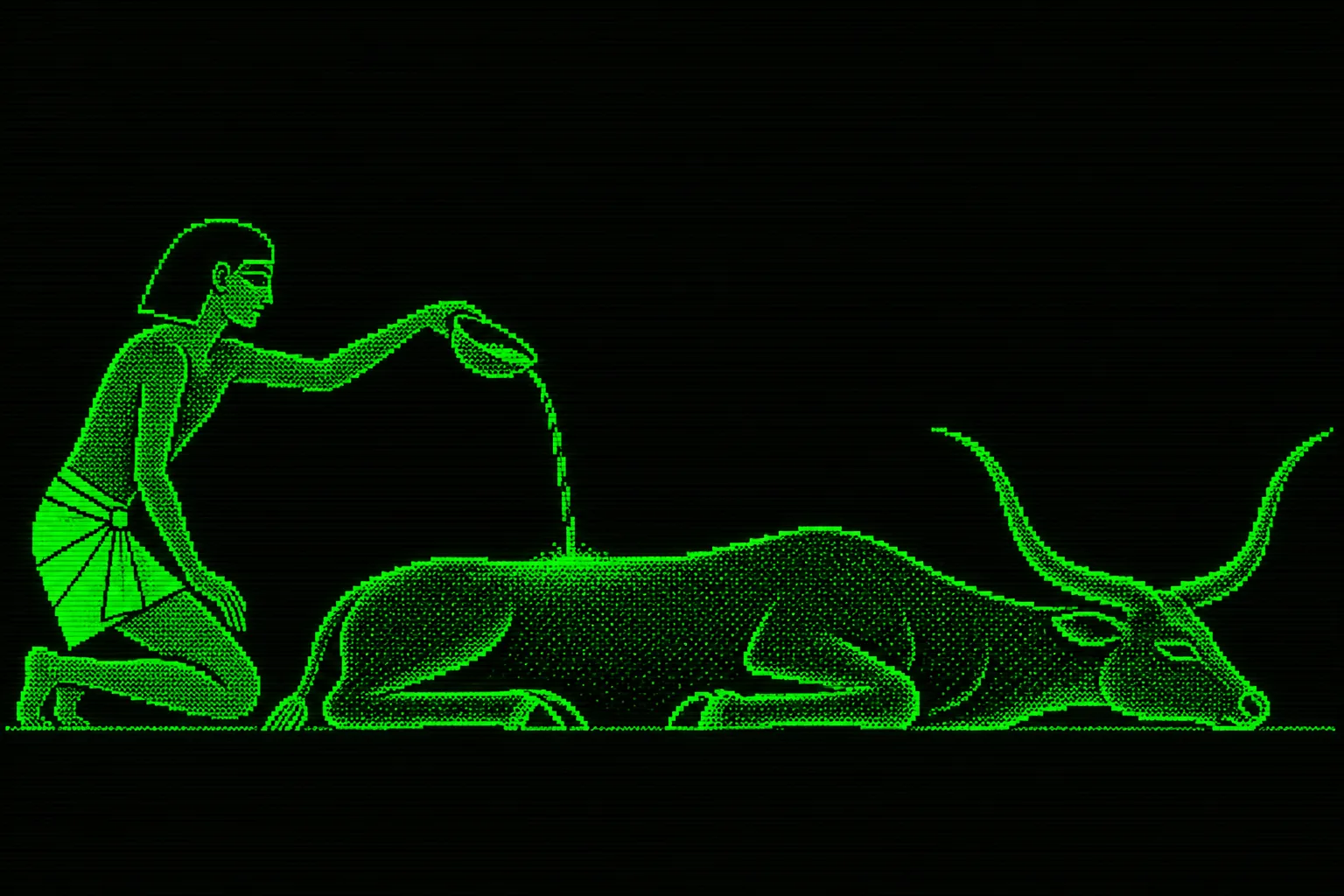
A cattle healer speaks, sometimes as I, sometimes ordering a pupil as you. After broken entries on a bird, a fish and a dog come three cases of sick cattle. For the bull with a worm’s nest: Then I must thrust my hand into his ḥmw, with a hin-bowl of water beside me, and he draws out clotted blood. When the mucus comes, you will know he is getting well.
The ox with wind sickness is laid on one side, sprinkled with cool water, rubbed down with plants and fumigated until he sweats. Then the knife: Then you must make a cut on his nose and another on his tail. The verdict is spoken over the animal: By it he dies; by it he lives. If he does not recover, a potsherd heated in the fire is drawn around each eye.
- 1
𓄄 𓂂𓂂 𓅭 𓅓 …
šsꜣ,w mꜣꜣ ⸮ꜣpd? m [...] ⸮[ḫt]m?
Instructions for examining a bird with … closed.
- 2
[...] ⸢ḫ⸣[t]m [...]
… close …
- 3
𓄄 𓂂𓂂 𓆟
šsꜣ,w mꜣꜣ ⸮rm?
Instructions for examining a fish.
- 4
… 𓈖𓍿𓆟𓈖 …
[...] ⸮___? [...]
[gap in the text]
- 5
[...] ⸮___? [...]
[gap in the text]
- 6
[...] [___]w.pl ⸮h?[__] [...]
[gap in the text]
- 7
… 𓁹𓁹 𓆑 𓃹𓈖𓉿 … 𓅓 𓆑
[...] ⸮[j]w? jr,t.du =f(j) wn [...] m ___ =f
… Both his eyes are open. … in his …
- 8
𓇋𓅱 𓂋𓂧𓂾𓏤 𓆑 … 𓅓 𓂋𓂧𓂾𓏤 𓆑
jw rd =f [...] ⸮⸢m⸣? rd =f
One leg … against the other.
- 9
𓂜𓃹𓈖𓏏 𓏠𓈖𓏏𓏴𓏥 𓇋𓅓 𓋴𓈖
n-wn,t mn,t jm =sn
There is no pain in them.
- 10
𓇋𓅱 𓊃𓍿𓎤 𓐍𓈖𓌰𓅓𓅱𓂊𓏥 𓆑 𓏇𓇋 𓂝𓅓𓂝𓅓𓅱
jw sṯ(j) ḫnm,w.pl =f mj ⸢ꜥmꜥm,w⸣
The odor he gives off is like a shrew’s.
- 11
𓇋𓅱 𓌳𓁹𓄿𓄿 …
jw mꜣ⸢ꜣ⸣ [...] ⸮___?
… sees … an animal.
Note · Line 11
The surviving sign shows a four-legged animal with long legs. - 12
… 𓆑 …
[...] [__]⸢j⸣.t =f ⸮wšꜥ,w? [...]
… before he … the itching sickness …
- 13
… 𓏌𓏤 𓄑𓏤𓏥 𓆑 …
[...] [wꜣb.w] n.w jbḥ.pl =f šn_ [...]
… the roots of his teeth are ringed with …
- 14
… 𓅓 …
[...] ⸮gsn? m gb⸮⸢b⸣? [...]
… in a state of exhaustion …
- 15
𓆑 𓅨𓂋𓂧𓀉 𓆑 …
[jw] =f wrd =⸢f⸣ [...]
He grows weary …
- 16
… 𓃛𓅱𓃡 𓈖 𓃹
[...] jw n wn
… a dog, because … is …
- 17
… 𓌩 𓇋𓅱 …
[...] ⸮psi̯? jw [...]
… cooked. …
- 18
[...] ⸢___⸣
[gap in the text]
- 19
𓈙𓈙G234 𓈖 𓆙𓏤
[šsꜣ,w] [mꜣꜣ] [___] [⸮ẖr?] {⸢š⸣}〈z〉š n(,j) ⸮___?
Instructions for examining a bull with a worm’s nest.
Note · Line 19
“Worm’s nest” is the name of the ailment. - 20
… 𓈖 𓆙
[...] n(,j) ⸮___?
… of a worm …
- 21
… 𓂧𓎼𓅓𓀉 𓅓 𓄿𓈖𓄿𓈖𓏛 𓆑 𓄣𓏤 𓈖𓏏 𓋴𓏏
[...] ⸢d⸣gm m __ ⸮⸢ꜣnꜣn⸣? =f ⸢jb⸣ ⸮n,t〈j〉? st
… dazed, with … He … the heart in which it is.
- 22
𓇋𓂋𓅓𓆱𓐍𓏏 𓊪𓏏𓐍𓂻 𓆑 𓇋𓍿𓈖𓀁 𓂋 𓇾𓈇𓏤 𓐍𓂋𓀒𓐍𓂋 𓆑 𓂋 𓆑
jr-m-ḫt ptḫ =f jṯn r tꜣ ḫr.ḫr =f r =f
If he then tries to throw himself to the ground, snorting, down he must fall.
- 23
𓆓𓂧 𓏏 𓎢𓋴𓅱𓀓𓏥 𓇋𓏠𓈖𓅱𓀃𓏥 𓂋 𓋴
ḏd =t(w) ks,w jmn.w r =s
They call this “the hidden bows.”
- 24
𓄞𓂧𓏏𓀁 𓏏 𓈖 𓆑
šdi̯ =t(w) n =f
Let someone recite for him.
- 25
𓋴𓏏𓄝𓂡𓐍𓂋 𓀀 𓂧𓏏𓏤 𓀀 𓂋 𓄚 𓈟𓅓𓅱𓊦𓄹𓏥 𓆑 𓉔𓈖𓏌𓅱𓎺 𓈖 𓈗 𓂋𓐛𓏤 𓀀
sti̯.ḫr =j ḏr,t =j r ẖnw ḥm,w.pl =f hnw n(,j) mw r-gs =j
Then I must thrust my hand into his ḥmw, with a hin-bowl of water beside me.
- 26
𓂻𓅱 𓂧𓏏𓏤 𓈖𓏏 𓊃𓀀 𓁷𓏤 𓊃𓄡𓂋𓂡 𓇋𓄿𓏏𓄦 𓈖𓏏 𓊪𓊃𓂧 𓆑
jwi̯ ḏr,t n.t z ḥr zẖr jꜣ,t n.t psd =f
The man’s hand moves along the ridge of the animal’s lower back, stroking it.
- 27
𓊃𓀀 𓂧𓏏𓏤 𓆑 𓅓 𓉔𓈖𓏌𓅱𓎺 𓊪𓈖 𓈖 𓈗 𓂋𓍿𓈖𓏌𓅱𓏛𓊃𓊪𓊗
zẖr.[ḫr] z ḏr,t =f m hnw pn n(,j) mw ⸢r⸣-ṯnw-zp
Each time, the man must wipe his hand in this hin-bowl of water.
- 28
𓇋𓅱 𓈎𓏇𓇋𓄿𓂡 𓂋 𓂧𓏏𓏤 𓂋 𓄞𓂧𓂧 𓎢 𓊃𓈖𓆑𓂐𓏥 𓈎𓆑𓈖𓊮 𓇋𓅓 𓐍𓏏𓏥 𓇋𓅓 𓎛𓊃𓅭𓄿𓇋𓇋𓈗 𓂋𓏤𓊪𓅱
jw qmjꜣ r ḏr,t r šdd =k znf qfn jm (j)ḫ,t jm ḥzꜣ,y rʾ-pw
It sticks to the hand until you draw out clotted blood from there, or some other matter from there, or mucus.
- 29
𓋷𓀁 𓎢 𓋴𓈖𓃀 𓆑 𓁷𓏤 𓂻𓅱 𓎛𓊃𓅭𓄿𓈗
sjꜣ =k snb =f ḥr jwi̯ ḥzꜣ
When the mucus comes, you will know he is getting well.
- 30
𓎛𓈖𓂝 𓊃𓅭𓄿𓏏𓀸 𓂭𓂭𓂭 𓎢 𓁷𓏤 𓁷𓏤 𓆑
ḥnꜥ zꜣu̯.t ḏbꜥ.pl =k ⸢ḥr⸣ [___] ḥr [___].⸢pl⸣ =f
And guard your fingers as you … on his …
- 31
𓇋𓅱 𓆑 𓅓 …
⸮[j]w? =f ⸢m⸣ [...]
He is in …
- 32
𓄃 𓂂𓂂 𓂸𓃒 𓌨𓂋 𓈖𓆑𓏏𓊡
šsꜣ,w mꜣꜣ ⸢jḥ⸣ ẖr nf,t
A guide to examining an ox with wind sickness.
Note · Line 32
“Wind” is the Egyptian name for the affliction. The signs described here do not identify it with any one modern disease. - 33
𓇋𓂋 𓌳𓁹𓄿𓄿 𓀀 𓃹𓈖𓈖 𓆑 𓁹𓁹 𓆑 𓋴𓍿𓊪𓍉𓐏𓏥 𓅿𓅿 𓆑 𓅱𓂧𓈖𓆻 𓍯𓄿𓃀𓅱𓆰𓏥 𓏌𓏤 𓄑𓏤𓏥 𓆑 𓅟𓂋 𓇋𓅱 𓈖𓅘𓎛𓃀𓏏𓄹 𓆑 𓁷𓏤 𓏏𓃹𓈖𓏌𓃒𓏥
jr mꜣꜣ =⸢j⸣ ⸢jḥ⸣ [ẖr] ⸮[nf],w.pl? wnn =f jr,t.du =f(j) sṯp ⸢mꜣꜥ.du⸣ =f(j) wdn wꜣb.w.pl n.w jbḥ.pl =f dšr jw nḥb,t =f ḥr twn
When I examine an ox afflicted by winds, both his eyes run, both his temples are heavy, the roots of his teeth are red, and he keeps thrusting his neck forward.
Note · Line 33
The roots of the teeth here are the gums at their base. - 34
𓄞𓂧 𓏏 𓈖 𓆑
šdi̯ =t(w) n =f
Let someone recite for him.
Note · Line 34
The recitation is part of the treatment. No words are given for it here. - 35
𓂋𓂞𓐍𓂋𓏏 𓆑 𓁷𓏤 𓐛𓏤 𓆑 𓌡𓏤𓂝
rḏi̯.ḫr.t(w) =f ḥr gs =f wꜥ
He must then be laid on one side.
- 36
𓃹𓈖𓐍𓂋 𓏏 𓁷𓏤 𓈖𓏏𓈙𓈗 𓆑 𓅓 𓈗 𓈎𓃀𓏂𓈗
wn.ḫr =t(w) ḥr ntš =f m mw qb
Someone must then keep sprinkling him with cool water.
- 37
𓋴𓇋𓆛𓈖𓂡𓐍𓂋 𓏏 𓁹𓁹 𓆑 𓎛𓈖𓂝 𓇥𓂋𓅱Aa79𓏥 𓆑 𓎛𓈖𓂝 𓂝𓏏𓄹 𓆑 𓎟𓏏 𓅓 𓐍𓈖𓈙𓆰𓏥 𓈙𓆄𓅱𓅱𓆰𓏥
sjn.ḫr =t(w) jr,t.du =f(j) ḥnꜥ ḏrw.pl =f ḥnꜥ ꜥ,t =f nb.t m ḫnš šw,w [rʾ]-pw
Then both his eyes, his flanks and every limb must be rubbed down with khenesh plants or hay.
- 38
𓂋 𓐍𓈖𓈙𓏥 𓇋𓈖 𓀸
⸮[kꜣp]?.t(w) r ḫnš jn ⸮[mnj,w]?
Let the herdsman fumigate him until he sweats.
Note · Line 38
The Egyptian word for breaking into a sweat sounds like khenesh, the plant just named. - 39
𓀸𓅱𓀀 … 𓃛𓎛𓅱𓈗
[ḫ]nn mnj,w [...] [_]w jwḥ,w
The herdsman stops … the cattle pool.
- 40
𓇋𓂋 … 𓈙𓂧𓂧𓏏 𓆑 𓅓 𓃛𓎛𓅱𓈗
⸮j⸢r⸣? [...] ⸮mw? šdd.t(w) =f m jwḥ,w
If … water, he is taken out of the cattle pool.
- 41
𓃹𓈖𓈖 𓆑 𓍯𓄿𓈐 𓂋 𓈗 𓋴𓇋𓆛𓈖𓏏𓂡 𓆑 𓅓 𓐍𓈖𓈙𓆰𓏥 𓈖 𓈎𓄿𓂧𓏏𓆰𓏥
⸮[j]r? wnn =f wꜣi̯ r mw sjn.t(w) =f m ḫnš n(,j) qꜣd,t
If he is away from the water, he is rubbed down with tendrils of the qadet creeper.
- 42
𓎼𓄿𓊪𓌪𓐍𓂋 𓎢 𓈖 𓆑 𓁷𓏤 𓂊𓏤 𓆑 𓎛𓈖𓂝 𓋴𓆓𓄢 𓆑
gꜣp.ḫr =k n =f ḥr fnḏ =f ḥnꜥ sḏ =f
Then you must make a cut on his nose and another on his tail.
- 43
𓆓𓂧𓐍𓂋 𓎢 𓂋 𓆑 𓌨𓂋𓌫𓏏𓏤 𓊪𓅱
ḏd.ḫr =k r =f ẖr〈,j〉-dm,t pw
Then you must say of him, “This one bears a cut.
- 44
𓇋𓅱 𓆑 𓅓𓏏𓀐 𓆑 𓌨𓂋 𓋴 𓇋𓅱 𓆑 𓋹𓈖𓐍 𓆑 𓌨𓂋 𓋴
jw =f mwt =f ẖr =s jw =f ꜥnḫ =f ẖr =s
By it he dies; by it he lives.”
- 45
𓇋𓂋 𓏏𓍃𓅓 𓆑 𓋴𓈖𓃀 𓅱𓂧𓈖𓆻 𓆑 𓌨𓂋 𓂭𓏤𓏥 𓎢 𓏏𓍃𓏏𓍃𓅓 𓁹𓁹 𓆑 𓍲𓈖N90𓐍𓂋 𓎢 𓁹𓁹 𓆑 𓅓 𓊪𓅯𓄿𓈎𓏏𓆁N90 𓅓 𓐍𓏏𓊮 𓂋 𓂧𓂋 𓎛𓇉𓄿𓍘𓇋𓁺
jr tm =f snb wdn =f ẖr ḏbꜥ.pl =k tmtm jr,t.du =f(j) šni̯.ḫr =k jr,t.du =f(j) m pꜣq,t stꜣ[.t(j)] m ḫ,t r dr ḥꜣtj
If he does not recover, if he feels heavy under your fingers and both his eyes grow dark, then you must trace a circle around each eye with a potsherd heated in the fire, to clear the clouding.
- 46
𓄃𓅱𓏥 𓂂𓂂 𓂸𓃒 𓌨𓂋 𓄑𓅱 𓅓 𓉐𓂋𓏏N89
šsꜣ,w.w.pl mꜣꜣ jḥ ẖr wšꜥ,w m pr,t
Directions for examining an ox with the gnawing itch in the sowing season.
Note · Line 46
The name of the itch evokes something eating away at the animal. The sowing season, Peret, followed the Nile flood. - 47
𓇋𓂋 𓌳𓁹𓄿𓄿 𓀀 𓂸𓃒 𓅓 𓉐𓂋𓏏N89 𓃹𓈖𓈖 𓆑 𓎼𓂋𓏏 𓂧𓎼𓅓𓇋𓇋𓁺 𓁹𓁹 𓆑 𓈎𓈖𓇋𓇋𓐏 𓎼𓄿𓊪𓌪𓐍𓂋 𓎢 𓏇𓇋 𓈖𓆑 𓇋𓏶𓄂𓏏𓏤
jr mꜣꜣ =j jḥ ẖr [wšꜥ,w] m pr,t wnn =f gr,t dgm.y jr,t.du =f(j) qni̯.y gꜣp.ḫr =k mj nf jm,j-ḥꜣ.t
If I examine an ox with the gnawing itch in the sowing season, and he is also dazed and both his eyes are greasy, then you must make the cuts as in the earlier case.
- 48
𓇋𓂋 𓌳𓁹𓄿𓄿 𓀀 𓂸𓃒 𓌨𓂋 𓄑𓅱 𓅓 𓉐𓂋𓏏N89 𓅓 𓈎𓃀𓏂𓈗 𓇥𓂋 𓂻𓅱 𓂋 𓆑 𓅓 𓈙𓈗N89 𓃹𓈖𓈖 𓌴𓐙𓂝𓅿𓅿 𓆑 𓅱𓂧𓈖𓆻 𓁹𓁹 𓆑 𓄣𓏤 𓆑 𓂜 𓈝𓅓𓂻 … 𓏠𓈖 …
jr mꜣꜣ =j jḥ ẖr wšꜥ,w m pr,t m qb ḏr jwi̯ r =f m šm,w ⸢wnn⸣ mꜣꜥ.du =f(j) wdn jr,t.du =f(j) sṯp jb =f jhm n šmi̯ [...] mn [...] wrm,y[t] [...]
If I examine an ox with the gnawing itch in the cold of the sowing season, and it has been with him since the harvest season, both his temples are heavy, both his eyes run, and his heart is sluggish. He does not walk … remains … the wermyt ailment …
- 49
𓇋𓂋 𓐍𓏏𓅱𓂻 𓆑 𓇋𓅱 … 𓉔𓃀𓉔𓃀𓍁𓇋𓈖 𓎢 𓂝𓏏𓄹𓏥 𓆑 𓎟𓏏 𓅓 … 𓏇𓇋 𓁹𓂋𓏏 𓂋 𓌨𓂋 …
⸢j⸣r ḫti̯.w =f j⸢w⸣ [...] [h]⸢b⸣hb.jn =k ꜥ,t.pl =f nb.t ⸢m⸣ [...] mj jrr.t r ẖr〈,j〉 sk,t [...]
If he draws back while … then you are to go over all his limbs with … as is done for one suffering from seket disease. …