~/sacred-texts/egyptian-funerary-texts
Isis, Nephthys and Nut Speak to Panehsi in His Tomb
- Date
- Carved in the Late Period (about 747–525 BC) in the burial chamber of the priest Panehsi
- Language
- Late Middle Egyptian · Hieroglyphic
Isis, right of the entrance
- 1
𓆓𓌃
ḏ(d)-mdw
Words to be spoken:
Note · Line 1
This formula marks the start of each speech carved on the burial chamber wall. It cues someone to recite the words aloud for Panehsi. - 2
𓉔𓄿 𓁹𓊨𓊹 𓏊𓊹𓉺 𓊪𓅘𓎛𓋴𓇋
hꜣ Wsr,w jtj-nṯr-Jwn(,w) P(ꜣ)-nḥs,j
O Osiris Panehsi, god’s father of Heliopolis!
Note · Line 2
Calling Panehsi “Osiris” gives him a share in the renewed life of the god of the dead. “God’s father” was Panehsi’s priestly title at Heliopolis. - 3
𓇋 𓈖 𓎡 𓌢𓈖𓏏 𓎡 𓊨𓏏𓏏 𓈖 𓌻 𓎡 𓋴 𓏲
{j}〈jyi̯〉 n =k sn,t =k (Ꜣ)s,tt 〈ḥꜥi̯.tw〉 n mr(w,t) =k ptr =s 〈ṯ〉w
Your sister Isis comes to you, rejoicing for love of you when she sees you.
- 4
𓍚 𓋴 𓂾𓂾 𓎡
ḫsf =s rd.du =k
She will turn back both your feet.
Note · Line 4
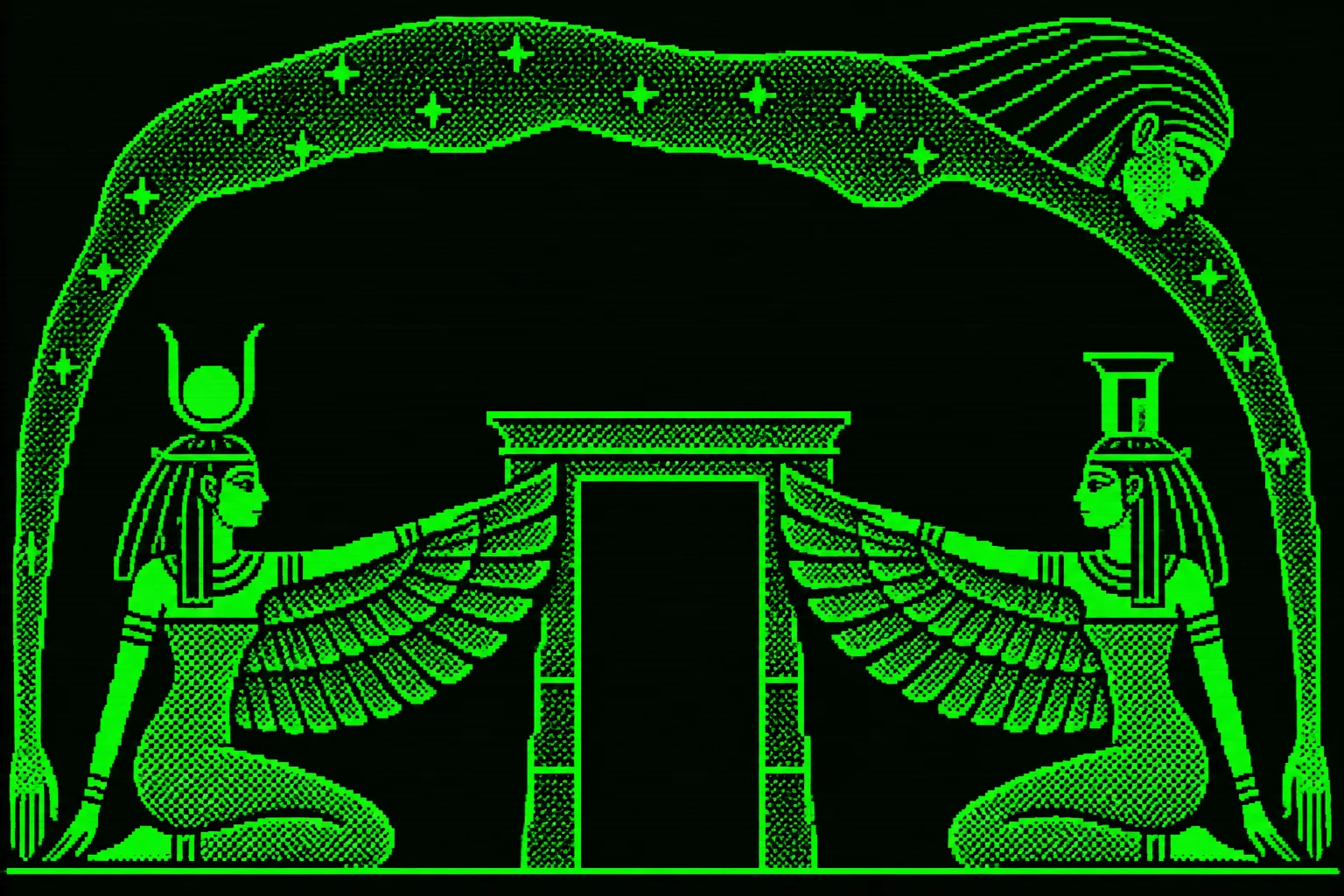
In Egyptian burial scenes, Isis often keeps watch at the dead person’s feet while Nephthys stands at the head. They take these places as the sisters of Osiris.
The TLA’s German inserts a “not” that the Egyptian lacks, reversing the line.
- 5
𓐍𓐍𓐍 𓊃 𓎡𓅱 𓅓 𓅓𓎔𓈖𓈘
ḫwi̯ =s kw 〈j〉mi̯ =〈k〉 mḥi̯
She guards you so that you do not drown.
- 6
𓂞 𓊃 𓈖 𓎡 𓊡 𓂋 𓂉 𓎡 𓋹 𓎡
ḏi̯ =s n =k ṯꜣw r fnḏ =k ꜥnḫ =k
She gives you air at your nose that you may live.
- 7
𓆫 𓄊𓏏 𓎡
srq =〈s〉 ḥtw,t =k
She lets your throat breathe.
Nephthys, left of the entrance
- 8
𓆓𓌃
ḏ(d)-mdw
Words to be spoken:
- 9
𓉔𓄿 𓁹𓊨𓊹 𓏊𓊹𓉺 𓊪𓅘𓎛𓋴
hꜣ Wsr,w jtj-nṯr-Jwn(,w) P(ꜣ)-nḥs(,j)
O Osiris Panehsi, god’s father of Heliopolis!
- 10
𓇋𓇋 𓈖 𓎡 𓌢𓈖𓏏 𓎡 𓉠 𓌢𓈖𓏏 𓇋𓅓 𓎼𓎛𓋴𓏏𓊖 𓍿𓊃𓎤 𓊃 𓈖 𓎡 𓁶𓏤 𓎡 𓇋𓈖𓈎 𓊃 𓈖 𓎡 𓌟𓌟𓌟 𓎡 𓋬 𓋴 𓈖 𓎡 𓂝𓏏𓄹𓏥 𓎡
{jj}〈jyi̯〉 n =k sn,t =k Nb(,t)-ḥw(,t) sn,t jm(.t) Gḥs,t ṯ(ꜣ)z =s n =k tp =k jnq =s n =k qs.pl =k dmḏ =s n =k ꜥ,t.pl =k
Your sister Nephthys comes to you,
the sister in Geheset,
to bind your head back in place for you,
to fit your bones together for you,
to reunite your limbs for you.Note · Line 10
In one account, Geheset is where Nephthys found her brother Osiris after he was killed. By gathering Panehsi’s limbs, she makes his body whole as she did her brother’s. - 11
𓏙 𓋴 𓊡 𓂋 𓂉 𓎡 𓋹 𓎡
ḏi̯ =s ṯꜣw r fnḏ =k ꜥnḫ =k
She gives breath to your nose so that you may live.
- 12
𓆫 𓄊𓏏 𓎡
srq =〈s〉 ḥtw,t =k
She lets your throat breathe.
Nut, on the ceiling
- 13
𓆓𓌃 𓇋𓈖 𓏌𓏏𓇯
ḏ(d)-mdw jn Nw,t
Words to be spoken by Nut:
- 14
𓊨𓁹 𓆤𓏏𓋨 𓇓𓏏𓂋𓐍𓌷𓂝 𓌻 𓆑 𓅮𓅘𓎛𓋴 𓅭𓏤 𓏏𓊹 𓊹𓍛 𓁷𓂋𓀸𓏞 G279G279𓊵 𓁹𓈖 𓎟𓉐𓏤 𓂞𓊃𓋞
Wsr,w ḫtm(,tj)-bj,t(j) rḫ-nzw-mꜣꜥ mr(,y) =f Pꜣ-nḥs(,j) zꜣ (j)t(j)-nṯr ḥm-nṯr ḥr(,j)-zꜣ-zẖꜣ Nb,du-ḥtp jri̯.n nb(,t)-pr Di̯-s(j)-nbw
O Osiris Panehsi, seal-bearer of the King of Lower Egypt, the king’s true acquaintance and his beloved, son of the god’s father, priest and chief archivist Nebuihetepu, born of Djisinebu, lady of the house!
Note · Line 14
“Seal-bearer” and “the king’s true acquaintance” are court titles that mark Panehsi’s rank. “Lady of the house” was a customary title for a married woman. - 15
𓊪𓈙𓈖 𓅱𓀭 𓁷𓂋 𓎡 𓐝 𓂋𓈖 𓏏 𓈖 𓈙𓏏𓍔𓇯
pš.n =(j) w(j) ḥr =k m rn ={t}〈j〉 n štp,t
I have spread myself over you in my name of Shetpet.
Note · Line 15
Shetpet is a name of Nut, the sky goddess and mother of Osiris. Egyptian coffin lids often show her with outstretched arms, sheltering the person inside as she shelters her son. - 16
𓂜𓈖 𓁷𓂋𓈐 𓇋𓂋 𓎡 𓐝 𓂋𓈖 𓏏 𓈖 𓁷𓂋𓏏𓇯
nn ḥri̯ =(j) jr =k m rn ={t}〈j〉 n ḥr,t
I will not draw away from you in my name of Sky.
- 17
𓂋𓂝𓏏𓈖 𓁐 𓃹𓈖𓈖 𓎡 𓐝 𓊹𓀭 𓂜𓈖 𓐍𓆑𓏏𓀐𓏥 𓎡
rdi̯.n =j wnn =k m nṯr nn ḫft(,j).pl =k
I have made you a god, with no enemies.