~/sacred-texts/royal-letters-of-djedkare-isesi-in-the-tomb-of-senedjemib-inti
Isesi’s Letter to Senedjemib: A Jubilee Palace Approved
- Date
- Written in the year of the 16th count of King Djedkare-Isesi (5th Dynasty, about 2400 BC), on the 28th day of the fourth month of Shemu; copied in hieroglyphs on the tomb of the vizier Senedjemib Inti at Giza
- Found
- Mastaba of Senedjemib Inti (G 2370), Western Cemetery, Giza
- Language
- Old Egyptian · Hieroglyphic
- 1
⸢wḏ⸣-[nswt] (n) ⸢tꜣy(,tj)-zꜣb-ṯꜣ(,tj)⸣ ⸢(j)m(,j)-rʾ-kꜣ,t-nb,t-n,t⸣-[nswt] (j)m(,j)-rʾ-⸢zẖꜣ(,w)⸣-ꜥ-⸢n-nswt⸣ ⸢S⸣ndm-jb
Royal decree to the vizier, overseer of all the king's works and overseer of the king's document-scribes, Senedjemib.
Note · Line 1
A letter from King Djedkare-Isesi of the Fifth Dynasty (about 2400 BC) to his chief minister. - 2
jw mꜣ.⸢n⸣ ḥm (=j) snṯ,w p[n] ⸢rḏi̯.n⸣ ⸢=k⸣ [jnt〈.t〉(j)] [=f] ⸢r⸣ ⸢sjꜣ⸣ m ⸢stp-zꜣ⸣ n š n(,j) wsḫ,t n(,j) ꜥḥ ⸢n(,j)⸣ Jzzj n ⸢ḥꜣb⸣-[sd]
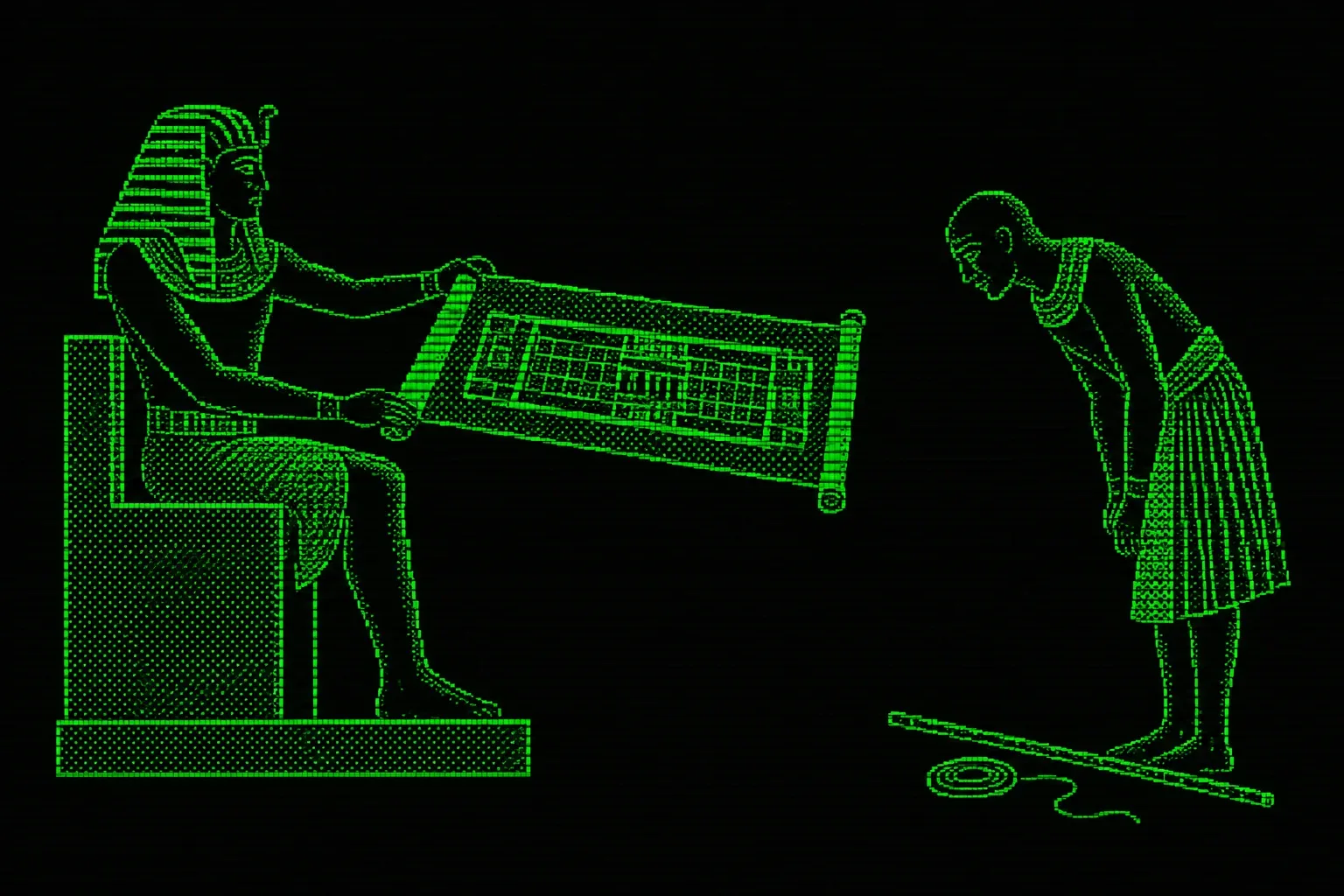
My Majesty has seen this plan which you had brought to the palace to be examined, for the precinct of the great court of Isesi's jubilee palace.
Note · Line 2
The king refers to himself as “My Majesty” throughout. - 3
⸢sk⸣ [ṯw] ḏd =k ḫr ḥm (=j) wn,t jri̯.n =k sw [r] [ꜣw] mḥ 1000 [〈〈r〉〉] [wsḫ,t] mḥ 440 ḫft w⸢ḏḏ.t⸣ ⸢n⸣ =⸢k⸣ ⸢m⸣ [stp-zꜣ]
Now, you told My Majesty that you had made it a thousand cubits long and four hundred and forty cubits wide, as you were instructed in the palace.
- 4
[rḫ.w(j)] [ṯw] [tr] ḏd mrr.t Jzzj r (j)ḫ,t nb
How well you know how to speak what Isesi loves above all things!
- 5
jri̯.n ṯw ḥm nṯr r s,t-jb n[.t] Jzzj
Truly, the god has made you a man after Isesi's own heart.
- 6
⸢jw⸣ ⸢ḥm⸣ (=j) rḫ ḥmu̯ =k ⸢r⸣ ⸢(j)m(,j)-rʾ-kꜣ,t⸣ ⸢nb⸣ ḫpr m tꜣ p⸢n⸣ ⸢r-ḏr⸣ ⸢=f⸣
My Majesty knows that you are more skilled than any overseer of works there has ever been in this whole land.
- 7
j⸢w⸣ jri̯ ḫr =k wr,t ⸢jri̯⸣.[t(j)] [mri̯.t] (=j) r (j)ḫ,t nb
Great things are done through you; what I love above all things is being done.
- 8
jw ḥm jri̯.n =k ⸢ḫrp⸣ ḥḥ.pl ⸢n.w⸣ [zp]
Indeed, you have taken charge a million times over.
- 9
⸢jw⸣ [=k] ⸢r⸣ [jri̯.t] (j)m(,j)-rʾ-kꜣ,t-nb,t-n,t-nswt
You shall serve as overseer of all the king's works.
- 10
j ⸢Sndm-jb⸣ [wr] ⸢mrr⸣ (=j) ⸢ṯw⸣ ⸢ḥ⸣[nꜥ] (=j) ⸢sk⸣ ⸢ḥm⸣ r⸢ḫ.t(j)⸣ ⸢mrr⸣ (=j) ⸢ṯw⸣
O Senedjemib the Elder, I love to have you by me, for you know full well that I love you.
Note · Line 10
The Egyptian uses the same verb twice, first for wanting him near and then for loving him. - 11
rnp,t-zp [1]6 ꜣbd 4 ⸢šmw⸣ sw 28
Year of the sixteenth count, fourth month of Shemu, day 28.
Note · Line 11
The date of the letter.