~/sacred-texts/egyptian-wisdom-literature
The Instruction of Ani: Three Years Her Breasts Were at Your Mouth
- Date
- Composed in the New Kingdom, 18th–19th Dynasty (c. 1550–1190 BC); this copy, Papyrus Boulaq 4, was written at Thebes in the 21st–22nd Dynasty (c. 1070–715 BC)
- Found
- Found at Deir el-Medina, western Thebes; now in the Egyptian Museum, Cairo (Papyrus Boulaq 4)
- Language
- Egyptian (Late Egyptian) · Hieratic
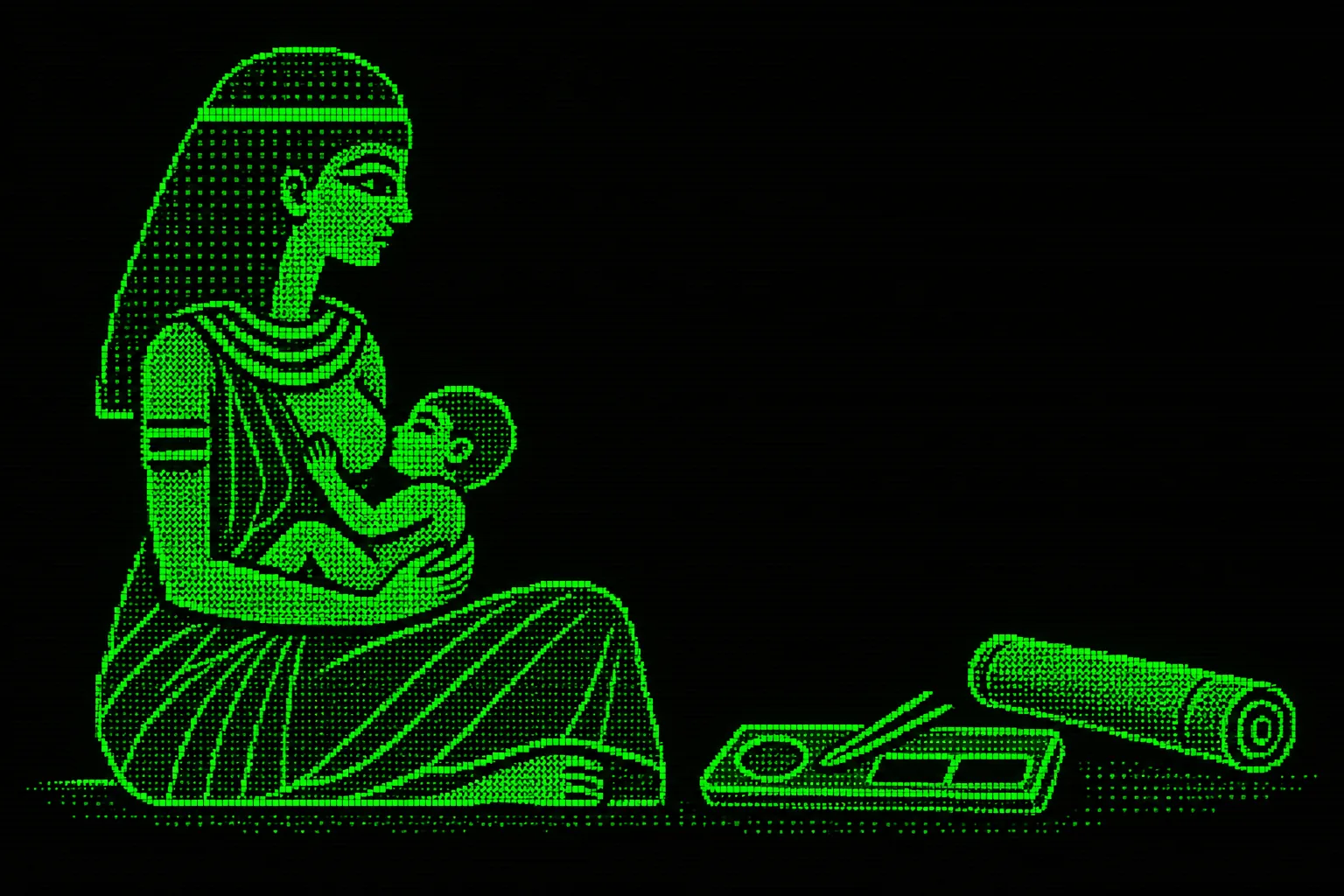
The scribe Ani instructs his son Khonsuhotep. Take a wife while you are a youth; keep the god’s feast; pour water for the dead; build your tomb now, for When Death comes, he snatches the child in his mother’s arms. A woman far from her husband is Deep water that no one knows how to skirt, and adultery with her is a crime punished by death. Repay your mother: For three years her two breasts were at your mouth, Your shit was disgusting, yet her heart felt no disgust.
Then the son answers back: Each man pulls his own way, according to his nature. Ani replies with the tamed bull, lion and hound, and with the carpenter who straightens The crooked stick left in the field.
- 1
[...] [___] =sn r r[ḏi̯.t] [...]
… their … so as to bring it about that …
Note · Line 1
Ani is instructing his son. Only fragments of the opening survive in this copy. - 2
[...] ḥr ⸮bwꜣ[,t]? [...]
… on the marsh mound …
- 3
[...] ⸮[dgs]? =k m s,t [...]
… may you tread in the place …
- 4
[...] ⸮ꜥꜣ? [...]
… great …
- 5
[...] jw =k 〈m〉 ⸮jr,t?.ṱ =k [...] ⸮ḏr,t?.ṱ =k [...]
… while you, with your eye … your hand …
- 6
[...] ḫpr [...]
… come to pass …
- 7
[...] ___ =k⸮wj? [ꜣ]s.t[j] [...]
… you … in haste …
- 8
[...] [ḥꜣ,tj] [...] n mri̯ =[k]
… the heart … to the one you love.
- 9
rḫ =t[j] jb m [...]
The heart is known by …
Note · Line 9
For the Egyptians, the heart was the seat of thought and judgment as well as feeling. - 10
[...] ⸮ꜥq,w? =⸮k? m-bꜣḥ =kwj
… when your bread is before you.
- 11
jm[m] [s]ꜣi̯ [...]
Let … eat their fill.
- 12
[...] [j]w =k ḥsi̯[.t]j
… while you are praised.
- 13
mnḫ{.t} jꜣ[rw] [...]
One of fine form …
- 14
[jmi̯] =k ⸮[ꜥḥ]ꜣ? 〈r〉 kꜣy jw ḫ,t [...]
Do not fight another when things …
- 15
[...] nꜣ šrjw.pl my,ti =f
… the children like him.
- 16
zꜣw [...]
Guard yourself …
- 17
[...] [___] =f r rḏi̯.t w(n)m =tj swrj =[tj] [...]
… his … so that people may eat and drink …
- 18
[...] r rḏi̯.t jri̯.y =[f] qnqn =〈k〉 jw ḏr,t =k [...] [jw] =[k] g[r].tj
… to let him beat you while your hand … and you keep silent.
- 19
j[mm] jr[,t] =[k] [r] nmt,t
Keep your eye on the course things take.
- 20
bn ⸮nfr? [...]
It is not good to …
- 21
[...] [_š]b,t ꜣb [...] [___] =sn [...]
… in reply … cease … their …
- 22
[ptrj] [tw≡j] [(ḥr)] [ḏd] [n] =[k] [nꜣy] [sp.y] mn[ḫ].y n,tj jp m jb =k
Look, I am telling you of these fine deeds
that count in your heart. - 23
j:jri̯ sw [ḫpr] =[k] [m] [nfr] [wꜣww] ḏw nb{.t} jr =k
Do them, that you may become a good man
and every evil may stay far from you. - 24
wṯs{sꜣ} n =k nfr,y (m-)⸮⸢wḥm⸣? r rḏi̯.t mtrtw b[jꜣ],t nfr.t tm k〈t〉ḫ ḏd [...] whꜣj wsfi [n] jꜣ:rḫ
Hold goodness up before you once more,
that good conduct may bear witness
and others may not say … “Idleness ill befits a wise man.” - 25
ꜥq 〈m〉 mdw,t
Enter into the words.
- 26
j:mḥ [tw] [m-jm] =[w] [jr] =k wꜣww ḏww nb{.t} jr =k [t]m ḫpr nmḥ m jꜣ,tw bw wsr
Fill yourself with them, that every evil may stay far from you
and poverty may not arise in office, the seat of wealth. - 27
dns{mn} j jb jꜣ =tw (ḥr) mdwi̯
Weigh things in your heart when someone speaks.
- 28
m-jri̯ tpj ⸮〈m〉? rʾ [...] 〈jri̯〉 〈tp-rʾ〉 [m] [w]šb.t.ṱ =k ḥr nḏnḏ{tj} [ḫ,t] ḫpr j:ḏd.ṱ =k nb{.t} mnḫ{t}
Do not draw breath through your mouth …
to utter a word in reply when a matter is under discussion,
so that all you say may be sound. - 29
⸮[bn]? hꜣb =k jw =k wstn.ṱ (ḥr) j[ṯi̯] jni̯
You will not be sent if you take things away
and bring them back as you please. - 30
jr ṯn{jn}jw z ẖri wšb,t.ṱ =f jw ns{,t} =f (r) wḏꜣ r ḥḏ
If a man distinguishes himself by his answer,
his tongue will come to no harm. - 31
zꜣw tw r spi (n) sꜥḏꜣ r srj jw =k (ḥr) ꜥn smy
When you report back,
take care not to bear false witness against a high official. - 32
jmn j:ḏd〈.ṱ〉 =〈f〉 m pr ={k} =〈f〉
Keep to yourself what he says in his own house.
- 33
j:jri̯ sw m sḫ{t} bw sḏm =[⸮w?]
Treat his words as a deaf man would:
no one heard a thing. - 34
sḏm j:ḏd.ṱ =j gmi̯ =k ꜣḫ(,t) =w
Heed my words, and you will find their worth.
- 35
bꜥj =k sw jri̯.y =k jw,tj
If you dismiss them, you will play the part of a nobody.
- 36
jmi̯ =k ḥr.y =k jw [kꜣy] m ẖ,t =〈k〉 jw =f (ḥr) 〈pḥ〉 jr =k
When another man comes at you,
do not ready yourself in your belly to strike back. - 37
b,tw n nṯr jṯi̯ 〈m〉 〈ꜣd,w〉
To lay hands on someone in anger is hateful to a god.
- 38
zꜣ[w] tw n =k
Be on your guard.
- 39
jmi̯ =k jri̯ =f
Do not do it.
- 40
m-jri̯ swḏ ḥr(,j) =kwj 〈n〉 nṯr =kwj
Do not denounce your superior to your god.
- 41
bw [jri̯] =[f] sḏm
He does not listen.
- 42
[wnn] =k 〈m〉 rq,ꜣy jw-ḥr ={k} =〈f〉 rꜥ-nb jw ḥꜣ,ty =〈f〉 (ḥr) rḫ =sw
If you stand before your superior day after day as his enemy,
his heart will know it. - 43
sn[mḥ] =[k] [n] ḥr,y =〈k〉 jw =k nmḥ.ṱ r r[ḏi̯.t] fꜣj =[f] [n] =[k] mꜣw[ḏ] [...] mꜣw[,t]
Plead with your superior when you are in need,
that he may bear the burden of forced labor for you … a staff.Note · Line 43
Forced labor was a levy paid in work. - 44
j:šm 〈r〉 n,t-ꜥ{.wj.du} rꜥ-nb n,tj [jp] m {n}kꜣ~wꜣ~wj
Follow each day the custom that others recognize.
- 45
⸢tj~rʾ⸣ [m] [sḫ],t m trj n skꜣ jw ={k} 〈pḥ〉 =〈k〉 wn
Work hard in the field at plowing time
when you have come into wealth. - 46
nn [...] jn ⸢ḏḏ⸣ =tw bꜣk,jw nb{.t} jw bn skꜣ jwnꜣ
No …
Does anyone pay wages when there is no crop? - 47
jri̯ n =k ḥm,t jw =[k] (m) ꜥḏd,jw jri̯.y =st n =k zꜣ =k jr =k msi̯ =⸮[tw]? n =k jw =k m rn(n)
Take a wife while you are a youth,
that she may give you a son to match you,
that he may be born to you while you are still a young man. - 48
mtrtw sw (r) jri̯ r(m)ṯ
Teach him to act like a man.
- 49
nfr z jw r(m)ṯ.ṱ =f ꜥšꜣ
Happy is the man whose people are many.
- 50
wšd.jw =f r ms,w =f
He is greeted on account of his children.
- 51
jri̯ ḥ(ꜣ)b 〈n〉 nṯr =kwj
Keep a feast for your god.
- 52
wḥꜣm =k s[w] 〈r〉 trj.ṱ =f
Keep it again at its appointed time.
- 53
qnd nṯr (ḥr) thꜣj.ṱ =f
The god grows angry when that time is missed.
- 54
sꜥḥꜥ mtrtw.pl m-ḫt w[d]n =k (m) spi tp(,j) ⸮n? pꜣ jri̯ =f
Call witnesses after you make the offering,
the first time you do it. - 55
tw≡tw jwi̯ r wḫꜣḫ šnw =k
They have come to collect your fee.
- 56
jm[m] sw 〈r〉 〈r〉ḏi̯.t hꜣi̯.y =k ḥr ꜥr.wj
Pay it, so that you may be entered on the roll.
- 57
pꜣ nw jwi̯ tw≡tw (ḥr) wḫꜣḫ šzp =k ={st} 〈r〉 〈s〉qꜣj bꜣ.pl =f
The time has come: they call for your receipt
to exalt the god’s power. - 58
ḫpr ḥsi̯ ḫꜥbi̯ sntrj m kꜣ,y =f šzp 〈sn-tꜣ〉 m ꜣḫ,t.ṱ =f
May singing, dancing and the burning of incense become his food;
may homage be received as his own possession.Note · Line 58
The act of homage was to bow down and kiss the ground. - 59
j:jri̯ sw pꜣ nṯr r sꜥꜣi̯ rn =f jw r(m)ṯ pꜣ n,tj tḫj
The god does this to make his name great,
but it is the man who gets drunk.Note · Line 59
Food and drink offered to a god could afterward be consumed by the people at the feast. - 60
jmi̯ =k ꜥq r pr kꜣy jw sꜥq =f [...] sꜥq〈ꜣ〉 =f trj.ṱ =k
Do not enter another man’s house
until he admits … and accepts your show of respect. - 61
m-jri̯ gmḥ 〈r〉 spi-sn.nw m pr ={k} =〈f〉
Do not fix your eyes on what is amiss in his house.
Note · Line 61
The speaker is advising a guest how to behave in another man’s house. - 62
j:nw 〈m〉 jr,t.ṱ =k jw =k gr.ṱ
Look with your eyes and hold your tongue.
- 63
m-jri̯ sḏd.jw =f m kꜣy m-b~n~rʾ tm =f ḫpr m-dj =k 〈m〉 btꜣ ꜥꜣ (n) m(w)t m-ḫt sḏm.tw =f
Tell no one outside about it,
lest, once word gets out, you have to answer for it
as a grave crime punishable by death. - 64
zꜣw tw r z(,t)-ḥm,t m-rʾ-rwj.ṱ jw bw rḫ =sw m nʾ,t =st
Beware of a woman from elsewhere
whom no one knows in her own town. - 65
m-jri̯ ṯnḥ =st m-ḫt ={st} 〈zni̯〉 =〈s〉
Do not wink at her when she has passed.
- 66
m-jri̯ rḫ =sw m-ḥꜥrʾ
Do not have sex with her by stealth.
- 67
mw mḏ bw rḫ =tw pẖr ={s} =〈f〉 z(,t)-ḥm,t wꜣi̯.y.ṱ 〈r〉 hꜣy =st
Deep water that no one knows how to skirt:
such is a woman far from her husband. - 68
[j]nk nꜥ ḫr =st n =k rꜥ-nb jw bn n =sst mtrtw jw =st ꜥḥꜥ.ṱ sḫt.ṱ 〈m〉 btꜣ ꜥꜣ (n) m(w)t m-ḫt sḏm.tw =f m-sꜣ pꜣy =st tm ꜥmꜣm =sw m-⸮rʾ-ꜥ.wj?
“I am tender,” she tells you every day
when she has no witnesses.
There she stands, caught in a grave crime
punishable by death once word gets out,
though she herself has yet to grasp it.Note · Line 68
The danger here is adultery: the woman is away from her husband, but she is still married. - 69
šdi̯.w r(m)ṯ 〈m〉 btꜣ nb{.t} ḥr[,w]-(r) pꜣj 〈m〉 wꜥ =f
A man will be saved from every crime but this one alone.
- 70
jmi̯ =k š(m) ꜥq r qnb,t tm rn =k ḫnš ḫpr sḫd
Do not go into court,
lest your name begin to stink and draw reproach. - 71
m-ḏi̯.ꜣyt ꜥšꜣ mdw,t
Do not let words multiply.
- 72
gr tw ḫpr =k m nfr
Keep silent, that you may become a good man.
- 73
m-jri̯ jri̯ ḫrw{tw} 〈m〉 ḫn,w n nṯr
Make no noise in the god’s resting place.
Note · Line 73
This is a chapel where the god’s image rests. - 74
b,tw.ṱ =f pw s〈b〉ḥ{b}
Shouting is what he loathes.
- 75
snmḥ n =k m jb ={j} mri̯ jw mdw,t.ṱ =f nb.t jmn
Pray for yourself with a loving heart
whose every word is hidden. - 76
jri̯.y =f ḫr(,t).ṱ =k
He will give you what you need.
- 77
sḏm =f j:ḏd.ṱ =k
He will hear what you say.
- 78
šzp =f w[d]n,ṱ =k
He will accept your offering.
- 79
j:wꜣḥ mw 〈n〉 jt =k mw,t =k n,tj ḥtp m tꜣ jn(,t)
Pour water for your father and your mother,
who rest in the valley.Note · Line 79
The valley is the burial ground. Water poured there is an offering to the dead. - 80
mtrtw mw jri̯ ⸢m-di̯⸣.ꜣyt nṯr.pl
It is right to pour water before the gods.
- 81
〈m〉 kꜣy-ḏd st (ḥr) šzp
In other words, they accept it.
- 82
jmi̯ =k ḫm m-rʾ-rwj.ṱ (ḥr) jri̯.ṱ =⸢f⸣ jri̯.y st n =k zꜣ =k my,tj
Make no secret of doing this,
so that your son will do the same for you. - 83
jmi̯ =k hꜣd =k m swrj ḥ(n)q{n}(,t)
Do not drink more beer than you can hold.
- 84
bn tw〈t〉 ⸮ḫrw{tw}? smy sn.nw pri̯ m rʾ =k
There will be nothing fine in the sound
of the sorry words that come out of your mouth. - 85
nn rḫ =kwj ḏd =sw
You do not know you said them.
- 86
tw≡k hꜣi̯.y.tj
You have fallen.
- 87
ḥꜥ,t =k zꜣu̯
Your body is broken.
- 88
nn kꜣy (ḥr) ḏi̯.t ḏr,t.ṱ =k
No one gives you a hand.
- 89
nꜣy =k jr,y swrj st (ḥr) ꜥḥꜥ (ḥr) ḏd
Your drinking companions stand there saying,
- 90
ḥrj 〈r〉 pꜣj swrj≡f
“Keep away from this drunk!”
- 91
jwi̯ =tw (r) wḫꜣḫ =k r nḏnḏtj.ṱ =k
Someone may come looking for you to ask your counsel,
- 92
gmi̯.tw =k (ḥr) sḏrj ḥr jwtn jw =k mj ꜥḏdj šrj
and you may be found lying on the ground like a little boy.
- 93
jmi̯ =k pri̯ r-b~n~rʾ m pr =k jw ḫm =k bw srf =k 〈jm〉
Do not go out of your house without knowing where you can rest.
- 94
jmm ꜥmꜣm =tw ⸮〈m〉? s,t nb.t mri̯ =k
See that people know every place you wish to go.
- 95
s{w}ḫꜣ =k jw =tw (ḥr) rḫ =k
You will be remembered if people know you.
- 96
jmm tw r-ḥꜣ,t.ṱ =k r mj,t n.t šm(,t) jꜣ =tw (ḥr) mt(r)tw gmi̯.ṱ =k
Keep this before you as the road to take
when someone bears witness to what you have found. - 97
smnḫ s,t.ṱ =k n,tj m tꜣ jn(,t) 〈dwꜣ,t〉 ḥꜣp(.t) ẖꜣ,t.ṱ =k
Make splendid your place in the valley,
the Duat that hides your corpse. - 98
jmm sw r-ḥꜣ,t.ṱ =k m nꜣy =k wp(w),t n,tj jp m-ḏr,t.ṱ =k
Put it first among the tasks in your hands.
- 99
jr my,tj jꜣ{t}w〈.pl〉 ꜥꜣ〈.pl〉 ḥtp =k m-ẖnw šnꜥ =sn
As for the great elders, may you too rest within their burial vaults.
- 100
bw ḫpr ṯꜣy n pꜣ jri̯ =f
There is no blame in doing so.
- 101
nfr sw grg{.ṱ} my,t(j)
It is well with a man who is ready in this way.
- 102
jwi̯ pꜣy =k jpw,t(j) j ṯꜣy =k gmi̯{.ṱ} =f 〈tw〉 grg.ṱ
When your messenger comes to take you away,
he will find you ready.Note · Line 102
The messenger comes to fetch the listener at death. - 103
j~yꜣ bw srf =〈f〉 n =k 〈r〉-ḏd
Indeed, he will not pause on your account to say,
- 104
m =k jyi̯ ḥr.y =f sw r-ḥꜣ,t.ṱ =k
“Look, the one who has come was ready before you were.”
- 105
m-jri̯ ḏd tw≡j m rn(n) j ṯꜣy =k ⸮〈wj〉? jw b(w) rḫ =k pꜣy =k m(w)t
Do not say, “I am too young for you to take me,”
for you do not know when you will die. - 106
jwi̯ pꜣ m(w)t 〈ḫnp〉 =f pꜣ nḫn pꜣ n,tj m qnj mw,t =f mj pꜣ n,tj jri̯.y =f j[ꜣ]{t}w(,t)
When Death comes, he snatches the child in his mother’s arms
as surely as the man who has grown old. - 107
ptrj tw≡j (ḥr) ḏd n =k nꜣy sp.y mnḫ n,tj jp m jb =k
Look, I am telling you of these worthy deeds
that count in your heart. - 108
j:jri̯ sw ḫpr =k m nfr wꜣi̯.ww ḏww nb{.t} jr =k
Do this, that you may become a good man
and every evil may be far from you. - 109
zꜣw tw r sp 〈n〉 s{n}ꜥḏꜣ r mdw,t bn sw
Guard against false testimony and words never spoken.
- 110
hꜣd tw ꜥḏꜣ.w m-ẖnw ẖ,t
Fight the falsehood in your own belly.
- 111
z tjtj jw bw srf =〈f〉 〈r〉 dwꜣ,ww jri̯ rwj r r(m)ṯ rq.ꜣy{,t}
You who pace without rest till morning,
keep away from a hostile man. - 112
m-jri̯ jri̯ =f n =k 〈m〉 jr,j
Do not make him your companion.
- 113
ḫnms wꜥ mtrtw mꜣꜥj jw mꜣꜣ =k jri̯.n =f jw pꜣy =k mtrtw (ḥr) jṯi̯ pꜣy =f mḫꜣ.y pꜣy =sn snsn
Befriend a man upright and true
when you have seen what he has done
and your uprightness matches his,
so that the two meet on equal terms. - 114
swḏꜣ ḏr,t〈.ṱ〉 =k n pꜣ n,tj m pr =k
Save the strength of your hand for what is in your house.
- 115
ḫpr nkt (ḥr) mki̯.ṱ =f
Wealth grows when it is guarded.
- 116
m-jri̯ ḫj~n~rʾ ⸮〈m〉? ḏr,t.ṱ =k m r(m)ṯ ḫm jwi̯ ={f} n =k m 〈ws〉mw
Do not let your hand scatter it on a stranger
who comes to you destitute. - 117
ḏḏ ꜣḫ,tw r s,t mss =sn [...] mss =sn jwi̯ =f n =k m-wḥꜣm
Let goods be put where they breed …
their interest will come back to you.Note · Line 117
The Egyptian word for interest echoes the verb for giving birth: the return on the goods is their offspring. - 118
jri̯ wḏꜣi 〈n〉 ꜣḫ,tw.ṱ =k ḥr ḏs =k gmi̯ sw r(m)ṯ.ṱ =k ḥr wꜣ,t.ṱ =k
Make yourself a storehouse for your goods,
so that your people may find it on your path. - 119
ḏḏ.tj pꜣ šrj jni̯.tw =f m pꜣ ꜥꜣ mj ḏbꜣ jni̯ ⸮[bs]w?
Let a little be given so that much may be brought back,
like a payment that brings a return. - 120
ꜥnḫ sbꜣ.y m pr swgꜣ.y
The man who has been taught lives off the fool’s household.
- 121
swḏꜣ pꜣy =k gmi̯ =k sw
Keep what is yours safe, and you will find it.
- 122
jmm jr,t.ṱ =k ⸮〈r〉? wn tm =k pri̯ dbḥ〈.ṱ〉
Keep your eye on your wealth,
so you do not go out begging. - 123
bw ḫpr z jw =f ꜥšꜣ nni̯
A man who is often idle comes to nothing.
- 124
ḥsi̯[.tw] =k m z ⸮(n)? sḫr.w =f
May you be praised as a man who stands by his plans.
- 125
jmi̯ =k snsn ḥm kꜣy jw rn =f ḫnš 〈n〉 bjꜣ,t bjn(.t) jw =f 〈m〉 srj ꜥꜣ
Do not befriend another man’s master
if his name stinks of his misconduct
and he holds high office. - 126
bw rḫ =tw sꜥḥꜥ =f 〈r〉 ꜥn n =f wšb
No one can bring him before a court
to call him to account. - 127
jṯꜣy ḥm =f šzp m-ḏr,t〈.ṱ〉 =f j⸢ꜣ⸣ =tw m-sꜣ =f r spḥ =f r nḥm pꜣ n,tj m pr =f jw =k jꜣd.ṱ (r)-ḏd jri̯.y =j jḫ
His master would take a receipt in hand
when they come after him to bind him
and seize what is in his house,
while you, in your misery, say, “What am I to do?” - 128
pꜣy =k jr,j-ḏd nḫt.ṱ
Your opponent in court is powerful.
- 129
r rḏi̯.t rḫ =k 〈tp-rd〉 (n) z jw =f (ḥr) wḫꜣḫ grg pr =f
To teach you the rules for a man
who seeks to establish his household: - 130
jri̯ n =k ḥ〈s〉b
Lay out a garden for yourself.
- 131
jnḥ n =k bꜣ〈n〉d,t m-ḥꜣ,t tꜣy =k skꜣ
Fence off a cucumber bed for yourself
at the front of your field. - 132
dgꜣj n =k 〈nh,t〉 m-ẖnw
Plant yourself a sycamore fig within it
- 133
hꜣp st m swꜣ.w nb{.t} m pr =k
(as is fitting anywhere around your house),
- 134
mtw =k mḥ ḏr,t〈.ṱ〉 =k 〈m〉 ḥw~rw~rw nb.t n,tj jr,t.ṱ =k (ḥr) gmḥ =w
and fill your hand with every flower your eye sees.
- 135
tw≡tw (ḥr) gꜣbi̯ m-jm =sn r-ḏr,ww
People have sore need of them all.
- 136
spi-nfr pꜣ tm ḫꜣꜥ =w
It is good not to neglect them.
- 137
m-jri̯ mḥ jb =k 〈m〉 ꜣḫ,tw kꜣy
Do not put your trust in another man’s possessions.
- 138
zꜣw tw jri̯.y =k n =k
Guard against that, so you may work for yourself.
- 139
m-jri̯ hꜣn =k 〈n〉 [...] 〈ḥr〉 nkt kꜣy bw jri̯.y =f ṯsj m pr =k
Do not bow to … for the sake of another man’s goods;
then he will not play the master in your house. - 140
j:qd{nwjw} n =k pr gmi̯ =k jn{n}(.w)
Build yourself a house, and you will find goods coming in.
- 141
msdd mtmt
Shun a mtmt building.
Note · Line 141
The word names a kind of building, but we do not know what kind. - 142
m-jri̯ ḏd wn pr m-dj.ꜣyt jt mw,t
Do not say, “My father and mother have a house.”
- 143
m pr n pꜣ 〈mn〉 ḫ{n}〈r〉 =w
“It is So-and-so’s house,” people say.
- 144
hꜣi̯.y =k m p(s)š{nw} r-ḥnꜥ sn =k jw pꜣy =k m-dj =k 〈wḏꜣ〉
Divide the inheritance with your brother
when what is yours is intact in your hands. - 145
ḏi̯ ={j} nṯr =kwj ḫpr n =k ms[.pl]
May your god grant you children.
- 146
[pr] jt ={k} =〈n〉 〈ḫr〉 =sn
“Our father’s house,” they will say.
- 147
ḫr ḥq{n}〈r〉 z ḫr sꜣi̯ =f m pr =f mtw ={j} nꜣy =f jnby ḥꜣp =f
Whether a man goes hungry or eats his fill in his house,
its walls hide him. - 148
jmi̯ =k jri̯ jw,tj ḥꜣ,tj ={k} =f jw ḏi̯ nṯr =kwj wn
Do not act like a man without sense
when your god has given you wealth.Note · Line 148
The Egyptians spoke of the heart as the seat of thought. A man without sense is literally a man without a heart. - 149
jmi̯ =k ḥmsi̯ jw kꜣy ꜥḥꜥ jw =f jꜣ{,t}wi̯ jr =k m-rʾ-p[w] jw =f sꜥꜣy ={k} j:r ={f} =〈k〉 m jꜣ,tw.ṱ =f
Do not sit while another stands
if he is older than you
or outranks you by virtue of his office. - 150
nn-wn ṯꜣy 〈n〉 bj(ꜣ),t nfr(.t)
Good conduct earns no rebuke.
- 151
mdw{,t} =f 〈m〉 bjꜣ,t bjn(.t)
A rebuke will be given for bad conduct.
- 152
j:šm tw r mj,t 〈n,t-ꜥ〉 rꜥ-nb dgꜣsꜣ =k 〈r〉 s,t nmt,t
Walk the path of custom every day,
so that your feet may keep to the accustomed track. - 153
ni~m dj ḫr =tw rꜥ-nb
“Who is there?” people ask every day.
- 154
jꜣ,tw (ḥr) jṯꜣy hꜣp =st
An office claims its due.
Note · Line 154
The question is one of standing: to know how to receive someone, one must know what place that person holds. - 155
nḏnḏtj z(,t)-ḥm,t jṯꜣy hꜣj =st
Ask a woman who her husband is;
- 156
nḏnḏ z ẖr jꜣ,tw.ṱ =f
ask a man what office he holds.
- 157
m-jri̯ ḏd bjn r ẖn.w nb{.t} {ḫrw}〈tj〉tw m hꜣrw ṯtṯt =k pnꜥ =f jm =k
Speak no ill of any friend of yours on the day you quarrel,
so that he may turn to you again. - 158
gmi̯ =k sw m nfr m trj pꜣy =k snsn
You will find him a good man when you come together again.
- 159
gꜣb jwi̯
Has hardship come?
- 160
gmi̯ =k sw r fꜣj pꜣ ḏrjḏrj jri̯.y =f rwj
You will find him ready to bear it;
the stranger will take his leave. - 161
jr nꜣ sp.y n ꜣḫ,t ={w} n z ḏrjḏrj wgꜣgg n pꜣ sn
Deeds that help a stranger do harm to a brother.
- 162
nhꜣm n =k r(m)ṯ.ṱ =k 〈m〉 rš.wj
Your people will cheer you with joy,
- 163
rnmm =sn jw jb.pl =sn
but they will weep as their hearts bid them.
- 164
tw≡k nfr.ṱ
Are you doing well?
- 165
nw n =k qn,w
Many will look to you.
- 166
tw≡k wꜥ.wj.ṱ ={k} [...] tw≡k 〈m〉 wꜥ.wj{.ṱ} =k
Are you alone? … When you are on your own,
- 167
gmi̯ =k mhꜣ,tjw.ṱ =k
you will find your kin.
- 168
jw jri̯.y =tw j:ḏd.ṱ =k nb{.t} jw =k sšjsꜣ.ṱ m zẖꜣ,ww
People do all you say when you are versed in the writings.
- 169
ꜥq m zẖꜣ,ww
Delve into the writings.
- 170
jmm sn m jb =k ḫpr j:ḏd.ṱ =k nb{.t} mnḫ
Take them to heart,
so that all you say may be excellent. - 171
jr ḏḏ zẖꜣ,w r jꜣ,tw nb.t jw =f 〈r〉 nḏnḏtj zẖꜣ,ww
Whatever office a scribe is appointed to,
he must consult the writings. - 172
nn-wn zꜣ 〈n〉 (j)m(,j)-r(ʾ)-pr-ḥḏ
The overseer of the treasury has no son;
- 173
nn-wn jwꜥꜥ{.wj} n (j)m(,j)-r(ʾ)-ḫtm(,t)
the keeper of the seal has no heir.
- 174
wr.w.pl (ḥr) jp zẖꜣ,w ⸮〈m〉? ḏr,t.ṱ =f
The great judge a scribe by his hand.
- 175
jꜣ,tw nn-wn 〈m〉-dj =st šrj
An office has no child.
Note · Line 175
It is the office that is childless, not the man: his son has no claim to the post by birth. - 176
pꜣy =sn nmḥ ḫrw.ṱ =f
Their dependent is his livelihood;
Note · Line 176
“Their” refers to the offices, “his” to the holder. He draws his living from someone below him and his protection from someone above. - 177
pꜣy =sn srj mk.ṱ =f
their high official is his protection.
- 178
jmi̯ =k wṯsꜣ jb =k n pꜣ z ḏrjḏrj r rḏi̯.t gmi̯{.tw} =f rʾ =k ={j} ꜣs
Do not speak your heart to a stranger,
lest he find you too quick to speak. - 179
smy sn.nw pri̯ m rʾ =k
What comes out of your mouth will be a poor account.
- 180
wḥꜣm ={k} =〈f〉 sw jri̯.y =k rq.ꜣy
He will repeat it, and you will be taken for an enemy.
- 181
whꜣn r(m)ṯ ḥr ns{,t} =f
A man can be brought down by his own tongue.
- 182
zꜣw tw jri̯.y =k jqꜣt
Take care not to bring loss on yourself.
- 183
jr ẖ,t r(m)ṯ wsḫ 〈st〉 r šnw.tj.pl jw =st mḥ.ṱ 〈m〉 wšb,t nb.t
A man’s belly is roomier than the twin granaries,
full of every kind of answer.Note · Line 183
The twin granaries were the state’s grain stores. The belly was thought of as a place where a person kept thoughts and words. - 184
j:jri̯.j =k stp tꜣ nfr j ḏd =⸮s?w jw tꜣ b{w}j〈n〉 ḏdḥ.ṱ m ẖ,t.ṱ =k
You are to choose the good answer to speak,
while the bad one stays locked in your belly. - 185
wšb,t nḫt.ṱ ꜥḥꜥ.ṱ 〈ẖr〉 ḥꜥwjy
A harsh answer stands under the rod.
Note · Line 185
The speaker risks a beating. - 186
j:ḏd m pꜣ nḏm mri̯ =tw
Speak the sweet words people love.
- 187
j~y[ꜣ] b[n] j[w] =k m-dj =j r-(n)ḥḥ ⸮〈r〉? ꜥn wšb 〈n〉 pꜣ thꜣj tw m-grg m-sꜣ
Truly, you will not be with me forever
to call to account whoever later attacks you with lies. - 188
pꜣ nṯr (ḥr) wpi̯ pꜣ mꜣꜥ,ṱ jw pꜣy =f šꜣy,t jwi̯ 〈r〉 jṯꜣy =f
The god judges the just man
when his fate has come to take him away. - 189
wdn 〈n〉 nṯr =kwj
Make an offering to your god.
- 190
zꜣw tw r 〈bw,t〉.ṱ =f
Keep clear of what he abhors.
- 191
jmi̯ =k nḏnḏ sšm,w =f
Do not question his processional image.
- 192
m-jri̯ wstn =f m-ḫt ḫꜥi̯ =f
Take no liberties with him once he has appeared.
- 193
m-jri̯ ẖnẖni =f r fꜣj.ṱ =f
Do not press close to him to carry him.
- 194
jmi̯ =k sꜥsꜥ{srj} b~pꜣy,t
Do not interfere with the oracle.
- 195
zꜣw tw
Be on your guard.
- 196
j:ḏi̯ =f ḥꜣ,ww m ḫwꜣ,ṱ =f
He will give you still more of his protection.
- 197
j:nw 〈m〉 jr,t〈.ṱ〉 =k r pꜣy =f sḫr.w qnd mtw =k 〈sn〉 〈tꜣ〉 m rn =f
See with your own eye how he shows his anger,
and kiss the ground in his name. - 198
sw (ḥr) ḏi̯.t bꜣ.pl 〈m〉 ḥḥ n jꜣrw 〈r〉 sꜥꜣi̯{srj} pꜣ n,tj (ḥr) sꜥꜣi̯{srj} =〈f〉
He shows his power in a million forms
to exalt the one who exalts him. - 199
jr nṯr tꜣ pn pꜣ šw 〈m〉 ḥr(,t) jw nꜣy =f tjtwy ḥr-tp tꜣ
The god of this land is the light in the sky;
his statues are on earth. - 200
ḏḏ.tj sntrj m kꜣy =st m-mn(,t) 〈r〉 sꜣrd nb{t}-ḫꜥ
May incense be given each day as their food
to strengthen the Lord of Appearances.Note · Line 200
For the god who is the light in the sky, the title “Lord of Appearances” also evokes the sunrise. - 201
j:q(ꜣ)b pꜣ ꜥq j:ḏi̯ ={j} n =k mw,t =k
Give back twice the bread your mother gave you.
- 202
fꜣj sw mj fꜣj =sw ((tw))
Carry her as she carried you.
- 203
jri̯.y =st qnw ꜣ[t]p.ṱ m-j〈m〉 =k jw bw 〈ḏd〉 =sw wꜣḥ n =j
She did so much while she was heavy with you,
without ever saying, “Leave me be!” - 204
tw≡k msi̯.ṱ m-ḫt ꜣbdw.ṱ =k
When your months were up, you were born.
- 205
nḥb =st sw m-rʾ-ꜥ
She put herself in harness again.
- 206
mndjdj =st m rʾ =k m 3 rnp,t jw =〈st〉 r(w)d.ṱ
For three years her two breasts were at your mouth,
and she held firm. - 207
f{ꜣn}〈t〉 ḥs =k
Your shit was disgusting,
- 208
bw f{ꜣn}〈t〉 jb =〈st〉 (r)-ḏd jri̯.y =j jḫ
yet her heart felt no disgust. She never said, “What am I to do?”
- 209
ḏi̯{.tw} =sw 〈tw〉 r ꜥ,t-sbꜣy m-ḫt sbꜣy.tw =k r zẖꜣ,ww jw =st mn.ṱ r-ḥr(,j) =kwj m-mn(,t) ẖri ꜥq,w ḥ(n)q{n}(,t) m pr =st
She sent you to school. Once you were being taught to write,
she still watched over you day after day,
bringing bread and beer from her house. - 210
tw≡k 〈m〉 mnḥ
You are a young man.
- 211
jri̯.y =k n =k ḥm,t
Take a wife for yourself.
- 212
tw≡k grg.ṱ m pr =k
You are settled in your own house.
- 213
jmm jr,t.ṱ =k n pꜣ msi̯.ṱ{n} =k pꜣ šdi̯ =k nb{.t} m-my.tj jri̯ mw,t =k
Give thought to how your mother bore you
and to all she did to bring you up. - 214
m-ḏi̯.ꜣyt ṯꜣy =st n =k mtw =st tm fꜣj ꜥ.wj.du =st n pꜣ nṯr mtw =f sḏm sbḥ =st
Give her no cause to reproach you.
Let her not raise both arms to the god
and have him hear her cry.Note · Line 214
Raising both arms was a gesture of prayer. A mother so wronged could appeal to the god against her son. - 215
jmi̯ =k w(n)m ꜥq,w jw kꜣy ꜥḥꜥ mtw =k tm jꜣwi̯ n =f ḏr,t.ṱ =k
Do not eat bread while another stands by
unless you hold out your hand to him.Note · Line 215
To hold out your hand is to invite him to eat with you. - 216
〈j〉r pꜣ ꜥq,w sw d(j) r-(n)ḥḥ jw r(m)ṯ pꜣ n,tj bn sw
Bread is here forever;
a man is not. - 217
wnn pꜣ wꜥ wsr jw kꜣy nmḥ jw pꜣ ꜥq,w mn jri̯.y =f ⸮〈n〉? sn.nw
One man is rich and another poor,
but bread remains to serve them both. - 218
jr pꜣ wsr m trj snf sw 〈m〉 qꜣ~rw~jw m tꜣ rnp,t
Last year’s rich man is this year’s wandering beggar.
- 219
m-jri̯ ꜥꜣf r mḥ ẖ,t =k jw bw rḫ 〈pḥ.wj〉 =k ⸮(m)-my,tj?
Do not gorge yourself to fill your belly;
your own end, too, is unknown. - 220
⸮my,tj? jyꜣj pꜣy =k wn
Your wealth is like a visitor.
- 221
ḏi̯ ={j} n =k kꜣy nfr
Another may give you something good.
- 222
rwjꜣj pꜣ ḫd n pꜣ mw 〈n〉 snf
Last year’s current has moved on;
- 223
sw 〈m〉 kꜣy ꜥ m tꜣ rnp,t
this year it runs in another channel.
- 224
wꜣḏ-wrj〈.pl〉 ꜥꜣ.wy ḫpr m šw,w
Great stretches of water have become dry land;
- 225
wḏb,y ḫpr m dwꜣ,wwt
the riverbank has become deep water.
- 226
bw ḫpr r(m)ṯ 〈m〉 wꜥ sḫr.w
No man’s life runs a single course.
- 227
sw (ḥr) wšb 〈n〉 nb{.t}-ꜥnḫ
He answers to the Lord of Life.
- 228
jmm jr,t.ṱ =k ⸮〈r〉? pꜣy =k wn ḥꜥꜣ m-rʾ-pw qꜣj
Keep your eye on your wealth, be it little or great.
- 229
bn nfr jwnꜣ šm m-ḥr =f
It is no good to rush ahead.
- 230
dgꜣsꜣj =k 〈r〉 s,t nmt,t
Tread the accustomed path.
- 231
jmi̯ =k wstn r(m)ṯ m pr ={k} =〈f〉
Do not take liberties with a man in his own house.
- 232
ꜥq =k jw =k smy.ṱ
Enter when you have been announced.
- 233
wnn =f (ḥr) ḏd n =k jꜣtw.ṱ m rʾ =f jw =k pw~ṯꜣ.ṱ m sḫr.w =f
His mouth greets you: “Praised one!”
Yet in his thoughts he mocks you.Note · Line 233
These words of praise bid the guest welcome. - 234
ḏḏ =tw pꜣ 〈šb,w〉 〈n〉 pꜣ msdd 〈ḏfꜣ,w〉 n jyi̯ ⸮〈jw〉? bw ꜥš.jw n =f
A meal is given even to a man they hate,
food to one who comes unbidden. - 235
〈m-jri̯〉 sḫsḫ 〈r〉 pḥww pꜣ 〈pḥ〉 tw
Do not rush to attack the man who attacked you.
- 236
jmm sw n pꜣ nṯr
Leave him to the god.
- 237
wḥꜣm =k sw m-mn,t n pꜣ nṯr jw dwꜣ,ww my,tj pꜣ-hꜣrw
Name him again to the god each day,
tomorrow as today. - 238
j:jri̯ =k ptrj pꜣ jri̯ ={j} pꜣ nṯr jw ḥtꜣ =f pꜣ ḥtꜣ tw
You will see what the god has done
when he has torn to tatters the man who tore you to tatters. - 239
jmi̯ =k ꜥq m ꜥšꜣ,t jw gmi̯ =k sw ṯsj.ṱ m-bꜣḥ qnqn
Do not join a crowd
when you find it gathered round a brawl. - 240
m-jri̯ snj m swꜣ,ww nb{.t} wḏꜣ =k r pꜣy =sn 〈wbn〉 tm =w ṯꜣy.ṱ =k r tꜣ qnb,t m-bꜣḥ sr.y m-ḫt jri̯ mtrtw
Do not pass anywhere near them,
lest you share their wounds
or be hauled into court before the magistrates
once testimony has been given. - 241
j:jri̯ rwj r r(m)ṯ rq,ꜣy jw ḥꜣ,ty gr{rʾ} m-ẖnw ((pꜣ)) mšꜥ
Keep clear of hostile people,
your heart still in the midst of the crowd. - 242
bw ṯꜣy =tw kꜣy r tꜣ qnb,t
No one hauls an outsider before the court.
- 243
bw snḥ =tw bw-rḫ≡j
No one binds a stranger.
Note · Line 243
The Egyptian calls the stranger an “I-don’t-know-him.” - 244
sḥtp 〈ꜣḫ〉
Appease the akh.
Note · Line 244
An akh is the spirit of a dead person, transformed after death and still able to help or harm the living. - 245
jri̯ mri̯.n =f
Do what he loves.
- 246
wꜥb tw n =f 〈m〉 tꜣy =f b,tw wḏꜣ =k r nꜣy =f wgꜣgg qn,w
For his sake keep yourself pure of what he loathes,
and you will be safe from the many harms he brings. - 247
zꜣw 〈tw〉 〈r〉 jꜣq,w nb{.t}
Guard yourself against every loss.
- 248
pꜣ tp{t}-n-jꜣ,tw jṯꜣy m sḫ,t
The livestock has been stolen from the field.
- 249
mntwf jri̯ my,tj
He is the one who does such things.
- 250
jr jqꜣ{,tw} 〈m〉 ḏnw m sḫ,t pꜣ ꜣḫ ḫr =tw m-r(ʾ)-{n}〈ꜥ〉
As for losses on the threshing floor out in the field,
there too people say, “It’s the akh.” - 251
wnn =f (ḥr) ḏi̯.t ẖny m pr ={f} jw ḥꜣ,ty〈.pl〉 ⸮(ḥr)? tjmḥ
When he stirs up trouble in a house,
hearts turn away from one another. - 252
st (ḥr) nḥi̯.ṱ =f r-ḏr,ww m-rʾ-ꜥ
Even then they all plead with him together.
- 253
jmi̯ =k r(w)d z(,t)-ḥm,t m pr =st jw =k rḫ.ṱ mnḫ(,t) =sw
Do not stand over a woman in her own house
when you know how capable she is. - 254
m-jri̯ ḏd n =sst
Do not say to her,
- 255
sw tnj
“Where is it?
- 256
jni̯ n =n
Bring it to us!”
- 257
j:ḏi̯.w =st r tꜣ s,t mnḫ(.t)
She has put it just where it belongs.
- 258
j:nw 〈m〉 jr,t.ṱ =k jw =k gr.ṱ ꜥmꜣm =k nꜣy =st tj~rʾ
Look with your own eye and say nothing;
you will come to know her strengths. - 259
rš,wt jw ḏr,t〈.ṱ〉 =k ḥnꜥ =st
There is joy when your hand joins hers.
- 260
qn,w d(j) jw bw rḫ =w
Many here do not know this.
- 261
j:jri̯ pꜣ z ꜣbb ḏi̯.t ẖny m pr =f jw bw gmi̯ =f pꜣy =f ḥꜣwt,tj m-rʾ-ꜥ
A man should stop stirring up trouble in his house,
even when he cannot find who started it. - 262
jṯꜣy nb{.t} grg m pr
Whatever was taken lies ready in the house.
- 263
smn ḥꜣ,ty ꜣs
Steady the hasty heart.
- 264
jmi̯ =⸢k⸣ šm m-sꜣ z(,t)-ḥm,t
Do not go chasing after a woman.
- 265
m-ḏi̯.ꜣyt ṯꜣy =st [...] ṯꜣy =st 〈n〉 ḥꜣ,tj =k
Do not let her take … or take your heart to task.
- 266
jmi̯ =k wšb n ḥr(,j) qnd
Do not answer an angry superior.
- 267
jmm jri̯.y =tw n =f m rwj
Let him be served from a distance.
- 268
j:ḏd pꜣ nḏm jw =f (ḥr) ḏd pꜣ dḥꜣj
Speak sweet words when he speaks bitter ones.
- 269
pẖr(,t) sḥtp jb =f
That is a remedy that soothes his heart.
- 270
wšb ꜥḥꜣ.ww ẖri šꜣbdy
A quarrelsome answer brings down the rod.
- 271
whꜣn nꜣy =k tj~rʾ tm bj(ꜣ),t.ṱ =k qnd wpi̯〈.ṱ〉 =k
Break your will to fight,
lest your hot temper condemn you. - 272
m-jri̯ ḥḏi̯ jb ḥr ḏs =k
Take no offense on your own account.
- 273
pnꜥ{t} =f ḥs,w(t).ṱ =f ꜣs m-sꜣ wnw,t.ṱ =f nꜣḥꜣj jw nꜣy =k mdw,t hꜣr{t} m jb hꜣn jb ={j} r šzp =w
He will soon turn his favor back to you
once his hour of fury has passed,
if your words please the heart
so that the heart inclines to receive them.Note · Line 273
«He» is the superior whose anger the listener must weather. - 274
wḫꜣḫ n =k gr ḫꜣm =k 〈n〉 pꜣ jri̯ =f
Seek silence for yourself,
that you may bow to what he does. - 275
ḫnms n 〈ꜣṯ,w〉 n jwꜣy,t.ṱ =k
Befriend the commander of your quarter.
- 276
m-ḏi̯.ꜣyt jri̯.y =f 〈sḫ〉,ṱ =k
Do not let him strike you.
- 277
jmm n =f 〈šb,w〉 jw wn m pr =k
Give him a meal when your household has the means.
- 278
m-jri̯ wni̯.ṱ =f ⸮〈m〉? nꜣy =f dbḥ
Do not brush him aside when he makes his requests.
- 279
j:ḏd n =f jꜣ,tw.ṱ jꜣ =tw ḥr-tp tꜣ
Say to him, “Praise to you!”
while one is still on earth.Note · Line 279
“Praise to you!” is a greeting. - 280
m~n ṯꜣy n pꜣ jri̯ =f
There is no blame in doing so.
- 281
j:yꜣ jw,tj dj,w bn n =f drp,w
Truly, a man without rations has nothing to eat.
- 282
ꜥnḫ =f 〈m〉 〈ḥ(ꜣ)b,yt〉
He lives on festival offerings.
Note · Line 282
Food offered to a god at a festival could afterward be distributed and eaten. - 283
gmi̯ =f ⸮mr? =k jꜣ =tw ⸮(ḥr)? kfꜣ
He will find your people
when something is brought to light. - 284
ḫꜣꜥ =f tj m-sꜣ pꜣy =k nfr
For your kindness he will leave you in peace.
- 285
ꜥq =k r dmy (m)-ḥꜣ,t hꜣ~tj~hꜣ~tj
You will enter the town before the well is dug
- 286
pri̯ =k jw =k wḏꜣ.ṱ m ḏr,t ={k} =〈f〉
and come out safe from his hand.
- 287
jw wšb zẖꜣ,w Ḫnsw-ḥtp 〈n〉 jt =f zẖꜣ,w J~〈ni〉~y
The scribe Khonsuhotep answered his father, the scribe Ani:
- 288
ḥꜣ~n~rʾ n =j my,tj jw =j rḫ.ṱ m-qd{nw} =k
“If only I were like you,
wise as you are! - 289
kꜣy jri̯.y =j nꜣy =k mtrtw jni̯ =tw zꜣ r s,t jt =〈f〉
Then I would follow your instructions,
so that a son might be appointed to his father’s post. - 290
jdḥ z-nb{.t} r jnw =f
Each man pulls his own way, according to his nature.
Note · Line 290
The word for a person’s nature also means “color.” - 291
mntwk z pw m-rʾ-pw qꜣj nꜣy =f ꜣb,w jw mdw,t =f nb.t stp
Of you they say, ‘There is a man!’
or ‘His aims are high,
and every word of his is well chosen.’ - 292
zꜣ (ḥr) jp bjn m-ḥꜥ,t =f
A son, left to himself, judges poorly.
- 293
j:ḏd =f ḫnw m ꜥr,w jw nꜣy =k mdw,t hrꜣ m jb hꜣn jb ((r)) šzp =w
He recites a saying from a scroll,
but your words please the heart
so that the heart inclines to receive them. - 294
ḥꜣ,tj rš.wj m-dj.ꜣyt ꜥšꜣ,t mnḫ(,t) =k
The heart rejoices in your many gifts.
- 295
tw≡tw (ḥr) fꜣj n =k mꜣw(ṯ)
People hold up a thought to you.
- 296
bw jri̯ ꜥḏdj sbꜣ,yt mtrtw
A young man does not compose a book of precepts;
- 297
ḫpr ꜥr,w ḥr ns{,t} =f
a scroll takes shape on his tongue.”
Note · Line 297
The son distinguishes reciting a work of wisdom from composing one himself. - 298
jw wšb zẖꜣ,w J~ni~y 〈n〉 zꜣ =f zẖꜣ,w Ḫnsw-ḥtp
The scribe Ani answered his son, the scribe Khonsuhotep:
- 299
m-jri̯ mḥ jb =k 〈m〉 nꜣy spi.y whꜣy
“Put no trust in these notions that miss the mark.
- 300
zꜣw tw jri̯.y =k n =k nꜣy =k sbḥy
Beware of composing laments for yourself.”
- 301
st gꜣ~wꜣ~šw m jb =j
To my heart they seem crooked.
Note · Line 301
At issue is whether teaching can change a creature’s nature. - 302
jw =j 〈r〉 mtrtw.ṱ =k ḥr-r{ʾ.wj} =w
I will teach you about them.
- 303
⸢bn⸣ [šr]j jwnꜣ nꜣy =n mdw,t j:ḏd =k ꜣbb 〈šdi̯〉 jm =sn
Those words of ours you say you have stopped reading are no small matter.
- 304
pꜣ kꜣ ꜥḥꜣ.w smꜣm 〈m〉 tꜣ mḏ,t ḫm =f ḫꜣꜥ bꜣy
The fighting bull that killed in the cattle pen
did not know how to leave the fighting ground. - 305
dḫ{.t} =f bjꜣ,t.ṱ =f
He has thrown off his old nature
- 306
smn =f sbꜣ,yt.ṱ =f
and set his training firmly in its place.
- 307
sw m jꜣrw n 〈wšꜣ〉
He has the look of a fattened ox.
- 308
pꜣ mꜣj ḥs(ꜣ) ḫꜣꜥ =f m {r}〈n〉šny =f
The fierce lion has given up his fury;
- 309
snj =f ꜥꜣ jm
he has come to resemble a braying donkey.
- 310
pꜣ ssim{t} (ḥr) ꜥq ẖri nḥb =f
The horse steps under his yoke;
- 311
pꜣ sḏm (ḥr) šm 〈r-b~n~rʾ〉
the one that obeys goes out.
- 312
pꜣ ṯsm{t} pn sw (ḥr) sḏm mdw,t
This hound heeds a word;
- 313
sw (ḥr) šm m-sꜣ nb =f
he follows his master.
- 314
tꜣ kꜣjry(,t) (ḥr) fꜣj pꜣ mꜥ~qw~rw~jw jw bw fꜣj sw mw,t =st
The female kiry monkey carries the pail,
though her mother never carried it. - 315
tꜣ srj(,t) hꜣi̯.y.ṱ m qbwḥ jꜣ =tw m-sꜣ =st ḥḏn =st m tꜣ jꜣd,t
The greylag goose has come down from the cool waters,
though people are after her to take her unwilling in the net. - 316
tw≡tw (ḥr) sbꜣy Nḥs,j mdw,t r(m)ṯ n Km,t Ḫꜣrw ḫꜣs,ty nb.t my,tj
They teach a Nubian the speech of an Egyptian,
and a Syrian and every foreigner likewise. - 317
j:ḏd ={j} jri̯.y =j m jꜣ,tw nb.t
Say, “I will take up every calling.”
- 318
sḏm =k rḫ =k pꜣ jri̯ =w
Listen, so that you learn how each is practiced.
- 319
jw wšb zẖꜣ,w Ḫnsw-ḥtp 〈n〉 〈jt〉 =f zẖꜣ,w ((J))~ni~y
Then the scribe Khonsuhotep answered his father, the scribe Ani:
- 320
m-jri̯ ⸮ꜥšj? [...] 〈n〉ꜥšj 〈m〉 nꜣy =k nḫt
Do not cry out … so loudly about your feats!
- 321
tw≡j ḥꜥrw.ṱ m sḫr.w =k
Your designs have taken me captive.
- 322
bw ḫpr z jw =f (ḥr) ḫꜣꜥ ꜥ =f 〈r〉 sḏm wšb r s,t.ṱ =f
No man lays his arm aside
to hear an answer in its place.Note · Line 322
Khonsuhotep seems to be asking what good a spoken answer is in place of a man’s own power to act. - 323
jr r(m)ṯ sn,nw n nṯr
A human being is a god’s counterpart.
- 324
pꜣy =sn n,t-ꜥ sḏm z ẖri wšb,t.ṱ =f
It is the custom of both to hear a man out when he gives his answer.
- 325
〈jn〉 rḫ wꜥ sn,nw =f
Does either know his counterpart?
- 326
ḫpr ꜥšꜣ,t m wnḏw.w nb{.t}
People have grown to be of every kind.
- 327
〈jn〉 rḫ wꜥ sbꜣ,y(t).ṱ =f
Has a single one understood his lesson?
- 328
ḫpr wꜥ ẖri ḥꜣ,tj ḥꜣ,tj jw pꜣ ꜥḥꜥ,y nb{.t} ḫꜣ{n}jnj
One man is born with good sense,
while the whole crowd is foolish. - 329
j:ḏd.ṱ =k nb{.t} mnḫ m jri̯
All you have said is well worth doing.
- 330
st 〈wḏꜥ〉 m-ḏr ꜣḫ
These things have been decided by an akh.
- 331
j:ḏd ={j} n pꜣ nṯr j:ḏi̯ ={j} n =k ꜥrq.w
Say to the god who gives you wisdom,
Note · Line 331
Khonsuhotep is asking his father to speak to the god on his behalf. The “him” in the prayer is the son himself. - 332
jmm 〈sw〉 ⸢ḥr⸣ wꜣ,t.ṱ =k
“Set him on your path!”
- 333
jw wšb zẖꜣ,w J~ni~y 〈n〉 zꜣ =f zẖꜣ,w Ḫnsw-ḥtp
Then the scribe Ani answered his son, the scribe Khonsuhotep:
- 334
j:ḫꜣꜥ ḥꜣj =k r nꜣy mdw,t qn,w n,tj wꜣi̯.ww r sḏm =w
“Turn your back on all these words we have just heard.
- 335
pꜣ ḫt gꜣ~wꜣ~šw ḫꜣꜥ m sḫ,t jw ḥ(w)i̯ =f 〈n〉 šw ḫꜣb(,t) jni̯ n =f sw pꜣ ḥmꜣm jri̯.y =f sꜥq(ꜣ) =f jri̯.y =f sw 〈m〉 tjwr (n) wr,w
The crooked stick left in the field,
cast aside in sun and shade—
the carpenter fetches it for himself
to straighten it and make it a nobleman’s staff of office. - 336
pꜣ ḫt mtrtw jri̯.y =f s〈w〉 m ⸮ḏr,t?
The straight stick he makes into a chariot shaft.
- 337
pꜣ ḥꜣ,tj ḫm jp jn jw jb =k (r) ḏi̯.t ꜥrq ={⸮n?} m-rʾ-pw tw≡k whꜣj.ṱ
O mind that cannot reckon,
will your heart give you wisdom,
or have you gone astray?”Note · Line 337
Egyptian has two words for the heart here: Ani calls his son a heart that cannot reckon, then asks what his own heart can give him. - 338
ptrj ḫr =f pꜣy =f my,tj pꜣ rḫ tj~rʾ~jw m ḏr,t.ṱ =f pꜣ nḫn n,tj m qnj m mw,t =f jw ḥꜣ,tj =f pw snq =f
“You who are his match,” he says, “you wise man with the strong hand,
look at the child in his mother’s lap:
his heart is set on being suckled.”Note · Line 338
The son is speaking again. He compares his father to the carpenter. - 339
ptrj ḫr =f gmi̯ =f rʾ =f j ḏd
“Look,” he says, “he has found his mouth and says,
Note · Line 339
Ani replies: the child who wanted the breast can now ask for bread. - 340
jmm n =j ꜥq,w
‘Give me bread!’”