~/sacred-texts/egyptian-wisdom-literature
The Instruction of Amenemhat: Put No Trust in a Brother
- Date
- Composed in the 12th Dynasty (about 1950 BC); this copy written in hieratic in the second half of the 18th Dynasty (about 1400–1295 BC) on Papyrus Millingen
- Found
- Findspot unrecorded. The papyrus is lost; it survives in the facsimile Amedeo Peyron made in 1843.
- Language
- Middle Egyptian · Hieratic
The dead king Amenemhat I speaks to his son and heir, Senusret I. His first lesson is distrust: Put no trust in a brother. Count no man a friend. The men who ate his food and wore his fine linen turned on him.
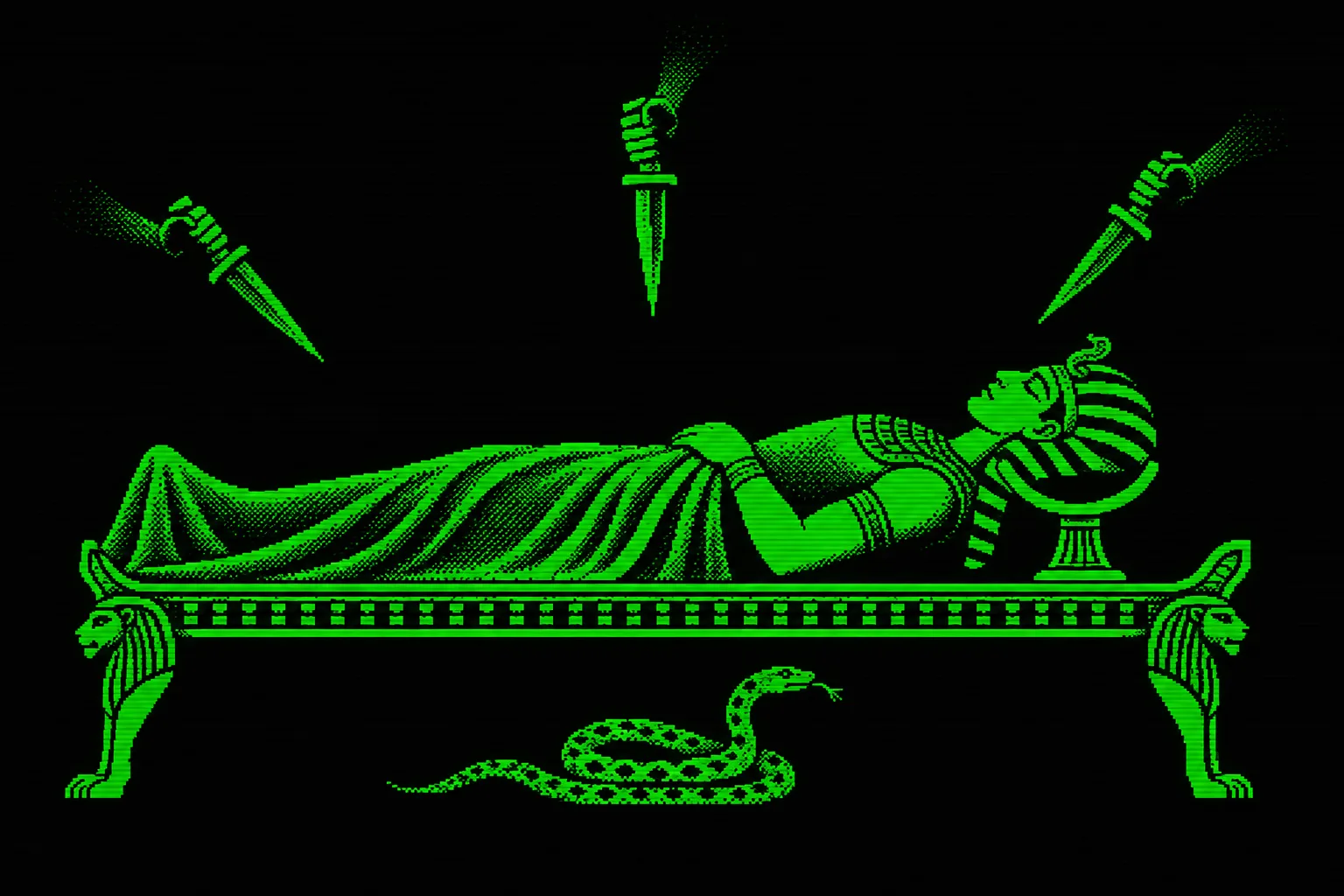
Then he tells the night of the attack. It was after supper. Night had fallen; he lay asleep like a desert snake while the weapons meant to guard him were handed round, and he woke to his own guards fighting. He drove the cowards back, but no man is a fighter alone. He counts up his reign: no hunger, Nubia subdued, a house adorned with gold. Then he steps into the barque of Ra and leaves the White Crown to his son.
- 1
𓄂𓂝𓅓 𓋴𓃀𓇼𓄿𓇋𓇋𓏏𓏛 𓁹𓏏𓈖 𓍛𓏤 𓈖 𓇓𓆤 𓇳𓋴𓊵𓏏𓊪𓄣𓏤 𓅭𓇳 𓇋𓏠𓈖𓅓𓄂𓏏𓏤 𓌷𓂝𓊤𓏲𓀁 𓆓𓂧 𓆑 𓅓 𓄋𓊪𓏏𓏴𓀁 𓌷𓂝𓏏𓆅𓏏𓏥 𓈖 𓅭𓏤𓅆 𓆑 𓎟𓂋𓇥𓂋𓅆
ḥꜣ,t-ꜥ-m sbꜣ,yt jri̯.t.n ḥm n.(j) nsw-bj,tj Sḥtp-jb-Rꜥ zꜣ-Rꜥ Jmn-m-ḥꜣ,t mꜣꜥ-ḫrw ḏd =f m wpi̯.t mꜣꜥ,t n zꜣ =f Nb-r-ḏr
Beginning of the instruction composed by His Majesty the King of Upper and Lower Egypt, Sehetepibre, Son of Ra, Amenemhat, true of voice. He speaks to his son, the Lord of All, laying bare the truth.
Note · Line 1
Sehetepibre was Amenemhat I’s throne name. “True of voice” marks him as one of the justified dead: a dead king is speaking to his son and successor, Senusret I. - 2
𓆓𓂧 𓆑 𓈍𓂝𓏛 𓅓 𓊹𓅆
ḏd =f ḫꜥi̯ m nṯr
Having appeared as a god, he says:
- 3
𓄔𓅓 𓈖 𓆓𓂧𓍘𓇋 𓀀 𓎢 𓇓𓏏𓈖𓇋𓇋𓏛 𓎡 𓇾𓏤𓈇 𓋾𓈎𓇋𓇋𓏛 𓎢 𓈅𓈅𓈅𓈇𓈇𓈇 𓁹 𓎢 𓇉𓄿𓏲𓏛𓏥 𓁷𓏤 𓄤𓏤𓏛
sḏm n ḏd.tj =j [n] =k nsw.y =k tꜣ ḥqꜣ.y =k jdb.pl jri̯ =k ḥꜣ,w ḥr nfr
Listen to what I shall tell you,
that you may reign over the land and rule the riverbanks
and make what is good better still. - 4
𓋴𓐠𓄿𓈎𓆌𓏛 𓏏𓏲 𓂋 𓋴𓅓𓂧𓏏𓏯𓀀𓁐𓏥 𓂋 𓆑 𓏏𓍃𓅓𓏏𓏛 𓆣𓏤 𓏏𓍃𓅓𓅓𓏏 𓂋𓂝 𓄣𓏤 𓅓𓐠𓏤 𓁷𓂋𓐡𓀜𓏫 𓋴
sꜣq tw r smd,t r =f tm.t ḫpr tmm.t rḏi̯ jb m-sꜣ ḥr =s
Be on your guard above all against those servants
who have come to nothing,
whose treachery no one has thought to watch for. - 5
𓅓 𓏏𓎢𓈖𓂻 𓇋𓅓 𓋴𓈖𓏥 𓅓 𓌡𓂝𓏲𓅪 𓎢𓏲𓀀
m tkn jm =sn m wꜥ,w =k{wj}
Do not go near them when you are alone.
- 6
𓅓 𓎔𓏛 𓄣𓏤 𓎢 𓅓 𓌢𓀀
m mḥ jb =k m sn
Put no trust in a brother.
- 7
𓅓 𓂋𓐍𓏛 𓐍𓈖𓌰𓅓𓋴𓀙𓏛𓀀
m rḫ ḫnms
Count no man a friend.
- 8
𓅓 𓋴𓆣𓂋𓏲 𓈖 𓎢 𓅧𓈎𓂻𓀀𓁐𓏥
m sḫpr.w n =k ꜥq
Make no one your confidant.
- 9
𓂜𓈖 𓆎𓅓𓏛 𓇋𓂋𓏭
nn km jr,j
Nothing comes of it.
- 10
𓋴𓇥𓂋𓁀 𓎢 𓀸𓄿𓏲𓀜 𓈖 𓎢 𓄣𓏤 𓎢 𓆓𓊃 𓎢 𓁷𓏤𓈖𓏏𓏏 𓂜𓈖 𓃹𓈖𓈖 𓈘𓈇𓀀𓁐𓏥 𓈖 𓊃𓀀𓏤 𓉔𓂋𓏲𓇳𓏤 𓈖 𓌟𓈖𓏏𓅪𓏥
sḏr =k zꜣw n =k jb =k ḏs =k ḥr-n,tt nn wn{n} 〈m〉 mr n z hrw n.(j) qsn,t
When you sleep, let your own heart keep watch for you,
for on the day of trouble a man has no followers. - 11
𓇋𓏲 𓂞𓈖 𓀀 𓈖 𓈙𓍯𓄿𓏲𓀜𓏛𓀀 𓋴𓆣𓂋𓈖 𓀀 𓈖𓌰𓅓𓎛𓀔𓀀 𓂞𓈖 𓀀 𓄖𓂻 𓂜𓏏𓏭𓅪𓆑𓈖𓆑𓀀 𓏇𓇋 𓈖𓏏𓏭𓃹𓈖𓏛𓀀
jw ḏi̯.n =j n šwꜣ,w sḫpr.n =j nmḥ ḏi̯.n =j pḥ jw,tj{≡f}-n≡f mj n,tj-wn
I gave to the poor man, I brought up the orphan;
I let the man who owned nothing go as far as the man of property. - 12
𓇋𓈖 𓏶𓅓𓀁 𓂓𓏤 𓀀 𓁹
jn wnm kꜣ =j jri̯ 〈ṯs,t〉
It was the man who ate my food who accused me.
- 13
𓂋𓂝𓈖 𓀀 𓈖 𓆑 𓂝𓂝𓏤𓏲𓏭 𓀀 𓁷𓏤 𓋴𓆣𓂋 𓁷𓂋𓐡𓀜𓏫 𓇋𓅓
rḏi̯.n =j n =f ꜥ.wj.du =j ḥr sḫpr ḥr jm
The man to whom I held out both my arms
used them to work treachery. - 14
𓃹𓈖𓐍𓅱𓍼𓋳𓏫 𓊪𓈎𓏏𓆀𓋳𓏥 𓀀 𓁷𓏤 𓌴𓁹𓄿𓈖 𓀀 𓏇𓇋 𓆅𓏲𓇋𓇋𓆰𓏥
wnḫ.w.pl p(ꜣ)q,t =j ḥr mꜣn =j mj šw,y
Those who wore my fine linen looked on me as so much hay.
- 15
𓅨𓂋𓎛𓏲𓏊𓀜𓀀𓏥 𓂝𓈖𓏏𓅂𓏊𓏥 𓁷𓏤 𓈗 𓌨𓂋𓏭𓏛
wrḥ.w.pl ꜥnt,jw =(j) ⸢ḥr⸣ sti̯ mw ẖr,j
Those anointed with my myrrh splashed urine.
- 16
𓋴𓇑𓇑𓈖𓈖𓏌𓏲𓀭𓏛𓏥 𓋹𓈖𓐍𓀀𓏥 𓊪𓊃𓈙𓏴𓏛𓏫 𓀀 𓅓 𓂋𓍿𓀀𓁐𓏥 𓁹𓏥 𓈖 𓀀 𓈎𓄿𓅓𓂧𓏏𓏯𓀀𓏥 𓀀 𓈖𓏏𓏭 𓂜 𓄔𓅓𓏏𓏲 𓆑
snn.pl =(j) ꜥnḫ.pl psš,(t) =j m r(m)ṯ.pl jri̯.pl n =j qꜣmd,t =j n,tj n sḏm.tw =f
My living likenesses, my share among mankind,
raise a lament for me such as no one has heard.Note · Line 16
The king turns from his son to address those among the living who will mourn him. - 17
𓃀𓏲𓉻𓂝𓄿𓏛 𓈖 𓂚𓄿𓀜 𓂜 𓌴𓁹𓄿𓈖𓏏𓏲 𓆑
bw-ꜥꜣ n.(j) ꜥḥꜣ n mꜣ.n.tw =f
No one has seen the full measure of the fight.
- 18
𓂚𓄿𓀜 𓏏𓏲 𓁷𓏤 𓂸𓏏𓃹𓈖𓃓𓏤 𓋴𓅓𓐍𓂜 𓋴𓆑𓇳
[jst]w ꜥḥꜣ =tw ⸢ḥr⸣ mtwn smḫ sf
Men fight on the field of battle
when yesterday is forgotten.Note · Line 18
“Yesterday” recalls what the king did for the very people who turned on him. - 19
𓂜𓈖 𓆎𓅓𓏛𓈖 𓃀𓅱𓄤𓆑𓂋 𓈖 𓐍𓅓𓂜𓀀 𓂋𓐍𓏛 𓆑𓀀
nn km.n bw-nfr n ḫm rḫ =f
Good comes to nothing for the man who disowns what he knows.
- 20
𓂋𓐠𓏤 𓄟𓋴𓇋𓇋𓏏𓈀𓏥 𓊪𓏲 𓆼𓄿𓏲𓏭𓇰 𓆣𓂋 𓊏𓊪𓂡𓈖 𓀀 𓃹𓈖𓏌𓏏𓇼𓇳𓏤 𓈖𓏏 𓄤𓆑𓂋𓄣𓏤
r-sꜣ ms,yt pw ḫꜣwj ḫpr šzp.n =j wnw,t n.t nfr-jb
It was after supper. Night had fallen;
I had enjoyed an hour of good cheer. - 21
𓋴𓇥𓂋𓁀𓎡𓏲𓀀 𓁷𓏤 𓎛𓆰𓈖𓎡𓇋𓇋𓏏𓂠𓋳𓏥𓉐 𓀀 𓃀𓅡𓄿𓎼𓀉𓅪𓈖 𓀀 𓄂𓏏𓏭𓄣 𓀀 𓌞𓋴𓂻 𓐪𓂧𓏌𓁻 𓀀
sḏr.kwj ḥr ḥnk,yt =j bꜣg.n =j [š]ꜣꜥ.n ḥꜣ,tj =j šms qd =j
I lay on my bed. I had grown weary,
and my heart had begun to follow me into sleep. - 22
𓇋𓋴𓏲𓀁 𓋴𓄲𓂋𓏲𓂻 𓈍𓂝𓏲𓆱𓏥 𓐩𓏌𓏲𓀁 𓂋𓏤 𓁷𓏤 𓀀 𓁹𓎢𓏲𓀀 𓏇𓇋 𓅭𓇾𓆙 𓈖 𓐖𓏏𓈉
jsw spẖr.w ḫꜥ,w nḏ rʾ ḥr =j jri̯.kwj mj zꜣ-tꜣ n.(j) zmy,t
Look, the weapons meant to guard me were being handed round,
while I lay like a desert snake.Note · Line 22
The Egyptian name for this snake means “son of the earth.” - 23
𓈖𓉔𓋴𓍞𓁻𓈖 𓀀 𓈖 𓂚𓄿𓀜 𓇋𓏲 𓀀 𓈖 𓎛𓂝𓄹𓏥 𓀀 𓅠𓅓𓈖 𓀀 𓎛𓀝𓀜𓈖𓏭𓂋𓁷𓏤𓀜 𓊪𓏲 𓈖 𓅓𓂝𓈖𓆑𓀜𓀀𓏥
nhsi̯.n =j n ꜥḥꜣ jw =j n ḥꜥ.pl =j gmi̯.n =j ḥ(w)-nj-r-ḥr pw n m(w)nf.pl
I woke to the fighting. I was back in my body,
and found my own guards fighting hand to hand. - 24
𓇋𓂋 𓊏𓊪𓂡 𓀀 𓄿𓋴𓏏 𓈍𓂝𓏲𓆱𓏥 𓅓 𓂧𓂋𓏤 𓀀 𓇋𓏲 𓂞𓈖 𓀀 𓆱𓐍𓏏𓂽 𓈞𓅓𓂺𓀀𓏥 𓅓𓂝
jr šzp =j ꜣs{t} ḫꜥ,w m ḏr,t =j jw ḏi̯.n =j ḫti̯ ḥm.pl m-ꜥ bꜣbꜣ
I was quick to take the weapons in my hand;
I drove the cowards back with a counterstroke. - 25
𓂜𓈖 𓇓G43_𓏏 𓈎𓈖𓀜𓀀 W11_𓂋𓎛𓇰
nn swt qn grḥ
Yet no man is brave at night;
- 26
𓂜𓈖 𓂚𓄿𓀜 𓌡𓂝𓏏𓏤
nn ꜥḥꜣ wꜥ.t(j)
no man is a fighter alone;
- 27
𓂜𓈖 𓊃𓊪𓊗𓅓𓂝𓂋𓂧𓇟𓏛 𓅓𓐍𓂸𓊃𓏫𓂜 𓅓𓂝𓎢𓏲𓀀
nn ḫpr sp-mꜥrd m-ḫmt mk,w
without a protector, success does not come.
- 28
𓅓𓂝 𓎢 𓋴𓏏𓍔𓄿𓏲𓍬𓂻𓐎𓏥 𓆣𓂋 𓇋𓏲 𓀀 𓅓𓐍𓂸𓏏𓏫𓂜 𓎢 𓂜 𓄔𓅓𓏏 𓍲𓈖𓇋𓇋𓏏𓀙𓀀𓏥 𓋴𓇅𓏛 𓀀 𓈖 𓎢 𓂜 𓈞𓊃𓏏𓀕 𓀀 𓎛𓈖𓂝 𓎢
m =k stꜣ,w ḫpr jw =j m-ḫmt =k n sḏm.t šny,t sw{ꜣ}ḏ =j n =k n ḥmsi̯.t =j ḥnꜥ =k
See, the attack came when I was without you,
before the court had heard I would leave the throne to you,
before I had sat down with you. - 29
𓇋𓐍𓏛 𓁹𓇋𓇋 𓀀 𓋴𓐍𓂋𓏲𓏛𓏥 𓎢 𓁷𓏤𓈖𓏏𓏏 𓂜 𓁷𓂋𓐡𓀜 𓀀 𓋴𓏏 𓂜 𓐍𓂸𓏏𓏫𓂜 𓀀 𓋴𓏏 𓂜 𓏎𓈖 𓄣𓏤 𓀀 𓏲𓋴𓆑𓄿𓏏𓅯𓅪𓏥 𓈖𓏏 𓅡𓎢𓅱𓀀𓏥
jḫ jri̯.y =j sḫr.w.pl =k ḥr-n,tt n ḥr =j st n ḫmt =j st n jni̯ jb =j wsfꜣ,t n.t bꜣk.w.pl
Let me, then, set your course for you.
For I was not ready for it, I had not reckoned with it,
and my heart had not shown me how careless my servants were. - 30
𓇋𓈖 𓇋𓏲 𓅮𓈖 𓈞𓏏𓁐𓏫 𓋭𓊃𓏛𓀜 𓋴𓎝𓎢𓏲S156𓀜𓀀𓏥
jn jw pꜣu̯.n ḥm,t.pl ṯsi̯ sk,w
Have women ever before raised troops?
- 31
𓇋𓈖 𓇋𓏲 𓄞𓂧𓀜𓏏𓏲 𓂙𓈖𓈖𓏌𓏲𓃫𓀜A1_𓏥 𓅓𓄚𓈖𓏌𓏲𓉐 𓉐𓏤
jn jw šdi̯.tw ẖnn.pl m-ẖnw pr
Are troublemakers taken into the inner rooms of the house?
Note · Line 31
King Amenemhat speaks to his son after his own assassination. The attack came in the king’s private quarters. - 32
𓇋𓈖 𓇋𓏲 𓍏𓃀𓅡𓄿𓌸𓂡𓏏𓏲 𓈗 𓎙𓂧𓂧𓌸𓂡 𓎤𓃀𓃀𓈇𓏥 𓋴𓏲𓆼𓄿𓅪𓏏𓏲 𓈖𓆓𓊃𓏲𓅪𓏥 𓁷𓏤 𓁹𓇋𓇋𓏏𓏥 𓋴𓈖𓏥
jn jw wbꜣ.tw mw ꜥd{d} gbb swḫꜣ.tw nḏs.w.pl ḥr jr.yt =sn
Is water that scours the fields let through,
so that the common folk are robbed of their labor?Note · Line 32
The image is of a breach in a dike: the flood cuts into the soil and costs the farmers their harvest. - 33
𓂜 𓂻𓏲 𓇍𓇋𓇋𓏏𓂻𓅪𓏥 𓇉𓄿𓁶 𓀀 𓇥𓂋 𓄟𓋴𓏏𓁒 𓀀
n jwi̯ jy,t ḥꜣ =j ḏr ms.(w)t =j
No harm had come upon me since the day I was born.
- 34
𓂜 𓆣𓂋 𓏇𓏏𓏏𓏛 𓊃𓊪𓊗 𓀀 𓅓 𓁹 𓈎𓈖𓈖𓀜𓀀
n ḫpr mj,tt sp =j m jri̯ qnn
No deed of valor ever matched my own.
- 35
𓇋𓏲 𓉔𓄿𓃀𓍁𓂻𓈖 𓀀 𓂋 𓍋𓃀𓏲𓐎𓈉 𓎛𓎿𓋴𓏭𓂻𓈖 𓀀 𓂋
jw hꜣb.n =j r ꜣbw ḥsj.n =j r jdḥ,w
I traveled as far as Elephantine;
I made my way to the marshes of the Delta.Note · Line 35
Elephantine lay at Egypt’s southern frontier; the Delta marshes were in the far north. - 36
𓊢𓂝𓂻𓎢𓏲𓀀 𓁷𓏤 𓇥𓂋𓏲𓈐𓏥 𓇾𓏤𓈇 𓌴𓁹𓄿𓈖 𓀀 𓈎𓄿𓃀𓄲𓈇𓏤 𓆑
ꜥḥꜥ.kwj ḥr ḏr,w tꜣ mꜣ.n =j qꜣb =f
I stood at the borders of the land,
having seen its heart. - 37
𓏎𓈖𓈖 𓀀 𓇥𓂋𓏲𓈐𓏥 𓐍𓊪𓏲𓈙𓏏𓄗𓈒𓏥 𓅓 𓀀 𓅓 𓆣𓂋𓏲𓀾𓏛𓏥 𓀀
jni̯.n =j ḏr,w ḫpwš,t ⸮m? [ḫ]p[š] =j m ḫpr,w =j
I reached the far bounds of Khepeshut
by the strength of my arm and by my stature. - 38
𓏌𓎢𓀀 𓁹 𓌾𓏥 𓌻𓂋𓀁 𓈖𓊪𓂋𓇋𓏬𓅆 𓏏𓂋𓇋𓆵𓀜𓏛𓈖 𓏲𓀀 V28_𓂝𓊪𓏭𓈙𓈗𓅆 𓁷𓏤 𓎟
jnk jri̯ jt mri̯ Npr,j trj.n wj Ḥꜥpj ḥr p[gꜣ] nb
I am the one who made the barley grow, beloved of Nepri;
Hapi paid me honor in every basin.Note · Line 38
Nepri is the god of grain; Hapi is the annual Nile flood personified. The basins held floodwater for the crops. - 39
𓂜 𓎛𓈎𓂋𓅪 𓏏𓏲 𓅓 𓆳𓏏𓏥 𓀀
n ḥqr =tw m rnp,t.pl =j
No one went hungry in my years;
- 40
𓂜 𓇋𓃀𓃚𓈗𓀁 𓏏𓏲 𓇋𓅓
n jbi̯ =tw jm
no one went thirsty then.
- 41
𓇋𓏲 𓈞𓊃𓀉 𓏏𓏲 𓅓 𓁹𓏏𓈖
jw ḥmsi̯ =tw m jri̯.t.n =[j] [ḥr] [sḏd.t] [jm] =[j]
Thanks to what I did, people sit and tell of me.
- 42
[jw] [wḏ.t.n] =[j] [nb.t] [r] [s,t] [jr,j]
Everything I decreed is in its proper place.
- 43
𓌳𓄿𓇋𓏲𓃬𓏫 𓏎𓈖 𓀀 𓅓𓋴𓎛𓏲𓆊
[jw] [qnb.n] =[j] mꜣj.w.pl jni̯.n =j msḥ.w.[pl]
I tamed lions; I brought in crocodiles.
- 44
𓂞𓈖 𓀀 𓁹𓇋𓇋 𓀀
[jw] [dꜣr.n] =[j] [Wꜣwꜣ,yw] [jni̯.n] =[j] [Mḏꜣ,y]w ḏi̯.n =j jri̯.y ={j} St,tj[w] [šmi̯.t] [ṯsm.pl]
I subdued the people of Wawat; I brought in the Medjay;
I made the people of Asia walk at heel like hounds.Note · Line 44
Wawat was in Lower Nubia, south of Egypt. The Medjay were a people of the eastern desert. - 45
𓅓 𓋞
[jw] [jri̯.n] =[j] [n] =[j] [pr] [sẖkr] m nbw
I built myself a house adorned with gold:
- 46
𓉔𓄿𓅱𓏏𓇲𓏫 𓆑 𓅓
hꜣ,wt.pl =f m ḫs[bḏ]
its ceilings of lapis lazuli,
- 47
[sꜣ,wt.pl] [m] [ḥḏ]
its walls of silver,
- 48
[sꜣṯw.pl] [m] [⸮mnh,y?]
its floors of menhy stone,
- 49
𓉻𓉿𓆱𓏥 𓅓 𓈔𓏤𓈒𓏥
ꜥꜣ.pl m ḥmtj
its doors of copper,
- 50
𓈎𓄿𓂋𓇋𓇋𓏏𓆱𓏥
qꜣr,yt.pl [m] [ḥzmn]
its bolts of bronze—
- 51
[jri̯] [n] [ḏ,t] [ḥr] [r] [nḥḥ]
made for eternity, made ready for time without end.
Note · Line 51
The first word for eternity suggests what endures unchanged, the second what is forever renewed. - 52
𓎟 𓇋𓂋𓏭 𓂋𓇥𓂋𓅆
[jw] =[j] [rḫ.kwj] [ḏr-n,tt] [jnk] nb jr,j ⸢r⸣-ḏr
I know, for I am lord of it all.
- 53
𓇋𓏲 𓄟𓋴 …
jw ms msw_ [...] 〈ms.w.pl〉 [...] 〈msḏ,t〉 [ꜥšꜣ.t] [m] [mr,t]
Yet there are accusations … children … much that is hateful in the street.
- 54
[rḫ] [ḥr] [tjw]
The wise man says, “Yes.”
- 55
𓁷𓏤𓈖𓏏𓏏 𓂜 𓂋𓐍𓏛 𓆑 𓋴𓏏 𓆄𓏲𓅪 𓅓 𓁷
[wḫꜣ] [ḥr] [m-bjꜣ] ḥr-n,tt n rḫ =f st šwi̯ m ḥr =[k]
The fool says, “Not so,”
for he does not know it, deprived of the sight of your face. - 56
𓄣𓏤 𓀀 𓆓𓊃 𓀀 𓁹𓁹 𓀀 𓁷𓏤
[Z-n-Wsr,t] [zꜣ] =[j] [rd.du] =[j] [ḥr] [šmi̯.t] [m] [tkn] jb =j ḏs =j jr,t.du =j ḥr gmḥ =[k]
Senusret, my son, my two feet carry me away
as my own heart draws near,
and my two eyes look on you. - 57
𓈖 𓎢 𓇋𓄿𓏲𓀜𓏛𓏥
[ms.w.pl] [m] [wnw,t] [n.t] [nfr-jb] [r-gs] [ḥnmm,t] [ḏi̯] =[s]n n =k jꜣ,w
In an hour of gladness the children are beside the people of the sun,
giving you praise. - 58
𓅓𓂝 𓎢 𓁹𓈖 𓀀
m =k jri̯.n =j [ḥꜣ,t] [ṯ(ꜣ)s] =[j] [n] =[k] [pḥ.wj]
See, I have shaped the beginning
that I may bind the end for you. - 59
[jnk] [mnj] =[j] [n] =[k] [n,tj] [m] [jb] =[j]
I myself will bring ashore for you what is in my heart.
- 60
𓎝𓎛𓏛 𓌉𓏏𓋑 𓊹𓉐𓂋𓏏𓍁𓈒𓏥
[ṯwt] wꜣḥ ḥḏ,t 〈n.(j)〉 pr,t-nṯr
It is you who wear the White Crown of the god’s seed.
Note · Line 60
The White Crown is the crown of Upper Egypt. The god’s seed is the king as a god’s offspring. - 61
[⸮ꜣḫ,t?] [pw] [m] [s,t] [jr,j] [⸮m?] [šꜣꜥ.n] =[j] [n] =[k]
Things are in their proper place: this is what I began for you.
Note · Line 61
King Amenemhat I speaks to his son and successor, Senusret I. - 62
𓂋𓂝𓇳𓏤 𓊢𓂝𓈖 𓇓𓏏𓈖𓇋𓇋𓏏𓏛
[hꜣi̯.n] =[j] [m] [wjꜣ] [n.(j)] Rꜥ ꜥḥꜥ.n nsw,yt ḫpr.[tj] [ẖr-ḥꜣ,t] [m] [jri̯.t.n] =[j] [m-qꜣb] [jr,j]
I stepped down into the barque of Ra;
then kingship came into being as at the beginning,
through what I had done within it.Note · Line 62
To board the sun god’s boat is to join him after death on his daily voyage across the sky and his nightly passage through the underworld. - 63
[sꜥḥꜥ] [mnw]
Raise monuments!
- 64
𓋴𓏠𓈖𓐍𓍊𓏛 𓂋𓂧𓏲𓌗𓉐 𓎢
smnḫ rwḏ =k
Make your burial chamber splendid!
- 65
ꜥḥꜣ [tw] [ḥr] [rḫ] [rḫ] [jb] [ḥr-n,tt] [mri̯.n] =[k] [sw] [r-gs] [ḥm] =[k] [ꜥnḫ-(w)ḏꜣ-s(nb)]
Strive for the wisdom of one wise of heart,
for you have wished for him at Your Majesty’s side—may you live, prosper, and be well!