~/sacred-texts/old-kingdom-tomb-inscriptions-of-deir-el-gebrawi
Egyptian Tomb Curse of Ibi: Wringing Intruders’ Necks
- Date
- Carved in the Sixth Dynasty (c. 2290–2180 BC) on the east wall of the rock-cut tomb of Ibi at Deir el-Gebrawi
- Found
- Tomb of Ibi, Deir el-Gebrawi, Middle Egypt; still in place in the tomb
- Language
- Old Egyptian · Hieroglyphic
- 1
ḥtp-ḏi̯ nswt 〈〈ḥtp-ḏi̯〉〉 Wsjr nb-Ḏd,w [ḥtp-ḏi̯] Jnp,w jm,j-wt [...] nb-tꜣ-ḏsr
An offering that the king gives, and Osiris, lord of Busiris, and Anubis, who is in the place of embalming, … lord of the Sacred Land, give:
Note · Line 1
This is the standard offering formula that opens Egyptian tomb inscriptions. - 2
pr(,t)-ḫrw n,j.t ḥꜣ,tj-ꜥ Jbj [...] ḏi̯ [...]
an invocation offering for the Count Ibi … give …
Note · Line 2
An “invocation offering” (literally “a going forth at the voice”) is food and drink called into being for the dead by speaking the formula aloud. “Count” is a high court rank. - 3
ḫtm,tj-bj,tj ḥqꜣ-ḥw,t smr-wꜥ,tj ḥr,j-tp-ꜥꜣ(-n)-⸢Tꜣ-wr⸣ Jbj ḏd =f
The seal-bearer of the King of Lower Egypt, estate manager, sole companion, great overlord of the Thinite nome, Ibi, says:
Note · Line 3
These are Ibi’s titles. “Sole companion” is an honorary court rank. A nome was one of Egypt’s provinces, and its “great overlord” was the provincial governor. - 4
jnk jd,w ṯꜣz mḏḥ [ḫr] ḥm ⸢n,j⸣ nswt[-bj,tj] [...]
I was a youth who knotted on the belt under the Majesty of the Dual King …
Note · Line 4
Tying on the belt marked a boy’s coming of age. - 5
⸢ḏi̯.[n]⸣ ⸢wj⸣ ⸢ḥm⸣ n nb =(j) ⸢nswt⸣-bj,tj Mr,n-Rꜥw ꜥnḫ(.w) ḏ,t m ⸢ḥꜣ,tj-ꜥ⸣ smr-⸢wꜥ⸣,tj ḥr,j-tp-ꜥꜣ-(n-)ꜣtf,t
The Majesty of my lord, the Dual King Merenre, may he live forever, made me count, sole companion, and great overlord of the nome of Atfet.
Note · Line 5
Merenre was a king of the Sixth Dynasty, in the late third millennium BC. Atfet was the province in Middle Egypt where Ibi’s tomb was cut, at the site now called Deir el-Gebrawi. - 6
ḏi̯.n wj ḥm n ⸢nb⸣ =(j) nswt-bj,tj [⸮_?] ⸢ꜥnḫ(.w)⸣ [ḏ,t] m jr,j-pꜥ,t jm,j-rʾ-Šmꜥ,w-mꜣꜥ
The Majesty of my lord, the Dual King …, may he live forever, made me hereditary noble and true overseer of Upper Egypt.
Note · Line 6
The king’s name is lost here. - 7
Jbj ḏd =[f]
Ibi says:
- 8
jr rmṯ.pl nb(.w) ꜥq.t(j) =sn r jz pn ⸢n⸣ wꜥb =s⸢n⸣ [...]
As for any people who shall enter this tomb while they are unclean …
Note · Line 8
Visitors to a tomb were expected to be ritually pure. Pollution, for example from eating forbidden food or from sex, could harm the dead. - 9
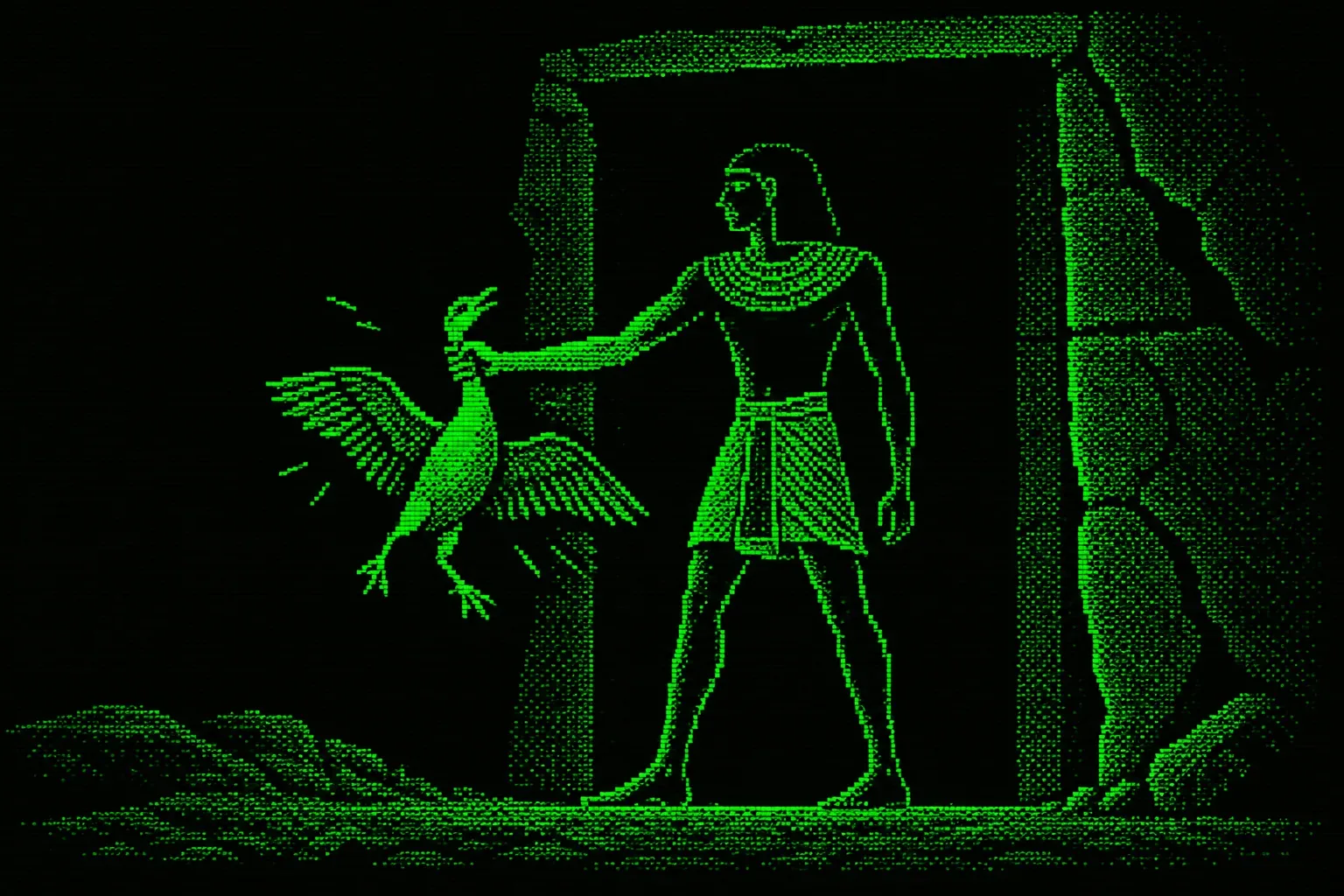
[jw] =[(j)] r jṯi̯.t ṯ(ꜣ)z =sn mj ꜣpd
I will seize them by the neck, as one seizes a bird.
Note · Line 9
The dead man threatens to wring intruders’ necks the way one kills a goose or duck. - 10
jnk ꜣḫ jqr
I am an excellent akh.
Note · Line 10
An akh is a dead person transfigured into an effective, powerful spirit, able to act in the world of the living. This power is what backs the threat just made. - 11
jw =(j) rḫ.n =(j) ḥkꜣ nb štꜣ n ẖnw [...] m ẖr-nṯr
I have learned every secret magic of the Residence … in the realm of the dead.
Note · Line 11
The “Residence” is the royal court. Ibi claims to command the court’s secret magic, so he can make his threats good from the grave. - 12
jnk mr,⸢y⸣ ⸢n⸣ jtj =f [ḥz,y] n mw,t =f jmꜣḫ,w-ḫr-nswt jmꜣḫ,w-ḫr-nṯr≡f-nʾ,tj n,j-mrw,t Jbj
I am one beloved of his father, praised by his mother, honored before the king, honored before his town god, the well-loved Ibi.
Note · Line 12
“Honored before” renders a term for a person cared for and provided for, in life and in death, by a patron: here the king and the god of his home town.