~/sacred-texts/middle-kingdom-religious-hymns
Hymns to Wepwawet: Lord of Slaughter, the Gods Tremble Before You
- Date
- Carved in the 13th Dynasty (about 1759–1630 BC) on two funerary stelae: that of Wenemi, god's sealer of Abydos, and that of the royal seal-bearer Amenemhat
- Found
- Stela of Wenemi: from Abydos, now in the Museum August Kestner, Hannover (1976.80a). Stela of Amenemhat: from Thebes, now in the British Museum, London (EA 893).
- Language
- Middle Egyptian · Hieroglyphic
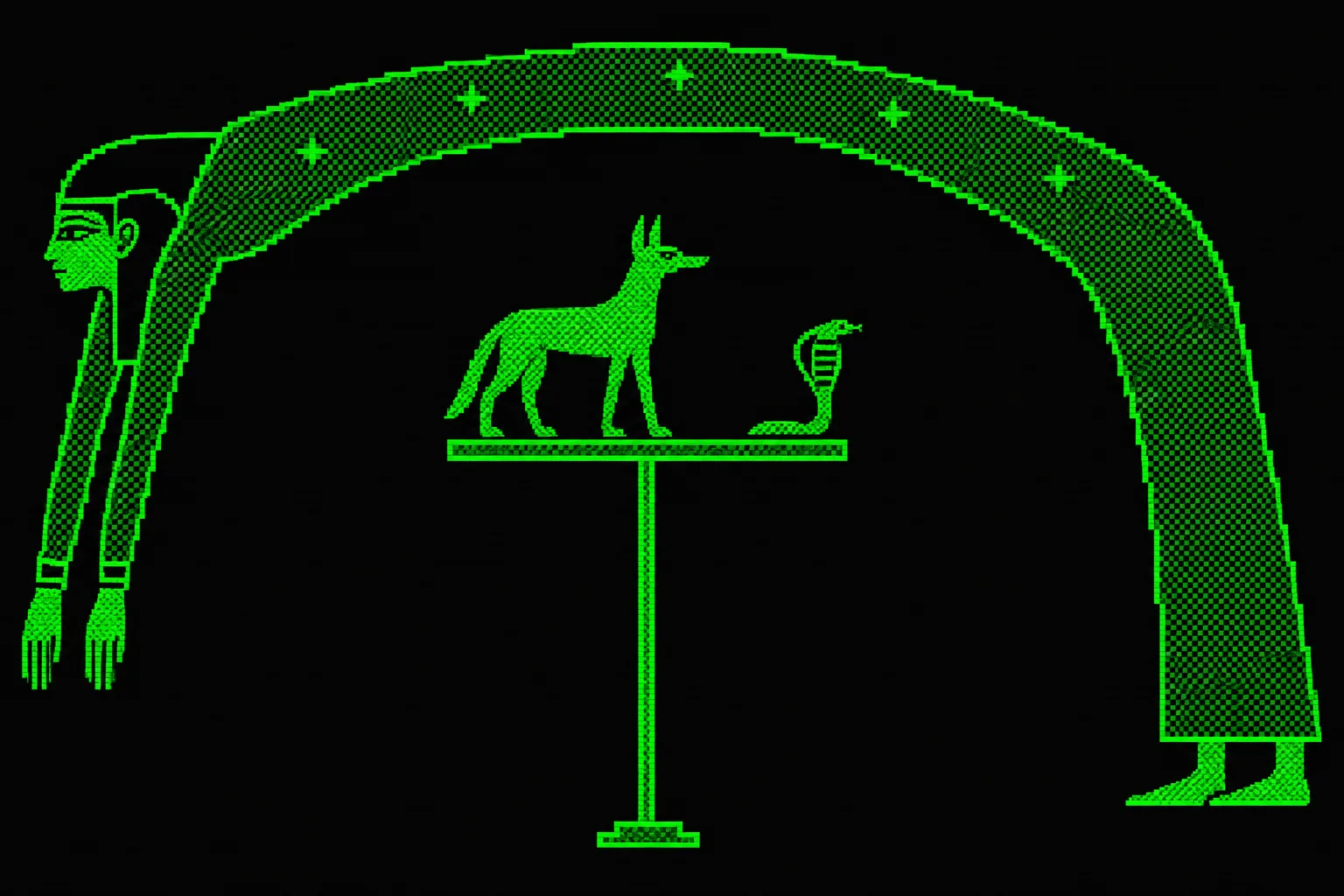
Wenemi, god’s sealer of Abydos, greets the jackal god at the moment of his birth from the sky goddess Nut: Your face slips forth over her two thighs. Gods and rulers shake at him: The lords who lead the land tremble before you. He is Lord of slaughter, neck held high, and Wenemi asks one thing of him: may you commend me to the just.
On the second stela the royal seal-bearer Amenemhat hails Wepwawet as Ra and as the ram god Heryshef, holder of the steering oar and the white crown. He enters the god’s presence as Horus and comes out unafraid: I have laid my fear on the ground.
Stela of Wenemi: Jackal of Upper Egypt, Lord of Slaughter
- 1
𓇓𓏏𓊵𓏙 𓊨𓁹 𓊹𓉻 𓎟𓍋𓃀𓈋
ḥtp-ḏi̯-nswt Wsjr nṯr-ꜥꜣ nb-ꜣbḏw
An offering the king gives to Osiris, the great god, lord of Abydos.
Note · Line 1
The king is named as giver; Osiris is asked to pass the offering on to the dead. - 2
𓂞 𓆑 𓏐 𓏊 𓃿 𓅿𓏪 𓐍𓏏𓏛𓏥 𓎟𓏏 𓄤𓆑𓂋𓏏 𓃂𓈗𓏏 𓋹𓈖𓐍𓏏 𓊹 𓇋𓅓 𓈖 𓂓 𓈖 𓊹𓋨𓈖𓍋𓃀𓈋 𓈎𓈎𓇋𓀀 𓁹𓈖 𓃂𓈗 𓈖 𓍋𓈋𓃀 𓇋𓂧𓄔𓇋𓀀 𓁹𓈖 𓃂𓈗𓈖𓍋𓈋𓃀 𓈖𓆱𓏏𓇋𓀀 𓄟𓊃𓈖 𓎟𓉐𓏏𓏤 𓌢𓈖𓀀𓈓𓋹𓈖𓐍𓁐 𓎟𓄪𓐍
di̯ =f pr,t-ḫrw tʾ ḥnq,t kꜣ.pl ꜣpd.pl ḫ,t.pl nb.t nfr.t wꜥb(.t) ꜥnḫ.t nṯr jm n kꜣ n ḫtm,w-nṯr-n-ꜣbḏ,w Wnm,j jri̯.n wꜥb n ꜣbḏ,w Jd,j jri̯.n wꜥb-n-ꜣbḏw Nḫt,j msi̯.n nb,t-pr sn,pl-ꜥnḫ nb(,t)-jmꜣḫ
May he give an invocation offering of bread and beer, oxen and fowl, and every good and pure thing on which a god lives, for the ka of Wenemi, the god’s sealer of Abydos, begotten by Idi, wab-priest of Abydos, begotten by Nakhti, wab-priest of Abydos, born of Senuankh, mistress of the house, lady of honor.
Note · Line 2
Speaking the offering aloud helped feed the ka, the life force that survived death. A wab-priest was a priest ritually purified for temple service. - 3
𓊹𓋩𓈖𓍋𓃀𓈋𓊖 𓈎𓈎𓇋 𓐙𓊤 𓆓𓂧 𓆑
ḫtm(,w)-nṯr-n-ꜣbḏ,w Wnm,j mꜣꜥ-ḫrw ḏd =f
Wenemi, the god’s sealer of Abydos, justified, says:
Note · Line 3
“Justified” is the verdict of the divine court: the dead man has been found in the right. - 4
𓇋𓐩 𓁷𓏤 𓎢 𓄋𓈐𓏏𓏥𓃢 𓄋𓊪𓏴 𓊪𓏏𓇯 𓂋 𓇿𓈇𓏤
j:nḏ ḥr =k Wpi̯-wꜣ,t.pl wpi̯ p,t r tꜣ
Hail to you, Wepwawet, who part the sky from the earth,
Note · Line 4
Wepwawet means “Opener of Ways.” The sound of “Opener” returns in the verb for parting sky from earth. - 5
𓋴𓃀𓃥𓇗𓂝 𓉐𓂋𓂻 𓅓 𓏌𓏏𓇯
s(ꜣ)b-šmꜥ pri̯ m Nw,t
Jackal of Upper Egypt, who came forth from Nut!
Note · Line 5
Nut is the sky goddess. The hymn pictures the jackal god being born of her. - 6
𓋴𓃀𓈖 𓁷𓏤 𓎢 𓁷𓏤 𓏠𓈖𓄖𓄖 𓋴 𓅓 𓂋𓈖 𓎢 𓊪𓅱 𓈖 𓋴𓃀𓃥𓇗𓂝
sbn ḥr =k ḥr ⸮mn.t.du? =s m rn =k pw n s(ꜣ)b-šmꜥ(,w)
Your face slips forth over her two thighs,
in this name of yours: Jackal of Upper Egypt. - 7
𓋴𓂧 𓈖 𓎢 𓊹𓊹𓊹 𓅓 𓂙𓈖𓏌𓅱𓃩 𓅓 𓂋𓈖 𓎢 𓊪𓅱 𓈖 𓄋𓈐𓏏𓏥
sd(ꜣ) n =k nṯr.pl m ẖnnw m rn =k pw n Wpi̯-wꜣ,t.pl
The gods tremble before you in the tumult,
in this name of yours: Wepwawet. - 8
𓋴𓂧 𓈖 𓎢 𓊹𓊹𓊹 𓅓 𓈖𓈙𓈖𓃩 𓅓 𓊪𓅱 𓈖 𓇋𓋴𓂧 𓄣
sd(ꜣ) n =k nṯr.pl m nšn m 〈rn〉 =〈k〉 pw n jsd jb
The gods tremble before you in the fury,
in this name of yours: Breaker of Hearts. - 9
𓋴𓂧 𓈖 𓎢 𓎟𓎟𓎟 𓏃𓈖𓏏 𓇿𓈇𓏤
sd(ꜣ) n =k nb.pl ḫnt(,j.pl) tꜣ
The lords who lead the land tremble before you.
- 10
𓋴𓂧 𓈖 𓎢 𓊹𓊹𓊹 𓅓 𓉗𓏏𓉐𓀙 𓅨𓂋𓏏 𓏶𓅓𓏏 𓉺𓏌𓊖
sd(ꜣ) n =k nṯr.pl m ḥw,t-sr wr.t jm,j.t Jwn,w
The gods tremble before you in the Great Mansion of the Prince in Heliopolis.
Note · Line 10
The mansion is where the gods sit in judgment. - 11
𓎟 𓄬𓏏𓏝 𓈎𓅱 𓄊𓏏𓏤
nb šꜥ,t qꜣ wsr,t
Lord of slaughter, neck held high,
Note · Line 11
The sign for the animal’s raised neck also writes “strong” two lines below. - 12
𓏶𓅓𓄂𓏏𓏤 𓂋 𓊹𓏤 𓎟
jm,j-ḥꜣ,t r nṯr nb
you who go before every other god:
- 13
𓇋𓅱 𓎢 𓄊𓋴𓏏𓂝𓍘𓇋 𓅓 𓊪𓏏𓇯 𓌂𓏤𓂝𓍘𓇋 𓅓 𓇿𓈇𓏤 𓂜𓃹𓈖𓏏 𓐍𓊃𓆑 𓅓 𓊹𓊹𓊹 𓏏𓅱𓏏𓀾𓅱
jw =k wsr.tj m p,t sḫm.tj m tꜣ n-wn,t ḫsf m nṯr.pl twti̯.w
you are strong in the sky, mighty on earth;
not one of the assembled gods stands against you. - 14
𓅨𓂋 𓌢𓌢𓈖
wr ḥr ⸮sn.du?
Great One upon the two …,
- 15
𓆑𓄿𓄿𓈒𓈒 𓅱𓄿𓇅𓏏𓏭 𓎟𓏏𓏭
⸮fꜣꜣ? ⸮wꜣḏ.tj? ⸮nb.tj?
you who bear the twin cobras of the Two Ladies,
Note · Line 15
The Two Ladies are Nekhbet and Wadjet, the protector goddesses of Upper and Lower Egypt. - 16
𓊵𓏏𓊪 𓏶𓅱𓏏𓏭 𓊵𓏏𓊪
ḥtp ⸮Jm,j-wtj? ḥtp
rest, Imiut, rest!
Note · Line 16
Imiut is a name of Anubis, the jackal god of embalming. - 17
𓏃𓈖𓏏 𓂋 𓊹𓊹𓊹 𓎟𓅱𓏥
ḫnt(,j) r nṯr.pl nb.w.pl
You who stand foremost of all the gods,
- 18
𓎗𓅱𓏛 𓎢 𓅱𓀀 𓈖 𓌳𓐙𓂝𓏏𓁦𓏏𓅱
wḏ =k wj n ⸮mꜣꜥ,t(j)w?
may you commend me to the just.
- 19
𓊪𓏏𓂋𓁻 𓎢 𓅱𓀀 𓅓 𓌳𓐙𓂝𓏏𓁦𓏏𓅱 𓌻𓂋 𓎟
ptr =k wj m ⸮mꜣꜥ,t(j)w? mri̯ =⸮k?
May you see me among the just whom you love.
- 20
𓂋𓂞𓏏 𓀢 𓈖 𓄋𓈐𓈐𓈐𓃢 𓎟𓇾𓂦𓈉 𓌴𓁹 𓄤𓄤𓄤 𓆑
rdi̯.t jꜣ,w n Wpi̯-wꜣ,t,pl nb-tꜣ-ḏsr mꜣ(ꜣ) nfr.pl =f
Giving praise to Wepwawet, lord of the sacred land, and beholding his beauty.
Note · Line 20
The sacred land is the burial ground. - 21
𓃂𓈗𓈖𓍋𓈋𓃀 𓇋𓂧𓄔𓇋𓀀 𓌴𓊤
wꜥb-n-ꜣbḏ,w Jd,j mꜣ〈ꜥ〉-ḫrw
Idi, wab-priest of Abydos, justified.
- 22
𓅭 𓆑 𓇋𓃀𓃙𓇋𓀀 𓌴𓊤
zꜣ =f [wꜥb]-n-ꜣbḏ,w Jb,j mꜣ〈ꜥ〉-ḫrw
His son Ibi, wab-priest of Abydos, justified.
- 23
… 𓈎𓈎𓇋 𓐙𓊤 𓎟𓄪𓏤
[...] [ḫtm,w-nṯr]-n-ꜣbḏ,w Wnm,j mꜣꜥ-ḫrw nb-jmꜣḫ
… Wenemi, the god’s sealer of Abydos, justified, lord of honor.
Stela of Amenemhat: Wepwawet, Lord of the Steering Oar
- 24
𓆓𓌃 𓇋𓈖 𓋔𓏏𓋩 𓄓𓐛𓉐 𓇋𓏠𓈖𓅓𓄂𓏏𓏤
ḏ(d)-mdw jn ḫtm(,w)-bj,tj jm,j-rʾ-gs-pr Jmn-m-ḥꜣ,t
Words spoken by Amenemhat, seal-bearer of the king of Lower Egypt and overseer of the temple administration:
- 25
𓇋𓐩𓆓𓏛 𓁷𓏤 𓎢 𓄋𓈐𓏏𓏪𓀭 𓏄𓈖𓏏 𓅢𓉺𓏌𓊖 𓏎 𓁹 𓄤𓆑𓂋𓏏
j:nḏ ḥr =k Wpi̯-wꜣ,t.pl ḫnt(,j) bꜣ,pl-Jwn,w jni̯ jri̯ nfr,t
Hail to you, Wepwawet, foremost among the bas of Heliopolis,
you who bring good and do good!Note · Line 25
Wepwawet’s name means “Opener of Ways.” The bas of Heliopolis are the divine powers of that city. - 26
𓏎 𓁹𓏏𓈖 𓎢 𓈖 𓀀 𓄤𓆑𓂋𓏏
jni̯ jri̯.t.n =k n =j nfr.t
Bring the good you have done for me!
- 27
𓇋𓐩𓆓𓏛 𓁷𓏤 𓎢 𓇳𓏤𓀭 𓎟 𓇷𓀭𓏪 𓄋𓈐𓏏𓏥𓀭 𓄤𓆑𓂋 𓁷𓂋𓈙𓆑𓀭 𓏄 𓍋𓈋𓃀
j:nḏ ḥr =k Rꜥ nb Psḏ,t Wpi̯-wꜣ,t.pl nfr Ḥr(,j)-š≡f ḫnt(,j) ꜣbḏ,w
Hail to you, Ra, lord of the Ennead,
Wepwawet the Beautiful,
Heryshef, foremost in Abydos!Note · Line 27
The Ennead is the company of nine gods of Heliopolis. Here the hymn addresses the sun god Ra, Wepwawet, and the ram god Heryshef as one. - 28
𓋹 𓈖 𓎢 𓐑𓏏 𓎢 𓈖 𓎢 𓅨𓂋𓂋𓏏𓋒 𓎢 𓈖 𓎢
ꜥnḫ n =k ḥp,t =k n =k wrr,t =k n =k
Life is yours,
your steering oar is yours,
your Wereret crown is yours.Note · Line 28
The Wereret, “the Great One,” is the white crown of Upper Egypt. - 29
𓂋𓂞 𓐑𓏏 𓈖 𓎟 𓐑𓏏𓏥 𓃢 𓁷𓂋𓈙𓆑𓀭 𓏄 𓍋𓈋𓃀
rdi̯(.w) ḥp,t n nb ḥp,t.pl Wpi̯-wꜣ,t.pl Ḥr(,j)-š≡f ḫnt(,j) ꜣbḏ,w
The steering oar was given to the lord of steering oars,
Wepwawet-Heryshef, foremost in Abydos. - 30
𓇋𓐩𓆓𓏛 𓁷𓏤 𓎢 𓄋𓈐𓏏𓏥𓀭 𓂋𓂞𓇋𓇋 𓈖 𓆑 𓂋𓏤 𓈖 𓌡𓏤𓂝𓀭
j:nḏ ḥr =k Wpi̯-wꜣ,t.pl rdi̯.y n =f rʾ n Wꜥ
Hail to you, Wepwawet,
to whom the word of the One was given! - 31
𓋹𓈖𓐍 𓂓𓂸 𓎢
ꜥnḫ kꜣ =k
May your ka live!
Note · Line 31
The ka is the life force of a god or a person. - 32
𓈖𓌱𓅓𓏏𓏥 𓎢 𓈖𓌱𓅓𓅂𓀭 𓊹𓏤 𓌡𓏤𓂝 𓃀𓈖𓂋𓇜 𓎛𓂝𓂝𓅱𓏏𓏥
nmt.pl =k Nmt,jw nṯr wꜥ bnr ḥꜥꜥ,wt.pl
Your strides are Nemty,
sole god, sweet in your rejoicing.Note · Line 32
Nemty’s name, “the Strider,” echoes the Egyptian word for “strides.” - 33
𓂋𓂞 𓈖 𓎢 𓊪𓏏𓎛𓄇 𓇋𓏏𓂋𓅱𓈘 𓊵𓏏𓊪𓏏𓈗 𓈖 𓂻𓏏𓏤 𓎢
rdi̯(.w) n =k p{t}ḥ,〈tj〉 jtrw 4 ⸮ḥtp.t? n nmt =k
For your stride you were given the strength
of the four rivers and the still water. - 34
𓄋𓈐𓏏𓏥𓀭 𓎟 𓂝𓈖𓅂𓏊𓏥 𓂓𓂸 𓊹𓌢𓈖𓏏𓂋𓊸𓏥 𓋴𓊵𓏏𓊪 𓏏𓅱 𓉡𓁥 𓅓 𓇳𓏤 𓊪𓈖
Wpi̯-wꜣ,t.pl nb ꜥnt,jw.pl kꜣ snṯr.pl sḥtp tw Ḥw,t-Ḥr m hrw pn
Wepwawet, lord of myrrh, bull of incense,
may Hathor gladden you this day.Note · Line 34
The Egyptian word for “bull” sounds like ka. - 35
𓅧𓈎𓂻𓈖 𓀀 𓁷𓏤 𓄋𓈐𓏏𓏥𓀭 𓅓 𓅃 𓎟𓌷𓂝𓏏𓁦
ꜥq.n =j ḥr Wpi̯-wꜣ,t.pl m Ḥr nb-mꜣꜥ,t
I entered Wepwawet’s presence as Horus, lord of Maat.
Note · Line 35
Amenemhat speaks here in the person of Horus. Maat is truth and right order, personified as a goddess. - 36
𓉐𓂋𓂻𓈖 𓀀 𓅓 𓅃 𓎟𓅨𓂋𓂋𓏏𓋒 𓊏𓊪𓈖 𓀀 𓎛𓎿𓊃𓏏 𓈖𓏏 𓄋𓈐𓏏𓏥𓀭
pri̯.n =j m Ḥr nb-wrr,t šzp.n =j ḥz,t n.t Wpi̯-wꜣ,t.pl
I came forth as Horus, lord of the Wereret crown,
having received Wepwawet’s favor. - 37
𓇋𓅱 𓎝𓎛𓈖 𓀀 𓅾 𓀀 𓂋 𓇾𓈇𓏤
jw wꜣḥ.n =j snḏ =j r tꜣ
I have laid my fear on the ground.
- 38
𓈖𓎟𓃀𓀀 𓊗𓏭 𓏌𓎢 𓆑𓂧𓏌 𓋔 𓊹 𓇋𓊪𓅱 𓂧𓂋𓅱𓂡𓏥 𓋴𓃀𓈖𓆟
Nb(.y) zp-sn jnk fd,nw n nṯr 4 jpw dr.w.pl sbn
O Swimmer, Swimmer!
I am the fourth of these four gods
who drive off the seben fish.Note · Line 38
The Swimmer is Osiris. The seben fish is not securely identified. - 39
𓆄𓀭 𓋴𓏏𓃀𓂻 𓋴𓎼𓎼𓁹 𓋴𓐍𓂋𓏛 𓅓 𓊹𓏤 𓎟 𓍑𓄿𓏏𓏴 𓆑 𓇓𓅱 𓅓 𓄋𓈐𓏏𓏥 𓂋 𓄔𓅓𓏏 𓆑 𓌃𓅱 𓀀 𓄤𓆑𓂋 𓅓 𓇳𓏤 𓊪𓈖
Šw ⸮stb[n]? sgg sḫr m nṯr nb [ḏ]ꜣi̯.t(j) =f(j) sw m Wpi̯-wꜣ,t.pl r sḏm.t =f mdw =j nfr m hrw pn
Shu, swiftly still with awe the designs
of any god who would cross Wepwawet’s path,
until he hears my fair words this day. - 40
𓈖𓈟𓅓 𓆑 𓅱𓀀 𓅓𓂝 𓐍𓏏𓏥 𓎟𓏏 𓈋𓏏 𓏏𓈖 𓈖𓏏 𓇰 𓊪𓈖 𓈖𓏏 𓇳𓏤 𓊪𓈖 𓅓𓂝 …
nḥm =f wj m-ꜥ ḫ,t.pl nb.t ḏw.t n.t [rnp],t tn n.t grḥ pn n.t hrw pn m-ꜥ sr[ḫ].y[.pl] [...]
May he save me from every evil thing
of this year, of this night, of this day,
from the accusers …