~/sacred-texts/lahun-kahun-papyri
Hymns to Senusret III: Alone He Is a Million
- Date
- Written in the 12th Dynasty, in the reign of Senusret III (about 1870–1831 BC), on a hieratic papyrus from the pyramid town of Lahun
- Found
- Found by Flinders Petrie in 1889 in the town of Lahun (Kahun) in the Fayum; now in the Petrie Museum, University College London (UC 32157)
- Language
- Middle Egyptian · Hieratic
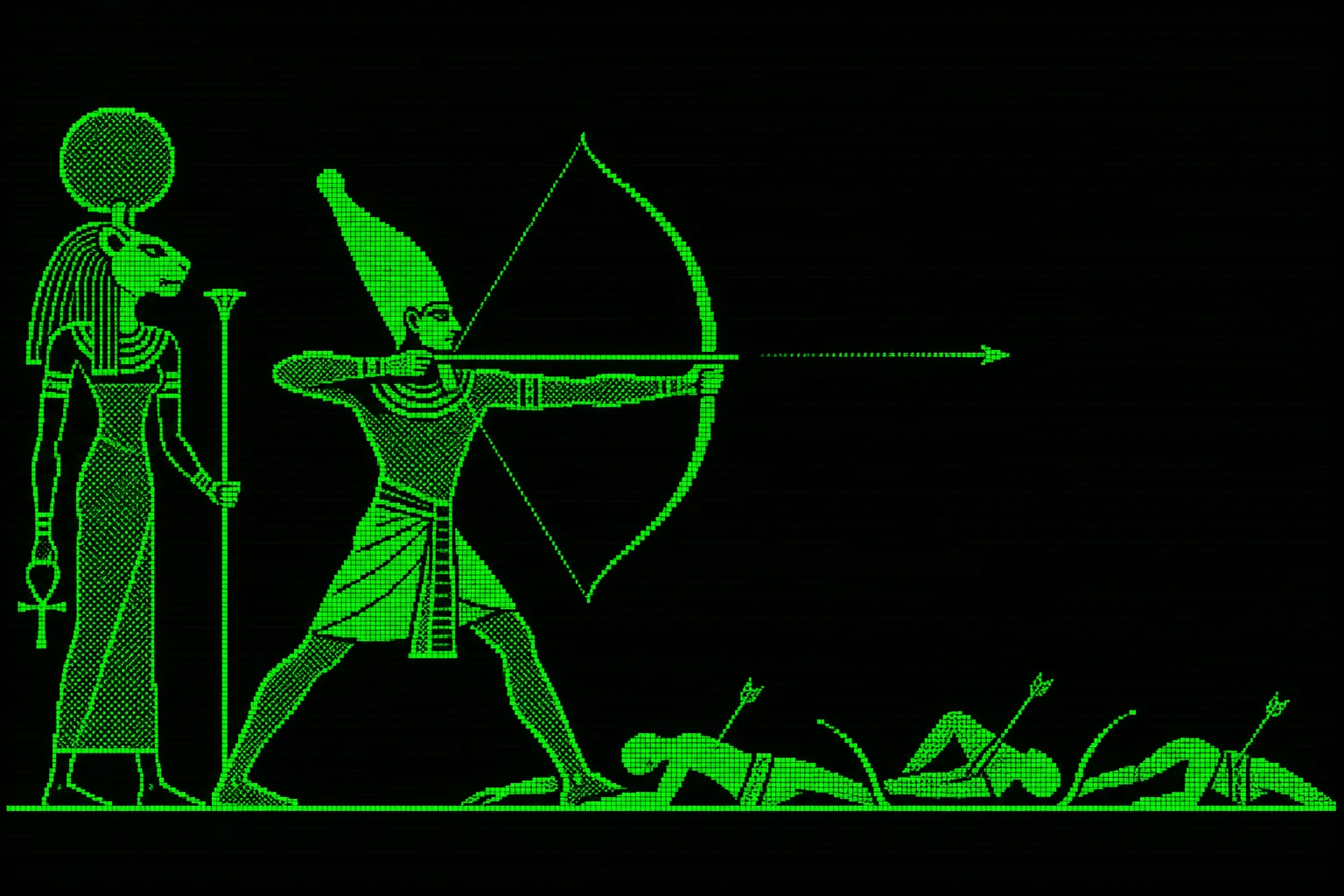
A chorus sings to Senusret III, calling him our Horus. The first hymn is the king at war: he kills bowmen without a stroke of the staff, and dread of him has slain the Nine Bows. The second counts who rejoices in him: gods, ancestors, recruits, the old.
The third names what he is to his city, a dike, a cool room, a warm corner, then Truly he is Sekhmet to the enemies who set foot on his frontier. The fourth greets his arrival: He has come: he has united the Two Lands. Two broken hymns follow, with a barque decked with electrum.
- 1
Ḥr,w [Nṯr(,j)]-ḫpr.w.pl nb,tj Nṯr(,j)-ms,wt.pl Ḥr,w-nbw Ḫpr nsw-byt Ḫꜥi̯-kꜣ.pl-Rꜥ zꜣ-R[ꜥ] Z-n-Wsr,t jṯi̯ =f tꜣ,du m mꜣꜥ-ḫrw
Horus: Divine in His Forms;
Two Ladies: Divine in Birth;
Golden Horus: He Has Come into Being;
King of Upper and Lower Egypt: Khakaure;
Son of Ra: Senusret.
He has seized the Two Lands in triumph.Note · Line 1
An Egyptian king bore five royal names. The Two Ladies are Nekhbet, the vulture goddess of Upper Egypt, and Wadjet, the cobra goddess of Lower Egypt. Khakaure is Senusret III’s throne name. - 2
j:nḏ ḥr =k Ḫꜥi̯-kꜣ.pl-Rꜥ Ḥr,w =n Nṯr(,j)-ḫpr.w.pl m~ki̯ tꜣ swsḫ tꜣš.w.pl =f dꜣjr ḫꜣs[,t].pl m wrr,t =f jnq tꜣ,du m r(ʾ)-ꜥ,w(j) ꜥ.wj =f [...] [ḫꜣs,t.pl] m ⸮rʾ-rmn〈.wj〉? =fj smꜣm pd,t(j).pl nn sḫi̯.t ḫt sti̯ šsr n〈n〉 jtḥ rwd ḥwi̯.n nr,w.pl =f jwn(,tj){.pl}.pl m tꜣ =sn smꜣ[m.n] snḏ =f pḏ,t-9 rḏi̯.n šꜥ,t =f mt ḫꜣ.pl m pd,t(j)[.pl] [...] ⸮pḥ.pl? tꜣš =f [sti̯] šsr mj jrr Sḫm,t sḫr =f ḫꜣ.pl m ḫ[m.w.pl] bꜣ,pl =f ns n ḥm =f rtḥ Ztj ṯs.w.pl =f sbhꜣ st,jw.pl wꜥ rnp,w [⸮ꜥḥꜣ?] ḥr tꜣš =f tm rḏi̯ wrd mr,t.pl =f rḏi̯ [s]ḏr pꜥ,t r sšp ḏꜣm.w.pl =f n qdd,w.pl =sn ḥꜣ,tj =f m m~k,tj =sn jri̯.n wḏ.pl =f tꜣš.w.pl =f sꜣq.n mdw =f jdb,du
Hail to you, Khakaure,
our Horus, Divine in His Forms,
who guards the land and widens its borders,
who subdues foreign lands with his crown,
who draws the Two Lands together by the work of his two arms,
… foreign lands by the strength of his two shoulders,
who kills bowmen without a stroke of the staff,
who shoots an arrow without drawing the string.
Terror of him has struck the nomads in their own land;
dread of him has slain the Nine Bows;
his slaughter has brought death to thousands of bowmen
… who attack his frontier.
He shoots an arrow as Sekhmet does,
felling thousands who do not know his might.
His Majesty’s tongue cows Nubia;
his words put the Asiatics to flight.
Peerless in his youth, he fights on his frontier,
never lets his subjects grow weary,
lets the nobles sleep till dawn.
His troops stand guard over their sleep;
his heart is their guardian.
His commands have set his borders;
his word has joined the Two Banks.Note · Line 2
The crown here is the White Crown of Upper Egypt. The Nine Bows stand for all Egypt’s traditional enemies. Sekhmet is the lioness goddess whose arrows bring death. - 3
ḥꜥi̯.wj [nṯr.pl] =[k] [sr]wd.n =k pꜣw,t.pl =sn
How your gods rejoice!
You have made their offerings of bread endure.Note · Line 3
The king was responsible for keeping the gods’ temples supplied with daily offerings. - 4
〈〈ḥꜥi̯.wj〉〉 _ =k jri̯.n =k tꜣš =sn
How your … rejoice!
You have drawn their boundary. - 5
〈〈ḥꜥi̯.wj〉〉 ⸮j[t.pl]? =⸮[k]? ⸮jm,j〈.pl〉-bꜣḥ? sꜥꜣi̯.n =k [ps]š[,t.pl] =sn
How your fathers of old rejoice!
You have increased their portions. - 6
〈〈ḥꜥi̯.wj〉〉 [Km,t] [m] [ḫp]š =k m~ki̯.n =k js,wt =[⸮s?]
How Egypt rejoices in your strong arm!
You have guarded her ancient ways. - 7
〈〈ḥꜥi̯.wj〉〉 pꜥ,t m sḫr =k jṯi̯.n bꜣ,pl =k ḥꜣ,w.pl =[sn]
How the nobles rejoice in your counsel!
Your might has won them abundance. - 8
〈〈ḥꜥi̯.wj〉〉 jdb,du m nr,w.pl =k swsḫ.n =k ẖr,t[.pl] =sn
How the Two Banks rejoice in the dread you inspire!
You have enlarged their holdings.Note · Line 8
The Two Banks are the two banks of the Nile: like the Two Lands, they name Egypt as a whole. - 9
〈〈ḥꜥi̯.wj〉〉 ḏꜣm.pl =k n ṯsi̯.t rḏi̯.n =k rd =sn
How your newly levied recruits rejoice!
You have made them grow. - 10
〈〈ḥꜥi̯.wj〉〉 jmꜣḫ,y.w.pl =k rḏi̯.n =k rnpy =〈sn〉
How your honored elders rejoice!
You have made them young again. - 11
〈〈ḥꜥi̯.wj〉〉 tꜣ,du m pḥ,tj.pl =k m~ki̯.n =k jnb.pl =sn
How the Two Lands rejoice in your strength!
You have guarded their walls. - 12
jn,yt =f Ḥr,w swsḫ tꜣš =f wḥm =k nḥḥ
Its refrain:
Horus who widens his frontier,
may you renew eternity! - 13
wr.wj nb n nʾ,t =f wꜥ ḥḥ pw nḏs⸢.pl⸣ pw kwj ⸢⸮ḫꜣ.pl?⸣ r(m)t.pl
How great is the lord to his city!
Alone he is a million;
other men, in their thousands, are small. - 14
〈〈wr.wj〉〉 〈〈nb〉〉 〈〈n〉〉 〈〈nʾ,t〉〉 =〈〈f〉〉 jsw ꜥ pw dnj jtr,w.pl r wḏn,w.pl =f n.w mw
How great is the lord to his city!
Truly he is a dike that holds the Nile back when its waters swell. - 15
〈〈wr.wj〉〉 〈〈nb〉〉 〈〈n〉〉 〈〈nʾ,t〉〉 =〈〈f〉〉 jsw mnqb pw rḏi̯ sḏr z-nb r sšp
How great is the lord to his city!
Truly he is a cool room where everyone may sleep till dawn. - 16
〈〈wr.wj〉〉 〈〈nb〉〉 〈〈n〉〉 〈〈nʾ,t〉〉 =〈〈f〉〉 jsw jmḏr pw [...] Gsm
How great is the lord to his city!
Truly he is a rampart … Gesem.Note · Line 16
Gesem was a place in the eastern Nile Delta. - 17
〈〈wr.wj〉〉 〈〈nb〉〉 〈〈n〉〉 〈〈nʾ,t〉〉 =〈〈f〉〉 jsw jb,w pw [t]mm šꜣš ḏr,t =f
How great is the lord to his city!
Truly he is a refuge; no one fails to find his hand. - 18
〈〈wr.wj〉〉 〈〈nb〉〉 〈〈n〉〉 〈〈nʾ,t〉〉 =〈〈f〉〉 jsw nh,t pw nḥm.t snḏ,w m-ꜥ ḫrw,y =f
How great is the lord to his city!
Truly he is a bulwark that saves a frightened man from his enemy. - 19
〈〈wr.wj〉〉 〈〈nb〉〉 〈〈n〉〉 〈〈nʾ,t〉〉 =〈〈f〉〉 jsw šw,t pw ⸮ꜣḫ,t.t? qb.t m šm,w
How great is the lord to his city!
Truly he is the shade of spring, cool in summer. - 20
〈〈wr.wj〉〉 〈〈nb〉〉 〈〈n〉〉 〈〈nʾ,t〉〉 =〈〈f〉〉 jsw qꜥḥ pw šm ⸮šw.y? r tr n pr,t
How great is the lord to his city!
Truly he is a warm corner, dry in winter. - 21
〈〈wr.wj〉〉 〈〈nb〉〉 〈〈n〉〉 〈〈nʾ,t〉〉 =〈〈f〉〉 jsw ḏw pw mḏr ḏꜥ r tr n nšnn p,t
How great is the lord to his city!
Truly he is a mountain that turns the storm wind back when the sky rages. - 22
〈〈wr.wj〉〉 〈〈nb〉〉 〈〈n〉〉 〈〈nʾ,t〉〉 =〈〈f〉〉 jsw Sḫm,t pw r ḫrw,y.w.pl ḫnd.w.pl ḥr tꜣš =[f]
How great is the lord to his city!
Truly he is Sekhmet to the enemies who set foot on his frontier. - 23
⸢jy⸣.n =f n =n jṯi̯ =f Tꜣ-Šmꜥ ẖnm.n sḫm,tj m tp =f
He has come to us, taking Upper Egypt,
the Two Mighty Ones already joined upon his head.Note · Line 23
The Two Mighty Ones are the crowns of Upper and Lower Egypt, worn together as the Double Crown. - 24
〈〈jy.n〉〉 =〈〈f〉〉 zmꜣ.n =f tꜣ,du ꜣbḫ.n =f sw,t n bj,t
He has come: he has united the Two Lands
and joined the sedge to the bee.Note · Line 24
The sedge and the bee are the emblems of Upper and Lower Egypt. Together they write the king’s title, “King of Upper and Lower Egypt.” - 25
〈〈jy.n〉〉 =〈〈f〉〉 ḥqꜣ.n =f Km,t rḏi̯.n =f dšr,t m-ꜥb =f
He has come: he has taken the Black Land under his rule
and brought the Red Land to his side.Note · Line 25
The Black Land is Egypt’s fertile valley, dark with Nile silt; the Red Land is the desert. - 26
〈〈jy.n〉〉 =〈〈f〉〉 m~ki̯.n =f tꜣ,du sgrḥ.n =f jdb,du
He has come: he has guarded the Two Lands
and brought the Two Banks peace. - 27
〈〈jy.n〉〉 =〈〈f〉〉 sꜥnḫ.n =f Km,t ḫsr.n =f šn,w =s
He has come: he has given life to Egypt’s people
and driven away her distress. - 28
〈〈jy.n〉〉 =〈〈f〉〉 sꜥnḫ.n =f pꜥ,t srq.n =f ḥty,t rḫ,t.pl
He has come: he has given life to the nobles
and put breath in the throats of the common people. - 29
〈〈jy.n〉〉 =〈〈f〉〉 p[t]pt.n =f ḫꜣs,t.pl ḥwi̯.n =f jwn(,tj){.pl}.pl ḫm.w.pl snḏ =[f]
He has come: he has trampled foreign lands
and struck the nomads who knew no fear of him. - 30
〈〈jy.n〉〉 =〈〈f〉〉 [sh]ꜣ.n =f tꜣš =f nḥm.n =f ꜥwꜣ [...]
He has come: he has made his frontier strong
and put an end to plunder … - 31
〈〈jy.n〉〉 =〈〈f〉〉 [...] _ n ꜥ.du =f jmꜣḫ n jni̯.n n =n ḫpš =f
He has come, his two arms having … the honor his strong arm had won for us.
- 32
〈〈jy.n〉〉 =〈〈f〉〉 [rḏi̯.n] =[f] [šdi̯] =[n] ⸮ẖrd.w.pl? =n qrs =n jꜣw.pl =n ⸮ḥr? ⸮m[k,t.pl]? =⸮[sn]?
He has come, having granted us the power to raise our children and bury our elders in their proper places.
- 33
mri̯ =[tn] Ḫꜥi̯[-kꜣ.pl-Rꜥ] ꜥnḫ ḏ,t r-nḥḥ [...]
May you love Khakaure—may he live for ever and ever—…
- 34
wdd jri̯ =f kꜣ.pl =tn nḥm [...]
the one charged with providing your food, the one who seizes …
- 35
zꜣ,w =n rḫ snfj ⸮ḏbꜣ? [...]
Our guardian, who knows how to give breath, who repays …
- 36
ḏbꜣ =tn n =f m ꜥnḫ wꜣs ḥḥ n [sp] [...]
May you repay him a million times with life and well-being …
- 37
ḥs,t Ḫꜥi̯-kꜣ.pl-Rꜥ ꜥnḫ ḏ,t r-n[ḥḥ] [...]
Praise to Khakaure! May he live for ever and ever …
- 38
fꜣi̯.t =j ṯꜣw m wj[ꜣ] [...]
My catching the wind aboard the barque …
- 39
ẖkr.y m ḏꜥm r [...]
decked with electrum as far as …
Note · Line 39
Electrum is an alloy of gold and silver. - 40
[...] n jdb,du r ⸮sḥ? =s [...]
… the Two Banks, until she reaches …
- 41
[⸮thi̯?].n =sn m~t(n).pl [...]
They had trespassed on the paths …