~/sacred-texts/ramesside-royal-hymns
Hymns to Ramesses V and Ramesses II: Isis Sounds the Trumpet
- Date
- The hymn to Ramesses V is dated to his regnal year 2 (about 1148 BC, 20th Dynasty); the flood hymn was written for the first Sed festival of Ramesses II (about 1249 BC, 19th Dynasty)
- Found
- The Ramesses V hymn is on the back of Papyrus Chester Beatty I, found at Deir el-Medina in 1928 and now in the Chester Beatty Library, Dublin. The flood hymn is on a Theban ostracon published by Černý and Gardiner.
- Language
- Late Egyptian · Hieratic
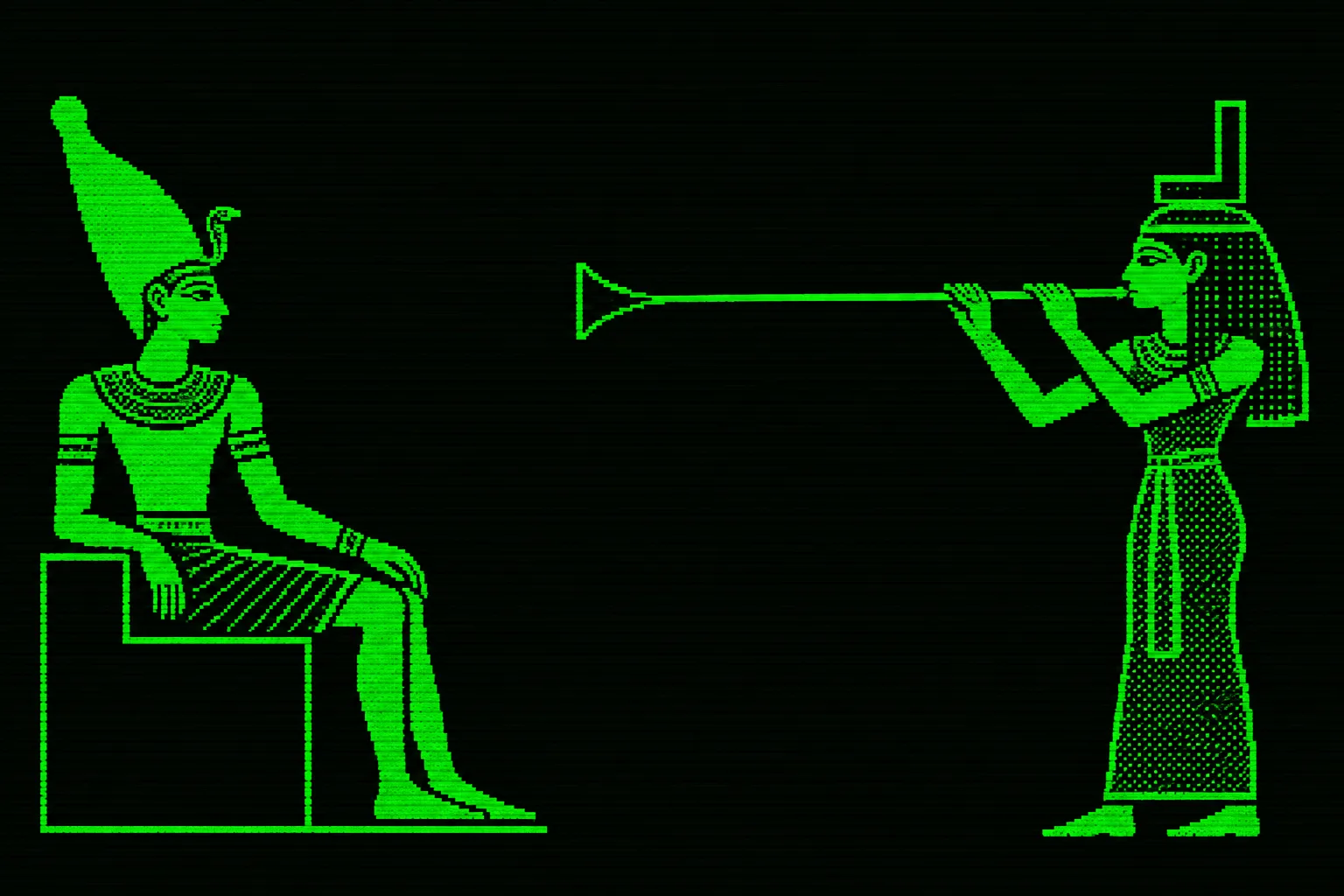
The first hymn is dated Regnal year 2, third month of the Inundation, day 28 and addresses the young Ramesses V. A singer hails him as the ruler who shatters the Nine Bows, mighty to slaughter Syria, to trample Kush! The gods celebrate his accession: His mother Isis sounds the trumpet, and Thoth proclaims the kingship.
The second hymn, a century older, praises the Nile flood that came at the first Sed festival of Ramesses II. The flood god breaks the dike: He reached the mountains. Then the singer turns to the king: Your granaries all but touch the sky.
Hymn to Ramesses V
- 1
rnp,t-zp 2 ꜣbd 3 ꜣḫ,t 〈sw〉 28
Regnal year 2, third month of the Inundation, day 28.
Note · Line 1
The years are counted from the king’s accession. The Inundation was the first of the Egyptian calendar’s three seasons. - 2
[nṯr]-nfr sḥbi̯ Wꜣs,t sḏfꜣ šmꜥ,w mḥ,w [...] tꜣ,wj m kꜣ =f rꜥ-nb šn,t.pl m rʾ~〈s〉fꜣ
The perfect god who sets Thebes feasting,
who feeds Upper and Lower Egypt,
… the Two Lands with his food each day.
The granaries teem.Note · Line 2
Upper Egypt is the Nile Valley to the south; Lower Egypt is the Delta to the north. Together they are the Two Lands. - 3
tꜣ bꜥḥj
The land is flooded.
- 4
ḥꜥpj.pl ꜥꜣy{,t}.pl wr.pl qn,w.pl n hꜣw =k
High, mighty and many are the Nile floods in your day.
- 5
zẖꜣ n =k Ḏḥw,tj ḥbsj.pl r-gs Nb-r-ḏr nsw-nṯr,pl
Thoth has written down your jubilees
beside the Lord of All, king of the gods.Note · Line 5
Thoth is the divine scribe. At the Sed jubilee the king renewed his royal strength; to have many such feasts inscribed was to be granted a long reign. - 6
pꜣ jwꜥ n wr-nṯr,pl Jmn Kꜣ-mw,t≡f pꜣ sḫpr tj ḏi̯ =f n =k 〈tꜣ,pl〉 nb.w.pl m qnj n ḫpš =⸢f⸣ jw =k ḥmsi̯.ṱ ḥr jsbw,t (n) pꜣ-Rꜥ
O heir of the eldest of the gods,
Amun, Bull of His Mother!
He who brought you into being gave you every land
by the strength of his arm,
as you sit on the throne of Ra.Note · Line 6
Amun’s title “Bull of His Mother” expresses his power to beget himself anew. - 7
Wr,t-ḥkꜣ(.pl) ḥr dp =k
Great of Magic is on your head.
Note · Line 7
“Great of Magic” is the rearing cobra on the king’s brow, a goddess who protects him. - 8
Rꜥ-mss-Jmn-(ḥr-)ḫpš≡f-mri̯-Jmn (ꜥnḫ-wḏꜣ)-s(nb) pꜣ-ḥqꜣ sksk pḏ,t-9 jt =〈k〉 Mn(w){,tj} (ḥr) ḏi̯.t n =k kꜣ =f
O Ramesses Amunherkhepeshef Meryamun—life, prosperity, health!—
ruler who shatters the Nine Bows,
your father Min gives you his ka.Note · Line 8
The Nine Bows stand for the foreign peoples Egypt counted as enemies. The ka is the life force that Min passes on to the king as his father. - 9
Bꜥ~jrʾ (ḥr) ḏi̯.t n =k pḥ,tjj pꜣ nsw nṯr,j mry,tj jṯt tꜣ,du 〈m〉 pḥ,tjj =f
Baal gives you strength,
O beloved, divine king
who seized the Two Lands by his strength!Note · Line 9
Baal was a storm god worshipped in Syria and Egypt. - 10
ẖ,t-nb(,t) mḥ.tj m nfr,pl =k
Every body is filled with your beauty.
- 11
〈ṯs,t.pl〉 nb(.t.pl) wnf.ṱ
All the troops rejoice.
- 12
ḏꜣm.pl nb(.pl) n,tj 〈r〉 ḫpr ẖ,t-nb(,t) jwi̯ =sn jw =sn (ḥr) nḥi̯.t n =k ḥbsj.pl rꜥ-nb
All the generations yet to be born, every last one—
they have come, praying day after day for jubilees for you. - 13
pꜣ mnj n Tꜣ-mrj Rꜥ-mssj-Jmn-(ḥr-)ḫpš≡f pꜣ sfj,y{.pl} zꜣ Wꜣḏ,yt nṯr-nfr nb-ꜣw,t〈-jb〉 [...] nb 〈f〉ꜣw,t ꜥꜣ pḥ,tjj r ḫꜣs,t nb(.t) r smꜣ Ḫꜣrw r ptpt Kšj jry =f sksk Nhꜣ~〈jrʾ~nꜣ〉y wr snd,w ꜥšꜣ hmhm.pl ḥr,yt.ṱ =f m jb (n) pḏ,t-9 tꜣ Wꜣwꜣ,t dmḏ.yt m ḫfꜥ =f Wsr-mꜣꜥj(,t)-Rꜥ-Sḫpr,n-Rꜥ (ꜥnḫ-wḏꜣ)-s(nb) mry,tj mj jt =〈f〉 Rꜥ nṯr-nfr ꜥn m nsw nfr-ḥr m ḥḏ,t mj Tm,w ꜥn 〈m〉 trj nfr ꜣbw,y(t) mj Jmn nḫt-ꜥ dr rq,y =f mj zꜣ-Nw,tt pḥ,tj =f mj Mntj,w sḫm ⸮ꜥšꜣ,t? ṯꜣy =f ḥḏ,t wḥm.n =f ꜣtf pꜣ tꜣ n Km,t (ḥr) ršw.t n hꜣw =k m-ḏr ḥmsi̯ =k ḥr jsbw,t
O shepherd of the Beloved Land, Ramesses Amunherkhepeshef,
young boy, son of Wadjet,
perfect god, lord of gladness,
… lord of renown,
mighty against every foreign land,
to slaughter Syria, to trample Kush!
He has shattered Naharina.
Great is the fear he inspires, many are his roars.
Dread of him is in the heart of the Nine Bows;
the land of Wawat is gathered in his fist.
Usermaatre Sekheperenre—life, prosperity, health!—
beloved like his father Ra,
perfect god, splendid as king,
fair of face in the White Crown like Atum,
splendid as one revered, fair of form like Amun,
strong of arm, driving back his foe like the son of Nut.
His strength is like Montu’s;
he wields power over the multitude.
He took up the White Crown
and has taken up the Atef crown in turn.
The land of Egypt rejoices in your day,
ever since you took your seat on the throne.Note · Line 13
The Beloved Land is Egypt. - 14
nh〈m〉 =sn n rn =k šps,j mj Ḥr,w nb-tꜣ,du
They cheer your noble name
as they cheer the name of Horus, lord of the Two Lands. - 15
st (ḥr) ršw.t ẖnm.ṱ nꜣ ṯḥḥ,wt n pꜣ ḥqꜣ (ꜥnḫ-wḏꜣ)-s(nb) (n) ꜥḏd
They rejoice, joined in shouts of joy
for the young ruler—life, prosperity, health! - 16
ḥꜥpj nfr jwi̯ n h(ꜣw) =k m-ḏr ẖnm =k mꜣꜥ,t
A good Nile flood has come in your day,
since you joined yourself to Maat.Note · Line 16
Maat is the right order of the world, which the king was bound to uphold. A flood high enough to water the fields without overwhelming them was a sign of that order. - 17
tw≡k mj ꜣb,w Ḥr,w-zꜣ-ꜣs,t jw =f ḫꜥi̯.y ḥr ṯꜣy,t
You are what Horus son of Isis desires
as he appears in glory on the royal dais. - 18
mw,t =f ꜣs,t (ḥr) ꜥš m šꜣ~nbj,w
His mother Isis sounds the trumpet,
- 19
Wnn-nfr (ꜥnḫ-wḏꜣ)-s(nb) m ṯḥḥ,wt 〈m-ḏr〉 mꜣꜣ =sn Jmn-(ḥr-)ḫpš≡f ḫꜥi̯.y ḥr s,t-Ḥr,w
and Wennefer—life, prosperity, health!—shouts for joy
when they see Amunherkhepeshef
appear in glory on the throne of Horus.Note · Line 19
Wennefer is Osiris, father of Horus. The divine parents celebrate the king taking the seat of their son. - 20
Ḏḥw,tj (ḥr) snḏm{.t} jb r-gs Nb-r-ḏr jw =f (ḥr) sr.t n =k nsw,yt
Thoth gladdens the heart beside the Lord of All
as he proclaims the kingship to you. - 21
jwi̯ n =k tꜣ pḏ,t-9 r Km,t (ḥr) fꜣy mꜥ~jrʾ~kꜣ.pl n bꜣ,pl =k
May the Nine Bows come to you in Egypt,
bearing gifts in homage to your power. - 22
ꜥš =k sgꜣbw r pꜣ Rʾ~bw~rn~nꜣy sꜥꜣ.w
May you raise a shout to Lebanon
as it trembles in its birth pangs. - 23
pꜣ hꜣbnj [...]
The ebony …
Hymn to the Nile Flood and Ramesses II
- 24
[...] pꜣ ḥꜥpj-wr{.t} n pꜣ ḥ{s}b-〈s〉d dp,j [n] [⸮nsw-byt?] [Wsr-mꜣꜥ,t-Rꜥ]-stp-n-Rꜥ zꜣ-Rꜥ Rꜥ-msi̯-sw-mr,yw-Jmn ḏj ꜥnḫ
… the High Flood at the first Sed festival
of the King of Upper and Lower Egypt, Usermaatre Setepenre,
Son of Ra, Ramesses Meryamun, given life.Note · Line 24
The Nile flood is personified as the god Hapy. The Sed festival renewed the king’s powers and was traditionally first held after thirty years on the throne. - 25
jni̯ =f mḥ
He brought a cubit’s rise.
Note · Line 25
The Nile’s rise was measured in cubits, each a little over half a metre. - 26
[bw] [ꜥḥꜥ] dnj,t r-ḥꜣ,t =f
The dike could not stand before him.
- 27
pḥ =f nꜣ-n ḏw.w.pl
He reached the mountains.
- 28
nb-rmw,pl ꜥšꜣ-ꜣpd,w,pl
Lord of fish, rich in birds.
- 29
[__].pl =f nb.t ꜣḫ
All his … do good.
- 30
wnm.tw =f jw ḥꜣ,tj.pl nḏm jw nṯr.pl m ḥb
He was eaten with glad hearts
while the gods kept festival.Note · Line 30
The food the flood brings is spoken of as the god himself. - 31
nḏm jb n Km,t n hꜣw =k
Glad was the heart of Egypt in your day.
- 32
sw 〈⸮m?〉 rʾ~sf,t rꜥ-nb
Day after day it teems with fish and fowl.
- 33
nn gꜣbw{.tw} m ⸮(j){t}ḫ〈,t〉? nb.t
Nothing is lacking.
- 34
pꜣ tꜣ jwi̯.w r s,t =f
The land is back in its place.
- 35
dmḏ((.t)).n psḏ,t-tꜣ-šmꜥ,t r sꜥšꜣ.t kꜣ =k mj šꜥj
The Ennead of Upper Egypt has gathered
to make your provisions as plentiful as grains of sand.Note · Line 35
An Ennead is a company of nine gods. - 36
pr-ḥḏ =k mḥ ngsgs.w m (j)ḫ,t nb(.t) nfr.t bꜣq 〈q〉mj sntrj jrp nn rʾ-ꜥ =sn
Your treasury is full, overflowing with every good thing:
moringa oil and resin oil, incense and wine without end. - 37
šnw.pl =k ḥr tkn ḥr,j(t)
Your granaries all but touch the sky.
- 38
sw mj tḫ [...] ⸮mj,t? tʾ~rʾ.pl n šꜥj
It is like … mounds of sand.
- 39
jri̯ n =k jt Jmn nꜣy =k nfr((,t.pl)) m {{jb}} =f
Of his own will, Father Amun fashioned your perfections for you.
- 40
nṯr nb n⸢tr⸣{r},t nb(.t) jb =sn ḥtp.w ḥr n[f]r[,w] =k
Every god and every goddess is content at heart with your perfection.
- 41
wršu̯ =sn ḥr sḏd{.pl} ⸢nfrj,pl⸣ [...] ⸢bꜣ,pl⸣ =k
They spend the day telling of perfection … your divine might.
- 42
ḥtp.w jb.pl =sn ḥr nfr⸢,w⸣ =⸢k⸣
Their hearts are content with your perfection.
- 43
⸢ntk⸣ nsw jri̯.w 〈m〉 ꜥ.wj.du =f{j} n pḥ,tj rḫ s,t ḏr,t =f nḫt pḥ,tj.ṱ r ḥm.pl ⸮ḥm,t[.pl]? [...]
You are a king who acts with his two mighty arms,
who knows where to lay his hand,
stronger and mightier than menservants and maidservants … - 44
ꜥnḫ Ḥr,w kꜣ-[nḫt] [...]
Long live Horus, the Strong Bull …!
Note · Line 44
The king bore a name identifying him with Horus. “Strong Bull” opens the Horus name of Ramesses II.