~/sacred-texts/middle-kingdom-stelae-from-abydos
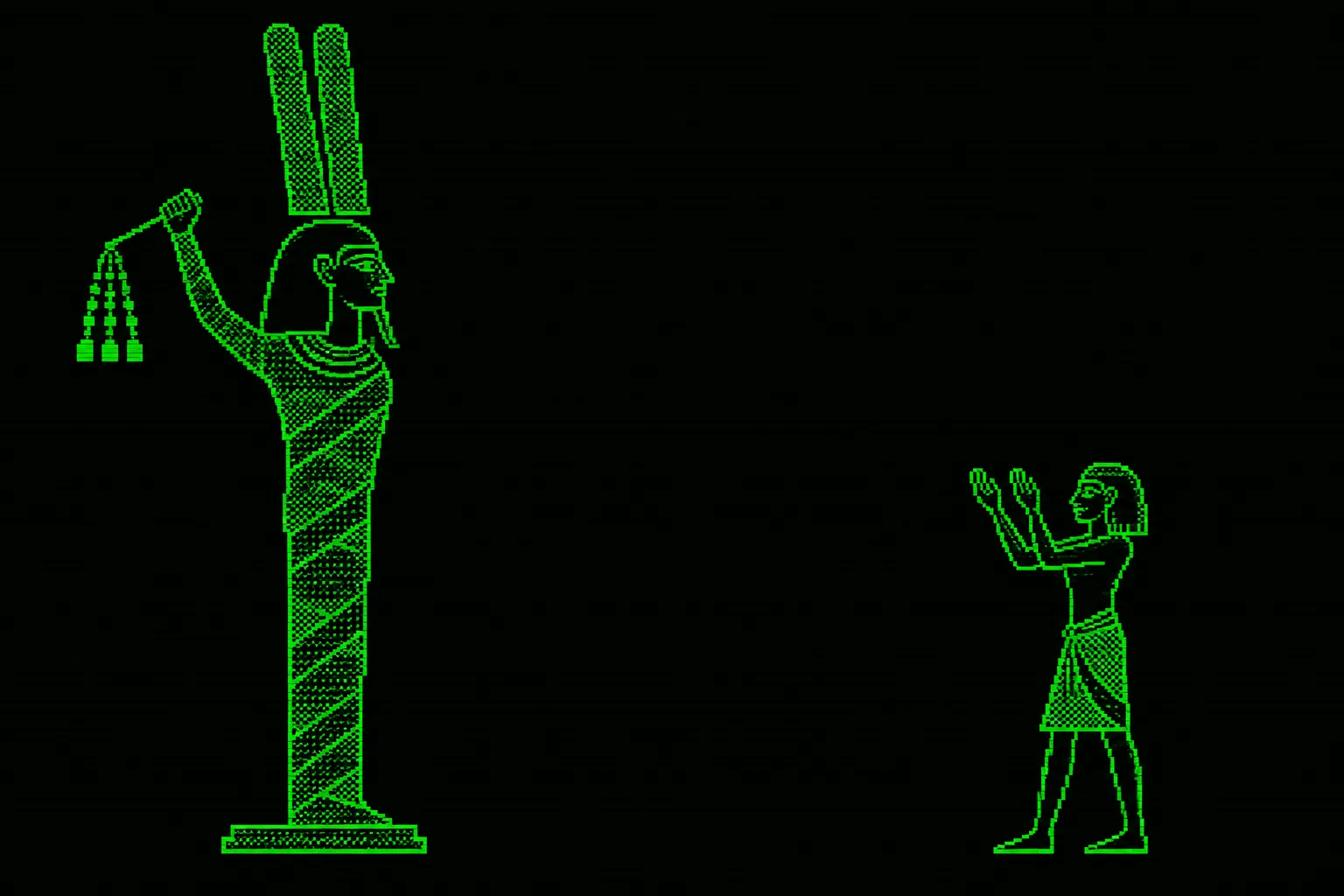
Hymn to Min: I Raise High Horus of the Upraised Arm
- Date
- Carved in the 13th Dynasty (about 1800–1700 BC) on the back of the stela of Sobekhotep and Sobekiry at Abydos
- Found
- Found at Abydos; now in the Musée du Louvre, Paris (C 30)
- Language
- Middle Egyptian · Hieroglyphic
- 1
𓇓𓏏𓊵𓏙 𓈾𓅃 𓈖𓆱𓐍𓏏 𓊩𓁹
ḥtp-di̯-nswt Mnw-Ḥr nḫt zꜣ Wsjr
An offering the king gives to Min-Horus, the strong one, son of Osiris.
Note · Line 1
The hymn honors Min and Horus as one god. In this offering formula the king gives to the god, who in turn is asked to provide for the dead. - 2
𓂞 𓆑 𓏐 𓏊 𓃿 𓅿𓏥 𓈖 𓂓 𓋔 𓄔𓏌𓈖𓄓𓋩𓏏 𓋴𓃀𓎢𓇋𓂋𓏭 𓐙𓊤
di̯ =f pr,t-ḫrw tʾ ḥnq,t kꜣ.pl ꜣpd.pl n kꜣ n jdn,w-n-jm,j-rʾ-ḫtm,t Sbk-jr,j mꜣꜥ-ḫrw
May he give an invocation offering of bread and beer, oxen and fowl, for the ka of the deputy to the overseer of the seal, Sobekiry, true of voice.
Note · Line 2
An invocation offering is called forth by reciting it. It sustains the ka, a person’s vital force, after death. “True of voice” means vindicated in the judgment of the dead. - 3
𓇓𓏏𓊵𓏙 𓈾𓅃 𓀋𓂝𓏤
ḥtp-di̯-nswt Mnw-Ḥr fꜣ-ꜥ
An offering the king gives to Min-Horus of the upraised arm.
Note · Line 3
Min is shown with one arm raised. The hymn returns to this gesture when it praises Horus. - 4
𓂞 𓆑 𓏐 𓏊 𓃿 𓅿𓏥 𓐍𓏏 𓎟𓏏 𓄤𓂋𓏏 𓈖 𓂓 𓋔 𓅨𓂋𓎆𓏥 𓋴𓃀𓎢𓊵𓏏𓊪 𓐙𓊤
di̯ =f pr,t-ḫrw tʾ ḥnq,t kꜣ.pl ꜣpd.pl ḫ,t nb.t nfr.t n kꜣ n wr-mḏ.pl-šmꜥ,w Sbk-ḥtp mꜣꜥ-ḫrw
May he give an invocation offering of bread and beer, oxen and fowl, and every good thing, for the ka of the Great One of the Ten of Upper Egypt, Sobekhotep, true of voice.
Note · Line 4
“Great One of the Ten of Upper Egypt” was an official title. - 5
𓌃𓆓 𓄔𓏌𓈖𓄓𓋩𓏏 𓋴𓃀𓎢𓇋𓂋𓏭 𓄟𓋴𓈖 𓎟𓏏𓉐 𓌢𓈖𓏌𓅱 𓐙𓏏𓊤
ḏd-mdw 〈jn〉 jdn,w-n-jm,j-rʾ-ḫtm,t Sbk-jr,j msi̯.n nb,t-pr Sn,(⸮n?)w mꜣꜥ,t-ḫrw
Words spoken by the deputy to the overseer of the seal, Sobekiry, born to the mistress of the house Senu, true of voice.
Note · Line 5
“Mistress of the house” was a customary title for a woman who presided over a household. - 6
𓆓𓂧 𓆑 𓃂𓈗 𓏏𓅨𓂋𓇌𓀀
ḏd =f wꜥb(.w) twr(.w)
Pure and purified, he says:
- 7
𓇼𓄿𓀢 𓀀 𓈾 𓋴𓈎𓄿𓇋𓇋𓀠 𓀀 𓅃 𓀋𓂝𓏤
dwꜣ =j Mnw sqꜣi̯.y =j Ḥr fꜣ-ꜥ
I praise Min;
I raise high Horus of the upraised arm. - 8
𓇋𓐩𓆓𓏛 𓁷𓏤 𓎢 𓈾 𓅓 𓉐𓂋𓏏𓂻𓏥 𓆑 𓈎𓄿𓀠 𓆄𓆄 𓅭𓏤 𓊩𓁹 𓄟𓋴𓈖 𓊨𓏏𓆇 𓊹𓂋𓏏
j:nḏ ḥr =k Mnw m pr,t.pl =f qꜣ šw,tj zꜣ Wsjr msi̯.n ꜣs,t nṯr,(j)t
Hail to you, Min in his processions,
tall in the twin-plumed crown,
son of Osiris, whom Isis the Divine bore;Note · Line 8
At a procession the image of the god was carried out of the sanctuary. - 9
𓅨𓂋 𓅓 𓌢𓌢𓌢𓏏𓉐 𓉻𓂝𓏛 𓅓 𓇋𓀁𓊪𓅱𓊖 𓍱𓃀𓅂𓇋𓇋𓊖 𓅃 𓏏𓌴𓄿𓂝𓏤
wr m Sn,t.pl ꜥꜣ m Jp,w Gb,tjw,y Ḥr tmꜣ-ꜥ
great in the Senut shrine,
mighty in Akhmim,
he of Coptos, Horus of the strong arm;Note · Line 9
Akhmim and Coptos were the two principal centers of Min’s worship in Upper Egypt. - 10
𓎟 𓈙𓆑𓈙𓆑𓏏𓏛𓏥 𓋴𓎼𓂋𓀁 𓆑𓄫𓅱𓏝𓏥 𓇋𓍘𓇋𓇋𓀲 𓊹𓏪 𓎟𓅱𓏪
nb šfšf,t.pl sgr fꜣ,w.pl jty nṯr.pl nb.w.pl
lord of awe, who silences the mighty,
sovereign of all the gods; - 11
𓅨𓂋 𓇋𓂧𓏏𓇲 𓉔𓄿𓂻 𓆑 𓅓𓍑𓅱𓈉 𓈙𓆑𓈙𓆑𓇋𓇋𓏏𓏭𓄅 𓅓 𓇾𓏤𓈇𓂊𓏏𓏭𓈉 𓅱𓏏𓈖𓏏𓏭 𓇋𓄿 𓎿𓏤𓏥
wr j(ꜣ)d,t hꜣi̯ =f 〈m〉 Mḏꜣ šfšf,ytj m Tꜣ-ztj Wtn,tj jꜣ〈,w〉 ḥz,t.pl
rich in fragrance when he comes down from Medja,
revered in Ta-Seti, he of Wetenet:
praise and acclaim!Note · Line 11
Medja was a region in Nubia. Ta-Seti, “Land of the Bow,” is a name for Nubia here. - 12
𓇼 𓈾 𓇋𓈖 𓄔𓏌𓈖𓄓𓋩𓏏 𓋴𓃀𓎢𓇋𓂋𓏭
dwꜣ Mnw jn jdn,w-n-jm,j-rʾ-ḫtm,t Sbk-jr,j
Adoration of Min by the deputy to the overseer of the seal, Sobekiry.
Note · Line 12
The hymn gives way here to captions naming the people on the stela. - 13
𓅨𓂋𓎆𓏥 𓋴𓃀𓎢𓊵 𓐙𓊤
wr-mḏ.pl-šmꜥ,w Sbk-ḥtp mꜣꜥ-ḫrw
The Great One of the Ten of Upper Egypt, Sobekhotep, true of voice.
- 14
𓅨𓂋𓎆𓏥 𓋴𓃀𓎢𓊵𓏏𓊪
wr-mḏ.pl-šmꜥ,w Sbk-ḥtp
The Great One of the Ten of Upper Egypt, Sobekhotep.
- 15
𓅐𓏏 𓆑 𓌢𓈖𓏌𓅱 𓐙𓏏𓊤 𓄟𓏏𓈖 𓇋𓇋𓇋 𓐙𓏏𓊤
mw,t =f Sn,(⸮n?)w mꜣꜥ,t-ḫrw msi̯.t.n Jjj mꜣꜥ,t-ḫrw
His mother Senu, true of voice, born to Iy, true of voice.
- 16
𓌢𓈖 𓆑 𓇋𓏠𓈖𓄂𓏤𓏏 𓄟𓈖 𓇋𓇋𓇋 𓐙𓏏𓊤
sn =f Jmn-m-ḥꜣ,t msi̯.n Jjj mꜣꜥ,t-ḫrw
His brother Amenemhat, born to Iy, true of voice.
- 17
𓌻𓂋𓂋𓀀 𓄟𓈖 𓇆𓏏𓏛 𓐙𓏏𓊤
Mrr msi̯.n Wꜣḏ,t mꜣꜥ,t-ḫrw
Merer, born to Wadjet, true of voice.
- 18
𓎟𓏏𓉐 𓇆𓏏𓏛 𓎟𓏏𓉐 𓇋𓍟𓁹
nb,t-pr Wꜣḏ,t nb,t-pr Mmj-rs
The mistress of the house Wadjet. The mistress of the house Memires.
- 19
𓎟𓏏𓉐 𓎟𓂧𓂧𓏴𓏛 𓐙𓏏𓊤 𓎟𓏏𓉐 𓋞𓏥𓈖𓁐𓏤𓏥
nb,t-pr ___ mꜣꜥ,t-ḫrw nb,t-pr Nbw-n-⸮rḥ,t.pl?
The mistress of the house …, true of voice. The mistress of the house Nebenrehut.
- 20
𓅨𓂋𓇓𓎆𓏥 𓋴𓃀𓎢𓊵𓏏𓊪 𓐙𓊤 𓈟𓏏 𓆑 𓎟𓏏𓉐 𓇆𓏏𓏛 𓐙𓏏𓊤
wr-mḏ.pl-šmꜥ,w Sbk-ḥtp mꜣꜥ-ḫrw ḥm,t =f nb,t-pr Wꜣḏ,t mꜣꜥ,t-ḫrw
The Great One of the Ten of Upper Egypt, Sobekhotep, true of voice. His wife, the mistress of the house Wadjet, true of voice.
- 21
𓅨𓂋𓇓𓎆𓏥 𓋴𓃀𓎢𓊵𓏏𓊪 𓎟𓏏𓉐 𓊵𓏏𓊪𓍘𓇋 𓐙𓏏𓊤
wr-mḏ.pl-šmꜥ,w Sbk-ḥtp nb,t-pr Ḥtp,tj mꜣꜥ,t-ḫrw
The Great One of the Ten of Upper Egypt, Sobekhotep. The mistress of the house Hetepti, true of voice.
- 22
𓎟𓏏𓏤𓉐 𓅧𓈎𓅱𓏒𓏥 𓐙𓏏𓊤 𓅭𓏏 𓋴 𓇆𓏏𓏛 𓐙𓏏𓊤
nb,t-pr ꜥq,w.pl mꜣꜥ,t-ḫrw zꜣ,t =s Wꜣḏ,t mꜣꜥ,t-ḫrw
The mistress of the house Aqu, true of voice. Her daughter Wadjet, true of voice.
- 23
𓌞𓅱𓌞𓋴 𓅱 𓄟𓈖 𓌢𓈖𓏌𓅱 𓇋𓏠𓈖𓄂𓏏𓏤 𓁹𓈖 𓊪𓏏𓎛𓅭𓏏
šms,w-šms Mmw msi̯.n Sn,(⸮n?)w Jmn-m-ḥꜣt jri̯.n Zꜣ,t-Ptḥ
Memu, a follower in the retinue, born to Senu. Amenemhat, whom Satptah brought forth.
- 24
𓎟𓏏𓉐 𓊪𓏏𓎛𓅭𓏏 𓅭𓏤 𓋴 𓋴𓃀𓎢𓊵
nb,t-pr Zꜣ,t-Ptḥ zꜣ =s Sbk-ḥtp
The mistress of the house Satptah. Her son Sobekhotep.
- 25
𓄙𓅱𓈖𓏏𓊖 𓌢𓈖𓀀𓇍𓂻 𓐙𓊤 𓈟𓏏 𓆑 𓂞𓂞𓅱𓋹
⸮wḥm,w-n-nʾ,t? Sn≡j-jyi̯ mꜣꜥ-ḫrw ḥm,t =f Dd,w-ꜥnḫ
The town herald Seni-iy, true of voice. His wife Deduankh.
- 26
𓇓𓍛𓀀 𓋴𓈖𓃀𓇋 𓐙𓊤 𓍛𓏏𓊹 𓏃𓈖𓏏𓄡𓍘𓇋𓇋𓅨
⸮ḥm-nswt? ⸮Snb,j? mꜣꜥ-ḫrw ⸮ḥm,t-nṯr? Ḫnt(,j)-ẖt,y-⸮wr?
The king’s servant Senebi, true of voice. The priestess Khentykhetywer.
- 27
𓆓𓂝𓂋𓂻𓌙𓅱𓐍𓇰 𓄟𓈖 𓄟𓇋𓇋 𓏶𓆱𓏏
Ḏꜥr-wḫ(ꜣ) msi̯.n Ms,yt ⸮jm,j-ḫt? ⸮Sn,pl?
Djarwekha, born to Mesyt. The deputy overseer Senu.
- 28
𓎟𓏏𓉐 𓁷𓏤𓋴𓄤𓆑𓂋 𓎟𓏏𓉐 𓃀𓃀𓅱𓏏 𓐙𓏏𓊤
nb,t-pr Ḥr≡s-nfr nb,t-pr Bbw,t mꜣꜥ,t-ḫrw
The mistress of the house Heresnefer. The mistress of the house Bebut, true of voice.
- 29
𓈖𓈙𓏏𓂞𓏏𓂞 𓁹𓏏𓈖 𓊪𓏏𓎛𓅭𓏏 𓄤𓏤𓏥 𓁹𓏏𓈖
Dd,t-nšm,t jri̯.t.n Zꜣ,t-Ptḥ Nfr,pl jri̯.t.n Dd,w-ꜥnḫ,t
Dedetneshmet, whom Satptah brought forth. Neferu, whom Deduankhet brought forth.