~/sacred-texts/hymns-to-amun-re
Hymn to Amun-Re, Earliest Copy: Wadjet Coils Around His Face
- Date
- Carved in the Second Intermediate Period (late 13th to 17th Dynasty, about 1700–1550 BC) on a limestone squatting statue set up in the temple of Mentuhotep II at Deir el-Bahari
- Found
- Found in the temple of Mentuhotep II at Deir el-Bahari, Thebes, in the Egypt Exploration Fund excavations; now in the British Museum, London (EA 494, registration no. 40959)
- Language
- Middle Egyptian · Hieroglyphic
- 1
… 𓂋𓍿𓀀𓁐𓏪 …
[...] r(m)ṯ[.pl] [...]
… people …
- 2
… 𓈎𓌳𓄿𓅓𓌙𓏛 𓆱𓏏𓏤𓈖𓋹𓈖𓐍𓆰𓏥
[...] qmꜣm ḫt-n-ꜥnḫ
… creator of grain,
- 3
𓉐𓂋𓂻𓈖 𓎟 𓅓 𓁹𓏏𓏤 𓆑
pri̯.n s[m,w.pl] nb m jr,t =f
from whose eye every green plant sprang,
- 4
𓌂𓏤 𓄤𓆑𓂋 𓁹𓈖 𓊪𓏏𓎛𓀭
sḫm nfr jri̯.n Ptḥ
perfect image of divine power, fashioned by Ptah,
Note · Line 4
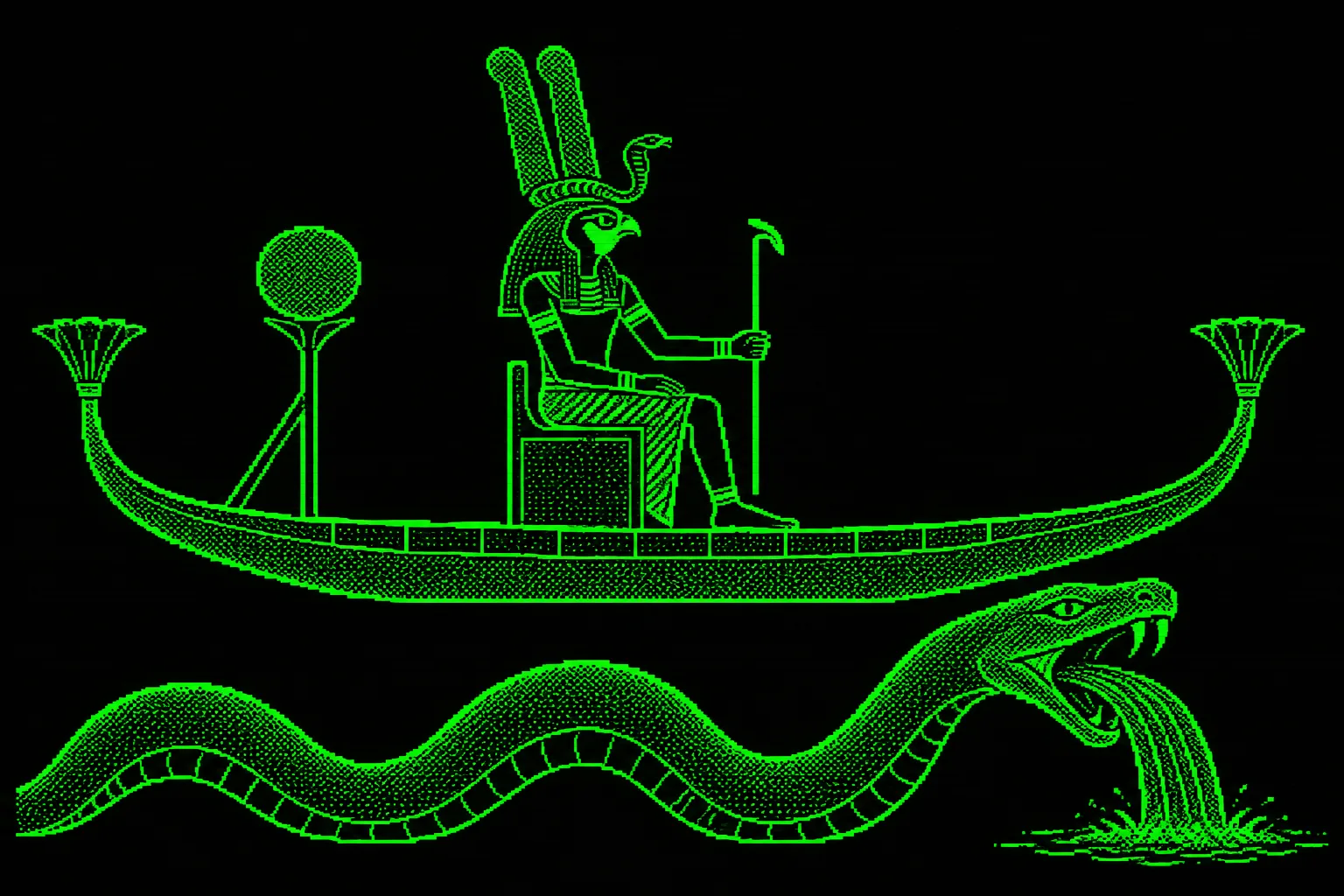
Ptah was a creator god and patron of craftsmen. - 5
𓄤𓆑𓂋 𓈖 𓌻𓂋𓏏𓀁 𓂞𓂞𓅱 𓈖 𓆑 𓊹
ḥ[wn] nfr n mrw,t dd.w n =f nṯr.pl jꜣ,[w]
fair and well-loved youth to whom the gods give praise,
- 6
𓁹 𓌨𓂋𓅱 𓁷𓂋𓅱𓇯
jri̯ ẖr(,j).w ḥr(,j).w
maker of those below and those above,
Note · Line 6
Those below are the dwellers on earth; those above are the dwellers in the sky. - 7
𓋴𓊵𓏏𓊪 𓇾𓇾 𓅓 𓊵𓏏𓊪𓅱
sḥtp Tꜣ,wj ḏꜣi̯ =[f] ⸢ḥ⸣r[,t] m ḥtp.w
who sets the Two Lands at peace as he crosses the sky in peace,
Note · Line 7
The Two Lands are Upper Egypt in the southern Nile valley and Lower Egypt in the northern delta. - 8
𓂋𓂝𓇳𓏤 𓇓𓆤 … 𓇾𓇾𓈇𓈇 𓉻𓂝 𓄖𓏏𓏭 𓎟 …
Rꜥ nswt-bj,tj [...] [ḥr(,j)]-tp Tꜣ,wj ꜥꜣ pḥ,tj nb šfy[,t] [...]
Ra, King of Upper and Lower Egypt, … chief of the Two Lands, great in strength, lord of awe …
- 9
… 𓈖 𓆑 𓉔𓈖𓏌𓅱𓀊 𓅓 … 𓅓 𓉐𓏤𓈖𓊃𓂋𓊮𓉐
[...] [dd].w n =f hn,w m [pr] [...] ⸮[ḫꜥ.w]?.pl m pr-nzr
… to whom cheers rise in Per-wer, … crowns in Per-neser,
Note · Line 9
Per-wer, the Great House, was the royal shrine of Upper Egypt; Per-neser, the House of Flame, was its counterpart in Lower Egypt. - 10
… 𓇍𓇋𓂻 𓅓 𓊪𓃹𓈖𓏏𓈉
[...] ⸢jy⸣ =[f] m Pwn,t
… when he comes from Punt,
Note · Line 10
Punt was a source of the fragrant resins Egyptians burned for the gods. - 11
𓊹𓏥 𓂋 𓆑 𓅓 𓎟𓏤 𓋴𓈖𓏥
[ẖnẖn].w nṯr.pl r rd[.wj] =[fj] [ḫft] ⸢sjꜣ⸣ =[sn] ḥm =f m nb =sn
to whose two feet the gods draw near when they recognize His Majesty as their lord,
- 12
𓎟 𓅾𓀁 𓉻𓂝𓄿𓏛 𓅨𓂋 𓅢 𓋴𓌂𓅓𓀜 𓈍𓂝𓅱𓏛𓏥 𓎟 𓊵𓏏𓊪𓏏𓏥 𓁹 𓆓𓆑𓅱𓏪
nb snḏ ꜥꜣ [nrw] wr bꜣ,pl sḫm ḫꜥ,w.pl nb ḥtp,t.pl jri̯ ḏf(ꜣ).w.pl
lord of dread, great in terror, great in divine power, mighty in his manifestations, lord of offerings, maker of food.
- 13
𓉔𓏌𓅱𓀊 𓈖 𓎡 … 𓊪𓏏𓇯 𓂧𓄿𓇋𓂋𓌗 𓅭𓏏𓅱𓈇𓏥
hn,w n =k [...] p,t dꜣjr zꜣt,w.pl
Acclaim to you, … the sky, you who press the earth down!
- 14
𓍟𓁺 𓅱𓍑𓏛 𓈾𓇋𓏠𓈖𓀭 … 𓆓𓏏𓇿 𓎟 𓇋𓄿𓅱𓀢 𓏄𓏏𓏭 𓏖𓏏𓊹
rs wḏꜣ Mn,w-Jmn [...] ḏ,t nb jꜣ,w ḫnt,j Psḏ,t
Awake in health, Min-Amun, … eternity, lord of praise, foremost of the Ennead,
Note · Line 14
Min-Amun unites the fertility god Min with Amun. The Ennead is a company of nine gods. - 15
𓏠𓈖 𓎡𓂋𓏏𓏭𓄏 𓄤 𓁷𓏤𓏥 𓎟 𓅨𓂋𓂋𓏏𓋑 𓆄𓏏𓏭 𓆤
mn kr,tj nfr ḥr.pl nb Wrr,t ⸢qꜣ⸣ šw,tj bj,tj
whose two horns stand firm, whose faces are fair, lord of the Wereret crown, tall in his twin plumes, king of Lower Egypt,
Note · Line 15
Wereret means “the Great One,” a name for the crown of Upper Egypt. - 16
𓎔𓈖𓏌𓅱 𓇆𓇋𓇋𓏏 𓈖 𓁷𓏤 𓆑
mḥn Wꜣḏ,yt n ḥr =f
around whose face Wadjet coils,
Note · Line 16
Wadjet is the cobra goddess of Lower Egypt, worn on the royal brow as a protector. - 17
𓈎𓏇𓇋𓇋𓏏𓏭 𓆭𓅓𓏛 𓄿𓂋𓏏 𓌰𓅓𓋴𓋜 𓆣𓂋𓈙𓏤𓋙
qmy,tj jmꜣ ḫꜣr,t [sḫ]m,tj nms ḫprš
the perfumed one, his hair sweet-scented, wearing the Double Crown, the nemes headcloth and the Blue Crown,
Note · Line 17
The Double Crown joins the white crown of Upper Egypt to the red crown of Lower Egypt. The nemes is the royal linen headcloth that falls in two panels over the chest. - 18
𓄤 𓁷 𓊐𓊪𓂝 𓆑 𓄿𓏏𓆑𓅱𓋚
nfr ḥr šzp =f ꜣtf.w
fair of face when he receives the Atef crown,
Note · Line 18
The Atef is a tall crown flanked by feathers, especially associated with Osiris. - 19
𓌸𓇋𓇋 M159𓋴𓋑 𓎔𓎛𓋴𓋔
mri̯.y šmꜥ,w-s(j) ḥn[ꜥ] mḥ,w-sj
beloved of She Who Belongs to Upper Egypt and She Who Belongs to Lower Egypt,
Note · Line 19
The two crowns are named as goddesses who love their wearer. - 20
𓎟 𓌂𓏏𓏭𓋖 𓊐𓊪𓂝 𓆑 𓄿𓄟𓋴𓌄
nb sḫm,tj šzp =f ꜣms
lord of the Double Crown when he receives the ames scepter.
Note · Line 20
The ames is a scepter shaped like a mace. - 21
… 𓈍𓂝 𓅓 𓌉𓏏𓋑
[...] [ḥqꜣ] [n]fr ḫꜥi̯ ⸮m? ḥḏ,t
… the good ruler who appears in the White Crown,
- 22
𓎟 𓄝𓏏𓅱𓏏𓇶 𓁹 …
nb stw,t jri̯ [...]
lord of rays, maker of …
- 23
… 𓆑𓏭 𓈖 𓌸𓇋𓇋 𓆑
[...] [ꜥ.du] =fj n mri̯.y =f
… his two arms to the one he loves,
- 24
𓉔𓏏𓅱𓊮 𓐍𓏏𓆑𓀐𓏥 𓆑 …
h{t}w〈t〉 ḫft(,j).pl =f [...]
who burns his enemies …
- 25
… 𓏌𓏌𓏌𓇯 𓂝 𓊃 𓃀𓈙 𓈖𓇋𓎡𓀐 …
[...] [sẖp] nwn di̯ =s bš n(j)k [...]
… who swallowed the primeval waters; she makes the gods’ enemy vomit …
Note · Line 25
The sun god’s Eye acts as a goddess in his defense. The serpent Apophis tries to strand the god’s boat by swallowing the water beneath it. - 26
… 𓅱𓇋𓄿 𓆑
[...] [ḥr(,j)]-jb wjꜣ =f
… in the midst of his barque,
- 27
… 𓁹 𓋹𓈖𓐍 𓊃𓏥
[...] jri̯ ꜥnḫ =sn
… who provides their means of life,
- 28
… 𓆭𓏛 𓄣 𓐍𓏏𓆑 𓈖𓇋𓋴𓀁 𓈖 𓆑
[...] ⸮[b]ṯn,w? ⸮jmꜣ? jb ḫft njs n =f
… the rebel, kind of heart when someone calls to him.